
Review · LOUISIANA
New Orleans: Combo Cocktail and Food History Tour
Come hungry, leave happily full. This four-hour walking tour links classic New Orleans food with the stories behind the city’s cocktails, moving from Bourbon Street to Jackson Square and the French Market. I like the generous portions and the way the stops cover more than one version of New Orleans cooking, from seafood gumbo and jambalaya to pralines, plantains, and hot sauces.
I also like the full-size craft cocktails, including a Hurricane, Pimm’s Cup, French 75, and daiquiri. Guides such as Meg, Ben, Nate, and Lindsay have earned especially warm praise for making the history lively rather than turning it into a lecture. The main caution is simple: this is not a tour for anyone avoiding alcohol, gluten, dairy, or animal products. The vegetarian option is useful, but there is no vegan menu.
Quick take: what makes this tour worth four hours
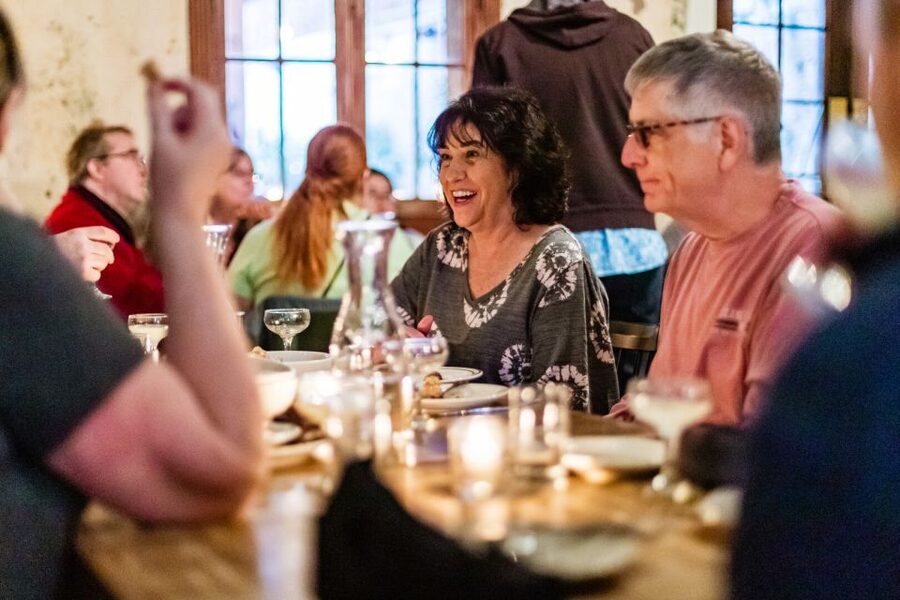
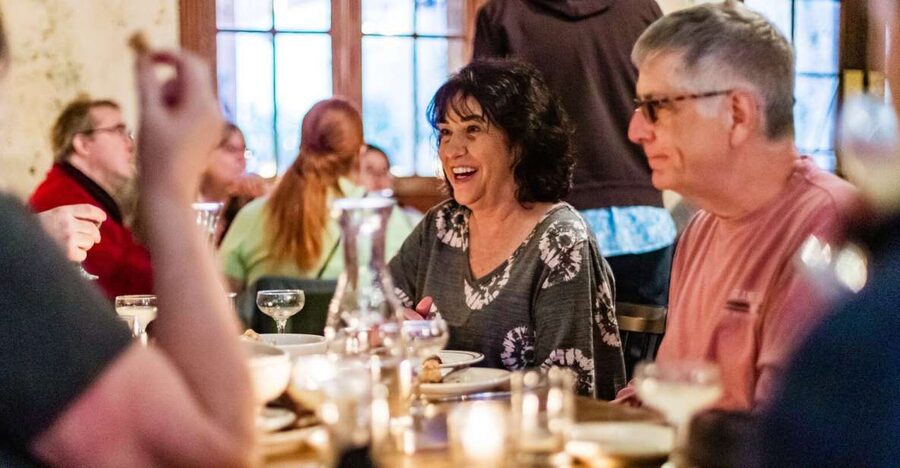
- Six food tastings and four cocktails: The servings are larger than the tiny bites you may expect from a food walk, so eat lightly beforehand.
- A useful route through the French Quarter: You begin at Red Fish Grill on Bourbon Street and finish near the French Market at Cane and Table.
- Food and history stay connected: Colonial Louisiana, Cajun influence, Creole cooking, and cocktail origins are part of the conversation.
- A thoughtful vegetarian option: Red beans and rice, meatless muffuletta, and potato salad replace the meat-based dishes.
- A small-group feel: Several people have had private or nearly private outings, while larger groups still benefit from a guide who can answer questions.
- Good indoor relief: Most food and drink stops take place inside, a welcome feature during New Orleans heat and humidity.
Starting with gumbo and a Louisiana Hurricane
Meet your guide at Red Fish Grill, 115 Bourbon Street, in the French Quarter. This is a central and easy-to-find starting point, but Bourbon Street can be loud and crowded, so give yourself time to locate the entrance.
The opening tasting sets the tone. You receive alligator sausage and seafood gumbo, followed by a craft Hurricane. The vegetarian alternative is red beans and rice. This first stop also introduces Louisiana’s colonial period, giving you a reason to think about how ingredients, cooking methods, and outside influences shaped the food on your plate.
The gumbo is more than a famous local dish checked off a list. It gives your guide a chance to explain the layered character of Louisiana cooking, where seafood, sausage, rice, spices, and long-simmered flavor meet. The alligator sausage adds a distinctly local talking point, though diners who prefer familiar meats may find it the most adventurous item of the meal.
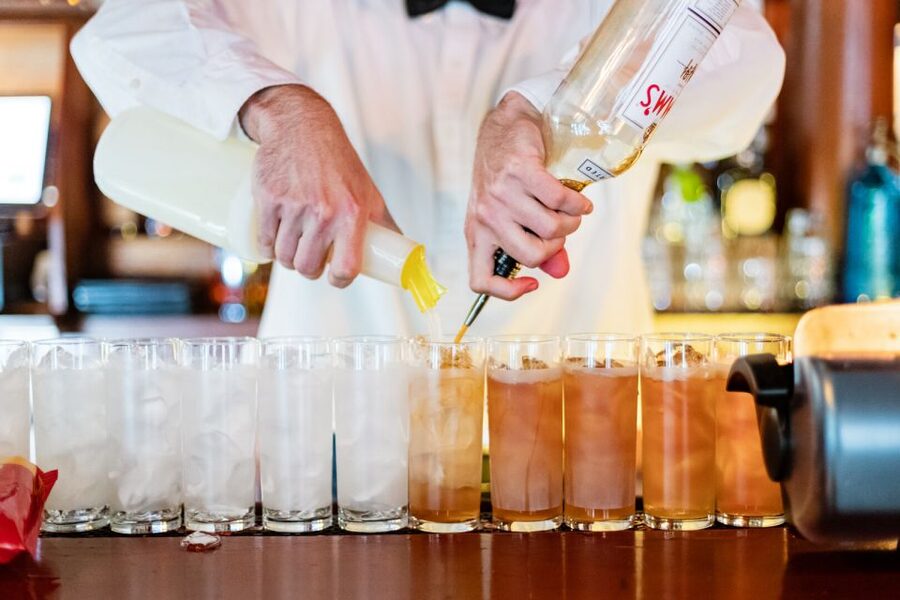
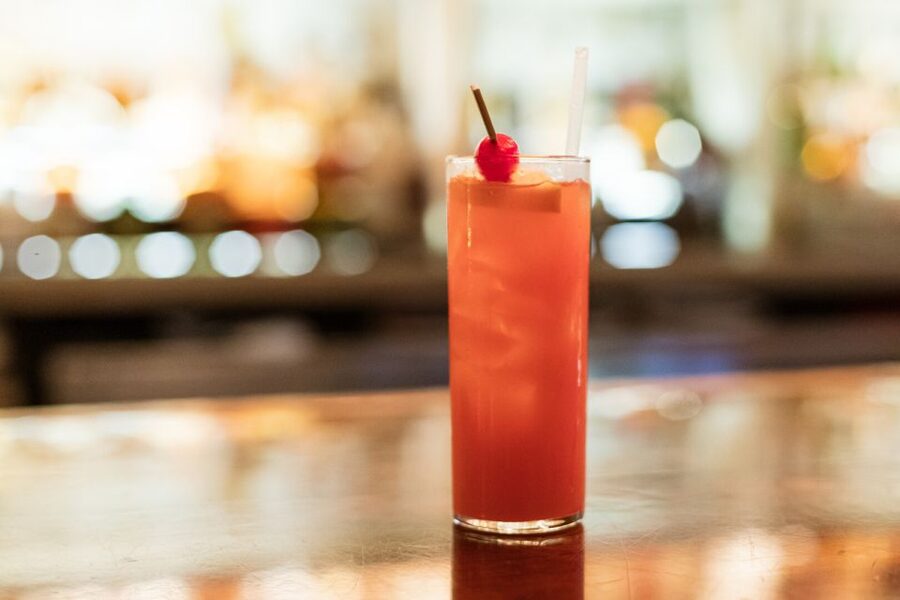
The Hurricane is a smart first cocktail because it is tied closely to New Orleans bar culture. It is also sweet and fruity, so pace yourself. You have three more cocktails ahead, and the generous pours are one reason this tour feels like a full afternoon rather than a series of token samples.
More Food Tours in New Orleans:
- New Orleans Food and History Walking Tour
★ 5.0 · 1,544 reviews - New Orleans Cocktail and Food History Tour
★ 5.0 · 819 reviews - New Orleans: French Quarter Food History Walking Tour
★ 4.9 · 713 reviews
Leah’s Pralines and the sweeter side of New Orleans
A short walk brings you to Leah’s Pralines, a third-generation family-owned candy shop. Here, the food story shifts from savory cooking to the sugary traditions that make New Orleans gift shops smell so tempting.
You sample traditional pralines and a pecan brittle. The contrast is worthwhile. Pralines are soft and creamy, while brittle has a firmer snap and a stronger toasted-nut character. This stop gives the tour some breathing room after gumbo and sausage, although it also means the meal begins to add up quickly.
I would not plan a large breakfast before this tour. The food is not limited to a single bite at each stop, and the sweets can be surprisingly filling. If you want to buy candy to take home, this is a natural place to do it, but any purchases are separate from the tour price.
The walk between venues is generally short, around five minutes at a time. That matters in New Orleans, where heat, humidity, and uneven pavement can make a long walking route tiring. The short hops keep the focus on the food while still giving you time to see the French Quarter between stops.
Napoleon House: muffuletta, Pimm’s Cup, and Creole comfort food
Napoleon House is one of the tour’s most characterful stops. The restaurant is known for its historic atmosphere and its connection to the famous Pimm’s Cup, a light, refreshing cocktail that is especially welcome on a warm afternoon.
You taste muffuletta sandwiches, Pimm’s Cup, and a side of Creole jambalaya. The vegetarian replacement is a meatless muffuletta with potato salad instead of jambalaya. This is the point where the meal becomes substantial. A muffuletta is not a dainty sandwich, and the combination of bread, filling, and accompanying dishes can leave you feeling well fed before the tour is halfway over.
The value here comes from variety. You are not eating the same kind of dish at every restaurant. Gumbo offers a spoonable stew, pralines bring sugar and pecans, and the muffuletta delivers a hearty sandwich format. Jambalaya adds another rice-based expression of Louisiana cooking, while the Pimm’s Cup shows that New Orleans bar culture is not built only around sweet rum drinks.
One limitation is that no one on this tour gets to choose freely from each restaurant’s menu. You receive set tastings, with substitutions for the stated vegetarian plan. That works well if you want a guided introduction, but it may feel restrictive if you have strong food preferences.
NOLA Sauce Bar and the Cajun influence
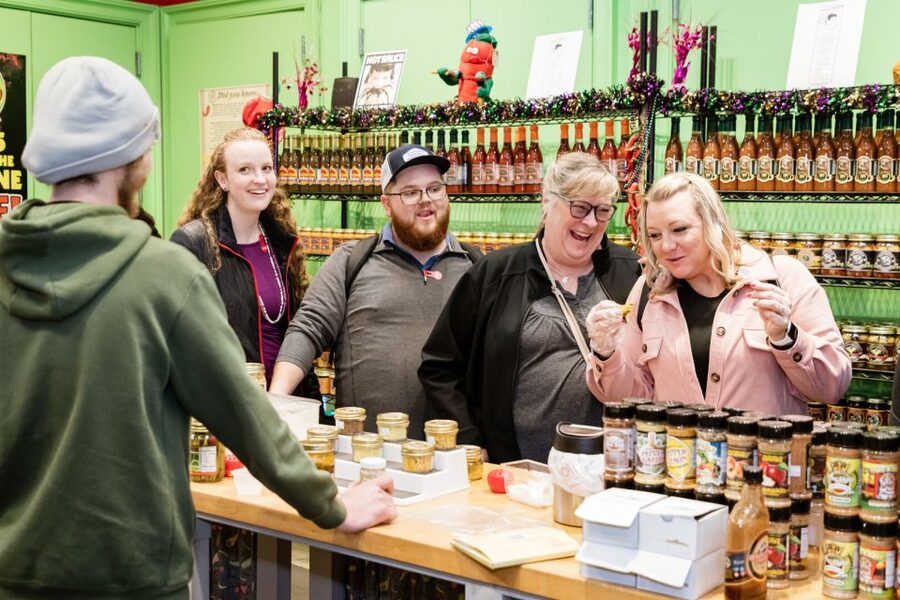
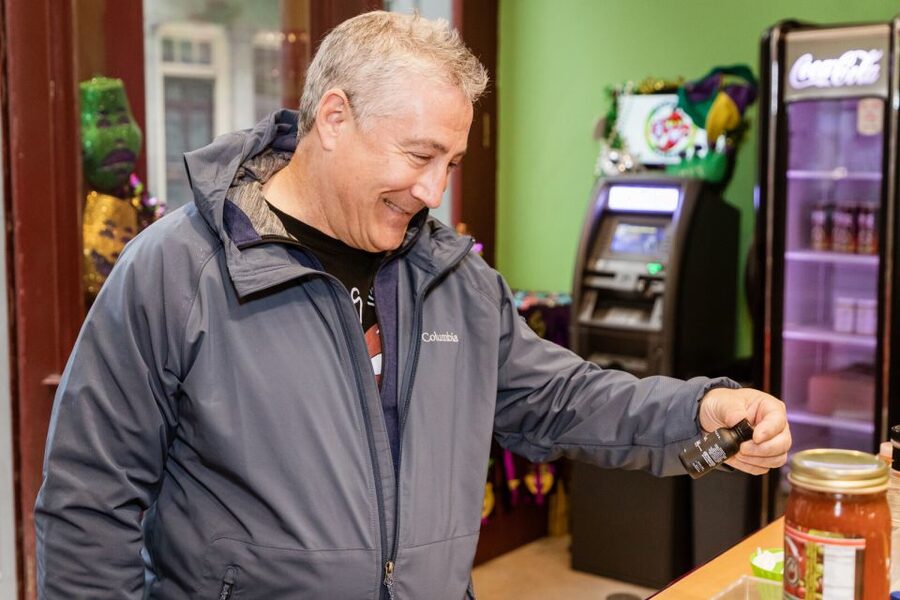
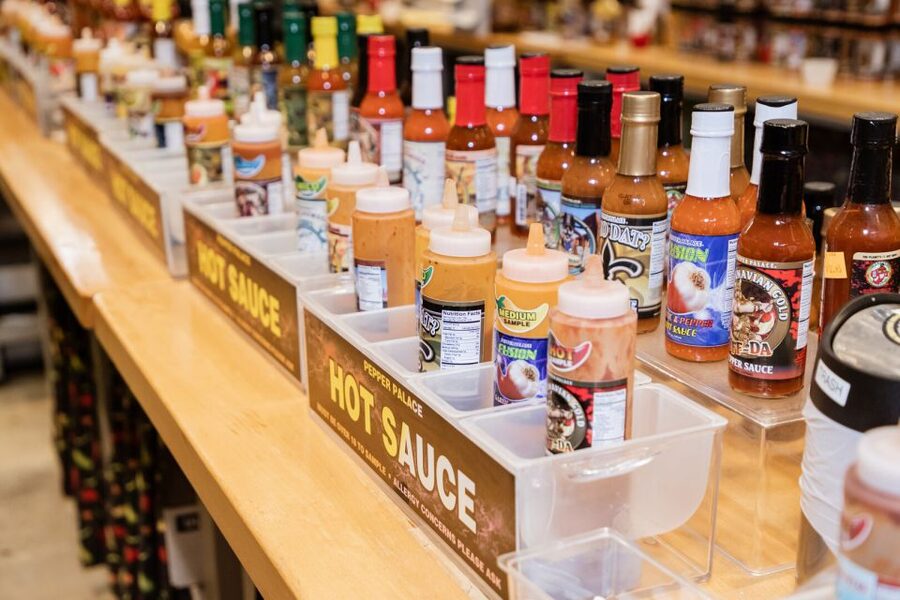
Four blocks later, the group stops at NOLA Sauce Bar. This is a different kind of tasting. Instead of one prepared dish, you can sample a wide range of locally supplied hot sauces, barbecue sauces, buffalo wing sauces, dry rubs, and other seasonings.
This stop adds a hands-on element to the afternoon. You can compare heat, sweetness, smoke, and spice rather than simply accepting one sauce with a dish. It also gives your guide room to discuss Cajun influence and the role of seasoning in Louisiana food.
A bottle of Louisiana-style seasoning is included, which adds practical value to the $160 price. It is a small souvenir, but it lets you recreate at least part of the experience at home. If you enjoy experimenting in the kitchen, this may be more useful than another branded trinket.
The sauce tasting can be intense, especially after several cocktails. Try small amounts and drink water. Water is available at most stops, but I would still bring your own bottle if you are sensitive to heat or visiting during a hot spell.
A few more history tours around New Orleans worth a look
- New Orleans Garden District History Walking Tour
★ 5.0 · 2,879 reviews - French Quarter Historical Sights and Stories Walking Tour
★ 5.0 · 2,724 reviews - New Orleans Small-Group Haunted History Carriage Tour
★ 4.5 · 2,289 reviews - New Orleans Haunted History Ghost Tour
★ 4.5 · 2,084 reviews
Tableau and the story of the French 75
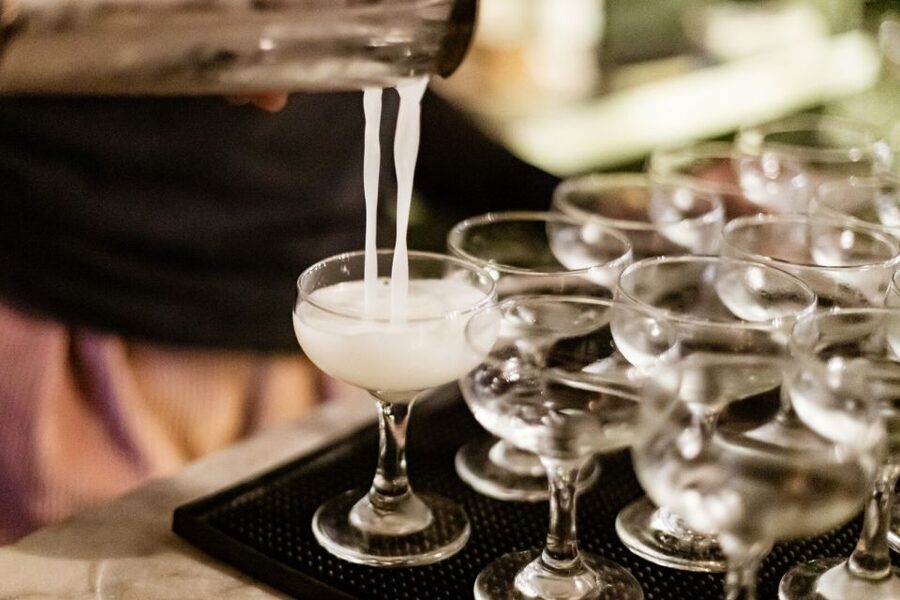
At Dickie Brennan’s Tableau, you sip a French 75. The drink combines fresh lemon, brandy or gin, and sparkling wine. Its bright citrus and bubbles provide a sharp contrast to the sweeter Hurricane and the herbal profile of a Pimm’s Cup.
This stop also shows off another side of French Quarter dining. The tour is not confined to casual counters and street-food settings. Moving through places such as Red Fish Grill, Napoleon House, Tableau, and Cane and Table gives you a look at different dining rooms and styles within the same compact area.
The cocktail history is one of the tour’s strongest features. You learn not only what is in the glass, but why these drinks belong to New Orleans’ food and drink identity. Guides including Ben and Nate have been especially praised for explaining buildings, dishes, and cocktails in a way that remains conversational.
Remember that brandy or gin may be used in the French 75. If you have a specific preference, ask the guide or bar staff what is being poured. The supplied details do not promise a choice at every stop.
Jackson Square to Cane and Table
After Tableau, the route passes through Jackson Square toward the French Market area. This is the longest stated walk, about ten minutes, and it gives the afternoon a useful change of pace after several indoor stops.
The route finishes at Cane and Table, located at 1113 Decatur Street. The final tasting includes fried sweet plantains and a classic daiquiri. Plantains provide a warm, starchy-sweet finish, while the daiquiri brings the rum and citrus combination associated with New Orleans cocktail culture.
Ending with a daiquiri makes sense. It is familiar, local in spirit, and easy to appreciate after a day of more unusual flavors. The final stop also places you near the French Market, so you can continue exploring after the tour without needing transport.
The tour does not include hotel pickup or drop-off. That is not much of a problem if you are staying in or near the French Quarter, since the route remains central. You should arrange your own way to the starting point and from the finish, especially if your hotel is outside the downtown area.
Food portions, pace, and the $160 price
At $160 per person, this is not a budget food walk. The price becomes easier to justify when you count four craft cocktails, six food samples, a guide, water at most stops, and server and bar staff tips.
The portions are also important. Several people have found the food closer to small meals than miniature samples, and the drinks are generally full pours. You may finish full rather than merely satisfied. That makes the tour a poor choice if you want to save your appetite for a later dinner.
I see the best value in the combination of food, drinks, and access to several established venues. You are paying for a guided route, not just ingredients. The guide handles the sequence, explains the dishes, and links the food to New Orleans history and culture. The included tips also make the price easier to understand, since you are not adding gratuities at every stop.
The value is weaker for non-drinkers, very light eaters, or anyone who already knows the French Quarter’s classic dishes well. You could spend less by ordering individual items, but you would lose the planned progression and the historical explanation.
What the guides add to the experience
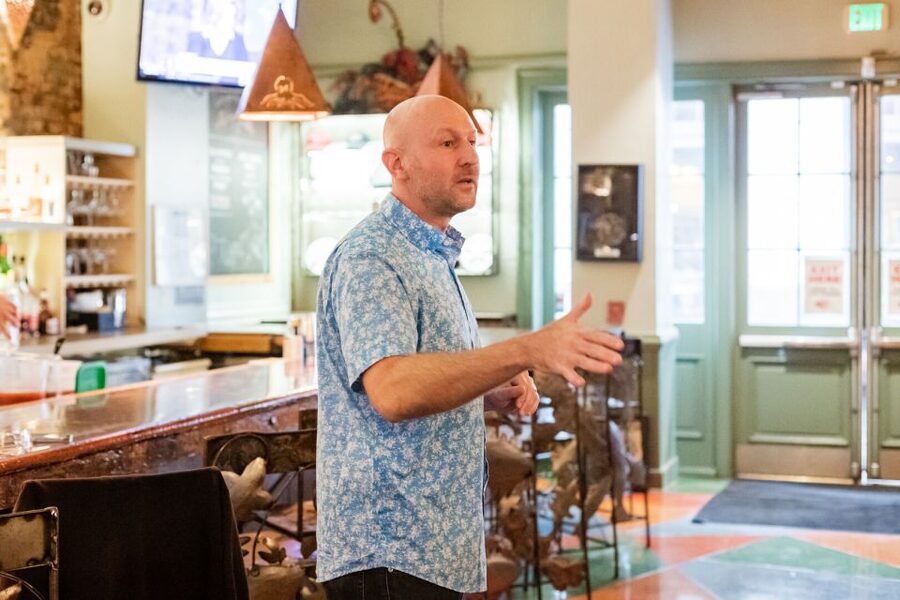
The strongest praise has consistently gone to the guides. Meg has been described as warm, entertaining, and able to tailor conversation to a small group. Ben is often noted for explaining Cajun and Creole cooking, local history, and each building without losing his sense of humor. Nate has been praised for his easy manner, strong historical background, and ability to keep the group moving at a comfortable pace.
That matters because a food tour can become a list of dishes. Here, the guide is meant to connect each bite to a larger story. You learn why the Hurricane and French 75 matter, how Cajun influence enters the conversation, and how the city’s mix of cultures appears in food and drink.
Group size can vary. Some outings have turned into private tours when only one couple or a very small number of people booked. A small group allows more questions and can let the guide adjust the discussion to your interests. Larger groups may feel less personal, but the fixed route still provides plenty of structure.
The walking pace has generally been comfortable, and one older couple in their seventies found the stops easy to reach on foot. Still, you should be prepared to walk for four hours with repeated standing, entering restaurants, and moving over city sidewalks.
Vegetarian choices and who should skip it
The vegetarian plan is more serious than a token salad. It includes red beans and rice instead of alligator sausage and gumbo, a meatless muffuletta, and potato salad in place of jambalaya. That makes the tour workable for a vegetarian in a mixed group.
You must request the vegetarian option at checkout. The tour does not offer vegan, gluten-free, or dairy-free substitutions. People with gluten intolerance, vegans, and anyone under 21 should not book this experience.
This is also an adult cocktail tour, not a family food walk. Bring a passport or ID card, since you may need to show proof of age. Water is available at most stops, and drinking slowly is sensible given the number of cocktails and the New Orleans climate.
Should you book this New Orleans food tour?
Book it if you want a first-day introduction to New Orleans food and drink, especially if you enjoy history with your meal. The route gives you a useful sense of the French Quarter, and the generous tastings can help you decide which restaurants and flavors deserve a return visit.
I would also recommend it for a small group with mixed interests. One person can focus on cocktails, another on regional food, and everyone gets a steady stream of local context. The vegetarian substitutions make it easier for groups with one vegetarian, though the lack of vegan and allergy-friendly choices is a firm limitation.
Skip it if you dislike alcohol, need strict dietary control, or prefer to explore restaurants at your own pace. At $160, the tour earns its price through full drinks, filling portions, several respected venues, and guides who make the history personable. Just arrive hungry, wear comfortable shoes, and leave room for the daiquiri.
FAQ
How long does the New Orleans Combo Cocktail and Food History Tour last?
The tour lasts four hours.
Where does the tour start?
It starts at Red Fish Grill, 115 Bourbon Street, New Orleans, Louisiana 70130.
Where does the tour finish?
It finishes at Cane and Table, 1113 Decatur Street, New Orleans, Louisiana 70116.
How many cocktails are included?
Four craft cocktails are included: a Hurricane, Pimm’s Cup, French 75, and daiquiri.
How many food tastings are included?
Six food samples are included, covering items such as gumbo, muffuletta, pralines, pecan brittle, fried sweet plantains, and other regional dishes.
Is there a vegetarian option?
Yes. The vegetarian choices include red beans and rice, meatless muffuletta, and potato salad. You need to request this option at checkout.
Is the tour vegan or gluten-free?
No. The tour does not offer vegan, gluten-free, or dairy-free options.
Is hotel pickup included?
No. You are responsible for reaching the meeting point and arranging your own return from the finish.
Can people under 21 join the tour?
No. The tour is not suitable for anyone under 21, and you should bring a passport or ID card.
Just added around New Orleans
- New Orleans: Garden District Food, Drinks & History Tour★ 4.9 · 97 reviews
- New Orleans: Drunk History Walking Tour★ 4.2 · 165 reviews
- New Orleans: French Quarter Food History Walking Tour★ 4.9 · 713 reviews
- New Orleans: French Quarter Saints & Sinners History Tour★ 4.6 · 56 reviews
- New Orleans: History, Culture & Architecture Guided Tour★ 4.6 · 38 reviews
- New Orleans: Haunted Drunken History Walking Tour★ 4.9 · 50 reviews
- New Orleans, French Quarter: Pirate History Walking Tour★ 5.0 · 45 reviews
- New Orleans: 2-Hour French Quarter History and Voodoo Tour★ 4.7 · 89 reviews
New Orleans History Tours, compared.
New Orleans Garden District History Walking Tour
Read our review →
French Quarter Historical Sights and Stories Walking Tour
Read our review →
New Orleans Small-Group Haunted History Carriage Tour
Read our review →
Paddlewheeler Creole Queen Historic Mississippi River Cruise
Read our review →
Creole Queen History Cruise with Optional Lunch
Read our review →
Browse the lists this tour appears in