
Review · NEW ORLEANS
New Orleans French Quarter Walking and History Tour
New Orleans gives its best stories on foot. This two-hour French Quarter walk combines major sights with details easy to miss, from levee engineering and Creole courtyards to Tennessee Williams and Pirate’s Alley. I especially like the small group, limited to nine people, and the chance to choose a morning or afternoon start. The main drawback is that the route covers about two miles, with little shelter from New Orleans heat or rain.
This is a strong first-day introduction, particularly if you want context before exploring on your own. Guides such as David Roberts and Davi Higgins have earned special praise for mixing local history, humor, music, and personal stories. Just confirm the exact meeting and ending points before setting out, since the tour information gives slightly different location details.
Key points to know before booking
- Small groups capped at nine: You get more room to ask questions and hear the guide clearly than on a large coach tour.
- A useful first-day route: The walk links the Mississippi River, French Market, Jackson Square, St. Louis Cathedral, literary sites, and Pirate’s Alley.
- Local guides add personality: David Roberts and Davi Higgins are praised for humor, music, personal New Orleans stories, and clear explanations.
- Two miles at a relaxed pace: The route is manageable for most people who can walk for two hours, but comfortable shoes matter.
- Good value at $29: You get a focused orientation to the French Quarter and access to a guide without paying for a full-day excursion.
- Check the meeting details: The information names Cafe Beignet at 334 Royal Street and also describes Musical Legends Park as the starting point.
Why this French Quarter tour works well as a first look
The French Quarter is compact, but its layers can be hard to sort out. French, Spanish, Creole, American, Catholic, literary, musical, and commercial stories overlap on the same few blocks. A good guide helps you see why a plain-looking building matters, where a fire changed the neighborhood, and how the river shaped the city.
This walk gives you that framework without taking up an entire day. At $29 per person, it is priced like a modest orientation rather than a major sightseeing expense. You are paying for a local guide and two hours of focused explanation, while the attractions viewed along the way do not require separate admission.
The small-group format is a real advantage. With no more than nine people, you can usually hear the guide and ask a question without holding up a crowd. The strongest feedback centers on guides who adapt the talk to the group. One family had a nearly private experience and found that David adjusted his stories to their interests. That flexibility is harder to achieve with 30 people.
The tour is also useful for your own later exploring. You will learn the basic layout of the Quarter, then have a better sense of where to return for music, museums, food, or architecture. One practical tip is to take it early in your stay, as several hours of later wandering become easier once the streets have a story attached to them.
More History Walking Tours in New Orleans
- New Orleans Garden District History Walking Tour
★ 5.0 · 2,879 reviews - French Quarter Historical Sights and Stories Walking Tour
★ 5.0 · 2,724 reviews - New Orleans Food and History Walking Tour
★ 5.0 · 1,544 reviews
Starting near Royal Street and the Mississippi River
The meeting details list Cafe Beignet, 334 Royal Street, while the tour description identifies Musical Legends Park as the starting place. These locations are close to one another, but I would rely on the exact address in your confirmation and arrive early. This is especially important because two poor experiences involved people missing the guide or failing to connect at the meeting spot.
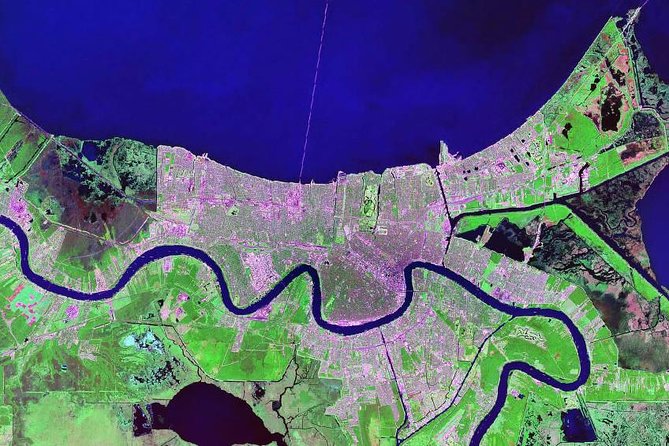
The walk begins with introductions before moving toward the Mississippi River. This opening is more useful than it may sound. New Orleans was built beside a powerful river on low, wet ground, and the city’s growth depended on controlling water. Your guide explains how levees helped turn swampy land into farmland and buildable ground.
At the riverfront, you may see paddlewheel steamboats moving along the water. The boats make an attractive backdrop, but the real value is the explanation of why the river remains central to New Orleans life. Agriculture, trade, flooding, and city planning all connect here.
The river stop also gives you a geographical anchor. The French Quarter can feel like a maze of similar streets, so learning its position beside the levee helps you understand the city’s shape. The first portion takes about 30 minutes, including the walk from the starting area.
French Market: food, trade, and a quick stop
The route continues through the French Market, described as the oldest open-air market in the United States. The tour does not include food or drinks, and you should not expect a long tasting session. Instead, you pass through the stalls while hearing about the market’s role in local commerce.
The site is linked to a story of Native American bartering, and the guide points out produce, fish, and Creole foods. This is a short stop, listed at about five minutes, so you will get an introduction rather than time to browse every stall.
That brief timing is both a benefit and a limitation. You see the market as part of the Quarter’s daily life, but you may want to return later if you hope to shop or eat. I like the placement here because it keeps the tour moving and connects the river to the neighborhood’s food culture without turning the walk into a food tour.
Jackson Square and the buildings around it
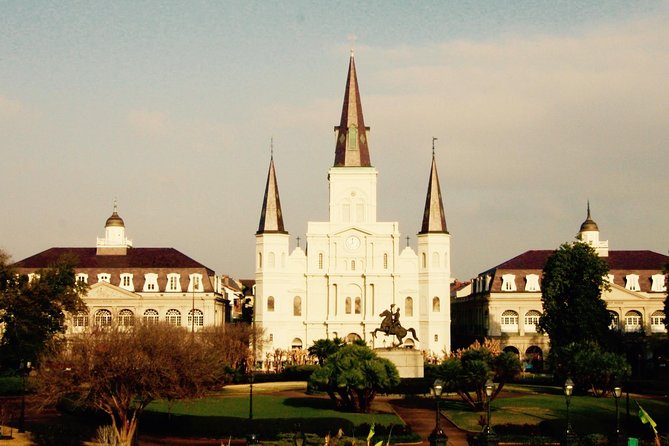
Jackson Square is the visual heart of the route. It occupies the site of the original Place d’Armes and honors Andrew Jackson. The square brings together several of the city’s most recognizable buildings, so it is a natural place for your guide to explain government, religion, architecture, and public life.
You will see the Cabildo, built between 1795 and 1799. It once housed New Orleans government and now serves as the Louisiana State Museum. The neighboring Presbytere was built in 1791 to match the Cabildo and contains permanent exhibits about the city’s resilience and celebration.
The Pontalba Apartments form two sides of Jackson Square. They are identified as the oldest apartment buildings in the United States, and their long red-brick facades help explain the square’s carefully framed appearance. This is a good example of what a walking guide adds. You can photograph the buildings on your own, but you might miss how their arrangement shapes the square.
The tour allows about 15 minutes at Jackson Square and another 15 minutes around the Cabildo. That is enough for a strong overview, though not enough to tour the museums inside. If you want the Cabildo or Presbytere exhibits, plan a separate visit.
More History Walking Tours in the USA
- New Orleans: French Quarter Food History Walking Tour
★ 4.9 · 713 reviews - New Orleans Cocktail History Walking Tour in the French Quarter
★ 5.0 · 604 reviews - New Orleans Jazz History and Music Walking Tour
★ 4.5 · 477 reviews - New Orleans Historic Cemetery Walking Tour
★ 5.0 · 175 reviews
St. Louis Cathedral and the fire that reshaped the Quarter
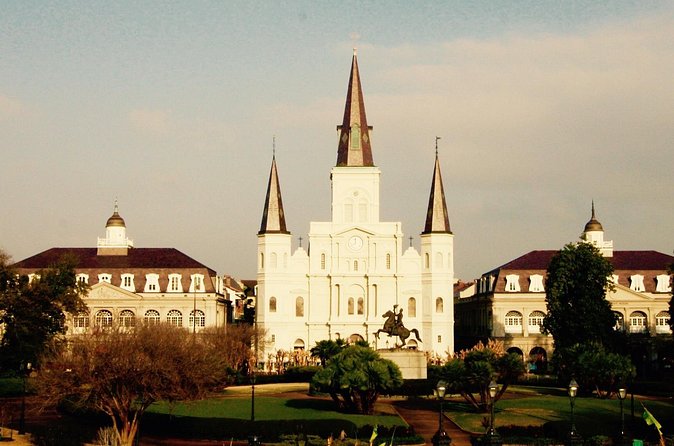
St. Louis Cathedral is one of the tour’s key stops. The guide takes you inside, then explains the Great New Orleans Fire of 1788 and points out where it began. The fire destroyed much of the area, and the rebuilding that followed helped create the architectural style now associated with the French Quarter.
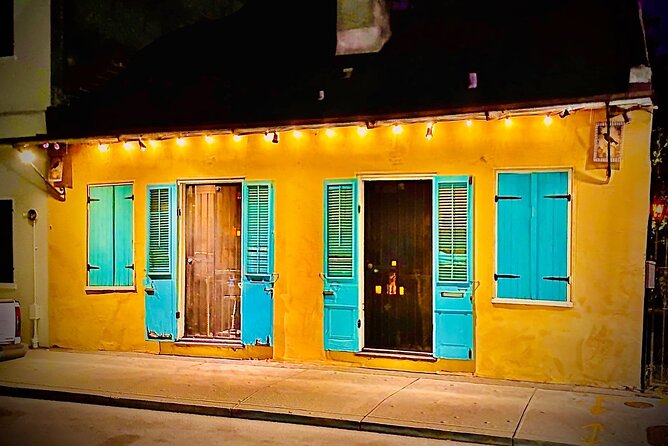
This stop gives the buildings more meaning. Shutters, balconies, courtyards, and stucco facades are not just attractive details. They reflect rebuilding, changing rule, climate, and the city’s effort to recover from disaster.
The cathedral portion lasts about 20 minutes. It is one of the few places where the experience moves indoors, which may be welcome on a hot day. Still, the tour is not a museum visit, and the time inside is structured around the guide’s explanation rather than quiet independent viewing.
Creole courtyards, slavery, and the harder stories

The walk does not present New Orleans as a postcard without stains. In a Creole courtyard, the guide discusses Creole society and slavery in South Louisiana. You also visit the balcony of the former Quadroon Ballroom and learn about Creole mistresses and the system known as placage.
This section matters because the French Quarter’s beauty can make its social history easy to overlook. The buildings were shaped by wealth, labor, race, and unequal power. A useful guide should give you enough context to see the people behind the facades, not only the famous residents and grand architecture.
The subject is serious, and the visit is short, listed at about 10 minutes. That means you receive an introduction rather than a full study of slavery or Creole identity. If those subjects are central to your interests, you may want to seek a tour or museum devoted to them. Still, including them in a general French Quarter walk makes the experience more honest.
Literary landmarks and Pirate’s Alley
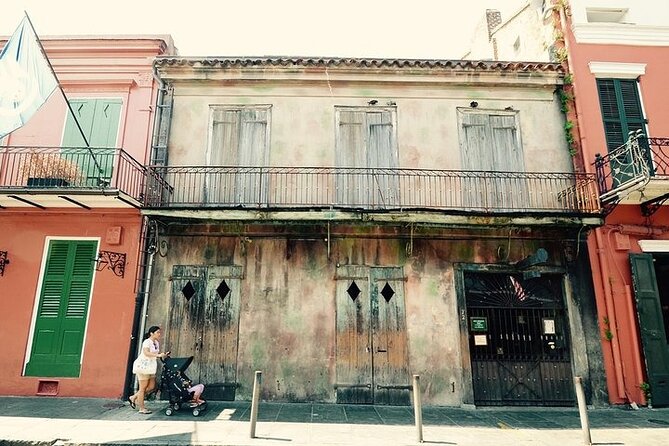
The route adds a literary thread that many general history walks skip. You pass the building associated with Tennessee Williams and A Streetcar Named Desire, enter William Faulkner’s former home, and continue to Pirate’s Alley.
These details give the walk a change of pace. You move from levees and public buildings to writers, theater, legends, and the city’s creative life. The guide also points out film locations, so people interested in books, movies, or architecture get extra reference points along the way.
Pirate’s Alley brings local tales of duels and prison escapes. The name alone invites exaggeration, so a good guide needs to separate documented events from colorful local lore. The tour’s appeal comes from having both: solid civic history and the stories that make a street memorable.
Street musicians may provide a soundtrack as you walk. Music is not a scheduled performance or a guaranteed part of the ticket, but it fits the setting and helps you sense why the Quarter is more than a collection of old buildings. One guide, Davi Higgins, is also described as a musician and comedian who tailored much of his talk to a group’s interest in music.
Old Ursuline Convent and the colonial story
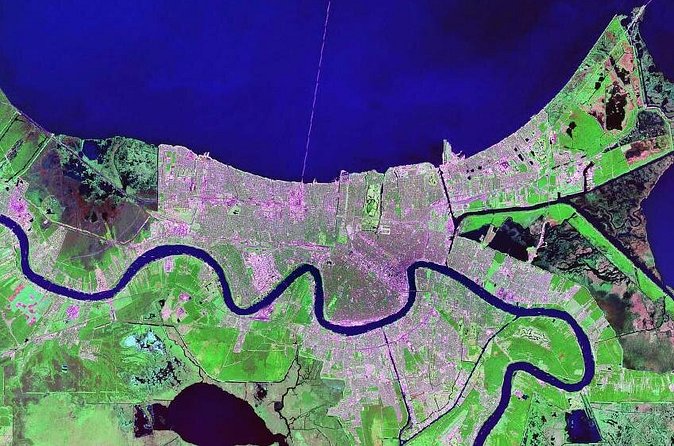
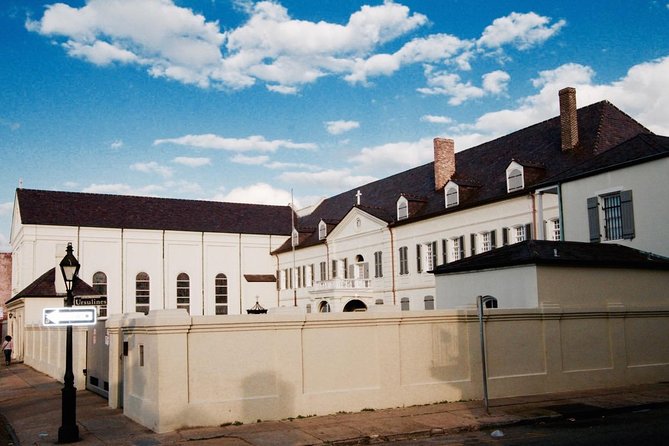
The Old Ursuline Convent is viewed from outside. It is identified as the oldest building in the Mississippi Valley, and its story offers a window onto early colonization and religious work in Louisiana.
The stop lasts about 10 minutes. You will not receive a full museum visit here, but the building helps broaden the tour beyond the usual Jackson Square photographs. It also reinforces a central point of the walk: New Orleans history is not one single French story. It includes Native American exchange, European colonization, Catholic institutions, slavery, Creole society, American government, and commerce on the river.
The convent appears late in the route, when you have enough context to understand why an old religious building matters. It is a quiet counterpoint to the music, market, and public square.
Walking conditions, timing, and guide quality
Plan on about two miles over two hours at a leisurely pace. The route has regular stops, and several people found the rhythm comfortable, but you should still wear supportive shoes. New Orleans weather can make a short walk feel longer, especially when the group is outdoors for most of the time.
Morning and afternoon start times give you useful flexibility. An early start may suit you if you have limited time in the city or want to avoid the busiest part of the day. An afternoon or evening option can fit better with a slow morning, though the tour still requires steady walking.
The guide makes the largest difference. The strongest experiences feature clear speech, humor, local perspective, and a willingness to answer questions. David Roberts is repeatedly praised for his command of New Orleans history, art, architecture, and personal stories. Davi Higgins is praised for his musical background and entertaining style. The exact guide depends on the date, so you should not assume you will receive a particular person.
There have also been problems with meeting communication. Two very low ratings describe people who could not find or identify the guide, while the operator disputed at least one account and said a refund was issued. The practical lesson is simple: arrive early, confirm the address, and make sure you know how the guide will identify the group.
What the $29 price really buys
At $29, this is good value if you want a clear introduction rather than a private or highly specialized tour. You receive two hours with a local guide, a small group, a route through major landmarks, and access to the guide’s local stories. You do not pay extra for the sights viewed along the way, though museum admission, food, and drinks are not included.
The price is less attractive if you already know the French Quarter well or prefer to wander alone with a guidebook. It also does not replace a museum visit or a focused food, music, or architecture tour. Think of it as a strong orientation that helps you choose how to spend the rest of your time.
The overall rating is 4.6 from 288 ratings, with 90 percent recommending the experience. That matches the pattern of the feedback: many very positive experiences, plus a small but important group of complaints about meeting the guide and refund handling. The tour itself is usually praised for its content and pace, while the arrival process deserves your attention.
Who should book this walk?
I would choose this tour if you are visiting New Orleans for the first time, have only one full day, or want history before nightlife and dining. It also suits solo visitors and families because the group is small and the pace is not built around rushing from sight to sight.
History fans should find plenty to enjoy, especially in the sections on the 1788 fire, levees, government buildings, Creole society, and early colonization. Literature and film fans get extra stops through Tennessee Williams, Faulkner, and movie locations. Music lovers may appreciate a guide with a performance background, though music is not the main scheduled activity.
You may want something else if you need a fully accessible route, since the supplied details only say most people can participate and do not spell out accessibility arrangements. You should also look elsewhere if food sampling, museum entry, or a late-night music experience is your main goal.
FAQ
How long is the New Orleans French Quarter walking tour?
The tour lasts approximately two hours and covers about two miles, or 3.2 kilometers, at a leisurely pace.
How much does the tour cost?
The listed price is $29 per person.
How large is the tour group?
The tour has a maximum of nine participants, making it a small-group experience.
Where does the tour meet?
The meeting details list Cafe Beignet at 334 Royal Street in New Orleans. The tour description also refers to Musical Legends Park as the starting place, so check your confirmation for the exact meeting instructions.
Is food included?
No. Food and drinks are not included, although the route passes through the French Market.
What happens if the weather is bad?
The experience requires good weather. If poor weather causes cancellation, you will be offered another date or a full refund. You can also cancel for a full refund if you do so at least 24 hours before the start time.
Should you book it?
Yes, if you want a reasonably priced first look at the French Quarter with a real local guide rather than a recording or a large crowd. The best parts are the small group, the mix of major sights and overlooked details, and the guide-led connections between levees, fire, architecture, slavery, literature, and music.
Book it early in your New Orleans stay, wear comfortable shoes, and arrive ahead of time at the confirmed meeting address. If you do those three things, this walk should give you a useful map of the Quarter and plenty of reasons to keep exploring after the two hours are over.
Just added around New Orleans
- Historic Garden District Walking Tour★ 5.0 · 75 reviews
- Garden District History and Homes Walking Tour★ 4.5 · 100 reviews
- New Orleans French Quarter and Voodoo History Walking Tour★ 5.0 · 151 reviews
- New Orleans Garden District Food & History Tour (10am Everyday)★ 5.0 · 51 reviews
- French Quarter Historical Segway Tour★ 5.0 · 178 reviews
- Small-Group French Quarter History Walking Tour★ 5.0 · 39 reviews
- New Orleans’ Finest Haunted Pub Tour★ 4.5 · 38 reviews
- French Quarter History Tour with Cafe Du Monde★ 4.5 · 121 reviews
History Walking Tours, compared.
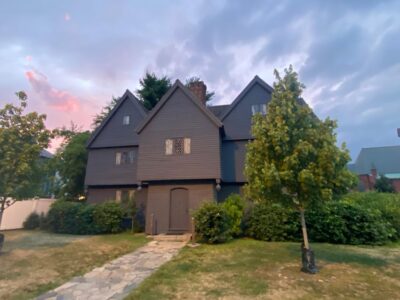
History and Hauntings of Salem Guided Walking Tour
Read our review →
Freedom Trail History Small Group Walking Tour
Read our review →
Historic Charleston Guided Sightseeing Walking Tour
Read our review →
Tapas Walking Tour with Food, Wine, and History
Read our review →
Savannah History and Haunts Candlelit Ghost Walking Tour
Read our review →
A History of Terror – Belfast City Centre Walking Tour
Read our review →Browse the lists this tour appears in