
Review · VIRGINIA
Williamsburg: The Patriots Historical Walking Tour
The Revolution begins on foot. Williamsburg’s Patriots Historical Walking Tour packs the city’s 1770s story into one clear hour, linking the Capitol, Raleigh Tavern, Powder Magazine, Courthouse, Governor’s Palace, and Bruton Parish Church. I like the logical route and the way the guide explains both the Revolution and the later creation of Colonial Williamsburg. I also like the chance to ask questions instead of simply following a memorized speech.
The main drawback is the short running time. You get a strong overview, not a full visit to every building or museum. The tour takes place rain or shine, and summer heat can make the walk tiring, though guide Lonnie Sandifer has been praised for choosing shade and rest stops when needed.
Key points at a glance
- One hour from Capitol to Palace Green: The route follows Duke of Gloucester Street and connects several of Williamsburg’s most important political sites.
- Original and reconstructed buildings: You see the original 18th-century Powder Magazine alongside reconstructed landmarks such as the Capitol and Raleigh Tavern.
- A clear timeline of the 1770s: The tour explains how disputes with royal government pushed Virginians toward rebellion and independence.
- Guide Lonnie Sandifer: Lonnie receives repeated praise for his preparation, humor, patience, and ability to answer questions.
- $25 for a focused introduction: The price is appealing if you want context before choosing which Colonial Williamsburg buildings to visit.
- Wheelchair accessible and weatherproof: The walk operates rain or shine, with free cancellation up to 24 hours before departure.
Why this one-hour walk works so well
Colonial Williamsburg can feel like a large puzzle. You see grand buildings, costumed interpreters, churchyards, taverns, and broad green spaces, but the meaning of each place is not always obvious when you encounter it alone.
This tour gives you the connecting thread. Instead of treating the Capitol, Powder Magazine, courthouse, and Governor’s Palace as separate sights, it shows how power moved through Williamsburg during the years before independence. You hear about elected government, royal authority, weapons, public protest, and the founding of a new nation in the places where those events unfolded.
I especially like the time limit. One hour is long enough to build a useful framework but short enough to fit before or after other Colonial Williamsburg activities. If you have only part of a day, this tour helps you get your bearings quickly.
The rating is 4.8 from 41 reviews, and the praise is unusually consistent. Lonnie Sandifer is repeatedly described as entertaining, considerate, and very well informed. That matters here because the value of a walking tour depends heavily on the guide’s ability to make dates and political arguments understandable while you are standing outdoors.
More History Walking Tours in the USA
- History and Hauntings of Salem Guided Walking Tour
★ 5.0 · 14,564 reviews - Boston: Freedom Trail History Small Group Walking Tour
★ 5.0 · 6,450 reviews - Historic Charleston Guided Sightseeing Walking Tour
★ 5.0 · 6,216 reviews
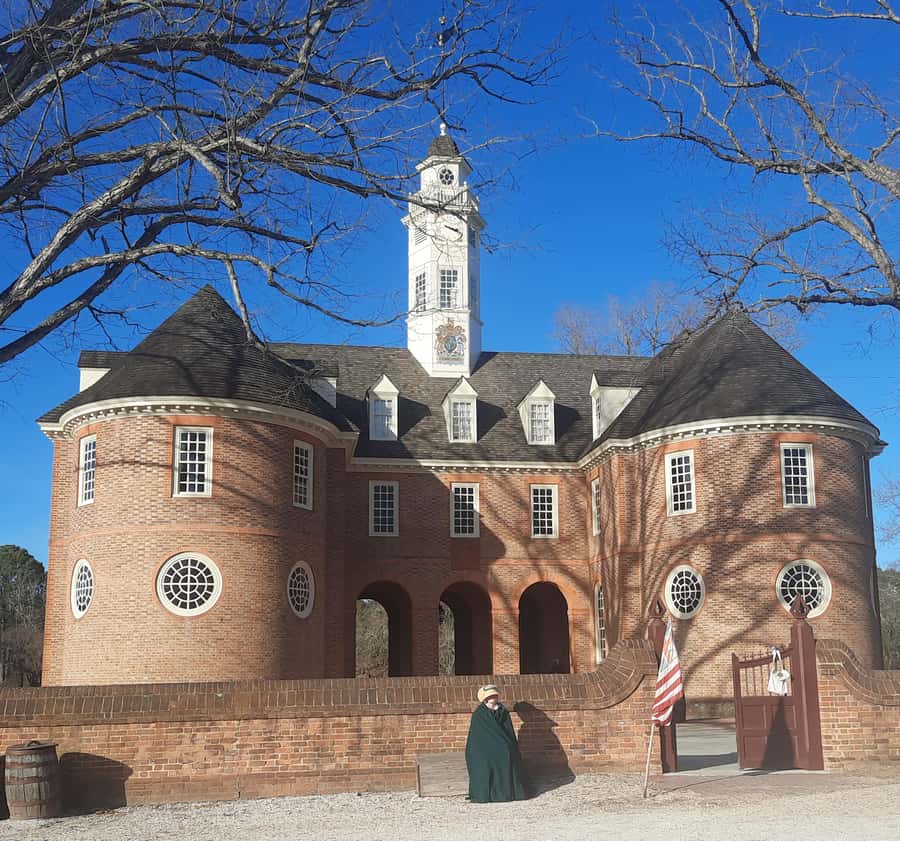
Starting at the reconstructed Capitol
The tour begins at the reconstructed Colonial Capitol Building on East Duke of Gloucester Street. Meet the guide in front of the Capitol’s west entrance gate. The listed coordinates are 37.27148127277172, -76.69388646348916, which is useful if you are using a phone map in the busy historic district.
The Capitol is a fitting starting place because the tour opens with the development of representative government in the colonies. You learn about the creation of the first elected body in the New World and how Colonial Williamsburg itself came into being as a restored and reconstructed historic district.
That second point is easy to miss. Colonial Williamsburg is not simply an untouched colonial town. Some structures are original, others were rebuilt, and the entire visitor experience grew from a major restoration project. A good guide helps you tell those categories apart.
This opening stop also establishes the tour’s approach. The story is not limited to battles and famous names. It looks at political institutions and the arguments that made independence possible. You will hear about the actions and attitudes of the founders, with the events of the 1770s placed in chronological order.
The building itself is reconstructed, so you should not expect every wall you see to date from the Revolution. Its value on this walk is as a setting for the political story and as a way to understand why Williamsburg mattered.
Raleigh Tavern and the private side of rebellion
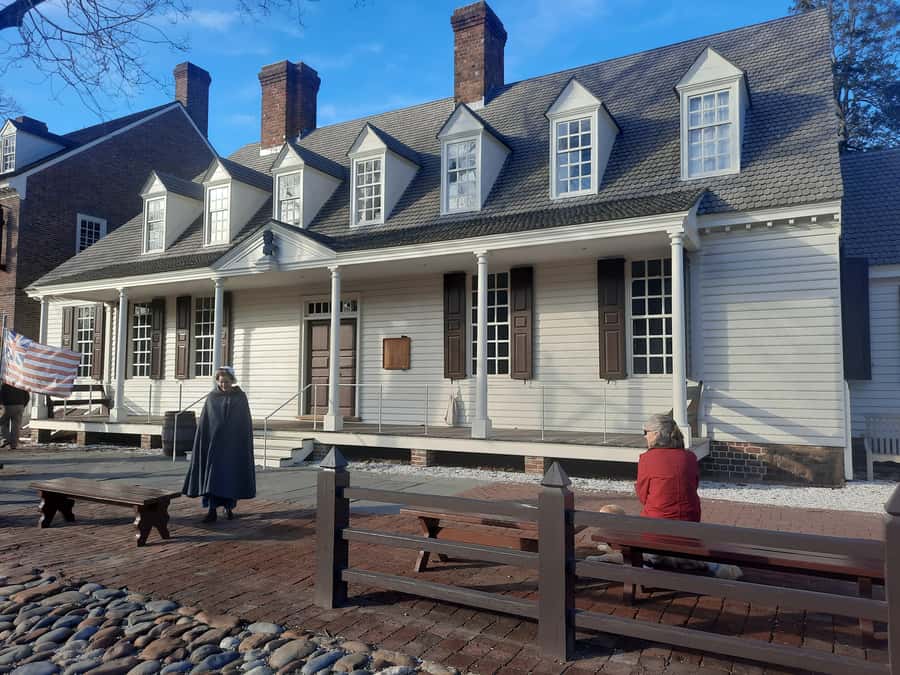
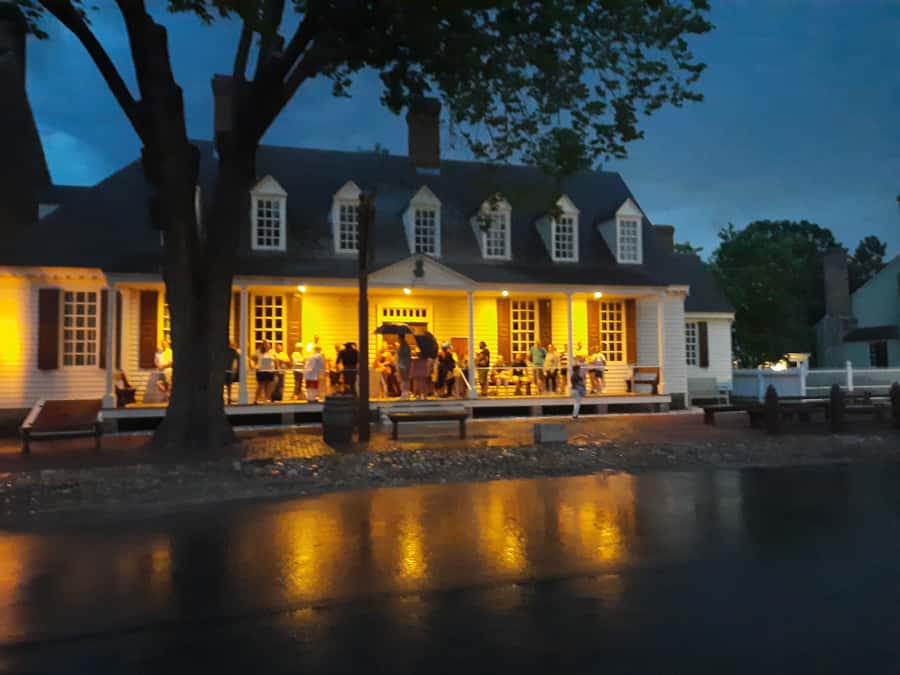
From the Capitol, the walk continues to the reconstructed Raleigh Tavern. In the public story of independence, speeches and declarations get most of the attention. The tavern introduces a more private world of meetings, alliances, subversion, espionage, and political plotting.
That makes it one of the more intriguing stops. Taverns were places where people met, argued, exchanged news, and planned action. You get a sense of how rebellion was shaped not only in official chambers but also through personal networks and discreet conversations.
The building is reconstructed, which is worth keeping in mind. Still, the location helps you picture the social setting in which colonial leaders and political activists worked. The guide’s job is to connect the building’s physical appearance with the less visible activity that gave it importance.
I would pay close attention here if you enjoy the political mechanics of history. This is less about viewing a furnished room and more about understanding how opposition developed before it became open revolution.
The original Powder Magazine and the turn toward rebellion
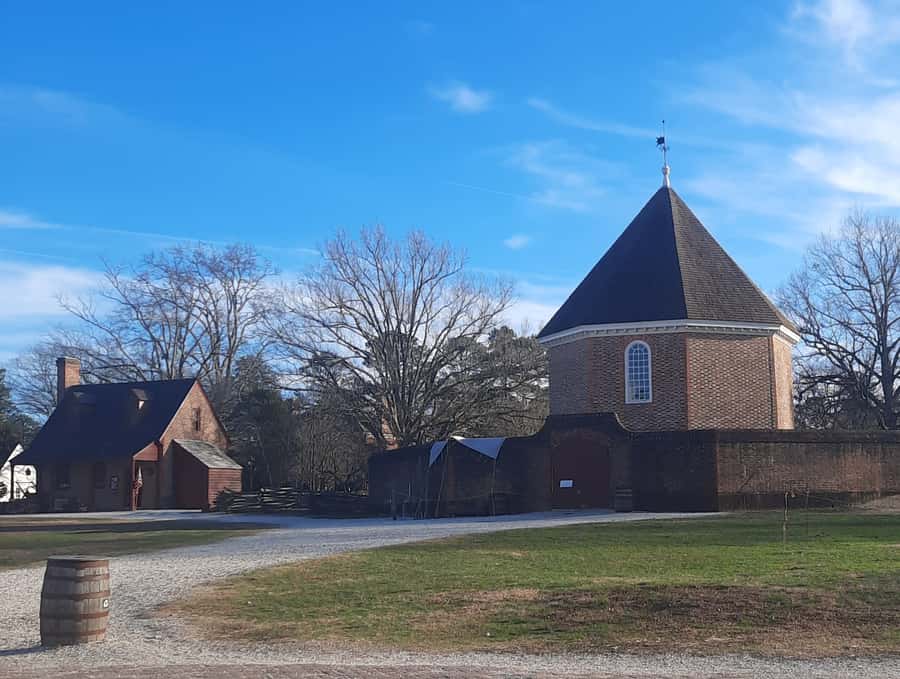
The third main stop is the original 18th-century Powder Magazine. This is one of the tour’s strongest points because the building itself survives from the colonial period.
The Powder Magazine helps explain how concerns over military supplies pushed Virginians toward open resistance. The story here involves government authority, weapons, and public fear. It shows how a dispute that might begin as an administrative decision can quickly become a crisis when people believe their security and rights are at risk.
This stop gives the walking tour a physical anchor. You are not only hearing about the 1770s in a reconstructed political setting. You are standing beside an original structure tied to the tensions that helped move Virginia toward rebellion.
The Powder Magazine is also a good reminder that the Revolution was not inevitable from the start. The tour presents a sequence of decisions and reactions. That timeline makes the political change easier to follow than a loose collection of famous events.
Same place, a different slice of the past:
- Charleston’s Old South Carriage Historic Horse & Carriage Tour
★ 5.0 · 10,023 reviews - Beneath The Streets Underground History Tour
★ 4.5 · 8,006 reviews - Charleston Horse-Drawn Carriage Tour: Explore Historic Charleston
★ 5.0 · 3,561 reviews - Savannah History and Haunts Candlelit Ghost Walking Tour
★ 5.0 · 3,235 reviews
Peyton Randolph House and the courthouse steps
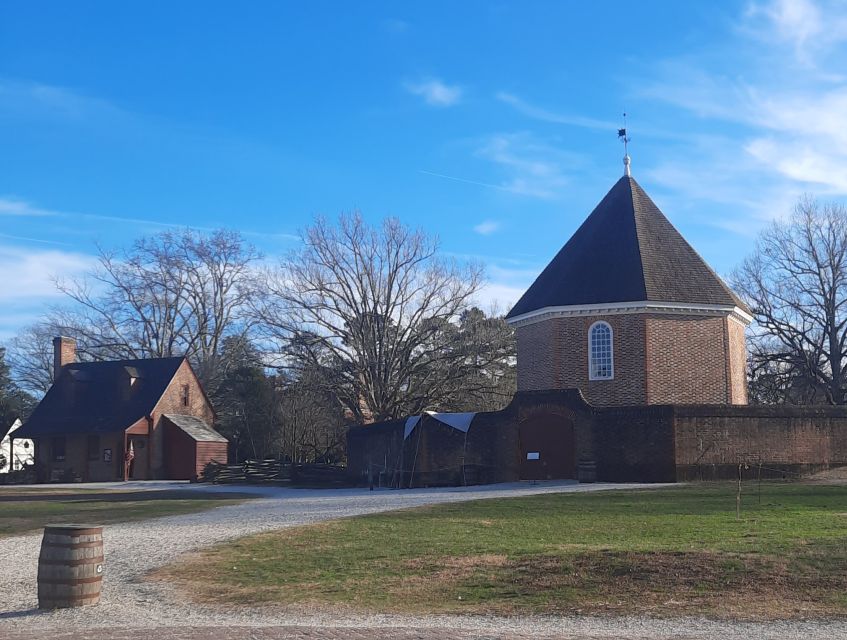
As you continue along Duke of Gloucester Street, you pass the Peyton Randolph House. Peyton Randolph served as president of the First and Second Continental Congresses, so the house links local Williamsburg politics with the wider colonial movement that eventually became a national government.
The building adds a personal scale to the story. Large institutions can feel abstract, while a residence suggests the people who carried political responsibility in the years before and during independence. You do not need a long stop here to understand why Randolph belongs in the story.
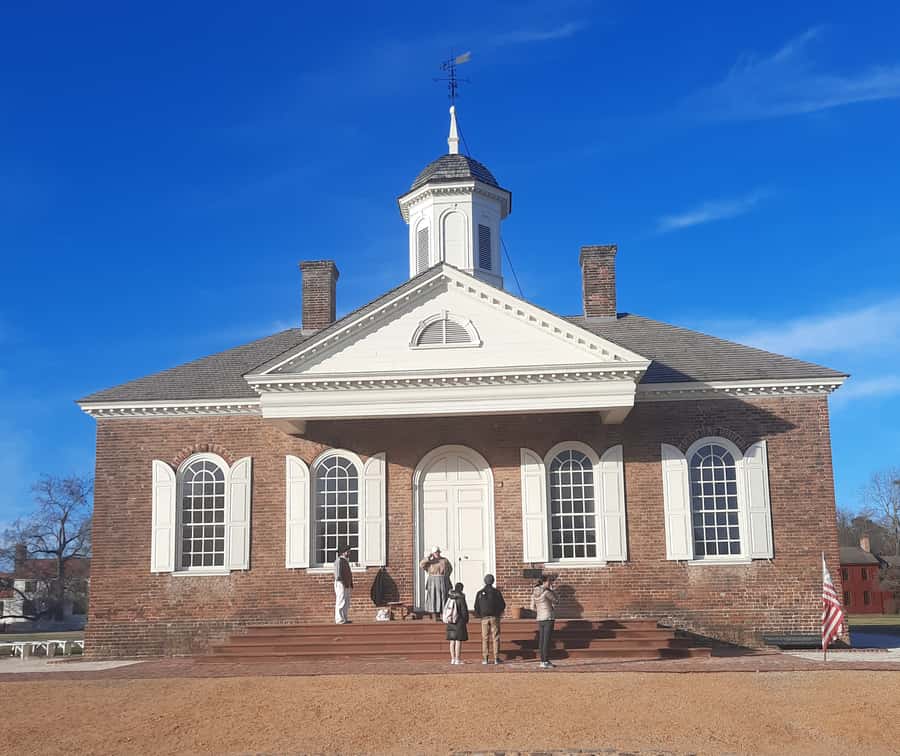
The route also passes the 1770 Colonial Williamsburg Courthouse. Its steps are associated with the reading of the Declaration of Independence to the citizens of Williamsburg. That is a powerful place to pause because it connects a major national document with a public audience in a real town setting.
You should not expect a long interior visit at every stop. The tour is designed around outdoor explanations and a moving route. That is part of the reason it fits into one hour, but it also means you will want a separate ticket or visit if you hope to spend extended time inside the historic buildings.
Palace Green, the Governor’s Palace, and Bruton Parish Church
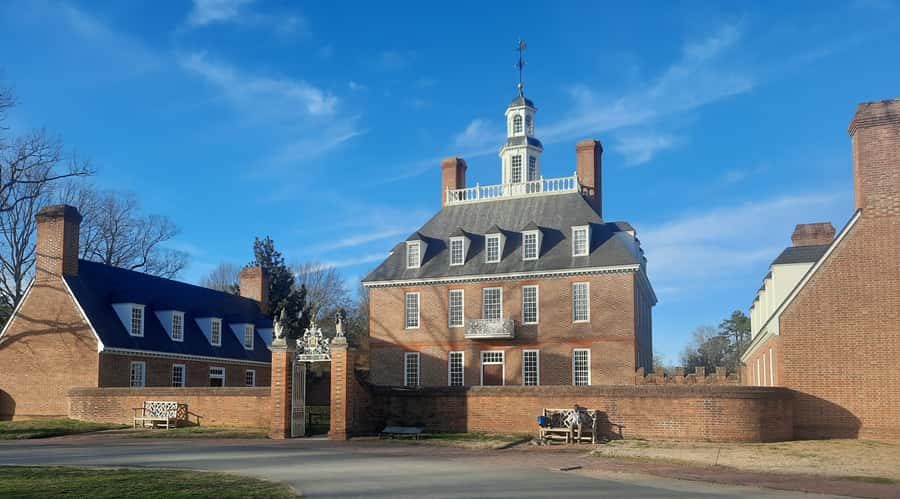
The walk concludes on Palace Green, between the reconstructed Governor’s Palace and historic Bruton Parish Church. This ending brings the story back to the struggle between royal power and colonial resistance.
The Governor’s Palace represents the authority of Virginia’s royal government. The tour explains how the royal governor’s actions helped push Virginians toward rebellion. That gives the final section a useful contrast with the elected government discussed at the Capitol.
Bruton Parish Church supplies a different kind of setting. Many of the founding fathers worshiped there while visiting Williamsburg, and the church remains an important part of the historic area. It is a place where political, civic, and religious life overlap.
The tour ends at the church, which may be open to the public at the church’s discretion. That wording matters. Do not count on a guaranteed church visit as part of the walking tour, but you will be well placed to check it afterward if it is open.
From Bruton Parish, you are only a few blocks from modern shopping and dining areas, as well as the Art Museums of Colonial Williamsburg. The location makes the tour easy to pair with lunch, a museum visit, or additional time in the historic district.
What you get for $25
At $25 per person, this is a focused orientation rather than a full Colonial Williamsburg admission package. The included service is a one-hour walking discussion of the historic events connected with the area. Building admissions, parking, and transportation to the historic district are not included.
I see the price as good value for three types of visitors. First, it suits anyone making a short visit who wants the main Revolutionary story without spending several days choosing buildings and waiting for scheduled access. Second, it works well for families who need a compact introduction before deciding what deserves more time. Third, it is useful for repeat visitors who want political context they may have missed on earlier house tours.
One review specifically considered the walk a better deal than purchasing a Colonial Williamsburg day pass. That comparison will depend on your plans. If you want entry to multiple buildings, demonstrations, and museums, a larger admission may suit you better. If you mainly want a clear explanation of the key sites, $25 keeps your cost lower and your schedule simpler.
The tour does not replace time inside the historic buildings. It helps you choose that time wisely.
The guide makes the difference
The strongest praise is directed at Lonnie Sandifer. He is described as passionate, funny, considerate, and able to explain both historic Williamsburg and the story behind its reconstruction.
That combination is important. A guide who knows only the colonial dates can leave you confused about what is original and what was rebuilt. A guide who talks only about restoration can lose the political story. Lonnie’s appeal seems to come from handling both sides.
Questions are encouraged throughout the walk. Use that opportunity. If you want more detail on the founders, the restoration of Colonial Williamsburg, daily life in the 18th century, or the route’s buildings, ask while the subject is in front of you.
The tour has also worked well for mixed groups. One group included long-time Virginia residents, newer residents, and people from Germany, with everyone finding useful material in the presentation. That suggests the information is not limited to local experts.
The guide has also adjusted the pace for conditions. During a very hot visit, Lonnie was praised for using shade and rest stops. That is helpful, but you should still bring water, wear comfortable shoes, and dress for the forecast.
Heat, rain, access, and practical planning
The tour lasts one hour and takes place rain or shine. Williamsburg weather can change your comfort level quickly, so check the forecast before you arrive. In hot weather, the walk may feel more demanding than its length suggests. In wet weather, the tour still operates, so bring suitable rain gear rather than assuming it will be canceled.
The tour is wheelchair accessible. Since the experience takes place outdoors along the historic area, you may still want to confirm the meeting point and route details when booking if your mobility needs are specific.
Parking is not included, and transportation to and from Colonial Williamsburg is your responsibility. Plan extra time to reach the Capitol west entrance gate. Arriving early is sensible because the guide will be waiting at a precise meeting point rather than collecting people from several locations.
Starting times vary, so check availability for the date you want. The reservation system allows you to reserve now and pay later, which helps if your Williamsburg schedule is still taking shape. You can also cancel up to 24 hours in advance for a full refund.
Who should book this walk
I would choose this tour if you want a compact, guided introduction to Williamsburg’s role in the Revolution. It is especially well suited to first-time visitors, families with older children, history-minded adults, and anyone who prefers a clear story over a long list of disconnected facts.
It also suits people who have limited time. In one hour, you move from elected government to political plotting, military tension, public declarations, royal authority, and religious life. That is a lot of ground, both physically and historically.
You may want something else if your main goal is extended access to interiors, costumed demonstrations, or a full day of Colonial Williamsburg programming. This walk is an overview, and its strength is the explanation rather than the number of rooms you enter.
Should you book the Patriots Historical Walking Tour?
Book it if you want to understand what you are seeing before spending the rest of your day in Colonial Williamsburg. The route is efficient, the price is modest, and Lonnie Sandifer’s patient, engaging style has made a strong impression on many people.
I would book it early in your visit, then use the final stop at Bruton Parish and Palace Green as a springboard for further exploring. Just remember the limits: it is only one hour, the buildings are not all original, admissions are separate, and the walk runs in poor weather.
For a focused introduction to the people, places, and arguments behind the American Revolution, this is a practical choice.
FAQ
How long is the Patriots Historical Walking Tour?
The tour lasts one hour.
How much does the tour cost?
The price is $25 per person.
Where does the tour begin?
The guide meets you in front of the Capitol west entrance gate on East Duke of Gloucester Street in Williamsburg, Virginia.
Where does the tour end?
The tour ends on Palace Green between the reconstructed Governor’s Palace and Bruton Parish Church.
Is the tour offered in English?
Yes. The live tour guide speaks English.
Is the walking tour wheelchair accessible?
Yes, the activity is listed as wheelchair accessible.
Does the tour operate in bad weather?
Yes. The tour takes place rain or shine.
Are parking and transportation included?
No. Parking and transportation to and from the area are not included.
Can I cancel or pay later?
You can reserve now and pay later. Cancellation up to 24 hours in advance qualifies for a full refund.
Just added around the USA
- Austin: Downtown History Walking Tour★ 4.9 · 123 reviews
- The History and Architecture of Downtown Los Angeles★ 5.0 · 66 reviews
- St.Augustine History Tour on Premium Golf Cart with PiCk Up★ 4.9 · 18 reviews
- Saint Augustine: Bourbon History and Tasting Experience★ 4.9 · 45 reviews
- St. Augustine: Guided History Walking Tour★ 4.9 · 70 reviews
- St. Augustine: Dolphin and Wildlife Historical Boat Tour★ 4.9 · 37 reviews
- Soul of Harlem: Strivers Row, Apollo Theatre, Gospel History★ 4.6 · 87 reviews
- Smithsonian Natural History + Air & Space Museum Tour 8ppl★ 5.0 · 17 reviews
History Walking Tours, compared.
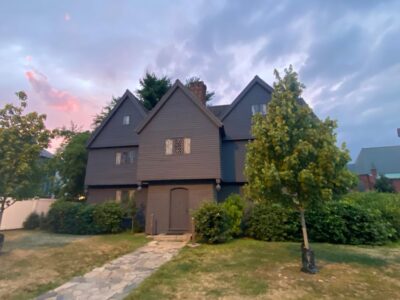
History and Hauntings of Salem Guided Walking Tour
Read our review →
Freedom Trail History Small Group Walking Tour
Read our review →
Historic Charleston Guided Sightseeing Walking Tour
Read our review →
Tapas Walking Tour with Food, Wine, and History
Read our review →
Savannah History and Haunts Candlelit Ghost Walking Tour
Read our review →
A History of Terror – Belfast City Centre Walking Tour
Read our review →Browse the lists this tour appears in