

Review · UNITED STATES
Smithsonian Natural History + Air & Space Museum Tour 8ppl
Two Smithsonian icons, one well-planned day. This five-and-a-half-hour tour links the Natural History Museum with the Air and Space Museum, giving you a guide to sort the essential exhibits from the thousands of objects competing for your attention. I like the personal feel of groups capped at eight and the way the schedule gives each museum about two and a half hours. The main consideration is pace: with so much to see, you will cover highlights rather than every gallery.
I also like the human touch from guides such as Amanda, Tim, Brenda, Leigh, and Richard, who have been praised for clear storytelling, sensible exhibit choices, and keeping the group moving without making anyone feel rushed. The break between museums is useful, but food and drinks are not included, and the Air and Space Museum is still undergoing renovation, so the exact mix of open galleries can change.
Five things to know before you book
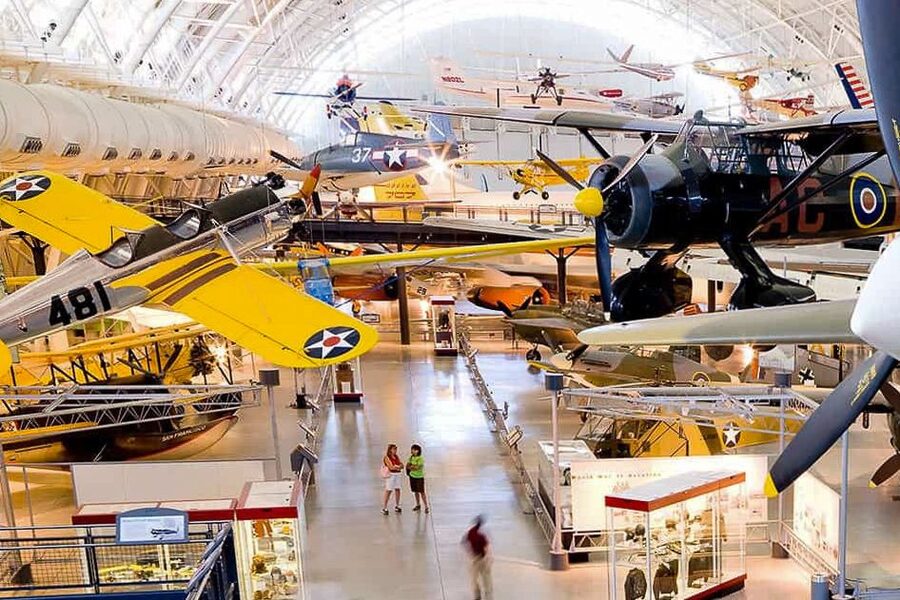
- Two major museums in 330 minutes: You get about 2.5 hours in each institution, with time to cross the National Mall between them.
- The group never exceeds eight people: This is small enough for questions and close contact with your guide.
- Henry the elephant greets you first: The Natural History visit starts with one of the museum’s most memorable sights.
- The 1903 Wright Flyer and Apollo 11 Command Module are key stops: These objects give the Air and Space visit its emotional center.
- Guide quality matters here: Amanda, Tim, Brenda, Leigh, and Richard have been praised for stories, chronology, and smooth pacing.
- Pack light: Security allows handbags and small thin backpacks, but not luggage or large bags.
Why this two-museum plan works
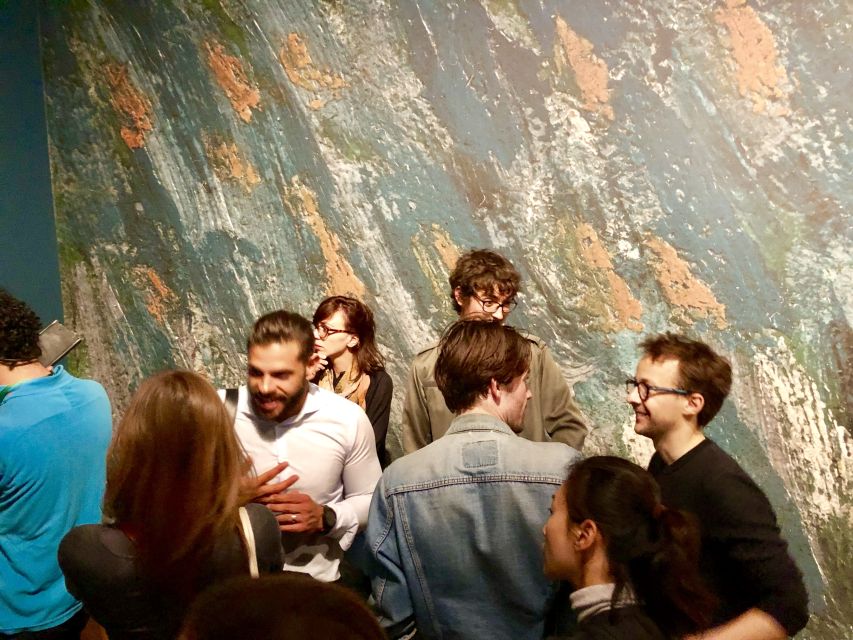
Washington’s Smithsonian museums are free to enter, which can make a $174 tour price seem steep at first glance. You are not paying for admission so much as paying for structure, navigation, interpretation, and a small group. That matters in museums where it is easy to wander past a major object without understanding why it matters.
I see the strongest value for first-time visitors, families who want a clear route, and anyone with only a short stay in Washington. A guide can put the exhibits in order, explain the connections, and help you avoid spending forty minutes on one room while missing the museum’s major treasures.
The format also suits people who enjoy asking questions. A maximum of eight participants is far more personal than a large coach group. You can hear the guide, stop for clarification, and stay close enough to follow the story.
Still, this is not a slow museum day. The two-and-a-half-hour sessions are generous enough for a well-chosen tour, but not for every display. If you prefer to read every label or linger at one collection, you may want to return to one museum on your own.
More Museum and Gallery History Tours in the USA
- Guided African American History Tour with Reserved Museum Entry
★ 4.5 · 1,180 reviews - Chicago: Field Museum of Natural History Ticket or VIP Tour
★ 4.7 · 717 reviews - Field Museum of Natural History Admission Tickets
★ 4.5 · 489 reviews
Starting at the Natural History Museum with Henry
Meet your guide on the large stairs at the Madison Drive NW entrance of the Natural History Museum, facing the lawn of the National Mall. This is a clear location, but give yourself enough time to find the right entrance and pass through security.
The opening sight is Henry, the museum’s large taxidermied elephant. He is a fitting welcome to a building filled with animals, minerals, fossils, insects, and evidence of the planet’s long story. Starting here also gives the tour a simple theme: you are about to move from the familiar world of animals and stones into much older and stranger chapters of nature.
The Natural History Museum is huge, and a guide is especially useful at the start. You can expect a selected route through major collections rather than a room-by-room march. The goal is to make sense of the objects, not just count them.
The Hope Diamond and the museum’s famous stones
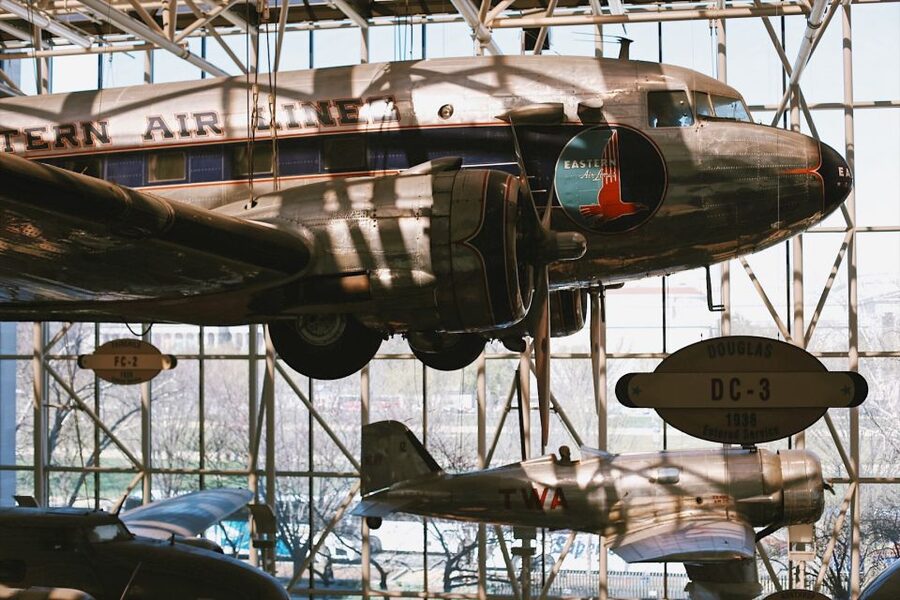
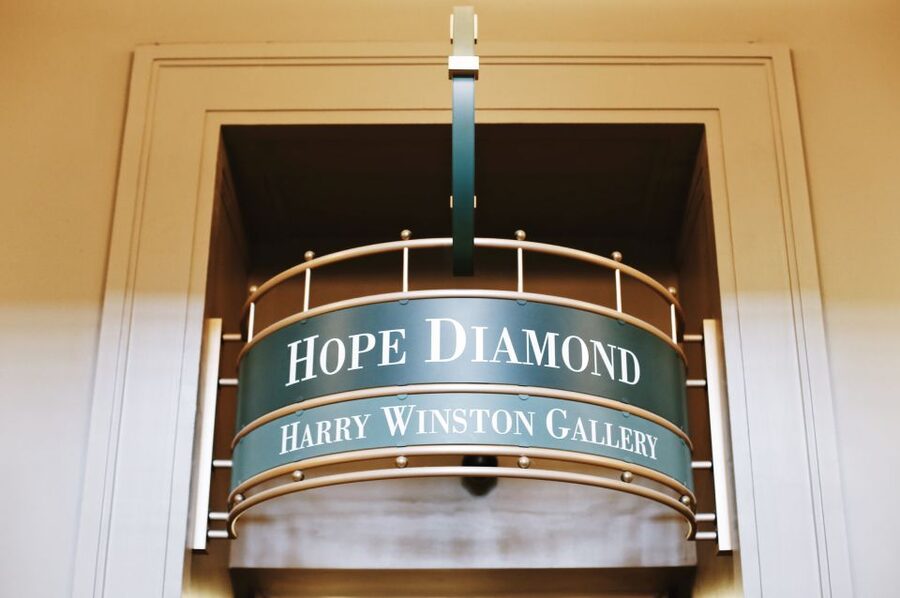
The Hope Diamond is one of the museum’s best-known objects. Its fame comes not only from its color and size, but also from the story that it is cursed. The tour presents this famous stone as part of the museum’s wider look at minerals, gems, and the way people attach stories to natural objects.
I like this stop because it works on two levels. You see a striking artifact, but you also get a reminder that museums are about human fascination as much as scientific facts. The diamond has a strong pull for children and adults alike, and it gives the guide an easy opening for questions about geology, value, superstition, and display.
Do not expect every mineral case to receive equal attention. The guide has to keep the route moving, so this is a highlights visit. If a particular stone collection matters greatly to you, note the room and return after the guided portion if time allows.
Fossils, mastodons, and T. rex
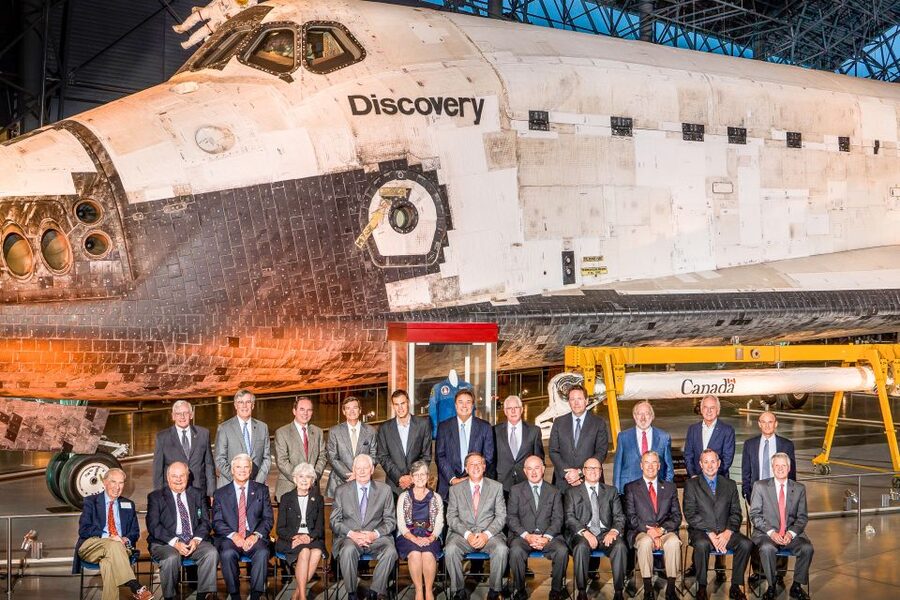
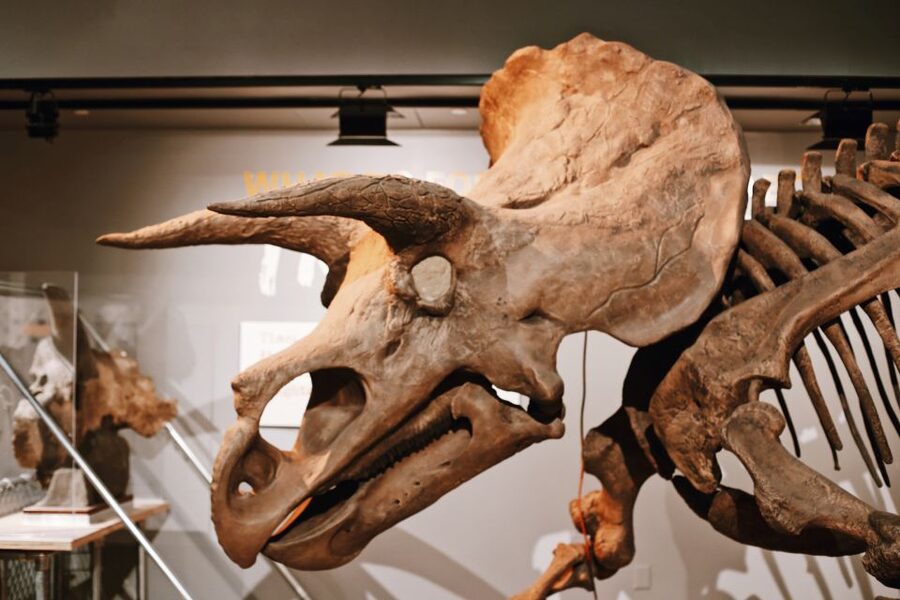
The renovated Fossil Hall is another major reason to book this tour. Mastodon, T. rex, and Diplodocus appear along the route, giving you a sense of scale that a textbook cannot provide. These specimens turn a long timeline into something you can see above and beside you.
The guide’s role is important here. Fossil halls can become a blur of names and dates, especially for younger visitors. A strong guide gives the animals a place in a sequence and explains why one specimen matters before moving to the next.
The tour description also points to stones, bones, and bugs, so you should expect variety rather than a single fossil-only visit. That mix makes the museum appealing to families with different interests. One person can focus on dinosaurs, another on insects, and another on gems.
The tradeoff is that the museum can feel full of competing attractions. Your guide will select the major sights, but you will not have time to inspect every case. I suggest asking at the start how much freedom you will have to pause, then saving one or two favorite rooms for the end of the session if the schedule allows.
Same place, a different slice of the past:
- History and Hauntings of Salem Guided Walking Tour
★ 5.0 · 14,564 reviews - Charleston’s Old South Carriage Historic Horse & Carriage Tour
★ 5.0 · 10,023 reviews - Beneath The Streets Underground History Tour
★ 4.5 · 8,006 reviews - Boston: Freedom Trail History Small Group Walking Tour
★ 5.0 · 6,450 reviews
Crossing the National Mall for Air and Space
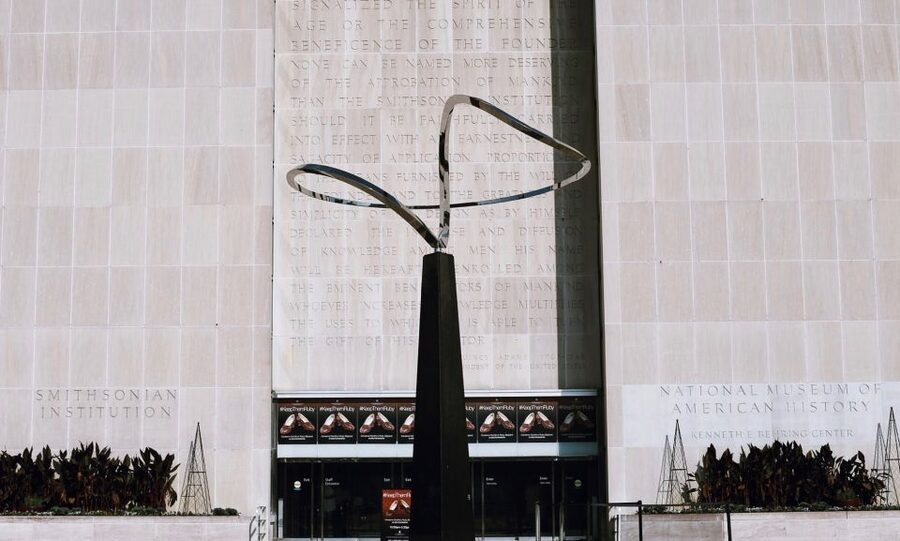
After the Natural History portion, you cross the National Mall to the Smithsonian Air and Space Museum. This is not a bus transfer or a hidden corridor. It is a walk outdoors, so wear comfortable shoes and dress for the weather.
The break between museums gives your mind a rest after the first two-and-a-half hours. Since food and drinks are not included, this is also the natural time to recharge on your own. Keep the break practical, because the second guided session is another full museum visit.
The Air and Space Museum is undergoing renovation, so some galleries may be closed or changed. That is the largest uncertainty in the itinerary. The museum management can also close either institution without warning. If an opening is delayed by more than an hour, an alternative is provided, but the supplier does not offer refunds or discounts for these changes.
The Wright Brothers and the 1903 Flyer

The Air and Space tour begins with the Wright Brothers, a family from Ohio who solved a problem that had challenged inventors for years. The original 1903 Wright Flyer receives its own exhibition gallery, making it the natural starting point for the story of powered flight.
The strength of this section is its scale. The Flyer is not a sleek modern machine. It looks fragile compared with what aviation became, which makes the achievement easier to appreciate. Your guide can connect the machine to the risks of early flight and the practical problems the brothers had to solve.
The route then moves toward the first military flyer from 1909, also a Wright Brothers creation, and into the period when aviation began setting records and carrying passengers. This chronological order has been praised by visitors who found it easier to follow than a scattered tour.
I especially like that the story is not only about machines. It is also about trust. Early pilots had to place their lives in technology that was still new and uncertain. That human risk gives the galleries weight beyond their engineering details.
From commercial aviation to the Apollo 11 Command Module
The aviation section leads into the broader story of flight and then into space exploration. The tone changes from daring early pilots to machines built for an environment that does not support human life.
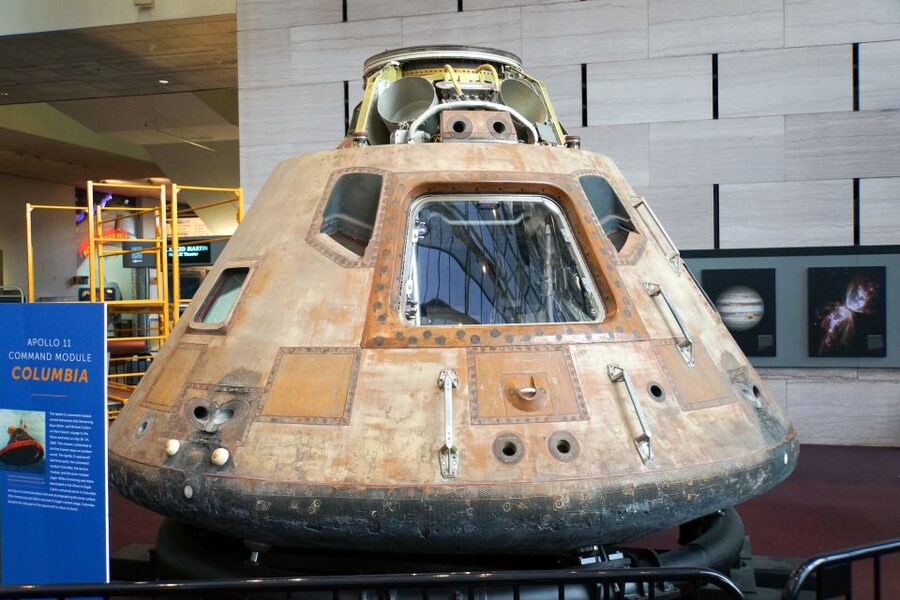
The Apollo 11 Command Module is one of the essential sights. Seeing an actual spacecraft used in the first moon landing gives the space section a direct physical focus. The Wright Flyer shows the beginning of powered flight, while Apollo 11 shows how far that first leap eventually reached.
This part of the museum can appeal to people who are not aviation enthusiasts. The objects are tied to risk, exploration, engineering, and imagination. You do not need a technical background to understand the basic question behind the exhibits: how did people build machines that could carry humans into the unknown and bring them home?
The tour also includes references to the Starship Enterprise and the Star Wars X-Wing. These fictional craft show how science fiction can inspire real scientists and technology. It is a useful closing idea because the museum is not only about what has already happened. It is also about the ideas that push people to attempt what seems impossible.
How the guides shape the experience
This tour depends heavily on the guide, and the feedback is unusually consistent on that point. Amanda has been praised for strong stories, answering a wide range of questions, and keeping the group moving without making anyone feel hurried. Tim has received praise for handling both museums with ease and selecting useful information.
Brenda has been appreciated for detailed explanations, historical context, and good exhibit choices. Leigh has been praised for giving real insight into the collections during a roughly four-hour museum visit. Richard has been remembered for strong stories and a clear command of the material.
Those details tell you what to expect from a good day: not a memorized list of labels, but a route with a beginning, middle, and end. The guide’s job is to decide what deserves your attention and explain why.
The score is five out of five from 17 ratings, which suggests strong satisfaction, though the total number is still small. I would treat the guide names as evidence of a consistently praised style, not as a guarantee that every tour will feel identical.
Price, group size, and practical value
At $174 per person, this is a premium museum visit. Because the Smithsonian museums generally do not charge standard admission, you should book it for the guide and the time saved, not for entry tickets.
The price makes the most sense if you value:
- A fixed route through two enormous museums
- A small group of no more than eight people
- Live explanations in English
- Help identifying the major objects
- A private option if you want a more personal experience
A private tour will usually make the most sense for families or groups with a shared pace and particular interests. The small-group option offers a similar advantage at a lower overall cost, but semi-private tours require at least two participants. If that minimum is not reached, an alternative date or refund is offered.
Bring valid photo identification. Large bags and luggage are not allowed, and security accepts only handbags or small thin backpacks. Appropriate dress is required for entry to some sites, and certain rooms may require quiet or limited speaking. Your guide will explain those rules before you enter.
Wheelchair tours are available by request only, so arrange that before the day of the visit rather than assuming it will be handled at the meeting point.
Who should book this Smithsonian tour?
I would recommend it to first-time Washington visitors, families, and people who want an organized introduction to the Smithsonian. It also suits anyone who has trouble choosing between the many museum galleries and would rather let an expert make the first cut.
The tour is less suited to repeat visitors who already know both museums and want hours of independent browsing. It may also frustrate anyone who dislikes a schedule or wants to linger at every fossil, aircraft, or spacecraft.
Book this tour if you want two major museums explained in a clear order, with a small group and plenty of room for questions. Skip it if your main goal is saving money or exploring at your own slow pace. At $174, the value lies in interpretation and planning. For a first Smithsonian day, that can be worth far more than wandering in circles beneath Henry’s watchful eye.
FAQ
How long does the tour last?
The total duration is 330 minutes, or five and a half hours. It includes a 2.5-hour walking tour of the Natural History Museum and a 2.5-hour walking tour of the Air and Space Museum.
What is the tour price?
The listed price is $174 per person.
Where does the tour begin?
Meet your guide on the large stairs at the Madison Drive NW entrance of the Natural History Museum, facing the National Mall lawn.
Which museums are included?
The tour includes the Smithsonian National Museum of Natural History and the Smithsonian National Air and Space Museum.
How many people can join the tour?
Each tour allows no more than eight people. Private and small-group options are available.
Is the tour available in English?
Yes. The listed live tour language is English.
What major objects will I see?
The route includes Henry the elephant, the Hope Diamond, highlights of the Fossil Hall, the 1903 Wright Brothers Flyer, and the Apollo 11 Command Module. It also includes aviation and space exhibits connected with the Wright Brothers, Starship Enterprise, and Star Wars X-Wing.
Can I bring luggage?
No. Luggage and large bags are not allowed. Only handbags or small thin backpacks are permitted through security.
Do I need photo identification?
Yes. Bring a valid passport or photo ID card.
What happens if a museum closes unexpectedly?
The Natural History Museum or Air and Space Museum may occasionally close without warning. If the opening is delayed by more than one hour from the tour start, an appropriate alternative is provided. The supplier does not provide refunds or discounts for these museum-related changes.
Just added around the USA
- Williamsburg: The Patriots Historical Walking Tour★ 4.8 · 41 reviews
- Austin: Downtown History Walking Tour★ 4.9 · 123 reviews
- The History and Architecture of Downtown Los Angeles★ 5.0 · 66 reviews
- St.Augustine History Tour on Premium Golf Cart with PiCk Up★ 4.9 · 18 reviews
- Saint Augustine: Bourbon History and Tasting Experience★ 4.9 · 45 reviews
- St. Augustine: Guided History Walking Tour★ 4.9 · 70 reviews
- St. Augustine: Dolphin and Wildlife Historical Boat Tour★ 4.9 · 37 reviews
- Soul of Harlem: Strivers Row, Apollo Theatre, Gospel History★ 4.6 · 87 reviews
Museum & Gallery History Tours, compared.
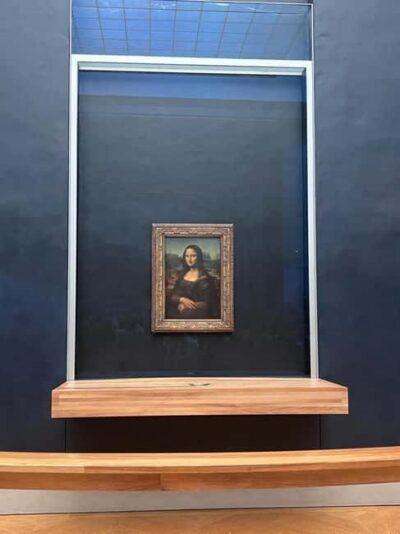
Louvre Museum Entry with History of Mona Lisa
Read our review →
Venice’s Best: Basilica, Doge’s Palace, Gondola & History Gallery
Read our review →
Guided African American History Tour with Reserved Museum Entry
Read our review →
POLIN Museum of the History of Polish Jews Ticket
Read our review →
Bell Tower & St Mark’s Square History Gallery Ticket
Read our review →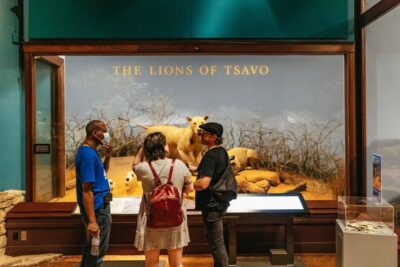
Field Museum of Natural History Ticket or VIP Tour
Read our review →
Madrid in a Day Tour:Royal Palace, Historic Center & Prado Museum
Read our review →
Basilica, Doge’s Palace, History Gallery & Bell Tower Option
Read our review →Browse the lists this tour appears in