
Review · FLORIDA
St. Augustine: Guided History Walking Tour
Start with the oldest streets in America. This 90-minute walk gives you a useful, story-filled introduction to St. Augustine, moving from the historic district to the harbor and the Castillo de San Marcos. I especially like the small group capped at 10 people and the way the tour connects famous figures, local buildings, and everyday places to the city’s long past. The restaurant and bar advice from guides such as Alex, Amy, Russ, and Steven is another real plus.
The main drawback is simple: this is an outdoor walking tour, so Florida heat, rain, or strong sun can affect your comfort. You will also see the Castillo from outside rather than take a full fort tour during these 90 minutes. Still, for $33, it is a sensible first activity if you want to understand St. Augustine before exploring it on your own.
Key points at a glance

- A 460-year story in 90 minutes: The tour links Spanish, British, and American chapters of St. Augustine’s past.
- Castillo de San Marcos views: You will stand near the oldest masonry fort in the United States and learn why its location mattered.
- Five flags, one strategic city: The guide explains the different powers that shaped the Castillo and St. Augustine.
- A compact group of 10 or fewer: You can hear the guide clearly and ask questions without shouting across a crowd.
- Useful local suggestions: Guides share ideas for restaurants, bars, breweries, museums, music, and later activities.
- A good opening walk: The route helps you get your bearings before spending time inside the fort or visiting other sights.
Why this walk makes sense at the start of your visit
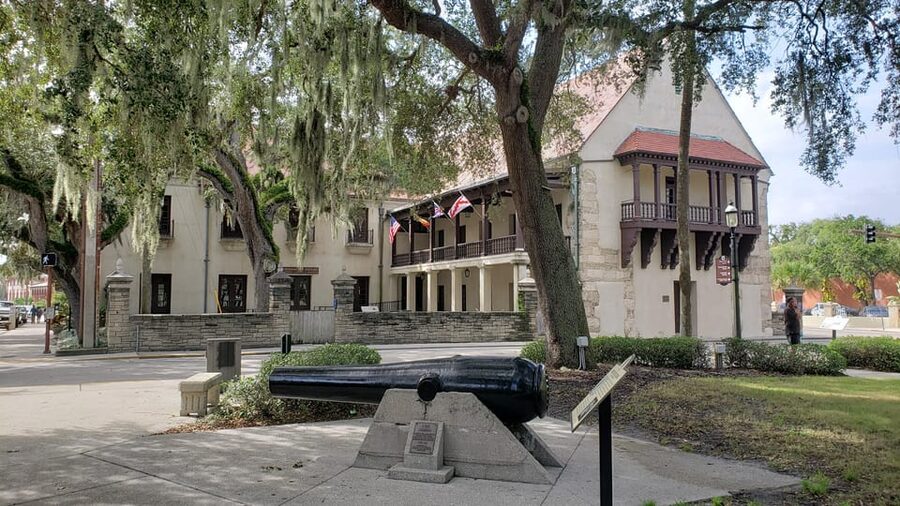
St. Augustine can feel like several cities layered on top of one another. Spanish colonial streets, British-era changes, American expansion, grand Flagler buildings, waterfront views, and civil rights history all occupy a fairly compact area. Without context, you can admire the old facades without seeing how the pieces connect.
That is the job of this tour. It gives you a broad framework first, then points out details you can revisit later. I like this approach because a walking tour is most useful when it helps you make better choices with the rest of your day.
The 90-minute length is also well judged. You get enough time for a substantial introduction without giving up half a day. The pace is described as relaxed, and the strongest feedback repeatedly praises the guides for speaking clearly, keeping a comfortable speed, and making the material easy to follow.
You will not receive food or drinks, so plan this as a sightseeing activity rather than a complete outing. That is no problem, especially since the guides often suggest places to eat and drink afterward.
More History Walking Tours in the USA
- History and Hauntings of Salem Guided Walking Tour
★ 5.0 · 14,564 reviews - Boston: Freedom Trail History Small Group Walking Tour
★ 5.0 · 6,450 reviews - Historic Charleston Guided Sightseeing Walking Tour
★ 5.0 · 6,216 reviews
Meeting at Aviles Street
The meeting point is outside the BART Art Gallery & Wine Bar at 11D Aviles Street, directly across from the Ximenez-Fatio House Museum. This puts you in the middle of the historic district before the walk even begins.
Arrive ready to walk rather than expecting a bus, tram, or seated presentation. Comfortable shoes are important because the route uses city streets and historic areas. Weather-appropriate clothing matters too, particularly in Florida, where a pleasant morning can turn hot and bright.
The small-group format is one of the tour’s strongest practical features. With no more than 10 people, the guide can point out small architectural details and respond to questions. You are less likely to lose the thread of the story than on a large group walk.
The tour is wheelchair accessible, according to the activity details. If you have specific mobility concerns, it is still sensible to confirm current route conditions before booking, since historic streets and changing weather can affect comfort.
Walking through America’s oldest city
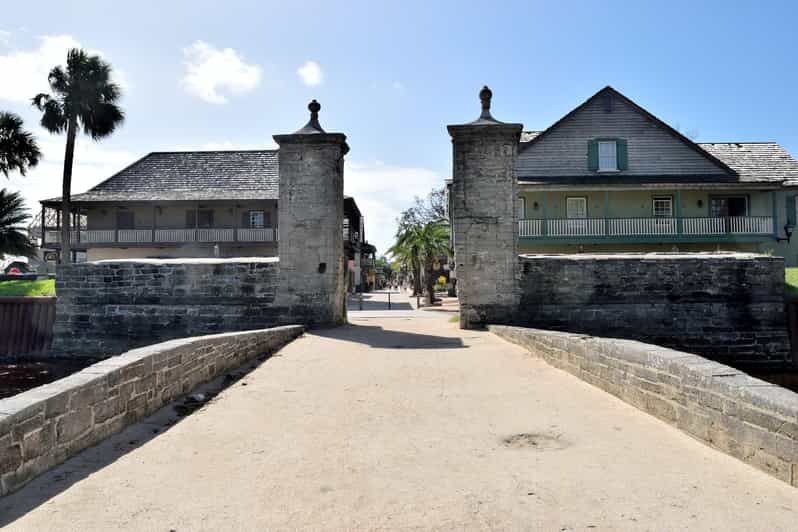
The central story begins with St. Augustine’s age and location. The city’s 460 years are not presented as a string of dates. Instead, the guide explains how different nations used this coastal outpost and how those choices shaped the streets and buildings you see now.
You will hear about early figures including Juan Ponce de León and Pedro Menéndez de Avilés. Their role in the city’s founding and early development gives the opening part of the tour a clear human focus. You are not simply looking at old walls. You are learning who came here, why they came, and what they were trying to protect or build.
The tour also places St. Augustine within a larger American story. It covers the influence of three nations and the changing control of the area over time. That makes the walk useful for first-time visitors who want more than a collection of colorful colonial anecdotes.
One strength of the guides is their ability to make a long timeline manageable. Amy is praised for explaining complicated periods in an easy-to-follow way. Alex is described as funny and engaging while still covering the turbulent parts of the city’s past. Russ is repeatedly noted for his command of local history and for adding information beyond a fixed script.
Harbor views and the Castillo de San Marcos
The waterfront section brings a change of pace. You get harbor views and a sense of why St. Augustine developed where it did. The coastal setting is not just scenery. It helps explain the city’s strategic value and the need for defense.
The Castillo de San Marcos is the major visual anchor. You will see the oldest masonry fort in the United States and learn how it fits into the city’s story. The tour does not include admission for a separate interior visit, so plan to return to the fort later if you want to explore its rooms and upper levels.
That outside perspective is still useful. A guide can explain why the fort mattered before you enter, giving your later visit more meaning. One particularly useful tip is to take the walking tour early in your stay, then use what you learned to understand the fort and other sights on your own.
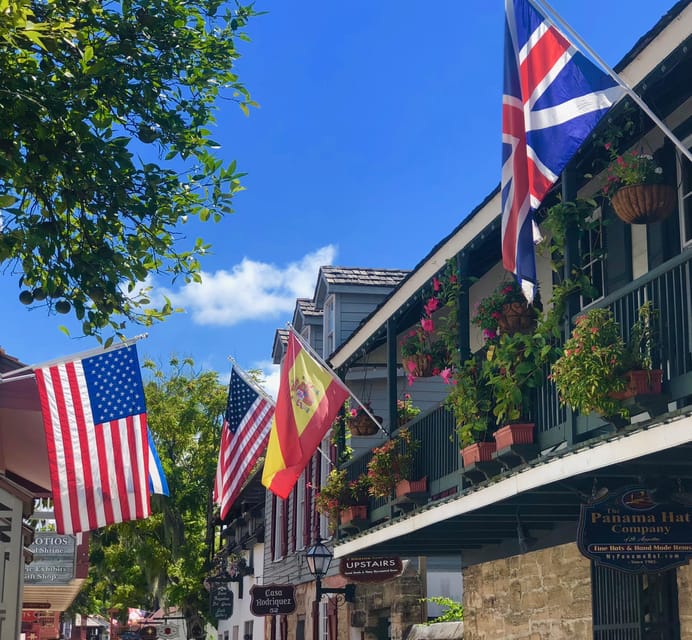
The five flags associated with the Castillo provide another easy way to organize the past. The guide uses them to explain the powers that controlled or influenced the fort and the city across 460 years. It is a simple idea, but it gives you a visual memory aid for a complicated political story.
Same place, a different slice of the past:
- Charleston’s Old South Carriage Historic Horse & Carriage Tour
★ 5.0 · 10,023 reviews - Beneath The Streets Underground History Tour
★ 4.5 · 8,006 reviews - Charleston Horse-Drawn Carriage Tour: Explore Historic Charleston
★ 5.0 · 3,561 reviews - Savannah History and Haunts Candlelit Ghost Walking Tour
★ 5.0 · 3,235 reviews
The oldest grid streets and overlooked details
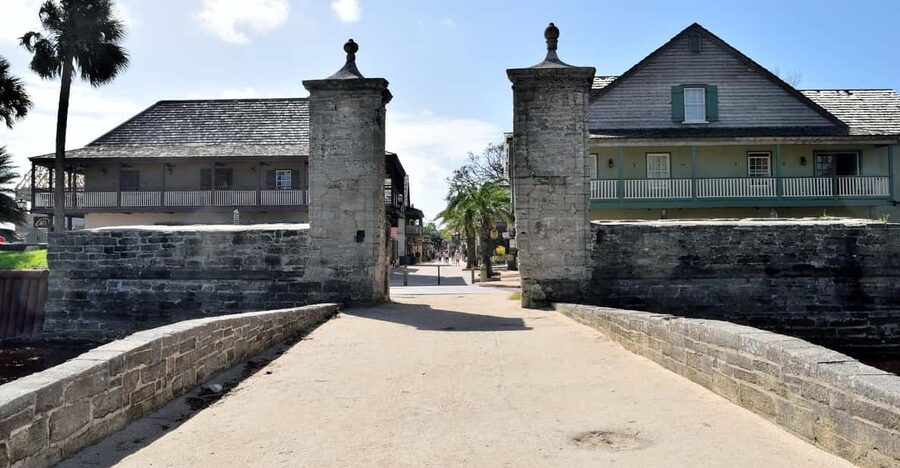
The walk includes the oldest grid street system in the country. That detail may sound technical, but it changes how you see the historic district. The narrow streets, building placement, and intersections become part of a planned town rather than a random collection of old lanes.
This is also where a good guide adds value beyond a printed map. Alex is praised for leading the group to places a casual passerby could easily miss. Another guide, Amy, is credited with discussing architecture as well as major events and notable people.
You may also encounter a small surprise along the route. One group was shown the Greek memorial and museum, described as an unexpected behind-the-doors moment. The exact availability of that stop can depend on the route and circumstances, so do not book expecting a guaranteed private opening. Still, it shows how the walk can include details that are easy to miss when you explore alone.
The route is designed as a loop around town, which makes it useful for orientation. By the end, you should have a clearer sense of where the harbor, fort, historic streets, museums, restaurants, and bars fit together.
From Henry Flagler to Dr. Martin Luther King Jr.
A good St. Augustine tour should not stop with the colonial era. This one also introduces Henry Flagler, whose vision helped shape the city’s later development, and Dr. Martin Luther King Jr., whose civil rights work connects St. Augustine to a major chapter in American history.
That range is important. It keeps the city from being treated as a decorative old town frozen in the past. You get a broader view of how power, tourism, architecture, race, and civil rights affected the place over time.
The tour cannot cover every period in detail. Ninety minutes is enough for a strong outline, not a full academic treatment. If you already know St. Augustine well, some of the basic material may feel familiar. For most first-time visitors, though, the balance of famous names, local stories, and visible sites should make the information stick.
I also like that the tour seems to leave room for questions. A small group and a relaxed pace matter here. You can ask about a building, a person, or a period that catches your interest instead of simply waiting for the guide to finish a speech.
The guides make the difference
The experience depends heavily on who leads your walk. The named guides receiving especially strong praise include Alex, Amy, Russ, and Steven.
Alex is repeatedly described as personable, funny, and very well informed. He appears particularly good at linking overlooked places with stories about early inhabitants and the city’s complicated past. He also gives recommendations for restaurants and later activities.
Amy receives high marks for energy, clear explanations, and an engaging delivery. Her tours are praised for covering people, architecture, food, museums, and local activities without becoming difficult to follow. She has also sent follow-up recommendations by email after the walk.
Russ is praised for his calm pace, strong command of local information, and restaurant suggestions. Several comments point to the value of his practical advice after the tour, not just the historical material during it.
Steven brings a local angle to breweries and the evening scene. If you are interested in where to go after dark, his advice may be especially useful.
The guide assigned to your departure may vary. That means you should think of the quality as coming from the tour team rather than booking around one particular person. The consistent themes are clear speaking, a friendly manner, a good pace, and enthusiasm for St. Augustine.
Is $33 good value?
At $33 per person, this is good value if you use it as an orientation tour. You are paying for a live guide, a small group, local suggestions, and a structured way to see major parts of the historic district in 90 minutes.
The value improves if you take it early in your visit. A few people used the advice to plan their next day, choose museums, find restaurants, and decide what to see at the fort. That can save time and help you avoid wandering without a plan.
The price does not include food, drinks, or entry to the Castillo de San Marcos. You should budget separately for those activities. The tour is not a replacement for a full fort visit, a museum afternoon, or an in-depth architecture tour.
Still, comparing it with a tram ride, the walking format has a clear advantage. You move through the streets at ground level and can pause near details that a vehicle may pass quickly. You also avoid sitting in traffic while listening to a fixed commentary. If you enjoy learning while walking, $33 is a fair price.
Who should book this walking tour?
I would recommend it to first-time visitors, couples, families with older children, solo visitors, and anyone who wants a clear introduction before choosing later activities.
It is especially useful if you enjoy:
- Local stories tied to actual streets and buildings
- A relaxed pace instead of a rushed checklist
- Small groups where questions are practical
- Historical context before visiting the Castillo
- Restaurant, bar, museum, and music suggestions
- Walking rather than riding through the district
It may be less suitable if you have very limited walking ability, dislike outdoor activities in warm weather, or want a detailed interior tour of the fort. It may also feel introductory if you have already spent considerable time studying St. Augustine’s past.
Wear comfortable shoes and check the forecast before leaving. English is the tour language, and the guide is live rather than recorded.
Cancellation and booking flexibility
You can cancel up to 24 hours before the tour for a full refund. The reserve-now, pay-later option also gives you some flexibility when your schedule is still changing.
The tour lasts 90 minutes, but starting times vary, so you will need to check availability for your chosen date. The group is limited to 10 participants, which is worth considering if you prefer a quieter, more personal walk.
Should you book it?
Yes, if this is your first visit to St. Augustine and you want the city to make sense quickly. The combination of harbor views, Castillo de San Marcos context, old grid streets, five-flag history, civil rights stories, and practical food advice gives you more than a basic stroll.
Book it early in your stay, bring good shoes, and treat the tour as your map for the days ahead. If you already know the historic district well or want to spend 90 minutes inside the fort, choose a different activity. For most first-time visitors, this is a smart and reasonably priced place to begin.
FAQ
How long is the St. Augustine Guided History Walking Tour?
The walking tour lasts 90 minutes.
How much does the tour cost?
The listed price is $33 per person.
Where does the tour meet?
Meet outside the BART Art Gallery & Wine Bar at 11D Aviles Street. It is across the street from the Ximenez-Fatio House Museum.
What language is the tour conducted in?
The live guided tour is conducted in English.
How large is the group?
The tour is limited to 10 participants.
Is the walking tour wheelchair accessible?
Yes, the activity is listed as wheelchair accessible.
Does the tour include food or drinks?
No. Food and drinks are not included.
Does the tour include entry to the Castillo de San Marcos?
The tour includes views and historical information about the Castillo, but admission to the fort is not listed as included.
What should I bring?
Bring comfortable shoes and clothing suitable for the weather.
Can I cancel the tour for a refund?
Yes. You can cancel up to 24 hours in advance for a full refund.
Just added around the USA
- St.Augustine History Tour on Premium Golf Cart with PiCk Up★ 4.9 · 18 reviews
- Saint Augustine: Bourbon History and Tasting Experience★ 4.9 · 45 reviews
- St. Augustine: Dolphin and Wildlife Historical Boat Tour★ 4.9 · 37 reviews
- Soul of Harlem: Strivers Row, Apollo Theatre, Gospel History★ 4.6 · 87 reviews
- Smithsonian Natural History + Air & Space Museum Tour 8ppl★ 5.0 · 17 reviews
- Snoqualmie, Twin Falls & Ancient Forest (Transport Included)★ 4.7 · 38 reviews
- Smithsonian National Museum of Natural History Guided Tour★ 4.1 · 159 reviews
- Savannah: Historical Pub Crawl Tour with Drinks Included★ 3.9 · 34 reviews
History Walking Tours, compared.

History and Hauntings of Salem Guided Walking Tour
Read our review →
Freedom Trail History Small Group Walking Tour
Read our review →
Historic Charleston Guided Sightseeing Walking Tour
Read our review →
Tapas Walking Tour with Food, Wine, and History
Read our review →
Savannah History and Haunts Candlelit Ghost Walking Tour
Read our review →
A History of Terror – Belfast City Centre Walking Tour
Read our review →Browse the lists this tour appears in