
Review · UNITED STATES
Smithsonian National Museum of Natural History Guided Tour
The museum is huge, so use a guide.
The Smithsonian National Museum of Natural History holds more than 145 million specimens, from dinosaur bones and early human tools to preserved animals, plants, gemstones, and mummies. A two-hour guided tour helps you reach the major sights without wandering through endless corridors. I especially like the fast route to the highlights and the extra stories that turn display cases into something memorable. The guide also adds useful context about Washington and the museum itself.
The main catch is price. The tour costs $75 per person, while entrance to the museum is free. That makes the guide a convenience purchase, not an admission bargain. Some people also found the pace brisk, the sound difficult at times, or the interaction lighter than expected. Still, guides such as Nur and DC have earned strong praise for their warmth, humor, and ability to keep children involved.
Key points at a glance
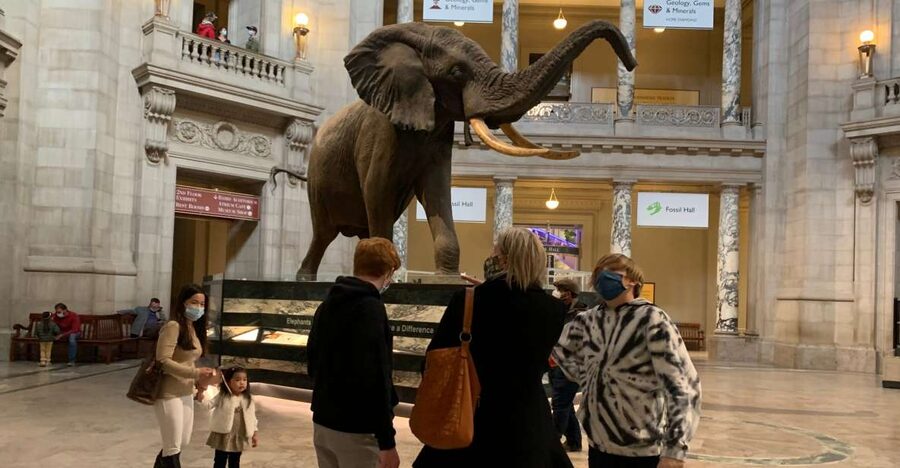
- 145 million specimens: See dinosaurs, human artifacts, plants, animals, gemstones, and mummies in one famous Washington museum.
- A two-hour highlights route: Your guide takes you directly to major exhibits instead of leaving you to find them alone.
- Guide-led storytelling: The commentary adds background about the collections, the objects, and Washington, DC.
- Strong family appeal: Guides have kept children interested by asking questions and letting them help choose what to see next.
- Worth weighing against free admission: The $75 fee pays for guidance and saved time, not entry to the building.
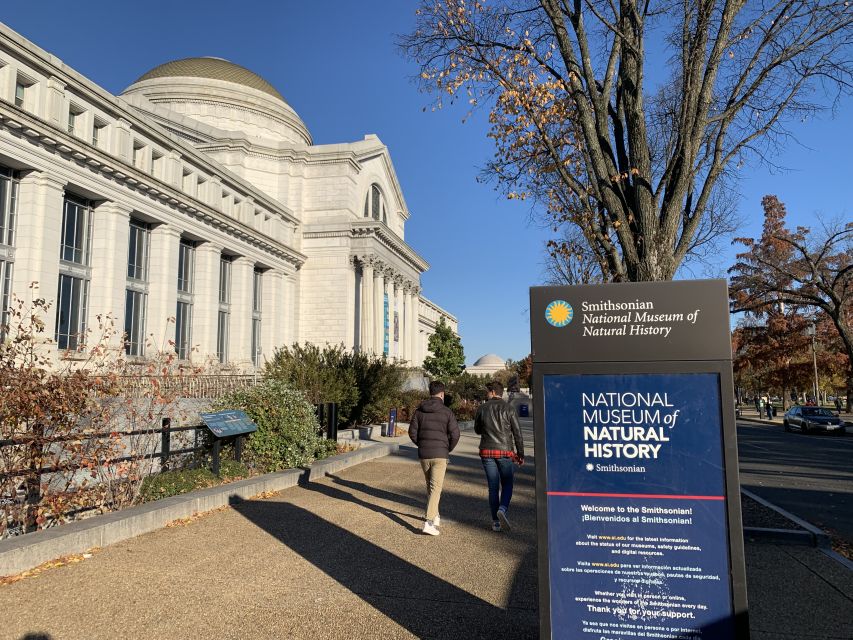
- Simple meeting point: Meet at the bottom of the stairs outside the Smithsonian National Museum of Natural History.
Why a guide helps inside this enormous museum
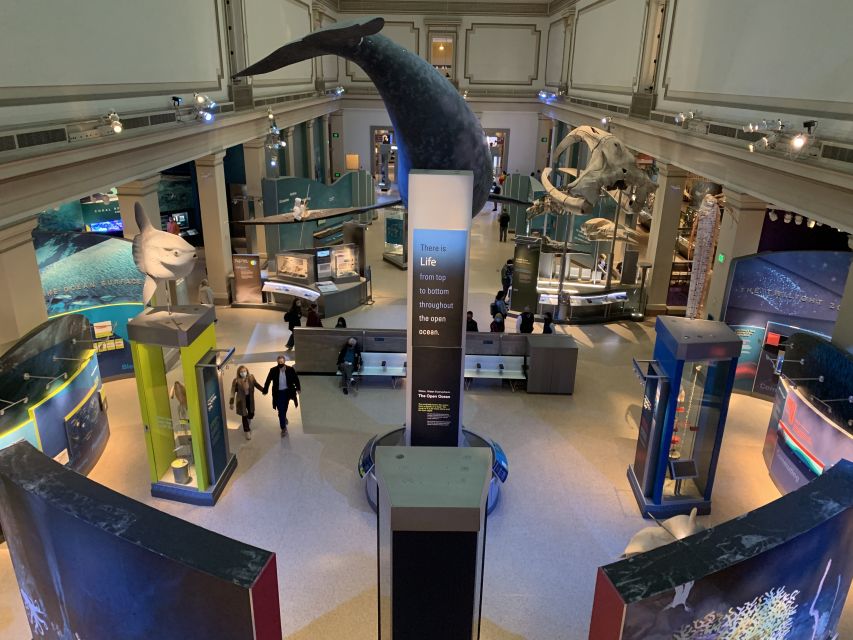
The museum’s size is both its gift and its problem. With more than 145 million specimens, you cannot reasonably see everything in a single visit. Even a full day would force you to make choices, and a first visit can easily become a march from one crowded display to another.
This tour solves that problem with a fixed two-hour route through the collection highlights. You meet your English-speaking guide at the bottom of the stairs outside the museum, then go inside together. The value is not a secret entrance or a special collection. It is knowing where to go first and what deserves your limited time.
I like this approach for a short Washington visit. If your schedule includes the National Mall, the Capitol, memorials, and several Smithsonian museums, a guide keeps the natural history stop focused. You can see the major subjects without spending half the morning studying a floor plan.
The tradeoff is control. A guide sets the pace, and two hours is not enough to pause at every display. If you already know the museum well, or if you prefer to read every label at leisure, a self-guided visit may suit you better.
More Museum and Gallery History Tours in the USA
- Guided African American History Tour with Reserved Museum Entry
★ 4.5 · 1,180 reviews - Chicago: Field Museum of Natural History Ticket or VIP Tour
★ 4.7 · 717 reviews - Field Museum of Natural History Admission Tickets
★ 4.5 · 489 reviews
Meeting outside the National Museum of Natural History
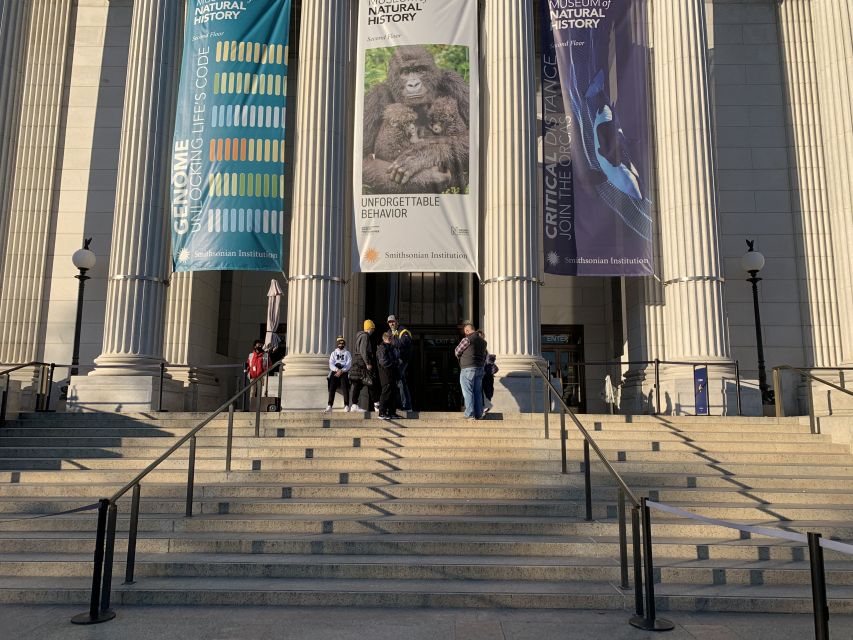
The meeting point is at the bottom of the stairs outside the Smithsonian National Museum of Natural History. That sounds clear, but the museum can be busy, and one person who took the tour wished for a more obvious way to identify the guide.
Give yourself a little extra time to find the exact spot. You should also keep your phone available for the guide’s contact information, although the supplied details do not specify a particular sign, flag, or uniform. The practical lesson is simple: do not arrive at the last second and assume the first person near the stairs is your guide.
Once the group is together, the guide leads you inside. The museum entrance itself is free, but this tour includes the two-hour service of a live English-speaking guide. There is no hotel pickup, transportation, food, or drink included, so plan your route to the museum independently and eat before or after the tour.
Dinosaur bones and the first sweep through the galleries
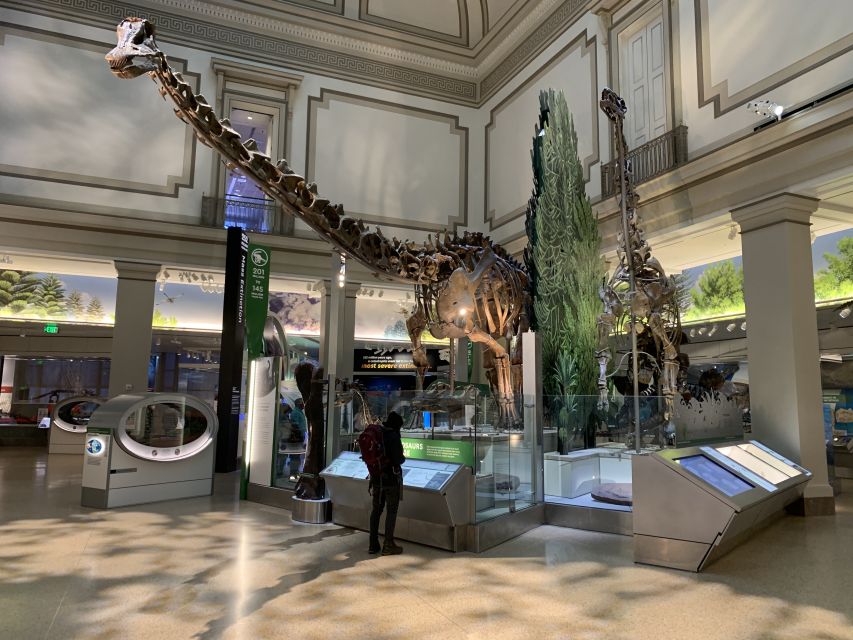
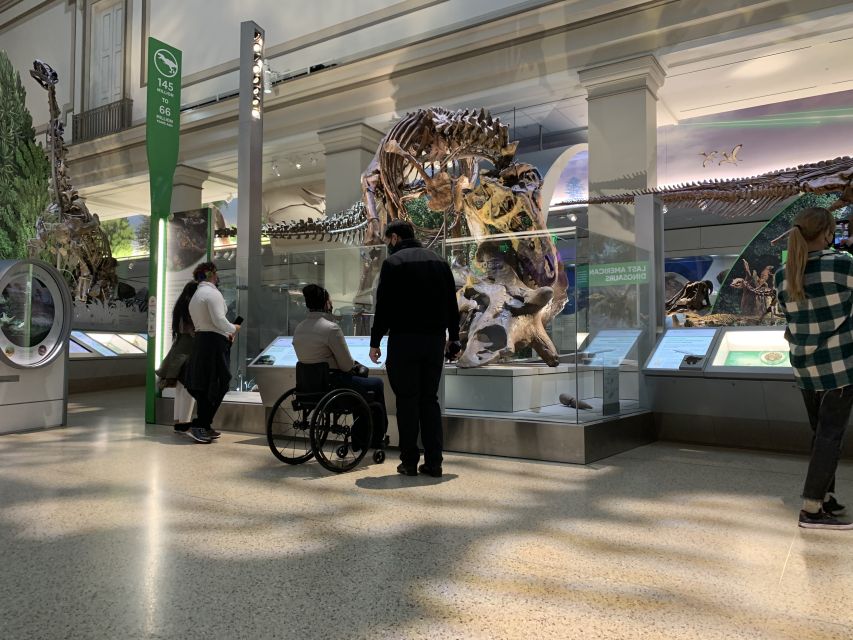
Dinosaur remains are one of the clear highlights. The bones give the tour an immediate sense of scale, and a guide can help you focus on the important parts rather than simply taking pictures of every skeleton in sight.
The value of the commentary is that it links the objects to larger questions about life, extinction, and the work of studying ancient remains. The exact path can vary, but the stated goal is to take you through the museum’s principal collections rather than every room.
This part should please first-time visitors and families. Children often need a little help turning a large skeleton into a story, and the guides have been praised for asking young visitors questions and responding to their interests. One guide, for example, kept a grandson involved by letting the children help decide what to see next.
The pace can be quick. One person felt the guide moved too fast and was sometimes hard to hear. If you want detailed notes or long stops at each dinosaur, tell your guide early. If you prefer to keep moving and see as much as possible, the pace may feel efficient.
Human artifacts and early tools
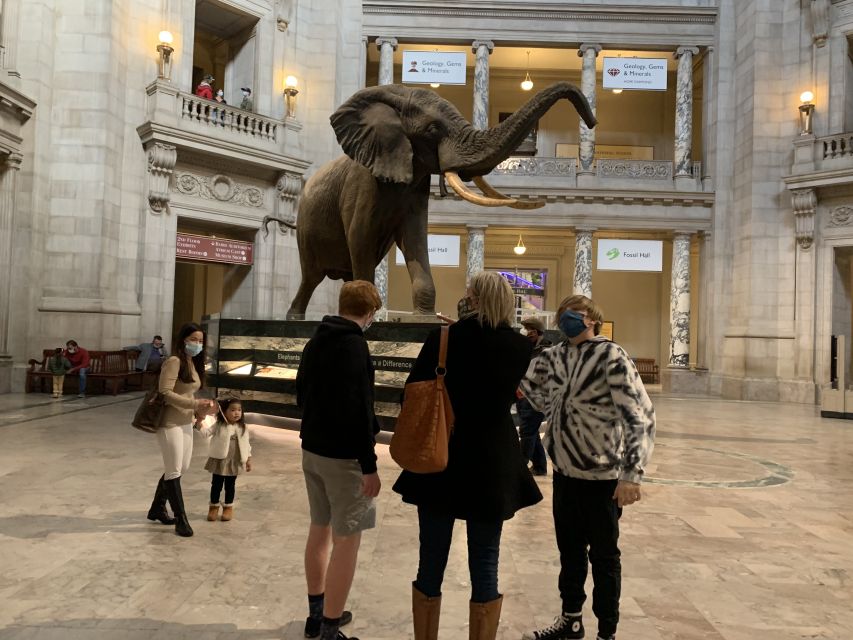
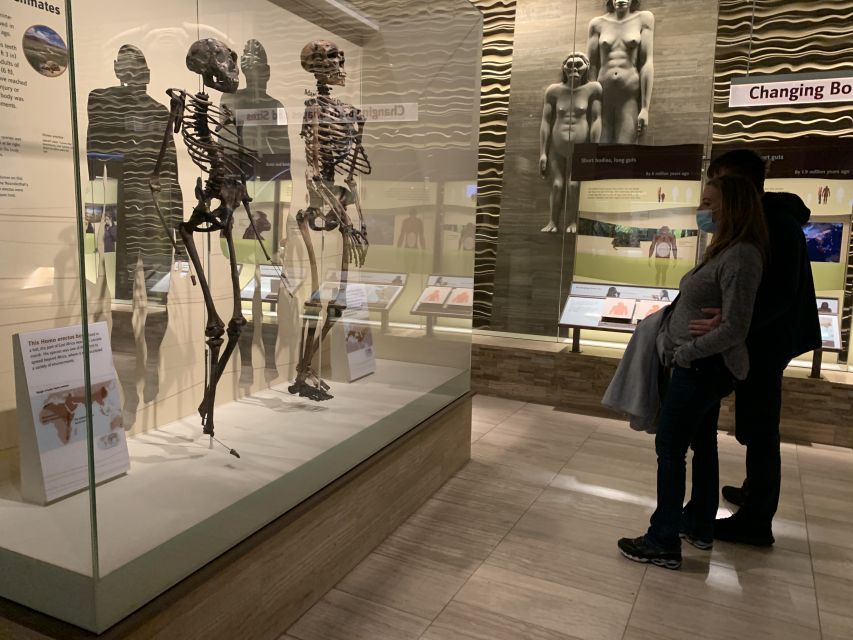
The museum also covers human history through artifacts and tools used by early humans. These displays give the tour a different mood from the dinosaur halls. Instead of focusing only on extinct animals, you see objects connected to human development, survival, and daily life.
I find this section especially useful with a guide because objects can look plain when you first see them behind glass. A short explanation can make a tool or artifact feel practical and human. The guide’s role is to point out what you might otherwise pass by, then explain why it matters.
This is also where the tour can connect naturally with Washington’s wider museum culture. Several highly positive assessments singled out guides who mixed exhibit information with stories about the city and the Smithsonian. That combination gives you more than a parade of labels. It places the museum within the larger experience of visiting the capital.
Do not expect a full anthropology seminar in two hours. The route is designed for highlights, not a specialist examination of every human artifact. If a particular culture or period matters greatly to you, ask your guide where you can return afterward.
Same place, a different slice of the past:
- History and Hauntings of Salem Guided Walking Tour
★ 5.0 · 14,564 reviews - Charleston’s Old South Carriage Historic Horse & Carriage Tour
★ 5.0 · 10,023 reviews - Beneath The Streets Underground History Tour
★ 4.5 · 8,006 reviews - Boston: Freedom Trail History Small Group Walking Tour
★ 5.0 · 6,450 reviews
Gemstones, mummies, plants, and animals
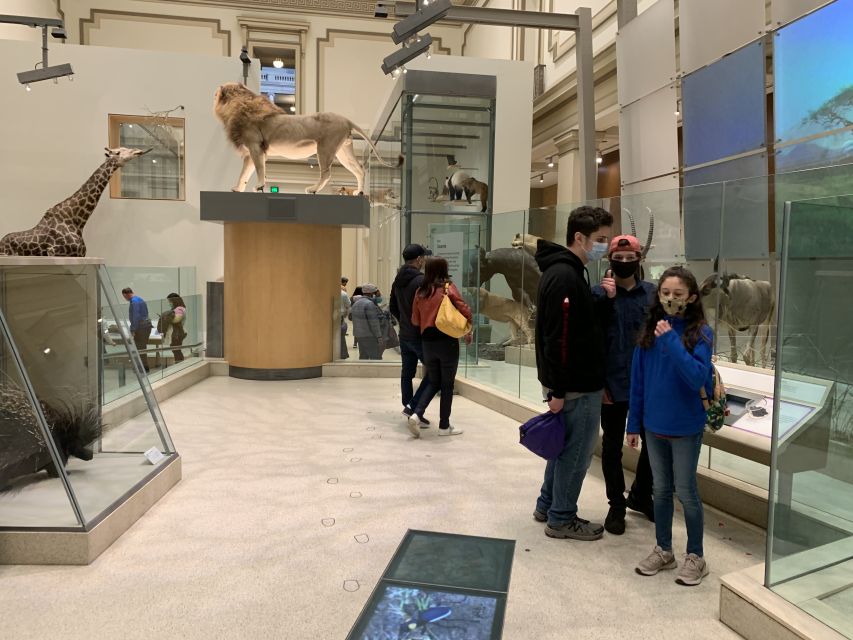
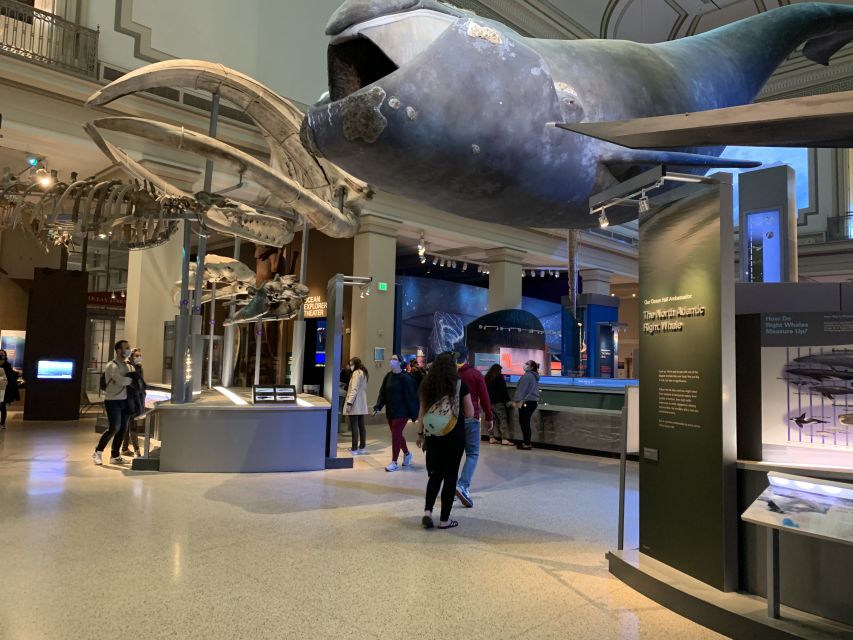
The collection changes tone again with unusual gemstones, ancient mummies, preserved plants, and animals. These displays work well together because they show the broad reach of natural history. You move from geology to human remains, then to the living world and the methods museums use to preserve it.
The gemstones offer visual appeal, but the guide’s explanation is what can make them more than shiny objects. Mummies bring a very different kind of interest, with questions about ritual, preservation, and the people represented. Preserved plants and animals remind you that the museum is not only about spectacular bones and famous stones.
The tour is strongest when the guide helps you notice something you would have missed alone. Gary, from the United Kingdom, felt the guide pointed out objects that he would not have found without help and covered more ground in two hours than he could have managed alone in a full day. That is a useful way to judge the tour: you are paying for selection, interpretation, and momentum.
The weakness is that interactive exhibits may receive less time. One person enjoyed having a leader but felt some hands-on areas were skipped. If interaction matters to you, plan to return after the guided portion and explore at your own speed.
The guide makes or breaks the experience
The strongest praise centers on the guides. Nur appears repeatedly in positive comments, with visitors describing him as friendly, enthusiastic, entertaining, and full of useful information. He has also been praised for bringing both the exhibits and Washington history to life.
DC was also described as interesting, kind, and well informed. Other guides received warm comments for being personable and making the material easy to follow. One guide was praised for a lively style that kept the tour fun while still teaching a great deal.
That matters because a museum guide can either make a collection feel alive or turn it into a rushed list of facts. Here, the best reports describe guides who ask questions, adjust to the group, and speak to children as well as adults. Jessica noted that Nur got to know people individually and made the visit feel more personal.
You should keep expectations sensible. Not every guide will have the same style, and one four-star assessment noted less interaction than on earlier tours. Another found the guide informative but occasionally difficult to hear. Group position matters too. Stay close enough to hear, and speak up if the commentary fades into the room noise.
Is $75 a fair price?
The $75 cost needs careful thought because museum admission is free. You are not paying for an expensive ticket to the Smithsonian. You are paying for two hours of expert direction, storytelling, and saved time.
For a first visit with limited time, that can be fair value. The museum is large, and the guide helps you reach the major sights without spending precious hours getting oriented. A family may also value having someone keep children involved and answer questions on the spot.
For a relaxed local visit, the calculation changes. If you can return another day, enjoy reading labels, or want to concentrate on interactive exhibits, use the free admission and explore independently. You could also take the guided tour for the main route, then remain at the museum afterward to revisit the rooms that interested you.
I would view the tour as a time-saving option rather than a budget activity. The price is easiest to justify when your Washington schedule is tight, this is your first museum visit, or you want a clear introduction before exploring on your own.
Who should book this two-hour tour?
I would recommend it most strongly to first-time visitors, families, and anyone with only a short window in Washington. It is also useful if you feel overwhelmed by large museums or dislike spending your first hour figuring out where the major exhibits are located.
The tour suits people who want a lively explanation rather than a silent walk through display cases. The best guide experiences include questions, stories, and links to Washington history. Children can benefit from the interaction, especially when the guide invites them to help shape the route.
You may want to skip it if you are a serious museum reader who prefers complete freedom. The quick pace could frustrate you, and the $75 charge is hard to defend when admission costs nothing. You should also consider booking only if you can arrive at the meeting point with enough time to identify your guide.
The tour is wheelchair accessible, and the activity is conducted in English. Free cancellation is available up to 24 hours before the start, and you can reserve now while paying later. Those policies make it easier to fit into a changing Washington schedule, but they do not change the central value question: do you want guidance badly enough to pay for it?
Practical ways to get more from the visit
Stay near the guide during the walk. The museum may be lively, and the group can spread out around popular exhibits. If you have hearing concerns, mention them at the beginning and position yourself where the guide is easy to hear.
Ask questions early rather than waiting until the last few minutes. The tour covers a lot of ground, and your guide can often explain which subjects deserve a longer stop or which galleries you should revisit afterward.
Treat the two hours as an introduction. If dinosaurs are your priority, take note of where you want to return. If you prefer mummies, gemstones, human artifacts, or interactive displays, use the guided route to locate them, then continue independently after the tour.
Finally, keep your expectations tied to the price. You are buying direction and interpretation. You are not buying private access, admission to a special collection, meals, or transportation.
Should you book the Smithsonian Natural History guided tour?
Book it if you want to see the museum’s main sights quickly and hear a lively guide explain what you are seeing. The repeated praise for Nur, DC, and other guides suggests that a good guide can make the visit more engaging, especially for families and first-time visitors.
Skip it if you have plenty of time, prefer to explore alone, or mainly want the museum’s interactive exhibits. Since entrance is free, you can return without paying for another tour.
My advice is to book when your Washington schedule is packed and the $75 fee fits your budget. Use the two-hour route as your orientation, then stay afterward to revisit the displays that caught your eye. That gives you the guide’s efficiency without giving up the freedom to explore.
FAQ
How long is the Smithsonian National Museum of Natural History guided tour?
The guided tour lasts two hours.
How much does the tour cost?
The tour costs $75 per person.
Is museum admission included?
Yes, entrance to the museum is included in the tour. However, the museum itself offers free entrance.
Where do I meet the guide?
Meet at the bottom of the stairs outside the Smithsonian National Museum of Natural History.
What language is the tour conducted in?
The tour is conducted in English with a live English-speaking guide.
Is the tour wheelchair accessible?
Yes, the activity is wheelchair accessible.
Just added around the USA
- Savannah: Historical Pub Crawl Tour with Drinks Included★ 3.9 · 34 reviews
- Savannah: History and Culture Walking Tour★ 4.6 · 149 reviews
- Savannah: African American History Tour★ 4.9 · 72 reviews
- Savannah: Historical Panoramic City Tour★ 4.8 · 72 reviews
- Savannah: Historic District Guided Bike Tour★ 4.8 · 47 reviews
- Savannah: Battles & Brews Civil War History Pub Crawl★ 4.4 · 36 reviews
- Savannah: History, Culture, & Scenic Views E-Bike Tour★ 5.0 · 69 reviews
- Savannah: Historical Bike Tour with Tour Guide★ 4.8 · 140 reviews
Museum & Gallery History Tours, compared.
Louvre Museum Entry with History of Mona Lisa
Read our review →
Venice’s Best: Basilica, Doge’s Palace, Gondola & History Gallery
Read our review →
Guided African American History Tour with Reserved Museum Entry
Read our review →
POLIN Museum of the History of Polish Jews Ticket
Read our review →
Bell Tower & St Mark’s Square History Gallery Ticket
Read our review →
Field Museum of Natural History Ticket or VIP Tour
Read our review →
Madrid in a Day Tour:Royal Palace, Historic Center & Prado Museum
Read our review →
Basilica, Doge’s Palace, History Gallery & Bell Tower Option
Read our review →Browse the lists this tour appears in