
Review · AREQUIPA REGION
Walking tour in the Historic Center of Arequipa
Arequipa rewards walkers. This two-hour tour connects the city’s grand Plaza de Armas with quiet courtyards, volcano views, alpacas, and the old San Lazaro neighborhood. I like the unusual mix of colonial architecture and camelid culture, and I like how guides such as Edgar, Johan, Jorge Echeandia, and Beatriz add local stories rather than simply pointing at buildings. The main drawback is that the pace can feel rushed, with limited time for photos at some stops.
The $10 booking price looks like a bargain, but read the payment details carefully. The reservation mainly secures your place, and you are expected to give the guide a voluntary tip at the end. One participant reports a suggested tip of 30 to 50 soles per person, so the final cost may be higher than the headline price.
Key points at a glance
- Volcano views from Puente Grau: Look for Misti, Chachani, and Pichu Pichu above the city.
- A city walk with alpacas: Mundo Alpaca adds llamas, alpacas, Suri, and vicuñas to a colonial-center route.
- Strong guiding is the main asset: Edgar, Johan, Jorge Echeandia, and Beatriz received particular praise for humor, history, and practical advice.
- San Lazaro adds an older, quieter side of Arequipa: This neighborhood is linked with the city’s early settlement.
- The $10 price needs explanation: A tip is expected after the walk, and paid attractions such as Santa Catalina Convent or the Juanita mummy are extra.
- Plan for a brisk two hours: The route is on foot and can last closer to two and a half hours, depending on the guide and group.
Starting near the Plaza de Armas
The meeting point is Santa Catalina Street 204, about one block from Arequipa’s Plaza de Armas. The guide carries an umbrella, which is the main way to identify the group. The listed coordinates are -16.3967191, -71.53667879999999, but the street address is the more useful detail for most people.
I would arrive a little early. One participant had trouble finding the guide at first and could not immediately reach the tour organizer by phone. The problem was eventually sorted out, but this is a good reason to keep the meeting instructions handy and avoid arriving at the last second.
The route begins and ends near the same address, which is handy if you are staying around the historic center. You do not need a taxi between stops. Bring shoes that feel good on stone streets, a hat, water, and something for sun protection. Arequipa’s high-altitude sunlight can be strong, even when the air feels cool.
The advertised duration is two hours. Some outings have run about two and a half hours, so I would not schedule a tight lunch reservation immediately afterward.
More Old Town and Historic Centre Walks in Peru:
- Lima: Historic Center Street Food, Market, and Eateries Tour
★ 4.9 · 216 reviews - Arequipa: Walk through the Historic Center of the City
★ 4.9 · 87 reviews - Lima: Historic Downtown, Miraflores & Catacombs Private Tour
★ 4.5 · 28 reviews
The Plaza de Armas sets the scene
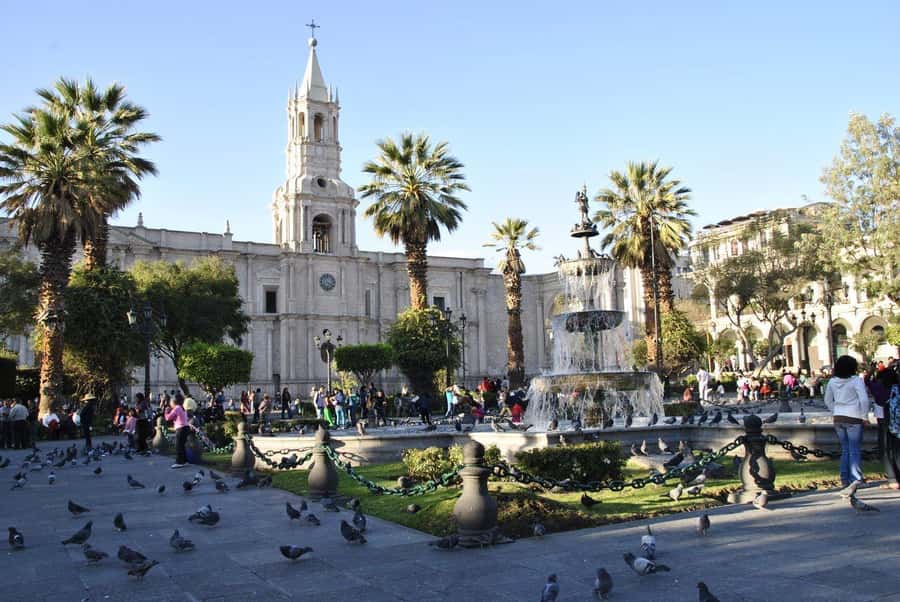
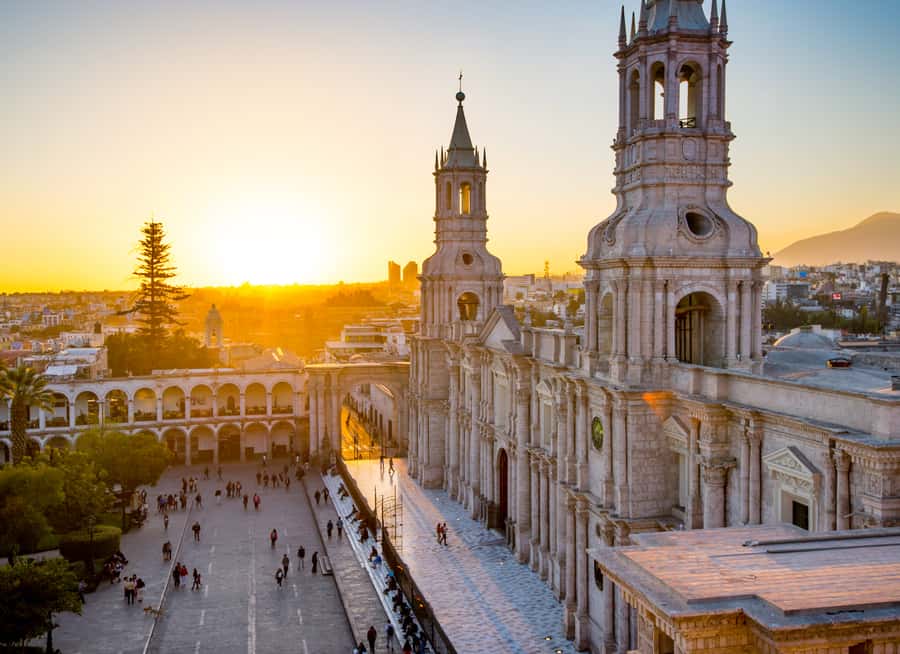
The Plaza de Armas is the right place to begin because it gives you Arequipa’s grandest public face in one view. The guide explains the square’s history, then points out the arches and portals that frame it. This is more useful than simply taking photographs, since the plaza becomes a reference point for the rest of your stay.
Expect discussion of the city’s buildings, religious traditions, and the way Arequipa developed around its central square. Guides have also used the walk to explain ordinary modern life, including the long line of people waiting to renew national identity cards. That kind of observation helps keep the tour from becoming a parade of old stones with dates attached.
The square is also where you can get your bearings fast. After the tour, you should have a better sense of how the surrounding streets connect, and several people found that useful for exploring independently during the following days.
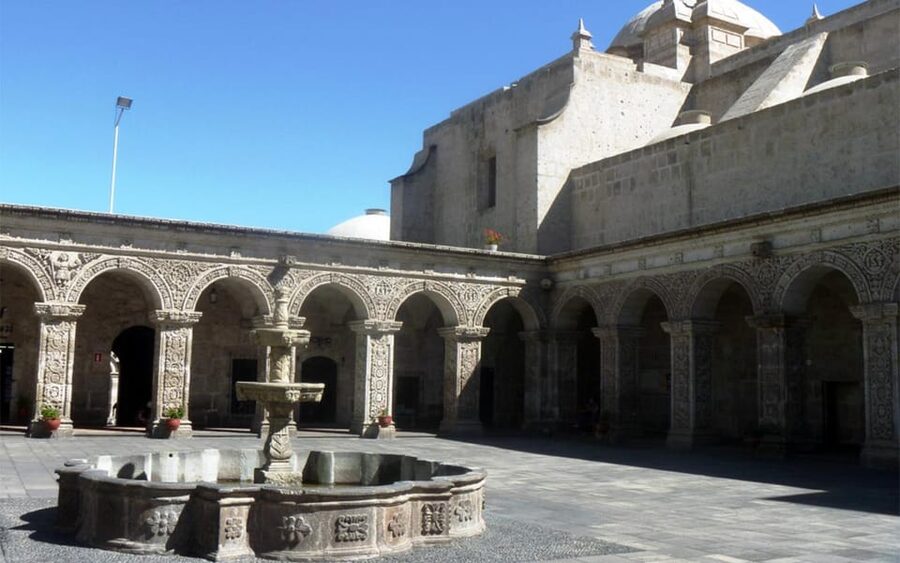
The Company’s cloisters show Arequipa’s softer side
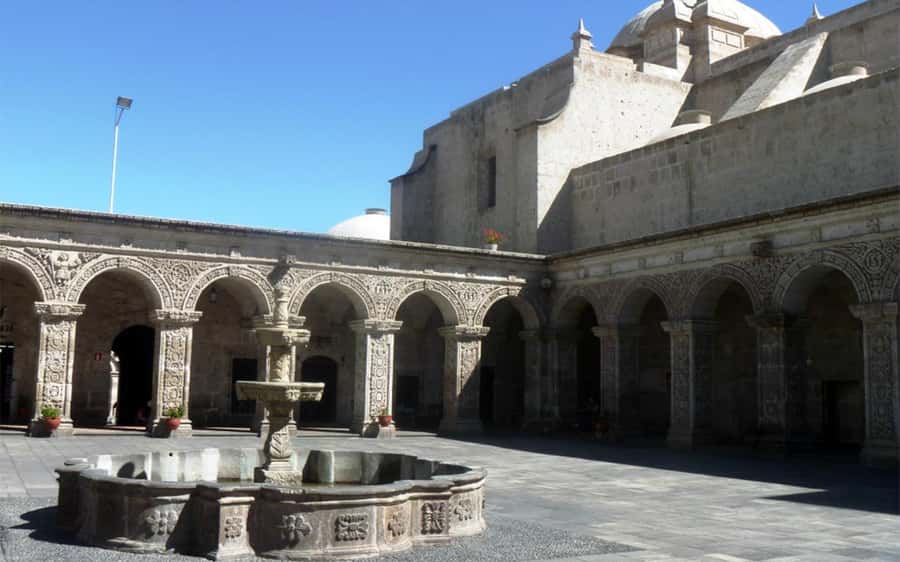
The cloisters of the Company are among the most attractive architectural stops. Their arcades, carved details, and enclosed spaces offer a calmer contrast to the open plaza. The guide explains the religious imagery and architectural meaning, so you are not left guessing why particular patterns or figures appear on the walls.
This is a photo-friendly part of the walk, although the schedule may not allow long pauses. If you enjoy architecture, ask questions here. The guides have been praised for explaining both the art and the religious ideas behind it in clear terms.
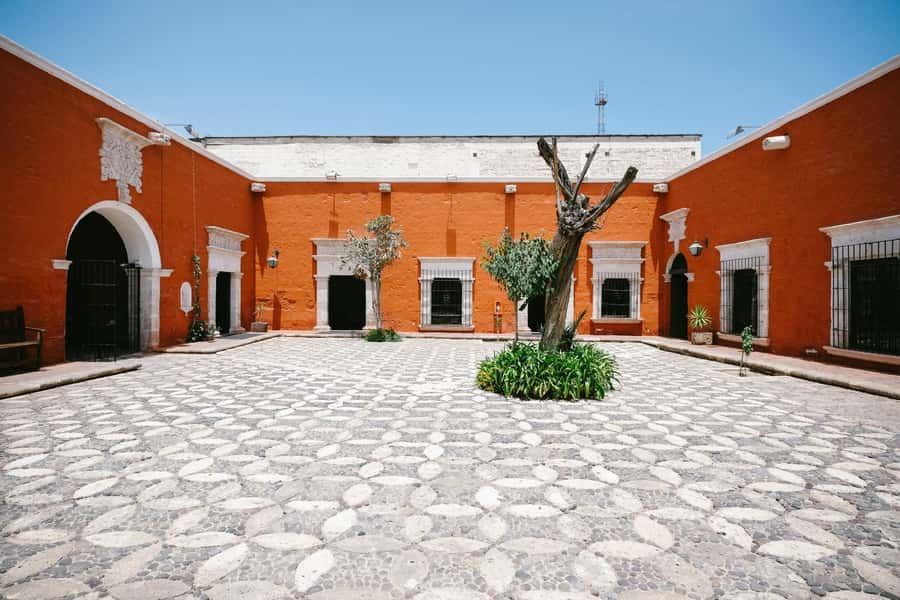
The route also passes old mansions, gardens, and courtyards near the center. These stops matter because Arequipa’s character is not limited to its famous square or major convent. A doorway, patio, or garden can reveal how the city’s older homes were arranged and how volcanic stone shaped local building traditions.
One guide also included a taste of local food and drinks, including cocktails and cheese helada. That is not presented as a guaranteed part of every departure, so treat it as a possible extra rather than a promised feature.
Puente Grau delivers the big volcano view

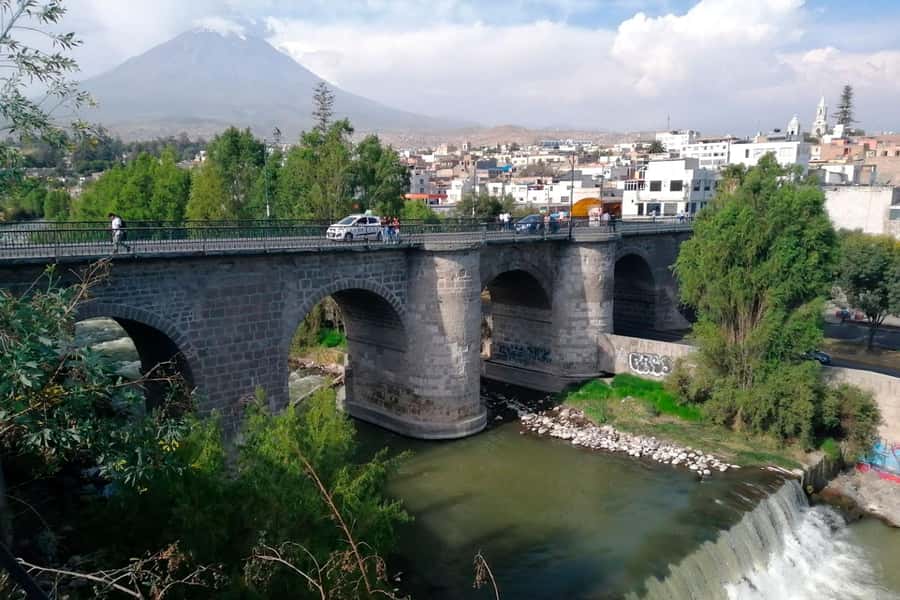
At Puente Grau, the walk reaches a useful lookout over the city. On a clear day, you can see the volcanoes Misti, Chachani, and Pichu Pichu. The view gives the city a sense of place that photographs of the historic center cannot provide.
This stop is particularly valuable early in your Arequipa visit. You begin to understand that the city is not just a colonial core. It sits in a dramatic volcanic setting, and the surrounding peaks help explain the local pride in Arequipa’s identity.
The practical catch is timing. One person found there was little time for photographs at several stops, so keep your camera ready before reaching the bridge. If the group is large, you may need to take your turn at the best viewing point rather than linger.
More History Walking Tours in Peru:
- Cusco: Historic Walking Tour with Pisco Sour and Music Show
★ 4.6 · 65 reviews - History and Hauntings of Salem Guided Walking Tour
★ 5.0 · 14,564 reviews - Lisbon: History, Stories and Lifestyle Walking Tour
★ 4.8 · 10,902 reviews - Boston: Freedom Trail History Small Group Walking Tour
★ 5.0 · 6,450 reviews
Mundo Alpaca changes the rhythm
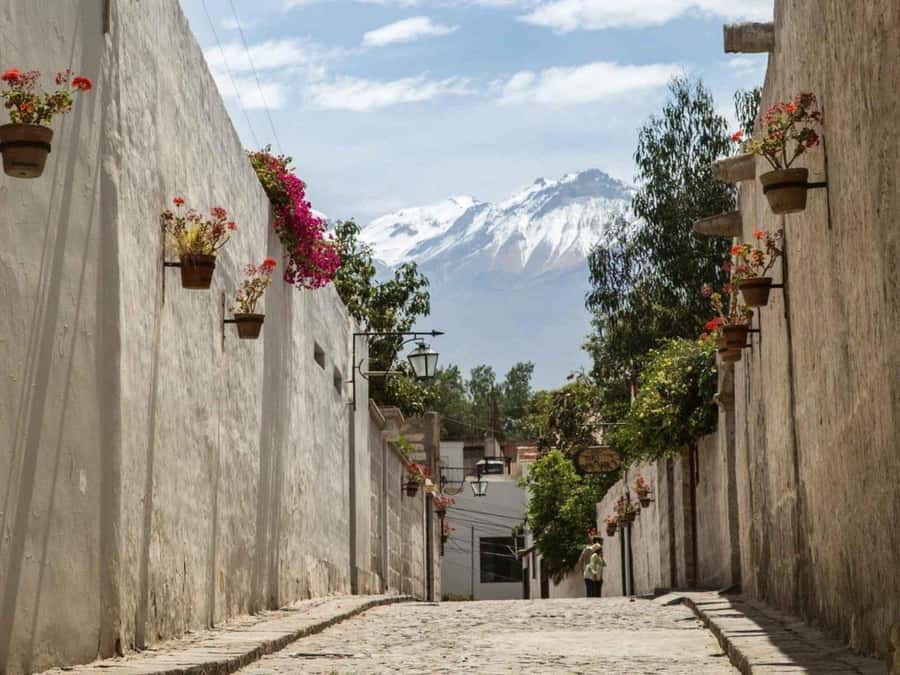
Mundo Alpaca is the tour’s most unexpected stop. Here you see an old breeding farm connected with camelids, including llamas, alpacas, Suri, and vicuñas. Some groups have been able to feed the animals, and seeing baby llamas and alpacas has been a highlight.
I like this part because it ties the city to Peru’s highland traditions. You are not only looking at finished textiles in a shop. You also get a basic sense of the animals that provide the fiber and the importance of camelids in Andean life.
You may optionally buy fabric made from the same fiber. That can be a useful chance to compare the material after seeing the animals, but you should not feel that shopping is the point of the stop. The attraction works even if you buy nothing.
Mundo Alpaca also helps break up the architecture-heavy first half of the route. Families and anyone who wants something beyond churches and courtyards will likely appreciate it. The downside is that a short visit cannot explain every type of fiber or textile technique in detail.
San Lazaro recalls Arequipa’s first settlement
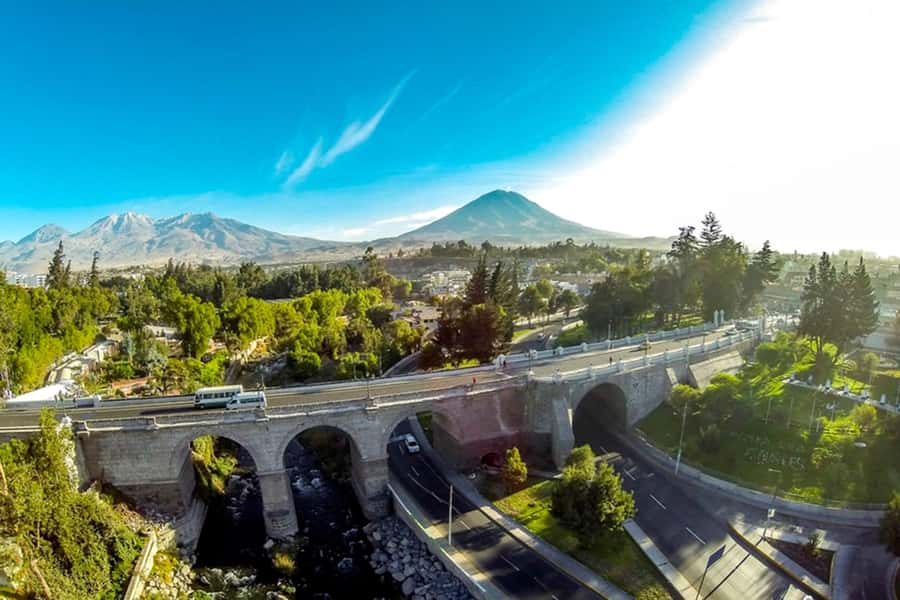
The walk continues to San Lazaro, described as the first town where the White City was founded. Its smaller streets provide a different mood from the monumental Plaza de Armas. Here, the value comes from seeing an older neighborhood in context rather than ticking off another major attraction.
A guide can help you notice how the area fits into Arequipa’s early story. You also get a better sense of the city’s gradual growth from an early settlement into the larger urban center around the plaza.
Because the entire route is on foot, this is also where tired legs may begin to matter. The walk is not described as difficult, but it includes several stops across the center and nearby streets. If you prefer a slow pace with long photography breaks, tell the guide early and understand that the group may still need to keep moving.
What the guides add to the walk
The best part of this experience is the guiding. Edgar was praised for history, humor, recommendations, and his ability to answer questions. Johan was described as funny and engaging, while Jorge Echeandia was singled out for being friendly, helpful, and able to cover a lot in a short time. Beatriz received praise for explaining religious art and architecture, and Francisco helped one participant understand the city and its market.
That pattern matters. The route itself is worthwhile, but a weak guide would turn it into a fast walk past attractive buildings. A good guide connects the Plaza de Armas, religious art, food, city customs, volcanoes, and camelids into one story.
The strongest guides also help you plan the rest of your stay. You may get restaurant suggestions, market advice, and a clearer idea of what deserves a longer visit. The experience is delivered in English or Spanish, so confirm your preferred language when booking.
Group size can affect the feel. One participant described a group of about 30, while other comments suggest a more personal experience. A large group may mean less time at each stop and more difficulty hearing or taking photos. The guide’s skill becomes even more important in that setting.
The real cost: $10 plus a tip
The $10 price is attractive, especially for an introduction to central Arequipa. It covers the reservation and the walking format, but the payment arrangement needs to be clear before you go.
The guide’s tip is described as voluntary, yet it is also presented as helping cover guide service and maintenance at the places visited. One person reports an expected range of 30 to 50 soles per person. That is not a small addition for everyone, so budget for it rather than treating the tour as a fixed $10 activity.
Even with the tip, the total may still offer good value if you receive a lively two-hour history lesson, volcano views, access to courtyards, the Mundo Alpaca visit, and practical city advice. But the price is not as simple as the headline suggests.
The Santa Catalina Convent and museums such as the Juanita mummy are optional additions and require separate payment. The description also lists entrances to places visited as included, so I would ask exactly which entrance fees are covered before starting. Paid attractions should not be assumed to be part of the basic walk.
Who will enjoy this Arequipa walk?
I would choose this tour if you have just arrived and want a useful orientation before exploring alone. It covers enough ground to help you recognize the main streets and major sights, while the volcano view and camelid stop give it more variety than a standard plaza tour.
It also suits you if you enjoy history but do not want to spend an entire morning inside museums. The route offers architecture, religious art, neighborhood history, local animals, and city views in one compact outing.
Families may like the llamas and alpacas, and shoppers may appreciate the chance to see fiber production before considering textiles. Food-minded visitors should ask if tastings or market stops are planned for their departure, since those details appear to vary.
I would hesitate if you want a slow photography tour or a private experience. The walk can feel rushed, especially with a large group. You should also be comfortable walking for roughly two hours and paying a tip after the tour.
Free cancellation is available up to 24 hours before departure, and you can reserve now and pay later. Those terms help if your Peru schedule is still shifting, but they do not remove the need to check the tip and optional entrance costs.
Should you book it?
I would book this walking tour as a first-day introduction to Arequipa, especially if the guide is Edgar, Johan, Jorge Echeandia, Beatriz, or another guide with the same lively style. The route gives you the essentials of the historic center, then adds three useful surprises: volcano views, camelids, and San Lazaro.
Go in with the right expectations. This is not a slow private architecture tour, and $10 is not necessarily the final amount. Allow for the guide’s tip, ask which entrances are included, and keep your photo stops efficient.
For a modest total cost, the tour can help you understand Arequipa quickly and point you toward places worth revisiting. That makes it a good value for first-time visitors who want context, local stories, and a practical start to their stay.
FAQ
Where does the walking tour start?
It starts at Santa Catalina Street 204, about one block from the Plaza de Armas. The guide carries an umbrella for identification.
How long does the tour last?
The stated duration is two hours. Some departures may last about two and a half hours.
Which languages are available?
The tour is offered with a live guide in English or Spanish.
What places are visited?
The route includes the Plaza de Armas, the Company’s cloisters, old mansions and gardens, Puente Grau, Mundo Alpaca, and the San Lazaro neighborhood.
Can I see volcanoes during the tour?
At Puente Grau, the tour provides a viewpoint for Misti, Chachani, and Pichu Pichu. Visibility can affect what you see.
Is the $10 price the complete cost?
The $10 reservation price is not necessarily the complete payment. A voluntary tip is expected at the end, and one reported suggested amount was 30 to 50 soles per person.
Are Santa Catalina Convent and the Juanita mummy included?
They can be visited by prior arrangement, but they require an extra entrance fee and an internal guide. Ask the organizer which entrances are included in your specific departure.
Just added around Peru
- Piramids of Tucume Tour, Sican Museum and Lambayeque city tour★ 5.0 · 30 reviews
- Arequipa, Historic and Colonial City and Santa Catalina Monastery★ 4.5 · 42 reviews
- Aymara Route Mystical Cultural Tour★ 4.7 · 27 reviews
- Machu Picchu: historical and photographic guided tour★ 4.9 · 27 reviews
- Lima: Historic Downtown, Miraflores & Catacombs Private Tour★ 4.5 · 28 reviews
- Lima: Historical, Colonial, and Modern City Tour★ 4.3 · 21 reviews
- Cusco: Historic Walking Tour with Pisco Sour and Music Show★ 4.6 · 65 reviews
- Cusco: Historical Guided City Tour with 4 Inca Ruins★ 4.5 · 99 reviews
Old Town & Historic Centre Walks, compared.

Live Fado Show with Port Wine in Historic Center
Read our review →
Valencia Old Town Tour with Wine & Tapas in 11th Century Historic Monument
Read our review →
Prague Old Town, Medieval Underground and Dungeon Historical Tour
Read our review →
Historic Center and Getsemaní Shared Walking Tour
Read our review →
Old Town Walking Tour History and Tales in Edinburgh
Read our review →
Philadelphia Old City Historic Walking Tour with 10+ Top Sites
Read our review →
Saadian Tombs & Bahia Palace, Medina Guided Tour
Read our review →Browse the lists this tour appears in