
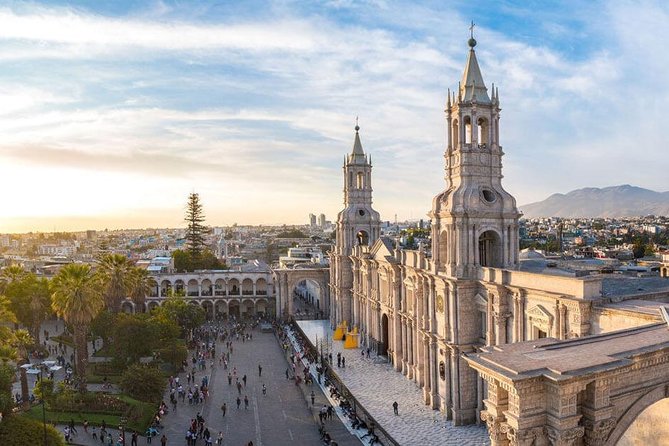
Review · AREQUIPA
Arequipa, Historic and Colonial City and Santa Catalina Monastery
Arequipa opens up fast. This 3.5-hour city tour combines volcano viewpoints and the white sillar architecture of Yanahuara with a guided visit to Santa Catalina Monastery. I like that the vehicle gets you beyond the central streets, and I like that admission to the monastery and Church of the Society of Jesus is included. The main caution is that much of the tour takes place inside religious buildings, so it may feel heavy on churches and convent history if that is not your interest.
The $61 price is fair for a small-group outing that includes transport, hotel pickup, a professional guide, and two paid attractions. You get a useful first look at Arequipa rather than a slow, single-neighborhood walk. Check the weather before booking, though, since February rain can hide the volcanoes at the very time you most want to photograph them.
Key points at a glance
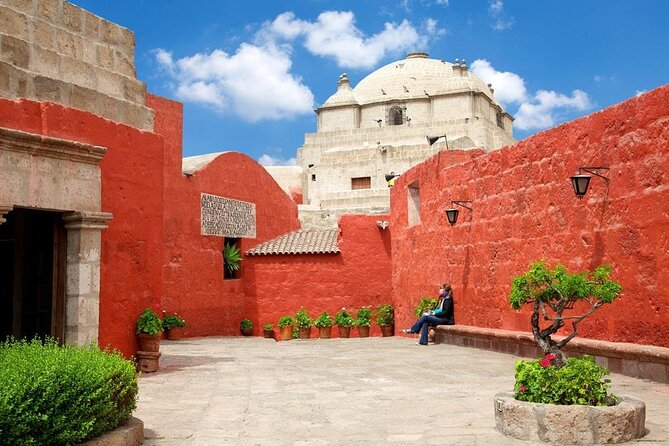
- Carmen Alto gives you three volcanoes in one view: Misti, Chachani, and Pichu Pichu rise behind farmland and terraces.
- Yanahuara explains the White City: Its pale buildings and arched viewpoint are made from sillar, the volcanic stone used throughout Arequipa.
- Santa Catalina feels like a small walled town: Narrow lanes, plazas, gardens, and old religious quarters make this the tour’s main event.
- The vehicle saves time: You can reach viewpoints outside the center without arranging taxis or spending much of the afternoon walking between sites.
- The group is capped at 15 people: That is small enough for questions, though the actual pace depends on the guide and language mix.
- Wear long clothing: Shorts are not allowed inside the religious sites.
Why this short Arequipa tour works
Arequipa is compact in its historic core, but its best viewpoints sit outside it. That is where this tour earns its place. Instead of spending your entire afternoon around the Plaza de Armas, you ride to Carmen Alto and Yanahuara first, then return to the center for the city’s major monuments.
I especially like this order because it gives you a visual introduction before the architectural details begin. From outside the center, you see the city as a living place surrounded by cultivated land and volcanoes. Later, inside the old districts, you can understand how local builders turned volcanic stone into churches, courtyards, arches, and homes.
The tour begins at 2:00 p.m. and lasts about three and a half hours. That timing can work well if you arrive in Arequipa earlier in the day or want a guided introduction before exploring on your own. It also means some late afternoon stops may be close to their closing times, so listen carefully to the guide’s plan if you hope to visit a tower or upper viewpoint.
More Medieval History Tours in the world:
- Prague: Oldtown, Medieval Underground & Dungeon History Tour
★ 4.3 · 10,277 reviews - Prague Old Town, Medieval Underground and Dungeon Historical Tour
★ 4.5 · 3,227 reviews - London: Medieval History Walking Tour from The Tower
★ 4.9 · 318 reviews
Carmen Alto and the three volcanoes
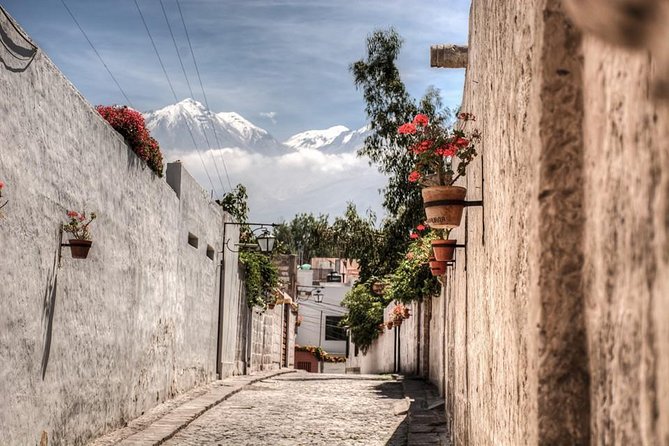
The first major stop is the Carmen Alto viewpoint, in the area connected with Arequipa’s early settlement. You look over farmland and terraces with the city’s three guardian volcanoes beyond: Misti, Chachani, and Pichu Pichu.
This is not just a quick photo stop. It gives useful context to Arequipa’s setting. The city grew beside dramatic volcanic peaks, and the pale sillar used in its buildings comes from that volcanic environment. The view also shows you that Arequipa is more than its colonial center. Fields, slopes, and cultivated terraces remain part of the scene.
Your best chance for clear volcano views is a sunny day. In February, rain can obscure the peaks, so keep your expectations flexible during the wet season. Even when the summits disappear, Carmen Alto still helps you understand the relationship between the city and its surrounding farmland.
You receive about an hour for this first part of the outing, including the viewpoint experience and nearby sights. The air-conditioned vehicle matters here. You do not need to arrange a taxi to reach this area, and you can see more than you would on a walking-only tour.
Yanahuara and the White City’s volcanic stone
The tour continues to Yanahuara, a colonial district known for its Andalusian-style church, white buildings, and arched viewpoint. This is one of Arequipa’s most photogenic corners, but the guide adds something a photograph cannot: an explanation of why the city looks the way it does.
The answer is sillar, a light-colored volcanic rock used in much of Arequipa’s historic construction. The material gives the city its nickname, the White City. At the El Mirador de Yanahuara, sillar arches frame views toward the volcanoes and the city.
I like this stop because it connects architecture with geology. You are not simply looking at pretty white facades. You are seeing a local building material shaped into churches, homes, cloisters, and decorative arches. That connection makes the rest of the city easier to read.
The Yanahuara church and viewpoint also offer a change from the grand scale of the main square. The setting feels more residential and less formal. The tour description specifically promises time beyond the main tourist center, and this neighborhood is where that promise is most apparent.
Santa Catalina Monastery, a city behind walls
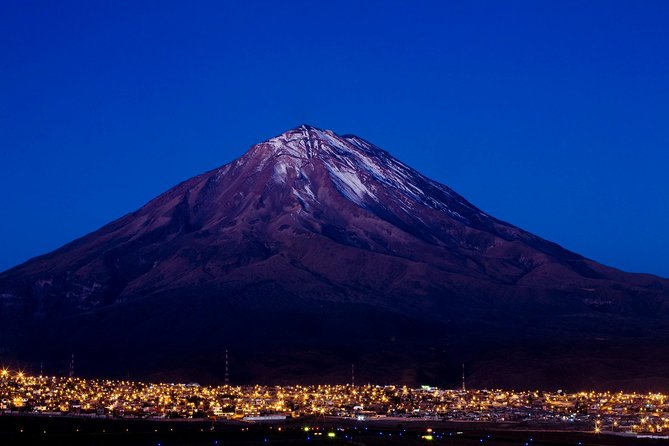
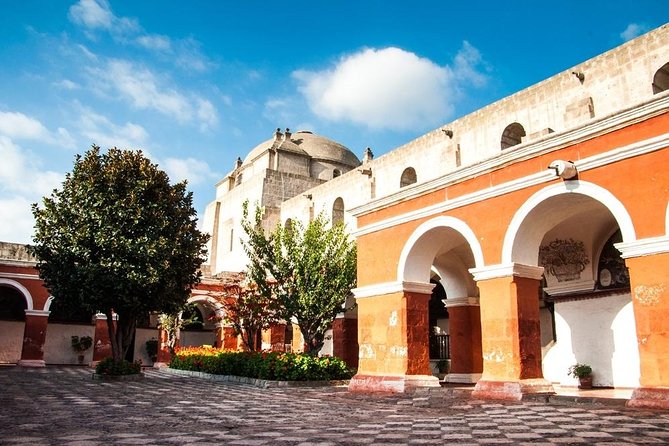
Santa Catalina Monastery is the heart of the experience. This Dominican religious complex was closed to the public for nearly four centuries, and its internal streets make it feel less like a single building than a contained town.
You walk through narrow lanes, quiet plazas, cloisters, and gardens. The colors and layout recall old Spanish districts, with references to Seville and Granada in the way the passageways and courtyards unfold. The scale can be surprising. Instead of moving directly from one room to another, you follow a network of spaces that once formed a private religious world.
A guide makes a real difference here. Without context, you might notice the painted walls and peaceful courtyards but miss how the complex was organized. With a good explanation, the rooms and passageways become easier to understand as parts of a working convent rather than a collection of attractive ruins.
Several guides have been praised for making the monastery vivid and easy to follow. Charo was singled out for her warmth and clear explanations, while Sline was noted for speaking English, Spanish, and Portuguese. Kaitlin was also praised for spending extra time with the subject and showing clear affection for her work. Guide quality can vary, but the strongest part of this tour is plainly the human interpretation inside Santa Catalina.
Some guides may arrange an additional language guide for the monastery. That can help if the main group is multilingual or if the city guide is explaining several languages at once. One practical point: the monastery is large enough that you should keep an eye on the available time. If you feel rushed near the end, ask at the entrance whether returning later is possible. One tour participant was told that a return visit could be arranged, though you should confirm this for yourself on the day.
More Colonial History Tours in the world:
- Vung Tau Essential: Beach, Christ Statue & Colonial Heritage
★ 5.0 · 284 reviews - Full-Day Ho Chi Minh City Tour with Colonial Heritage & Chinatown
★ 5.0 · 246 reviews - Colonial Zone: Historical Tour with a visit to the Columbus Lighthouse and Tres Ojos Park
★ 4.9 · 157 reviews - Colonial History Tour in Williamsburg Virginia
★ 5.0 · 97 reviews
Plaza de Armas, the cathedral, and the Jesuit cloisters
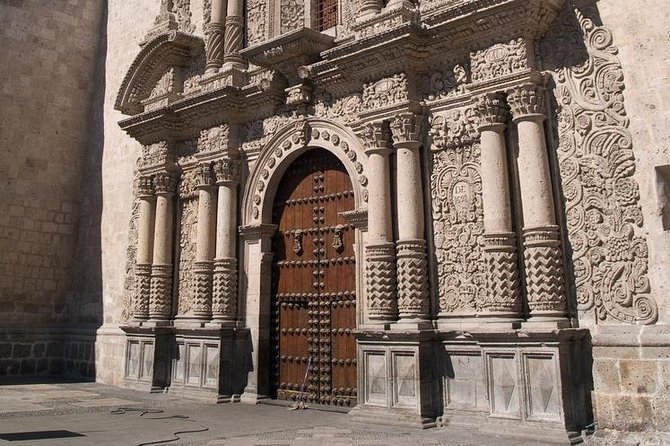
After Santa Catalina, the route returns to the center and the Plaza de Armas. This grand square is surrounded by arches and anchored by the Basilica Cathedral of Arequipa, whose origins reach back to the 16th century.
The cathedral visit focuses on the building’s story and its place in the city. You should pay attention to the timing, though. One visitor found that the cathedral tower and its views closed at 4:00 p.m., while the scheduled cathedral visit came later. If climbing the tower is important to you, ask the guide at the start whether the order can be adjusted.
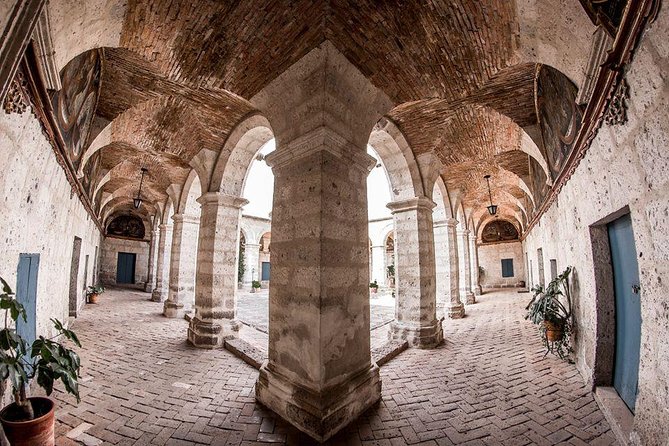
The final stop is the Church of the Society of Jesus, usually called La Compañía. Its cloisters and the San Ignacio Chapel provide a different kind of visual experience from the open plaza. The chapel is especially memorable for its colorful decoration, including jungle birds and plant forms.
This final church visit adds another layer to the city’s colonial story, but it also explains why the tour may not suit everyone. Around two thirds of the outing can be devoted to Santa Catalina and churches. If you enjoy religious art, architecture, and the history of Catholic institutions in Peru, that focus is a strength. If you are not interested in religious sites, the schedule may feel unbalanced.
Guide quality and language considerations
The guide can make or break a short city tour. Several guides have been praised for clear English, lively delivery, humor, and patience with questions. One guide was particularly appreciated for checking repeatedly that a multilingual group understood the explanations. Another was praised for speaking English, Spanish, and Portuguese.
Still, language balance can affect the pace. In one case, an English-speaking participant found that the group included mostly Spanish speakers and that the guide’s explanations were long, leaving some people waiting. If you book an English tour, confirm the language at pickup and speak up if you are having trouble following the presentation.
The group limit is 15 people. That is a reasonable size for moving through the monastery while still allowing questions. The guide may also make small adjustments for the group, such as stopping at a viewpoint or responding to particular interests. Do not count on a fully private experience, but you should have more personal attention than on a large coach outing.
What the $61 price really buys
At $61 per person, the price is not simply for transportation around town. It covers hotel pickup and drop-off, an air-conditioned vehicle, a professional guide, and admission to Santa Catalina Monastery and the Church of the Society of Jesus.
Those inclusions matter because Santa Catalina is the tour’s most expensive and time-consuming sight. Visiting the monastery on your own is possible, but the tour saves you from arranging transport between outlying viewpoints and the center. It also gives you one continuous explanation of the city instead of separate visits with scattered information.
The value is strongest if this is your first afternoon in Arequipa and you want orientation quickly. You see viewpoints, a historic neighborhood, the main square, a major cathedral, a Jesuit church, and the monastery in one compact outing.
The value is weaker if you have several days and prefer slow exploration. You may want to return to the Plaza de Armas, spend more time in Yanahuara, or visit Santa Catalina at your own pace. Food and drinks are not included, but the tour is short enough that this is not a major issue.
Practical advice before you go
Wear long pants or a long skirt. Shorts are not permitted inside the religious sites, and appropriate clothing prevents an awkward interruption at the entrance.
Choose a clear afternoon if volcano views matter to you. The tour still has plenty to offer in cloudy weather, but Misti and the other peaks may be hidden, especially during February’s rainy period.
Bring comfortable shoes for the monastery. The route includes narrow lanes, courtyards, and several hours of walking mixed with vehicle transfers. The tour is suitable for most people, but the experience is not entirely seated or effortless.
Confirm the pickup details carefully. One serious complaint involved a missed pickup caused by a date mix-up, followed by difficulty reaching the local operator. The booking terms allow free cancellation up to 24 hours before the start time, but changes or cancellations inside that window are not accepted. For a 2:00 p.m. departure, double-check the date, hotel, and pickup time before the deadline.
Who should book this experience?
I would choose this tour if you have limited time in Arequipa, want Santa Catalina explained properly, or prefer not to arrange taxis to the viewpoints. It is also a good fit if you want a guide to connect the volcanoes, sillar architecture, colonial districts, and religious buildings into one story.
It suits couples, families, solo visitors, and anyone who likes a structured first look at a city. The small group limit and air-conditioned vehicle add comfort, while the outside-the-center stops keep the outing from becoming a simple plaza-and-church walk.
I would look elsewhere if you want a secular city tour, a relaxed photography outing, or a deep focus on everyday modern Arequipa. You will spend a large part of the afternoon inside religious sites, and the schedule can feel tight at the end. If the cathedral tower matters to you, ask about the timing before the tour begins.
Should you book it?
Yes, if Santa Catalina Monastery is high on your list and you want to see Arequipa’s viewpoints without arranging local transport. The monastery admission alone adds useful value, and the best guides bring its lanes and courtyards to life.
Book with care if you are visiting in February, need a precise English-only experience, or have only one afternoon in town. Confirm the pickup details, dress properly, and ask about the cathedral tower early. With those precautions, this is a sensible, time-saving introduction to Arequipa.
FAQ
How long does the Arequipa city tour last?
The experience lasts approximately 3 hours and 30 minutes.
What time does the tour start?
The scheduled start time is 2:00 p.m.
Is hotel pickup and drop-off included?
Yes. Hotel pickup and drop-off in Arequipa are included.
Is admission to Santa Catalina Monastery included?
Yes. Admission to Monastery of Saint Catherine is included in the tour price.
Is admission to the Church of the Society of Jesus included?
Yes. Admission to the Church of the Society of Jesus is included.
What should I wear to the religious sites?
Wear long pants or a long skirt. Shorts are not allowed inside the religious places.
Can I cancel for a full refund?
Yes. You can cancel at least 24 hours before the local start time for a full refund. Cancellations or changes made less than 24 hours before the start time are not accepted.
Just added around the world
- Ancient Corinth★ 5.0 · 29 reviews
- Segway Journey: Athens Tour From The Ancient Past To The Present★ 5.0 · 62 reviews
- Acropolis, Parthenon and Ancient Agora Guided Tour with entrances★ 5.0 · 29 reviews
- Historic Music Scene Walking Tour in Asheville★ 5.0 · 26 reviews
- Semi-private Historical & Contemporary Segway Tour in Athens★ 5.0 · 56 reviews
- Aspen’s Past to Present Historic Tour★ 5.0 · 37 reviews
- Private sake pairing@ancient underground★ 5.0 · 27 reviews
- [30 minutes] Rickshaw tour around Asakusa [History, sightseeing, Tokyo Skytree]★ 5.0 · 38 reviews
Medieval History Tours, compared.
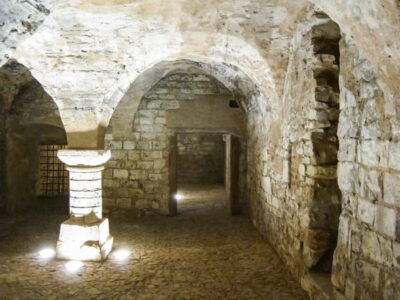
Oldtown, Medieval Underground & Dungeon History Tour
Read our review →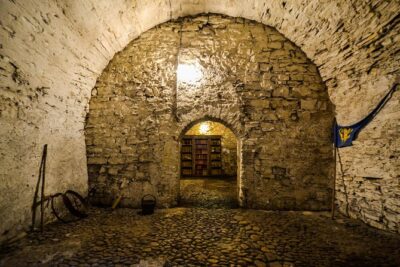
Prague Old Town, Medieval Underground and Dungeon Historical Tour
Read our review →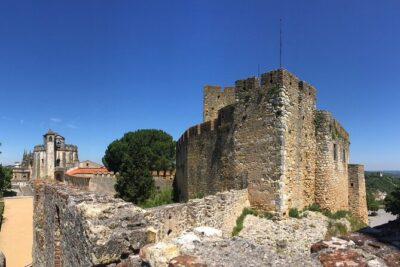
Templar Tour Convent of Christ & Almourol Castle from Lisbon
Read our review →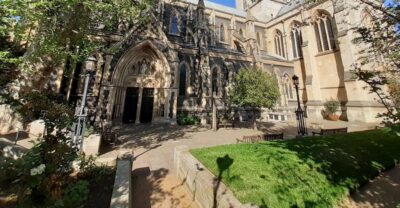

Barcelona 1.5h Private Old Town, Gothic & Ramblas Walking Tour
Read our review →
Day Trip From Addis Ababa See Historical Monastery,Stunning Nature,Animals,Birds
Read our review →
Stockholm Viking History Full Day Tour to Sigtuna + Uppsala
Read our review →
Tipsy Tapas & History Tour in the Gothic Quarter
Read our review →Browse the lists this tour appears in