
Review · VALENCIAN COMMUNITY
Valencia: Essentials and World Heritages Sites Walking Tour
Valencia reveals its best stories on foot. This two-hour tour links the old town’s key monuments with the city’s three UNESCO World Heritage properties, giving you a useful first look at Valencia’s past, architecture, traditions, and daily life. I especially like the Silk Exchange visit and the way the walk connects famous buildings to living customs such as the Water Tribunal and Fallas.
The $21 price is fair for an English-language guided walk that includes entry to the Silk Exchange and, when open, Valencia City Hall. Guides including Gabor, Maria, Sara, Sofi, and Belen have earned especially warm praise for clear explanations, friendly conversation, and practical restaurant and sightseeing advice. The main limitation is time: two hours gives you a strong introduction, not a full study of the old town.
Key points at a glance
- Three World Heritage properties: Learn about the Silk Exchange, the Water Tribunal, and Fallas, three very different entries on the UNESCO list.
- Silk Exchange entrance included: Go inside the Gothic trading hall rather than only viewing its grand exterior.
- A useful first-day tour: The route helps you get your bearings before exploring Valencia on your own.
- Central meeting point: Start at the Tourism Hub beside Estación del Norte, near Xàtiva metro station.
- Friendly English-speaking guides: Gabor, Maria, Sara, Sofi, and others are praised for clear delivery, local tips, and a warm manner.
- Short but active: The walk covers several important sights in two hours, with relatively short distances between stops.
Starting beside Valencia’s grand railway station
The meeting point is easy to find if you know where to look. Go to the Tourism Hub at Estación del Norte, the city’s main railway station. The meeting point is in the West Tower, on the right when you face the station, at ground level on Carrer de Xàtiva, 24. Xàtiva is the nearest metro station.
Starting here makes good practical sense. Estación del Norte is close to the historic center, and the station itself is an attractive early example of Valencia’s decorative architecture. The tour then moves into the central streets and squares, where a guide can help you read the city instead of simply ticking off buildings.
I would book this for your first morning in Valencia if you want quick orientation. Julia specifically found it useful at the start of her visit, and several people described the walk as a good way to get their bearings. You leave with a clearer idea of where the main old-town sights sit and which places deserve more of your own time.
The tour lasts two hours, so expect a steady pace rather than long pauses at every monument. The walking distances are not described as difficult, and Isobelle found the route suitable for different ages, with short stretches between many stops. Still, you are on your feet for most of the experience, so comfortable shoes remain sensible.
More History Walking Tours in Spain
- Barcelona: Tapas Walking Tour with Food, Wine, and History
★ 4.8 · 4,261 reviews - Barcelona Tapas Walking Tour: Food, Wine & History
★ 4.5 · 1,928 reviews - Madrid Historical Walking Tour
★ 5.0 · 721 reviews
Valencia City Hall and the public face of the city
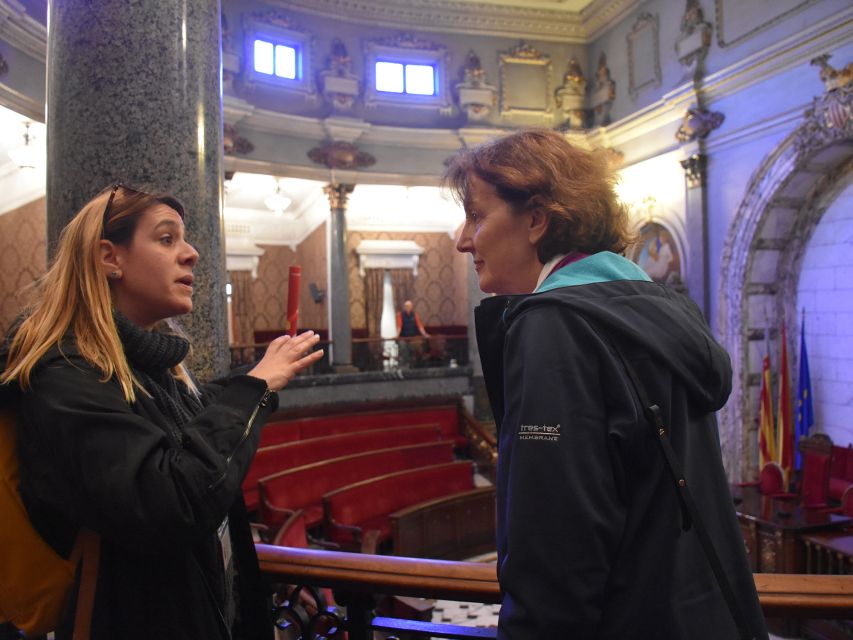
One of the early or central stops is Valencia City Hall, also called the City Palace in some descriptions of the tour. When the building is open for the guided visit, your entrance is included.
The City Hall visit adds a useful civic layer to the tour. Valencia is not only a collection of old churches and merchant buildings. It is also a working city with active public institutions, and entering the building lets you connect the historic center with modern local government.
There is an important scheduling catch. The guided City Hall visit takes place on working days, unless an official event is happening. On those occasions, the exterior and surrounding area may still form part of the route, but the interior visit is not guaranteed. If seeing inside matters to you, check the available date and ask the provider before booking.
Sara, Maria, and other guides are often praised for adjusting the amount of information to the group. That matters in a building like City Hall, where a short explanation of its use and design can be more helpful than a long list of dates. You will likely get the most from this stop if you ask questions about Valencia today, not only about its medieval past.
Squares, markets, and the city between the monuments
The walk connects major buildings through Valencia’s public spaces. Previous routes have included plazas, the Central Market, and streets leading toward the cathedral and Silk Exchange. These transitions are not dead time. They show how Valencia’s old center works as a place for shopping, meeting, government, worship, and tourism all at once.
The Central Market is particularly useful as a point of context, even if the tour does not spend a long time inside. It helps you understand the food culture that guides often discuss when recommending local dishes and restaurants. Gabor, for example, suggested Armonia to one family, who later enjoyed its Valencian paella.
Do not expect a food tour. Restaurant advice is an extra benefit, not the main product. Guides such as Maria and Sara have also offered suggestions for other sights to see after the walk, which can save you time when you are deciding what to do next.
The route may pass through lively public areas, so you will see Valencia as a working city rather than as a museum display. The tradeoff is that noise, crowds, weather, or an event can make some explanations harder to hear. Cheryl appreciated that Gabor deliberately sought shady places during a hot June tour. On a rainy day, as Daniela found, the weather may be the one factor that affects the experience most.
The Silk Exchange: the tour’s main interior visit
The Lonja de la Seda, or Silk Exchange, is the clearest architectural centerpiece of the walk. Your entrance is included according to the monument’s opening schedule, and going inside gives the tour more substance than a street-level old-town stroll.
The building represents Valencia’s commercial strength and its connection to Mediterranean trade. The name points to the silk business, but the wider lesson is about money, contracts, merchants, and the public importance of trade. A good guide can make the stonework easier to understand by explaining what the building was for, not simply pointing out its columns.
The interior is also where the two-hour format becomes a little tight. You receive an introduction rather than an extended architectural lecture. That is a fair compromise at this price, especially if your goal is to see the principal sights and decide which ones you want to revisit.
The Silk Exchange can close for an event. If that happens during your visit, the provider may send you the ticket so you can enter independently in the afternoon, or try to exchange it for a ticket of equal value to another museum or monument. This is worth checking on the day. The ticket arrangement helps protect the value of the booking, but it may mean your visit is no longer guided inside.
Same place, a different slice of the past:
- Madrid Essential: Historic Center, Plaza Mayor & Royal Palace
★ 5.0 · 6,416 reviews - Sevilla Food Tour: Tapas, Wine, History & Traditions
★ 5.0 · 3,468 reviews - Valencia Old Town Tour with Wine & Tapas in 11th Century Historic Monument
★ 5.0 · 3,234 reviews - Madrid Tapas & Taverns Small Group Food & History Tour
★ 5.0 · 2,664 reviews
The Water Tribunal and Fallas, two very different traditions

The tour’s World Heritage theme becomes more interesting because the three properties are not all buildings. The Silk Exchange is a physical monument. The Water Tribunal is a living legal tradition. Fallas is an annual celebration built around temporary art, fire, and fireworks.
The Water Tribunal, or Tribunal de las Aguas, reflects Valencia’s long connection with irrigation and farming. It gives you a glimpse of a local institution that is less obvious than a cathedral or market. You may not spend a long time at the tribunal itself, but learning why it matters adds a practical side to the city’s story.
Fallas offers a completely different idea of heritage. Its large artistic figures are temporary, and the festival combines craft, satire, fire, and fireworks. The guide can help you see why a short-lived event can receive the same international recognition as a medieval building.
This is one of the best reasons to choose this tour over a simple list of old-town sights. You get a broader picture of Valencia: trade, water management, religion, civic life, and popular celebration. The guide’s ability to connect those subjects matters more than the number of stops.
Cathedral area and Valencia’s long timeline
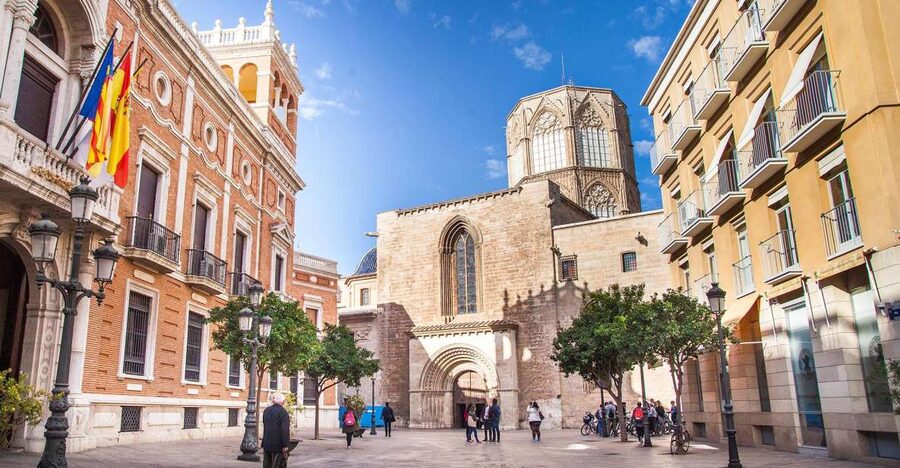
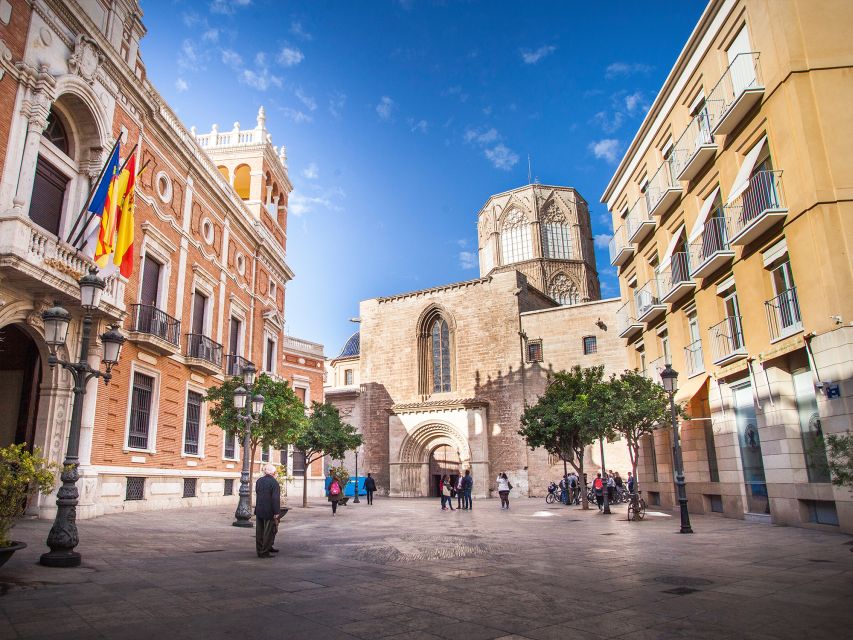
The route generally finishes around the cathedral area, after moving through the historic center’s main squares and monuments. The cathedral gives the guide another chance to explain how Valencia changed over more than 21 centuries.
You should treat this part as an introduction rather than a cathedral visit. The tour information does not include cathedral admission, so do not assume you will go inside as part of the package. The guide can still help you understand the building’s place in the city and point out details you might otherwise pass without noticing.
One strength of the tour is the range of periods covered. You are not given a single narrow story about Valencia. Instead, the walk links ancient origins, medieval commerce, public institutions, religious buildings, and present-day traditions. Several guides have been praised for explaining architecture and history in plain English, at a pace that keeps the group moving.
The route is also a good choice if you prefer stories to dates. Sara has been praised for bringing the city to life, while Eugenia was described as especially passionate about her home city. Carlos received strong praise for connecting architecture, customs, and the way Valencia developed over time.
What the guides add to the experience
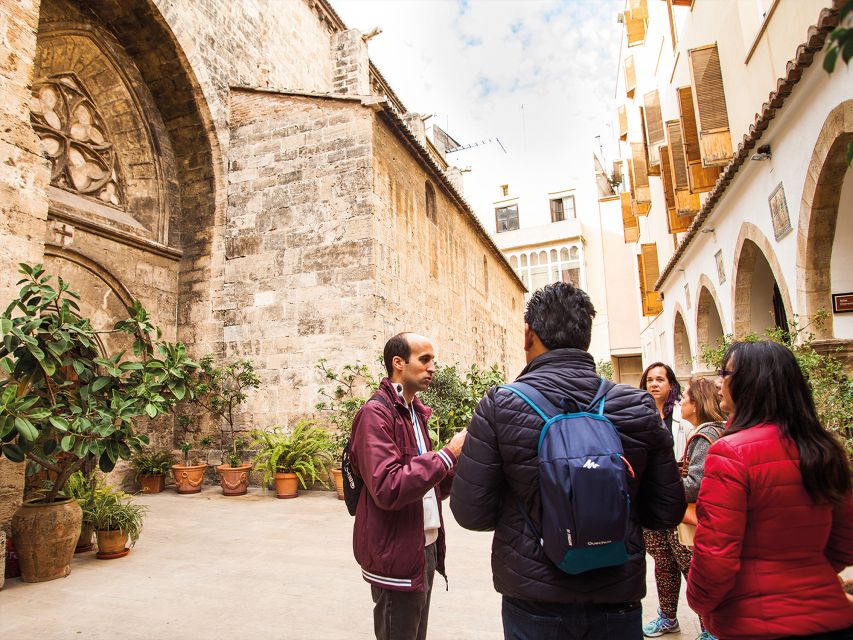
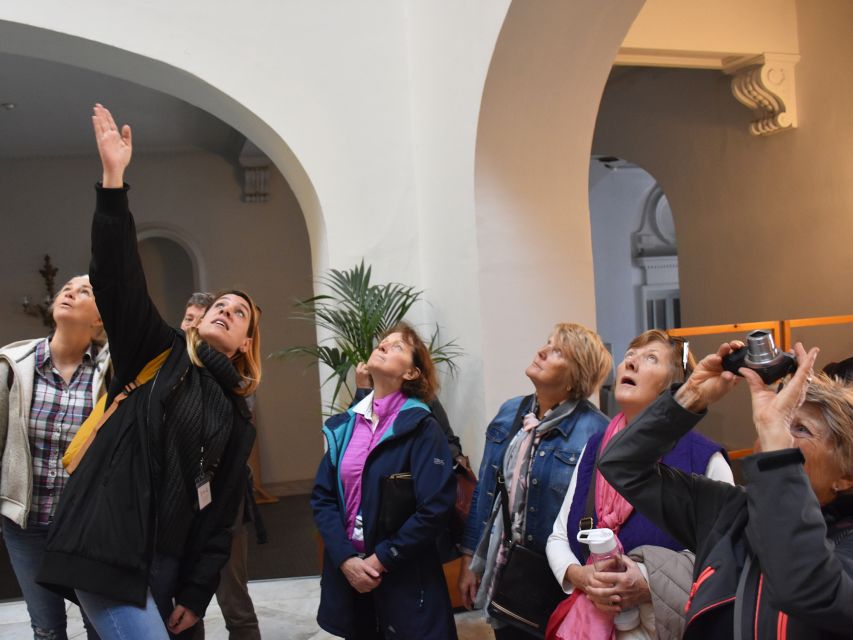
The human side of this tour is a major reason its rating is high, at 4.7 from 684 reviews. Gabor is repeatedly praised for his friendly manner, clear English, local knowledge, photographs, and restaurant suggestions. Maria is often described as calm, clear, and good at answering questions. Sara is praised for enthusiasm, humor, and a strong grasp of local history.
That does not mean every departure will feel identical. Different guides lead the walk, and each person will tell the story in a slightly different way. Some groups may be small, even just two or three people, while other departures may have more participants. Small groups allow more questions and a more personal pace, but group size is not specified in advance.
The guide-led format also helps if you are not comfortable reading Spanish signs or working out the old-town route alone. You can ask about restaurants, further sights, and local customs as you go. If you want to change to another language group, availability applies and there is an extra charge of €5 per person.
The advertised language is English. The experience is described as led by a bilingual local guide, but you should select the English departure unless the booking information gives you another confirmed option.
Price, access, and who will value it most
At $21 per person, the tour offers good value if you plan to visit the Silk Exchange anyway. The entrance fee is included, and you also receive a guided introduction to City Hall when its schedule allows. You are paying not just for admission, but for a route that joins several sights and explains how they relate.
The value is weaker if you prefer to move slowly, take many photographs, or spend a long time inside each building. Two hours is enough for a useful overview, but not enough for detailed visits to every monument. You may still want to return to the Silk Exchange or cathedral afterward.
The tour is wheelchair accessible, which makes it suitable for a wider range of visitors. Even so, ask about the exact day’s route if you have specific mobility needs, since historic centers can include uneven paving and changes caused by public events. The supplied information confirms accessibility but does not describe every surface or entrance.
You can cancel up to 24 hours before the start for a full refund, and you can reserve now and pay later. Those terms are useful if your Valencia schedule is still shifting, especially around weather or train arrangements.
I would recommend this experience to:
- First-time visitors who want a clear introduction to central Valencia.
- People with only a short stay.
- History and architecture fans who want the Silk Exchange explained properly.
- Families or mixed-age groups looking for a manageable two-hour activity.
- Anyone who likes practical local advice along with history.
I would choose something else if you want a full-day food experience, long museum visits, or a tour focused only on Fallas. This walk introduces those subjects, but it cannot explore each one at length.
Should you book the Valencia heritage walk?
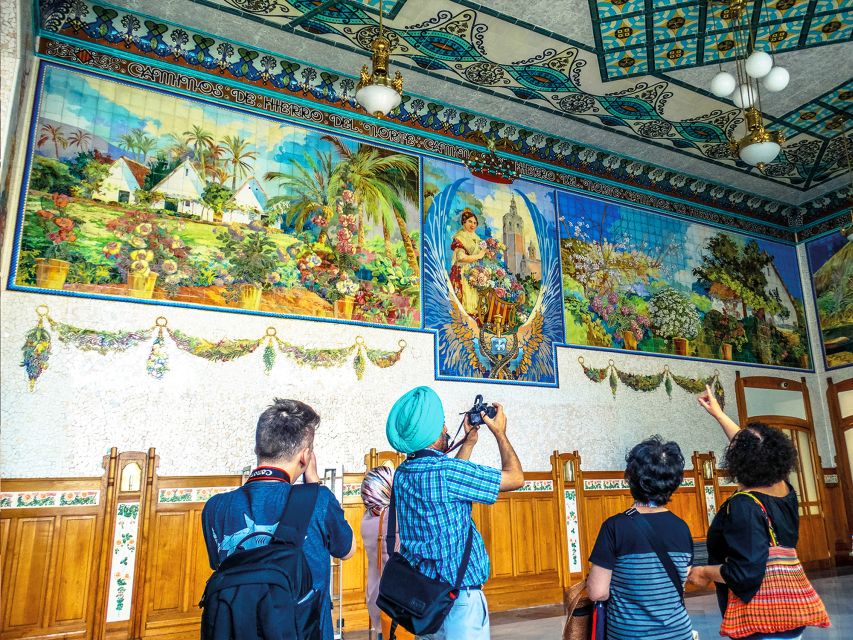
Book it if you want a well-priced orientation with real cultural range. The Silk Exchange admission, central route, World Heritage focus, and helpful local guides give the tour more substance than a basic photo stop walk.
I would schedule it near the beginning of your stay, then use the guide’s suggestions to plan the next day or two. Just confirm the City Hall schedule, remember that the Silk Exchange can close for events, and accept that two hours means a brisk overview. For $21, it is a sensible way to meet Valencia before you start exploring on your own.
FAQ
How long does the Valencia walking tour last?
The tour lasts two hours.
How much does the tour cost?
The listed price is $21 per person.
What language is the guided tour in?
The tour is offered in English with a live tour guide.
Where is the meeting point?
Meet at the Tourism Hub in the West Tower of Estación del Norte, the tower on the right when facing the station. It is on the ground floor at Carrer de Xàtiva, 24. Xàtiva is the nearest metro station.
Is entry to the Silk Exchange included?
Yes. The entrance fee to the Lonja de la Seda is included according to the monument’s opening schedule.
Is City Hall included?
City Hall entry is included according to its opening schedule. The guided visit takes place on working days unless an official event is taking place.
What happens if the Silk Exchange closes for an event?
The provider may send you the ticket so you can enter independently in the afternoon, or may try to exchange it for a ticket of the same value to another museum or monument.
Is the tour wheelchair accessible?
Yes, the activity is listed as wheelchair accessible. You can still ask about the exact route if you need specific information about access on your chosen date.
Just added around Spain
- Jerez de la Frontera History and Art Walking Tour★ 4.5 · 49 reviews
- 2 Hours Tour around Cádiz: History, anecdotes and curiosities★ 5.0 · 89 reviews
- Bilbao Historical Small Group Tour★ 4.5 · 159 reviews
- Barcelona Jewish & Gothic Tour★ 5.0 · 18 reviews
- Andorra Original History and Sightseeing Tour (Private, Pickup)★ 5.0 · 350 reviews
- History Museum of Catalonia & Rooftop Access Ticket★ 4.5 · 43 reviews
- Sip, Sites & Bites Barcelona Food, Drinks & History Tour★ 4.5 · 95 reviews
- Barcelona Tapas Food Tour, Taverns, History & Local Culture★ 5.0 · 42 reviews
History Walking Tours, compared.
History and Hauntings of Salem Guided Walking Tour
Read our review →
Freedom Trail History Small Group Walking Tour
Read our review →
Historic Charleston Guided Sightseeing Walking Tour
Read our review →
Tapas Walking Tour with Food, Wine, and History
Read our review →
Savannah History and Haunts Candlelit Ghost Walking Tour
Read our review →
A History of Terror – Belfast City Centre Walking Tour
Read our review →Browse the lists this tour appears in