
Review · KATHMANDU
TOP 4 UNESCO World Heritage Sites Tour
Four sacred sites, one busy day. This Kathmandu tour links Pashupatinath, Boudhanath, Swayambhunath, and Patan Durbar Square with private transport, making it a smart way to cover widely scattered sights in six to seven hours. I like the door-to-door pickup and the chance to see both Hindu and Buddhist traditions in one outing. The main drawback is that entrance fees, roughly NPR 2700, are extra, and only Hindu visitors may enter Pashupatinath Temple.
I also like the private format. You are not tied to a large group, so your guide can slow down for questions or adjust the pace. Guides such as Kapil Pandey and Saraswati Ghimire have received especially warm praise for clear explanations and friendly care. Traffic can be stressful, though, and the four-site schedule leaves little room for lingering.
Key points to know before you book
- Four major UNESCO sites in one day: The route covers Kathmandu Valley’s best-known Hindu, Buddhist, and Newari landmarks.
- Private vehicle and hotel service: Pickup and drop-off are provided anywhere in Kathmandu by air-conditioned tourist vehicle.
- Strong guide support: Kapil Pandey and Saraswati Ghimire are praised for clear explanations, patience, and thoughtful help.
- Pashupatinath has an important access rule: Only Hindu visitors may enter the temple itself.
- Budget for extra costs: Monument entry fees are about NPR 2700, and tipping the guide and driver is expected.
- Choose morning or afternoon: The departure choice helps you fit the tour around other Kathmandu plans.
Why this four-site route works in Kathmandu
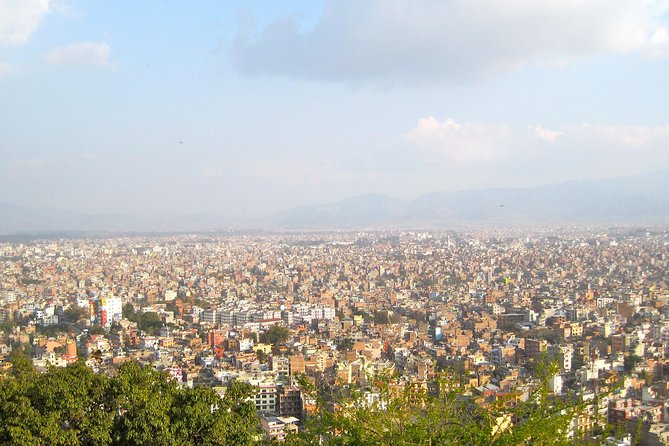
Kathmandu Valley is not a single compact historic center. Its major religious and royal sites are spread across the capital, and moving among them by local transport can eat up much of your day. This private tour handles the road time for you and puts a driver and English-speaking guide at your disposal.
The schedule gives you about one hour at Pashupatinath, one hour at Boudhanath, 45 minutes at Swayambhunath, and one hour at Patan Durbar Square. That adds up to three hours and 45 minutes at the sights, with the remaining time used for traffic and transfers.
I see this as a focused introduction rather than a slow study of Kathmandu. You will see the major landmarks, learn how Hindu and Buddhist practice shape daily life, and get a useful first look at Newari architecture. If you want long visits inside temples, extended photography stops, or unhurried wandering, you may find the pace brisk.
The private setup makes the schedule more manageable. Your group alone takes part, and the driver can handle Kathmandu’s difficult traffic while you watch the city pass by. One guest specifically praised Suman for navigating the streets with ease, while another described the driver as reliable despite stressful road conditions.
More UNESCO World Heritage Tours in Kathmandu:
- Private Kathmandu Sightseeing Tour | UNESCO World Heritage sites
★ 5.0 · 756 reviews - UNESCO Seven World Heritage Tour in Kathmandu
★ 5.0 · 253 reviews - Nepal Discovery Tour: Heritage Sites & Scenic Hill Easy Hike
★ 5.0 · 121 reviews
Pashupatinath Temple and the Bagmati River
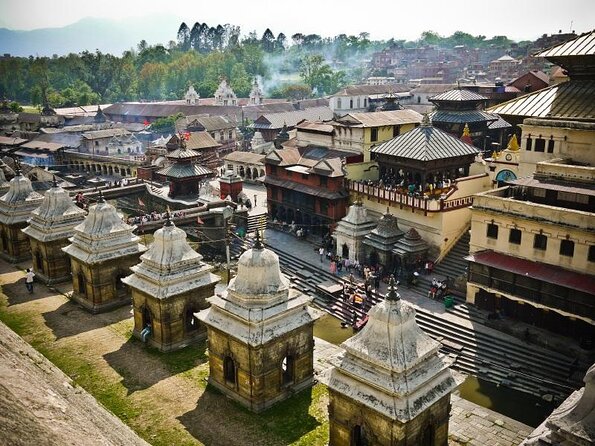
The first stop is Pashupatinath, about five kilometers east of Kathmandu on the bank of the Bagmati River. This is one of the valley’s most important Hindu pilgrimage sites and is dedicated to Lord Shiva.
The temple’s traditional details are striking: two golden roofs and four silver doors. You will also encounter a place where worship is active rather than staged for visitors. The stop is meant to help you observe Hindu spiritual practice and understand why the site matters to pilgrims.
There is a firm restriction here. Only Hindu visitors may enter Pashupatinath Temple. If you are not Hindu, you should not expect to go inside the main temple. Ask your guide what areas you may view and how to behave respectfully around worshippers and religious activity.
This rule makes the guide particularly useful. Kapil was praised for helping one visitor pray during a very crowded period of special prayers. That kind of assistance can matter more than a long lecture, especially at a living religious site where timing, custom, and courtesy all count.
Plan your clothing carefully before you leave your hotel. Shorts and sleeveless tops are not allowed at places of worship and selected museums, and both men and women must cover their knees and shoulders. Dressing properly from the start saves you from being refused entry at sites where access is permitted.
You receive about an hour here. That is enough for an introduction and time to take in the setting, but not necessarily enough for a long religious visit during a crowded period. The experience is strongest when you treat Pashupatinath as a sacred place first and a sightseeing stop second.
Boudhanath Stupa and the Buddhist quarter
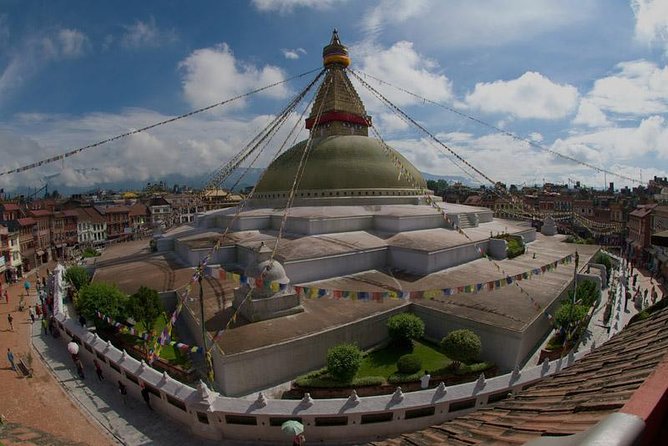
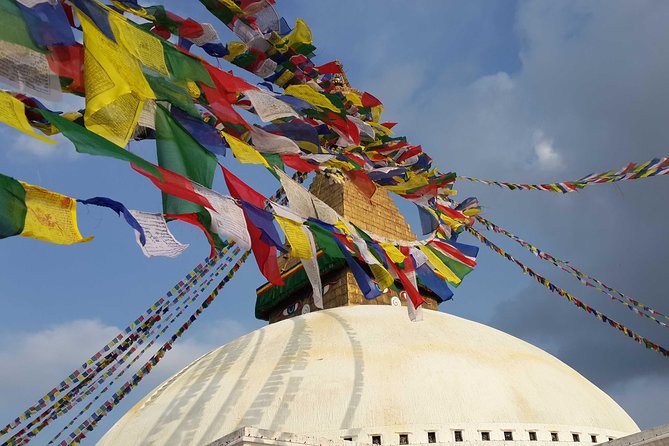
Boudhanath is about six kilometers east of central Kathmandu and is said to have been built in the fifth century. It is one of the largest Buddhist stupas in the world and is surrounded by Buddhist lamas and monasteries.
This stop gives the day a clear change of tone. Pashupatinath centers on Hindu worship, while Boudhanath offers a Buddhist setting where the stupa, monastic presence, and devotional activity shape the visit. Your guide can help explain what you are seeing and point out details that are easy to miss when you are simply circling the structure.
You have about an hour here. That is a useful amount of time for a first visit, particularly if you want to look closely at the stupa and absorb the religious atmosphere. Still, the stop is not designed as a full exploration of every monastery or side street in the area.
The included transport matters here. Boudhanath and Pashupatinath are both east of Kathmandu, but the city’s roads can make even short distances slow. Instead of spending your energy finding the next stop, you can use the private vehicle as a moving break between sites.
Swayambhunath, the hilltop Monkey Temple
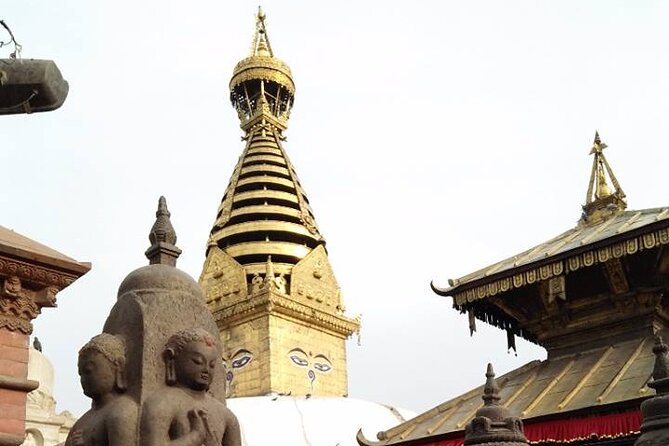
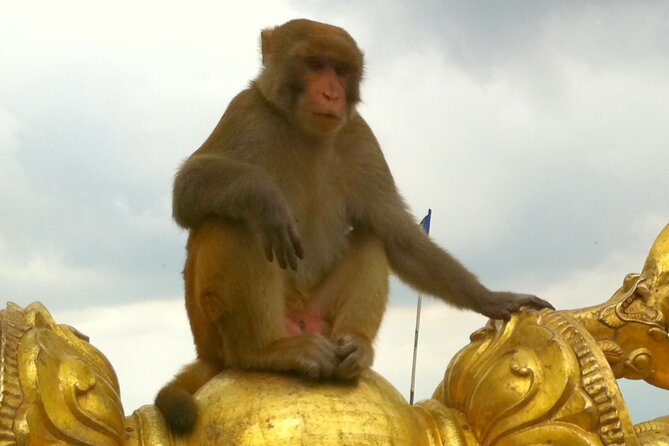
Swayambhunath, often called the Monkey Temple, sits on a hill about 77 meters above the ground. The stupa is described as 2500 years old, and the hill offers a broad view over Kathmandu Valley.
The setting is the main attraction. After the lower, river-side atmosphere of Pashupatinath and the large Buddhist stupa at Boudhanath, Swayambhunath gives you a higher viewpoint and a different way to understand Kathmandu. The painted eyes on the dome are among its most recognizable details.
Your stop lasts about 45 minutes, the shortest visit of the day. That should be enough for a guided introduction and the hilltop view, but you will need to keep moving. If stairs or uphill walking are a concern, ask about the route and pace before you begin. The supplied information says most people can participate, but it does not promise a step-free visit.
The Monkey Temple name is memorable, but the religious setting deserves your attention too. Follow your guide’s lead on respectful behavior, clothing, and photography. This is not simply a lookout with a famous nickname.
A few more history tours around Kathmandu worth a look
- Kathmandu Private Sightseeing Tour | UNESCO World Heritage Sites
★ 5.0 · 109 reviews - Kathmandu: Full Day Private Top 4 UNESCO Heritage Tour W/Lunch.
★ 5.0 · 86 reviews - Kathmandu World Heritage Tour
★ 5.0 · 74 reviews - Kathmandu Heritage Tour (Full Day)
★ 5.0 · 63 reviews
Patan Durbar Square and Newari design
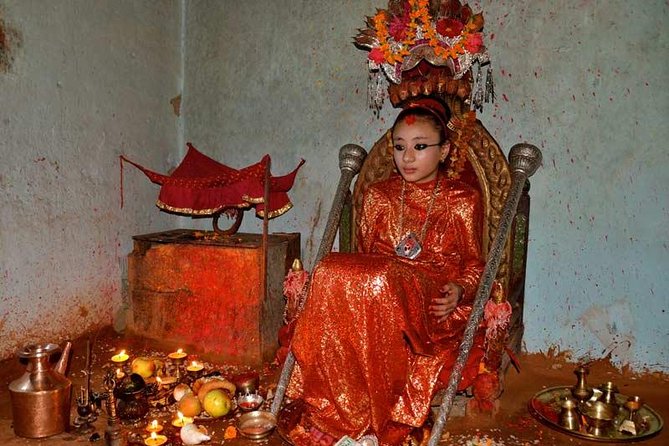
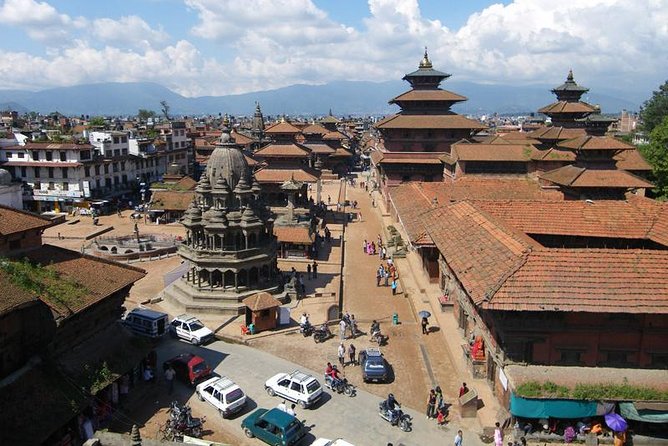
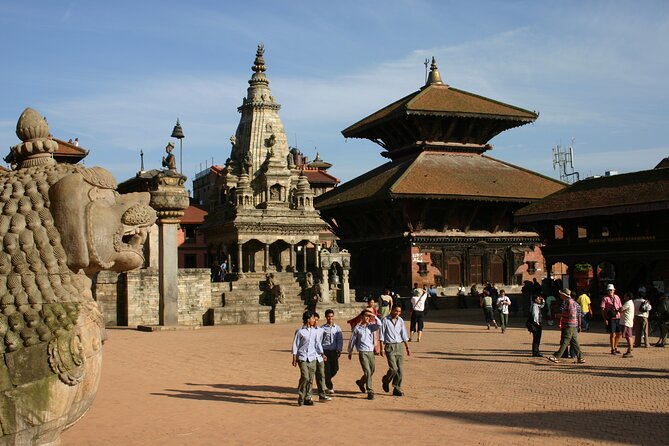
The final stop is Patan Durbar Square, home of the former Patan royal family. It is often photographed for its remarkable Newari architecture, and its main attractions include the Krishna Mandir.
Patan gives the tour a strong architectural finish. The earlier stops focus heavily on active religious practice, while this square brings royal history, temples, courtyards, and Newari craftsmanship into the picture. Your guide can help connect the buildings to the former royal setting instead of leaving you to see them as a collection of ornate facades.
You receive about an hour here. That is enough to appreciate the square’s main sights and hear an organized explanation, but Patan rewards slower wandering. If architecture is your main reason for booking, you may wish for more time than this schedule allows.
The square is also a good place to notice how closely religion, art, and political power have been linked in the valley. That connection is one reason the four-stop plan works: each location adds a different part of Kathmandu’s cultural picture.
What the private vehicle adds to the day
The tour includes an air-conditioned private tourist vehicle, hotel pickup, and hotel drop-off anywhere in the capital. For a six to seven-hour route with four separate sites, that convenience is a real part of the value.
Kathmandu traffic can be tiring, particularly when you are trying to make several stops in one day. You are not left to arrange taxis between each monument, and you do not have to negotiate the next ride while keeping track of entrance times. The private driver also lets your group travel at its own pace within the limits of the schedule.
The tradeoff is that a vehicle cannot make traffic disappear. A six to seven-hour estimate is approximate, and road conditions may affect how long you spend at each site. The schedule works best when you accept some flexibility and do not place another time-sensitive appointment immediately afterward.
You can choose a morning or afternoon departure. A morning start may suit you if you want the rest of the day free, while an afternoon option can work around another Kathmandu plan. The data does not specify exact departure times, so confirm the pickup details when booking.
Guides who make the sites easier to understand
The quality of the guide is central to this experience. You are not simply being delivered to four monuments. The tour includes an English-speaking professional guide, and the strongest praise centers on clear explanations, patience, flexibility, and personal care.
Kapil Pandey is repeatedly singled out for his friendly manner and strong site explanations. He was also praised for answering questions and helping a visitor pray at Pashupatinath during crowded special prayers. Saraswati Ghimire, also called Sara, was appreciated for sharing facts about all four sites and discussing changes in Nepalese culture in recent years.
Those details suggest what you should expect from a good day: not just dates and names, but help making sense of living religious practice and changing local culture. When you book, it is reasonable to request Kapil or Saraswati if either is available, though a specific guide cannot be guaranteed by the information provided.
Tipping is expected for the guide and driver, so include it in your mental budget. The tour price does not cover it.
Is the $50 price good value?
At $50 per person, the tour offers a useful combination of private transport, hotel service, and professional guiding. For someone with limited time in Kathmandu, the value comes from putting four major sites into one organized day without arranging separate rides.
The price does not include monument entrance fees, listed at around NPR 2700. That is a significant extra cost compared with the advertised tour price, so you should calculate the full day before booking. Tips are also expected, and those are separate as well.
Even with those additions, the price can make sense if you value convenience and explanation. A solo visitor or couple may pay more per person for private service than for a large shared bus, but you gain a tour limited to your own group. Group discounts are offered, which may improve the value for families or friends traveling together.
I would not choose this tour solely because it is cheap. I would choose it because the route is efficient, the vehicle removes transport problems, and the guide can add context at places where independent visits may feel confusing.
Clothing, access, and practical preparation
Wear clothing that covers your shoulders and knees from the start. The rule applies to both men and women, and failure to follow it can lead to refused entry at places of worship and selected museums.
Pashupatinath requires extra thought because only Hindu visitors may enter the temple itself. If that restriction affects your plans, ask the provider how the visit will work for you before booking.
Confirmation is provided at the time of booking, and at least one person is required for a booking. The tour is near public transportation, though private pickup means you do not need to depend on it for this experience.
Most people can participate, according to the supplied tour information. Still, Swayambhunath is on a hill, and the schedule includes several active sightseeing stops. Ask about physical demands if you have mobility concerns, since no detailed accessibility information is provided.
Free cancellation is available if you cancel at least 24 hours before the start time. Cancellations or changes made inside that 24-hour window are not accepted for a refund.
Who should book this Kathmandu day tour?
I would recommend it for a first visit, a short stay, or anyone who wants a guided introduction to Kathmandu Valley’s major religious and royal sites. It suits solo visitors, couples, families, and small groups who prefer a private vehicle and the freedom to ask questions.
It is also a good fit if you want to compare Hindu and Buddhist traditions in one day. Pashupatinath and Boudhanath provide the clearest contrast, while Swayambhunath adds the hilltop setting and Patan adds Newari royal architecture.
I would hesitate if you want to spend half a day at one temple, browse Patan slowly, or avoid all extra entrance costs. The itinerary is full, and the traffic can make the day feel even tighter.
Final call: book it if you value context and convenience
Book this tour if your Kathmandu time is limited and you want four major UNESCO sites handled in one private day. The best reasons are the hotel pickup, private vehicle, strong guide reports for Kapil and Saraswati, and the mix of Hindu, Buddhist, and Newari culture.
Before paying, confirm the total cost with the roughly NPR 2700 in entrance fees and expected tips. Check the departure time, dress modestly, and remember the Hindu-only entry rule at Pashupatinath. With those points clear, this is a practical and well-focused way to get your bearings in Kathmandu.
FAQ
How long does the tour last?
The tour takes approximately six to seven hours.
Can I choose a morning or afternoon departure?
Yes. Morning and afternoon departure options are available.
Is hotel pickup included?
Yes. Pickup and drop-off are provided from anywhere in Kathmandu by private vehicle.
Is the tour private?
Yes. Only your group participates in the tour.
What kind of vehicle is included?
The tour includes an air-conditioned private tourist vehicle.
Is an English-speaking guide included?
Yes. An English-speaking professional tour guide is included.
Are monument entrance fees included?
No. City sightseeing monument fees are not included and cost around NPR 2700.
Can non-Hindu visitors enter Pashupatinath Temple?
No. Customers must be Hindu to enter Pashupatinath Temple.
What clothing is required?
You must cover your knees and shoulders. Shorts and sleeveless tops are not allowed at places of worship and selected museums.
Can I cancel for a full refund?
Yes, if you cancel at least 24 hours before the experience start time. Cancellations within 24 hours are not refunded.
Just added around Kathmandu
- Full Day Private Tour of Seven World Heritage Sites in Kathmandu★ 5.0 · 19 reviews
- Seven World Heritage Day Tour in Kathmandu Nepal★ 5.0 · 26 reviews
- Kathmandu World Heritage Tour★ 5.0 · 74 reviews
- Kathmandu UNESCO World Heritage Tour★ 5.0 · 24 reviews
- Kathmandu Heritage Day Tour with Guide.★ 5.0 · 30 reviews
- Kathmandu World Heritage Full Day Culture Tour★ 5.0 · 41 reviews
- Kathmandu: Full Day Private Top 4 UNESCO Heritage Tour W/Lunch.★ 5.0 · 86 reviews
- Kathmandu Guided Day Tour: Explore Top 4 UNESCO Heritage Sites★ 5.0 · 19 reviews
UNESCO World Heritage Tours, compared.
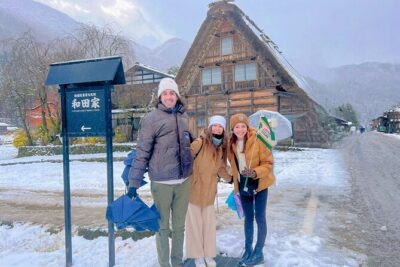
World Heritage Shirakawa-go and Experience Tours from Kanazawa
Read our review →
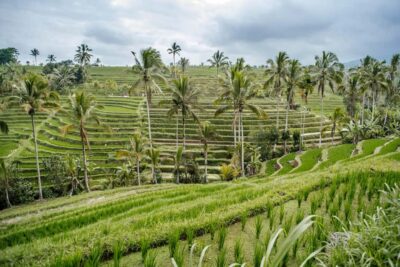
Bali: Tanah Lot UNESCO World Heritage Sites Full-Day Tour
Read our review →World Heritage Kyoto & Nara Uji Authentic Matcha Experience
Read our review →
UNESCO’s Ayutthaya Historical Park: Full-Day Tour from Bangkok
Read our review →
Rotterdam: Kinderdijk UNESCO World Heritage Entry Ticket
Read our review →
From Busan: Gyeongju UNESCO World Heritage Guided Day Tour
Read our review →Browse the lists this tour appears in