
Review · CATALONIA
Tarragona: Roman Heritage Guided Walking Tour
Rome begins beside the Mediterranean. This two-hour walk gives you a clear route through Tarragona’s Roman past, from the ancient city walls to the Circus vaults and the seaside Amphitheater. I especially like the large city model, which helps you picture the Roman settlement before modern homes and streets grew around it, and the audiovisual presentation with 3D images, which adds useful visual context.
The price is appealing at $17 per person, especially with the Circus entrance included. The main caution is time: two hours moves quickly, and the route can feel short if you want long explanations at every monument. A crowded start can also make it harder to hear, so arriving early matters.
Key Things to Know Before You Go
- The Roman walls are the opening lesson: You begin beside some of the oldest Roman walls outside Italy, where the guide explains Tarragona’s role as Rome’s gateway to the Iberian Peninsula.
- The Circus vaults bring ancient entertainment to life: The included Circus visit focuses on the hidden spaces connected with chariot racing.
- The city model makes the ruins easier to read: You see how Roman buildings once fitted into the same urban area now occupied by houses, squares, and streets.
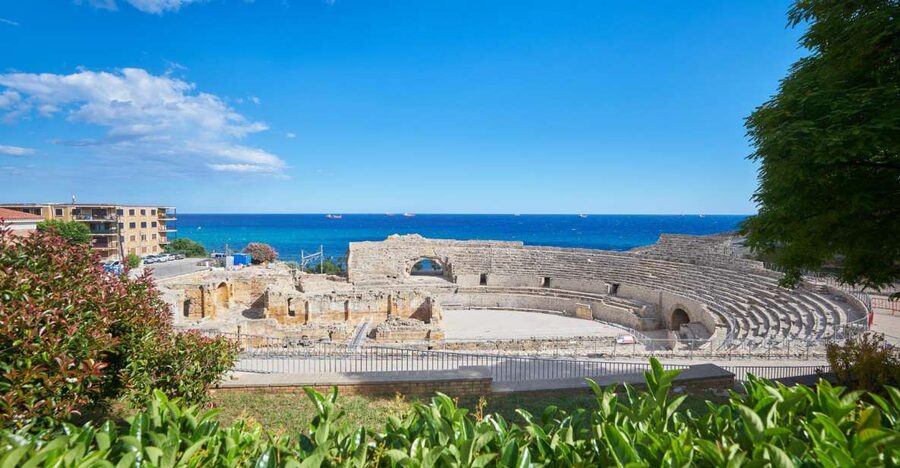
- The Amphitheater has a dramatic setting: The final stop sits beside the sea, giving you memorable views as well as a chance to learn about gladiator contests and animal hunts.
- The tour is led in Catalan or Spanish: Guides such as Adrià have been praised for clear, warm explanations and strong local pride.
- Comfortable shoes are essential: This is a walking tour, and large bags or luggage are not allowed.
Starting Beside Tarragona’s Roman Walls
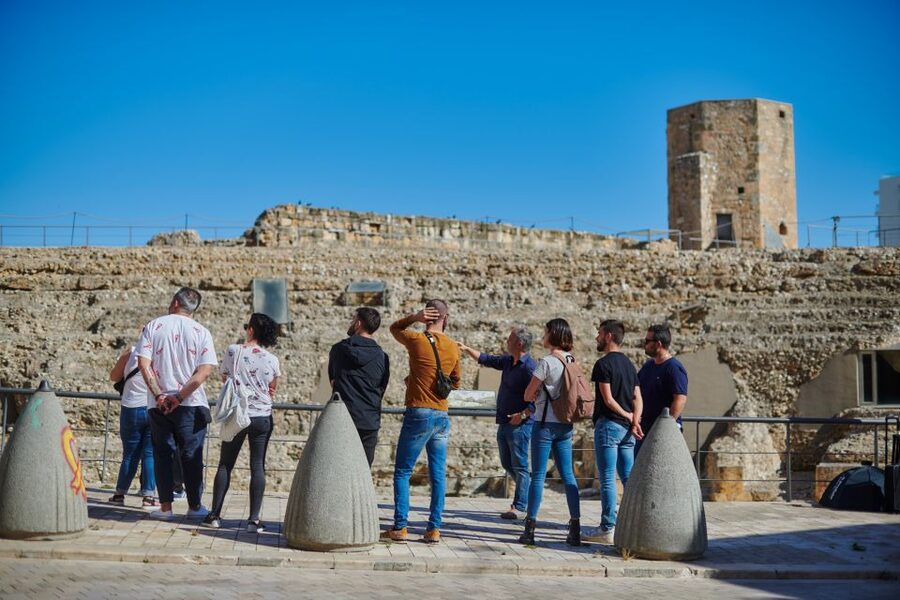
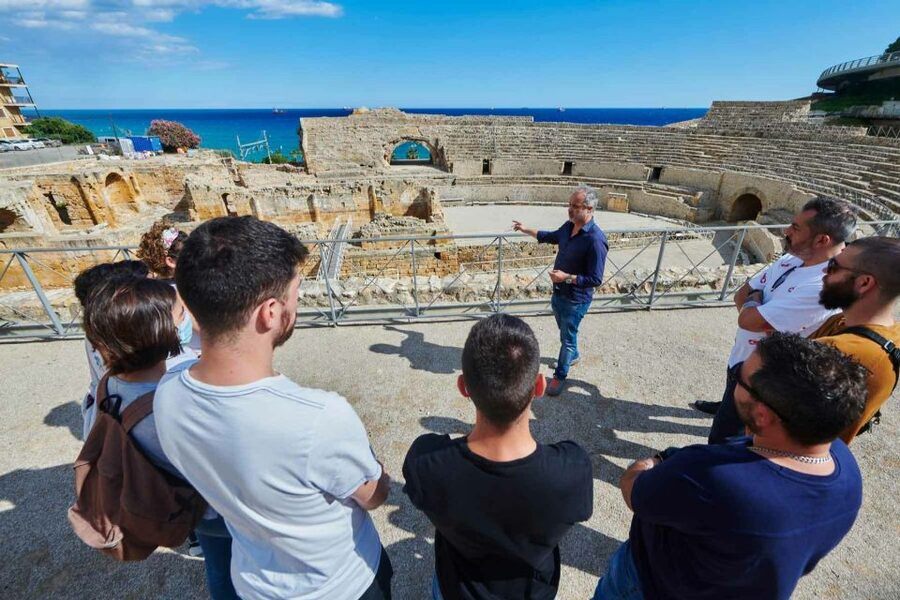
You meet at the Itinere office beside the Roman walls, arriving at least 10 minutes before the scheduled start. That extra time is sensible. One of the tour’s practical weak points is a busy departure, and several groups can gather in the same area. If you arrive just before the start, you may spend the first minutes looking for your group rather than listening to the guide.
The walls make an excellent first stop because they immediately show Tarragona’s scale and strategic value. These are described as the oldest Roman walls outside Italy, a fact that gives the opening moments real weight. Instead of beginning with a general history lecture, the guide can point to the stonework and explain why Rome chose this hill beside the Mediterranean.
The key idea is Tarragona’s position as a gateway to the wider peninsula. Rome did not simply place a small outpost here. The city became an important base for Roman power in what is now Spain, and its location helped connect the coast with the rest of the territory.
I like this part because it gives you a framework for everything that follows. Without it, the Circus, Amphitheater, and scattered remains can feel like separate ruins. With it, you understand that Tarragona was planned as a major Roman city, not just a collection of old stones.
The walls also set the right pace. You are outdoors, moving through the modern city while looking at remains from two thousand years ago. Tarragona’s Roman past is not locked away in one museum. It is woven into the streets you are using now.
More History Walking Tours in Spain
- Barcelona: Tapas Walking Tour with Food, Wine, and History
★ 4.8 · 4,261 reviews - Barcelona Tapas Walking Tour: Food, Wine & History
★ 4.5 · 1,928 reviews - Madrid Historical Walking Tour
★ 5.0 · 721 reviews
Seeing Roman Tarragona Under the Modern City
The route continues into Tarragona’s historic center, where ancient monuments sit among present-day homes, streets, and squares. This is one of the most useful parts of the walk for anyone who wants more than a quick photograph at a ruin.
The guide explains how Roman buildings functioned and how the city was arranged. The large city model is especially helpful here. Roman sites can be hard to understand when only fragments remain, but a model gives you the missing shape: where the buildings stood, how the streets connected, and how the main public areas related to one another.
I find this kind of visual aid valuable because it keeps the talk grounded. You are not asked to remember a long list of dates or Latin names. You can look at a physical model and connect the guide’s explanation to the ground beneath your feet.
The setting also gives you a useful lesson in urban layers. Tarragona is not a preserved Roman theme park. Modern life has grown around and over its ancient remains. That can make the archaeology less obvious, but it also makes the city feel more real. You see how old structures survive inside an active town rather than sitting apart from daily life.
A guide who can explain those layers clearly makes a big difference. Adrià has received particularly warm praise for understandable explanations, enthusiasm, and obvious pride in Tarragona and Catalonia. If he is leading your walk, expect a personal tone rather than a dry recital of facts. The guide language is Catalan or Spanish, so you should choose this experience only if you are comfortable following one of those languages.
Entering the Circus Vaults and Recalling Chariot Races
The Circus is the tour’s included interior visit. Your admission covers the vaults, spaces that help you understand the huge entertainment complex once used for chariot racing.
The vaults are important because they shift your view below street level. In Tarragona, Roman remains are often mixed into the modern city, and the Circus is a good example of that layered setting. You are not simply looking at an open field and being told races happened there. The vaults offer a more physical sense of the structure that supported the spectacle.
The guide uses this stop to bring back the energy of the races. Chariots, speed, noise, and competition are easier to picture when you are inside the surviving parts of the complex. The tour does not just name the building. It explains its function and connects it to Roman public life.
The Circus visit also shows why a guided walk can be better value than seeing the monuments alone. A bare wall or underground passage can be hard to interpret without context. A good explanation turns a partial ruin into part of a working city.
Still, keep your expectations realistic. The experience is only two hours, and the Circus is one stop among several. You are getting an introduction, not an extended archaeological study. If you want every section examined in detail, the schedule may feel tight. One local visitor felt that three hours would have allowed a fuller treatment, and that is a fair point for anyone who likes slow sightseeing.
For most people, though, the Circus vaults are a strong use of the available time. They add variety to the route and give you a direct connection with one of Rome’s favorite public entertainments.
Using the 3D Presentation Before the Amphitheater
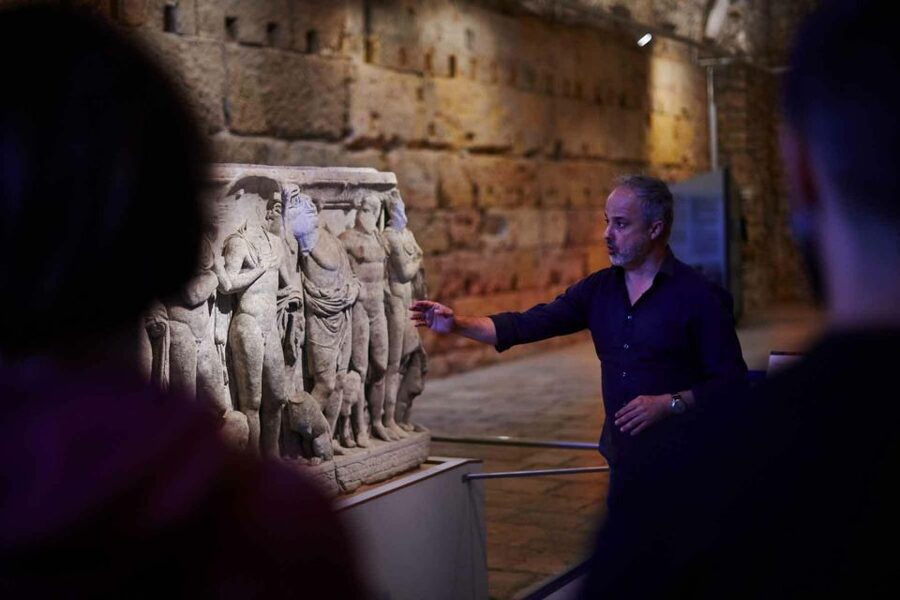
Before heading to the Amphitheater, you watch an audiovisual presentation using 3D images. This may sound less exciting than walking among ruins, but it serves a useful purpose.
Roman remains often leave you with a partial picture. You might see foundations, walls, or a curved structure, yet have trouble imagining the building when it was complete. The 3D material helps fill in those gaps. It gives you a clearer idea of how the site may have looked and makes the later stop easier to follow.
I would not treat the video as filler. It is one of the tour’s best tools for making the archaeology understandable, especially if you are visiting Tarragona without much prior knowledge of Roman architecture. A German-speaking participant singled out the Tarragona video as a favorite part of the visit, which makes sense: visual reconstruction can cross language and subject barriers better than a long spoken explanation.
The presentation also helps control the pace. Rather than stopping for a lengthy lecture at every outdoor monument, the tour uses images to explain the past before you reach the Amphitheater. That leaves more room for the final site and its setting.
The only limitation is that the tour is offered in Catalan and Spanish. The images will still help, but the full benefit depends on understanding the guide’s spoken explanation.
Same place, a different slice of the past:
- Madrid Essential: Historic Center, Plaza Mayor & Royal Palace
★ 5.0 · 6,416 reviews - Sevilla Food Tour: Tapas, Wine, History & Traditions
★ 5.0 · 3,468 reviews - Valencia Old Town Tour with Wine & Tapas in 11th Century Historic Monument
★ 5.0 · 3,234 reviews - Madrid Tapas & Taverns Small Group Food & History Tour
★ 5.0 · 2,664 reviews
Reaching the Seaside Amphitheater
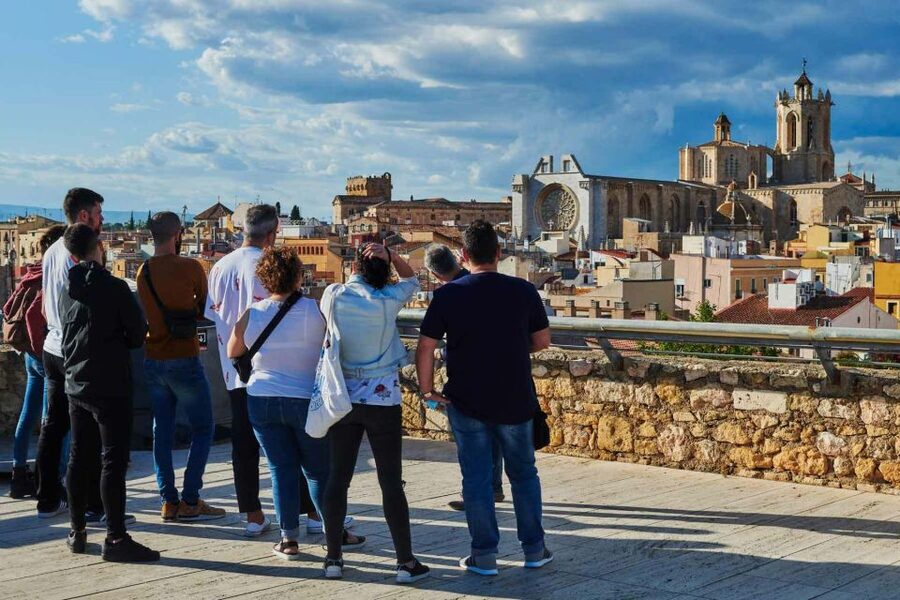
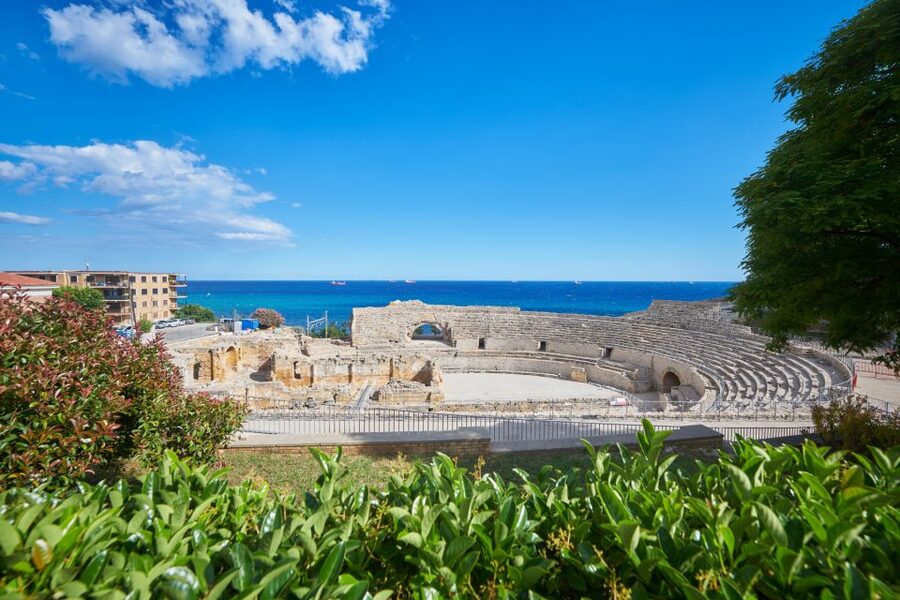
The Amphitheater is the visual high point of the walk. It sits beside the sea, and the setting gives the site an immediate sense of drama. You get both the Roman monument and broad views toward the Mediterranean, a combination that makes this stop memorable even before the historical explanation begins.
Here, the guide discusses gladiator fights and the hunting of wild animals. These events were designed as public spectacles, and the Amphitheater gives you a place to consider how entertainment, politics, and power worked in Roman society.
The site’s history did not end when the Roman shows stopped. The guide also reviews the Amphitheater’s later story, helping you see it as a monument that changed meaning over time. That wider view is useful because ancient ruins are not frozen objects. People continued to live with, reuse, and interpret them long after Rome’s arena culture disappeared.
Pay attention to the contrast between the arena and the sea. The open Mediterranean view is beautiful, but the subject matter can be grim. Gladiator combat and animal hunts were serious public events, not harmless performances. The location can make the past feel close while also reminding you how different Roman public life was from your own.
The supplied details specifically include entrance to the Circus, not a separate promise of entry into every part of the Amphitheater. You should therefore view this stop as a guided visit and explanation of the site, with the sea views as a major reward, rather than assume that every monument has the same admission arrangement.
What the Two-Hour Schedule Really Feels Like
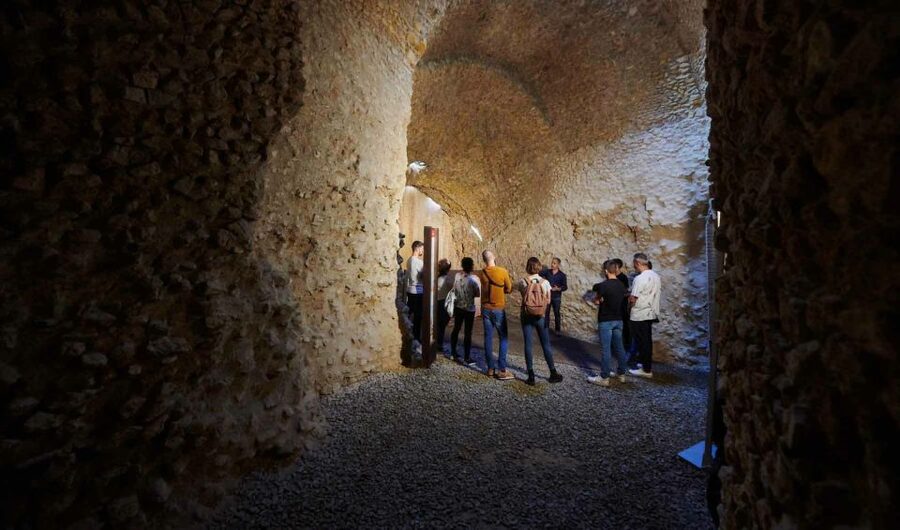
Two hours is enough for a strong introduction to Tarragona’s Roman core, but it is not generous. You will move through several major subjects: the walls, the city center, the city model, the Circus vaults, the 3D presentation, and the Amphitheater.
That compact format works well if you want to get your bearings at the start of a Tarragona visit. You leave with a map of the Roman city in your head and can return later to places that deserve more time.
It is less ideal if you prefer lingering at each site. The route has to keep moving, and a guide cannot give a long answer to every question without cutting into another stop. The timing becomes even more important in bad weather. One January tour took place during heavy rain and was still considered satisfactory, but poor conditions can make any walking route feel harder and less relaxed.
The group atmosphere may also affect the experience. A particularly crowded departure, with several groups leaving around the same time, can create noise and make it difficult to follow the guide. This is not a reason to avoid the tour, but it is a reason to arrive early and stay close enough to hear.
Bring comfortable shoes. Do not bring luggage or a large bag, since those are not allowed. The tour is wheelchair accessible, which is useful practical information when planning, though you should still make sure the meeting arrangements suit your needs before booking.
Is $17 a Fair Price?
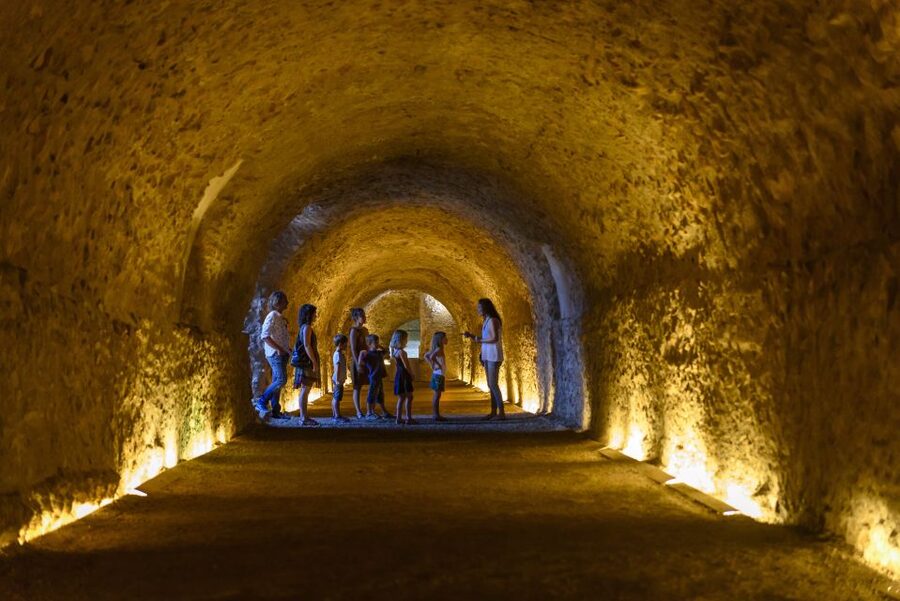
At $17, this is a good-value introduction to Tarragona’s Roman sights. The price includes a live city guide and entrance to the Circus, while also bringing together several major locations that would be harder to connect on your own.
The value is strongest if you want context. You can see Roman walls and an Amphitheater independently, but the city model, the 3D presentation, and the explanations about how each building worked add something a self-guided walk may not provide.
The price is less of a bargain if you already know Tarragona’s archaeology well or want a very slow visit. The tour cannot offer a detailed treatment of every monument in two hours. Think of it as a well-priced orientation with access to an important interior site, not a full day of Roman archaeology.
Free cancellation up to 24 hours before the start also reduces the risk of booking around an uncertain schedule. You can reserve now and pay later, which may help if you are arranging several activities in Catalonia.
Who Will Enjoy This Tarragona Walk?
I would recommend this tour to first-time visitors who want a clear introduction to the city’s Roman identity. It is also a good fit if you prefer a guide to connect scattered remains rather than reading separate signs at each location.
Families and mixed-interest groups may appreciate the city model and 3D presentation. These tools make the subject easier to follow than a talk built only around dates and architecture. The Amphitheater’s sea setting also gives the route a visual finish that helps keep the experience varied.
It suits visitors comfortable with Catalan or Spanish. If you need an English-language guide, this activity is not the right choice based on the stated language options.
History specialists may find the pace too quick. You will get the main story and several strong sites, but not an exhaustive study of Roman Tarragona. I would use this walk as a first look, then return independently if a particular monument catches your interest.
Should You Book It?
Book it if you want an affordable, guided introduction to Tarragona’s Roman past, especially the city walls, Circus vaults, and seaside Amphitheater. The strongest reasons are the clear visual aids, the included Circus admission, and the chance to understand how Roman remains fit into the modern city.
Skip it if you need an English tour, dislike group sightseeing, or want several hours at each monument. If you do book, arrive 10 minutes early, wear comfortable shoes, leave large luggage behind, and stay near the guide in crowded areas. For $17 and two focused hours, this is a sensible way to give Tarragona’s Roman center a proper beginning.
FAQ
Where does the Tarragona Roman Heritage tour meet?
The meeting point is the Itinere office next to the Roman walls. You should arrive 10 minutes before the activity begins.
How long does the tour last?
The walking tour lasts two hours.
What languages are available?
The live guide operates in Catalan and Spanish.
What is included in the price?
The activity includes the guided tour of Tarragona and entrance to the Circus.
Does the tour visit the Roman Amphitheater?
The itinerary includes a visit to the Amphitheater beside the sea, where the guide explains gladiator fights, animal hunts, and the site’s later history.
Is the tour wheelchair accessible?
Yes, the activity is listed as wheelchair accessible.
What should I bring?
Bring comfortable shoes. This is a walking tour.
Can I bring luggage or a large bag?
No. Luggage and large bags are not allowed.
Just added around Spain
- Jerez de la Frontera History and Art Walking Tour★ 4.5 · 49 reviews
- 2 Hours Tour around Cádiz: History, anecdotes and curiosities★ 5.0 · 89 reviews
- Bilbao Historical Small Group Tour★ 4.5 · 159 reviews
- Barcelona Jewish & Gothic Tour★ 5.0 · 18 reviews
- Andorra Original History and Sightseeing Tour (Private, Pickup)★ 5.0 · 350 reviews
- History Museum of Catalonia & Rooftop Access Ticket★ 4.5 · 43 reviews
- Sip, Sites & Bites Barcelona Food, Drinks & History Tour★ 4.5 · 95 reviews
- Barcelona Tapas Food Tour, Taverns, History & Local Culture★ 5.0 · 42 reviews
History Walking Tours, compared.

History and Hauntings of Salem Guided Walking Tour
Read our review →
Freedom Trail History Small Group Walking Tour
Read our review →
Historic Charleston Guided Sightseeing Walking Tour
Read our review →
Tapas Walking Tour with Food, Wine, and History
Read our review →
Savannah History and Haunts Candlelit Ghost Walking Tour
Read our review →
A History of Terror – Belfast City Centre Walking Tour
Read our review →Browse the lists this tour appears in