
Review · CHARLESTON
Small Group Historic Charleston walking Tour
Charleston’s old streets reward a good storyteller. This small-group walk brings you from White Point Garden along the Battery and into Tradd and Meeting Streets, where local guide Mike Frederick adds personal stories to the city’s architecture and military past. I like the group limit of 10 and the chance to shape the tour around the Civil War or slavery in Charleston. The main caution is that the slavery focus may need to be confirmed before booking.
I also like the easy route and the generous guide style. The advertised tour lasts about 90 minutes, but several outings with Mike ran closer to two hours or more, giving you extra time for questions, restaurant suggestions, and neighborhood stories. At $47 per person, the price is fair if you want a personal introduction to Charleston’s historic core, though the walk stays concentrated around the Battery and nearby streets rather than covering the whole city.
Key points to know before you book
- A 10-person maximum keeps the tour personal: You can ask questions without shouting over a large group.
- Mike Frederick is a longtime local guide: His connection to the Battery gives the walk a resident’s point of view.
- The route links four historic areas: White Point Garden, East Battery, Tradd Street, and Meeting Street.
- Architecture is a major part of the experience: You’ll see Rainbow Row, Charleston single houses, antebellum mansions, and early Georgian homes.
- Civil War history receives strong attention: The Battery, Fort Wagner, General Beauregard, and blockade running all enter the story.
- The slavery focus deserves clarification: The tour can be customized, but one past participant found this subject insufficiently covered.
A compact Charleston walk with a local voice
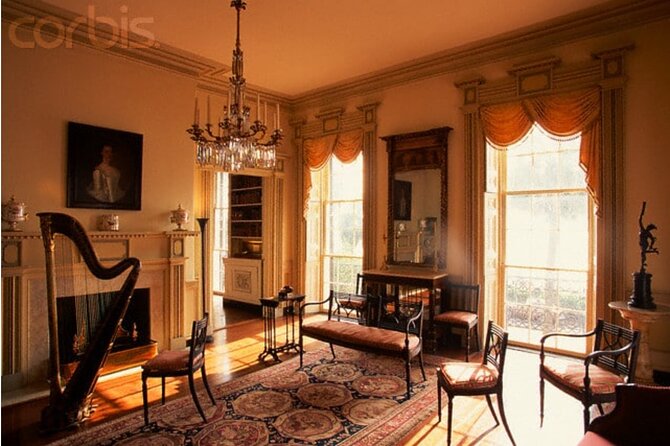
This is a good first look at Charleston if you have limited time or want context before exploring on your own. The route begins at 1 1/2 Meeting Street, loops through the historic district, and returns to the same point.
You are not entering the houses on this walk. Instead, you study them from the street while Mike explains who built them, how Charleston developed, and what happened around them. That format works well in a city where the exterior details are part of the story: narrow Charleston single houses, decorative ironwork, window boxes, broad porches, and grand homes built by wealthy merchants and planters.
The small group matters. With no more than 10 people, Mike can adjust the pace and answer specific questions. Past outings also included families with young children and people with physical restrictions, with the guide adapting his approach. Still, this is a walking tour in warm weather, and one participant found the heat made the walk difficult. I would choose a cooler time of day when possible and bring water.
The schedule says 90 minutes, but you should allow closer to two hours if Mike is in his usual storytelling mode. Some groups spent two hours or more on the route. That extra time is useful, but it can affect plans made immediately afterward.
More History Walking Tours in Charleston
- Historic Charleston Guided Sightseeing Walking Tour
★ 5.0 · 6,216 reviews - Hidden Alleyways and Historic Sites Small-Group Walking Tour
★ 5.0 · 2,335 reviews - Charleston historical walking tour with a Professor of History at The Citadel
★ 5.0 · 1,284 reviews
White Point Garden: where the city story begins
The tour opens at White Point Garden, at the southern tip of the historic district. This waterfront park gives you an immediate sense of Charleston’s setting, with the harbor nearby and old homes facing the water.
Here, Mike explains the city’s founding in 1680 and the role of the eight Lord Proprietors who received the colony from King Charles II. It is a useful starting point because Charleston’s later wealth, architecture, wars, and social divisions all connect to those early settlement decisions.
You’ll also hear about the Stevens-Lather House, described as a 17,000-square-foot home and the second-largest residence in Charleston. The house is linked to the creation of the Society for the Preservation of Old Dwellings in 1920. That organization was the first preservation society in the country, giving this stop a practical lesson in why Charleston still has so many old buildings.
I like this opening because it goes beyond admiring pretty facades. You learn that preservation in Charleston was an organized local effort, not simply good luck. White Point Garden also gives the guide room to establish the broad themes of the walk before the group moves into narrower streets.
East Battery: cannon fire, mansions, and harbor views

From White Point Garden, the route follows the East Battery. This is one of the most scenic sections, with the water on one side and a row of notable homes on the other.
The Battery is also where the military story becomes central. Mike discusses the Revolutionary War and the Civil War, including the Battle of Battery Wagner, which gained wider recognition through the film Glory. If you are interested in Charleston’s Civil War role, this section is likely to be the strongest part of the tour.
The homes provide a running visual guide to Charleston’s old social order. You’ll see antebellum residences, the Carolina Yacht Club, and Rainbow Row. The famous row of colorful houses is attractive, but the stories behind individual buildings are more useful than a quick photo stop.
One especially memorable detail concerns a cannon that landed on the roof of the Roper House in 1864 and is said to remain there. Whether you come for military history or architecture, details like this help connect the quiet waterfront to the violence that once reached these houses.
The Battery is an easy walk in terms of terrain, but it is exposed. On a hot, sunny day, the lack of shade can make this portion tiring. Wear comfortable shoes, use sun protection, and do not assume that a relaxed pace removes the effects of Charleston’s heat.
Tradd Street and Catfish Row
The walk then turns toward Tradd Street, within what was once the original walled city. Here the feel changes. Instead of the open waterfront, you move through narrower streets lined with some of Charleston’s earliest grand houses, including homes dating from the 1740s and 1750s.
Tradd Street is known for its window boxes and carefully maintained facades. It is the kind of place where you can appreciate small details more easily than from a moving carriage or vehicle. Mike explains the houses while you have time to look at their proportions, entrances, shutters, and street-level design.
This section also brings up Catfish Row, the Black neighborhood located along Church Street between Tradd and Broad Streets before the Civil War. The area is associated with the setting of Porgy and Bess. That connection gives the stop cultural importance, but it also points toward a subject that deserves careful treatment: the lives of Black Charlestonians, both enslaved and free, and the economic system surrounding the city’s grand homes.
If slavery is your main reason for booking, ask before the walk begins how much time will be given to that subject. The experience can be customized around slavery in Charleston, but one past participant felt the topic received little attention and wanted a fuller account of the wealth created through enslaved labor. The guide later indicated that stories of formerly enslaved people who achieved success are an important part of his material. That is encouraging, but a direct request will help set expectations.
More History Walking Tours in the USA
- Charleston: Old Walled City Historical Walking Tour
★ 4.7 · 705 reviews - Historic Charleston Walking Tour: Rainbow Row, Churches, and More
★ 5.0 · 691 reviews - Charleston: History and Architecture Guided Walking Tour
★ 4.8 · 349 reviews - Charleston History and Hops Tour: Bar and History Walk
★ 5.0 · 316 reviews
Meeting Street and the city’s grand houses
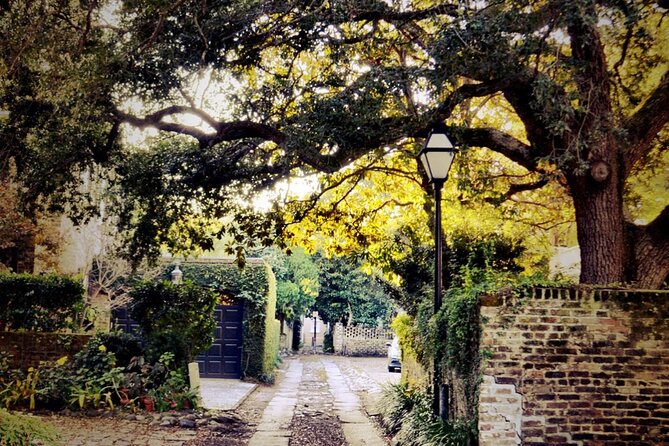
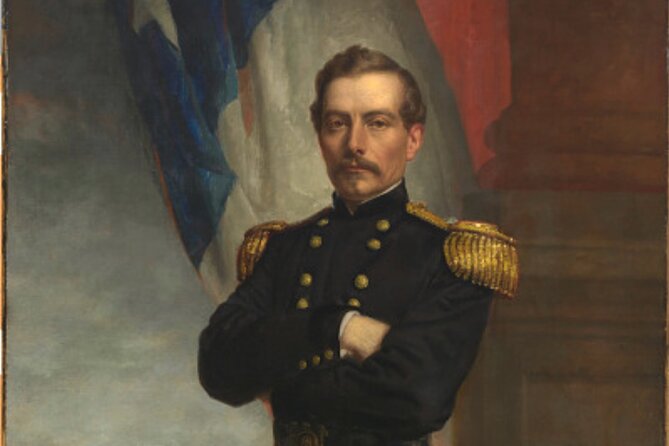
Meeting Street brings the tour back to architecture, politics, and the Civil War. You’ll see more pre-Revolutionary homes, including the James Simmons House, which served as General Beauregard’s headquarters during the Civil War.
The Nathaniel Russell House is another major stop. It is described as one of Charleston’s finest museum homes and a strong example of the Charleston single-house style. You do not tour the interior during this walk, but hearing how the style works gives you more to notice later if you choose to visit the house separately.
A Charleston single house typically presents its narrow end toward the street, with rooms arranged along the side and access through a piazza, or long side porch. That design is practical for the hot climate and tight city lots. The tour’s value comes from learning how to read this pattern rather than simply collecting names of famous buildings.
The final major house is the Williams Mansion, described as Charleston’s largest home at 24,000 square feet. George Williams built it after the Civil War in the Italianate style. His fortune came from blockade running during the war, an example of how Charleston’s wealth continued to be tied to conflict and trade.
The house also has a literary connection. Margaret Mitchell visited it at age 13, and local tradition suggests the visit may have helped inspire Gone with the Wind. Treat that as an intriguing Charleston story rather than a proven origin story. Mike’s approach appears to include these local claims while giving you the broader context needed to judge them.
The history is strongest when you ask questions
The most praised part of this experience is the guide’s ability to respond to the group. Mike Frederick is repeatedly described as warm, clear, flexible, and willing to follow a group’s interests.
That matters because Charleston’s history can quickly become a list of dates and house names. A good question can turn a static facade into a discussion about war, commerce, race, preservation, or daily life. Mike has also provided suggestions for restaurants and other things to do, and in some cases helped with transportation after the walk. Those extras are not guaranteed features, but they show the practical value of having a local guide at the start of your stay.
Families may also find this format useful. Mike has kept children engaged, including groups with boys aged 6, 9, and 10, and he has adjusted the pace for people with physical limitations. That said, the route is still a city walk, so anyone with mobility concerns should discuss needs in advance rather than assume every part will be effortless.
The tone appears friendly rather than formal. You get history, personal memories, current neighborhood observations, and occasional local color. If you want an academic lecture with a fixed script, this may feel informal. If you want a conversation that can follow your interests, that flexibility is a major advantage.
What $47 buys you

At $47 per person, this is not the cheapest way to see Charleston’s streets, but the cost is reasonable for a small group and a potentially extended outing. You are paying for access to a guide who can connect buildings and events, not for admission to a house museum or a major attraction.
The value is best for a first day in Charleston. You can get oriented, learn which areas deserve a longer visit, and ask for restaurant suggestions before spending the rest of your stay on your own. The return to the starting point also makes the walk easy to fit into a day of sightseeing.
The price is less compelling if you only want photographs of Rainbow Row or the Battery. You can see those areas without a guide. The tour earns its fee through explanation, context, and personal attention, especially if you care about the Civil War, architecture, or local stories.
The published rating is 4.8 from 62 ratings, with 95 percent recommending the experience. That strong record matches the repeated praise for Mike’s patience, personal attention, and ability to answer questions. The one clear area for caution is the slavery content, which may vary depending on what the group requests.
Practical details that affect your day
The tour is offered in English and uses a mobile ticket. Confirmation is sent within 48 hours of booking, subject to availability. It accepts service animals, is near public transportation, and most people can participate.
You meet at 1 1/2 Meeting Street and finish there. No admission fees are listed for the stops because the tour views the buildings and public spaces from outside. If you want to enter the Nathaniel Russell House or another museum home, plan that separately.
The experience allows free cancellation up to 24 hours before the start time. Cancellations made within 24 hours are not refunded, and late changes are not accepted. Since the tour can run longer than the stated 90 minutes, leave some breathing room before your next booking.
For comfort, I would bring water, wear walking shoes, and avoid carrying a heavy bag. The route is not described as strenuous, but Charleston’s heat can change an easy walk into a tiring one.
Should you book the Historic Charleston walking tour?
Book it if you want a small, flexible introduction to Charleston led by someone closely connected to the historic district. It is especially suitable for couples, families, Civil War enthusiasts, architecture fans, and anyone who wants restaurant or sightseeing advice from a local voice.
I would also recommend it early in your stay, when the guide’s suggestions can shape the rest of your visit. Ask Mike at the beginning to emphasize the Civil War, slavery, architecture, or daily life, depending on your priorities.
Skip it if you want extensive interior visits, a citywide route, or a guaranteed, detailed treatment of slavery without first confirming the focus. For most people who want streets, stories, and historic houses brought to life, $47 is a sensible price for a personal walk through Charleston’s oldest neighborhoods.
FAQ
How long is the Historic Charleston walking tour?
The advertised duration is approximately 1 hour and 30 minutes. Some outings have lasted about two hours or longer, so allow extra time if you want to ask questions.
What is the price?
The cost is $47 per person.
How large is the group?
The tour has a maximum of 10 participants.
Where does the tour start?
You meet at 1 1/2 Meeting Street, Charleston, South Carolina 29401.
Where does the tour end?
The activity ends back at the meeting point.
What language is the tour offered in?
The tour is offered in English.
Does the tour focus on the Civil War?
Yes. The Battery section includes discussion of the Revolutionary War, the Civil War, and the Battle of Battery Wagner. You can request a Civil War-focused experience.
Can I request information about slavery in Charleston?
Yes. The tour can be customized to focus on slavery in Charleston. If this is your main subject, confirm the expected emphasis with the guide before the walk begins.
Can I cancel for a refund?
You can cancel at least 24 hours before the start time for a full refund. Cancellations or changes made within 24 hours are not accepted and are not refunded.
More Small-Group History Tours in Charleston
- Small-Group Tour: Charleston Old Walled City Historical Walking Tour
★ 4.5 · 283 reviews - Small Group Ghost Tour Charleston: 60min of True Haunted History
★ 4.5 · 272 reviews - Semi-private SMALL group Historic Walking Tours w/certified guide
★ 5.0 · 224 reviews - London Small Group Tour of Historical Pubs
★ 5.0 · 10,422 reviews
Just added around Charleston
- Charleston’s Historic Pubs, Taverns, and Taprooms Tour★ 4.5 · 33 reviews
- Charleston’s Strong Women of the South History Tour★ 4.5 · 27 reviews
- Small-Group Tour: Charleston Old Walled City Historical Walking Tour★ 4.5 · 283 reviews
- Sip History In a Secret Speakeasy Cocktail Class★ 5.0 · 40 reviews
- Private Walking Tour of Historic Charleston★ 5.0 · 38 reviews
- Sip History in The Sun Cabana Covered Cocktail Class★ 5.0 · 332 reviews
- Private Afternoon Sailing/Dolphin & History Tour on 43ft Mystique★ 5.0 · 32 reviews
- Private Sunset Sail BYOB Dolphin/History Tours on 43ft Mystique★ 5.0 · 42 reviews
History Walking Tours, compared.
History and Hauntings of Salem Guided Walking Tour
Read our review →
Freedom Trail History Small Group Walking Tour
Read our review →
Historic Charleston Guided Sightseeing Walking Tour
Read our review →
Tapas Walking Tour with Food, Wine, and History
Read our review →
Savannah History and Haunts Candlelit Ghost Walking Tour
Read our review →
A History of Terror – Belfast City Centre Walking Tour
Read our review →Browse the lists this tour appears in