
Review · GALICIA
Santiago: Historic Walking Tour and Highlights
Santiago reveals itself one stone street at a time. This two-hour walking tour gives you a lively introduction to the UNESCO-listed Old Town, from the Cathedral and Obradoiro Square to quieter lanes lined with churches, convents, and legends. I like the route’s strong sense of place, and I like that the group is limited to 10 people, which gives the guide room to answer questions. The main drawback is that it is a brisk outdoor walk over cobbles, with no monument admissions included.
I also like the mix of famous sights and everyday Santiago. You move from pilgrimage landmarks and university streets to the Mercado de Abastos, where the city’s food culture comes into view. Alex, one of the guides praised especially warmly, is known for bringing together Galician history, the Camino, religion, architecture, and local recommendations in an entertaining way. Bring good shoes, since this tour runs rain or shine and is not suitable for wheelchair users or people with mobility impairments.
Key points to know before you book
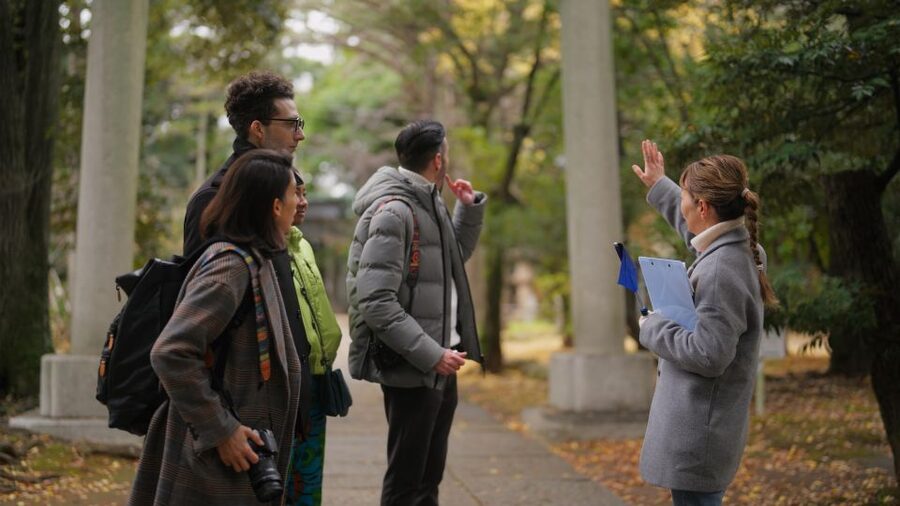
- The meeting point is easy to identify: Find the main entrance of Capela do Pilar and look for a guide with a black backpack and clear identification.
- The route covers Santiago’s essential core: Alameda Park, Rúa do Franco, Fonseca, Obradoiro, the Cathedral, Quintana, Platerías, historic churches, and the food market.
- The Cathedral is viewed from outside: Entrance fees to monuments and museums are not included, so plan a separate visit if you want to go inside.
- Small groups make the history more personal: A maximum of 10 participants is useful in narrow streets and busy squares.
- The guide is a major part of the experience: Alex receives particular praise for explaining Galician culture, the Camino, religious traditions, and architecture with humor.
- The walk suits active visitors best: Wear comfortable, weather-ready clothes and shoes, and expect the tour to continue in rain.
Starting at Capela do Pilar and Alameda Park
The walk begins at the main entrance of Capela do Pilar, a practical starting point near the edge of Santiago’s historic center. Look for the black backpack and guide identification rather than simply waiting near the church. That small detail matters in a city where several lanes and plazas can look similar at first glance.
From there, the route moves through Alameda Park. This opening stop gives you a little breathing room before the tighter streets of the Old Town. You get a guided visit, time for photographs, and an early sense of how Santiago combines open public spaces with a dense medieval center.
I like beginning here because it helps you get your bearings. The tour is not just a march from one famous building to the next. It sets up Santiago as a city shaped by pilgrimage, local life, faith, and university culture. You will hear more about those threads as the walk continues.
More History Walking Tours in Spain
- Barcelona: Tapas Walking Tour with Food, Wine, and History
★ 4.8 · 4,261 reviews - Barcelona Tapas Walking Tour: Food, Wine & History
★ 4.5 · 1,928 reviews - Madrid Historical Walking Tour
★ 5.0 · 721 reviews
Rúa do Franco and the university quarter
Rúa do Franco brings you into the social side of Santiago. It is one of the best-known streets in the historic center, and the guide uses it to connect the monumental city with its daily rhythms. You pass along the street rather than stopping for an extended indoor visit, so keep your attention on the buildings, lane layout, and stories shared along the way.
The route then reaches Praza de Fonseca. This area helps explain Santiago’s university identity, a part of the city that can be missed if you focus only on the Cathedral. The university has long shaped the atmosphere here, and the square adds another layer to the city’s story beyond pilgrimage and church architecture.
This section is especially useful if you are visiting Santiago for more than a quick stop. The guide can point out places worth revisiting later, and Alex has been praised for offering extra suggestions for sightseeing and restaurants at the end of the walk. I would keep a note on your phone for these recommendations, since two hours goes quickly.
Obradoiro Square and the face of the Cathedral
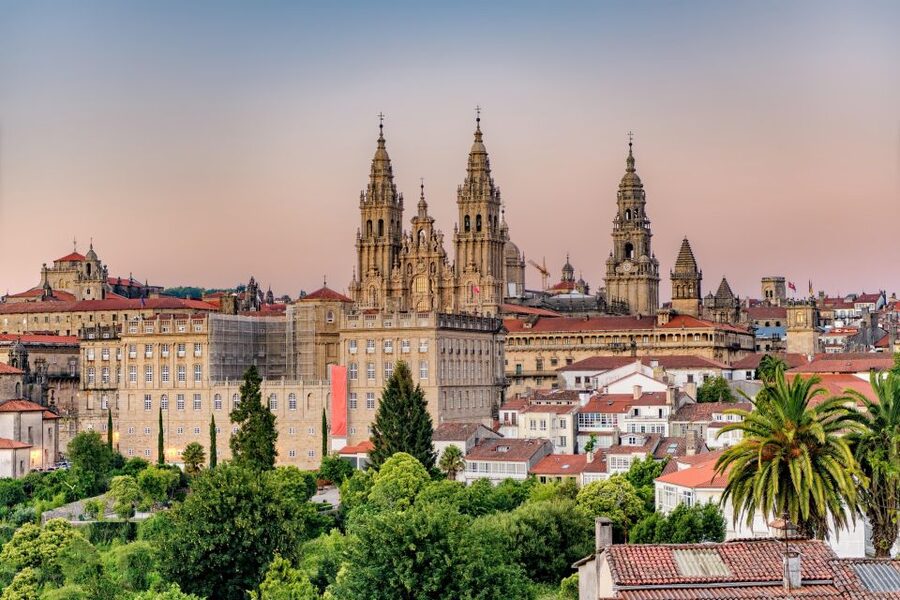
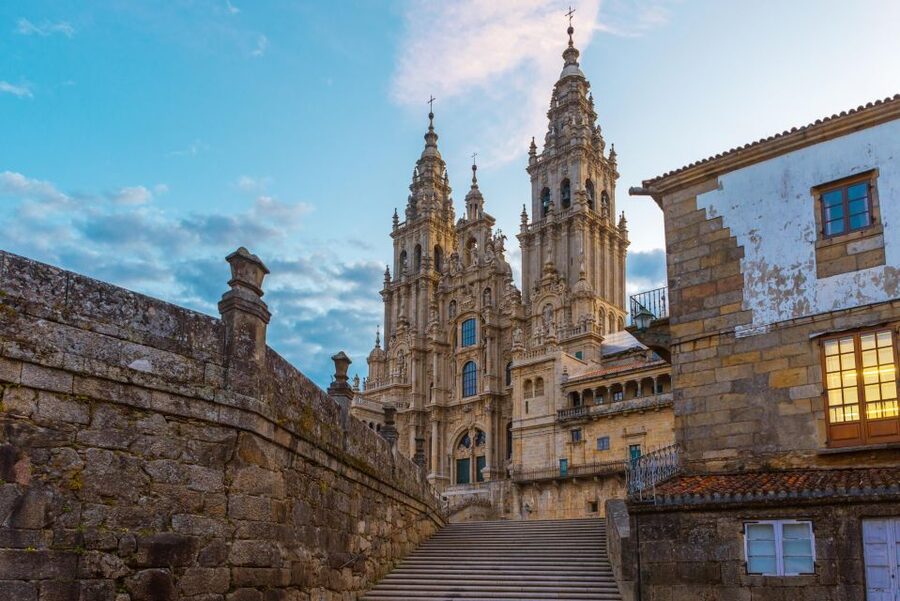
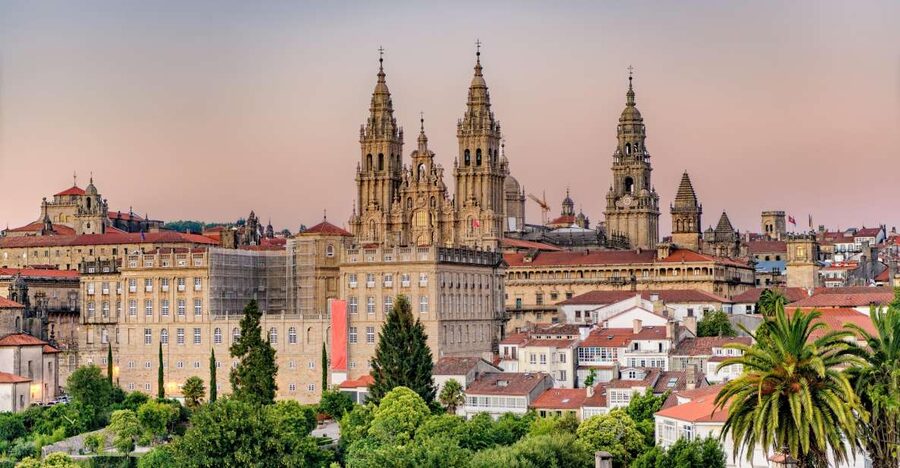
Praza do Obradoiro is the emotional center of the tour. Here, the Cathedral fills the view, and the square gives you room to take in its scale. This is the place where pilgrims arrive after walking the Camino, but you do not need to be religious or have completed a long-distance walk to feel the importance of the setting.
Your guide explains the square and its surrounding buildings, helping you read the scene instead of simply taking a photograph and moving on. The architecture carries several centuries of religious and civic power, while the square itself remains a meeting point for people arriving from many countries.
The Cathedral of Santiago de Compostela is viewed as part of the walking route, with time for photographs and an exterior explanation. The tour does not include admission fees, so this is an important planning point. If you want to see the interior, tomb of the apostle, or other paid areas, you will need to arrange that separately.
I consider the exterior visit a fair choice for a two-hour introduction. It keeps the walk moving and lets you see more of the historic center. Still, if the Cathedral is your main reason for coming to Santiago, do not assume this tour replaces a dedicated interior visit.
Quintana, Platerías, and the city’s sacred heart
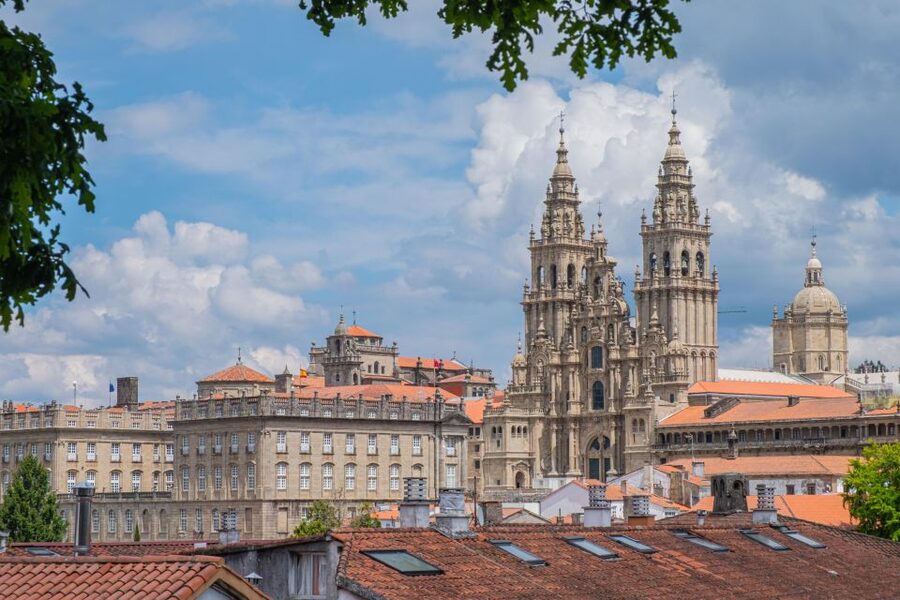
After Obradoiro, the route continues toward Quintana de Vivos Square. This area has a different feel from the broad openness of Obradoiro. The guide draws attention to the square’s religious role, surrounding buildings, and the stories attached to Santiago’s long pilgrimage tradition.
The walk then reaches Praza das Praterías, another important square near the Cathedral. Here, you can study the stonework and changing views of the Cathedral complex. The name and character of the square connect it with old trades, while the surrounding architecture shows how religious life shaped the Old Town.
The tour also passes ancient convents, churches, and other historic buildings. The exact indoor access is limited, and several stops are pass-by points rather than full visits. That means the quality of the explanation matters a great deal. A strong guide helps you understand why an apparently quiet doorway or plain stone façade deserves attention.
This is where Alex’s reported style sounds particularly useful. He connects the story of Santiago with Galicia as a whole, including the relationship between church and monarchy, the role of the pilgrim, the apostle Santiago, and the region’s culture. If religious history is your main interest, ask questions during this part. One area some visitors want more of is the apostle’s evangelizing story and spiritual meaning.
Same place, a different slice of the past:
- Madrid Essential: Historic Center, Plaza Mayor & Royal Palace
★ 5.0 · 6,416 reviews - Sevilla Food Tour: Tapas, Wine, History & Traditions
★ 5.0 · 3,468 reviews - Valencia Old Town Tour with Wine & Tapas in 11th Century Historic Monument
★ 5.0 · 3,234 reviews - Madrid Tapas & Taverns Small Group Food & History Tour
★ 5.0 · 2,664 reviews
Legends, churches, and streets with a local feel
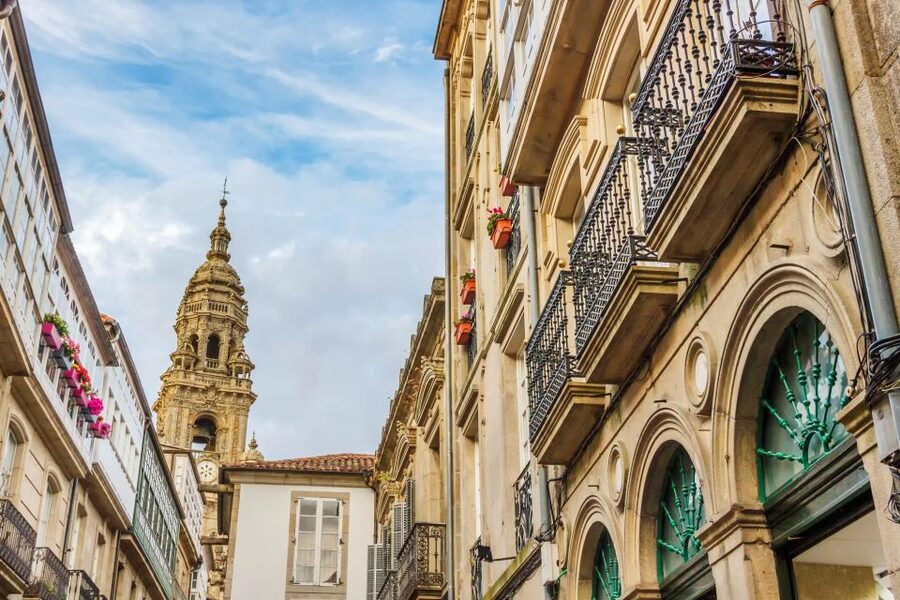
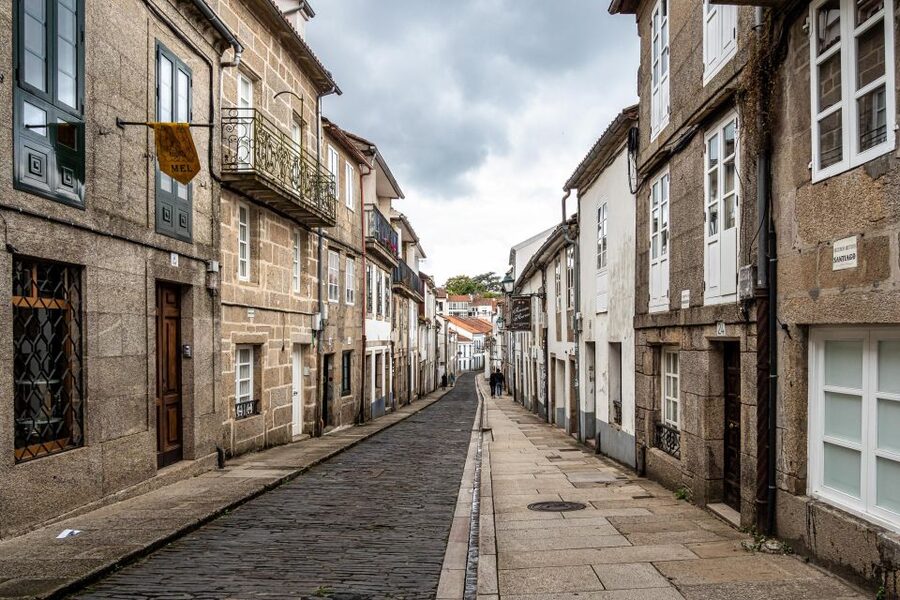
Santiago’s Old Town works best when you slow down. Its narrow cobbled streets are not just scenic paths between monuments. They hold stories about faith, tradition, university life, and the generations who have passed through the city.
The guide brings you through additional streets and historic points between the main squares. The supplied route lists several guided pass-by stops without naming every building, so you should expect an interpretive walk rather than a sequence of formal admissions. That format is good for seeing how the city fits together, though it offers less time for quiet, detailed study of any single church.
The narrow lanes can also be crowded and uneven. You will want shoes with reliable support, not thin sandals or hard dress shoes. Since the tour operates in all weather, a light rain layer is sensible in Galicia, even if the forecast looks kind at breakfast.
The small-group limit helps here. With no more than 10 participants, you can usually stay close enough to hear the guide and move through tight streets without forming a large block. It also makes it easier to ask about a symbol, façade, or local custom before the group moves on.
Finishing at the Mercado de Abastos
The tour ends at the Mercado de Abastos de Santiago, with a break and guided food-market visit. This is a smart final stop because it shifts your attention from grand religious buildings to the ingredients and commerce of everyday Galicia.
A market visit also gives you practical help for the rest of your stay. You can look around, ask the guide what local products matter, and use the setting to understand the connection between the city and the wider region. The tour does not promise a tasting or meal, so think of this as an introduction rather than a food tour.
I like the ending because it leaves you with something useful. After seeing pilgrimage squares, monasteries, and churches, you finish in a place where local life is more immediate. If you are choosing a restaurant later, this is also a good moment to ask for suggestions. Alex has been praised for sharing restaurant advice and pointing out additional places to visit.
What the guide adds to the experience
The route itself is strong, but the guide determines how much you take away. The best feedback centers on explanations that are creative, warm, and easy to follow. Alex is praised for making children stay engaged after the Camino, for using humor, and for explaining Santiago within the wider story of Galicia.
That matters because the city can overwhelm you with stone, symbols, and religious references. A guide who explains the links between the Cathedral, monarchy, pilgrimage, and local identity gives you a clearer picture than a list of dates ever could.
The tour is offered in Spanish and English. If Alex is leading your group, you may get especially broad context about Galician history and culture. Guides can vary, however, so book this for the route and format, not with the assumption that one particular person will always lead every departure.
Is $19 a good value?
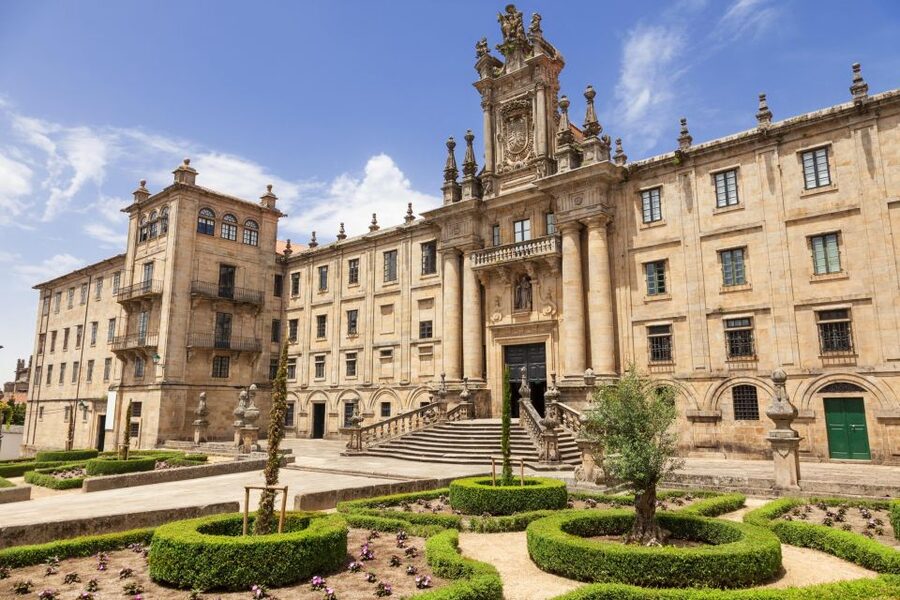
At $19 per person, this is a reasonable price for a two-hour guided introduction in one of Spain’s most important historic cities. The fee includes the local guide and all tour fees, while monument and museum entrance charges are separate.
The value comes from orientation. In two hours, you see the principal squares, understand the layout of the Old Town, hear the city’s pilgrimage story, and receive ideas for what to do next. That can save time, especially if Santiago is one stop in a larger Galicia trip.
It is less valuable if you want long interior visits or a slow photography walk. The price does not include Cathedral admission, museum entry, food, or a full meal at the market. You are paying for a guided outdoor overview, not an all-inclusive cultural package.
I would take this early in your stay. Then you can return to the Cathedral, squares, market, or recommended restaurants with a better sense of where you are and what you are seeing.
Who should book this walk?
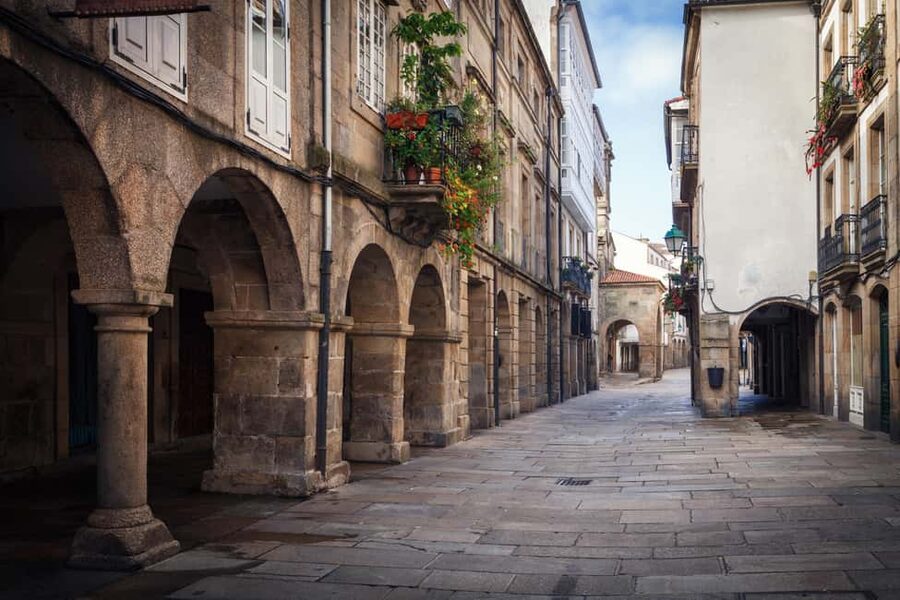
This tour suits first-time visitors, Camino pilgrims, families, and anyone who wants a clear introduction before exploring alone. It also works well for people who enjoy architecture but want the religious and cultural background explained in plain language.
Families may appreciate the short duration and interactive guiding. One particularly strong account describes children remaining engaged even after completing the Camino, which suggests that the storytelling can hold younger attention better than a formal lecture.
It is less suitable for anyone who needs step-free access, uses a wheelchair, or finds uneven streets difficult. The route includes outdoor walking over historic cobbles, and the tour operates in poor weather as well as good weather.
You should also choose a different experience if your priority is entering every major monument. This walk shows you many important exteriors and explains their meaning, but it does not include admission fees or promise extended indoor visits.
Practical details for a smoother walk
Meet at the main entrance of Capela do Pilar. Look for the guide’s black backpack and identification, and arrive ready to walk rather than expecting a transport-based sightseeing tour.
Wear comfortable shoes, comfortable clothes, and clothing suited to the weather. Since the walk takes place rain or shine, a rain layer and weather-ready outer clothing are sensible choices.
The group is limited to 10 people, and the available languages are Spanish and English. The duration is two hours, though you should check the available start time when booking.
You can cancel up to 24 hours before the tour for a full refund, and the reserve-now, pay-later option keeps your plans flexible. Those policies are useful if your Galicia schedule may change, especially around Camino plans or unpredictable weather.
Should you book Santiago’s historic walking tour?
Book it if you want a friendly, well-paced introduction to Santiago’s core sights for $19. The combination of Obradoiro, the Cathedral, Quintana, Platerías, university streets, historic churches, and the Mercado de Abastos gives you more than a quick Cathedral photo stop.
I would especially recommend it at the beginning of your visit. You will leave with a better map in your head, a clearer understanding of the Camino’s importance, and practical ideas for food and sightseeing.
Skip it if you need accessible routes, prefer extensive monument interiors, or dislike walking in uncertain weather. For most active visitors, though, this is a useful first look at Santiago, with the guide’s storytelling providing the real value.
FAQ
Where does the Santiago walking tour begin?
The tour begins at the main entrance of Capela do Pilar in Santiago de Compostela. The guide wears a distinctive black backpack and is properly identified.
How long does the walking tour last?
The tour lasts two hours.
Which languages are available?
The tour is offered in Spanish and English.
Is Cathedral admission included?
No. Entrance fees to monuments and museums are not included, so Cathedral admission or other paid entries must be arranged separately.
Is the tour suitable for wheelchair users?
No. The experience is not suitable for wheelchair users or people with mobility impairments.
What should I bring?
Bring comfortable shoes, comfortable clothes, and clothing suitable for the weather. The tour takes place outdoors in rain or sunshine.
Just added around Spain
- Palma de Mallorca: Wooden Sailboat; Food, Views & History★ 4.8 · 19 reviews
- Oviedo : Walking tour of the Historic Center★ 4.8 · 56 reviews
- Mojo Workshop Cooking Class in Ancient Canarian Village★ 4.9 · 127 reviews
- Menorca: Mahon Guided Walking Tour with History & Tastings★ 4.9 · 110 reviews
- Ultimate Malaga: History and Tapas All Included★ 4.8 · 58 reviews
- Malaga City Tour: 3-Hour Historical Segway Adventure★ 4.9 · 72 reviews
- Madrid: Tour of the Historic City Center★ 5.0 · 87 reviews
- Málaga: 2-Hour Historical Center & Cathedral Tour★ 4.0 · 338 reviews
History Walking Tours, compared.
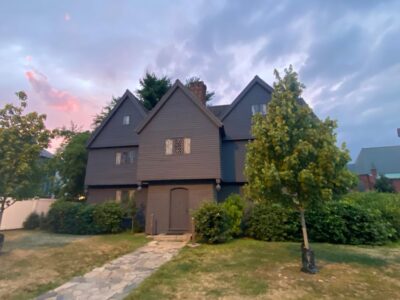
History and Hauntings of Salem Guided Walking Tour
Read our review →
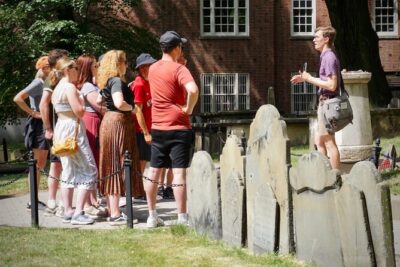
Freedom Trail History Small Group Walking Tour
Read our review →
Historic Charleston Guided Sightseeing Walking Tour
Read our review →
Tapas Walking Tour with Food, Wine, and History
Read our review →
Savannah History and Haunts Candlelit Ghost Walking Tour
Read our review →
A History of Terror – Belfast City Centre Walking Tour
Read our review →Browse the lists this tour appears in