
Review · LAZIO
Rome: Rome at Night Evening Historical Walking Tour
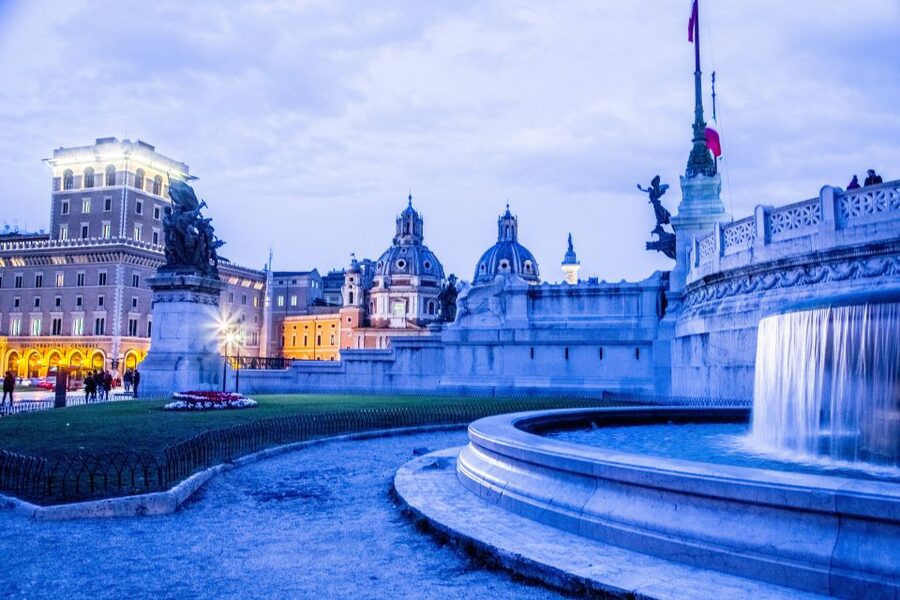
Rome changes after sunset. The stone glows, fountains sparkle, and dinner tables spill into the squares. This 2.5 to 3-hour evening walk links the Spanish Steps, Trevi Fountain, Pantheon, and Piazza Navona with stories from a local guide.
I like the route because it gathers four essential Rome sights without wasting time on transport. I also like the timing: starting after aperitivo lets you see the city when locals are out for dinner, a stroll, or a late coffee. The main drawback is simple: you walk the whole way, often over cobblestones, and the tour does not include food, drinks, or transportation.
The $59 price makes the most sense if you want context and company at the monuments rather than a quick look on your own. A private or small-group format can make the evening more personal, but you should confirm the group type and start time before booking.
Key points to know before booking
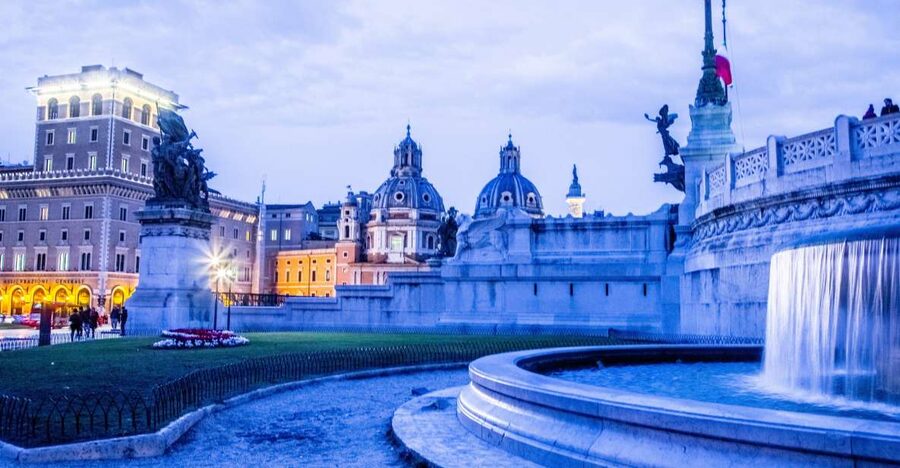
- Four major sights in one evening: The route covers Piazza di Spagna, the Trevi Fountain, the Pantheon, and Piazza Navona.
- Rome looks different after dark: Warm lighting brings out the marble, fountains, church fronts, and intimate lanes between the main squares.
- A guide adds the real value: You get historical background, explanations of architectural details, and stories about the influence of France, Spain, and England around the Spanish Steps.
- Walking shoes matter: The route uses Rome’s streets and cobblestones, with no included transport.
- Good for a first or second night: The tour gives you a useful orientation to central Rome and points out places you may want to revisit later.
- Weather does not stop the tour: Bring water, an umbrella, sun protection, and warmer clothing when needed.
Why Rome after dark works so well
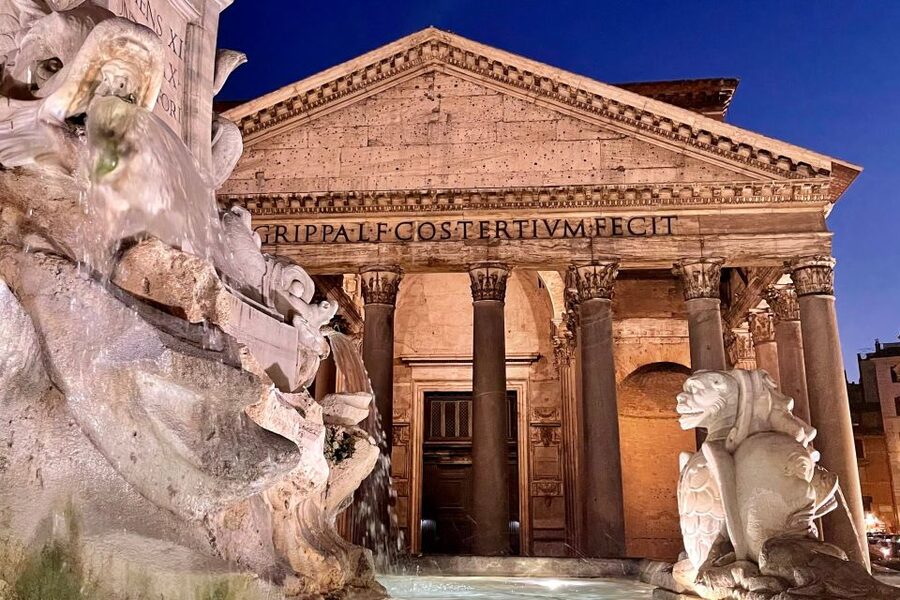
Rome is not merely quieter at night. It has a different rhythm. The hard edges of the day soften under the lamps, and the city’s fountains become bright pools of movement. Restaurants fill, painters set up near the squares, and people walk without the same hurry they have in daylight.
I especially like this timing for visitors who have spent the day inside museums or churches. You get fresh air, an easy social pace, and a chance to see central Rome without adding another major indoor visit to your schedule.
The route is also practical. These sights are close enough to connect on foot, but the city’s winding streets can make the order feel confusing if you are exploring alone. A guide helps turn separate monuments into one connected story.
This is not a food tour, and it is not a late-night pub crawl. The evening atmosphere is part of the setting, not a scheduled tasting or entertainment program. If you want dinner, gelato, or an aperitivo, plan that before or after the walk.
More History Walking Tours in Italy
- Rome: Forbidden History Walking Tour & Pub Crawl with Drinks
★ 4.9 · 688 reviews - Ancient Rome Guided Walking Tour: Colosseum, Forum and Palatine
★ 4.5 · 455 reviews - Colosseum & Ancient Rome Guided Walking Tour
★ 5.0 · 332 reviews
Starting at Piazza di Spagna
The tour begins at Piazza di Spagna, home to the Spanish Steps and the fountain at their base. This is a strong meeting point because it is easy to recognize, close to major shopping streets, and full of visual detail from the moment you arrive.
Your guide explains how France, Spain, and England each shaped the identity of this square. That background gives the area more meaning than a quick photo stop. The Spanish Steps are not simply a grand staircase. They reflect the international character Rome has carried for centuries.
The fountain provides another useful talking point. Your guide points out its design and explains why it belongs so naturally in the square. Nearby, you can glimpse the windows of major Italian fashion brands, a reminder that this part of Rome connects old monuments with modern luxury shopping.
There is one practical point to remember: the Spanish Steps are a place for looking, listening, and taking photographs, not for treating the monument like a picnic bench. Expect to move with the group and follow local rules around the steps and fountain.
Piazza di Spagna is also a lively beginning. The area can feel crowded, especially during popular evening hours, so arrive at least 10 minutes early. Look for the guide holding an orange sign with the local partner’s logo.
The Trevi Fountain under evening lights
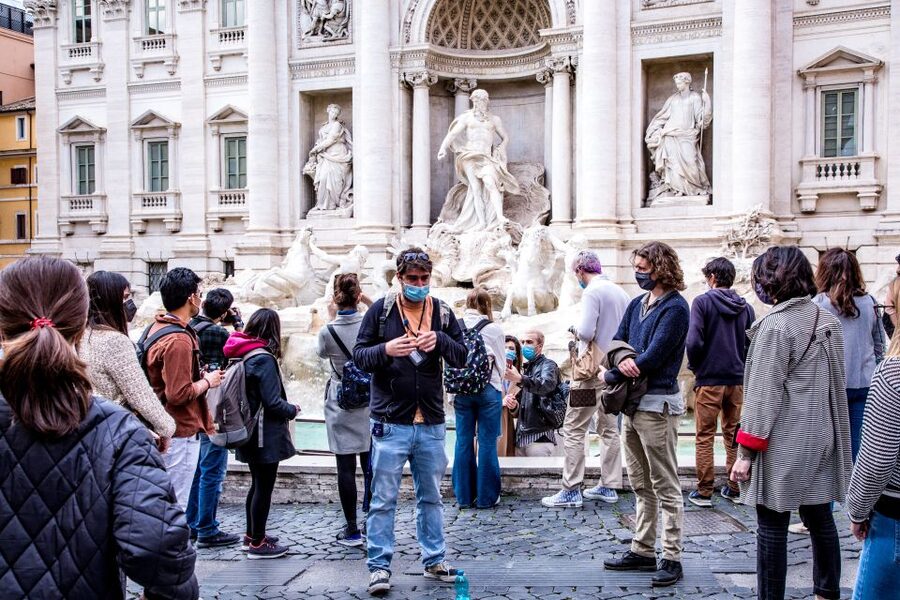
From Piazza di Spagna, you continue through central Rome toward the Trevi Fountain. The walk takes you through streets where polished storefronts give way to older stone facades, small restaurants, artists, and booksellers.
The Trevi Fountain is impressive in daylight, but the lighting gives it a more theatrical look. White marble catches the lamps, and the water provides constant movement beneath the statues. Your guide explains the fountain’s history and points out details that are easy to miss when you are focused only on the central figure and the coin toss.
You will have time to admire the fountain and toss in a coin for a return to Rome. That custom is touristy, of course, but it is also harmless fun and part of the shared ritual of visiting the city. Keep your expectations sensible: this is one of Rome’s most famous spots, so the square may still be crowded at night.
The guide’s presence matters here. Without context, the fountain can become a quick photograph followed by a shuffle to the next stop. With a good explanation, you get a better sense of the artistic work, the marble, the water, and the role of the fountain in Rome’s public spaces.
Past guests have given especially strong praise to guides who make those details memorable. Angela has been praised for her helpful recommendations, while James has been singled out for his wide command of the city’s history and many other subjects. Guide quality can vary from one departure to another, but those comments show what the tour is trying to provide: more than a list of dates.
Walking Rome’s smaller streets toward the Pantheon
The section between the Trevi Fountain and the Pantheon is part of the appeal. Instead of jumping from sight to sight by vehicle, you move through cobbled streets where the city feels more human and less arranged for sightseeing.
You might pass artists, booksellers, and restaurants along the way. These details matter because Rome’s character is not limited to its headline monuments. The short walks between them show how daily life continues around ancient and Renaissance buildings.
This is also where comfortable shoes become essential. Rome’s central streets can be uneven, and a two-and-a-half-hour walk feels longer if your footwear is poor. Bring water, particularly in warm weather, and consider a hat and sunscreen if the tour begins before full darkness or during the brighter summer evenings.
The route does not include a vehicle, so you should be ready to walk from the meeting point through the full sequence of stops. That is a benefit if you want to see central Rome at street level. It is a limitation if you have mobility concerns or prefer a seated sightseeing option.
More History Walking Tours in Rome
- Ancient Rome at Twilight Walking Tour
★ 5.0 · 276 reviews - Rome: Colosseum and Ancient Rome Guided Walking Tour
★ 4.8 · 237 reviews - Rome: Colosseum and Ancient Rome Guided Walking Tour
★ 4.8 · 93 reviews
Seeing the Pantheon with a guide’s eye
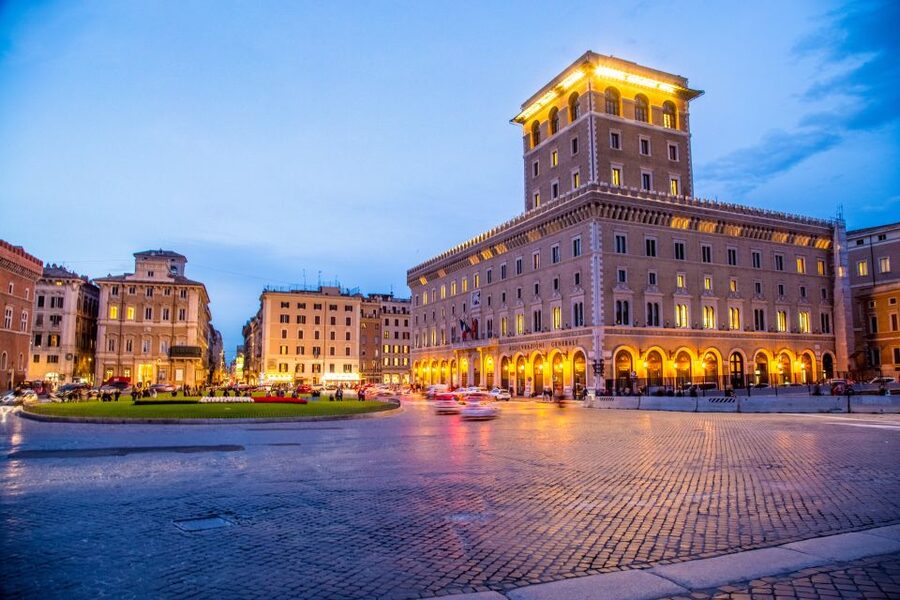
The Pantheon is one of the tour’s most important stops. The building dates to 125 AD, and its survival gives you a direct connection to Roman construction and design on a scale that is difficult to grasp from a guidebook photograph.
Your guide points out details in and around the square, including useful viewing positions. That small service can make a large difference. The Pantheon’s exterior is easy to recognize, but its proportions, columns, and relationship to the surrounding piazza become clearer when someone directs your attention.
The evening setting changes the mood. The pale stone catches the lights, and the square around it becomes a place for conversation, dining, and slow walks. You get the monument without the same feel as a daytime museum visit, though the tour should not be treated as a replacement for an interior visit if you want extensive time inside.
The supplied information does not promise a dedicated interior visit or entry ticket. Think of this as a guided look at the Pantheon and its surroundings, with historical explanation and photo opportunities. If entering the building is a priority, check the current arrangements before you book.
Finishing at Piazza Navona
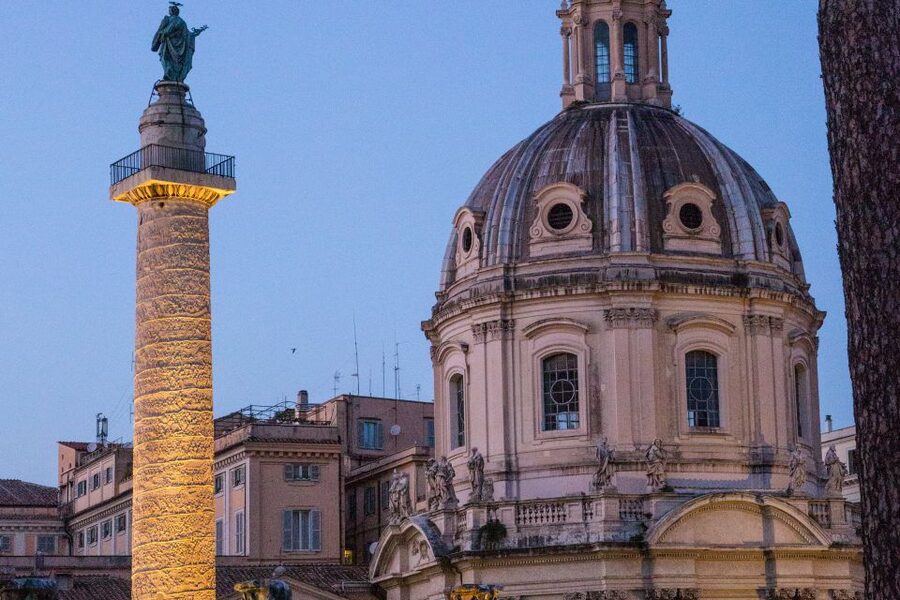
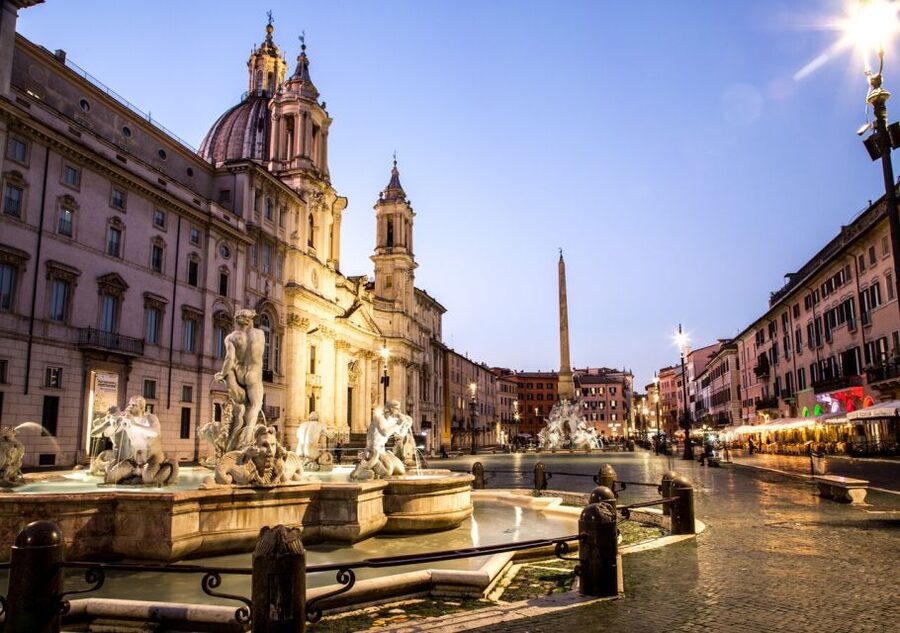
Piazza Navona is the final major stop and a fitting place to end. It is one of Rome’s best-known squares, shaped by a long history and decorated with Bernini’s fountains.
At night, the piazza becomes social rather than solemn. Restaurants line the edges, painters display their work, and street performers add movement. Locals come out for an evening walk, so you see the square as part of the city’s daily life rather than as an empty monument after closing time.
Your guide explains the fountains and the square’s past while pointing out places to watch the activity. I like this ending because you are free to continue the evening afterward. You can remain in the area for dinner, meet your group elsewhere, or walk back through central Rome with a better sense of direction.
Piazza Navona can also be the least quiet stop. If you want a peaceful, carefully framed look at Bernini’s work, the crowds and restaurants may distract you. If you enjoy people-watching and a social setting, that same energy is a plus.
What the $59 price really buys you
At $59 per person, this is not the cheapest way to see the four landmarks. You can walk between them on your own for little or no cost. The price is paying for a guide, a planned route, historical explanations, and the ease of moving between places without constantly checking a map.
The value improves if you are new to Rome, short on time, or traveling with people who prefer a guided evening. A well-informed guide can explain why a fountain matters, show you a useful view, and connect the city’s French, Spanish, English, ancient Roman, and Baroque influences.
The value is less clear if you already know central Rome well or prefer to stop whenever you want. You will not receive food, drinks, or transportation, and the tour focuses on outdoor sightseeing rather than admissions to multiple attractions.
Private and small-group options are available. A private outing usually makes the most sense for families, couples, or groups that want to ask many questions and set a more personal pace. A small group can offer a better balance between social company and individual attention. Check the exact option when booking because the price and feel may differ.
Who will enjoy this evening walk
I would recommend the tour to first-time Rome visitors who want an easy introduction to the historic center. It also suits anyone arriving in summer who would rather walk after the worst daytime heat has passed.
It works well for couples and families with older children who enjoy stories, fountains, and city views. The route has enough variety to keep the evening moving: a grand staircase, a famous fountain, ancient architecture, and a large public square.
It may not suit you if you want a slow photographic session at every stop. The tour has a set route and a scheduled duration of about 2.5 to 3 hours, so you need to keep pace with the group.
It is also not the right choice if you need frequent seated breaks, dislike uneven streets, or want a tour centered on food and wine. Bring a cover for bare shoulders if you may enter a church during the evening, and dress warmly in colder temperatures.
Practical advice for a smoother night
Meet your guide 10 minutes before the scheduled start. The tour cannot wait for late arrivals, and missed departures are not refunded, so build in extra time for reaching Piazza di Spagna.
Look for the orange sign with the local partner’s logo. Since the meeting point is in a busy part of Rome, having the sign detail in mind can save you from circling the square.
Wear shoes you can walk in for several hours. Pack water, an umbrella, and sun protection. The tour operates in all weather, so a light rain plan is part of sensible Rome planning.
You can cancel up to 24 hours before departure for a full refund, and the reserve-now, pay-later option keeps your plans flexible. The tour is offered in English, with private or small-group formats available.
Should you book the Rome at Night tour?
Book it if you want Rome’s essential central sights explained in a relaxed evening setting. The route is well chosen, the monuments look excellent under the lights, and the walk gives you more than isolated photo stops.
I would be especially inclined to book this early in a Rome visit. The Spanish Steps, Trevi Fountain, Pantheon, and Piazza Navona give you a useful mental map, while the guide can add recommendations for the rest of your stay.
Skip it if you prefer complete independence, need a shorter walk, or want a tour with food and included transport. For most first-time visitors who value context and an enjoyable introduction to central Rome, $59 is a fair price for a well-paced night out.
FAQ
How long does the Rome at Night walking tour last?
The tour lasts approximately 2.5 to 3 hours. Starting times vary, so check availability for the date you want.
Which Rome sights does the tour visit?
The route includes Piazza di Spagna and the Spanish Steps, the Trevi Fountain, the Pantheon, and Piazza Navona.
Is transportation included?
No. Transportation to and from the meeting point is not included, and the experience is a walking tour.
Where does the tour meet?
The meeting point is at Piazza di Spagna. Look for a guide holding an orange sign with the local partner’s logo.
What language is the tour offered in?
The live tour guide speaks English.
Is the tour private or shared?
Private and small-group options are available. Check the booking choice for the format offered on your selected date.
What should I bring?
Bring comfortable walking shoes, water, and an umbrella. Sunscreen and a hat are also recommended, and you should dress warmly in colder temperatures.
What happens if it rains?
The tour operates in all weather conditions. Bring an umbrella and dress appropriately for the forecast.
Just added around Rome
- Rome: Private Colosseum Experience and Ancient Ruins Tour★ 4.6 · 25 reviews
- Rome Secrets: Dark History & Tasty Bites Tour★ 5.0 · 37 reviews
- Rome: Guided Tour of Colosseum and Ancient Rome★ 4.9 · 74 reviews
- Rome: Colosseum with Access to Arena Floor and Ancient Rome★ 4.2 · 320 reviews
- Rome: Food Tour of the Historic Center with Rooftop Spritz★ 4.7 · 43 reviews
- Rome: Introduction to the Colosseum and Ancient City Tour★ 4.8 · 75 reviews
- Rome: Guided Group Colosseum & Ancient City Tour★ 4.8 · 62 reviews
- Rome: Five Shapes of Pasta Cooking Class in Ancient Tavern★ 5.0 · 102 reviews
History Walking Tours, compared.

History and Hauntings of Salem Guided Walking Tour
Read our review →
Freedom Trail History Small Group Walking Tour
Read our review →
Historic Charleston Guided Sightseeing Walking Tour
Read our review →
Tapas Walking Tour with Food, Wine, and History
Read our review →
Savannah History and Haunts Candlelit Ghost Walking Tour
Read our review →
A History of Terror – Belfast City Centre Walking Tour
Read our review →Browse the lists this tour appears in