

Review · CHATTANOOGA
National Medal of Honor Heritage Museum Admission Ticket in Chattanooga
Heroes are waiting downtown. The National Medal of Honor Heritage Center gives you a focused look at extraordinary courage through personal stories, battlefield objects, theater presentations, and displays about recipients from the Civil War onward. I especially like the real human stories and the way the center connects military service with everyday character. I also like that admission includes the theater and immersive experience. The main caution is simple: a private event once left ticket holders unable to enter, so check that the center is open on your date.
You can spend about one to three hours here, depending on how closely you read and watch everything. The center is open Monday through Saturday from 9 a.m. to 5 p.m., accepts mobile tickets, allows service animals, and sits near public transportation. The posted rating is 4.8 from 74 reviews, with 96 percent of visitors recommending it.
Key points to know before you go
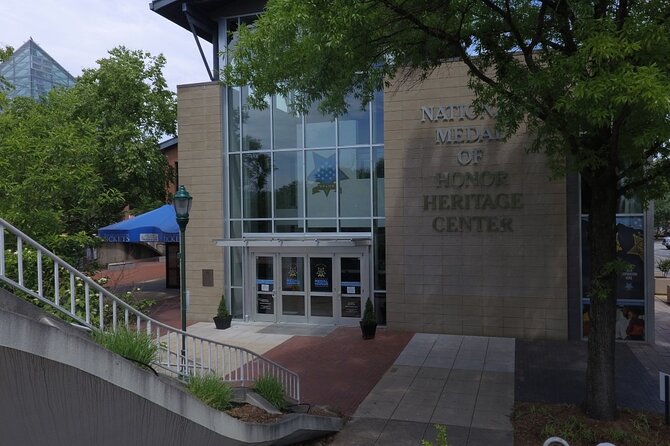
- More than 6,000 objects help tell the story of Medal of Honor recipients and fellow veterans.
- Theater access is included, adding a prepared visual and emotional introduction to the subject.
- Personal stories lead the visit, with attention to courage, sacrifice, service, and character.
- Clint, Bob, Stephen, and other staff members have received special praise for welcoming visitors and adding useful context.
- The Desmond Doss display has been a memorable stop for visitors interested in World War II history.
- Downtown access is easy, but parking in Chattanooga can be frustrating and expensive.
Why this small downtown museum deserves your time

The Medal of Honor is easy to reduce to a medal, a ceremony, and a list of names. This center works harder than that. Its purpose is to explain what the award means and to show the circumstances behind it, including fear, confusion, sacrifice, and the decision to help others when the cost may be enormous.
I appreciate that the center does not treat recipients as distant figures in a textbook. The displays focus on people and on the moments when they acted under extreme pressure. That approach gives the award moral weight without requiring you to have a military background.
The center also presents a useful idea about service. The stories come from battlefields, but the lessons are framed more broadly around courage, integrity, responsibility, and putting service before self. You may find that the message reaches beyond military history, especially if you visit with children or teenagers.
The subject is serious. Some accounts are likely to be difficult, and the stories often involve injury, death, and painful sacrifice. This is not a light museum stop to rush through between lunch and shopping. Give it the attention it deserves.
More Museum and Gallery History Tours in the USA
- Guided African American History Tour with Reserved Museum Entry
★ 4.5 · 1,180 reviews - Chicago: Field Museum of Natural History Ticket or VIP Tour
★ 4.7 · 717 reviews - Field Museum of Natural History Admission Tickets
★ 4.5 · 489 reviews
Entering the National Medal of Honor Heritage Center
The center is in the heart of downtown Chattanooga, which makes it easy to add to a day of sightseeing. You can reach the area by public transportation, and the location works well with other downtown stops. The experience is indoors, so it can also provide a thoughtful change of pace from Chattanooga’s outdoor attractions.
Your visit begins with admission to the Heritage Center itself. The ticket includes access to the theater and the center’s immersive experience, so you are not paying only to walk past display cases. The exact amount of time you spend depends on your pace, but one to three hours is a sensible range.
I would allow at least an hour if you want more than a quick look. Two hours gives you room to watch the presentation, read the panels, study the objects, and pause at the individual stories. If military history is a major interest for you, three hours may feel more natural.
A staff member may help set the tone when you arrive. Clint received special praise for giving a strong introduction, while Stephen was singled out for taking time to speak at length with a retired Air Force officer. Those personal conversations are not guaranteed, but they show how the center’s staff can add meaning beyond the printed information.
The theater and the first layer of the story
The theater gives you a prepared introduction to the Medal of Honor and its recipients. This matters because the award has a complicated place in American history. Without context, a collection of medals and uniforms can feel disconnected. A theater presentation can help explain what you are looking at before you move through the rest of the center.
The ticket includes this theater access, which improves the value of the admission. You receive both an organized presentation and time to explore at your own pace. I like that combination because a guided tour can sometimes move too quickly, while a self-guided museum can leave you wondering where to begin.
The information covers the Medal of Honor through American military history, beginning with the Civil War and continuing forward. You will learn about recipients and the circumstances that led to their awards, along with the larger story of warfare in the United States.
The center is not simply a catalog of medals. Its goal is to explain the meaning behind the award. Pay attention to how the displays connect an act of bravery with qualities such as honor, courage, integrity, and sacrifice.
More than 6,000 objects tell the larger story
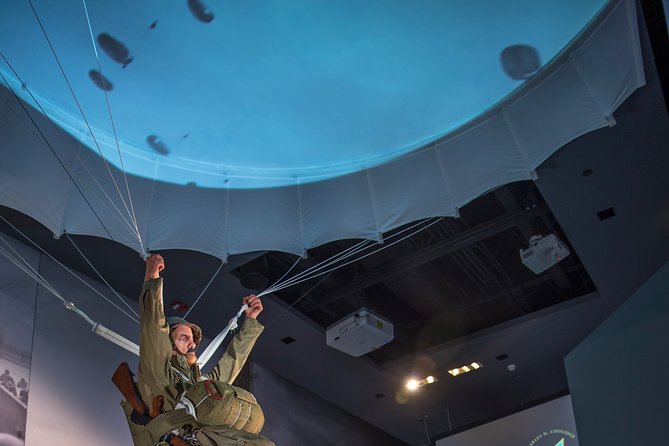
The Heritage Center cares for more than 6,000 objects connected to Medal of Honor recipients and fellow veterans. The objects serve as physical reminders of military service, and they help turn broad events into something more personal.
I find this kind of collection most useful when you take time to ask what each object represents. A piece of equipment, a photograph, or a personal item can connect you to a particular person and a particular moment. The object itself may be modest, but the story attached to it can be powerful.
The displays also place individual recipients within larger periods of American warfare. One part of the experience may help you understand the award, while another connects it to a person from Tennessee or to a major conflict. That structure gives the visit more range than a single-subject display about medals alone.
You should not expect every object to be explained in the same way or to have the same emotional impact. Some displays will interest you for their military detail. Others will matter because of the person behind them. The mix is part of the center’s appeal.
Same place, a different slice of the past:
- History and Hauntings of Salem Guided Walking Tour
★ 5.0 · 14,564 reviews - Charleston’s Old South Carriage Historic Horse & Carriage Tour
★ 5.0 · 10,023 reviews - Beneath The Streets Underground History Tour
★ 4.5 · 8,006 reviews - Boston: Freedom Trail History Small Group Walking Tour
★ 5.0 · 6,450 reviews
The recipients’ stories are the heart of the visit
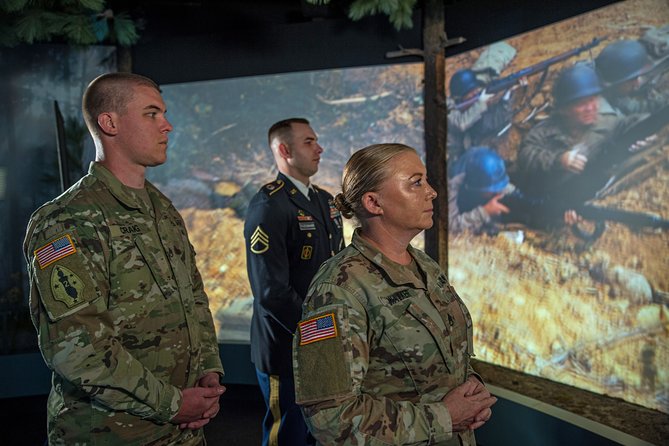
The most praised part of the experience is the human storytelling. Visitors repeatedly describe the individual accounts as moving, memorable, and worth passing on to younger generations. I agree with that emphasis because the Medal of Honor makes the most sense when you understand the person and the decision behind it.
One display uses wax figures and scenes to help explain some of the stories. That visual approach can be useful for families, especially children who may not stay engaged with long blocks of text. It also gives a clearer sense of setting and action than a label alone.
The center’s account of valor is not limited to a single kind of hero. Each recipient faced a different situation, and the circumstances help show that courage does not always look the same. Some acts may involve direct combat. Others may involve protecting fellow service members or continuing to serve despite danger and uncertainty.
I would encourage you to read slowly rather than trying to collect every name. Choose a few stories and let them stay with you. The center works best when you treat it as a place for reflection, not as a checklist.
The Desmond Doss display and personal connections
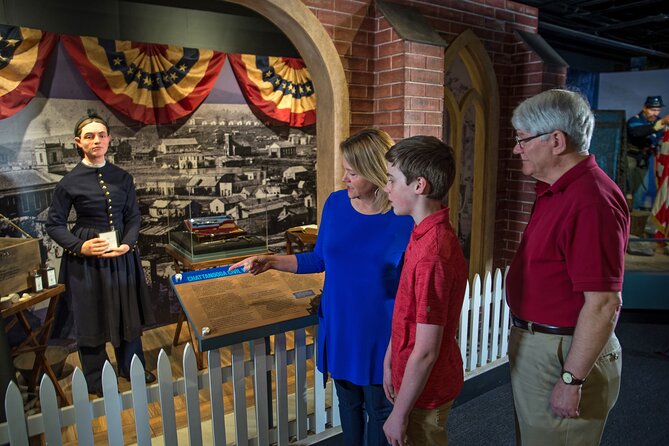
The Desmond Doss exhibit has drawn particular attention. One visitor described a long conversation with a staff member about Doss, and that exchange added a personal layer to the visit. The account also shows that staff members may be willing to discuss a recipient in more detail when you have questions.
Doss is a useful figure for understanding the center’s wider message because his story connects military service with personal conviction and moral courage. The display gives you another example of how recipients’ lives can raise questions about duty, belief, and service.
You may also encounter a Medal of Honor recipient at the center, though no appearance is guaranteed. One visit included a question and answer session with Ryan Tipps for schoolchildren. He showed his medal, posed for a photograph, and gave each child a personal Medal of Honor coin.
That kind of encounter would be exceptional, but it should not be treated as a scheduled part of admission. Think of the center as a place where recipient stories are presented every day, with occasional opportunities for direct contact when the timing happens to work.
A good stop for families, veterans, and history fans

Families can get a lot from this visit, particularly if adults help children connect the displays to the ideas of courage and service. The scenes and figures may make the stories easier to follow, while the theater gives younger visitors a clear beginning.
Still, the subject matter is serious. Parents should be ready to explain that the Medal of Honor is awarded for extraordinary heroism under extreme conditions. Some accounts involve loss and suffering, so younger children may need a little preparation.
Military veterans may find the center especially meaningful. One retired Air Force officer described the chance to salute a Medal of Honor recipient as a profound moment. That kind of response cannot be promised, but the center clearly gives veterans a place to reflect on service and to learn about recipients from different periods.
You do not need military experience to appreciate the museum. I would recommend it to anyone interested in American history, leadership, sacrifice, or the way national memory is shaped. The center also works well for families who want a serious educational stop rather than another purely recreational attraction.
How to plan your time in Chattanooga

The posted opening hours are Monday through Saturday, 9 a.m. to 5 p.m. The experience is not listed as open on Sunday, so plan around that schedule rather than assuming you can stop by any day.
The center is near public transportation, which is helpful if you are staying downtown or prefer not to drive. Parking deserves a warning. A strongly negative review focused on Chattanooga’s parking costs and difficulty, so I would not treat parking as an effortless part of the visit.
A mobile ticket makes entry simple, but I would still keep your booking details easy to access on your phone. The center has also had private events that closed it to the public, including one occasion when tickets were sold even though the museum could not be used. Check the operating status close to your visit, especially if your schedule is tight.
The cancellation policy is generous if your plans change. You can cancel at least 24 hours before the start time for a full refund. Changes or cancellations within 24 hours are not accepted for a refund.
Is the admission a good value?
The actual ticket price is not provided here, so I cannot make a fair dollar comparison. I can assess what you receive for the admission: access to the Heritage Center, the theater, the displays, the object collection, and the center’s immersive presentation.
That package is good value if you spend enough time to read and think about the material. A quick fifteen-minute stop would waste much of what the center offers. I would plan at least an hour, and I would choose two hours if you want the visit to feel unhurried.
The value also depends on your interests. If you want rides, outdoor scenery, or a broad survey of every part of Chattanooga’s past, this is not the right admission. If you want a focused account of military courage told through people and objects, the price is easier to justify.
The strongest added value comes from the staff. Clint, Bob, and Stephen were all singled out for helping visitors understand the displays. Bob was praised for making Chattanooga’s wartime past engaging, while Stephen gave one visitor a detailed conversation about Desmond Doss. Staff interaction may vary, but it can make the experience feel more personal.
What I would combine with the museum
The center works well as part of a larger history day. One retired military couple paired it with the Veterans Bridge, Chickamauga Battlefield, and Trail of Tears sites. Those stops helped place the museum’s stories within a wider setting.
You do not need to copy that exact plan, but the idea is sound. The Heritage Center focuses on people and acts of valor. A battlefield or historic trail can give you a different sense of place and help you understand the events behind the stories.
If you have only a short time in Chattanooga, place the center near other downtown activities. Its one to three hour length makes it flexible. You can give it a full morning, or use it as a serious mid-day stop between other attractions.
Who should book this experience?
I would book it if you like military history, American history, museums built around personal accounts, or places that encourage reflection. Veterans and families with older children may find the subject especially meaningful.
I would think twice if you want a quick, light attraction or if you dislike reading and listening to historical material. The museum’s strength is its stories, and those stories require time and attention.
My advice is to reserve the ticket, check the opening status, and plan at least an hour. If you are already visiting Chattanooga’s battlefields or historic sites, the Heritage Center can give those places a human face. If you are not especially interested in military subjects, it may still be worthwhile, but choose it for the values and personal stories, not merely for a list of famous names.
FAQ
How long does a visit to the National Medal of Honor Heritage Center take?
The visit takes approximately one to three hours, depending on how much time you spend with the theater, displays, stories, and objects.
What does admission include?
Admission includes access to the National Medal of Honor Heritage Center, its theater, and its immersive experience.
When is the Heritage Center open?
The listed opening hours are Monday through Saturday from 9 a.m. to 5 p.m.
Is the center open on Sunday?
Sunday hours are not listed in the provided information, so you should confirm the schedule before planning a Sunday visit.
Is the center near public transportation?
Yes. The center is near public transportation in downtown Chattanooga.
Are mobile tickets accepted?
Yes. The experience offers mobile tickets.
Are service animals allowed?
Yes. Service animals are allowed.
Can most people participate?
Yes. The admission information states that most travelers can participate.
Can I cancel for a full refund?
Yes. You can cancel at least 24 hours before the experience start time for a full refund. Cancellations or changes made within 24 hours are not refunded.
Just added around the USA
- Historical Bicycle Tour of Dunedin★ 5.0 · 44 reviews
- Safety Harbor Ghost Tour★ 5.0 · 60 reviews
- Tarpon Springs Ghost Tour★ 4.5 · 19 reviews
- Cincy Brunch History and Streetcar Tour with Riverside Food Tours★ 5.0 · 108 reviews
- 2.5 Hour Kayaking with Manatee and History Tour in Tarpon Springs★ 5.0 · 24 reviews
- Chicago River Architecture Tour Aboard a Historic Yacht★ 5.0 · 45 reviews
- Walkin’ with Colin: Chicago History-Mystery-Comedy-Tragedy Tour★ 5.0 · 218 reviews
- Historic Homes and Cottages of Wicker Park Walking Tour★ 5.0 · 44 reviews
Museum & Gallery History Tours, compared.

Louvre Museum Entry with History of Mona Lisa
Read our review →
Venice’s Best: Basilica, Doge’s Palace, Gondola & History Gallery
Read our review →
Guided African American History Tour with Reserved Museum Entry
Read our review →
POLIN Museum of the History of Polish Jews Ticket
Read our review →
Bell Tower & St Mark’s Square History Gallery Ticket
Read our review →
Field Museum of Natural History Ticket or VIP Tour
Read our review →
Madrid in a Day Tour:Royal Palace, Historic Center & Prado Museum
Read our review →
Basilica, Doge’s Palace, History Gallery & Bell Tower Option
Read our review →Browse the lists this tour appears in