
Review · GEORGIA
History of Savannah Walking Tour
Savannah reveals itself one square at a time. This 90-minute walking tour links the city’s best-known squares, buildings, cemetery, and park while explaining how Savannah grew from its founding in 1733 through the Civil War and beyond. The route is compact enough to feel manageable, yet broad enough to give you a useful sense of the city’s design and past.
I especially like the small-group format, which makes it easier to hear Sarah, ask questions, and keep the conversation lively. I also like the frequent shaded stops and relaxed pace. The main limitation is time: with so many important places packed into an hour and a half, some stops receive a focused explanation rather than a long visit, and museum interiors are not included.
Sarah is the guide named for this tour, and her strongest qualities are clear communication, warmth, and a willingness to handle unexpected questions. If you want a quick orientation with real historical substance, this is a strong first activity in Savannah.
What makes this Savannah walk worth your time
- Chippewa Square sets the scene: Begin with James Oglethorpe and the founding of Georgia’s first city.
- Savannah’s square plan becomes easier to understand: The route shows how public spaces shaped daily life and city growth.
- The tour handles difficult subjects directly: Slavery, colonial power, Indigenous alliances, immigration, and war all receive attention.
- Colonial Park Cemetery adds a different mood: You learn how death, memory, and Savannah’s Victorian past fit into the city story.
- The route ends at Forsyth Park: Finish beside Savannah’s famous fountain, with a clearer sense of how the city fits together.
- Sarah earns repeated praise for her teaching: Her friendly style and willingness to answer unusual questions make the walk feel personal.
Starting beneath the trees at Chippewa Square
Your meeting point is Chippewa Square, in the center of the square, in front of the large statue. Look for Sarah wearing a Tour Guide Lanyard. This clear meeting instruction matters in a city where several squares can begin to look alike after a while.
The opening discussion introduces James Oglethorpe and Savannah’s founding in 1733. That gives you a useful frame for everything that follows. Rather than treating the squares as pretty lawns surrounded by old buildings, Sarah explains how Savannah’s original plan helped shape the city.
I like beginning here because it gives the walk a strong sense of place right away. You are not simply gathering outside a landmark and waiting for a list of dates. You start with the ideas behind the city.
More History Walking Tours in Savannah
- Savannah History and Haunts Candlelit Ghost Walking Tour
★ 5.0 · 3,235 reviews - Historic Savannah Guided Walking Tour
★ 5.0 · 2,918 reviews - Southern Flavors Food, Pub Crawl, and History Walking Tour
★ 4.5 · 1,623 reviews
Wright Square and the Yamacraw connection
Wright Square brings the story of Tomochichi and the Yamacraw people into the tour. This is an important stop because Savannah’s early success depended on relationships with local Indigenous communities, not just on the decisions of colonial officials.
The stop also helps correct the overly simple version of colonial history. Savannah was not created in isolation. Its survival and growth involved negotiation, local knowledge, and the actions of people whose stories can easily be pushed aside.
Sarah’s style suits this material. Her explanations are designed to be understood while you are standing outdoors, not studied from a textbook. You can ask questions as the route continues, which is useful if you want more context about the people and events introduced here.
Oglethorpe Square and the city’s original design
Oglethorpe Square continues the look at Savannah’s planned layout. The city’s squares are not random bits of greenery. They are part of a system that gives the Historic District its distinctive rhythm and makes the walk feel different from a standard street-by-street city tour.
This is where the tour’s focus on design becomes valuable. You begin to see how squares, streets, homes, churches, and civic buildings relate to one another. The route gives you a way to read Savannah instead of simply photographing it.
The pace is intentionally unhurried. That makes it easier to look up at buildings, listen to the guide, and ask a question without feeling that the group is already moving on. If you prefer a fast list of sights, the pace may feel slow. If you want the city explained, it is a sensible trade.
Juliette Gordon Low and Savannah’s Girl Scout story
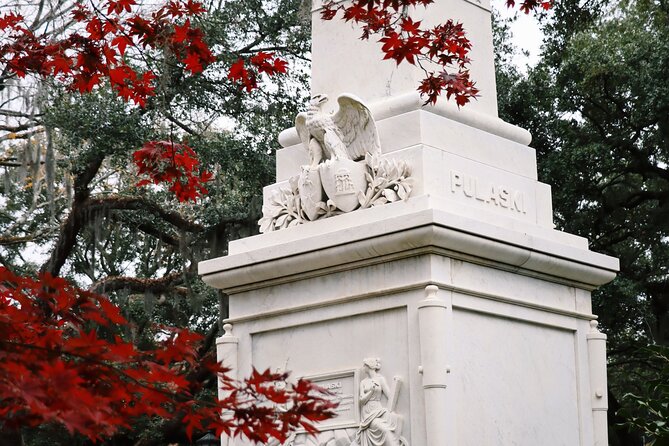
The Juliette Gordon Low Birthplace adds a more personal and modern thread to the walk. Savannah was the birthplace of the founder of the Girl Scouts, and this stop shows how the city’s story reaches beyond colonial leaders, soldiers, and wealthy families.
You should note that the tour does not include entry to museums. The visit is about the building and its place in Savannah’s story from the outside, along with Sarah’s explanation. That keeps the tour within its 90-minute schedule, but it also means you will need a separate visit if you want to explore museum interiors.
This stop works well for families and for anyone who already has an interest in the Girl Scouts. It also adds variety to a route that might otherwise focus too heavily on early colonial and antebellum history.
More History Walking Tours in the USA
- Genteel and Bard’s Savannah Dark History and Ghost Encounter Walking Tour
★ 5.0 · 1,546 reviews - Heart of Savannah History Walking Tour – 2hr
★ 5.0 · 857 reviews - Creepy Crawl Night-Time Haunted Pub Walking Tour of Savannah’s Historic District
★ 4.5 · 802 reviews - Genteel and Bard’s Savannah History Walking Tour
★ 5.0 · 684 reviews
Owens-Thomas House and the hard facts of slavery
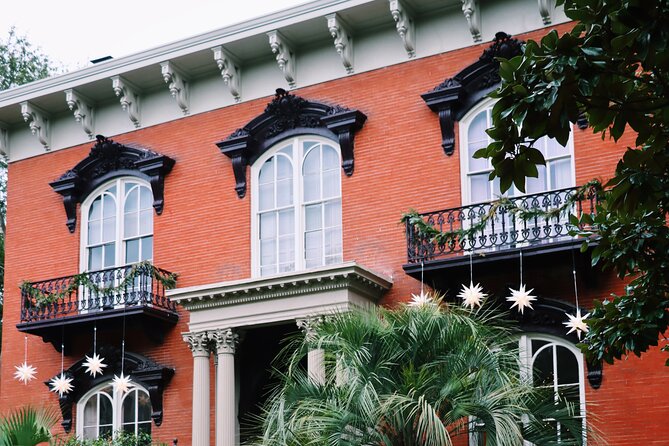
At the Owens-Thomas House and Slave Quarters, the discussion turns to slavery and the way it shaped Savannah’s economy and everyday life in the antebellum era. This is one of the most necessary stops on the route because grand architecture can easily hide the labor and suffering that supported it.
The tour does not treat Savannah’s historic homes as decorative backdrops alone. You get a direct explanation of the people and systems behind the city’s wealth. That makes the visit more honest and gives the surrounding buildings a fuller meaning.
Again, admission to the house and slave quarters is not included. You can still learn from the exterior discussion, but you should plan a separate museum visit if entering the site is important to you. For a 90-minute overview, the stop gives difficult history a proper place without turning the tour into a long indoor program.
Colonial Park Cemetery and Savannah’s Victorian past
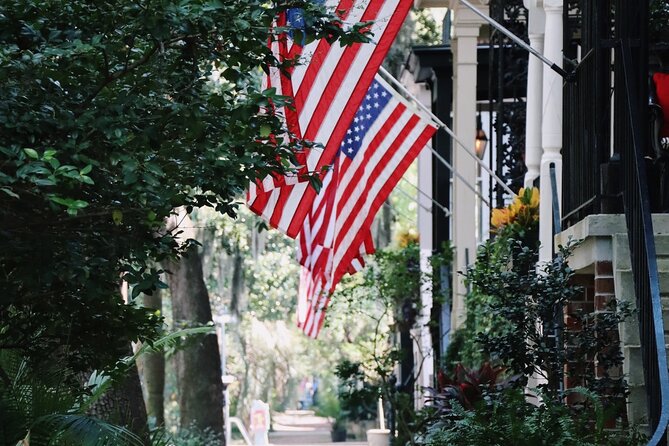
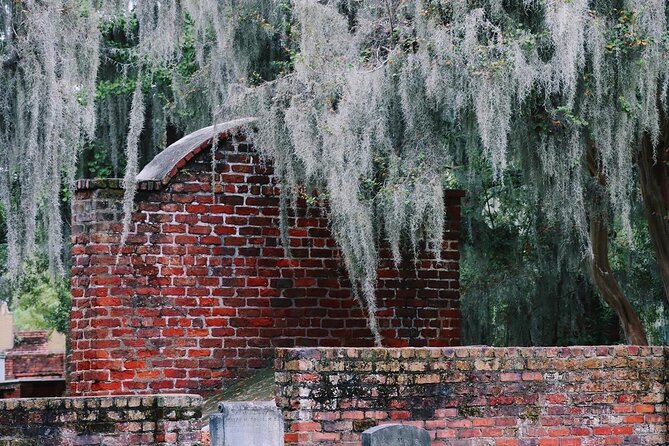
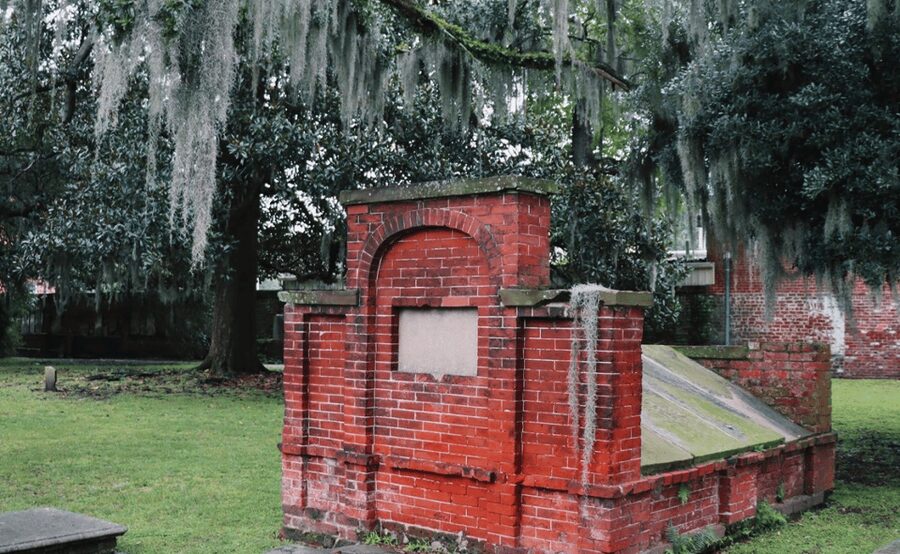
Colonial Park Cemetery changes the mood of the walk. Here, Sarah explores stories of life and death in historic Savannah, including the city’s Victorian past.
Cemeteries can explain a city in ways that monuments and mansions cannot. Names, dates, burial customs, and the condition of a cemetery all offer clues about who lived in Savannah and how the city remembered its dead. This stop gives the tour a quieter, more reflective pause.
It is also a practical point in the route. The walk includes regular shaded stops, and a cemetery can provide a calmer setting after several busy historical explanations. The tour remains outdoors, so you should be comfortable walking between stops and standing while listening.
St. John the Baptist and Savannah’s Irish influence
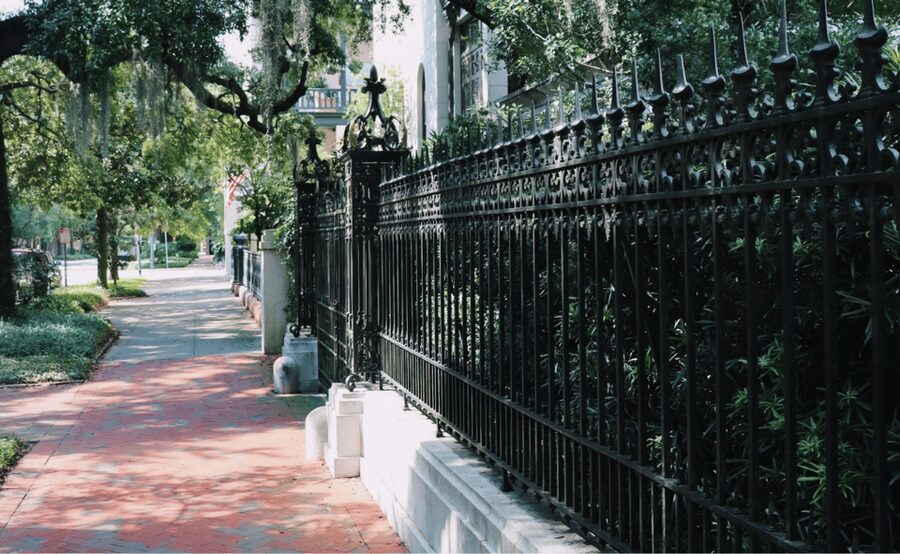
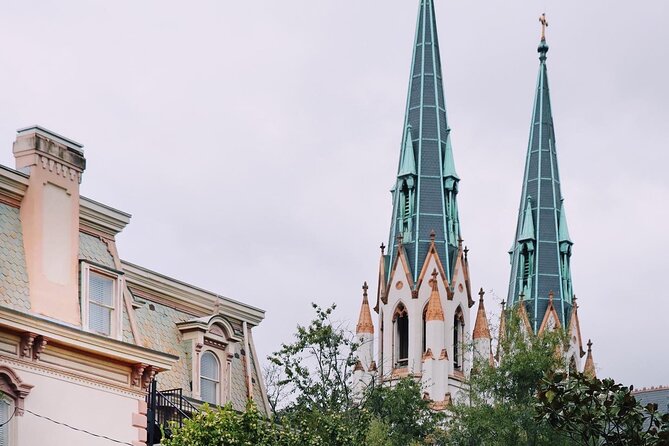
The Cathedral of St. John the Baptist introduces the influence of Savannah’s Irish immigrant community. That broadens the tour beyond the city’s founding and elite architecture by showing how immigration shaped Savannah’s religious and cultural life.
The cathedral is also an important visual marker along the route. Even if you know little about its history, the building helps show how Savannah’s communities expressed identity through public architecture.
The tour focuses on interpretation rather than admission. Entry to museums is not included, and the supplied details do not promise an interior cathedral visit. If you want to spend time inside, treat that as a separate plan rather than part of the walking tour.
Green-Meldrim House and Savannah during the Civil War
The Green-Meldrim House brings the Civil War into the story. Sarah explains Savannah’s strategic role during the conflict, helping you understand that the city was not merely a beautiful Southern port with old homes. Its location and resources gave it military importance.
This stop connects the earlier themes of planning, commerce, wealth, and slavery with the upheaval of war. A good city tour should show how major events changed local life, and this route does that without abandoning the streets and buildings in front of you.
The benefit of a local guide is especially clear here. A building can tell you that something happened, but a guide can explain why the location mattered and how it fits into the city’s larger story.
Jones Street and the pleasure of simply walking
Jones Street offers a change of pace. It is often called one of the most beautiful streets in America, and the tour gives you time to appreciate the homes, trees, and calm residential feel.
Not every stop needs to carry a heavy historical subject. A walking tour also has to let you enjoy the city as a place, not just as a timeline. Jones Street provides that breathing room while keeping you within Savannah’s Historic District.
This is one of the sections where the shaded, easygoing pace matters most. You can take in the architecture without feeling pressed to race toward the next landmark. If you enjoy attractive streets and residential details more than formal museum displays, this part should appeal to you.
Monterey Square, Pulaski, and Mercer-Williams House
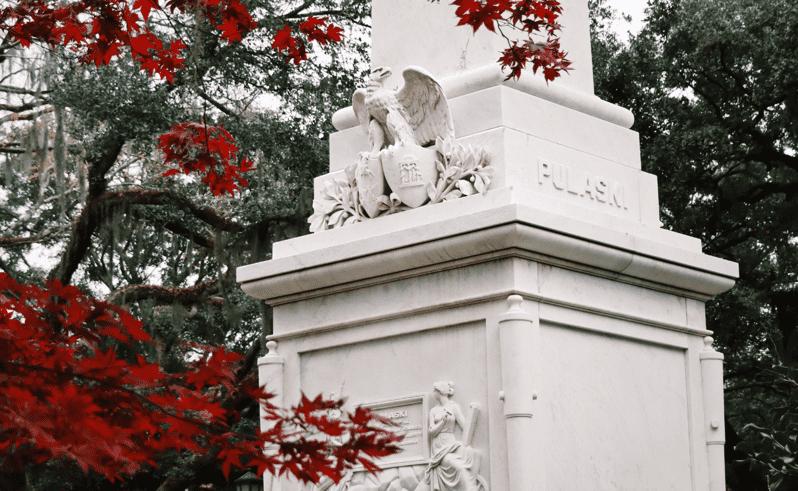
At Monterey Square, the story turns to General Pulaski and the Mercer-Williams House. The square brings together military history, architecture, and one of Savannah’s best-known homes.
The Mercer-Williams House is especially familiar to people interested in Savannah’s literary and cultural reputation, but this tour keeps the focus on history and the square’s notable figures. As with the other museums, admission is not part of the $35 price.
You should think of this stop as an outdoor introduction. Sarah gives you the context needed to recognize why the square matters, while a separate paid visit would be necessary for a longer look inside a museum.
Finishing at Forsyth Park’s famous fountain
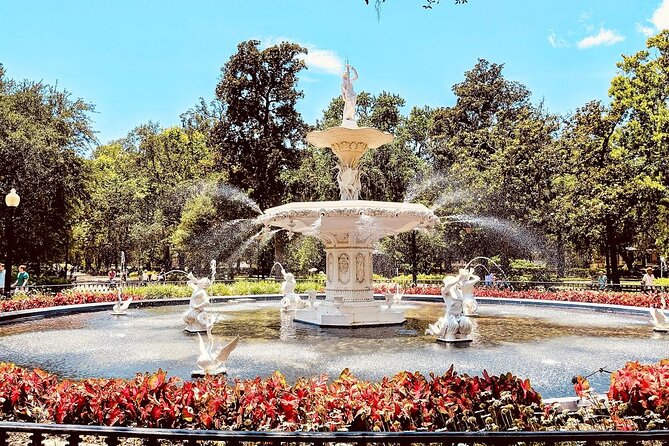
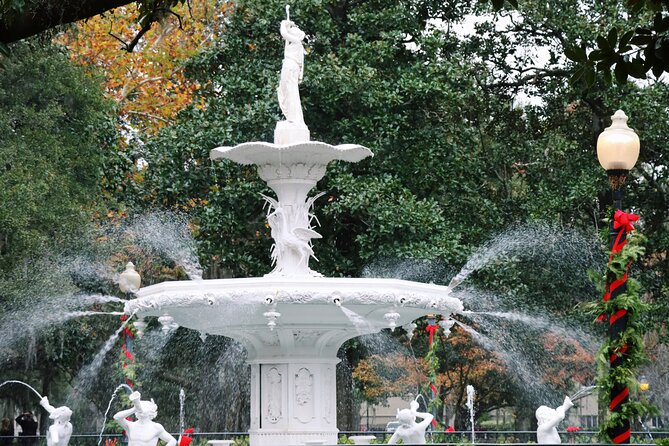
The route concludes at Forsyth Park, beside its iconic fountain. This is a satisfying finish because the park gives you room to step back and consider what you have seen.
By this point, Savannah’s squares should make more sense. You have heard about Oglethorpe’s plan, the Yamacraw connection, Irish immigration, slavery, the Civil War, and the people who shaped the city. Forsyth Park then works as a final reminder that Savannah’s public spaces are central to its identity.
Ending here also gives you a useful point for continuing your day. You can leave with a better sense of the city’s layout and a list of places you may want to revisit at your own pace.
How much history fits into 90 minutes?
The tour costs $35 per person. I consider that fair value if you want an organized introduction rather than a simple stroll through attractive streets.
You are paying for a guide, a planned route, interpretation at major sites, and the chance to ask questions. The strongest value comes from Sarah’s teaching style. Several pieces of feedback describe her as friendly, articulate, cheerful, organized, and happy to answer even offbeat questions. That matters because a city tour can feel stiff when the guide only recites prepared facts.
The price is less compelling if your main goal is museum entry. No museum admissions are included, so add those costs separately if you want to go inside the Owens-Thomas House, Mercer-Williams House, or other sites.
At 90 minutes, the tour is also a good fit for the first day of a short Savannah visit. It gives you orientation without consuming half a day. The tradeoff is that each stop receives a concise explanation rather than an extended examination.
Who will enjoy this walking tour most?
I would recommend this experience to:
- First-time visitors who want a clear introduction to Savannah
- People who enjoy local stories more than audio guides or self-guided maps
- Families and couples looking for a manageable historical walk
- Anyone interested in architecture, city planning, cemeteries, or public squares
- Visitors who want to ask questions and receive recommendations for the rest of their stay
- People who prefer a slower pace with shaded stops
It may be less suitable if you want a long museum visit, a private tour, or a route devoted mainly to food, ghosts, or architecture. This is a broad history walk. It covers many subjects, but it does not promise an exhaustive treatment of any one building.
The tour is in English and led live by a guide. Sarah’s ability to explain clearly and respond to questions is one of its biggest strengths.
Practical details before you book
Meet Sarah in the center of Chippewa Square, in front of the large statue. Her Tour Guide Lanyard should make her easy to identify.
Wear comfortable shoes. The experience is a walking tour through the Historic District, with standing and movement between multiple outdoor stops. The frequent shaded pauses make the pace more comfortable, but you should still plan for an active 90 minutes.
You can cancel up to 24 hours in advance for a full refund. A reserve-now, pay-later option is also available, which helps if your schedule is still changing. Starting times vary, so check availability when you book.
Should you book the History of Savannah Walking Tour?
Book it if you want Savannah to make sense, not just look pretty. The route covers the city’s most useful introductory subjects, and Sarah’s friendly, clear teaching style helps connect the squares, homes, cemetery, church, and park into one story.
The best reason to choose it is the balance: serious history, attractive streets, shaded pauses, and enough time for questions. The main caution is that museum entry is excluded and the 90-minute schedule keeps each stop fairly focused.
For a first visit, I would take this tour early in your stay. You will leave with better bearings, a stronger grasp of Savannah’s past, and a clearer idea of which buildings and neighborhoods deserve a second look.
FAQ
How long is the History of Savannah Walking Tour?
The tour lasts 90 minutes.
How much does the tour cost?
The price is $35 per person.
Where does the tour begin?
The tour begins at Chippewa Square in Savannah’s Historic District.
How do I find the guide?
Meet Sarah in the center of Chippewa Square, in front of the large statue. She will be wearing a Tour Guide Lanyard.
Where does the tour finish?
The tour finishes at Forsyth Park, by Savannah’s iconic fountain.
What language is the tour conducted in?
The live tour is conducted in English.
Are museum admissions included?
No. Entry to museums is not included in the tour price.
Which major places are included on the route?
The route includes Chippewa Square, Wright Square, Oglethorpe Square, the Owens-Thomas House and Slave Quarters, Colonial Park Cemetery, the Cathedral of St. John the Baptist, Green-Meldrim House, Jones Street, Mercer-Williams House, and Forsyth Park.
Can I cancel for a full refund?
Yes. You can cancel up to 24 hours in advance for a full refund.
Just added around Savannah
- Bonaventure Cemetery & Wormsloe State Historic Site Tour★ 4.8 · 268 reviews
- Savannah Historic District Walking Tour★ 5.0 · 223 reviews
- Historic Downtown Savannah: Guided Segway Tour★ 4.9 · 276 reviews
- Historical Bike Tour of Savannah and Keep Bikes After Tour★ 5.0 · 345 reviews
- 90-Minute Segway History Tour of Savannah★ 5.0 · 365 reviews
- Savannah Slavery to Freedom Guided History Tour★ 5.0 · 407 reviews
- Private Tour of Savannah’s Historic/Victorian Districts & Bonaventure Cemetery★ 5.0 · 418 reviews
- Guided Savannah Civil War History Walking Tour★ 5.0 · 492 reviews
History Walking Tours, compared.
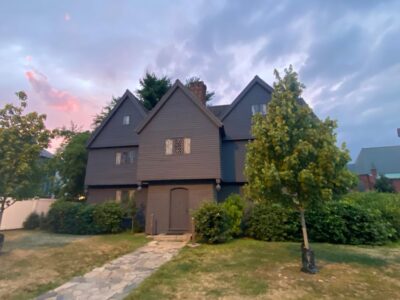
History and Hauntings of Salem Guided Walking Tour
Read our review →
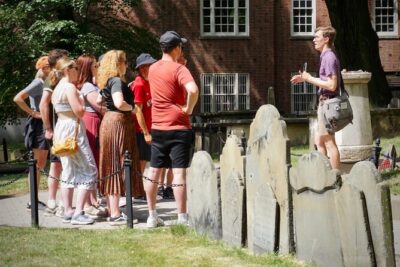
Freedom Trail History Small Group Walking Tour
Read our review →
Historic Charleston Guided Sightseeing Walking Tour
Read our review →
Tapas Walking Tour with Food, Wine, and History
Read our review →
Savannah History and Haunts Candlelit Ghost Walking Tour
Read our review →
A History of Terror – Belfast City Centre Walking Tour
Read our review →Browse the lists this tour appears in