
Review · SAVANNAH
Heart of Savannah History Walking Tour – 2hr
Savannah tells its story one square at a time. This two-hour walk links major landmarks, quiet corners, and famous movie sites from Wright Square to Forsyth Park. I like the clear city orientation and the way guides such as Rick Moss, Mark, Rose, and Crystal mix facts with humor. The main drawback is that the pace can feel full in places, with limited time for questions and breaks.
I also like the route’s variety. You get colonial planning, American Revolution and Civil War stories, grand houses, Girl Scout history, a haunted-home tale, and the bench linked to Forrest Gump. The tour covers about one mile, but Savannah’s heat, crowds, and occasional traffic noise can make comfortable shoes and water essential.
Key points to know before you book

- Start at Wright Square: The tour begins beside the Gordon Monument and ends at Forsyth Park Fountain.
- About one mile on foot: Benches appear along the way, but you will be standing and walking for much of the two hours.
- A strong first-day activity: The route helps you get your bearings before exploring Savannah on your own.
- Many exterior visits: You admire the Juliette Gordon Low birthplace, Mercer Williams house, and Armstrong-Kessler house from outside.
- The guide makes the difference: Rick Moss, Mark, Rose, and Crystal have all been praised for humor, warmth, storytelling, and local detail.
- Weather matters: The tour runs rain or shine, with rescheduling offered in severe weather or if the minimum group size is not met.
Why this two-hour walk works so well
Savannah can look easy on a map. The streets are flat, the squares are close together, and many major sights sit within a short walk. Yet the city’s story is spread across those squares, churches, mansions, monuments, and parks. Without context, you may see attractive buildings but miss why they matter.
This tour gives you that framework. It explains why General James Oglethorpe chose a 40-foot bluff for the colony, how Savannah’s squares were planned, and how the city grew around trade, military conflict, family wealth, religion, and tourism.
I would book it near the beginning of a Savannah visit. Afterward, you will know which squares deserve another look, where to pause for photos, and which houses or stories you may want to explore in greater detail.
The route is offered in the morning or afternoon, which gives you useful flexibility. A morning departure can leave your afternoon open for museums and food. An afternoon walk may work better if you want a slower start, though summer heat can make any outdoor tour demanding.
More History Walking Tours in Savannah
- Savannah History and Haunts Candlelit Ghost Walking Tour
★ 5.0 · 3,235 reviews - Historic Savannah Guided Walking Tour
★ 5.0 · 2,918 reviews - Southern Flavors Food, Pub Crawl, and History Walking Tour
★ 4.5 · 1,623 reviews
Wright Square explains Savannah’s original plan
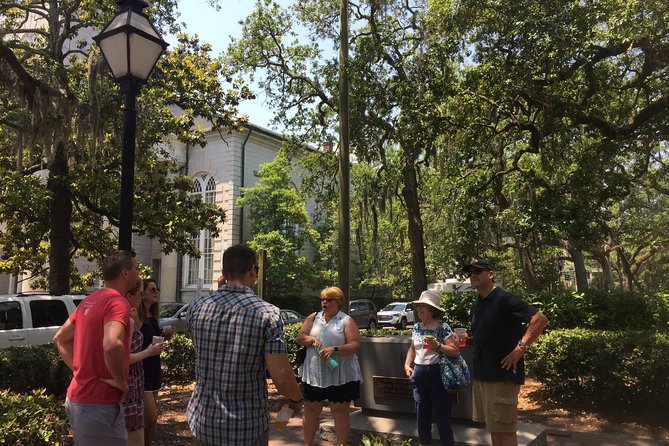
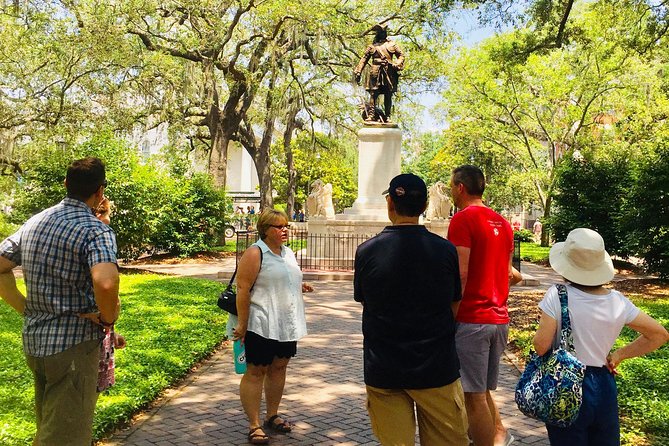
The walk starts in the center of Wright Square, in front of the Gordon Monument. This is a good opening point because the guide can explain the city before leading you through it.
You learn why Oglethorpe established Savannah where he did and how the planned squares shaped daily life. The design is not just a pretty pattern for postcards. It reflects the way Savannah was organized from its earliest days, with public squares serving as gathering places and key parts of the town’s layout.
The square also introduces Tomochichi, chief of the Yamacraw Indians. His connection to the early settlement adds an important layer to the usual colonial story. The tour explains why he is buried beneath the Gordon Monument, giving the monument a meaning that is easy to miss if you only stop for a photograph.
The guide also connects Savannah’s past to its present-day port. You hear that the Port of Savannah is the third-largest port in the nation. That detail helps show why this city has long mattered beyond its handsome streets.
Juliette Gordon Low’s birthplace, seen from the sidewalk
The next stop is the birthplace of Juliette Gordon Low, founder of the Girl Scouts. She was born here on October 31, 1860, and the house offers a direct link between Savannah’s 19th-century society and a movement known around the world.
You do not go inside the home on this tour. That is important to understand before booking. The stop lasts about ten minutes and focuses on the exterior, the Gordon family, and how the building is used today.
For many visitors, this is a short but useful pause. It adds a personal story to the city’s grand architecture. If the Girl Scouts or women’s history matter to you, you may want to return later for the museum visit, since this walk does not include interior admission.
Churches, movie scenes, and a helpful dose of humor
At Independent Presbyterian Church, the guide explains the building’s complicated past. The church was first founded in 1755 on Ellis Square, originally called Market Square. Fire destroyed the first building, and a later structure on Telfair Square was destroyed by a hurricane.
The present church, on Bull Street at Oglethorpe Avenue, dates to 1855. You also learn which United States president was married there in 1885 and why the steeple became so well known. This is a brief stop, only about five minutes, so expect an exterior explanation rather than a long architectural visit.
Chippewa Square changes the mood. This is where Forrest Gump sat with his box of chocolates while waiting for the bus. The scene made the square one of Savannah’s most recognizable film locations.
The guide also clears up a common mistake about the monument in the center. It shows General James Oglethorpe, not Captain Morgan. The resemblance creates an easy laugh, especially when the guide connects it to Savannah’s allowance for to-go cups.
This is one of the tour’s most accessible moments. Even if you have not seen the film recently, the setting is easy to appreciate. If you have watched it, you will likely want a photograph here.
More History Walking Tours in the USA
- Genteel and Bard’s Savannah Dark History and Ghost Encounter Walking Tour
★ 5.0 · 1,546 reviews - Creepy Crawl Night-Time Haunted Pub Walking Tour of Savannah’s Historic District
★ 4.5 · 802 reviews - Genteel and Bard’s Savannah History Walking Tour
★ 5.0 · 684 reviews - Savannah: Historic District Foodie Walking Tour
★ 4.8 · 613 reviews
Sorrel Weed House and Savannah’s taste for ghost stories
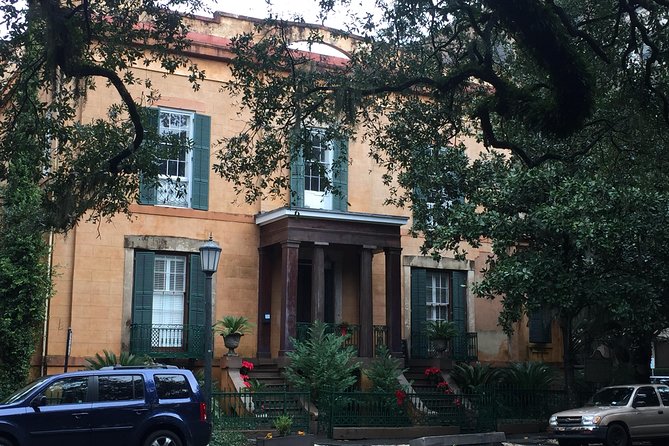
The walk passes the Old Sorrel Weed House, one of Savannah’s best-known haunted homes. You do not enter during this tour, and the stop lasts only about two minutes.
Instead, the guide points out the gray brick wall around the courtyard and explains the fingerprints found in the brick. You also hear where the brick came from. It is a quick stop, but it shows how Savannah’s buildings collect layers of folklore, construction history, and family stories.
Ghost stories are part of the city’s tourism culture, and this tour includes some of that material. If you prefer strictly military, political, or architectural history, you may find the supernatural details a little overdone. If you enjoy a good eerie aside, they add personality without taking over the whole walk.
Madison Square recalls the Siege of Savannah
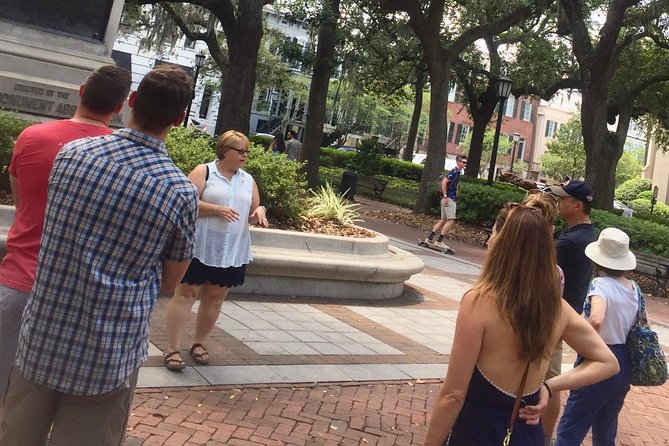
Madison Square is one of the most important historical stops. The ground where the square now sits was once the site of the Siege of Savannah, one of the bloodiest battles of the American Revolution.
That contrast is part of what makes Savannah so interesting. Today, the setting is calm and landscaped, but the guide asks you to picture a military conflict in the same urban space. The stop lasts about ten minutes, giving enough time for the broad story without turning the tour into a battlefield lecture.
This is also where the tour benefits from moving on foot. You are not hearing about a distant event from a bus window. You are standing in the place where it happened, surrounded by the later city that grew over it.
Green-Meldrim House and Sherman’s March to the Sea
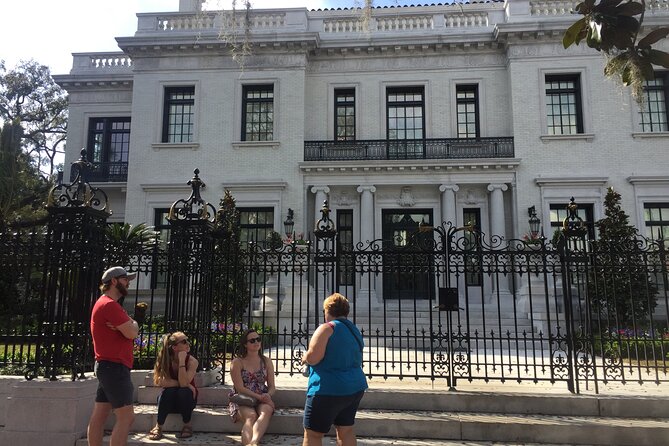
The Green-Meldrim House is one of the route’s grandest buildings. Completed in 1853, it is presented as a major example of Gothic architecture in the South.
The house cost $93,000 at the time, equivalent to about $3.2 million today. That figure helps you understand the scale of the home and the wealth required to build it. It was the most expensive house in Savannah during the 1800s.
The building also played a role in the Civil War. General Sherman used it as his headquarters during his March to the Sea after occupying Savannah. The combination of architecture and wartime history gives this stop more weight than a simple mansion photo.
The tour continues past the former Savannah Volunteer Guard building, now owned by the Savannah College of Art and Design. You do not go inside, but it adds another piece to the city’s changing story, from military organization to modern education.
Gryphon Tea Room and the old apothecary
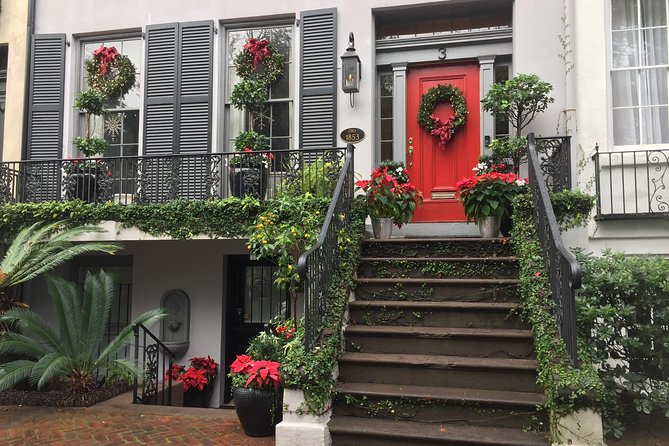
The route passes the building that houses Gryphon Tea Room, known as the Shriner’s Building. Inside the tea room is what feels like a small museum, with original mahogany cabinetry and cubbies from its earlier use as Solomon’s Apothecary.
You do not stop for a meal as part of the walking tour, but the guide points out why the tea room is worth remembering. It can be a useful place for lunch, dinner, or a cup of tea after the walk.
This is a good example of the tour’s practical value. You are not just collecting dates and names. You are also getting ideas for places to return to when you explore the city on your own.
Mercer Williams House and Savannah’s most famous scandal
The Mercer Williams house is tied to Midnight in the Garden of Good and Evil, John Berendt’s nonfiction account of Savannah personalities, wealth, and a 1981 shooting.
Jim Williams bought the house in 1969. The book, published in 1993, remained on the New York bestseller list for 216 weeks, and the later film brought even more attention to Savannah. The story helped make the city a major destination for people interested in architecture, local characters, and true crime.
You view the house from outside. The guide explains the people and events connected to it, but this is not a visit to the interior.
I recommend reading the book or watching the film before your trip if you can. You will recognize more of the setting and understand why this one home has such a strong hold on Savannah’s public image. If you have no interest in the book or film, the stop may feel less important than the squares and war history.
Armstrong-Kessler House delivers the big architectural moment
The house once called the Armstrong House is now known as the Armstrong-Kessler house. The guide discusses its past and the people connected to the property.
The scale is striking. The home covers more than 26,000 square feet, and it is still a private residence. You cannot tour the interior, but the exterior alone gives you a sense of Savannah’s grandest residential architecture.
This is the kind of stop where you may want a little extra time for photographs. The scheduled visit lasts about ten minutes, and the house is easy to admire from the street. It is also a reminder that Savannah’s most impressive homes do not all operate as museums.
Forsyth Park brings the route to a natural close
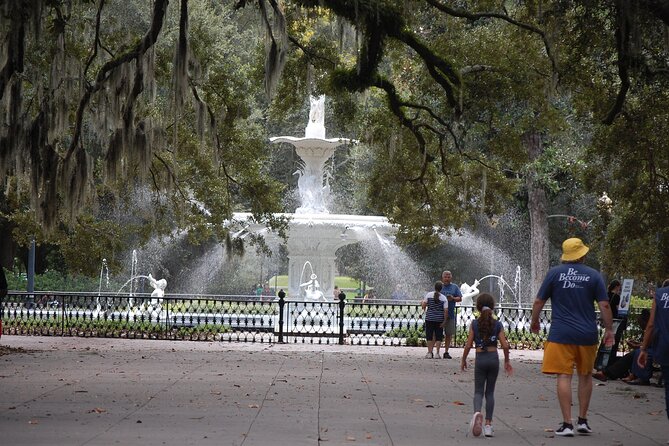
The walk ends at Forsyth Park, Savannah’s largest and best-known public park. It began in 1848 with ten acres and now covers 30 acres.
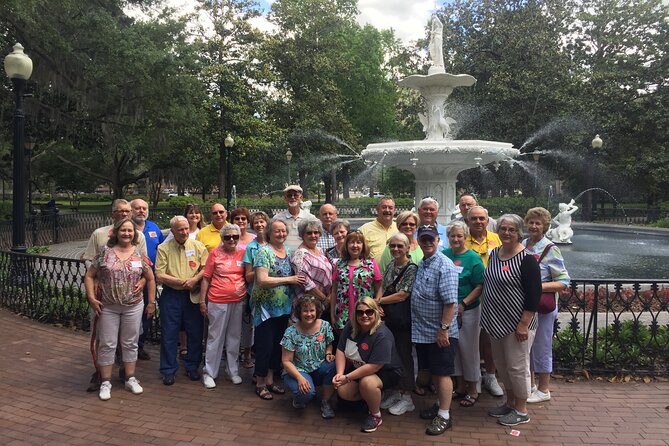
The park gives the tour a pleasant finish. After two hours of stories and architecture, you reach a broad public space used by people of all ages. The guide ends at the Forsyth Park Fountain, the city’s most famous fountain and one of its best photo spots.
The fountain was ordered from a catalog in France and installed in 1858. That small detail is exactly the sort of fact that makes a familiar landmark more memorable. Plan to take your own photograph here, then use the park as a starting point for the next part of your day.
Guide style, group size, and the pace
The tour allows up to 30 people, though the experience may feel smaller depending on the booking. The strongest part of the walk is the guide’s delivery. Rick Moss has been praised for friendliness, humor, and local detail. Mark is noted for an entertaining approach, while Rose and Crystal are praised for warmth, storytelling, and practical recommendations.
The tone is generally lively rather than academic. Guides explain the facts, then add side stories, jokes, and local characters. That approach works well in Savannah, where folklore and documented history often sit close together.
There are a few things to watch for. One guide received criticism for speaking too softly in a busy setting, and another tour began late after an emergency involving the scheduled guide. That delay was handled with refunds for affected participants, but it shows why you should avoid scheduling a tight connection immediately afterward.
The walk can also wander into side stories. Some people love those details. Others may prefer a faster route with more squares and more time for questions. If you want a strict march through every major landmark, this may feel leisurely in spots.
Comfort, weather, and value
The tour covers roughly one mile and includes benches along the way. Most people who can manage a normal city walk should be able to take part, but you still need comfortable walking shoes.
Savannah summers can be hot and humid. Bring water, and carry an umbrella because the tour runs rain or shine. Severe weather may lead to a new date or a full refund. Service animals are allowed, and the starting point is near public transportation.
The exact tour price is not provided here, so I cannot judge it against a specific fare. The value comes from the amount of orientation packed into two hours, especially if this is your first visit. A guide can help you avoid spending your whole day looking at buildings without understanding their place in Savannah’s story.
The tour is less valuable if you already know the historic district well, have visited the main houses, or prefer to move at your own pace. It also does not include interior admission to the Juliette Gordon Low birthplace, Old Sorrel Weed House, Mercer Williams house, or Armstrong-Kessler house.
You can cancel for a full refund up to 24 hours before the start time. Cancellations within 24 hours are not refunded, and changes during that period are not accepted.
Who should book this Savannah walk?
I would recommend it to first-time visitors, couples, solo visitors, families with older children, and anyone who wants a readable introduction to Savannah before exploring alone.
It is especially useful if you enjoy architecture, military history, film locations, local personalities, or stories about how cities were planned. The mix keeps the two hours from feeling like a list of dates.
You may want another type of experience if you need wheelchair-specific route details, want to tour house interiors, dislike ghost stories, or prefer a quiet small-group walk with lots of time for questions. The group can reach 30 people, and busy streets may make a soft-speaking guide hard to hear.
Should you book the Heart of Savannah History Walking Tour?
Yes, if you want a strong first look at Savannah without spending half a day on your feet. The route gives you Wright Square, Chippewa Square, Madison Square, Forsyth Park, famous houses, Civil War and Revolutionary War stories, and the Forrest Gump film site in one well-planned walk.
Book it early in your visit, wear good shoes, bring water, and leave room afterward to explore Forsyth Park or return to a house that caught your attention. The experience is not a replacement for museum visits or a slow private stroll, but it is a useful way to understand what you are seeing.
FAQ
How long is the Heart of Savannah History Walking Tour?
The tour lasts approximately two hours.
Where does the tour begin?
It begins at Wright Square in Savannah, in front of the Gordon Monument.
Where does the tour end?
The tour ends at the fountain in Forsyth Park.
How far do you walk?
The route covers approximately one mile and includes benches along the way.
Is the tour offered in English?
Yes. The tour is offered in English and includes a mobile ticket.
Do you go inside the historic houses?
No. The tour views the Juliette Gordon Low birthplace, Old Sorrel Weed House, Mercer Williams house, and Armstrong-Kessler house from outside. Interior admission is not included.
What happens if the weather is severe?
The tour operates rain or shine. If severe weather causes cancellation, you will be offered another date or a full refund.
Just added around Savannah
- Savannah: Historical Pub Crawl Tour with Drinks Included★ 3.9 · 34 reviews
- Savannah: History and Culture Walking Tour★ 4.6 · 149 reviews
- Savannah: African American History Tour★ 4.9 · 72 reviews
- Savannah: Historical Panoramic City Tour★ 4.8 · 72 reviews
- Savannah: Historic District Guided Bike Tour★ 4.8 · 47 reviews
- Savannah: Battles & Brews Civil War History Pub Crawl★ 4.4 · 36 reviews
- Savannah: History, Culture, & Scenic Views E-Bike Tour★ 5.0 · 69 reviews
- Savannah: Historical Bike Tour with Tour Guide★ 4.8 · 140 reviews
History Walking Tours, compared.
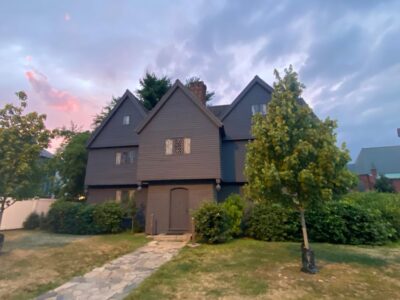
History and Hauntings of Salem Guided Walking Tour
Read our review →
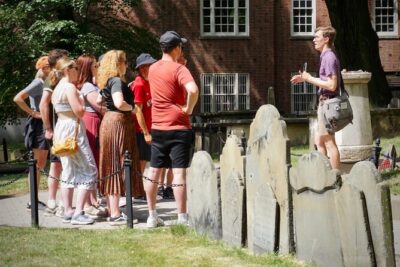
Freedom Trail History Small Group Walking Tour
Read our review →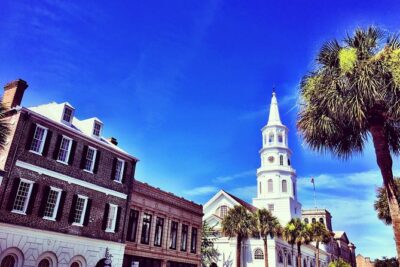
Historic Charleston Guided Sightseeing Walking Tour
Read our review →
Tapas Walking Tour with Food, Wine, and History
Read our review →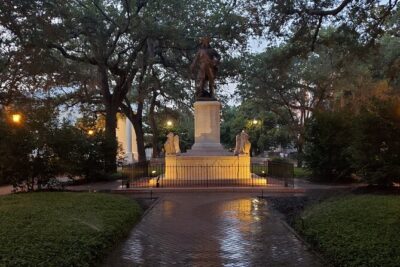
Savannah History and Haunts Candlelit Ghost Walking Tour
Read our review →
A History of Terror – Belfast City Centre Walking Tour
Read our review →Browse the lists this tour appears in