

Review · SAVANNAH
Genteel and Bard’s Savannah History Walking Tour
Savannah tells its stories outdoors. Genteel and Bard’s two-hour history walk brings those stories to the streets, squares, homes, churches, and movie locations of the Historic District. I like the small-group feel, capped at 20 people, and the clever use of headsets and recorded material, which lets you hear the guide without crowding around. I also like that guides such as David and Julianna add personal insight, not just dates and names.
The main drawback is simple: you walk and stand for much of the two hours. Warm weather can make that tiring, and one participant found the earbud style uncomfortable with small ear canals or hearing aids. Still, the route offers a strong first look at Savannah for $39, especially if you want context before exploring on your own.
Key points to know before you go
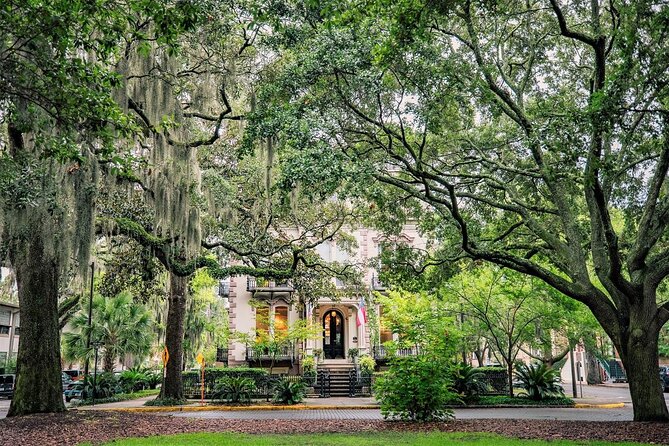
- A two-hour introduction to Savannah: The route covers the city’s founding, Native American connections, Civil War role, architecture, film history, religion, and local culture.
- Headsets keep the guide audible: You can listen while standing back from the group, though the earbuds may not suit every ear.
- Six notable parts of the Historic District: Expect Chippewa Square, Madison Square, Monterey Square, Jones Street, Lafayette Square, and several important buildings.
- Guides bring local perspective: David is a ninth-generation Savannahian, while Julianna has earned praise for her warmth, storytelling, and command of local history.
- Morning and afternoon departures: You can fit the walk into different sightseeing plans.
- Good shoes and water matter: The route involves plenty of walking and standing, especially on warm days.
Why this Savannah walk is worth your first morning
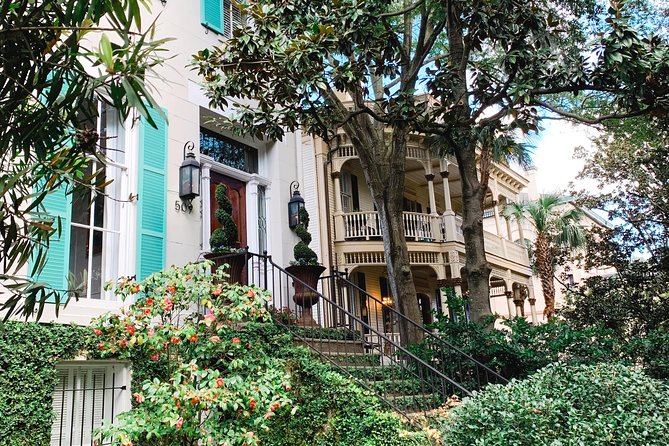
Savannah is easy to admire and surprisingly hard to understand without a little background. Its squares look peaceful, its streets are lined with old homes, and Spanish moss gives nearly every photograph a soft frame. But the city’s layout, founding purpose, Native American alliances, wartime role, and social history are not obvious from a casual stroll.
That is where this tour earns its keep. It gives you a working map of the Historic District while explaining why the city looks the way it does. I would book it early in a Savannah visit, then use the rest of the day to revisit the places that caught your attention.
The tour begins at 151 Bull Street and ends outside the Cathedral of St. John the Baptist at 222 East Harris Street. Since the walk finishes in Lafayette Square, you are already in a useful part of the Historic District for further sightseeing.
The route is delivered in English, with a live local guide and audio support based on professionally recorded stories and historic letters. The format has a practical benefit: you do not need to stand shoulder to shoulder with the guide to catch every word.
More History Walking Tours in Savannah
- Savannah History and Haunts Candlelit Ghost Walking Tour
★ 5.0 · 3,235 reviews - Historic Savannah Guided Walking Tour
★ 5.0 · 2,918 reviews - Southern Flavors Food, Pub Crawl, and History Walking Tour
★ 4.5 · 1,623 reviews
Bull Street and the city’s first chapter
The opening section covers Savannah from 1733 to the present. That is a lot of ground for two hours, so you should expect a brisk overview rather than a specialist lecture on every period.
The guide connects Savannah’s streets to its people, music, architecture, movies, wartime experiences, and local customs. The best part of this broad approach is the variety. One moment you may be thinking about the city’s planned design, and the next you are hearing about a film location or a local family.
The tour’s storytelling style is a major part of its appeal. David has been praised for adding details from his life as a ninth-generation Savannahian. Julianna has also received strong praise for making the past feel approachable and for helping people plan the rest of their time in the city.
Your experience will depend partly on the assigned guide. The feedback is especially strong for David and Julianna, with repeated praise for their enthusiasm, humor, and ability to answer questions. That matters on a walking tour because a good guide makes pauses feel useful rather than like interruptions.
Chippewa Square and Savannah’s planned design
Chippewa Square is the first major stop. Many people recognize it from Forrest Gump, but the film connection is only one small part of why the square matters.
Here you learn about James Oglethorpe, the founder of Georgia, along with Mary Musgrove, Chief Tomochichi, and the Yamacraw people. These names help explain Savannah’s early relationships and the city’s original purpose.
The square also gives the guide a chance to explain Savannah’s unusual street plan. The squares were not placed randomly. They were part of the city’s design, shaping neighborhoods and public life.
The movie connection is an easy way into the conversation, especially if you are visiting with children or with someone who is more interested in pop culture than colonial planning. The stronger value, though, is the link between the familiar movie setting and Savannah’s actual beginnings.
Expect about ten minutes here. That is long enough to establish the main ideas, take in the setting, and ask a question, but not enough for an exhaustive account of Oglethorpe or the Yamacraw people.
Madison Square and the Civil War era
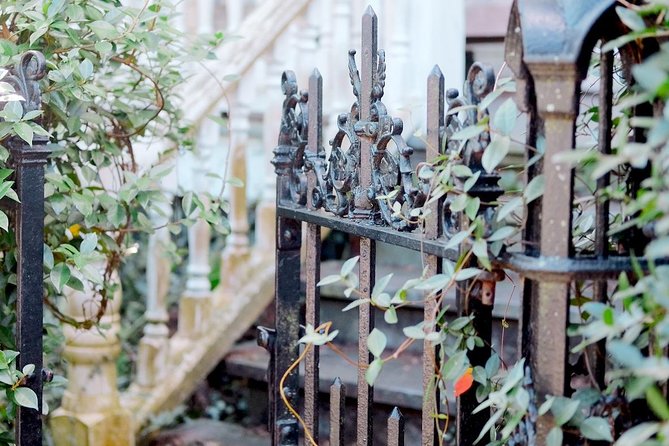
At Madison Square, the focus shifts to Savannah’s role in the Civil War and to the Green-Meldrim House. This section gives the tour more political and military weight.
Savannah’s wartime story is not simply a list of battles. The guide places the city within the larger events that helped shape the future of the United States. That broader framing is useful because it moves the tour beyond pretty buildings and famous movie scenes.
The Green-Meldrim House adds a physical anchor to the story. You are not only hearing about national events in the abstract. You are standing beside a historic building connected with the period.
This stop is brief, so listen for the main thread rather than trying to memorize every detail. If Civil War history is your main interest, you may want a more focused museum visit later. For a general city tour, the coverage gives you enough background to recognize Savannah’s importance.
More History Walking Tours in the USA
- Genteel and Bard’s Savannah Dark History and Ghost Encounter Walking Tour
★ 5.0 · 1,546 reviews - Heart of Savannah History Walking Tour – 2hr
★ 5.0 · 857 reviews - Creepy Crawl Night-Time Haunted Pub Walking Tour of Savannah’s Historic District
★ 4.5 · 802 reviews - Savannah: Historic District Foodie Walking Tour
★ 4.8 · 613 reviews
Monterey Square, Pulaski, and religious history
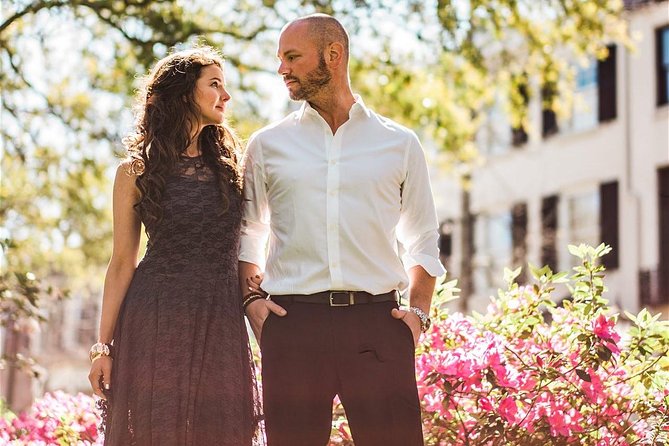
The route continues to Monterey Square, one of Savannah’s most photogenic public spaces. The stop includes the Mercer Williams House, the monument to Casimir Pulaski, and the Temple Mickve Israel.
This is where architecture and biography meet. The Mercer Williams House is widely associated with Savannah’s grand residential style and with the city’s literary and film identity. The Pulaski monument adds a military connection, while the temple points to Savannah’s religious and cultural variety.
I like this combination because it prevents the walk from becoming a parade of mansions. You get buildings, public monuments, and the people connected with them. The guide can show how one square holds several layers of the city’s story.
Again, the stop is planned for roughly ten minutes. You will hear an introduction rather than receive entry into each attraction. Admission to the tour stops is free, but this experience is a street-level tour, not a house museum tour.
Jones Street and Savannah’s architectural character
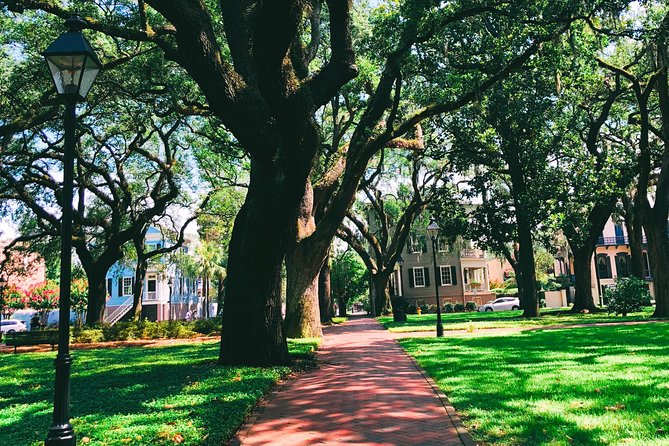
The Savannah Historic District section brings attention to Jones Street, once described as America’s most beautiful street. Here, the pleasure comes from slowing down and looking closely at the homes, brick paving, live oaks, and details that are easy to miss when you wander without a plan.
This is one of the places where the guide’s architectural commentary matters most. A participant noted that the tour could have included more architectural features, so you may want to ask questions about the buildings that catch your eye.
That small criticism is useful advice. Do not wait for the guide to explain every facade. Point to the details you find interesting and ask. A walking tour works best as a conversation, and the guides are praised for answering questions.
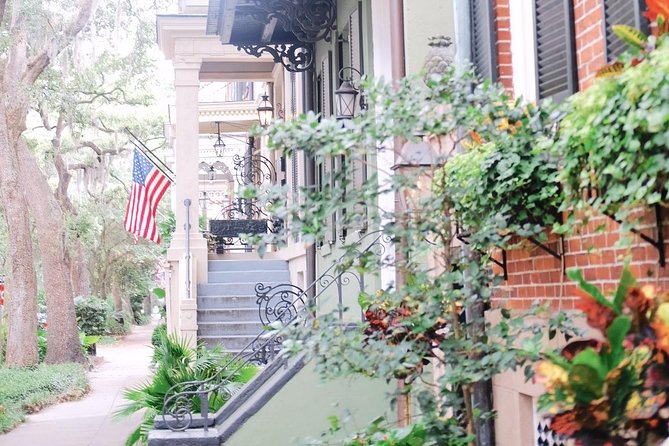
Jones Street is also a good reminder that Savannah’s appeal is not limited to its famous squares. The city’s character comes from the relationship between the streets, houses, trees, paving, and public spaces.
Lafayette Square and the tour’s final stories

The final major stop is Lafayette Square, where the tour ends outside the Cathedral of St. John the Baptist. The square brings together several subjects: Juliette Gordon Low and the Girl Scouts, the Hamilton-Turner Inn, electricity in Savannah, the cathedral, and the city’s Irish heritage.
Juliette Gordon Low gives the stop a strong local connection with national reach. The Girl Scouts began through her work, making this more than a quick biography. It shows how one Savannah resident influenced generations of people far beyond Georgia.
The Hamilton-Turner Inn adds a domestic and technological detail. It is identified as the first house in Savannah with electricity. Details like this help you imagine how daily life changed inside these grand homes.
The Cathedral of St. John the Baptist gives the ending a striking visual focus, while the Irish heritage discussion adds another layer to Savannah’s population and traditions. The tour does not finish in a generic parking area or far from the center. It ends at a major landmark, which makes it easy to continue sightseeing.
What the headset system adds
The audio equipment is one of the more unusual features of this walking tour. You receive a listening device and earbuds so the guide can speak without shouting.
In a city with traffic, people, and open public spaces, that can make a real difference. You can stand a few steps away, look around, and still follow the explanation. The recorded stories, based on historic letters, also add material beyond a standard spoken tour.
The tradeoff is comfort. One person found the earbuds painful with small ear canals and noted that over-ear reusable headsets might work better for people with hearing aids. If that could affect you, contact the operator before booking and ask what equipment is available.
Price, group size, and pacing
At $39 per person, the tour is reasonably priced for a two-hour guided walk with a local escort and audio equipment. You are paying for interpretation, not admission to several indoor attractions. That makes the value strongest for first-time visitors who want a useful introduction to the city.
The maximum group size is 20. That is small enough for questions and personal attention, while still large enough that the pace may not feel private. In the off-season, a quiet departure might be much smaller. One past outing even became private because of low demand, but you should treat that as a lucky possibility, not a promise.
The walk can run longer than expected. The scheduled experience is approximately two hours, and one participant reported a tour lasting more than two hours. That extra time can be generous, but it also adds to the amount of standing and walking.
Morning and afternoon departures give you flexibility. The morning slot can be a smart way to get oriented before lunch, while an afternoon departure may suit you if you have a slower start.
Who will enjoy this walk most
I would recommend this tour to:
- First-time visitors who want a city overview before exploring alone
- Couples and families who enjoy stories more than museum labels
- People interested in Savannah’s founding, architecture, film sites, war history, and local culture
- Visitors who want a guide able to answer questions in the moment
- Anyone who likes walking tours with a clear route and a strong sense of place
It may be less suitable if you have difficulty walking or standing for two hours. Most people can participate, but the route is not a seated sightseeing trip. Bring water on warm days, wear good walking shoes, and plan for outdoor conditions.
Children must be accompanied by an adult. Service animals are allowed, and the starting point is near public transportation.
Booking advice and cancellation terms
The experience is often reserved about 20 days ahead, so book early if your Savannah dates are fixed. Confirmation arrives when you book, and you can cancel for a full refund up to 24 hours before the start time.
Changes or cancellations inside 24 hours are not accepted for a refund. The tour also depends on good weather. If poor weather forces cancellation, you are offered another date or a full refund.
Should you book Genteel and Bard’s Savannah History Walking Tour?
Yes, if you want a friendly, story-led introduction to Savannah and do not mind walking. The route covers the city’s key squares and several important buildings, while the guides add local color that a guidebook cannot provide.
I especially like the mix of famous sights and less obvious context: Forrest Gump at Chippewa Square, the Yamacraw connection, the Civil War at Madison Square, Pulaski and Temple Mickve Israel at Monterey Square, Jones Street’s architecture, and Juliette Gordon Low at Lafayette Square.
Choose it early in your stay, wear sensible shoes, and ask questions when a building catches your eye. Skip it only if two hours outdoors would be uncomfortable or if you want detailed access inside historic houses. For most first-time visitors, $39 is a fair price for a well-organized introduction that helps the rest of Savannah make more sense.
FAQ
How long is the Genteel and Bard Savannah History Walking Tour?
The tour lasts approximately two hours, though it may run longer depending on the guide and the pace of the group.
Where does the tour begin?
The tour begins at 151 Bull Street in Savannah, Georgia.
Where does the tour end?
The walk ends at 222 East Harris Street, outside the Cathedral of St. John the Baptist in Lafayette Square.
What language is the tour offered in?
The tour is offered in English.
Are audio devices included?
Yes. Headsets are included so you can hear the live guide clearly. The experience also uses professionally recorded stories based on historic letters.
How many people can join the tour?
The maximum group size is 20 people.
Can I cancel for a full refund?
Yes. You must cancel at least 24 hours before the scheduled start time for a full refund. If poor weather causes the operator to cancel, you are offered another date or a full refund.
Just added around Savannah
- Savannah: Historical Pub Crawl Tour with Drinks Included★ 3.9 · 34 reviews
- Savannah: History and Culture Walking Tour★ 4.6 · 149 reviews
- Savannah: African American History Tour★ 4.9 · 72 reviews
- Savannah: Historical Panoramic City Tour★ 4.8 · 72 reviews
- Savannah: Historic District Guided Bike Tour★ 4.8 · 47 reviews
- Savannah: Battles & Brews Civil War History Pub Crawl★ 4.4 · 36 reviews
- Savannah: History, Culture, & Scenic Views E-Bike Tour★ 5.0 · 69 reviews
- Savannah: Historical Bike Tour with Tour Guide★ 4.8 · 140 reviews
History Walking Tours, compared.
History and Hauntings of Salem Guided Walking Tour
Read our review →
Freedom Trail History Small Group Walking Tour
Read our review →
Historic Charleston Guided Sightseeing Walking Tour
Read our review →
Tapas Walking Tour with Food, Wine, and History
Read our review →
Savannah History and Haunts Candlelit Ghost Walking Tour
Read our review →
A History of Terror – Belfast City Centre Walking Tour
Read our review →Browse the lists this tour appears in