

Review · KERALA
Fortkochi Heritage Walking tour with a local guide
Old Kochi tells its best stories on foot. This three-hour walk connects Fort Kochi, Mattancherry, and Jew Town with the help of Biju, a guide born in the old quarter. I like the personal storytelling and the access to working places such as ginger warehouses, candle-making units, and papadam workshops. I also like that the walk explains Kochi through its many outside influences, from Arab traders and Chinese fishing nets to Portuguese churches and British rule.
The main drawback is the heat. Even in February, the 2pm to 5pm departure can feel very hot and humid, so I would choose a morning start if possible. You also need to pay separately for the short tuk tuk rides and the Paradesi Synagogue entrance.
Key points to know before you book
- A local guide with local roots: Biju was born in Old Kochi and has led walks around Fort Kochi and Mattancherry for about 10 years.
- More than monuments: You visit working spice stores, candle and papadam units, and the Dhobi Khana laundry.
- A broad historical lens: Arab, Chinese, Portuguese, Dutch, British, Jewish, and local Kochi influences all have a place in the story.
- Three districts in one morning: The walk links Fort Kochi, Mattancherry, and Jew Town, with short tuk tuk rides between some areas.
- Useful timing advice: Dutch Palace is closed on Fridays, while Paradesi Synagogue closes on Friday afternoon, Saturdays, and Jewish holidays.
- Best for curious walkers: You should be comfortable walking for three to three and a half hours in warm conditions.
Why Biju’s local perspective matters
Fort Kochi is easy to admire and surprisingly easy to misunderstand. You can photograph the Chinese fishing nets, walk past colonial buildings, and browse Jew Town without grasping how many communities shaped this small part of Kerala.
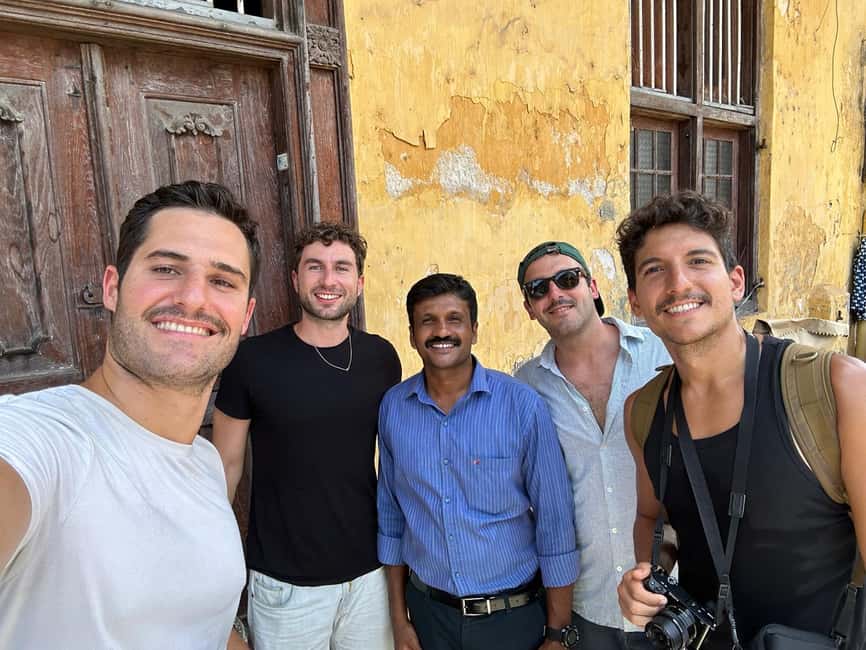
Biju’s role is to connect those pieces. Born in Old Kochi, he brings a local point of view to the streets, buildings, and working neighborhoods. The strongest praise for this tour centers on his clear explanations, friendly manner, humor, and ability to show places that independent walkers might pass without noticing.
That local background matters most when the tour moves away from famous sights. A guidebook can tell you that Kochi had Portuguese, Dutch, and British rulers. A local storyteller can explain how their presence affected ordinary streets, religious buildings, food, trade, and daily work.
The tour also looks at Kochi as a meeting point rather than a single colonial town. Arab merchants helped shape the spice trade. Chinese visitors left behind the famous fishing-net design. Portuguese, Dutch, and British powers built churches, offices, homes, and military sites. Jewish families maintained a long-established community in Mattancherry.
The result is a walk through several layers of Kochi at once.
More History Walking Tours in India
- Fontainhas Heritage Walk by Make It Happen
★ 5.0 · 2,834 reviews - The Great Indian Food Tour: Old Delhi Food and Heritage Walk
★ 5.0 · 1,698 reviews - Old Goa Heritage Walk by Make It Happen
★ 5.0 · 797 reviews
Starting at Kashi Art Café in Fort Kochi
The meeting point is in front of Kashi Art Café on Burger Street in Fort Nagar, Fort Kochi. Arrive about 10 minutes early, and expect the guide to confirm your name.
The exact guide details are sent by WhatsApp or email before the tour. That is useful in a busy district where cafés, galleries, and narrow streets can look similar. Check your messages before leaving your hotel, especially if you are arranging the walk during a packed day of sightseeing.
Fort Kochi is a practical starting point because it gives you a quick sense of the district’s colonial character before the tour moves toward Mattancherry. Wear comfortable shoes. This is a real walking tour, not a series of coach stops, and the route can last three to three and a half hours when walking and short tuk tuk rides are combined.
Bring a hat, sunglasses, sunscreen, water, insect repellent, and an umbrella. A scarf is also listed among the recommended items. Kerala’s sun can be strong, and an umbrella helps with both heat and sudden rain.
Chinese fishing nets and the working waterfront
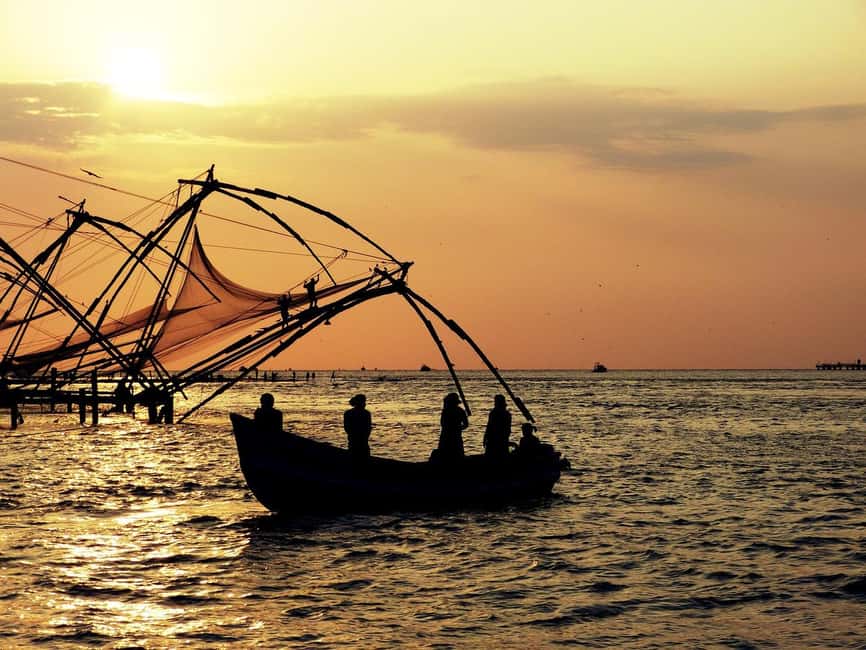
The Chinese fishing nets are among Fort Kochi’s best-known sights, but this tour aims to show them in action rather than treating them as a quick photo stop. The large shore-operated structures are part of Kochi’s Chinese influence and remain one of the clearest reminders that this port has long looked outward toward other parts of Asia.
The timing can make a difference. The tour’s recent morning departures included close views of the nets being operated, giving you a better sense of their scale and physical work. Activity can vary, so the guide’s local knowledge is useful here.
This is also a good place to understand the difference between seeing a symbol and understanding a practice. The nets are not simply decorative structures along the waterfront. They represent a fishing method associated with Kochi’s trading connections and coastal life.
Do not expect a long, formal presentation at every stop. The tour moves through several parts of town in three hours, so the value comes from the links Biju makes between each place.
Spice warehouses and Kochi’s trading past

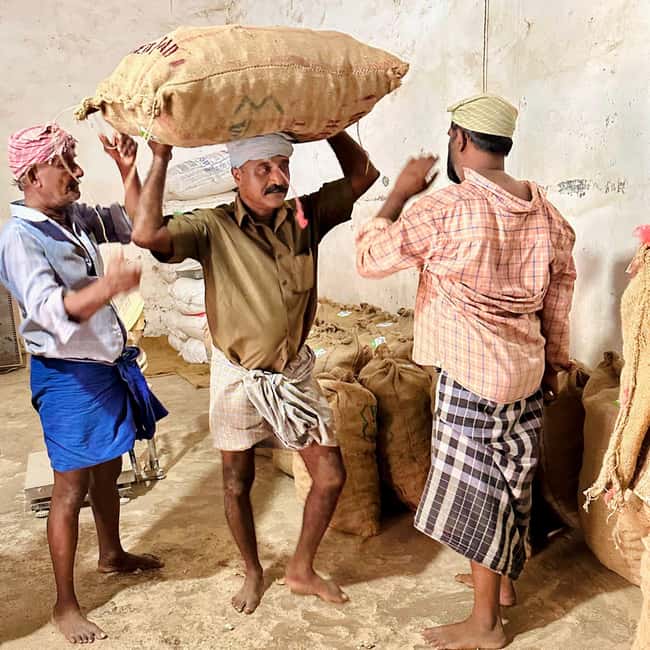
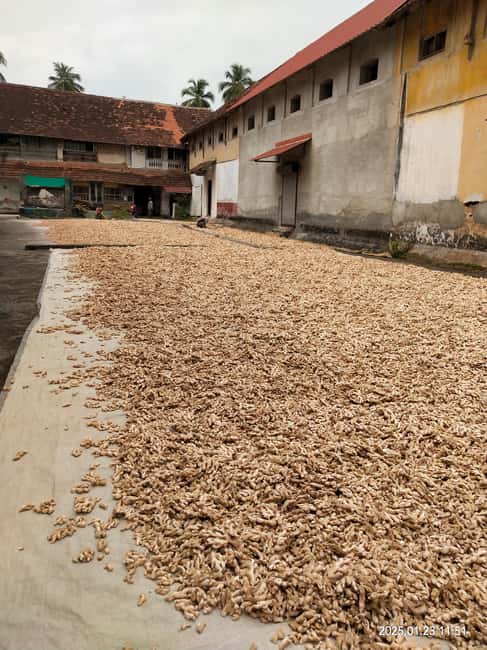
Spices are central to Kochi’s story, and this walk gives that story a physical setting. You visit ginger warehouses, spice processing areas, and other places connected with the trade that brought Arab merchants and European powers to the coast.
A warehouse visit can be more revealing than a display in a museum. You see where a trade product is handled, stored, and prepared, and you get a clearer idea of why Kochi attracted outside powers. The spice trade was not a small side business. It helped shape the city’s commercial life and drew Portuguese, Dutch, and British attention.
Shopping may be part of the route, but personal purchases are not included. That distinction matters. You can look at spices, souvenirs, or handicrafts, but set your own budget and do not treat a purchase as part of the tour price.
The stop is best for people who want context rather than a cooking demonstration. The supplied details promise visits to traditional spice facilities, but they do not promise tastings or a hands-on spice lesson.
Same place, a different slice of the past:
- Old Delhi Food, Heritage&Cultural Walk with Rickshaw ride to Masterji Kee Haveli
★ 5.0 · 742 reviews - Blue City Heritage Private Walking Tour With Pickup and Drop-Off
★ 5.0 · 441 reviews - Kolkata Heritage Tram Tour
★ 4.0 · 395 reviews - Private Heritage Walking Tour in Jaisalmer Fort and Old Bazaar
★ 5.0 · 306 reviews
Candle-making, papadam, and the Dhobi Khana
Some of the most interesting stops are small working units rather than grand buildings. You may see traditional candle-making and papadam-making, along with the open-air Dhobi Khana laundry.
These places show how Old Kochi functions beyond its visitor sights. Papadam is part of South Indian food culture, and candle-making offers a glimpse into a modest craft still practiced locally. The Dhobi Khana adds another angle, showing a traditional laundry operation rather than a polished heritage display.
The activity level can vary. Local markets and artisan units may be quieter on Sundays and public holidays. If you want to see these places at their most active, a regular weekday or Saturday departure may be a better choice, though the information provided does not promise that every workshop will be operating at every moment.
I like this part of the route because it gives the walk some everyday texture. You are not only looking at what colonial powers built. You are also seeing work that belongs to local life.
Portuguese churches, the Dutch Palace, and colonial power
The tour places Kochi’s European buildings into a larger political story. Portuguese-style churches, Dutch structures, and British-era sites show how Fort Kochi and Mattancherry became European strongholds.
The Dutch Palace, also called Mattancherry Palace, is included in the price. This is one of the clearest advantages of booking the walk rather than simply wandering through the district. You receive the building’s historical setting while also having admission covered.
The palace is closed on Fridays, so Friday departures use alternate sights. Check the day before booking if this building is a priority for you. The tour still operates with a substitute route, but the exact experience will not be identical.
The Portuguese churches and colonial buildings are not presented as isolated architectural curiosities. The guide explains how foreign powers affected Kochi’s buildings, customs, and commercial life. That approach helps you avoid seeing the town as a collection of European leftovers. The streets also reflect local adaptation and continued use.
The Freedom Fighters’ Jail
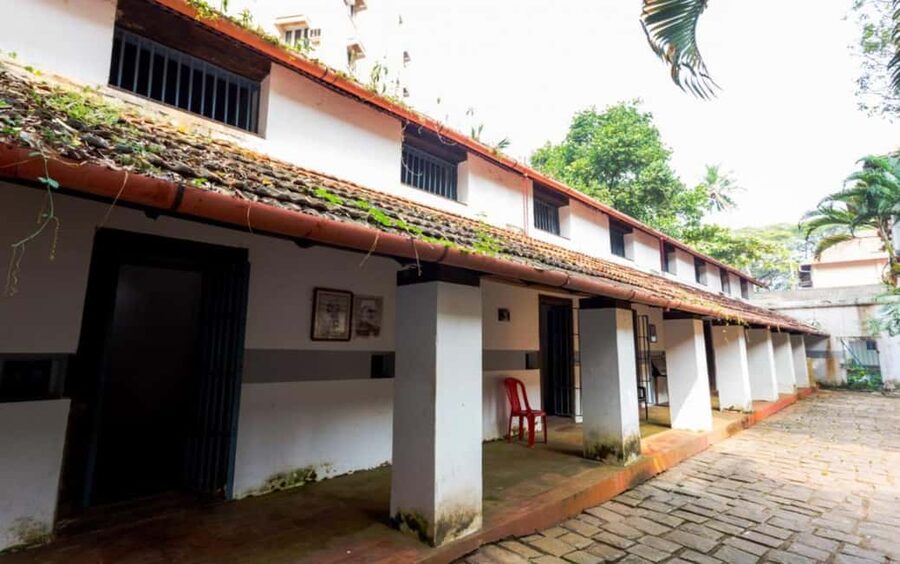
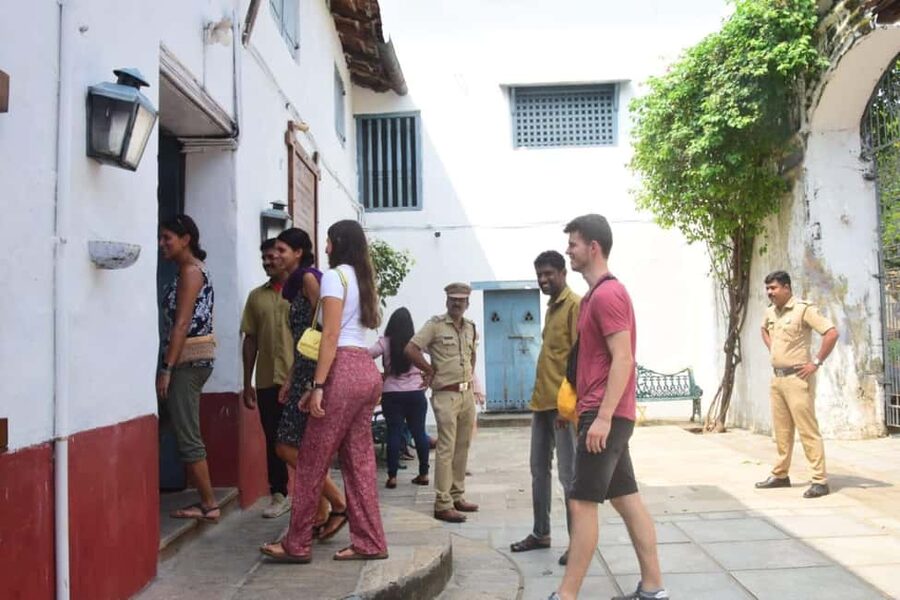
The Freedom Fighters’ Jail is a less familiar stop and one of the tour’s more meaningful additions. It links Old Kochi to India’s independence struggle and provides a reminder that the area’s political story did not end with European rule.
The jail is included if it is open. That wording is important. Access can depend on operating conditions, so you should not book the tour solely for guaranteed entry to this site.
Even a short visit adds balance to the colonial portion of the walk. Portuguese, Dutch, and British history can easily dominate a Fort Kochi visit. The jail shifts attention toward Indian resistance and the people who challenged colonial power.
Jew Town and the Paradesi Synagogue
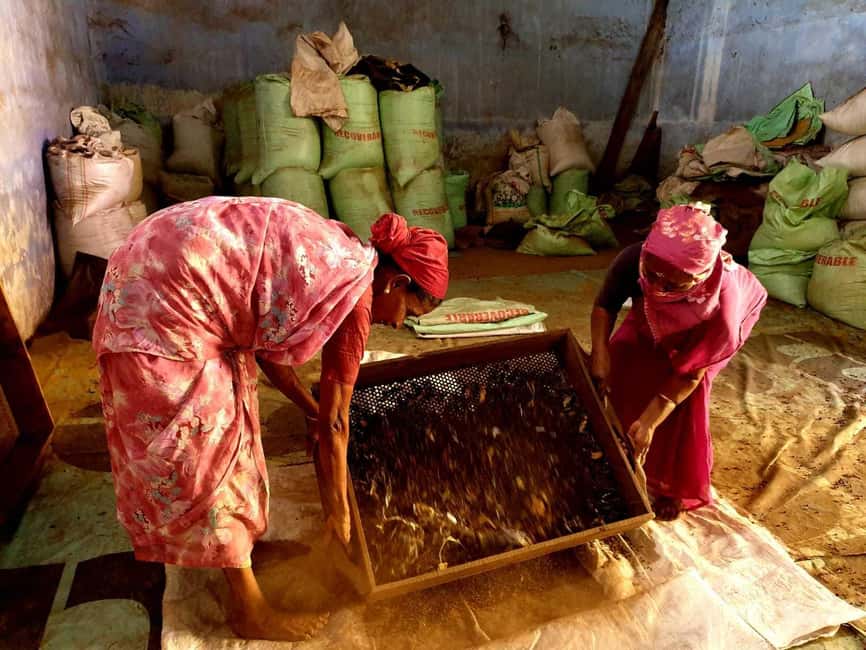
The move into Jew Town is one of the tour’s strongest sections. Mattancherry was home to one of India’s oldest Jewish communities, and the route explains the community’s relationship with the royal family of Kochi and its long coexistence with other groups in the area.
The Paradesi Synagogue is not included in the tour price, so you pay the entrance fee separately. It is also closed on Friday afternoons, Saturdays, and Jewish holidays. On those days, alternate sights are included.
Jew Town is a place where history can become overly tidy if it is reduced to a few dates and architectural details. The guide’s local explanations help place the synagogue and surrounding quarter within the wider life of Mattancherry. You hear about community relationships, trade, and the way several groups lived alongside one another.
Some departures also include a museum visit in this area, but the provided details do not promise a particular museum entrance on every tour. Ask Biju what is open on your date if Jew Town is your main reason for booking.
Getting between Fort Kochi and Mattancherry
The tour combines walking with short tuk tuk rides, particularly for the move from Fort Kochi toward Mattancherry and Jew Town. Tuk tuk fares are not included, so carry some money for that part of the route.
This arrangement makes practical sense. Fort Kochi and Mattancherry are close, but walking every section in the heat would use up time and energy better spent at the sights. The tuk tuk ride also gives you a quick look at the changing streets between the districts.
Do not expect a fully private car-based tour. The walking remains the main event, and you need to be comfortable on your feet for most of the three-hour period.
A short refreshment stop may be included along the way. One recent route included time for a local lassi, and the tour may allow a brief break at a café. Lunch and snacks are not included, so plan to eat before or after unless you are happy to purchase something during the walk.
What the $25 price gets you
At $25 per person, the value depends on how much you want from a guide. The price includes a local guide, the three-hour walking route, entry to Mattancherry Palace, visits to spice and artisan sites, and the cultural explanations that tie the route together.
You pay extra for tuk tuk rides, the Paradesi Synagogue, food, drinks, and anything you buy. Those costs are easy to manage, but you should know about them before setting your budget.
The best value comes from the guide’s local access and storytelling. Biju has been guiding in Fort Kochi and Mattancherry for around 10 years, and the strongest praise focuses on his ability to explain local history, show less familiar places, and keep the pace interesting.
If you only want to photograph the Chinese fishing nets and see the main streets, you can explore independently for less. If you want the connections between trade, architecture, religion, colonial rule, and daily work, $25 is a fair price for three hours.
Choosing the right departure time
Morning is the smart choice if you have an option. A 2pm to 5pm departure can be uncomfortably hot and humid, even in February. The route includes exposed streets and several hours of movement, so early light and cooler air will make the experience easier.
The tour is offered in English. Children aged six and older can join when accompanied by an adult, and the route is described as family-friendly. Still, parents should consider the heat, walking distance, and the need to stay attentive around streets and working areas.
The tour is not suitable for wheelchair users, people with mobility impairments, pregnant women, or people with severe back problems or heart conditions. It is also not recommended for anyone who cannot comfortably walk for up to three and a half hours.
Who should book this Fort Kochi walk?
I would choose this tour if you want to understand how Old Kochi became a meeting place for many cultures. It suits first-time visitors who want orientation, history fans who prefer local stories to a standard lecture, and curious families with older children.
It is especially useful early in a Kochi stay. After three hours, you will have a better sense of Fort Kochi, Mattancherry, and Jew Town, making it easier to return later for shopping, museums, or a slower look at a favorite area.
I would skip it if you dislike walking in heat, want a fully private vehicle tour, or need every attraction to operate exactly as advertised. The Dutch Palace, synagogue, jail, markets, and artisan units all have different opening conditions.
Should you book it?
Book this tour if you want local explanation over simple sightseeing. Biju’s background, the working spice and craft stops, and the mix of Chinese, Arab, Jewish, Portuguese, Dutch, and British influences give the route more substance than a quick Fort Kochi highlights walk.
Choose a morning departure, wear light comfortable clothing that covers the shoulders and knees, and budget separately for tuk tuk rides, the synagogue, and refreshments. If the key sights are closed on your date, the walk can still be worthwhile, but confirm the alternate stops before you go.
FAQ
Where does the tour meet?
Meet the guide in front of Kashi Art Café on Burger Street, Fort Nagar, Fort Kochi, Kerala 682001, India.
How early should I arrive?
Arrive 10 minutes before the tour begins. The guide will ask for your name.
How will I receive the guide’s details?
The guide’s information and exact meeting details are sent by WhatsApp or email before the tour.
How long does the tour last?
The tour lasts three hours, though you should be comfortable walking and taking short tuk tuk rides for up to three to three and a half hours.
Is the tour conducted in English?
Yes. The live guide conducts the tour in English.
Are tuk tuk rides included?
No. Tuk tuk transfer fees from Fort Kochi to Mattancherry are extra.
Is the Paradesi Synagogue entrance included?
No. The synagogue entrance fee is paid separately.
Is the Dutch Palace entrance included?
Yes. Entry to Dutch Palace, also called Mattancherry Palace, is included.
Can I visit the Dutch Palace on a Friday?
No. Dutch Palace is closed on Fridays, and alternate sights are included on those departures.
Can I visit the Paradesi Synagogue on Saturday?
No. The synagogue is closed on Saturdays, Friday afternoon, and Jewish holidays. Alternate sights are included when it is closed.
Just added around India
- Heritage & Cultural Walk of Trivandrum Guided Walking Tour★ 4.4 · 19 reviews
- Fort Kochi Heritage Day Cycling Tour★ 4.2 · 26 reviews
- Candolim: Heritage Walk of Fort Aguada Port and Jail Complex★ 4.9 · 25 reviews
- Agra Fort: Guided UNESCO Heritage Walking Tour★ 4.9 · 21 reviews
- World heritage Ahmedabad city tour in private car with guide and lunch★ 5.0 · 44 reviews
- Private Elephanta Caves UNESCO World Heritage Site Tour★ 5.0 · 34 reviews
- Mumbai: South Mumbai Heritage Walking Guided Tour★ 4.5 · 69 reviews
- Hill-station & Heritage: Lonavala & Karla Caves Tour from Mumbai★ 5.0 · 60 reviews
History Walking Tours, compared.

History and Hauntings of Salem Guided Walking Tour
Read our review →
Freedom Trail History Small Group Walking Tour
Read our review →
Historic Charleston Guided Sightseeing Walking Tour
Read our review →
Tapas Walking Tour with Food, Wine, and History
Read our review →
Savannah History and Haunts Candlelit Ghost Walking Tour
Read our review →
A History of Terror – Belfast City Centre Walking Tour
Read our review →Browse the lists this tour appears in