
Review · KOLKATA
Kolkata Heritage Tram Tour
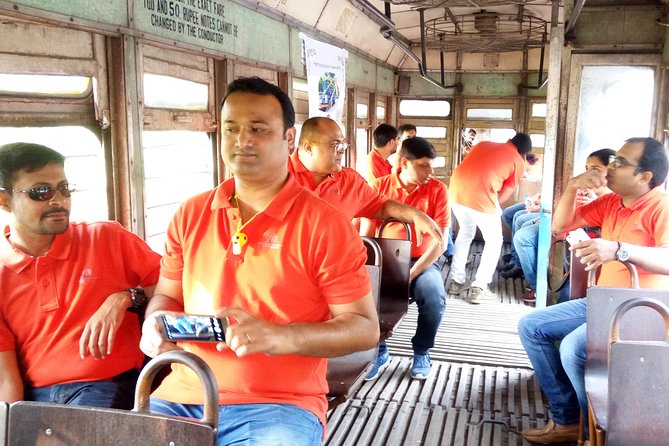
Kolkata’s oldest transport still has work to do. This early-morning tour uses a heritage tram to give you a broad look at central Kolkata, from the Maidan and Victoria Memorial to churches, mosques, cemeteries, and Mother House. I like the slow pace and the chance to see the city while it is just waking up. I also like that the tour includes snacks and refreshments, making the $60 price feel more reasonable than a simple tram ride.
The main caution is sound. A tram is a noisy place for a running commentary, and one guest found the guide difficult to hear. The company has said it plans to add headsets. If you want a quiet, highly polished sightseeing vehicle, this may not be your ideal outing. If you want local context and an unusual way to get your bearings, it has far more character than a standard city drive.
Key points at a glance
- Kolkata’s rare tram experience: Kolkata has India’s only tram network, and the tour uses a heritage car on the city’s remaining tram lines.
- A 7:00 am start: The early departure helps you see central Kolkata before traffic becomes heavy.
- Many faiths in one route: Temples, churches, mosques, a cemetery, and Mother Teresa’s former home all appear along the way.
- Useful city overview: You pass the Maidan and Victoria Memorial, then get time at selected sites including Tipu Sultan Masjid and Mother House.
- Small-group format: The maximum group size is 20 people, with pickup offered and mobile tickets accepted.
- Food included: Snacks and refreshments are provided, a welcome touch during a two- to three-hour outing.
Why a heritage tram is a smart way to meet Kolkata
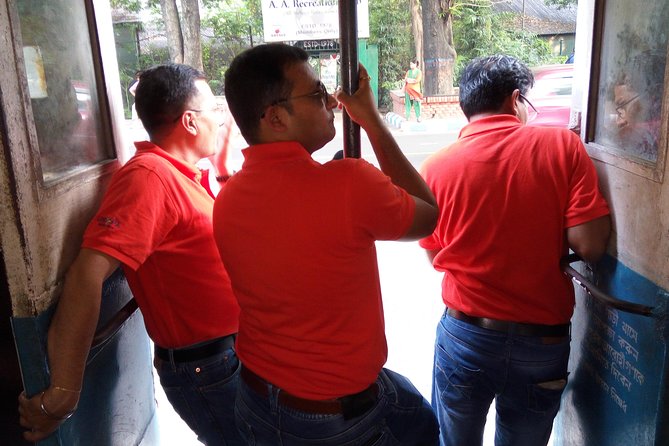
Kolkata is a city best understood in motion. Its streets connect grand colonial buildings, religious landmarks, crowded commercial districts, old neighborhoods, and wide open spaces. A car can cover more ground, but it can also make the city feel sealed behind glass. The tram gives you a slower view, with the sound and movement of the city coming right to you.
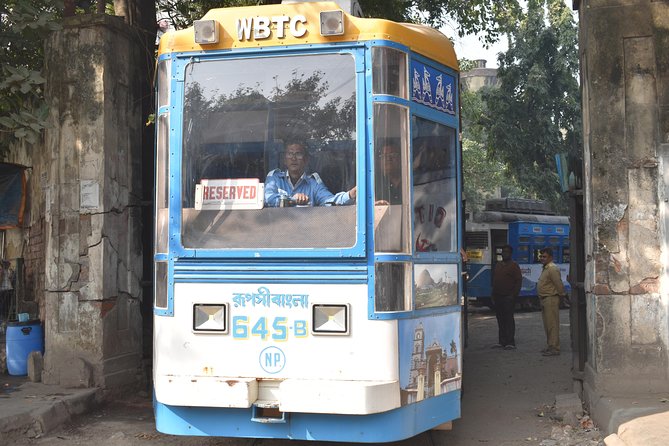
The tram itself is part of the attraction. One guest described the cars as century-old vehicles with their original mechanical character. That is the sort of detail that makes this experience worthwhile for anyone who enjoys old transport, not just for people checking landmarks off a list.
The route also gives you a useful introduction to Kolkata’s mixed religious and cultural life. You see Hindu temples, Catholic and Protestant churches, a mosque linked to Tipu Sultan, a cemetery, educational institutions, and sites connected with Mother Teresa. None of these stops tells the whole story by itself. Together, they show how many different communities have shaped the city.
The early start matters. At 7:00 am, Kolkata is beginning its day, and the lighter traffic can make the tram ride more comfortable. You also get a look at daily routines before the central streets fill up. The tradeoff is obvious: you must be ready early, and the tour may feel rushed if you want long visits at every location.
A few more history tours around India worth a look
- Fontainhas Heritage Walk by Make It Happen
★ 5.0 · 2,834 reviews - The Great Indian Food Tour: Old Delhi Food and Heritage Walk
★ 5.0 · 1,698 reviews - Old Goa Heritage Walk by Make It Happen
★ 5.0 · 797 reviews
Starting with Birla Mandir and Kolkata’s Hindu landmarks
Birla Mandir in Ballygunge is one of the first major points of interest. Built by the Birla family on Asutosh Chowdhury Avenue, this Hindu temple is dedicated to forms of Vishnu, including Rama and Krishna. Its pale stone work and tall temple structure make it an easy landmark to recognize from the route.
A second Birla family landmark also appears in the opening part of the tour. The supplied details do not identify it by name, so you should treat this portion as a general introduction to the family’s imprint on Kolkata rather than expect a full architectural lecture at one specific building.
The value of these early stops is context. The Birla family helped shape modern Kolkata’s public and religious architecture, and seeing these buildings before the tour moves into the denser central districts gives you a useful contrast. You may not get a long visit at each site, so keep your expectations practical. This is an overview tour, not a temple-focused excursion.
Churches, a cemetery, and the city’s quieter corners
The route then moves through a group of Christian landmarks that are easy to miss if you spend your time only around the best-known monuments. One stop is described as an old church with a peaceful atmosphere. Another is the Lower Circular Road Cemetery, also called the General Episcopal Cemetery.
The cemetery was established in 1840 and remains a working burial ground. It contains about 12,000 graves, including those of former residents of Kolkata. This is not a flashy sightseeing stop, but it can be one of the most revealing. Old cemeteries often explain a city’s foreign connections, changing population, and social structure better than a grand monument does.
You also pass the Assembly of God Church School. Pastor Buntain founded its first school in Kolkata in January 1964 after being moved by the city’s poor and homeless children. The school began with 200 pupils and focused on education. This gives the route a social dimension. You are not only looking at old buildings. You are seeing institutions created in response to real urban needs.
Maulana Azad College adds another layer. Founded in 1926, it is a government-run college for liberal arts and science near the junction of Rafi Ahmed Kidwai Road and SN Banerjee Road. The building and its setting place you in central Kolkata’s long tradition of public education.
Sacred Heart Church and Tipu Sultan Masjid
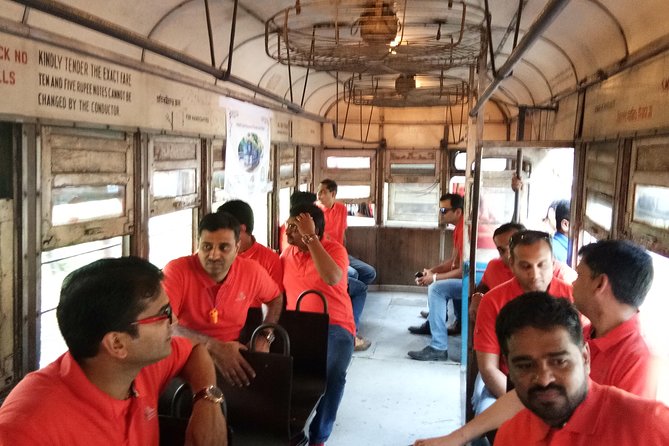
Two timed stops provide the clearest chance to get off the tram and explore. Sacred Heart Church receives about 20 minutes, with admission listed as free. It reflects the Portuguese connection with Bengal, a part of Kolkata’s past that can be overlooked amid the city’s better-known British-era buildings.
Twenty minutes is enough to look around and hear the main story, but not enough for a slow architectural study. If church interiors matter greatly to you, you may want to return independently later. On this tour, the advantage is variety: you can see a meaningful religious site without giving up the rest of the route.
Tipu Sultan Masjid also receives about 20 minutes. The mosque is named after Tipu Sultan, the ruler of Mysore, and is described as an important piece of Kolkata’s architectural and cultural heritage. The stop helps you see how the city’s links extend beyond Bengal and beyond the British period.
Here, respectful behavior matters. Follow the guide’s instructions about where to stand and how to enter. The tour presents the mosque as a living religious place as well as a monument, which is exactly the right way to approach it.
Same place, a different slice of the past:
- Old Delhi Food, Heritage&Cultural Walk with Rickshaw ride to Masterji Kee Haveli
★ 5.0 · 742 reviews - Blue City Heritage Private Walking Tour With Pickup and Drop-Off
★ 5.0 · 441 reviews - Private Heritage Walking Tour in Jaisalmer Fort and Old Bazaar
★ 5.0 · 306 reviews - Old Delhi Food-Spice Market-Temples Tour Soon Featured on NETFLIX
★ 5.0 · 304 reviews
The overlooked institutions of central Kolkata
Between the main stops, the route passes a string of places that may not appear on a first-time visitor’s must-see list. These include Thoburn Memorial Methodist Church, founded in 1873, and The Lord Jesus Church in Taltala.
The Lord Jesus Church was formerly a Church of Scotland Presbyterian place of worship before being handed to the Jesuits in the 19th century. That change reflects Kolkata’s shifting religious communities and colonial-era connections. You may find these passing views more useful after you have already seen Sacred Heart Church and Tipu Sultan Masjid. The tour builds a picture through comparison.
The Muslim Institute dates from 1902, when students and young people helped establish it. The West Bengal Urdu Academy was later created to support the Urdu language. A heritage book store also appears along the route.
These are not dramatic photo stops. Their importance lies in showing Kolkata as a city of schools, language institutions, community organizations, and reading culture. I appreciate this part of the experience because it moves beyond the usual palace-and-memorial circuit. Still, the exact amount of time available at each location is not specified, so expect some to be viewed from the tram rather than explored inside.
Nonapukur Tram, where the transport story comes alive
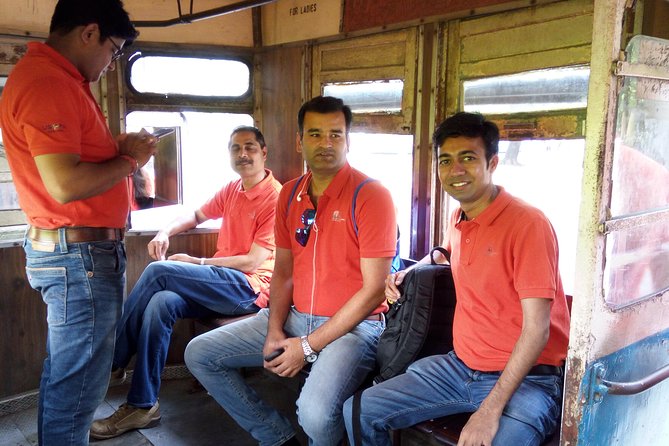
Nonapukur Tram is listed as the birthplace of the Calcutta Tramways, and it receives about 20 minutes. For many people, this will be the emotional center of the tour.
You are not simply riding an old vehicle. You are visiting a place tied to the tram system itself. That distinction matters. A heritage ride in any city can feel like a museum display, but this tour connects the car, the tracks, and Kolkata’s own transport story.
The experience is especially well suited to you if you enjoy railways, streetcars, or working machines. The original mechanical character can mean noise and vibration, however. Bring patience, and do not expect the smooth, silent ride of a modern sightseeing bus.
The tram also limits how fast the tour can move. That is part of its charm, but it means the experience depends on the route and the city around it. Traffic, operating conditions, and weather can affect the rhythm of the morning. The tour requires good weather, and poor conditions can lead to a new date or a full refund.
Maidan and Victoria Memorial from a slower viewpoint
The route passes the Maidan and Victoria Memorial, two of Kolkata’s best-known open spaces and landmarks. The Maidan gives the city a welcome sense of room after the close streets of central Kolkata. Victoria Memorial provides the grand architectural counterpoint, with its formal scale and strong connection to the British period.
The tram is a good platform for this section because you can see the relationship between the open ground, major roads, and surrounding buildings. You may not have a dedicated long visit inside Victoria Memorial, so do not book this tour as a substitute for a museum visit. Instead, think of this passage as orientation. It helps you decide which major sights deserve a separate return.
This is one reason I would take the tram early in a Kolkata visit. You get a broad map of the city without spending your first day wandering at random. Afterward, you can choose to revisit a museum, a church, a temple, or a neighborhood with a better sense of direction.
Mother House and the final focus on service
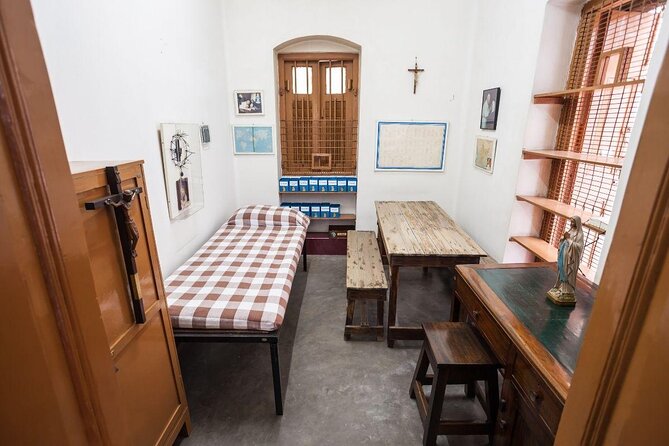
The final named stop is Mother House, associated with Mother Teresa. The stop lasts about 30 minutes, with admission listed as free. It is also her former home and final resting place.
This is a more personal and reflective stop than the tram ride itself. The visit connects Kolkata’s religious identity with its work among the poor and sick. You may find the atmosphere quiet compared with the city streets, although the tour does not promise a long guided visit or access to every part of the building.
Thirty minutes gives you more breathing room than the shorter church and mosque stops. It also provides a natural end to a route that has moved from grand temples and public institutions to questions of service and social care.
If Mother Teresa is your main reason for visiting Kolkata, you may want a dedicated visit on another day. On this tour, Mother House is one important chapter in a larger city portrait.
Guide quality, group size, and the sound problem
The tour accommodates up to 20 people. That is small enough to feel manageable, though not necessarily intimate. Pickup is offered, and the mobile ticket format is convenient for visitors arranging several Kolkata activities on a phone.
The strongest guide feedback centers on personal knowledge and local connection. One highly praised experience involved Mr. Arif, also referred to as Ariff, who served as both driver and guide. He has long family ties to Kolkata and was praised for his integrity and understanding of the city. Another account mentions Mr. Arif and Haris leading a route through central and north Kolkata that reached beyond familiar tourist sights.
That local connection can make a big difference on a city tour. Buildings are easy to point at. Explaining why a school, cemetery, mosque, or church matters is harder, and that is where a strong guide earns the price.
The weakness is audibility. Tram wheels, road noise, and conversation can make spoken information hard to catch. Headsets were expected to be added, but you should not assume they are in use on your date. Sit near the guide if possible, and ask questions during the stops rather than trying to hear every word while the tram is moving.
Is $60 a fair price for two to three hours?
At $60 per person, this is not the cheapest way to ride Kolkata’s tram system. You are paying for more than transport, though. The price includes a guided route, pickup, snacks and refreshments, planned stops, and access to a city overview that would take more effort to assemble on your own.
The value is strongest if you are in Kolkata for a short stay, visiting for the first time, or interested in transport and local history. It is also useful if walking several miles in the morning is not appealing. The tram lets you cover a wide area while giving you regular chances to get out.
The value is weaker if you only want a basic tram ride, already know central Kolkata well, or prefer to spend 20 to 30 minutes at one major sight. A private guide or a focused museum tour may suit you better in those cases.
The included snacks are more than decoration. An early 7:00 am start leaves little time for a relaxed breakfast, and the generous snack bag described by one guest makes the morning easier. Still, do not treat the food as a full meal unless the provider gives you more detail before departure.
Who should book this Kolkata experience?
I would choose this tour for a first visit, especially if you want an overview before exploring on foot. It suits anyone interested in old public transport, religious architecture, local institutions, and the less obvious parts of central Kolkata.
It also works well for people who want a guided introduction without committing to a full-day tour. The duration is about two to three hours, and the early schedule leaves much of the day open.
I would think twice if you dislike noisy vehicles, need a slow pace at every stop, or expect detailed indoor visits at each landmark. The route covers a lot, and that breadth comes with short stops and some sights viewed from the tram.
The experience has a 4.2 out of 5 score from 395 ratings, which fits the overall picture: strong character, good local insight, and a few practical limitations. Free cancellation is available up to 24 hours before the start time. Changes made within 24 hours are not accepted, and weather-related cancellations offer another date or a full refund.
Should you book the Kolkata Heritage Tram Tour?
Book it if you want a memorable first look at Kolkata, not just a ride between famous monuments. The combination of an old tram, an early start, local guides such as Mr. Arif and Haris, and stops across several faiths and communities gives the morning real substance.
Skip it if you need perfect audio, long visits at every landmark, or a quiet vehicle. For most visitors who value atmosphere and orientation over polish, this is a worthwhile introduction to Kolkata, especially near the start of a stay.
FAQ
How much does the Kolkata Heritage Tram Tour cost?
The tour costs $60 per person.
How long does the tour last?
The experience lasts approximately two to three hours.
What time does the tour start?
The stated start time is 7:00 am.
Is pickup available?
Yes, pickup is offered.
How many people can join the tour?
The tour has a maximum group size of 20 people.
Does the tour include food or drinks?
Yes. Snacks and refreshments are provided.
Which major Kolkata sights are included?
The route passes the Maidan and Victoria Memorial and includes stops or visits connected with sites such as Birla Mandir, Tipu Sultan Masjid, Nonapukur Tram, and Mother House.
How long are the stops at Sacred Heart Church and Tipu Sultan Masjid?
Sacred Heart Church and Tipu Sultan Masjid each have a listed stop of about 20 minutes.
How long is the stop at Mother House?
The Mother House stop lasts about 30 minutes.
Can I cancel for a full refund?
Yes, you can cancel at least 24 hours before the experience start time for a full refund. If poor weather cancels the tour, you will be offered another date or a full refund.
Just added around India
- Georgetown heritage walking tour in Chennai about the founding of Chennai★ 5.0 · 144 reviews
- Private Chennai Day Tour – Art History and Contemporary Chennai★ 5.0 · 21 reviews
- Chennai Heritage & Cultural Walk (2 Hours Guided Walking Tour)★ 3.5 · 32 reviews
- Exploring Mylapore: A Cultural & Historical Walking Tour★ 5.0 · 42 reviews
- See Bangalore through my eyes (Cultural / Historical / Walking Tour)★ 5.0 · 60 reviews
- Malleswaram heritage walk, an immersive walking tour in Bangalore★ 5.0 · 20 reviews
- Treasures of Mysuru – day tour★ 5.0 · 27 reviews
- Bangalore: Walk In the Footsteps of Maharajas & Sultans★ 5.0 · 18 reviews
India History Tours, compared.

The Great Indian Food Tour: Old Delhi Food and Heritage Walk
Read our review →

Old Delhi Food, Heritage&Cultural Walk with Rickshaw ride to Masterji Kee Haveli
Read our review →
Blue City Heritage Private Walking Tour With Pickup and Drop-Off
Read our review →
Private Heritage Walking Tour in Jaisalmer Fort and Old Bazaar
Read our review →
Old Delhi Food-Spice Market-Temples Tour Soon Featured on NETFLIX
Read our review →
Panaji: Heritage Walk through Goa’s Latin Quarter
Read our review →Browse the lists this tour appears in