
Review · GOA
Panaji: Heritage Walk through Goa’s Latin Quarter
Goa’s prettiest streets reward a slower pace. This $12 walking tour introduces you to Fontainhas, Panaji’s old Latin quarter, through colorful homes, Portuguese-era details, local food, galleries, and live music. I especially like the chance to enter heritage homes and meet a Goan musician, since both add life to what could otherwise be just a photo walk.
I also like the way the route mixes history with ordinary neighborhood details. You stop at the old 31st January Bakery, see art at places such as Galerie Gitanjali, and hear stories about local life rather than only dates and buildings. The main consideration is the heat and uneven walking surface, so this suits you best if you are comfortable on foot and can manage roughly two and a half hours outside.
Key points at a glance
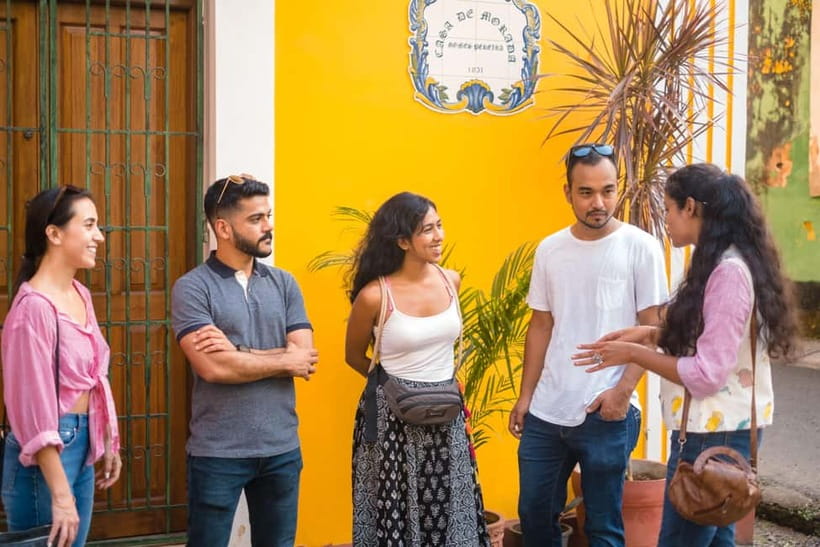
- Fontainhas in a compact walk: See colorful homes, narrow lanes, churches, galleries, and old civic buildings without needing transport between stops.
- Portuguese influence beyond architecture: Learn how Portugal shaped Goan music, food, art, street names, and local customs.
- A bakery stop with local flavor: The 31st January Bakery offers a chance to try Goan-Portuguese treats, including pastel de nata.
- Live music with a local connection: Meet a well-known Goan musician and hear how Portuguese traditions influenced Goa’s music.
- Small-group feel: The group can reach 20 people, though several experiences have had around 10 participants, making it easier to hear and ask questions.
- Good value at $12: The price includes a local English-speaking guide, heritage-home entry, and the musician meeting, but not food, drinks, or souvenirs.
Why Fontainhas deserves more than a quick photo stop
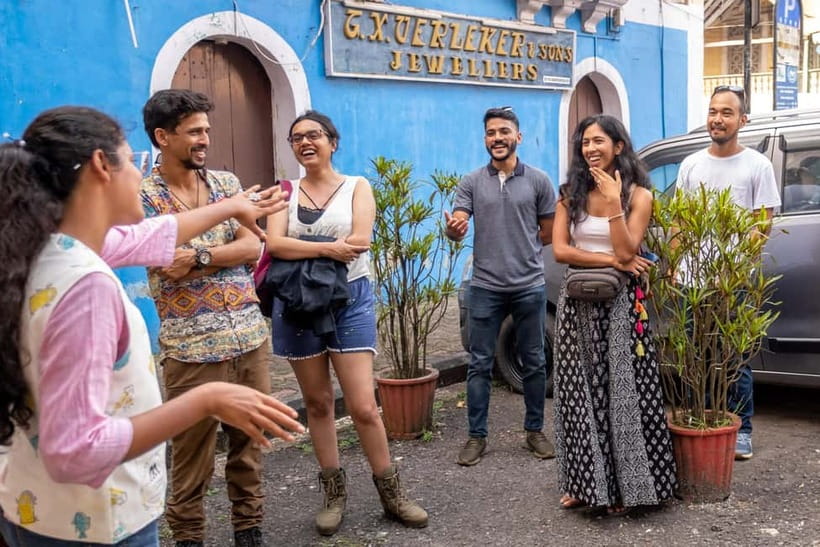
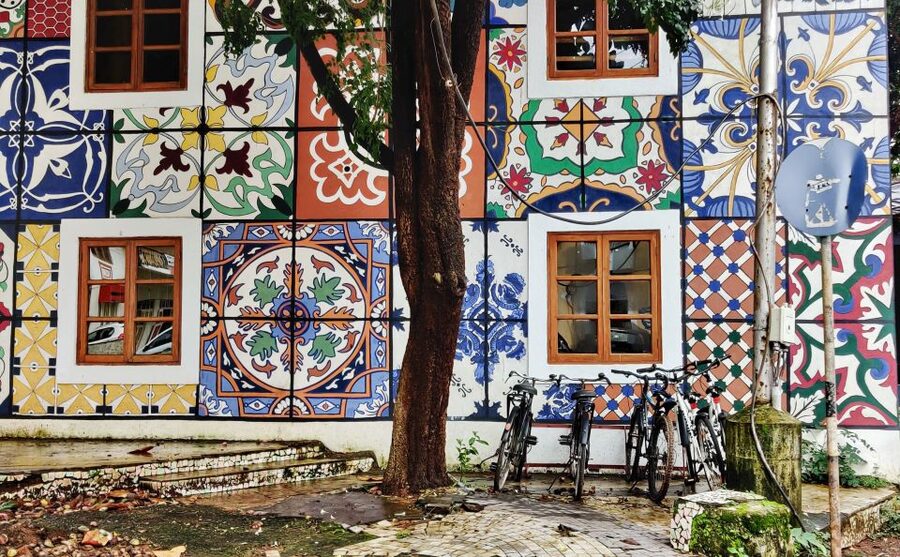
Fontainhas is easy to admire from the outside. Its painted houses, decorative balconies, winding lanes, and bright doors make it one of Panaji’s most photogenic districts. But a short look on your own can leave you with little sense of why the neighborhood looks this way.
This walk gives the streets a story. Fontainhas developed in the late eighteenth century and takes its name from the Portuguese word for little fountain, referring to springs at the foot of the Altinho hills. Portuguese influence remains visible in the architecture and road names, but it also appears in music, baking, art, and family traditions.
I like that the tour does not treat the district as a museum piece. You pass homes where people still live, meet locals, and hear about the relationship between old buildings and present-day Panaji. That makes the area feel less like a preserved set and more like a working neighborhood with a long memory.
The meeting point is the entrance to the Panjim Head Post Office near the Mala district. The São Tomé Chapel is a useful nearby landmark if you are unsure where to look. Hotel pickup is not included, so you need to make your own way there.
More History Walking Tours in India
- Fontainhas Heritage Walk by Make It Happen
★ 5.0 · 2,834 reviews - The Great Indian Food Tour: Old Delhi Food and Heritage Walk
★ 5.0 · 1,698 reviews - Old Goa Heritage Walk by Make It Happen
★ 5.0 · 797 reviews
Starting at Tobacco Square and tracing Goa’s Portuguese past
The walk begins at Tobacco Square, where your guide sets up the wider story of Portuguese arrival and influence in Goa. This opening matters because the rest of the route is not just a parade of attractive façades. You begin to understand why Panaji developed its particular mix of Indian and Portuguese features.
The guides are a major part of the experience. Names praised in the feedback include Yashasvi, Divya, Calvin Gomes, Trancy, Alita, Rachana, Vaibhav, Shreeya, and Priyanka. Their strengths vary, but the best descriptions repeatedly point to guides who tell stories well, answer questions, and connect architecture with daily life.
Priyanka, for example, was also described as a professional archaeologist, while several other guides were praised for local stories, folktales, and personal insight. You cannot choose a particular guide with certainty, but the standard appears to be strong across the team.
The tour is conducted in English. Since it is a group walk, the maximum size is 20 people. A group of that size can make narrow lanes and small indoor spaces feel crowded, but groups of around 10 have also been reported, which is a more comfortable size for conversation.
San Thome Chapel and the first colorful lanes
One of the early stops is the small Church of San Thome. It helps establish the religious side of Fontainhas and gives you a quiet pause between the opening history and the main neighborhood walk.
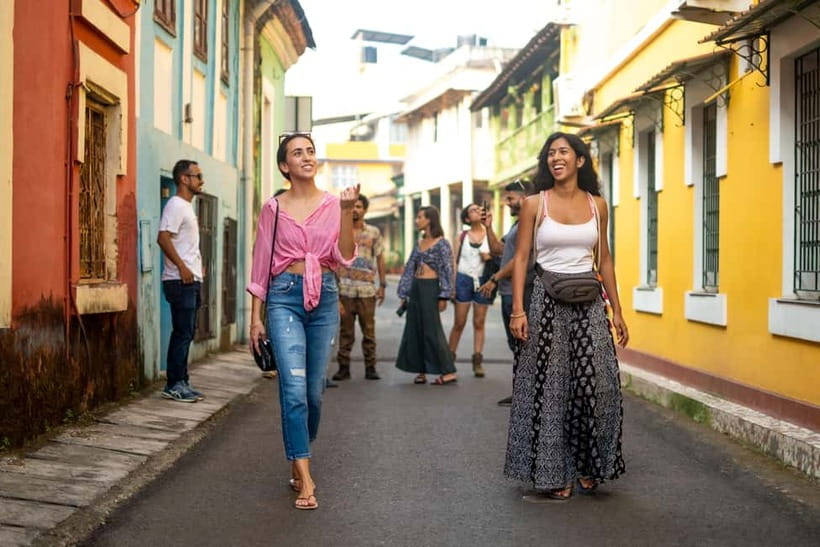
From here, the route turns toward the lanes of Fontainhas. Allow yourself time to look above eye level. Portuguese influence often shows up in details such as balconies, window shapes, painted trim, and the arrangement of houses rather than in one grand monument.
The walk through this section lasts about 45 minutes, followed later by another 30-minute walk through Fontainhas. These are not long-distance hikes, but the narrow streets and frequent stops mean you are on your feet for much of the tour. Comfortable shoes are essential, and loose, comfortable clothing will make the warm weather easier to handle.
You will want your camera here. The colorful backdrop is one of the obvious pleasures of the route, but the guide helps you see beyond color. A house becomes a clue to colonial planning, a road name becomes a reminder of the old administration, and a bakery becomes part of the area’s mixed cultural identity.
31st January Bakery and the taste of Goan-Portuguese culture
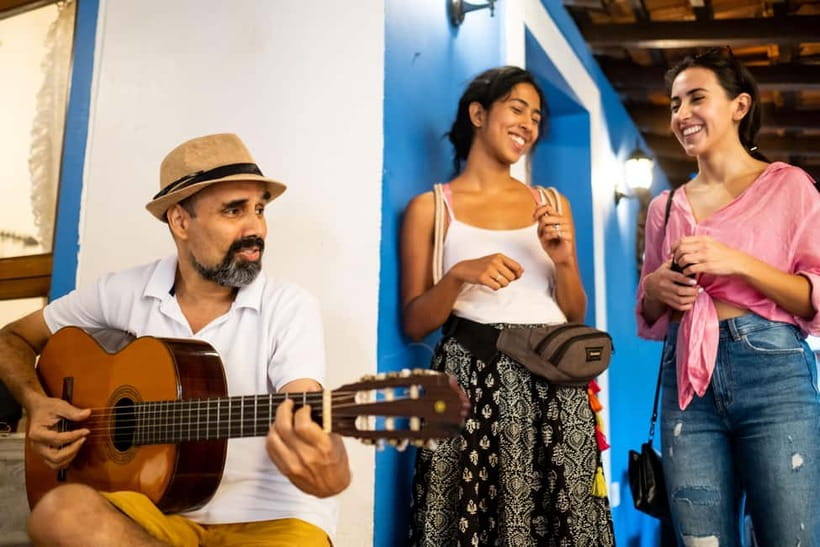
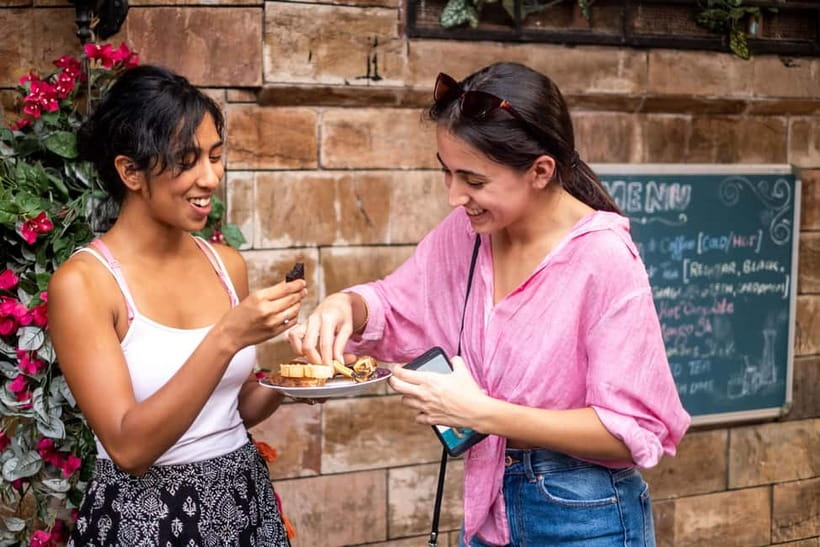
The stop at 31st January Bakery is one of the tour’s most appealing touches. The bakery is described as a long-running Goan-Portuguese institution dating to 1930, and it gives you a chance to connect history with something edible.
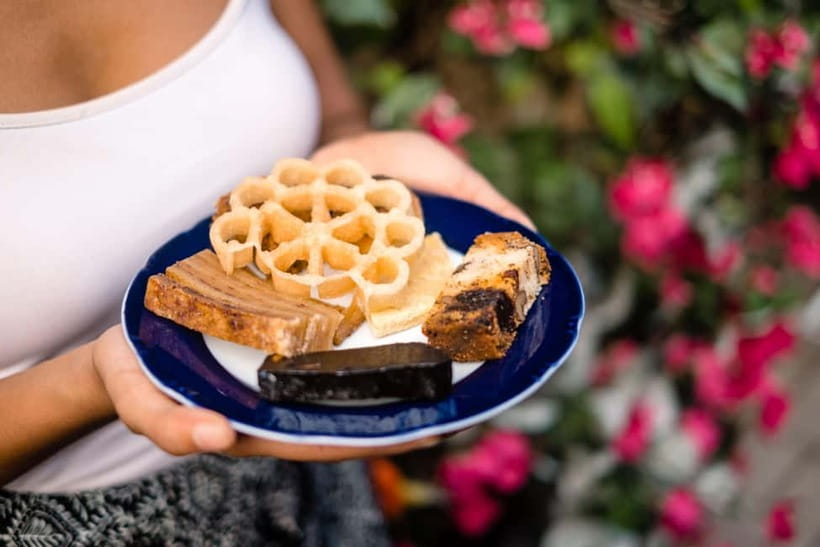
Local pastries and baked goods may be available, including pastel de nata. Some experiences have also included sweet and savory treats, along with a local drink such as kokum. Food is not formally included in the price, so bring cash and expect to pay for anything extra unless your guide tells you otherwise.
I value this stop because food can explain cultural exchange more clearly than a long speech. Portuguese influence in Goa is not limited to church façades or street names. It also appears in recipes, baking traditions, and the way local ingredients and European methods meet.
Do not treat the bakery as a full meal stop. It is a quick taste rather than a restaurant visit, and additional food and drinks are not included. If you need a substantial lunch, arrange that separately before or after the walk.
Same place, a different slice of the past:
- Old Delhi Food, Heritage&Cultural Walk with Rickshaw ride to Masterji Kee Haveli
★ 5.0 · 742 reviews - Blue City Heritage Private Walking Tour With Pickup and Drop-Off
★ 5.0 · 441 reviews - Kolkata Heritage Tram Tour
★ 4.0 · 395 reviews - Private Heritage Walking Tour in Jaisalmer Fort and Old Bazaar
★ 5.0 · 306 reviews
Chapel of San Sebastian and Fontainhas architecture
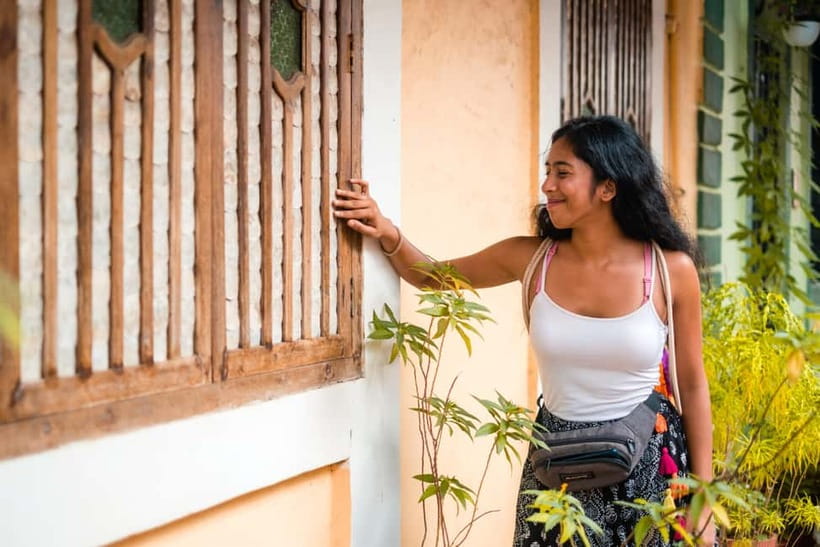
The route continues toward the Chapel of San Sebastian, another useful point for understanding the religious and residential character of the district. The chapel provides a change of scale from the small lanes and houses, while the surrounding buildings return you to the everyday feel of Fontainhas.
The guide may shape the discussion around your interests. You can ask about architecture, Goa’s Portuguese past, local customs, food, music, or the way people live in the neighborhood today. This flexibility is important because the tour works for both first-time visitors and people who already know a little about Goa.
The architecture is best appreciated at walking speed. You can notice how neighboring houses differ in paint, frontage, and decoration, while still sharing a clear regional character. Some buildings are carefully maintained, while others show the wear of age. That contrast is part of the appeal, though anyone expecting a uniformly restored heritage district may find the area less polished than a formal open-air museum.
The route includes entry into heritage homes, which adds a useful indoor look at the district. The exact homes available can vary, so it is best to think of this as access to the character of the neighborhood rather than a guaranteed visit to one specific grand residence.
Panjim Inn, Fundacao Orient, and Galerie Gitanjali
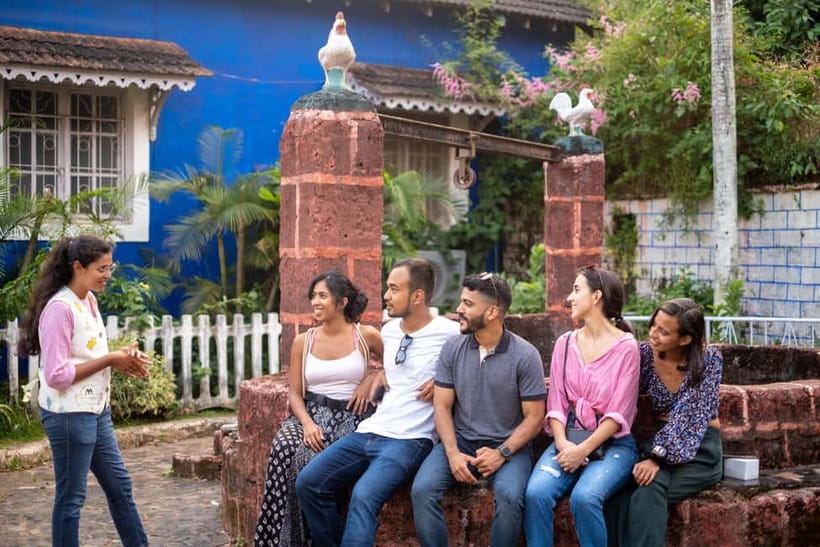
The tour then brings you around buildings connected with Panjim Inn, Fundacao Orient, and Galerie Gitanjali. These stops broaden the experience beyond churches and houses.
Galerie Gitanjali is especially worthwhile if you care about art. You can see work by local and international artists, including paintings connected with Goa’s artistic life. The gallery stop gives the walk a more modern edge and shows that Fontainhas is not only about the past.
Fundacao Orient and Panjim Inn help you read the neighborhood as a cultural district rather than a single architectural style. You may find that the most useful part is not one famous building but the way several institutions, homes, and creative spaces sit close together.
The pace is generally relaxed. You stop often, listen, take photographs, and ask questions instead of marching from landmark to landmark. That makes the 2.5-hour duration feel manageable for most people who are comfortable walking, though heat can change the equation quickly.
A local musician brings the history to life
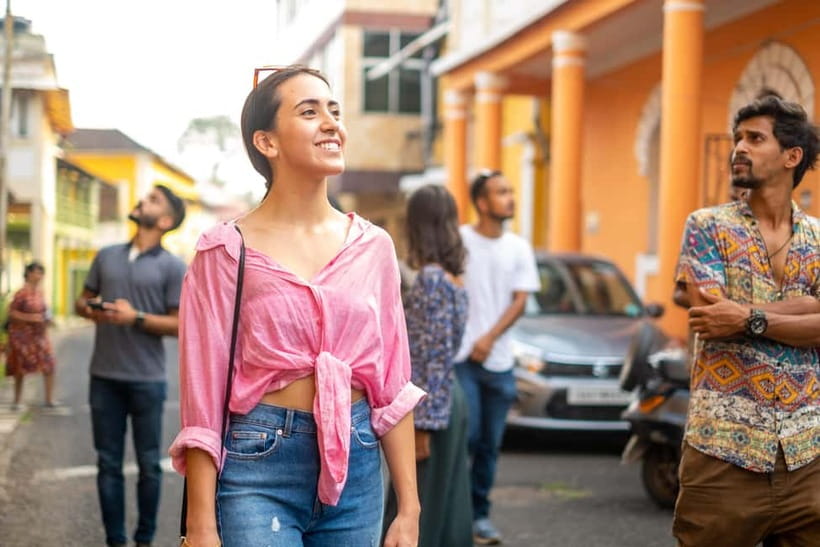
The final major highlight is a meeting with a well-regarded Goan musician. You hear live music and learn how Portuguese influence shaped Goan musical traditions. This is one of the strongest parts of the experience because it turns cultural history into something immediate and human.
Several accounts describe the musician as a memorable part of the walk, with some naming Francis or Glossy. The exact performer may vary, but the format remains valuable: you meet a local artist and hear music in a setting tied to Goa’s living culture.
This is more meaningful than simply adding background music to a tour. Music gives you another way to understand the meeting of Portuguese and Goan traditions. It also provides a welcome change after the architectural portion of the walk.
Some experiences have included a local drink and an informal musical presentation at a café. Treat those extras as possible features rather than fixed promises, since the information provided does not guarantee the same performer or refreshment arrangement on every departure.
Before returning to the post office, you may also stop at a studio producing handcrafted ceramic souvenirs. This is a pleasant final look at local creativity, but purchases are not included. Bring cash if you want to buy something.
Is $12 good value for this Panaji walk?
At $12 per person, I consider this a strong-value introduction to Fontainhas. You receive an English-speaking local guide, entry into heritage homes, a structured route through the Latin quarter, and a meeting with a Goan musician. Those elements would be difficult to arrange as smoothly on your own in a first visit.
The price does not cover hotel transport, insurance, food, drinks, or personal purchases. That is reasonable for a walking tour, but you should bring cash for bakery treats, drinks, and ceramics.
The real value depends on how much you want context. If you only want to photograph colorful houses, you can walk through Fontainhas independently. If you want to understand why the area looks the way it does and connect its buildings with food, music, and art, the guide earns the modest fee.
Timing, weather, and practical comfort
Morning and late-afternoon departures are the sensible choices. A 10:30 a.m. walk may offer quieter lanes and less crowding, while a 4:30 p.m. start can be more comfortable in the heat and finishes near dinner time.
Goa can be hot, and one account specifically noted that the walk remained enjoyable despite the heat. Still, carry a reusable water bottle, wear comfortable shoes, and dress for warm weather. The tour is not suitable for people with mobility impairments because it involves extended walking through narrow neighborhood streets.
Sunday may require extra care. One participant found that everything was closed on a Sunday, so galleries, bakeries, studios, or other stops may not operate normally then. Check the available date and starting time before booking if those indoor visits matter to you.
The cancellation policy is flexible: you can cancel up to 24 hours before the tour for a full refund, and reserve now while paying later. That helps if your Panaji plans are still shifting.
Who should book this experience?
I would choose this tour for first-time visitors to Panaji, history and architecture fans, art lovers, and anyone who wants more than a quick set of photographs. It is also a good early activity in Goa because the guide can help you understand the Portuguese layer of the region before you visit other sites.
Families with older children may enjoy the mix of stories, food, music, and visual details. The walk also suits solo visitors who want company without committing to a full-day excursion.
You may want to skip it if you dislike group activities, struggle with extended walking, or want a private, highly customized tour. A group of up to 20 can be less intimate, and the route does not include hotel pickup.
Should you book the Fontainhas heritage walk?
Yes, if you want Panaji’s Latin quarter explained rather than simply photographed. The combination of heritage homes, colorful lanes, bakery treats, art, and live Goan music gives the walk more range than a basic architecture tour.
Book the morning for cooler conditions and quieter streets, or choose the 4:30 p.m. departure for a gentler finish before dinner. Bring water, cash, and an open mind about the exact bakery, musician, or surprise along the route. At $12, this is an easy recommendation for a well-rounded introduction to Fontainhas.
FAQ
Where does the Panaji heritage walk begin?
The guide meets you at the entrance to the Panjim Head Post Office near the Mala district. The São Tomé Chapel is a nearby landmark that can help you locate the meeting point.
How long does the tour last?
The walk lasts approximately 2.5 hours.
What language is the tour conducted in?
The tour is conducted in English by a live local guide.
What is included in the price?
The price includes a local English-speaking guide, entry into heritage homes, and a meeting with a well-known Goan musician.
Are food and drinks included?
Additional food and drinks are not included. The route includes a stop at the 31st January Bakery, where you can purchase local treats, and some departures may include a local drink.
Is hotel pickup provided?
No. Hotel pickup and drop-off are not included, so you must reach the Panjim Head Post Office independently.
How large can the group be?
The maximum group size is 20 people. Smaller groups may be possible depending on the departure.
What should I bring?
Bring comfortable shoes, comfortable clothing, cash, and a reusable water bottle. Souvenirs and personal purchases are not included.
Just added around India
- See Bangalore through my eyes (Cultural / Historical / Walking Tour)★ 5.0 · 60 reviews
- Malleswaram heritage walk, an immersive walking tour in Bangalore★ 5.0 · 20 reviews
- Treasures of Mysuru – day tour★ 5.0 · 27 reviews
- Discover Bangalore with Me (A Private Historical Walk Tour)★ 5.0 · 24 reviews
- Bangalore Heritage and Cultural Walking Tour★ 3.5 · 21 reviews
- Bangalore: Walk In the Footsteps of Maharajas & Sultans★ 5.0 · 18 reviews
- Bangalore Heritage Walk – Private Walking tour★ 5.0 · 47 reviews
- World heritage site of Belur & Halebid with temple sculptures★ 5.0 · 24 reviews
History Walking Tours, compared.
History and Hauntings of Salem Guided Walking Tour
Read our review →
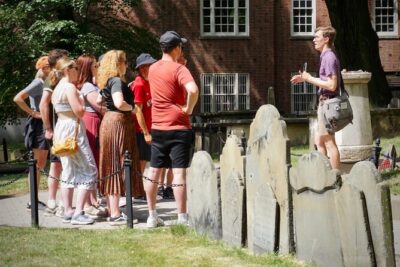
Freedom Trail History Small Group Walking Tour
Read our review →
Historic Charleston Guided Sightseeing Walking Tour
Read our review →
Tapas Walking Tour with Food, Wine, and History
Read our review →
Savannah History and Haunts Candlelit Ghost Walking Tour
Read our review →
A History of Terror – Belfast City Centre Walking Tour
Read our review →Browse the lists this tour appears in