

Review · GOA
Candolim: Heritage Walk of Fort Aguada Port and Jail Complex
History feels close at Fort Aguada. This one-hour walk takes you through a 400-year-old Portuguese fort, its former jail, and several areas many visitors cannot enter on their own. I like the access to the chapel, freshwater spring, kitchens, and prison cells, all paired with stories about Goa’s freedom fighters. I also like the strong local focus, especially the way guides such as Veron Franco, Niranjan, Yashashvi, and Rochwin explain both colonial rule and Goa’s liberation movement.
The main drawback is the short running time. One hour gives you a sharp introduction, not a slow, complete look at every corner of the monument. You should also think carefully about the heat. A noon start felt very hot for one visitor, and there is no vehicle service inside the complex, so you will be walking throughout.
Key points to know before you go
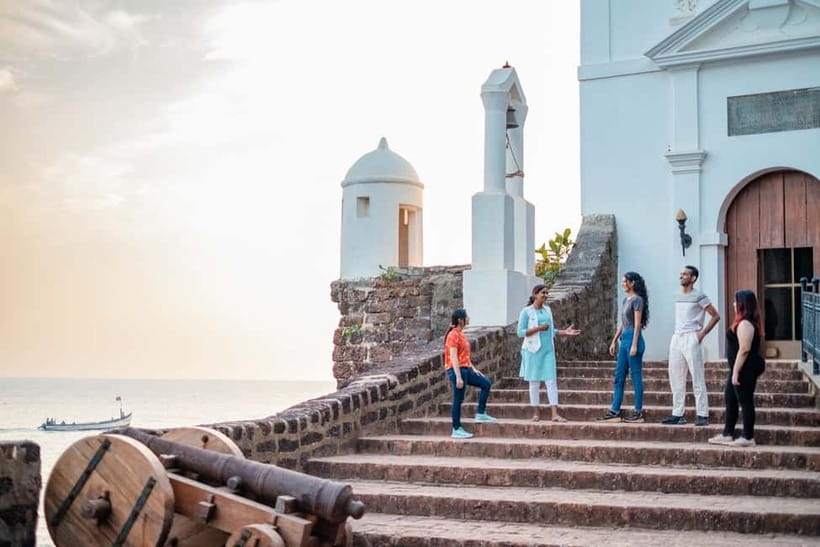
- The lower fort is the real focus: You will see the former Aguada jail, prison cells, kitchens, and a freshwater spring, not just the famous sea-facing walls.
- Entry is included: The $10 price includes the monument ticket. One recent booking valued the included foreign entry fee at about 400 rupees.
- The guide makes the difference: Veron Franco received praise for his passionate explanations, while Niranjan and Yashashvi were also singled out for clear storytelling.
- You get special access: The walk includes areas not generally open to the public, including the chapel and former service spaces.
- Expect a proper walking tour: No vehicles are used inside the monument, and pickup, meals, snacks, umbrellas, hats, and raincoats are not provided.
- It suits history-minded visitors: The hour covers Portuguese defenses, battles with Indian powers, Salazar’s prison policy, religion, colonialism, and Goa’s independence struggle.
Why Fort Aguada deserves more than a quick photo stop

Many people know Fort Aguada for its broad sea views and Portuguese walls. Those are good reasons to visit, but they are only the opening chapter. The fort was built as a defensive stronghold and witnessed repeated struggles involving the Portuguese, the Dutch, the Marathas, and Indian kingdoms competing for control.
This walk gives you a useful frame for understanding the site. You are not simply looking at old masonry. You are following the changing purpose of a military fort, then a prison, and finally a monument tied to Goa’s modern identity.
The setting helps. From the fort, you can look across the seaside and understand why this location mattered. Its position gave the Portuguese a way to watch and defend the coast. The panoramic views are attractive, but the guide’s explanation gives them meaning.
I especially value the attention given to Goan freedom fighters. Their stories can be easy to miss if you visit only for photographs. The walk brings those less celebrated figures into the center of the experience, showing how the fort later became part of the struggle against Portuguese rule.
More Castle and Palace History Tours in India
- Private Heritage Walking Tour in Jaisalmer Fort and Old Bazaar
★ 5.0 · 306 reviews - Private Jaisalmer Fort & old city tour
★ 5.0 · 168 reviews - Kochi Tour Guide -A Heritage walking tour in Fort kochi and Mattancherry !
★ 5.0 · 143 reviews
Meeting at the Lower Fort Aguada ticket counter
Your meeting point is the ticket counter at the Lower Fort Aguada Port and Jail Complex Heritage Walk. This is important because Fort Aguada is a large historic site with more than one area of interest. You are not meeting at a hotel or arranging a transfer. You need to make your own way to the lower fort and find the storyteller at the stated counter.
The tour is offered as a private group, with a live guide speaking English. That format should appeal to you if you prefer to ask questions or keep the pace focused on your interests. It also avoids the feeling of being one person in a large crowd moving from signboard to signboard.
One guide began a walk 15 minutes early when the group arrived ahead of time. That is a nice practical touch, though you should still plan to be at the meeting point on time. The walk returns to the same Aguada Port and Jail Complex area, so there is no separate ending point to find.
A one-hour route through Portuguese defenses and a former jail

The tour lasts about one hour, and that length works best if you arrive ready to concentrate. You will not have time for a leisurely look at every wall or a long pause at every viewpoint. Instead, the guide connects the main areas into a compact story.
Portuguese architecture and the fort’s defensive role
The first part of the visit focuses on the fort as a Portuguese military site. Its architecture reflects the colonial power that controlled Goa for centuries, while its position explains the practical side of that control.
The story includes threats from the Dutch and the Marathas, as well as battles between Indian kingdoms and the Portuguese empire. This is one of the strongest parts of the tour because it avoids treating the fort as an isolated European monument. Its history is about competing powers, changing alliances, and control of the coast.
You will likely gain more from this section if you pay attention to how the guide links the walls and views to defense. Without that explanation, the architecture can look impressive but abstract. With it, the fort becomes a working military site shaped by fear of attack.
More History Walking Tours in India
- Fontainhas Heritage Walk by Make It Happen
★ 5.0 · 2,834 reviews - The Great Indian Food Tour: Old Delhi Food and Heritage Walk
★ 5.0 · 1,698 reviews - Old Goa Heritage Walk by Make It Happen
★ 5.0 · 797 reviews - Old Delhi Food, Heritage&Cultural Walk with Rickshaw ride to Masterji Kee Haveli
★ 5.0 · 742 reviews
The chapel and freshwater spring
The walk includes access to a beautiful chapel and a freshwater spring. These are not simply extra stops added to fill time. Together, they show how a fortified settlement had to support the people living and working inside it.
The spring is particularly useful for understanding the practical needs of a coastal fort. Fresh water was not a minor convenience. It helped make long periods of defense possible. The chapel adds another layer, showing the religious life woven into Portuguese colonial administration.
The special access matters here. You can see parts of the lower fort that are not generally available to the public, rather than being limited to the most obvious open areas. If you have visited the upper fort before, this lower complex should feel like a different experience.
Kitchens and the working side of the compound
Former kitchens offer a look at the ordinary labor behind a military and prison complex. Grand forts are often presented through commanders, battles, and political decisions. Kitchens bring the scale back to daily life.
You can use this stop to picture the compound as a place that required regular food preparation and maintenance. It also helps break up the military narrative with details about how the site functioned from day to day.
The tour does not promise a long exploration of each room, so expect a guided introduction rather than a full archaeological study. Still, this is exactly the kind of access that makes a short heritage walk worthwhile. A signboard may identify a kitchen, but a storyteller can explain why it mattered.
Prison cells and the stories of Goan independence
The most powerful section for many people will be the former prison. Under Portuguese dictator Antonio Salazar, the lower fort was repurposed as a prison complex for convicted Goan freedom fighters.
The cells are described as dingy, and that word captures the mood better than polished museum displays could. This is a place where the political history of Goa becomes physical. You are looking at confined spaces connected to people who opposed colonial rule and pushed for Goan independence.
The guide also discusses dictators, religion, and colonialism. That broader scope is useful because the jail story does not exist separately from Portugal’s political system or Goa’s religious and social history. One guide, Veron Franco, was praised for covering a wide range of subjects with real passion. That kind of delivery can turn a quick visit into a more serious lesson.
A small modern museum inside the prison is also included in the price. The tour itself remains the main attraction, but the museum gives you a chance to continue looking at the site after the guided hour.
The guides are the strongest part of the experience
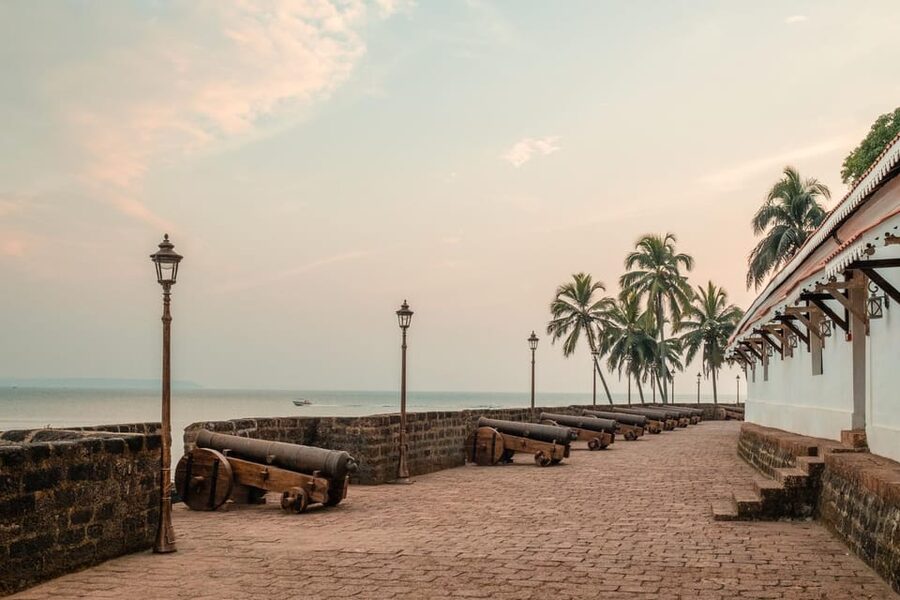
This walk depends heavily on the quality of its storyteller. The fort provides the setting, but the guide provides the connections between military architecture, colonial rule, religion, imprisonment, and liberation.
The names that appear repeatedly in the feedback are useful if you have a choice. Veron Franco was praised for an interesting, detailed approach and for clearly enjoying his work. Niranjan was described as a strong storyteller. Yashashvi was praised for clear explanations of the jail complex and Goa’s culture and history.
That does not mean every guide will use exactly the same style. It does suggest that the local storytelling is a serious part of the experience rather than a basic escort service. You should expect an explanation-led visit, with time spent listening as you move through the complex.
The walk has also earned a 4.9 rating from 25 reviews, with strong praise for the guides’ clarity, warmth, and command of the subject. The most useful takeaway is not the number alone. It is the consistency of the comments: people left feeling better informed about both the fort and Goa.
Is $10 a fair price?

At $10 per person, this is a strong value if you want context rather than a quick independent visit. The fee includes the heritage walk, the monument entry ticket, and access to the spring, kitchens, chapel, prison cells, and small museum area.
For foreign visitors, one recent booking valued the included entry at around 400 rupees. Since entrance charges can change, you should check the current booking details, but the basic value remains clear: you are paying a modest amount for a private guided visit and access to areas that are not normally open to everyone.
The price is less compelling if you only want to see the exterior walls and take a few pictures. You could find the one-hour format too brief if you prefer long, independent visits. But if you want the fort’s political story explained and would otherwise miss the lower complex, the cost is easy to justify.
There are no hidden meal or transport benefits here. Pickup and drop-off are not included, and you need to handle your own refreshments. That is normal for a short site tour, but it matters when planning your day.
Heat, walking, and what to carry

This is a walking trail, and vehicles are not used inside the monument. You should be comfortable walking between the fort sections and standing while the guide explains the site.
Timing deserves real attention. A start around midday can be hot, and one February booking specifically found the noon visit uncomfortable. If you can choose among available times, a cooler part of the day may make the walls, cells, and open views easier to enjoy.
Bring the basics yourself. The provider does not supply umbrellas, raincoats, hats or caps, face masks, or sanitizers. Meals and snacks are also excluded. These details are easy to overlook because the tour is only one hour, but sun protection and water can make a noticeable difference.
The walk is best for you if you enjoy history, architecture, and guided interpretation. It may be less suitable if you want a shaded, seated activity or dislike compact walking tours with a lot of spoken information.
Who will enjoy this Fort Aguada tour most?
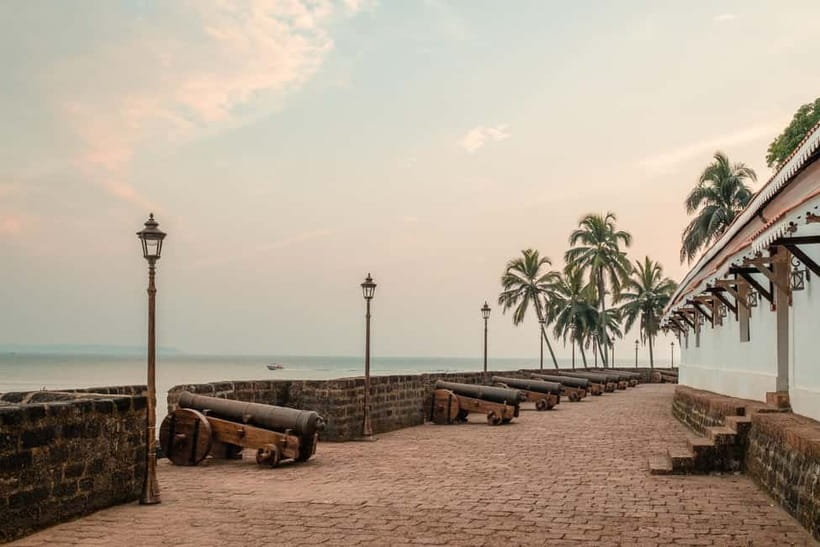
I would recommend it to several types of visitors:
- First-time visitors to Goa: The tour links the fort to wider Goan history instead of treating it as a stand-alone monument.
- History and architecture fans: You get Portuguese design, military strategy, colonial politics, religion, and prison history in one compact visit.
- Visitors who want access beyond the obvious: The chapel, spring, kitchens, and cells add substance beyond the standard viewpoint.
- People short on time: One hour is enough to gain a clear sense of the site without giving up a full day.
- Private groups: The private format gives you a more focused setting for questions and discussion.
I would think twice if you are mainly looking for a relaxed scenic stop. The sea views are part of the appeal, but the experience is built around listening and walking. It is also not the best choice at the hottest part of the day if you are sensitive to heat.
Should you book it?

Book this walk if you want Fort Aguada to make sense. The combination of Portuguese defenses, a freshwater spring, a chapel, working kitchens, prison cells, and stories of Goan freedom fighters gives the site far more weight than a quick photo stop.
The best reason to choose it is the human story of the jail complex, supported by guides who explain the fort with care and energy. The main caution is the one-hour limit and the heat, especially around noon. Choose a cooler start if possible, arrive at the lower fort ticket counter early, and bring water and sun protection.
For $10, the included entry and special access make this a worthwhile, focused introduction to one of Goa’s most important historic sites.
FAQ

How long does the Fort Aguada heritage walk last?
The guided walk lasts one hour and returns to the Aguada Port and Jail Complex.
Where does the tour meet?
You meet the storyteller at the ticket counter of the Lower Fort Aguada Port and Jail Complex Heritage Walk.
Is entry to Fort Aguada included?
Yes. The monument entry ticket is included in the price, along with access to the freshwater spring, kitchens, and prison cells.
What language is the tour offered in?
The live tour is offered in English.
Is this a private group experience?
Yes. The activity is offered for a private group.
Are transportation, food, and walking equipment included?
No. Vehicles are not used inside the monument, and pickup, drop-off, meals, snacks, umbrellas, raincoats, hats or caps, face masks, and sanitizers are not provided.
Just added around India
- Fortkochi Heritage Walking tour with a local guide★ 4.4 · 19 reviews
- Heritage & Cultural Walk of Trivandrum Guided Walking Tour★ 4.4 · 19 reviews
- Fort Kochi Heritage Day Cycling Tour★ 4.2 · 26 reviews
- Agra Fort: Guided UNESCO Heritage Walking Tour★ 4.9 · 21 reviews
- World heritage Ahmedabad city tour in private car with guide and lunch★ 5.0 · 44 reviews
- Private Elephanta Caves UNESCO World Heritage Site Tour★ 5.0 · 34 reviews
- Mumbai: South Mumbai Heritage Walking Guided Tour★ 4.5 · 69 reviews
- Hill-station & Heritage: Lonavala & Karla Caves Tour from Mumbai★ 5.0 · 60 reviews
Castle & Palace History Tours, compared.

Edinburgh Castle Guided History Tour with Tickets
Read our review →
Venice’s Best: Basilica, Doge’s Palace, Gondola & History Gallery
Read our review →
Imperial Palace and Shogun Historical Walking Tour
Read our review →
Saadian Tombs & Bahia Palace, Medina Guided Tour
Read our review →
Charleston historical walking tour with a Professor of History at The Citadel
Read our review →
Abu Dhabi Grand Mosque, Palace, and Heritage Village
Read our review →
Buda Castle District Dark History, Legends and Vampire Night Tour
Read our review →
Tokyo Castle & Imperial PalaceーShogun Walking Tour
Read our review →Browse the lists this tour appears in