
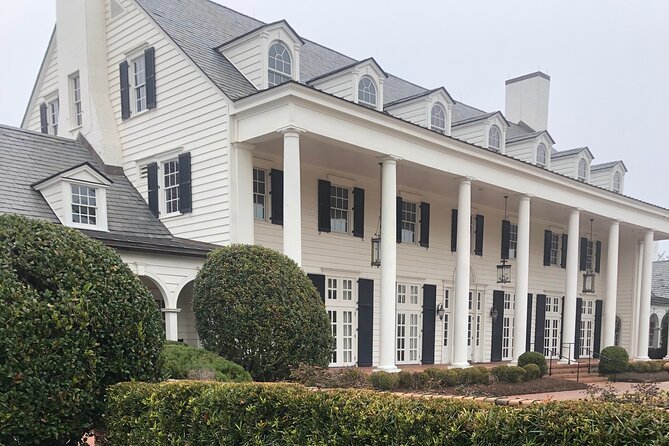
Review · MYRTLE BEACH
Early Myrtle Beach History and The WWII Years Trolley Tour
Myrtle Beach has more stories than sunshine. This two-hour trolley ride looks past the resort strip to the town’s early years, wartime dangers, German prisoners of war, and the African American school that served local children from the 1930s through the 1960s. I especially like the visit to Pine Lakes Country Club, linked to the birth of Sports Illustrated, and the stop at the Historic Myrtle Beach Colored School Museum, a small but meaningful place that adds an important part of the city’s story.
The tour also benefits from a clean, enclosed, climate-controlled trolley, a useful comfort in Myrtle Beach weather. Guide Katherine receives especially warm praise for her clear storytelling and enthusiasm. The main consideration is that this is a narrated history ride, not a tour packed with major buildings to enter. Some places described during the ride are gone, so you may be looking at a location rather than an intact landmark.
Key points to know before booking
- WWII reaches Myrtle Beach: Learn about U-boat attacks off the Eastern Seaboard and the German POW camp opened near the beach in 1944.
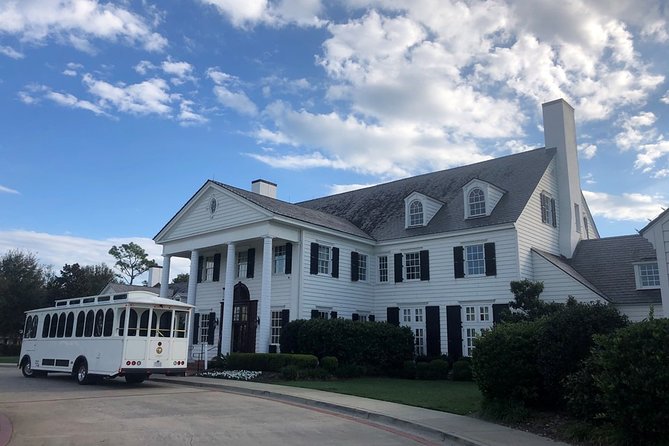
- Pine Lakes tells two stories: The country club is one of Myrtle Beach’s oldest locations and is tied to the launch of Sports Illustrated.
- The Colored School Museum adds vital context: See a recreation of the original school that served African American children in the Myrtle Beach area.
- Katherine is a major strength: Her detailed, warm presentation is a big reason the tour earns such high marks.
- The trolley keeps things easy: The vehicle is enclosed and climate-controlled, with a maximum group size of 33 people.
- Expect history more than spectacle: The tour often points out sites and locations from the past rather than visiting large preserved buildings.
Myrtle Beach before the boardwalk crowds
If your picture of Myrtle Beach is mostly hotels, mini-golf, restaurants, and the oceanfront boardwalk, this tour gives you a useful reset. It presents the city as a place that had a life before modern tourism took over.
The story begins with Myrtle Beach’s early development as a resort. The ride connects streets, properties, and surviving landmarks to the town’s beginnings. That approach matters because much of the early resort town has changed or disappeared. You are not simply looking at old buildings. You are learning how the city grew, where important events took place, and why Myrtle Beach became more than a quiet coastal settlement.
Guide Katherine is repeatedly praised for making this material easy to follow. She does not just list dates. She explains how local events fit into larger national stories, especially during World War II. Her enthusiasm is useful here because the subject can otherwise feel scattered. One moment you are hearing about a country club and early resort development, and the next you are learning about wartime shipping dangers along the coast.
The tour is conducted in English and lasts about two hours. That is long enough to create a real narrative without taking up an entire day at the beach. I like this length for a first visit, or for a return visit when you want something more thoughtful than another afternoon of shopping.
More WWII and D-Day Tours in the USA:
- Pearl Harbor History Remembered Tour from Ko Olina
★ 5.0 · 1,009 reviews - Pearl Harbor & USS Arizona Small-Group Tour [Early Access]
★ 4.5 · 492 reviews - Pearl Harbor with USS Arizona and Hawaiian Kingdom History Tour
★ 4.5 · 184 reviews
WWII history on a coast at war
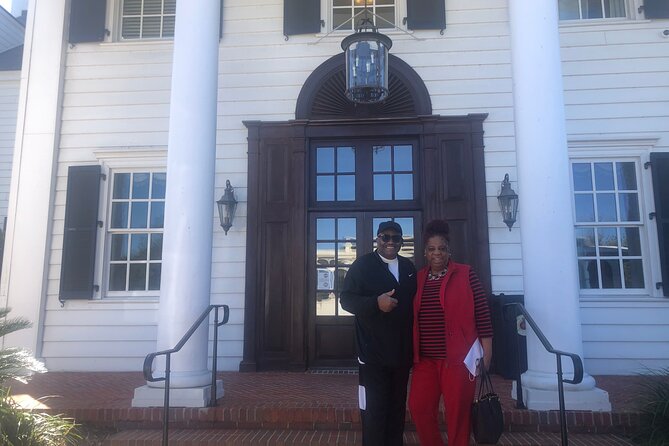
The WWII material is the tour’s most unexpected feature. In April 1942, the waters off the Eastern Seaboard were among the most dangerous places in the world for shipping vessels because of German U-boat activity. Myrtle Beach was not just watching the war from a distance. The conflict affected the coast directly.
You will also hear about the German POW camp opened across from the beach in 1944. That detail can be surprising, especially if you associate Myrtle Beach only with leisure and summer holidays. The tour explains how prisoners were brought to the United States and how their presence affected the local economy and community.
This section may prompt mixed feelings, and that is not necessarily a weakness. The subject raises difficult questions about how prisoners were treated, how local residents responded to them, and how people separated wartime responsibility from individual prisoners. One person found the local welcome for German POWs troubling, given the actions that led to their imprisonment. That reaction is understandable, and the topic is more interesting when you approach it with room for complexity rather than expecting a simple patriotic story.
The tour’s WWII section works best for people who enjoy lesser-known local connections to major events. If you want a military history presentation filled with preserved artifacts or battlefield sites, this is not that kind of experience. Much of the story is told from the trolley, with the guide explaining what happened and where it happened. Still, the connection between Myrtle Beach, U-boats, coastal shipping, and a German POW camp gives the city a far more complicated past than its resort image suggests.
Stop one: Pine Lakes Country Club
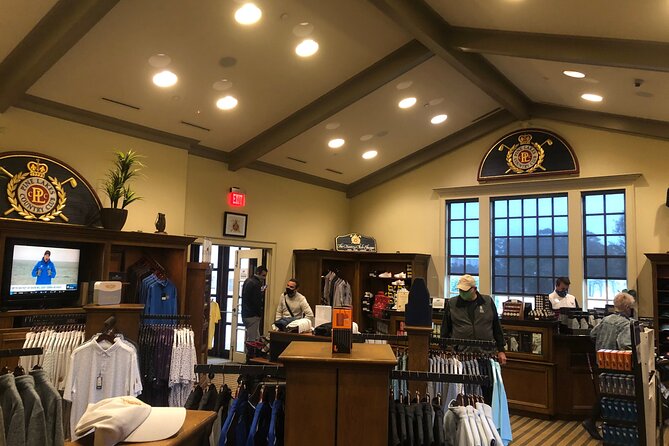
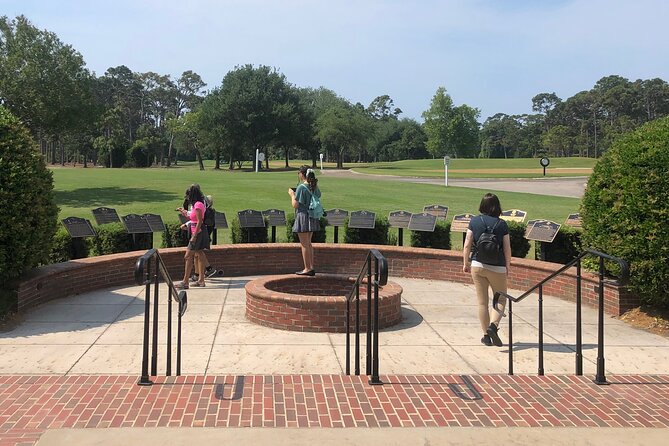
The first scheduled stop is Pine Lakes International Country Club, one of Myrtle Beach’s oldest and most attractive locations. You have about 15 minutes here, and restrooms are available.
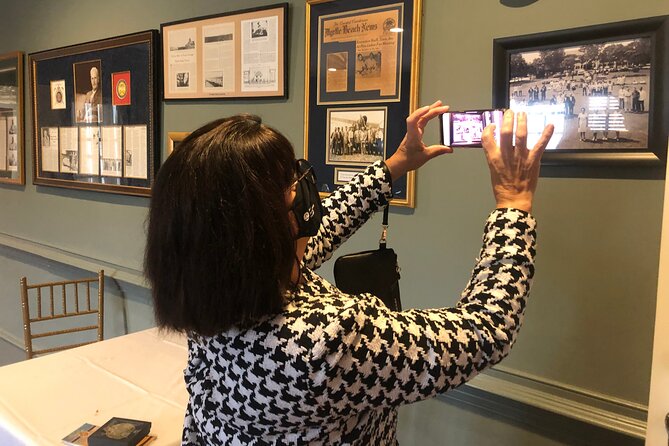
Pine Lakes matters for more than its appearance. It is associated with the early development of Myrtle Beach and is also connected with the beginning of Sports Illustrated. The first issue cost 25 cents, and the marketing conference connected with the magazine’s launch took place in Myrtle Beach before the publication reached newsstands.
That is a terrific example of the kind of detail that can change how you see a familiar place. You may think of Sports Illustrated as a national magazine, not something connected to a South Carolina resort town. At Pine Lakes, the tour ties a major piece of American sports media to a local setting.
The stop is short, so you should not expect a long club visit or an extended walk. It functions as a compact look at one of the city’s oldest sites, with time to use the restroom and take in the setting. Several people particularly enjoy this stop because many Myrtle Beach visitors never see Pine Lakes at all.
I would pay close attention to the guide here. The value is in the explanation, not simply in the view. Without the story about early resort development and Sports Illustrated, Pine Lakes could look like a pleasant golf property. With the context, it becomes part of Myrtle Beach’s cultural and commercial beginnings.
Stop two: The Historic Myrtle Beach Colored School Museum
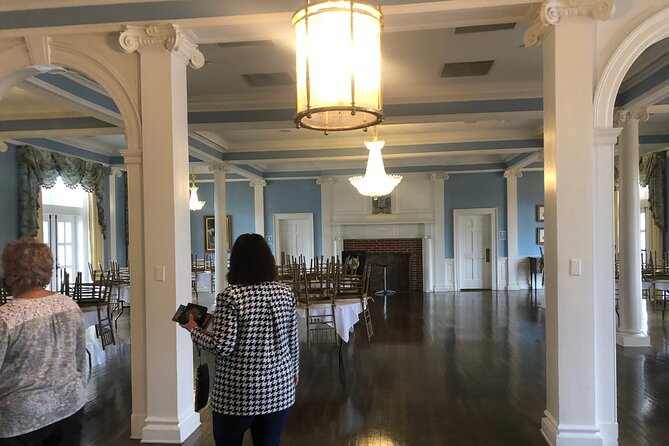
The second stop is the Historic Myrtle Beach Colored School Museum. It presents a recreation of the original school that once stood across the street and tells the story of African American education in Myrtle Beach from the 1930s to the 1960s.
This is an important part of the tour because it moves beyond resort history. Myrtle Beach’s development did not happen equally for everyone, and the school helps show how Black families and children built community within a segregated education system.
The museum is small. That is worth knowing before you arrive. When the trolley group enters, the space can feel crowded, and it may be difficult to study every display at your own pace. I would treat the stop as a focused visit rather than a large museum experience.
The setting also gives the tour a more personal tone. The school represents everyday life, education, and opportunity for children who attended it. The material covers several decades, from the 1930s through the 1960s, so you get a look at a period of major social change in the United States.
Matthias Grissett of the City of Myrtle Beach has been praised for his presentation at the museum. His connection to the subject adds warmth to the visit, though specific staff participation can change. The stop is particularly worthwhile if you want the tour to include the history of Black Myrtle Beach, not just the city’s resort growth and wartime connections.
A few more history tours around the USA worth a look
- History and Hauntings of Salem Guided Walking Tour
★ 5.0 · 14,564 reviews - Charleston’s Old South Carriage Historic Horse & Carriage Tour
★ 5.0 · 10,023 reviews - Beneath The Streets Underground History Tour
★ 4.5 · 8,006 reviews - Boston: Freedom Trail History Small Group Walking Tour
★ 5.0 · 6,450 reviews
What you see from the trolley
Between the two stops, the trolley serves as both transportation and classroom. The guide points out locations tied to Myrtle Beach’s past, including places that no longer survive. This is where expectations matter most.
You will not always step out beside an intact historic building. At times, the guide may point toward the location of an old house or former site while explaining its role. One original house was viewed from the road rather than entered. That can disappoint if you expect a steady sequence of preserved landmarks.
I see this as a strength for people who enjoy local history, but a limitation for anyone who wants constant visual drama. The tour asks you to imagine parts of the older city. Katherine’s timing and narration help, since she explains what you are seeing as the trolley passes by, but the experience depends on listening.
The enclosed, climate-controlled vehicle makes that listening easier. You are protected from heat, cold, or rain during the ride, and the trolley provides a relaxed way to cover more ground than you could comfortably walk. The vehicle has been described as clean and comfortable, though the seating area can feel tight. The maximum capacity is 33 people, so the group is not guaranteed to feel intimate.
Is $45 a fair price?
The cost is $45 per person for about two hours. That works out to roughly $22.50 per hour, including transportation, narration, and the two scheduled stops.
I think the price is fair if you are genuinely interested in Myrtle Beach’s past. You are paying for a locally focused presentation rather than a basic sightseeing loop. The best value comes from the guide’s research and storytelling, especially the material about WWII, the POW camp, Pine Lakes, and African American education.
The value is weaker if you mainly want broad city views or entertainment. You could spend two hours enjoying the beach, and this tour will not compete with a thrill ride or a fast-paced attraction. It is a sit-and-listen experience, with short visits along the way.
People who have visited Myrtle Beach many times may find the price especially worthwhile. The tour can reveal parts of the city that are easy to miss, including Pine Lakes and the Colored School Museum. It also gives familiar streets a new meaning. You may pass places you have seen for years and finally understand their role in local history.
Practical details for a smooth ride
The tour begins at 10:00 a.m. at 4002 Deville Street in Myrtle Beach and returns to the same meeting point. Give yourself enough time to reach the starting address, since the activity does not end at a separate location.
A mobile ticket is accepted, and confirmation is provided when you book. The tour is offered in English. Service animals are allowed, and most people can participate, though the tight trolley space is worth considering if you need extra room.
The experience requires good weather. If poor weather cancels the tour, you are offered another date or a full refund. It also requires a minimum number of participants, so a cancellation for that reason brings the same choice of another date or a refund.
You can cancel for a full refund up to 24 hours before the start time. Changes or cancellations made less than 24 hours ahead are not accepted for a refund. Since the cutoff uses local time, check the time carefully before making a last-minute change.
Who will enjoy this tour most?
I would recommend it to people who enjoy local stories, military history, and social history. It also works well for families with older children who can listen for a sustained period. One parent found it engaging enough to consider bringing a child who usually has little interest in Myrtle Beach activities.
It is a good choice for repeat visitors. If you have spent years coming to Myrtle Beach and already know the major attractions, this ride can show you a different side of the city.
Couples and multigenerational families should also find the format easy. You remain seated for most of the ride, and the stops are brief. That makes it less demanding than a long walking tour.
I would hesitate to recommend it to anyone seeking a large museum, extensive walking, or a long list of buildings to enter. The Colored School Museum is small, and several historic places are explained from the trolley. The experience depends on your willingness to picture what used to be there.
Should you book the Early Myrtle Beach History and The WWII Years Trolley Tour?
Book it if you want to understand Myrtle Beach beyond the beach. The combination of early resort development, U-boat danger, the 1944 German POW camp, Pine Lakes, Sports Illustrated, and African American education gives you a surprisingly broad look at the city in two hours.
The strongest reason to go is the guide, especially if Katherine is leading your departure. Her clear, enthusiastic delivery turns scattered local facts into a story you can follow.
Skip it if you want nonstop sights, large museum displays, or a more active outing. But if you enjoy thoughtful local history and do not mind looking toward a former site while the story fills in the missing pieces, $45 is a reasonable price for a useful and memorable introduction to Myrtle Beach’s past.
FAQ
How long is the Myrtle Beach history trolley tour?
The tour lasts approximately two hours.
Where does the tour begin and end?
It begins at 4002 Deville Street in Myrtle Beach, South Carolina, and returns to the same meeting point.
What time does the tour start?
The scheduled start time is 10:00 a.m.
What places does the tour visit?
The tour stops at Pine Lakes International Country Club and the Historic Myrtle Beach Colored School Museum.
Is the trolley climate-controlled?
Yes. The trolley is enclosed and climate-controlled, though seating can feel tight.
What is the cancellation policy?
You can cancel up to 24 hours before the start time for a full refund. Cancellations or changes made less than 24 hours before the tour are not accepted for a refund. If bad weather or an insufficient number of participants cancels the activity, you are offered another date or a full refund.
Just added around the USA
- Legends of Music City Guided Historical Walking Tour★ 4.5 · 68 reviews
- Wander Nashville- Guided Historic Walking Tour★ 5.0 · 55 reviews
- Bootleg and Barrels: Tennessee Whiskey Tasting Golf Cart Tour★ 4.5 · 35 reviews
- Historic Grounds: A Music City History and Coffee Morning Tour★ 5.0 · 19 reviews
- Nashville Music, History and Hidden Gems Tour★ 5.0 · 19 reviews
- Dolphin and Manatee Adventure Tour of Naples with Florida History★ 5.0 · 187 reviews
- Historical Tour of Nantucket★ 4.5 · 108 reviews
- Myrtle Beach History, Movies and Music Trolley Tour★ 4.5 · 107 reviews
WWII & D-Day Tours, compared.
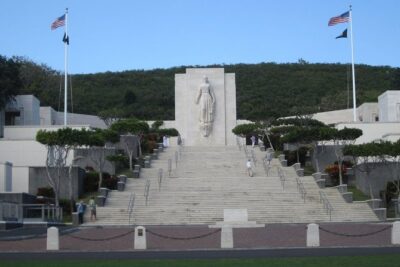
Pearl Harbor History Remembered Tour from Ko Olina
Read our review →
Hiroshima Peace (Heiwa) Walking Tour at World Heritage Sites
Read our review →
Pearl Harbor & USS Arizona Small-Group Tour [Early Access]
Read our review →
Anne Frank and the Jewish History of Amsterdam Private Tour
Read our review →
Browse the lists this tour appears in