

Review · CHARLESTON
Charleston Historical Walking Tour: Pirates, Patriots, and More
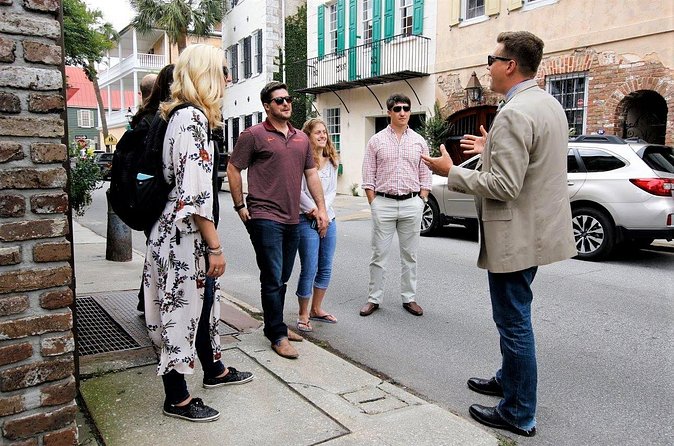
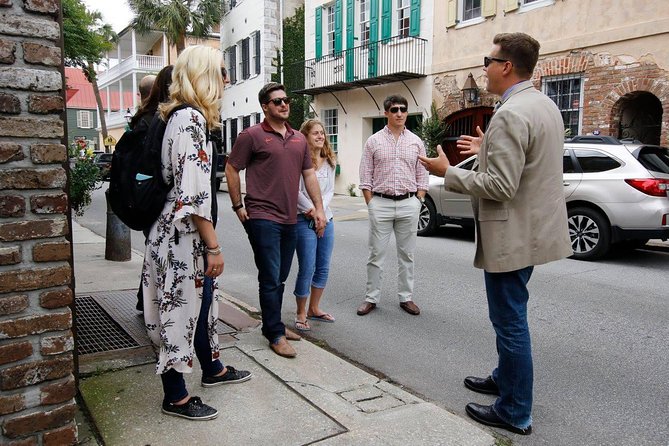
Charleston’s stories are best heard on foot. This 90-minute walk covers about 2.5 miles through the old city, linking grand homes, waterfront parks, churches, and streets that cars cannot reach. I like the leisurely pace and the mix of major sights with quieter side streets. I also like that guides such as Benjamin bring humor and local feeling to the history, rather than simply reciting dates.
The main consideration is the weather. The tour operates in all conditions, and Charleston can be hot, cold, windy, or wet. You will also be walking for the full outing, so good shoes and a sensible pace matter. The route is easygoing, but it is not a seated sightseeing trip.
What makes this Charleston walk worth your time
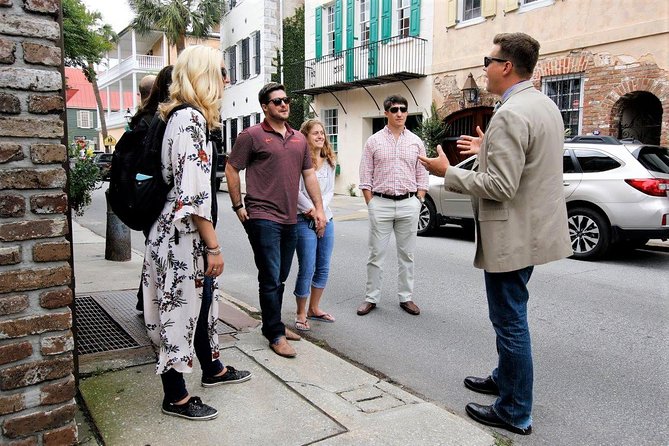
- Benjamin’s storytelling style: He is praised for linking Charleston’s people, buildings, politics, and scandals into memorable stories.
- A 2.5-mile route through the old city: You see famous sights while also reaching narrow streets and corners that cars cannot access.
- A useful first-day orientation: The route brings together Waterfront Park, Rainbow Row, the Battery, White Point Gardens, St. Michael’s Church, and major historic buildings.
- History beyond pretty houses: The subjects include pirates, taverns, patriots, the early republic, slavery-era Charleston, antebellum architecture, and the Civil War.
- Small-group format: The maximum group size is 20, giving the guide room to answer questions and adjust the presentation.
- A practical start time: The 10:15 a.m. departure leaves much of the afternoon free for museums, lunch, or further exploring.
Starting at Waterfront Park at 10:15 a.m.

The meeting point is at 1 Vendue Range in downtown Charleston, near the Circular Fountain in Waterfront Park. Check your booking details carefully, since the tour description also identifies the Circular Fountain as the starting landmark. The walk ends back at the meeting point.
Beginning near the water makes sense. Charleston was founded in 1670 and grew into one of the continent’s most important seaports. From here, your guide can introduce the city as a working port, a political center, and a place shaped by trade, conflict, and the people brought here by force.
The 10:15 a.m. start is useful if you want to make this your first major activity of the day. You get an overview before choosing which museums, houses, churches, or restaurants deserve more of your time. If you are visiting Charleston for only a short stay, that orientation can save you from wandering without a plan.
The walk covers about 2.5 miles at a leisurely pace, with stops for photographs and stories. That distance is manageable for most people with moderate fitness, but Charleston’s sidewalks and weather can still affect how comfortable you feel. Wear shoes you can walk in for 90 minutes, bring water, and dress for the forecast.
More History Walking Tours in Charleston
- Historic Charleston Guided Sightseeing Walking Tour
★ 5.0 · 6,216 reviews - Hidden Alleyways and Historic Sites Small-Group Walking Tour
★ 5.0 · 2,335 reviews - Charleston historical walking tour with a Professor of History at The Citadel
★ 5.0 · 1,284 reviews
Nathaniel Russell House and Charleston’s grand homes
One featured stop is the Nathaniel Russell House Museum at 51 Meeting Street, near the High Battery. Completed in 1808, this neoclassical house is known for its elegant design and is widely regarded as one of the country’s important examples of the style.
You may not enter the house during this walking tour, so think of the stop as an exterior introduction rather than a house museum visit. That is still valuable. Charleston’s architecture makes more sense when you understand how its grand homes fit into the city’s social and economic order.
The route also gives your guide room to discuss antebellum architecture more broadly. The polished facades are beautiful, but the story behind them is not simple. Charleston’s wealth came from port commerce and plantation agriculture, and the city’s grand homes were tied to a society built on enslaved labor.
This is one area where a good guide matters. Benjamin is praised for making connections between buildings and the people who lived in them. He also adjusted the presentation when a couple showed particular interest in architecture, adding more detail instead of sticking rigidly to a script.
The Old Exchange and Customs House
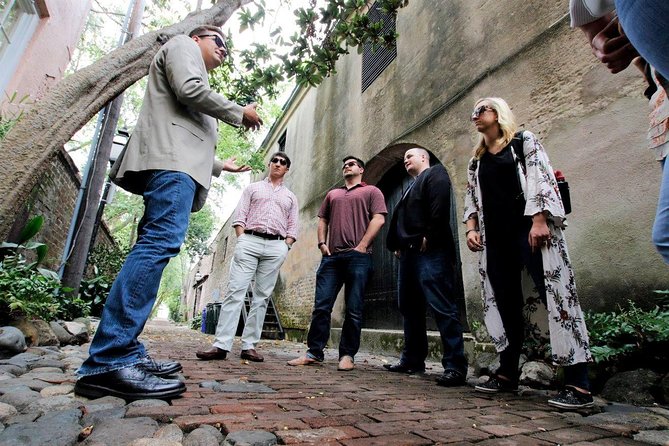
The former Exchange and Customs House was completed in 1771 and is described as South Carolina’s most historic building. Its past reaches into the colonial period, the American Revolution, and the early years of the United States.
This is the kind of stop that gives the tour political weight. Patriots were imprisoned here, the Constitution was ratified here, and George Washington was entertained here. Those facts make Charleston feel less like a collection of attractive streets and more like a city involved in national power struggles from the beginning.
You will hear about heroic patriots, but the wider story includes competing loyalties and hard choices. Charleston was not simply a stage for famous men. It was a port where commerce, empire, rebellion, and local ambition met.
The building is especially useful as a history marker because several periods overlap in one place. Your guide can move from colonial Charleston to the Revolution, then toward the new republic and the city’s later decline during the Civil War. In 90 minutes, you will not get every detail, but you will get a clear framework for understanding the city.
Waterfront Park and Rainbow Row
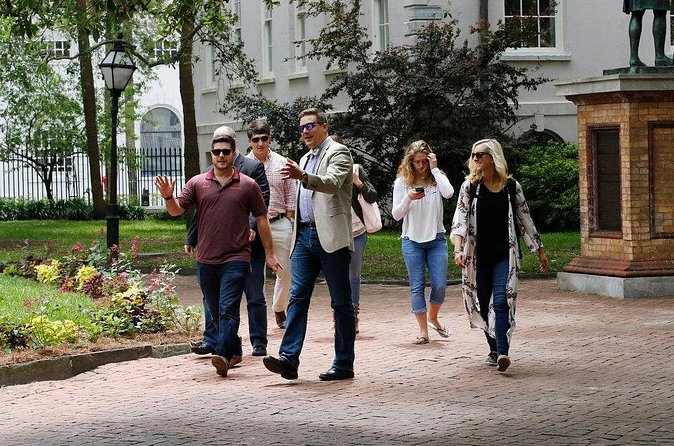
Waterfront Park is both a scenic pause and a practical way to understand Charleston’s relationship with the harbor. The park is close to the Market and is one of the city’s most visited public spaces. The Circular Fountain provides an easy landmark for the start, while the open waterfront gives the group room to gather.
The park is also a good place for photographs. The tour does not rush from one address to the next, and the planned stops let you take pictures while listening. That makes the walk feel less like a race through a checklist.
From there, the route includes Rainbow Row, one of Charleston’s most recognizable streets. The colorful Georgian row houses form the longest cluster of their kind in the United States. It is a popular photo stop, so you should expect to share the space with other people and pause rather than linger indefinitely.
Rainbow Row is attractive, but the real value comes from hearing how these houses fit into the city’s growth. The buildings are easy to admire on your own. A guide helps turn them into part of a larger story about urban life, commerce, status, and changing fortunes.
More History Walking Tours in the USA
- Charleston: Old Walled City Historical Walking Tour
★ 4.7 · 705 reviews - Historic Charleston Walking Tour: Rainbow Row, Churches, and More
★ 5.0 · 691 reviews - Charleston: History and Architecture Guided Walking Tour
★ 4.8 · 349 reviews - Charleston History and Hops Tour: Bar and History Walk
★ 5.0 · 316 reviews
Pirates, taverns, and the less polished Charleston
The title promises pirates, and the tour also covers bawdy taverns and seaport life. That gives the walk a lighter side, but it is not just entertainment. A port city attracted sailors, merchants, smugglers, soldiers, and people seeking opportunity. Its taverns and waterfront were places where money and trouble often met.
Benjamin’s style seems particularly well suited to this part of the tour. He is repeatedly praised for being funny, engaging, and able to connect separate facts into stories you remember. One useful sign of a strong guide is that specific phrases and small details stay with you after the walk. Benjamin appears to have that gift.
The humor also helps keep a long historical sequence from becoming a lecture. You will hear about pirates and taverns alongside patriot politics, architecture, and war. That range is a strength for first-time visitors who want a broad introduction rather than a tour focused only on houses or only on military events.
Still, the format has limits. If your main interest is a detailed study of Charleston’s architecture, African American history, military history, or religious buildings, you may want a more specialized tour afterward. This walk touches many subjects by design.
The Battery and White Point Gardens
The Battery is one of the classic Charleston walks, and this tour brings you along its waterfront edge. At the southern end, White Point Gardens covers six acres and provides a broad public park with views, historic surroundings, and room for the group to pause.
This section gives the tour a change of pace. After streets lined with houses and civic buildings, the open park lets you see how the city meets the water. It is also a good place for photographs, especially if the weather is comfortable.
Do not expect a quiet, empty park. The Battery is one of Charleston’s best-known areas, and public spaces can feel active. The guide’s job here is to give the setting meaning, not simply to point out a view.
The Battery also helps explain Charleston’s defensive and commercial past. Its location at the southern edge of the historic city makes it an easy place to discuss the port, military concerns, and the city’s changing role over time. The tour connects those themes with stories of the Civil War and the damage it caused.
St. Michael’s Church and the city’s changing fortunes
St. Michael’s Church is another key sight along the route. Its inclusion adds a religious and civic dimension to the walk, since Charleston’s churches were part of public life as well as places of worship.
The tour does not promise interior visits, so you should treat this as an exterior stop unless your guide says otherwise. That is worth knowing if you are specifically hoping to see church interiors. The benefit is that you can take in several important buildings during one continuous walk without spending the entire morning inside a single site.
By the time the route reaches these landmarks, the city’s long arc should be clearer. Charleston began as a colonial settlement, grew as a major seaport, became central to revolutionary politics, developed a grand antebellum appearance, and suffered during the Civil War. The walk presents those periods in a compact form.
What the guides add to the experience
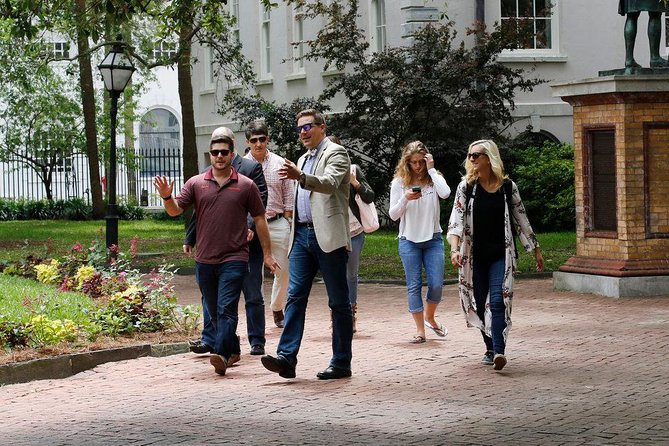
Guide quality is the strongest reason to choose this tour. Benjamin is the name most often praised, and he is described as the founder of Pineapple Tours as well as a guide with local roots. His presentation combines historical facts, Southern charm, humor, and practical advice about what to do in Charleston.
He also appears willing to shape the walk around the group. On one occasion, the tour ended at a lunch restaurant, and on another, architectural details received extra attention after the group showed interest. You should not assume every group will get the exact same adjustment, but the company’s small-group size makes questions and conversation more realistic.
Another useful detail is the attention to comfort. In hot sunshine, Benjamin tried to keep the group in the shade when possible. On a very cold day with wind chill below freezing, guide Ron Smith helped make the outing work despite harsh conditions. That does not make bad weather pleasant, but it suggests the guides take conditions seriously.
The group limit is 20 people. That is large enough to provide a lively atmosphere but small enough for the guide to keep the group together. If your party includes a slow walker, tell the guide early. One private tour worked well for a couple because the guide adjusted to a slower pace, though you should not count on every departure becoming private.
Is the 90-minute format good value?
No price is provided here, so I cannot judge the exact cost. I would judge the value by what you want from the outing. If you want a broad introduction to Charleston’s streets, architecture, political past, and waterfront, a 90-minute guided walk can be a smart first investment.
You are paying for interpretation, not transportation or admission to a house museum. The value comes from seeing several important areas in one route and learning how they connect. If the tour price is close to other standard walking tours, the praised storytelling and small maximum group size make it appealing.
The format is less useful if you prefer to explore at your own pace, spend long periods taking photos, or enter every building. You will see the exteriors of major sites, but the walk is not a substitute for visiting the Nathaniel Russell House Museum or other interiors on your own.
Who should book this walk?
I would recommend it most strongly to first-time visitors, couples, families with older children, and anyone who wants a clear introduction before exploring independently. The mix of pirates, patriots, architecture, and war keeps the subject matter varied.
It also suits people who enjoy stories more than raw dates. Benjamin’s humor and local perspective are central to the experience, and the strongest praise focuses on his ability to make Charleston’s past easy to picture.
You should think twice if walking 2.5 miles is difficult, if you dislike tours that operate in rain or cold, or if you want a specialist lecture on one narrow topic. The company asks for a moderate fitness level, and children must be accompanied by an adult. A child rate applies only when the child shares with two paying adults.
Cancellation is free up to 24 hours before the 10:15 a.m. start. Inside that window, the payment is not refunded, and changes are not accepted. The tour also requires a minimum number of participants, so a cancellation for that reason would bring an alternative date or experience, or a full refund.
My verdict on the Charleston Historical Walking Tour
I would book this tour near the start of a Charleston visit, especially if Benjamin is guiding it. The route covers the essential historic core without feeling like a hurried roll call of monuments, and the stories give you useful context for the rest of your stay.
The best reasons to choose it are the walkable route, the mix of famous sights and quieter streets, and the guides’ ability to make complicated history enjoyable. The main cautions are the weather, the walking distance, and the fact that major buildings are generally viewed from outside.
If you want Charleston explained by a personable local guide rather than simply photographed, this is a strong choice. Bring comfortable shoes, prepare for the forecast, and leave room in your afternoon to return to the places that catch your interest.
FAQ
How long is the Charleston Historical Walking Tour?
The tour lasts approximately 90 minutes.
How far does the walking route cover?
The route covers roughly 2.5 miles at a leisurely pace.
Where does the tour begin?
The meeting point is 1 Vendue Range in Charleston, South Carolina, near the Circular Fountain in Waterfront Park.
What time does the tour start?
The scheduled start time is 10:15 a.m.
Where does the tour end?
The activity ends back at the meeting point.
What language is the tour offered in?
The tour is offered in English.
What sights are included along the route?
Featured sights include Waterfront Park, Rainbow Row, the Battery, White Point Gardens, St. Michael’s Church, the Old Exchange and Customs House, and the Nathaniel Russell House area.
Is the tour offered in bad weather?
Yes. The tour operates in all weather conditions, so you should dress appropriately.
How large can the group be?
The tour has a maximum of 20 participants.
What is the cancellation policy?
You can cancel up to 24 hours before the start time for a full refund. Cancellations or changes made less than 24 hours before the start time are not accepted for a refund.
Just added around Charleston
- Charleston’s Historic Pubs, Taverns, and Taprooms Tour★ 4.5 · 33 reviews
- Charleston’s Strong Women of the South History Tour★ 4.5 · 27 reviews
- Small-Group Tour: Charleston Old Walled City Historical Walking Tour★ 4.5 · 283 reviews
- Private Walking Tour of Historic Charleston★ 5.0 · 38 reviews
- Sip History in The Sun Cabana Covered Cocktail Class★ 5.0 · 332 reviews
- Sip History In a Secret Speakeasy Cocktail Class★ 5.0 · 40 reviews
- Private Afternoon Sailing/Dolphin & History Tour on 43ft Mystique★ 5.0 · 32 reviews
- Private Sunset Sail BYOB Dolphin/History Tours on 43ft Mystique★ 5.0 · 42 reviews
History Walking Tours, compared.
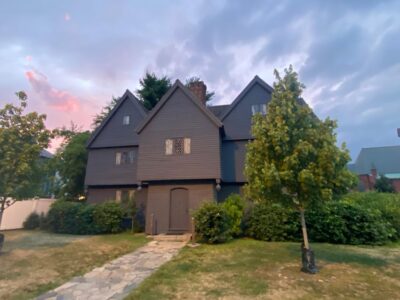
History and Hauntings of Salem Guided Walking Tour
Read our review →
Freedom Trail History Small Group Walking Tour
Read our review →
Historic Charleston Guided Sightseeing Walking Tour
Read our review →
Tapas Walking Tour with Food, Wine, and History
Read our review →
Savannah History and Haunts Candlelit Ghost Walking Tour
Read our review →
A History of Terror – Belfast City Centre Walking Tour
Read our review →Browse the lists this tour appears in