
Review · UNITED KINGDOM
Belfast: A History of Terror Walking Tour
Belfast’s streets carry memories. This 2.5-hour History of Terror walking tour uses the city centre to explain how centuries of division led to The Troubles, how ordinary people lived through the violence, and how peace has changed the city. I like its careful balance and the way local guides such as James, Mylie, Anne, Chris, and Steve connect major events with everyday life. I also like that the tour ends by looking at reconciliation and the work still unfinished. The main drawback is the subject itself: stories of bombings, deaths, fear, and loss can be upsetting, especially for younger visitors or anyone with a close connection to the conflict.
This is not a quick circuit of Belfast landmarks. It is a serious history lesson delivered while you walk about 1.5 miles through a flat city centre. The pace is manageable, the included headsets help you hear every word, and the guides use personal memories, survivor stories, and political context to make a complicated subject easier to follow. You need good English to get the full value, and you should arrive ready for rain.
Key points to know before booking
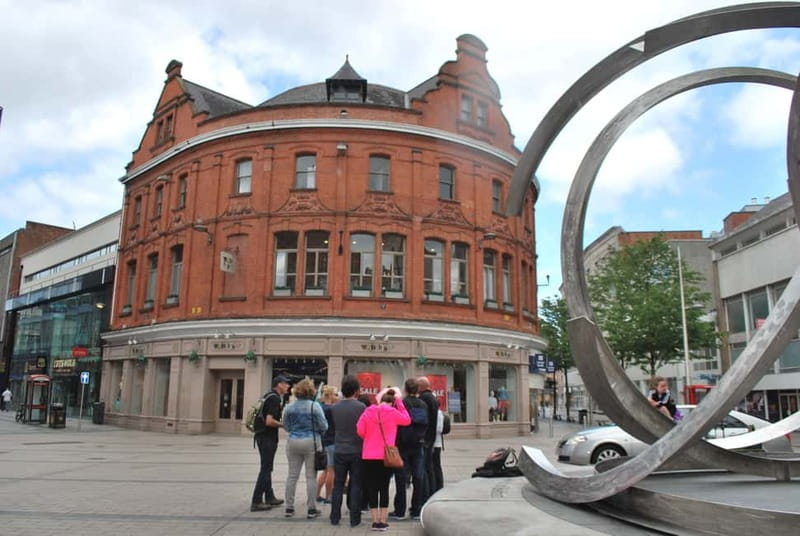
- Ten city-centre stops: Begin at Belfast City Hall, then visit locations linked to major attacks, security cordons, memorials, and reflection.
- Personal local storytelling: Several guides grew up in Belfast during The Troubles, adding lived experience without turning the tour into a political speech.
- Balanced treatment: The tour explains the roles of civilians, paramilitary groups, the British Army, and police rather than presenting only one side.
- A flat 1.5-mile route: There are no hills or steps, though comfortable shoes still matter after two and a half hours on your feet.
- The Forgotten Troubles Memorial: This stop turns attention toward people affected by the conflict and the issues Belfast still faces.
- Good value at $35: For a long, focused tour with an expert guide and audio equipment, the price is reasonable if modern Irish history interests you.
Starting at Belfast City Hall
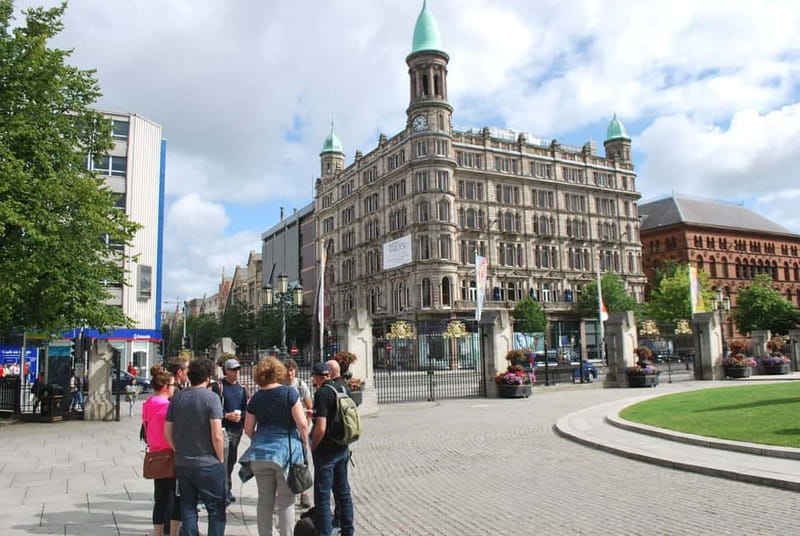
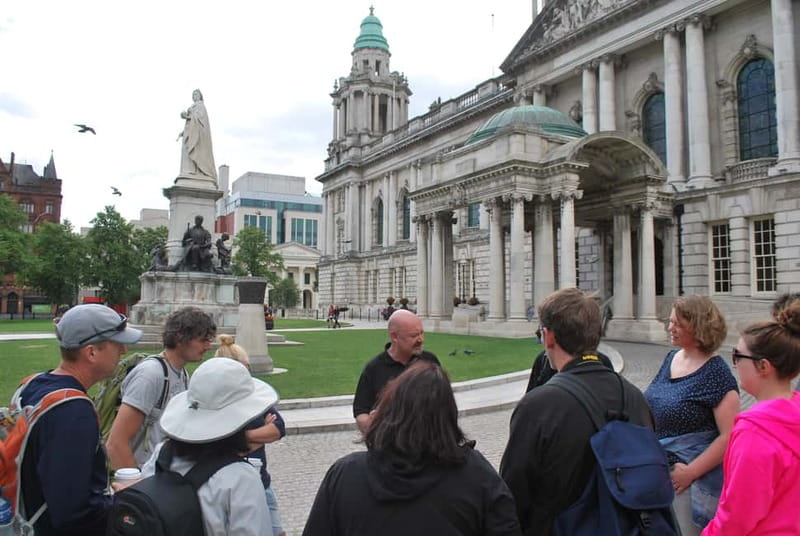
The tour begins at the front gates of Belfast City Hall on Donegall Square North. Look for a guide wearing a black jacket or T-shirt with the DC Tours logo on the left breast. Arriving 10 minutes early is wise, since the opening explanation gives you the framework for everything that follows.
City Hall is a useful starting point because it places Belfast’s modern conflict in a wider setting. Your guide explains how roughly 800 years of Irish and British political history shaped divisions that later hardened into the conflict known as The Troubles. You are not expected to arrive with a degree in Irish history. The aim is to give you enough background to understand why events in Belfast became so charged.
I particularly like this beginning because it avoids the common trap of treating The Troubles as a sudden outbreak of violence with no earlier causes. The guide sets up the political, religious, and social divisions first. That makes the later stops easier to understand, even if you know little about Northern Ireland.
The opening can also feel dense. You are dealing with centuries of history before reaching the late 1960s. Pay attention to the broad patterns rather than trying to remember every name and date. The guide’s job is to make the story coherent, not to turn you into an instant specialist.
More History Walking Tours in the UK
- A History of Terror – Belfast City Centre Walking Tour
★ 5.0 · 2,883 reviews - Edinburgh: Old Town History and Tales Walking Tour
★ 4.8 · 2,361 reviews - Old Town Walking Tour History and Tales in Edinburgh
★ 5.0 · 2,168 reviews
Seeing where Belfast’s city-centre attacks happened
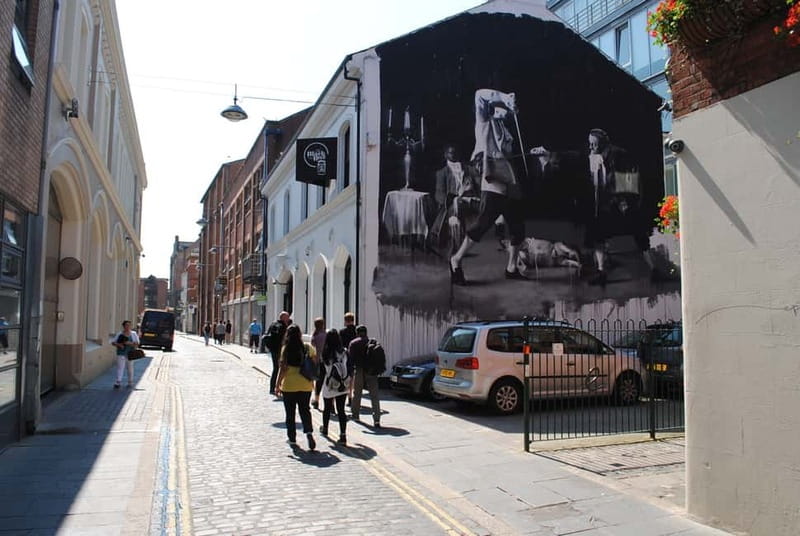
The route then moves through sites connected with major bombings and attacks. These locations are not presented as distant historical curiosities. They are ordinary parts of the city centre, which helps you grasp how violence interrupted work, shopping, travel, and daily routines.
At each location, your guide explains what happened, who was affected, and what the event meant for Belfast at the time. You may hear about civilians, businesses, public spaces, and the wider atmosphere of fear. The useful feature here is the connection between place and story. Instead of hearing a list of incidents in a lecture room, you stand where people experienced the consequences.
Guides James and Eugene have been praised for keeping the tour engaging even in heavy rain, while Jim has been noted for explaining both the historical events and the day-to-day experience of living through them. That distinction matters. Dates and political decisions tell only part of the story. The tour also asks what it felt like to move through Belfast when ordinary public spaces could become dangerous.
The subject matter is painful, and the tour does not pretend otherwise. Still, the presentation aims for care rather than shock. There is no suggestion that the tour relies on graphic displays or sensational staging. You get context, personal accounts, and time to think.
Understanding security cordons and everyday fear
One of the route’s most useful themes is the security cordon. The tour points out former locations where movement through central Belfast was controlled or restricted. These sites help explain how security measures changed the shape of city life.
A cordon can sound like a technical term in a history book. On foot, it becomes easier to imagine the inconvenience and tension involved. The tour connects security arrangements with the experience of civilians, businesses, commuters, and anyone trying to move around the city during the conflict.
This is also where the audio headsets earn their place. Belfast city centre has normal street noise, and a 2.5-hour walking tour can become tiring if you are constantly trying to stand close to the guide. The headsets let you hear clearly while looking at the site in front of you. John from the United States specifically valued them because of hearing difficulties, so they are useful well beyond crowded conditions.
The walk covers only about 1.5 miles and Belfast city centre is flat, with no hills or steps on the route. That makes it accessible for many people, including wheelchair users. You still need to be comfortable outside for a long period, and wet paving or poor weather can make the walk feel longer.
Hearing how ordinary Belfast people lived
The strongest part of this experience is its attention to civilian life. The tour explains how political violence affected homes, shops, public spaces, and routines. It also shows how fear and normality existed at the same time.
That balance gives the history a human scale. You learn about the conflict, but you also hear how people carried on with work, family life, and daily errands. Guides who grew up in Belfast during The Troubles, including Anne, Chris, Steve, and Jim, can add personal perspective to the broader account.
Personal experience can make a tour more moving, but it also requires careful handling. Here, the aim is not to claim that one person’s memories explain everything. The guides place their experiences within the wider political and social story, and the best feedback repeatedly highlights their impartial approach.
Mylie has been praised for explaining difficult material at both an intellectual and emotional level. Anne’s storytelling has also been described as particularly powerful because she was born and raised in Belfast and could connect the past with the city’s ongoing recovery. Those personal accounts may stay with you long after the walk ends.
You should not expect a cheerful sightseeing tour. There are moments when the stories may become emotional. At the same time, appropriate humour appears in the guiding style. James, Jim, and Chris have been praised for using humour carefully, giving the group a little breathing room without making light of the subject.
Same place, a different slice of the past:
- London Small Group Tour of Historical Pubs
★ 5.0 · 10,422 reviews - Edinburgh: Edinburgh Castle Guided History Tour with Tickets
★ 4.8 · 9,933 reviews - Edinburgh: Whisky Tasting with History and Storytelling
★ 4.9 · 2,451 reviews - Soho Music & Historic Pubs Tour
★ 5.0 · 1,993 reviews
Following the path from conflict to peace
The tour does not stop at the worst years of The Troubles. It explains the peace process and asks what peace looks like in a city still carrying the effects of conflict.
This forward-looking section is important. A tour focused only on bombings and armed groups could leave you with a frozen image of Belfast. Instead, the guide explains how the city has regenerated and how communities continue to deal with division, memory, and reconciliation.
You will hear about the roles played by paramilitary groups, the British Army, police, and civilians. The goal is not to tell you what political conclusion to reach. It is to give you enough information to understand the competing positions and the human cost attached to them.
That approach suits visitors who want context rather than a simple good-side and bad-side story. Ryan from the United States particularly valued being given background on the multiple sides of the conflict and space to form his own view. For me, that is a sign of a useful historical tour: it explains clearly without pretending the subject is simple.
Reflecting at the Forgotten Troubles Memorial
The Forgotten Troubles Memorial provides one of the route’s quieter moments. Here the focus shifts toward remembrance and the people whose lives were damaged or lost, along with the challenges that remain.
A memorial stop can feel less dramatic than a site linked to a major attack, but it may be more important. It asks you to think about how a city remembers conflict and whose experiences receive attention. The tour uses this point to connect past violence with present-day questions about healing and reconciliation.
Do not expect a neat ending. Belfast’s progress is real, but the legacy of The Troubles has not vanished. The memorial helps keep that fact in view while the rest of the tour offers a hopeful account of the city’s future.
The guides make the difference
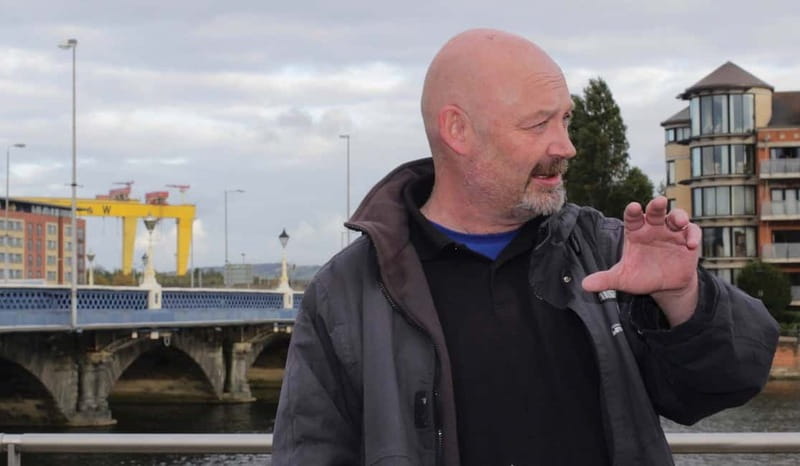
DC Tours is locally owned, and the guide quality is the main reason this experience receives such strong praise. Names that appear repeatedly in feedback include James, Mylie, Anne, Chris, Jim, Steve, Rory, Roisin, Paul, and Finn.
Their styles differ, but several qualities recur. The guides explain complex history in plain language, check that the group is following, and adjust the tone when the subject becomes especially difficult. James has been praised for giving a safety briefing, explaining the route at the start, checking in after each stop, and even offering rain capes during a wet walk.
That kind of care matters on a serious tour. You are not simply being moved from one point to another. The guide has to judge when to explain, when to pause, and when a little humour will help the group continue.
Group size can affect the experience. A small group allows more personal attention, and one guide was specifically praised for making the tour feel tailored to the people present. The available information does not promise a fixed group size, so you should not book expecting a private tour. Still, the use of headsets should help everyone follow clearly.
What the $35 price includes
At $35 per person, this is not the cheapest way to spend two and a half hours in Belfast. It is also more than a casual orientation walk. The value depends on how much you want to understand.
You are paying for a local guide, a structured route, carefully selected locations, personal interpretation, and audio headsets. The tour also does work you would struggle to reproduce by walking alone. You could visit Belfast’s streets without paying anything, but you would miss much of the connection between the places and the events.
I consider the price fair for visitors who want a serious introduction to The Troubles. It is especially useful early in your Belfast stay, since it can give meaning to later visits around the city. It may be less worthwhile if you want only architecture, shopping, or light sightseeing.
The free cancellation option up to 24 hours before the tour and the reserve-now, pay-later choice add flexibility. They are practical benefits, though the real value remains the quality of the interpretation.
Weather, clothing, and accessibility
The tour runs in all weather. Belfast rain is not a minor possibility, so bring a waterproof jacket and dress warmly in winter. Comfortable shoes are essential, even though the route is short and flat.
Wheelchair access is available, and there are no hills or steps on the stated route. If you have mobility concerns, the flat city-centre setting should help, but you will still spend 2.5 hours outdoors.
The tour is offered in English only. You need a good standard of English to follow the historical detail, political terms, and personal stories. Children under 12 are not suitable for this experience, and I agree with that limit given the subject matter.
Who should book this Belfast tour?
I would choose this tour if you want to understand Belfast beyond the usual headlines. It suits adults and teenagers over 12 who enjoy modern history, political context, and personal storytelling.
It is also a strong choice if you know very little about The Troubles. The guides start with the long background and then move through the conflict, its human effects, the peace process, and the city’s present direction.
You may want to skip it if you are looking for a relaxed sightseeing walk with little discussion of violence. The stories can be upsetting, and the English-language presentation demands attention. This is an educational tour first, with sightseeing woven into it.
Should you book Belfast: A History of Terror?
Yes, if modern Irish history matters to you. At $35, the tour offers a clear route through Belfast’s city centre, local guides with personal insight, audio headsets, and a thoughtful explanation of how conflict shaped ordinary life.
Book it early in your visit if possible. You will understand Belfast’s public spaces, memorials, and continuing divisions more clearly afterward. Bring waterproof clothing, allow the full 2.5 hours, and arrive ready for a serious subject handled with care.
Skip it only if you want a light city walk or feel uncomfortable hearing about political violence. For everyone else, this is a strong, fair-minded introduction to Belfast’s past and its unfinished journey toward peace.
FAQ
How long is the Belfast History of Terror walking tour?
The tour lasts 2.5 hours.
How far does the walking route cover?
The route is approximately 1.5 miles through Belfast city centre.
Where does the tour begin?
It begins at the front gates of Belfast City Hall on Donegall Square North, Belfast.
How can I identify the guide?
The guide wears a black jacket or T-shirt with the DC Tours logo on the left breast.
Is the route wheelchair accessible?
Yes. The tour is wheelchair accessible, and the city-centre route is flat with no hills or steps.
What language is the tour conducted in?
The tour is conducted in English only. A good standard of English is needed to follow the information fully.
Is the tour suitable for children?
Children under 12 are not suitable for this tour.
What should I bring?
Bring comfortable shoes and weather-appropriate clothing. A waterproof jacket is recommended, and warm clothing is strongly advised during winter.
Just added around the UK
- Curious Cambridge – The History Tour that’s FUN!!!★ 5.0 · 80 reviews
- Birmingham Gangs Nighttime Historical Walking Tour with Pub Stops★ 5.0 · 53 reviews
- 2.5-Hours Walking Tour of Birmingham into Black Heritage Madiba★ 5.0 · 49 reviews
- Award Winning Private 2 Hour Belfast Political Black Taxi Tour★ 5.0 · 53 reviews
- Belfast Walking Tour: City Centre History, Troubles & Stories★ 5.0 · 39 reviews
- Belfast Political/history/troubles private taxi/cab tour★ 5.0 · 69 reviews
- Private Political History & Murals Tour Belfast★ 5.0 · 182 reviews
- Ancient Britain Tour – Private Day Trip from Bath★ 5.0 · 17 reviews
History Walking Tours, compared.
History and Hauntings of Salem Guided Walking Tour
Read our review →
Freedom Trail History Small Group Walking Tour
Read our review →
Historic Charleston Guided Sightseeing Walking Tour
Read our review →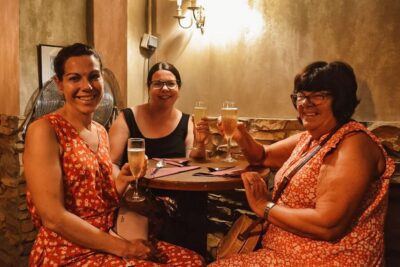
Tapas Walking Tour with Food, Wine, and History
Read our review →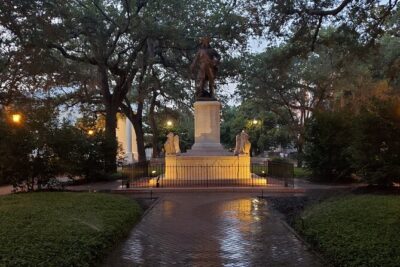
Savannah History and Haunts Candlelit Ghost Walking Tour
Read our review →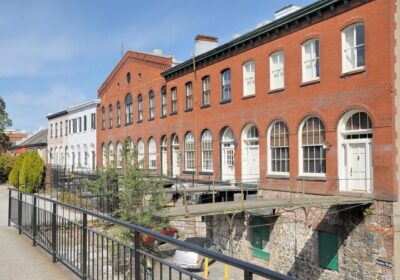
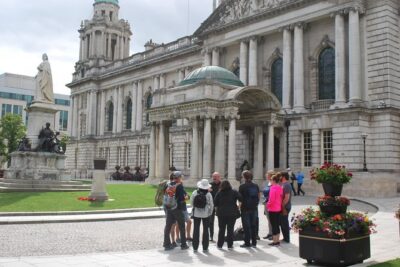
A History of Terror – Belfast City Centre Walking Tour
Read our review →Browse the lists this tour appears in