
Review · NUR-SULTAN
Astana: KarLag and Karaganda – Private USSR history tour
History gets real here. This private day trip from Astana takes you to Karaganda’s coal-mining landmarks and the KarLag Museum, where Soviet repression is explained through documents, objects, and personal stories. I like the private format, which keeps the day flexible for your group, and I like the careful mix of city sights with the much more powerful museum visit. The tour also includes time for lunch, a welcome break during a long day.
The main drawback is the distance. Karaganda sits about two and a half hours from Astana, and the full outing lasts roughly 10 to 11 hours, with travel time included. The city stops are fairly short, while KarLag deserves a full two hours, so you should book this for serious history and not for a relaxed day of sightseeing.
Key points before you book
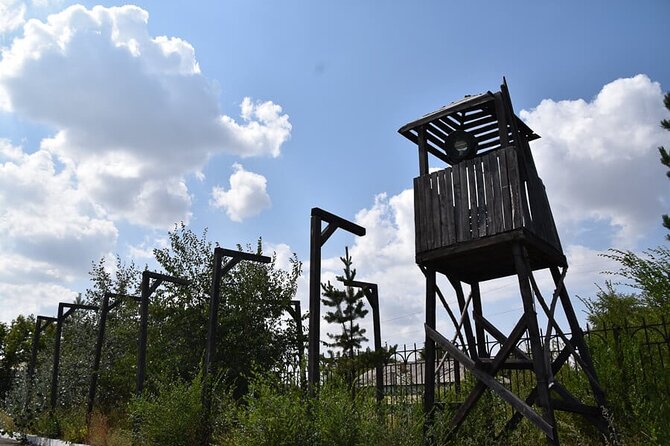
- KarLag is the heart of the day: The museum in Dolinka offers a detailed look at Stalin-era labor camps and political repression.
- Expect a long road day: Karaganda is about two and a half hours from Astana, each way depending on conditions.
- The city portion is focused: You visit theaters, mining monuments, and a humorous phrase monument, mostly for context and photos.
- This is a private experience: Only your group takes part, making it easier to ask questions and set the pace.
- Lunch breaks up the history: A Russian restaurant lunch is part of the day, though the supplied details do not specify whether it is included in the price.
- The price is $199 per person: That is easiest to justify if you value private transport, a full-day schedule, and a substantial museum visit.
Why Karaganda makes a worthwhile day trip from Astana
Astana is known for its modern architecture and grand new city image. Karaganda offers a different Kazakhstan, one shaped by coal, forced labor, Soviet industry, and the movement of people across the USSR.
The journey takes you roughly 200 kilometers from the capital region toward Karaganda. That travel time is not a minor detail. You will spend a large part of the day on the road, but the distance helps explain why this works better as a private full-day excursion than as a quick side trip.
Karaganda’s identity grew around coal mining and heavy industry. The tour introduces that story through public monuments and cultural buildings before taking you to KarLag, the former labor camp area outside the city.
I like this structure. You first see how Karaganda presented its Soviet industrial identity, then you reach the place where the human cost of that system is discussed more directly. The contrast gives the day more weight than a simple collection of monuments.
Because the experience is private, you are not tied to a large group. You can ask for more explanation at a place that interests you, though the listed timing suggests that the city portion remains brisk. The private format is especially useful if your group includes children, older family members, or people with different levels of interest in Soviet history.
More Cold War and Communism Tours in the world:
- Prague: Communism History and Nuclear Bunker Guided Tour
★ 4.7 · 2,417 reviews - Prague Communism History and Nuclear Bunker Tour
★ 5.0 · 1,742 reviews - Bucharest: Communism and History Guided City Walking Tour
★ 4.9 · 918 reviews
Shalkyma Concert Hall and the first look at Karaganda
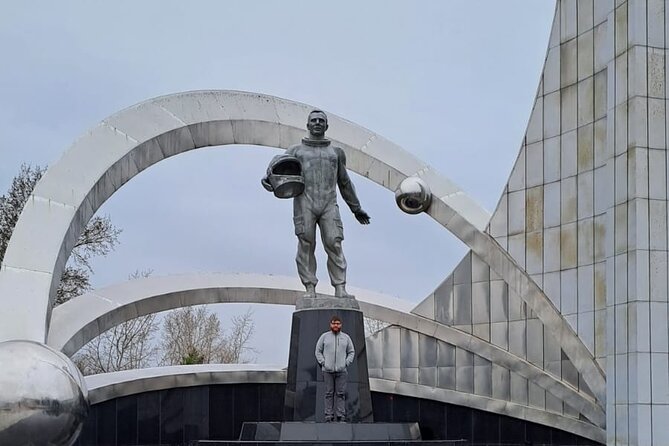
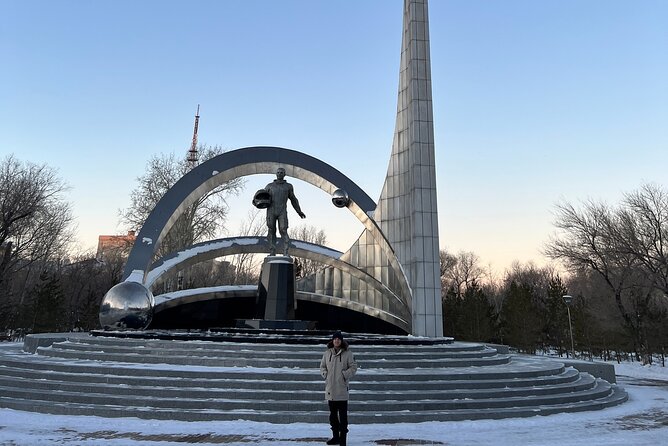
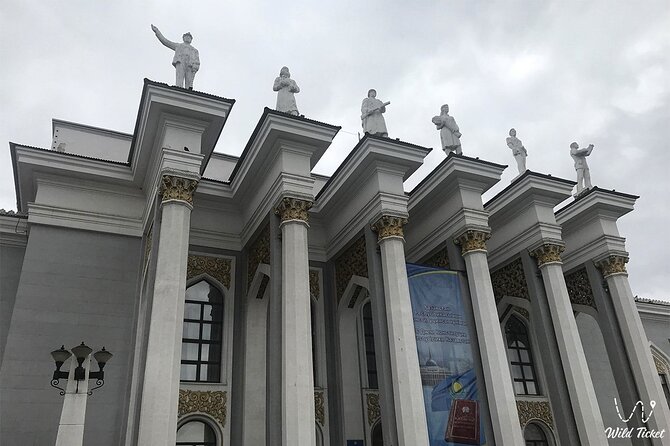
The first stop is Shalkyma Concert Hall, with about 20 minutes set aside. The hall is also near a monument to Yuri Gagarin, the Soviet cosmonaut, and an alley with a monument to Abay Kunanbayev, one of Kazakhstan’s best-known poets.
This is a compact introduction to the city. In a short visit, you can take photographs and begin to see the mix of Soviet public culture and Kazakh national identity. Gagarin represents the Soviet space age, while Abay connects the setting to Kazakhstan’s own literary and cultural tradition.
The stop has no admission charge. That keeps the schedule simple, but 20 minutes is not enough for a full look at the surrounding area. I would treat it as an orientation stop rather than a major attraction.
If you want photographs, have your camera ready before you arrive. The tour moves through several brief city stops, and you will get more from them if you know in advance that they are designed to show key symbols rather than provide long visits inside buildings.
K. Stanislavskiy Drama Theatre and Soviet cultural life
The K. Stanislavskiy Drama Theatre receives about 10 minutes. It opened in 1930 and is described as one of the first Russian drama theaters in Kazakhstan.
The building gives you another angle on Karaganda’s Soviet past. Mining was central to the city, but theaters, concert halls, and cultural institutions also helped create a permanent urban life for workers and their families.
Ten minutes is a quick photo stop. You should not expect a performance or an extended interior visit based on the supplied schedule. Still, it helps explain why the city was more than an industrial outpost. Karaganda had the institutions of a serious regional center.
I appreciate that the tour includes this building instead of focusing only on monuments. Public culture matters when you are trying to understand how Soviet cities were organized. The theater also helps break up the sequence of memorials and mining references.
Glory to the Miners and the city’s coal identity
The Monument Mining Glory is given about 30 minutes. It sits opposite the Miners’ Palace of Culture, creating a clear visual link between the work of mining and the public life built around it.
This is one of the most useful city stops for understanding Karaganda. Coal was not just an economic activity here. It shaped the city’s image, its workforce, and the pride attached to industrial labor.
The 30-minute stop gives you more time than the theater visit. You can look at the monument, photograph the surrounding buildings, and listen as your guide explains the role of mining in local history.
The site also prepares you for KarLag. The tour does not present Karaganda as a simple industrial success story. It places the city’s development beside the forced labor system that affected the wider region. That transition is important, and it prevents the monuments from feeling like isolated Soviet decorations.
More Private History Tours in the world:
- Private Historical Walking Tour of York
★ 5.0 · 1,324 reviews - Private Guided Historic Electric Cart Tour of St. Augustine
★ 5.0 · 1,194 reviews - Istanbul: Acemoglu Historical Turkish Bath w/Private Options
★ 4.6 · 1,190 reviews - From Cairo: Private Full-Day Tour of Historical Alexandria
★ 4.1 · 1,155 reviews
Gde-gde? V Karagande! and the humor of a dark past
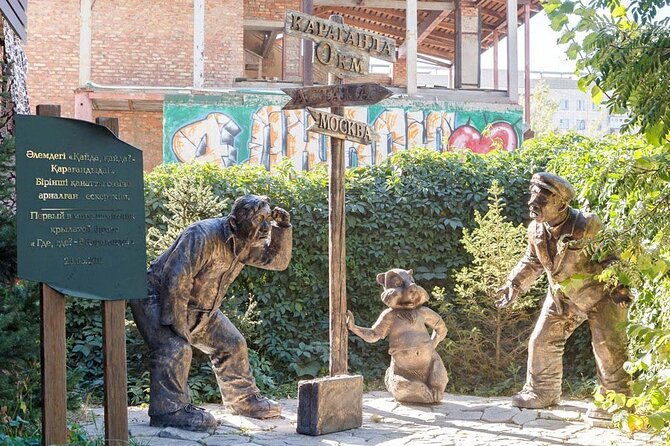
The monument connected with Gde-gde? V Karagande! receives the longest city stop, about one hour. The Russian phrase means Where? Where? In Karaganda!
In everyday use, the expression became a humorous answer suggesting that a faraway or unpleasant place was somewhere in Karaganda. Its origin is linked to the infamous KarLag labor camp, but the phrase later took on a lighter, more popular meaning.
This is an unusual stop because it shows how history can move into ordinary speech. A place associated with suffering became part of a joke. That does not erase the past, but it shows how people use humor to handle difficult subjects.
The one-hour allocation gives you time to explore the setting instead of rushing in for a single photograph. It is also a good point to ask your guide about the phrase, its connection to KarLag, and how Karaganda is viewed within Russian-speaking culture.
I would not expect this monument to carry the emotional force of the museum. Its value is context. It helps you understand the city’s reputation before you visit the place that gave the phrase its darker association.
KarLag Museum in Dolinka: the most important two hours
The KarLag Museum, officially connected with the memory of victims of political repression in the Dolinka settlement, is about 35 kilometers outside Karaganda. The drive from the city takes roughly 30 minutes, according to the tour information.
This is the serious center of the experience. The museum examines Stalin’s labor camp system and the people caught in it. You can expect a detailed presentation of political repression, camp life, and the role of forced labor in the Soviet system.
Two hours is a sensible amount of time. A shorter visit would risk turning a complicated subject into a quick collection of grim photographs. The longer stop gives you room to read, look at displays, and discuss what you are seeing with your guide.
The museum is not presented as a light attraction, and you should come prepared for a somber visit. The material deals with imprisonment, suffering, and the loss of freedom. Families with older children may find it valuable, but parents should decide whether the subject suits their children.
This is also where a private guide can make a real difference. The supplied feedback specifically praises Amir for planning and historical knowledge. If Amir is assigned to your group, his role may help you connect the museum displays with Karaganda’s wider story. Guide assignments can change, so treat his name as useful information rather than a guarantee.
The museum admission is included. The other listed city stops are free, so the paid attraction is concentrated here. That makes sense: the museum requires staff, displays, and a sustained historical visit, while the city monuments are seen from public areas.
Lunch and the rhythm of a 10 to 11 hour day
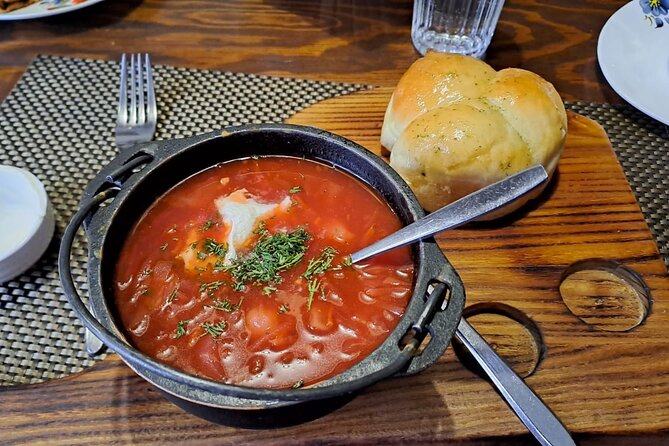
A lunch stop is included in the day’s plan, and the available feedback describes a delicious meal at a Russian restaurant. The supplied information does not state whether lunch is included in the $199 price, so check the exact booking terms before you go.
Lunch matters because this is a demanding schedule. You have a long journey from Astana, several stops in Karaganda, a museum visit, and the return trip. A proper meal gives you a chance to rest and talk through what you have seen.
The day is likely to feel full rather than leisurely. City stops range from 10 minutes to one hour, and KarLag takes two hours. You will not have unlimited time to wander through Karaganda on your own.
That trade-off is clear. The tour gives you a strong overview of the city and a serious museum visit in one day, but it does not offer the relaxed pace of an overnight stay. I would choose it if your priority is Soviet history and regional context, not cafés, shopping, or independent exploration.
Is $199 per person good value?
The price is $199 per person. At first glance, that may seem high for a day trip, especially when several city stops have no admission fee. The value depends on what you are paying for beyond entry tickets.
You are buying a private experience, pickup is offered, and the outing covers a full 10 to 11 hours. The route includes the long journey from Astana to Karaganda, the trip to Dolinka, the museum visit, a guide, and the return journey.
For a solo visitor, the price may feel harder to justify. For a couple, family, or small group, the private format can make more sense, especially if group discounts apply to your booking.
The strongest value comes from the combination of logistics and interpretation. Reaching Karaganda and Dolinka independently would require arranging the long-distance journey, local transport, timing, and museum visit yourself. Here, the day is built around the history rather than left for you to assemble.
Still, do not book this expecting a low-cost sightseeing loop. The monuments are free, the city stops are short, and the main reward is the KarLag Museum plus the convenience of a dedicated guide and itinerary.
Who will enjoy this tour most?
I would recommend this experience to you if you have a serious interest in Soviet history, political repression, industrial cities, or Kazakhstan’s 20th-century past.
It also suits people who want a private day outside Astana without arranging every part of the route themselves. Families can take part, and one detailed account says children enjoyed the day, but the KarLag Museum covers painful subjects. Parents should prepare younger visitors and decide if the material is appropriate.
This is less suitable if you want a slow day, dramatic scenery, or a broad cultural tour of modern Kazakhstan. The focus is historical, and the long road time is part of the bargain.
You should also be comfortable with a schedule that has several short stops. The city attractions are useful, but the museum receives the most attention and carries the greatest emotional weight.
Practical details before you reserve
Pickup is offered, confirmation is provided at booking, and the activity is private, with only your group taking part. A mobile ticket is available, which is useful when you are moving through a long day with several stops.
Most people can participate, but the tour requires good weather. If poor weather causes cancellation, you can receive a different date or a full refund.
For other cancellations, you can cancel at least 24 hours before the start time for a full refund. Changes or cancellations made less than 24 hours before departure are not accepted for a refund, and local time controls the cut-off.
Wear comfortable clothing for the long day and keep your schedule clear. The supplied information does not specify exact pickup hours, vehicle details, meal inclusion, or group discount terms, so confirm those points before payment.
Should you book the KarLag and Karaganda tour?
I would book this tour if you want the KarLag Museum to be the main reason for leaving Astana. The museum visit is long enough to matter, and the surrounding Karaganda stops give you useful context about coal mining, Soviet culture, and the city’s public identity.
I would skip it if you dislike long road journeys or prefer unstructured time. The day is full, the city visits are brief, and the subject at KarLag is difficult.
For history-minded visitors, though, this is a strong use of one long day. The private format, the detailed museum stop, the lunch break, and the clear link between Karaganda’s industrial identity and Soviet repression give the trip substance. Just book with realistic expectations: you are choosing a serious historical excursion, not a casual city outing.
FAQ
How long does the Astana to Karaganda and KarLag tour last?
The experience lasts approximately 10 to 11 hours, including travel time.
Is pickup available?
Yes. Pickup is offered, although the supplied information does not give exact pickup locations or times.
Is this a private tour?
Yes. Only your group participates in the activity.
How far is Karaganda from Astana?
Karaganda is located about two and a half hours from Astana.
Is admission to the KarLag Museum included?
Yes. Admission to the KarLag Museum is included. The listed city monuments and exterior stops have no admission charge.
Can I cancel for a full refund?
Yes, if you cancel at least 24 hours before the experience start time. Cancellations made less than 24 hours before the start time are not refunded.
Just added around the world
- Historical Tour and Seafood Experience★ 4.5 · 27 reviews
- Culture, History and Food in Oaxaca City★ 5.0 · 43 reviews
- Bicycle Tour through Oaxaca learning about its Urban Art and History★ 5.0 · 78 reviews
- Oaxaca city bike ride – History & traditions★ 5.0 · 25 reviews
- Cruise Wells Next The Sea on Historic RNLI and Dunkirk Veteran Lifeboat★ 5.0 · 199 reviews
- Historical Honolulu Bike Tour★ 5.0 · 76 reviews
- Historic Walking Tour of Colchester★ 5.0 · 35 reviews
- Heritage private Tour by classic carts★ 5.0 · 43 reviews
Cold War & Communism Tours, compared.
Communism History and Nuclear Bunker Guided Tour
Read our review →
Prague Communism History and Nuclear Bunker Tour
Read our review →
Cold War & Berlin Wall History Guided Bike Tour
Read our review →
Chisinau: Discover Soviet Heritage of Transnistria
Read our review →
Between Capitalism & Communism: Hong Kong History Tip Based Tour
Read our review →
Communist History Tour with House of Terror Option
Read our review →
Guided Bike tour of the Berlin Wall and Third Reich
Read our review →Browse the lists this tour appears in