
Review · WASHINGTON DC
African American History Tour with Museum of African American History Ticket
History feels different when you see where it happened. This half-day Washington DC tour links the Capitol, White House, memorials, historic neighborhoods, and important African American institutions in one compact route. I especially like the personal storytelling and the included ticket to the National Museum of African American History and Culture. The main drawback is that several stops are brief, and the historic house visits depend on the day of the week.
The tour costs $90 per person, lasts about three and a half hours, and uses an air-conditioned vehicle for much of the route. I also like that it reaches places many standard city tours skip, including LeDroit Park, Dunbar High School, the Howard Theatre, and the African American Civil War Memorial.
This is a strong choice if you want context before entering the museum. Just read the schedule carefully: the Frederick Douglass house is visited on Tuesdays, Wednesdays, and Saturdays, while the Mary McLeod Bethune Council House is visited on Thursdays and Fridays when time allows. Both houses are closed Sundays and Mondays.
Key points to know before booking
- The tour begins at 9:30 a.m. at US Navy Memorial Plaza, at 701 Pennsylvania Avenue NW.
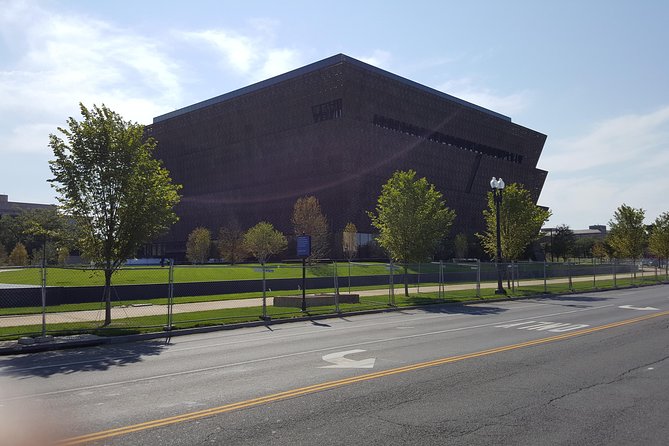
- The National Museum of African American History and Culture ticket is included, with the tour ending at the museum.
- Frederick Douglass National Historic Site visits vary by day, so check which house experience applies to your date.
- Guide Kenny receives especially strong praise for his stories, humor, and command of Washington’s African American past.
- The group can include up to 21 people, giving you more personal attention than a large sightseeing bus.
- You will see many sites from outside or during short stops, so this is an overview tour rather than a long museum-and-monument walk.
Why this tour works as a first look at Black Washington
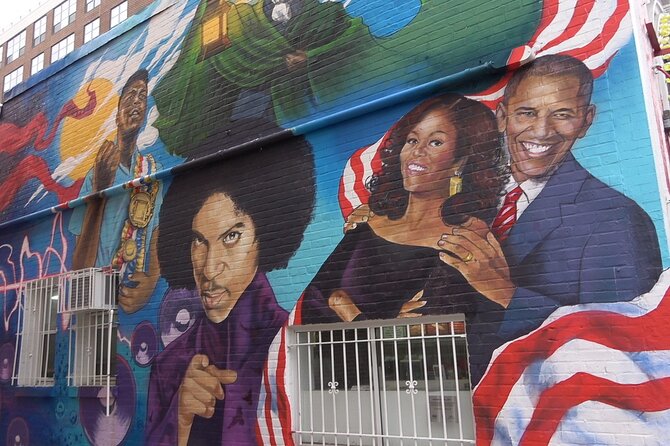
Washington DC can feel like a city of grand white buildings and official speeches. That picture is incomplete. African Americans built much of the capital, worked in its institutions, challenged its laws, created its music, and shaped its neighborhoods. This tour makes those connections visible.
The route also helps you understand the city geographically. You begin near the Capitol and White House, move through the National Mall, head toward historic African American neighborhoods, and finish at the national museum. You are not simply checking off monuments. You are following a story from enslavement and segregation through military service, education, civil rights, politics, and culture.
Guide Kenny is a major part of the experience. His style is conversational, humorous, and personal. He does not rely only on dates and names. He uses stories to connect people and places, which helps the information stick. Several parts of the tour are best understood through that spoken context, especially the short drive-by stops where you may not get out.
The pace is useful for a first visit. You see a lot without spending an entire day on foot. At the same time, you should not expect a detailed architectural tour of every site. Most stops last between 10 and 30 minutes.
More Museum and Gallery History Tours in the USA
- Guided African American History Tour with Reserved Museum Entry
★ 4.5 · 1,180 reviews - Chicago: Field Museum of Natural History Ticket or VIP Tour
★ 4.7 · 717 reviews - Field Museum of Natural History Admission Tickets
★ 4.5 · 489 reviews
The Capitol, White House, and the foundations of power
The first major stop is the U.S. Capitol, where you have about 20 minutes. You can stand near the area associated with President Barack Obama’s inauguration and hear about the enslaved workers who helped build the Capitol and White House.
The guide also discusses the Supreme Court’s early location in the Capitol and decisions that shaped the lives of people of color for generations. That context is valuable because the Capitol is often presented as a symbol of democracy without enough attention to who was denied a voice within it.
You do not enter the Capitol as part of this experience, and admission is not required for the outdoor stop. The short visit works best for photographs and orientation. If you want an interior tour, you will need to arrange that separately.
At the White House, the stop lasts about 15 minutes. You see the exterior and hear about African Americans connected to the building, from enslaved laborers involved in its construction to Obama’s presidency. Again, this is a photo and storytelling stop, not an interior visit.
The short timing is a limitation, but it keeps the tour moving. You get the essential setting without using half your morning at two familiar landmarks.
Constitution Hall and Marian Anderson’s turning point
The route includes Constitution Hall, connected to one of the most important music and civil rights episodes in Washington.
Marian Anderson, a celebrated African American contralto, had been scheduled to perform at Constitution Hall on April 9, 1939. The Daughters of the American Revolution, which owned the hall at the time, refused to let her sing there because of her race.
With support from First Lady Eleanor Roosevelt, Anderson instead performed on the steps of the Lincoln Memorial before about 75,000 people. The concert became a major moment in the national fight against racial discrimination.
You may not spend much time at Constitution Hall itself, but the stop gives the later Lincoln Memorial visit greater meaning. It shows how a denied performance became a public challenge to segregation. In Washington, the location of an event often matters as much as the event itself.
The Lincoln Memorial and Martin Luther King Jr. Memorial
The Lincoln Memorial receives about 30 minutes, making it one of the longer outdoor stops. The guide discusses Abraham Lincoln, the African American role in the memorial’s history, Marian Anderson’s concert, the March on Washington, and Robert Moton’s dedication speech at the memorial’s opening.
This is one of the strongest sections of the route because the memorial is not treated as a single-purpose monument. You learn how African Americans used the space for public expression and political pressure. The setting makes the connection between the Civil War, emancipation, and the civil rights movement easy to grasp.
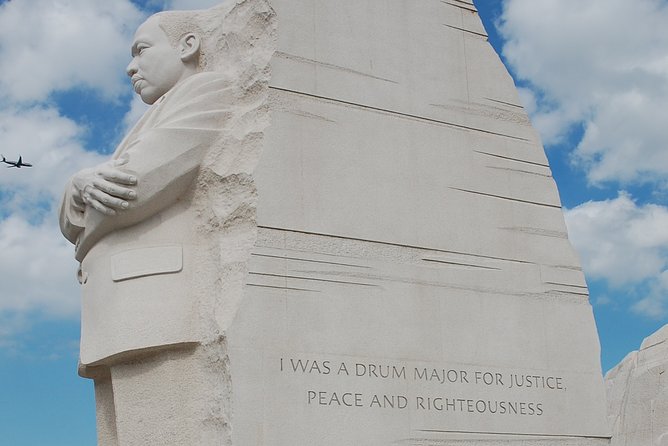
The Martin Luther King Jr. Memorial follows with about 15 minutes. You will see the inscription wall, the 14 quotations and statements, the Mountain of Despair, and the Stone of Hope. The guide also explains choices made during the memorial’s design and construction.
The King Memorial can be powerful even on a short visit. Give yourself time to read the inscriptions rather than only taking a photograph. The tour offers useful interpretation, but the stop is still fairly quick.
Same place, a different slice of the past:
- History and Hauntings of Salem Guided Walking Tour
★ 5.0 · 14,564 reviews - Charleston’s Old South Carriage Historic Horse & Carriage Tour
★ 5.0 · 10,023 reviews - Beneath The Streets Underground History Tour
★ 4.5 · 8,006 reviews - Boston: Freedom Trail History Small Group Walking Tour
★ 5.0 · 6,450 reviews
The Frederick Douglass house and changing house visits
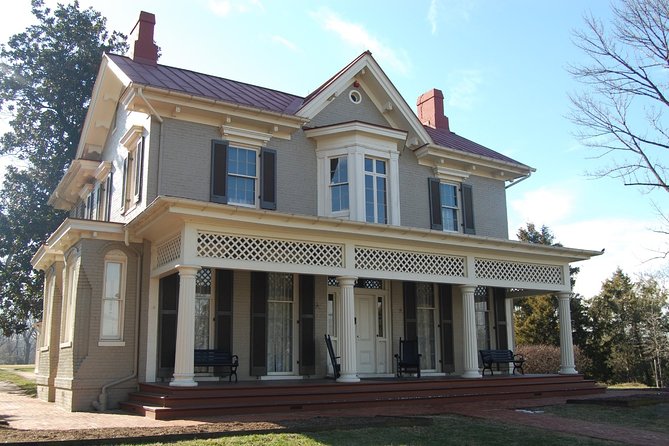
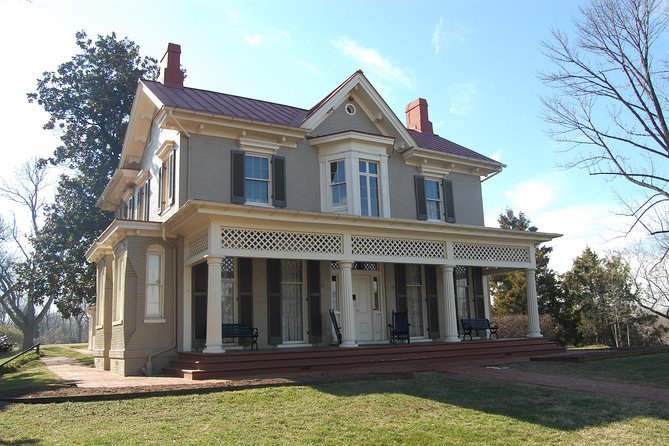
The Frederick Douglass National Historic Site can be the most memorable stop for many people. On Tuesdays, Wednesdays, and Saturdays, the tour includes a walking visit inside Douglass’s home. The house sits above the city and requires steps, so be prepared for some physical effort.
Inside, you gain a more personal sense of Douglass as a writer, speaker, reformer, and public figure. The house adds a human scale to the larger story. Instead of only hearing about his ideas, you see the setting connected to his later life.
On other days, the vehicle passes the home and the guide explains its significance. That is still worthwhile, but it is not the same as going inside. This difference matters because the tour price does not change with the schedule.
Thursday and Friday visits may include the Mary McLeod Bethune Council House instead. Bethune bought the house in 1943, and its French Second Empire design is part of the story. When open and time permits, the tour can include the interior.
Bethune’s work as an educator and civil rights leader gives this stop a different focus from Douglass’s home. She founded the National Council of Negro Women in 1935, an organization dedicated to the rights and welfare of African American women and their families. The council’s headquarters at 633 Pennsylvania Avenue NW is also part of the route. The building has served as the organization’s headquarters since 1953 and is a National Historic Landmark.
Because the house schedule can affect the experience, confirm the details before booking. Sunday and Monday are the least appealing days for anyone hoping to enter one of these historic homes, since both are closed then.
LeDroit Park and Washington’s Black Broadway
LeDroit Park gives the tour a welcome change of scale. Instead of national monuments, you see a residential neighborhood tied to education, politics, music, and social change.
The neighborhood was first developed for white professors at Howard University. Homes were later sold to both Black and white buyers, making LeDroit Park one of Washington’s early integrated neighborhoods.
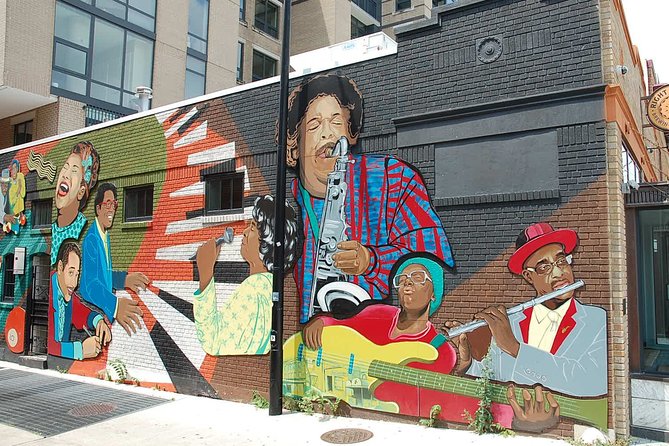
The area became home to figures such as Mary Church Terrell, the first president of the National Association of Colored Women, and Duke Ellington. In the early 20th century, it was known as Black Broadway because of its theaters, music venues, nightclubs, and entertainment life.
Much of this section is seen from the vehicle, so do not expect a long neighborhood walk. Still, it is an important part of the tour. Washington’s African American story was not confined to the National Mall. It unfolded in ordinary streets, homes, schools, theaters, and businesses.
The African American Civil War Memorial and Dunbar High School
At the African American Civil War Memorial, you learn about the approximately 209,000 African American soldiers and sailors who served during the Civil War. The memorial was dedicated in 1998 and includes plaques listing the names of United States Colored Troops from 166 regiments.
The Spirit of Freedom statue, created by sculptor Ed Hamilton, gives the memorial a strong visual focus. The stop is scheduled for about 10 minutes, so you may have time to read only some of the names. If this subject matters greatly to you, consider returning later for a longer visit.
The tour also passes Dunbar High School, founded in 1870 as the first public high school for African Americans in the United States. Its alumni and connections include educator Mary McLeod Bethune and poet Paul Laurence Dunbar.
Dunbar represents the importance of education in Washington’s African American community. It is easy to admire the capital’s monuments while overlooking schools that created generations of teachers, writers, lawyers, and public leaders. This stop corrects that imbalance.
Howard University, the Howard Theatre, and Carter G. Woodson
Howard University is viewed from the vehicle. Founded in 1867, it now includes 13 schools and has educated figures such as Supreme Court Justice Thurgood Marshall, Congressman Elijah Cummings, actor Taraji P. Henson, and author Toni Morrison.
Because you do not tour the campus, this is another short orientation stop. Its value comes from placing Howard within the broader story of Black education and leadership in Washington.
The Howard Theatre adds the cultural side of the route. Opened in 1910, it was among the first theaters in the United States designed and operated by African Americans. During segregation, it welcomed major Black performers and audiences.
The theater hosted Duke Ellington, Billie Holiday, Ella Fitzgerald, and Marvin Gaye. It was also linked to the Chitlin Circuit, the network of venues that supported African American performers when many mainstream theaters excluded them.
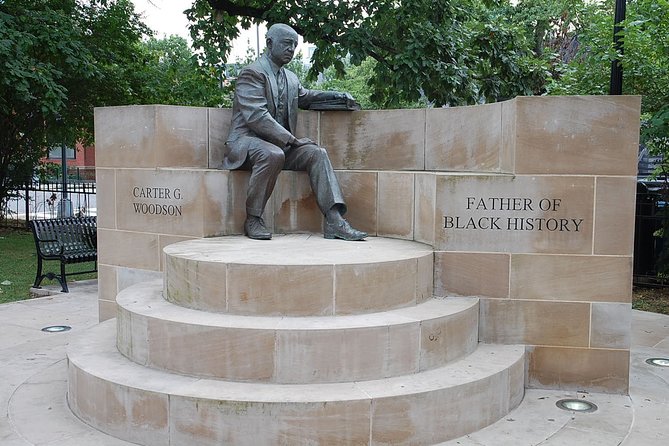
The tour passes the Carter G. Woodson House as well. Woodson is remembered as the Father of Black History and is credited with creating Black History Month. These drive-by stops are quick, but together they show how Washington’s influence came through universities, schools, scholarship, and music as much as through government buildings.
Ending at the National Museum of African American History and Culture
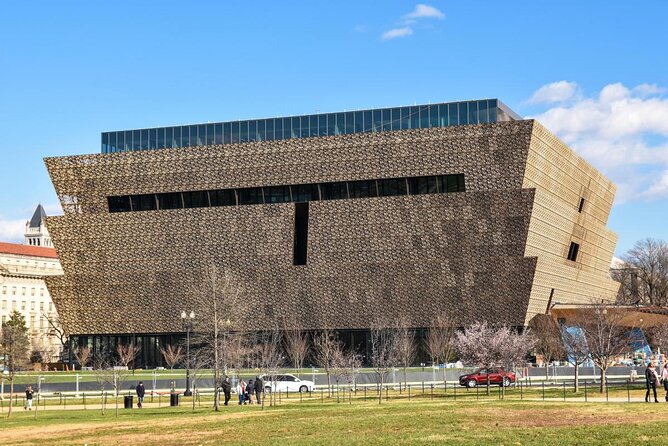
The tour ends at the National Museum of African American History and Culture, where you receive same-day admission. The listed museum portion is about one hour, but you may stay until the museum closes at 5:30 p.m.
That flexibility is one of the best values in the package. The guided route gives you a framework, then the museum lets you spend more time with the subjects that interest you most. One hour is enough for a first look, but not enough for the whole museum.
Start at the lower floors if you can. The museum’s chronological presentation is easier to follow from the bottom upward, beginning with slavery and continuing through emancipation, segregation, civil rights, and modern life. The guide specifically encourages beginning there because the stories make more sense in sequence.
The museum has so much to read, hear, and see that you should not treat the one-hour estimate as a limit. Since the tour ends when you arrive, you are free to continue independently until closing. Plan your day around that option.
One practical point: you must take the guided tour to receive the museum ticket. You cannot simply use the tour as transportation to the museum.
Is $90 a fair price?
At $90, this is not the cheapest way to see Washington. You could walk around the National Mall for free, and several memorials on the route have no admission charge.
The value comes from the interpretation, transportation, and museum entry. You receive roughly three and a half hours of guided context, bottled water, an air-conditioned vehicle, and access to a museum that can be difficult to plan around. The tour also reaches neighborhoods and institutions that are not usually included in a basic monument loop.
A maximum group size of 21 is not truly intimate, but it is more manageable than a large coach tour. The vehicle matters on hot, rainy, or cold days, especially because the route covers several parts of the city.
I consider the price reasonable for a first-time visitor who wants a guided introduction and museum access. It is less attractive if you already know Washington well or prefer to spend long periods inside each historic site.
Timing, walking, and who should book
The tour begins at 9:30 a.m. at US Navy Memorial Plaza and ends at 1400 Constitution Avenue NW, at the African American History and Culture Museum. The ticket is mobile, the tour is offered in English, and service animals are allowed.
You should expect some walking and steps, especially at the Frederick Douglass house. Comfortable shoes are a smart choice. Most people can participate, but the route includes outdoor stops and changing weather conditions.
I would recommend this experience to:
- First-time visitors to Washington DC
- Families with older children and teenagers
- Anyone seeking Black history beyond the major monuments
- People who want transportation between distant neighborhoods
- Museum fans who want background before visiting the national museum
It may not suit you if you want a slow walking tour, a full interior visit at every site, or a tour focused only on the National Mall.
The tour requires good weather and a minimum number of participants. Cancellation is free up to 24 hours before the start time. Cancellations within 24 hours are not refunded, and changes during that period are not accepted.
Should you book this Washington DC history tour?
Book it if you want a clear, personal introduction to African American Washington and prefer stories over a simple list of monuments. Kenny’s humor and warmth are central strengths, and the route connects national symbols with homes, schools, theaters, universities, and neighborhoods.
Choose your date carefully. Tuesdays, Wednesdays, and Saturdays offer the best chance to enter the Frederick Douglass house. Thursdays and Fridays may include the Bethune Council House instead, while Sundays and Mondays do not include an interior visit to either home.
For $90, you are paying for guidance, transportation, and museum access rather than admission to a long series of paid attractions. I think that is fair for a first visit, especially if you stay at the museum after the tour ends. If you want an efficient introduction with real historical substance, this is a worthwhile way to begin your Washington DC visit.
FAQ
Where does the African American History Tour begin?
It begins at US Navy Memorial Plaza, 701 Pennsylvania Avenue NW, Washington, DC 20004.
What time does the tour start?
The scheduled start time is 9:30 a.m.
Where does the tour end?
The tour ends at the National Museum of African American History and Culture, 1400 Constitution Avenue NW.
Is admission to the National Museum of African American History and Culture included?
Yes. Same-day museum tickets are included, and you receive the ticket at the end of the guided tour.
How long is the tour?
The guided experience lasts approximately three hours and 30 minutes. The museum portion is listed as one hour, but you may remain inside until the museum closes at 5:30 p.m.
Can I visit the museum without taking the tour?
No. You must take the tour to receive the museum ticket included with the experience.
Which days include the Frederick Douglass house?
The tour includes a walking visit inside the Frederick Douglass house on Tuesdays, Wednesdays, and Saturdays.
What happens on Thursdays and Fridays?
On Thursdays and Fridays, the tour may visit the Mary McLeod Bethune Council House instead. The interior visit is subject to time.
Are the historic houses open every day?
No. The Frederick Douglass house and Mary McLeod Bethune house are closed on Sundays and Mondays.
How many people can join the tour?
The tour has a maximum of 21 travelers.
Is the tour canceled in bad weather?
The experience requires good weather. If it is canceled because of poor weather, you are offered another date or a full refund.
What is the cancellation policy?
You can cancel for a full refund at least 24 hours before the scheduled start time. Cancellations within 24 hours are not refunded.
Just added around the USA
- Historical Bicycle Tour of Dunedin★ 5.0 · 44 reviews
- Safety Harbor Ghost Tour★ 5.0 · 60 reviews
- Tarpon Springs Ghost Tour★ 4.5 · 19 reviews
- Cincy Brunch History and Streetcar Tour with Riverside Food Tours★ 5.0 · 108 reviews
- 2.5 Hour Kayaking with Manatee and History Tour in Tarpon Springs★ 5.0 · 24 reviews
- Chicago River Architecture Tour Aboard a Historic Yacht★ 5.0 · 45 reviews
- Walkin’ with Colin: Chicago History-Mystery-Comedy-Tragedy Tour★ 5.0 · 218 reviews
- Historic Homes and Cottages of Wicker Park Walking Tour★ 5.0 · 44 reviews
Museum & Gallery History Tours, compared.
Louvre Museum Entry with History of Mona Lisa
Read our review →
Venice’s Best: Basilica, Doge’s Palace, Gondola & History Gallery
Read our review →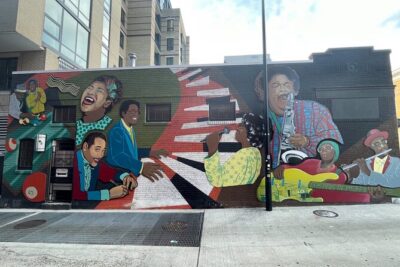
Guided African American History Tour with Reserved Museum Entry
Read our review →
POLIN Museum of the History of Polish Jews Ticket
Read our review →
Bell Tower & St Mark’s Square History Gallery Ticket
Read our review →
Field Museum of Natural History Ticket or VIP Tour
Read our review →
Madrid in a Day Tour:Royal Palace, Historic Center & Prado Museum
Read our review →
Basilica, Doge’s Palace, History Gallery & Bell Tower Option
Read our review →Browse the lists this tour appears in