
Review · TBILISI
Tbilisi old town & soviet heritage – Private driver-guided Tour
Tbilisi reveals itself in layers. This private half-day tour links ancient churches, hilltop views, old markets, and modern city landmarks in one comfortable outing, giving you a useful first look at Georgia’s capital without the usual group-tour shuffle. I especially like the hotel pickup and the freedom to pause for photos or adjust the pace.
I also like that the tour brings together places with very different moods, from the peaceful Metekhi Cathedral and grand Holy Trinity Cathedral to Dry Bridge Market and the modern Bridge of Peace. The main trade-off is pace: with about 16 stops in five to six hours, some visits are brief, and the tour offers only a quick introduction to several sites.
Key points at a glance
- Private car and flexible timing: Your group travels in an air-conditioned vehicle with an English-speaking driver and can request extra photo stops.
- A broad Tbilisi introduction: The route covers churches, fortifications, sulfur baths, markets, pedestrian streets, museums of everyday life, and modern architecture.
- Excellent city views: The aerial tramway and Narikala Fortress provide some of the best elevated views over Tbilisi.
- Strong local hospitality: Guides including Giga, Timo, Makho, and Goga have received special praise for warmth, local tips, and family-friendly service.
- Good practical value: At $77.93 per person, the price includes private transportation, hotel pickup and drop-off, WiFi, bottled water, guide service, and the tramway ride.
- A brisk schedule: The tour is best for first-time visitors who want orientation and coverage, not long visits at every stop.
Why this tour works well for a first day in Tbilisi
Tbilisi can feel confusing at first. The old town sits among steep hills, the Mtkvari River cuts through the city, and major sights are spread across both sides of the water. This tour solves that geography problem by using a private vehicle between stops, so you can see a lot without spending your first day figuring out taxis, bus routes, and uphill walks.
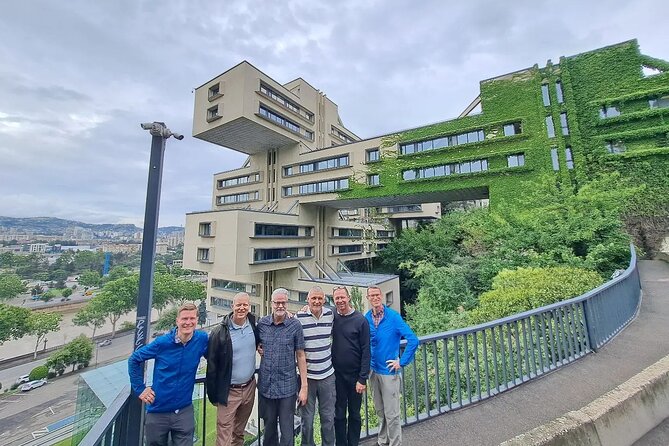
The route also gives you a useful sense of the city’s changing character. You move from medieval churches to Soviet-era collecting culture at Dry Bridge Market, then on to modern public spaces such as Rike Park and the Bridge of Peace. It is not a specialist architectural tour of Soviet Tbilisi, but it does give you a broad look at the city’s old, Soviet, and contemporary layers.
Your pickup is scheduled for 9:30 a.m. from a hotel or apartment in Tbilisi. Since this is a private activity, only your group participates. That matters if you are traveling with children, an older family member, or anyone who prefers not to keep up with a large group.
The tour is recommended for people with a moderate level of physical fitness. You will not walk all day, but there are hills, uneven surfaces, stairs, and short walks around fortifications and old streets. The car reduces the strain, yet comfortable shoes remain a smart choice.
More Cold War and Communism Tours in the world:
- Prague: Communism History and Nuclear Bunker Guided Tour
★ 4.7 · 2,417 reviews - Prague Communism History and Nuclear Bunker Tour
★ 5.0 · 1,742 reviews - Bucharest: Communism and History Guided City Walking Tour
★ 4.9 · 918 reviews
Metekhi Cathedral and Holy Trinity Cathedral
The first stop is Metekhi Cathedral, a 13th-century church perched above the river. You have about 20 minutes here, enough to look around and begin understanding Tbilisi’s old core. The setting matters as much as the building: from this area, the city’s hills and river corridors start to make sense.
After that comes Holy Trinity Cathedral, known locally as Sameba. At 101 meters, it is the highest church in Georgia and one of the most noticeable buildings in Tbilisi. The planned 30-minute stop gives you more time than at Metekhi, which is useful because the cathedral complex is large and its scale is hard to appreciate from the car.
These first two churches offer a helpful contrast. Metekhi feels connected to the older city and its river setting, while Holy Trinity is grander and more open in scale. If religious architecture interests you, you may wish the schedule allowed longer at both. The short visits are enough for an overview, but not for a slow architectural study.
Chronicles of Georgia, a bold monument outside the center
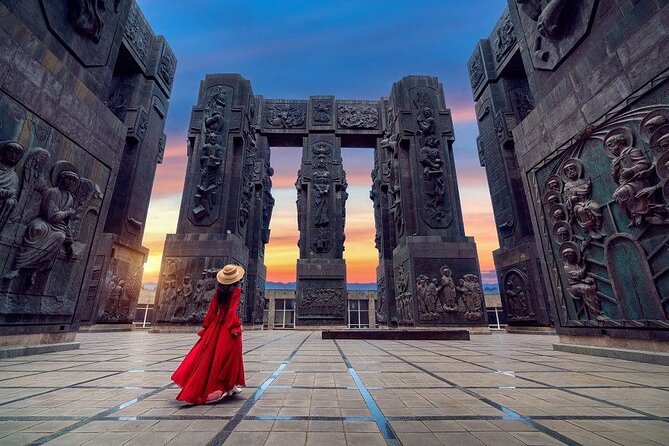
The Chronicles of Georgia is one of the most unusual stops on the route. Sixteen huge pillars carry scenes connected with Georgian rulers and episodes from the life of Jesus. Because of its size and dramatic form, it is often compared with Stonehenge, though the imagery and purpose are distinctly Georgian.
You get about 30 minutes here. That should allow time to walk around the monument, study the carved panels, and take photographs. The site is useful because it takes you beyond the familiar old town and gives the tour a more spacious, monumental feel.
This is also one of the stops where a guide adds real value. The carvings can be difficult to read without context, especially if you do not know much about Georgian rulers or Orthodox Christian imagery. Ask your driver-guide to explain the scenes rather than simply using the stop as a photo break.
Aerial tramway, Narikala Fortress, and the best city views
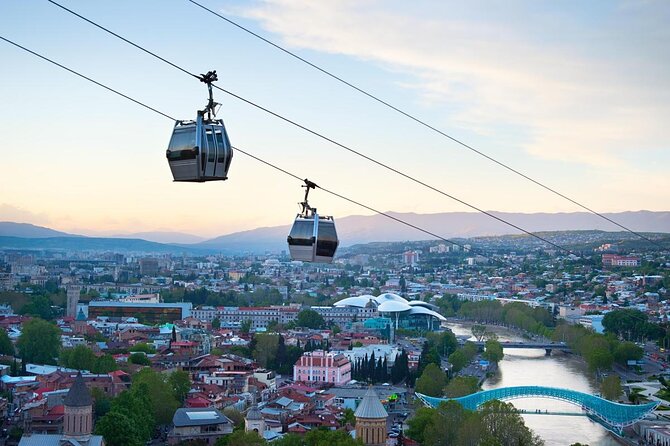
The aerial tramway connects Rike Park with Narikala Fortress. The ride lasts only a couple of minutes, but the large windows provide a quick 360-degree look at Tbilisi, the river, rooftops, and surrounding hills. The ticket is included, so you do not need to budget separately for this part.
At the top, you have about 15 minutes at Narikala Fortress. This is a short stop, but the views are the main reward. The fortress is one of Tbilisi’s oldest and most familiar monuments, and from its hilltop position you can see how tightly the old city fits between the river and the slopes.
The brief timing is the main limitation here. You will see the fortress and enjoy the panorama, but you will not have a long walk through the ruins. If the weather is clear, this is one of the tour’s most memorable sections. If you want more time at Narikala, ask in advance if the schedule can be adjusted.
More Old Town and Historic Centre Walks in the world:
- Madrid Essential: Historic Center, Plaza Mayor & Royal Palace
★ 5.0 · 6,416 reviews - Lisbon: Live Fado Show with Port Wine in Historic Center
★ 4.7 · 4,166 reviews - Valencia Old Town Tour with Wine & Tapas in 11th Century Historic Monument
★ 5.0 · 3,234 reviews - Prague Old Town, Medieval Underground and Dungeon Historical Tour
★ 4.5 · 3,227 reviews
Rike Park, Shardeni Street, and the old city’s social side
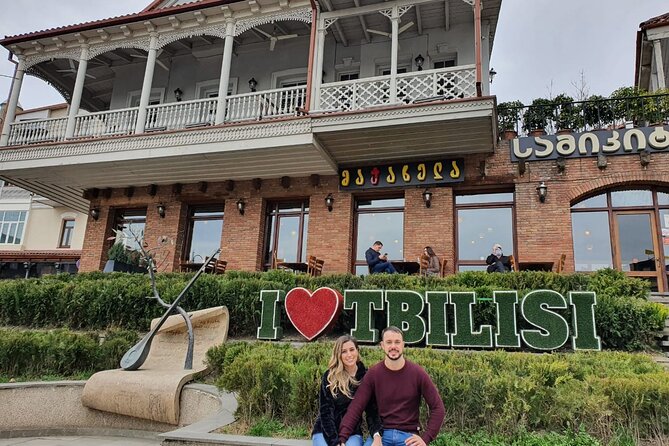
Back near the river, Rike Park offers a modern public space beside Europe Square. It is described as a meeting point for people from different nationalities and a place where the city’s contemporary side is easy to see. The planned 10 minutes is enough for a look and a few photographs.
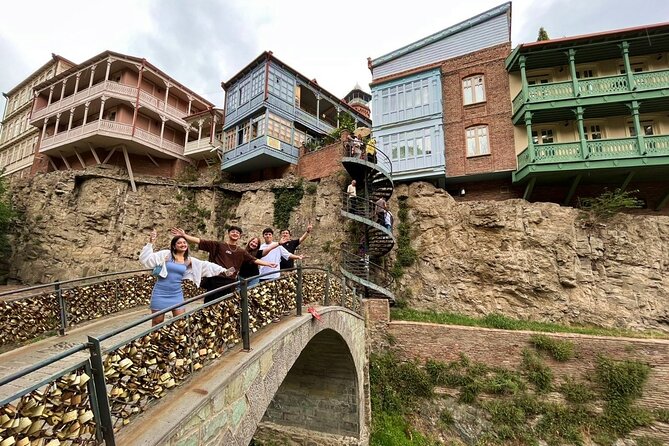
Jan Shardeni Street follows, with about 15 minutes for this pedestrian area. It is one of the most popular streets in the old town, lined with colorful façades and the patterned balconies that give central Tbilisi much of its visual character. The route here is more about atmosphere than a single monument.
You should think of these stops as orientation points. They introduce the city’s public life, cafés, old buildings, and pedestrian lanes, but they are not designed for a long meal or extended shopping session. If you find a street or shop you want to explore, the private format makes it worth asking for a little extra time.
Jumah Mosque and Tbilisi’s mixed religious traditions
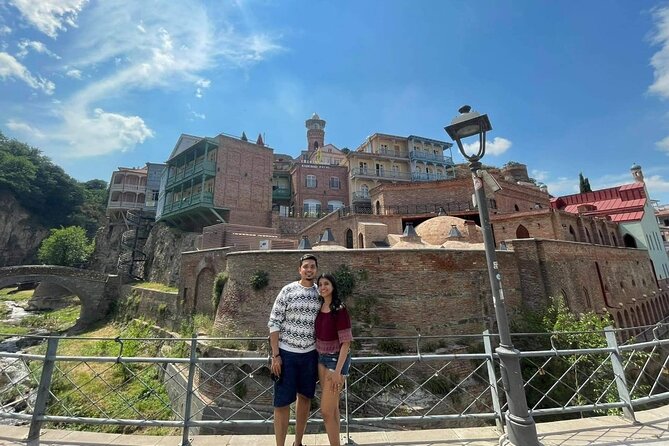
The Jumah Mosque is a small but important stop. This red-brick mosque is currently the only Muslim shrine in the city and is known as a place of worship for both Sunni and Shia Muslims. The visit lasts only about five minutes, so expect a quick exterior look rather than a long guided visit.
Its value comes from the point it makes about Tbilisi. The city’s old quarter brings Christian churches, a mosque, sulfur baths, and different cultural traditions into a compact area. The stop is brief, but it adds balance to a route otherwise weighted toward Georgian Orthodox churches.
Dress and behavior should be respectful around any religious site. The tour information does not promise interior access, so you should treat this as a short sightseeing stop unless your guide tells you otherwise.
Dry Bridge Market and the city’s Soviet-era character
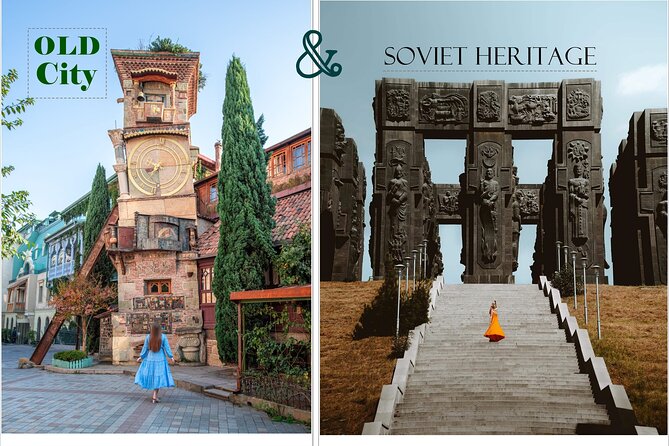
Dry Bridge Market is one of the strongest stops for anyone interested in everyday history, collecting, and the Soviet period. The market is known for old coins, postcards, dishes, paintings, books, accessories, vintage telephones, and cameras. You might find objects from family homes, old collections, or earlier decades of Georgian life.
The first visit is scheduled for 30 minutes, followed later by another 15-minute stop. That repeated appearance suggests the market is meant to be more than a passing photo stop. You can browse, look for small souvenirs, and see how personal objects from the past become part of modern city commerce.
The market is not presented as a formal museum, so its appeal depends on your curiosity. Prices and quality can vary, and you may need to inspect items carefully. Still, this is one of the best places on the route to connect Georgia’s recent past with ordinary possessions rather than grand monuments.
The tour also includes the Shota Rustaveli Statue and a section of Rustaveli Avenue. The avenue runs about 1,500 meters and is lined with government, cultural, public, and business buildings. The 20-minute stop gives you a look at Tbilisi’s formal civic center and offers a useful counterpoint to the narrow old-town lanes.
Bridge of Peace, Abanotubani, and the story of Tbilisi’s name
The Bridge of Peace is a modern pedestrian bridge opened to the public in 2010. It crosses the Mtkvari and links the old town with Rike Park. The structure is a clear example of contemporary Tbilisi, with a very different design language from the nearby churches, baths, and fortress.
You have about 10 minutes here. That is enough to cross part of the bridge, take photographs, and see the river from a different angle. It is also a convenient reminder that Tbilisi is not preserved as a single old quarter. New public architecture sits directly beside buildings and streets with centuries of use.
Abanotubani is one of the city’s signature areas. Its sulfur bathhouses sit below street level, with rounded, beehive-like domes rising above the surface. Local tradition says Tbilisi was born here, and the baths remain one of the clearest symbols of the city.
The scheduled visit lasts about 20 minutes. Admission to a bath is not included, so this is a sightseeing stop rather than a bathing session. If you want to use a bath during your stay, plan that separately. The tour gives you the setting and the story, but not time for a full spa visit.
Meidan Bazaar, Gabriadze Theater, and a taste of local shopping
Meidan Bazaar occupies an underground tunnel-shop near the old town. It focuses on products made in Georgia, including wine, postcards, jams, sauces, spices, tea, and handmade items such as socks. The 10-minute stop is short, so use it to identify possible gifts rather than plan a leisurely shopping trip.
The Rezo Gabriadze Marionette Theater is another quick but distinctive stop. Its unusual clock tower is covered with hundreds of tiles, and an angel appears every hour with a small hammer to ring the bell. A puppet theater operates inside, with performances of The Circle of Life at noon and 7 p.m.
The tour allows about 10 minutes at the theater. If your timing matches one of those performances, you may see the short clock-tower show, but the tour schedule does not guarantee it. A full puppet performance is not part of the tour, so check the timing before you book if this is a major interest.
The final destination is Bazari Orbeliani, a food hall with 35 modern food facilities and restaurants offering Georgian and international food. The visit lasts about 25 minutes. That makes it a handy place to finish with a snack or a quick look at modern Georgian dining, though the time may be too short for a relaxed meal.
Guides, vehicle, and the value of private travel
The practical package is strong. You receive private transportation, an air-conditioned car, bottled water, WiFi on board, hotel pickup and drop-off, and an English-speaking driver-guide. The tramway ticket is included, while the sulfur baths are not.
The guide is an important part of the experience. Giga has been praised for sharing personal insights about Georgian life, food, and local traditions, and for treating the group with the warmth of visiting friends. Timo has also been singled out for clear information and smooth time management.
Families may appreciate the flexibility shown by Makho, who adjusted the day for a group with two small children and an older person. Goga has been praised for friendly, enthusiastic guiding. The exact guide may vary, but these details point to a company that puts real weight on personal service.
At $77.93 per person, the value depends on group size. For one or two people, it costs more than a shared walking tour, but you are paying for a private car, hotel transfers, a broad route, and less time spent arranging transport. For a family or small group, the price becomes easier to justify because the cost is attached to the vehicle and service rather than only to a seat on a bus.
Who should book this five to six hour tour?
I would choose this tour if you have one full day or less in Tbilisi and want to cover the main sights quickly. It is also a good fit if you prefer a private setting, need hotel pickup, or want the option to adjust stops for children, older family members, or photography.
You will get the most from it if you ask questions and use the private format. Ask about Georgian food, local customs, the meaning of the Chronicles of Georgia, or the objects at Dry Bridge Market. The strongest praise for the guides centers on personal explanations and local tips, not just transportation.
I would hesitate if you want long museum visits, extended shopping, a complete Soviet architecture study, or a slow old-town walk. The schedule is packed, and several stops last only 5 to 20 minutes. It is a broad introduction, not a deep examination of each site.
Free cancellation is available up to 24 hours before the start time for a full refund. Changes made within 24 hours are not accepted, so keep that deadline in mind when making plans.
Should you book it?
Book this tour if you want an efficient, comfortable introduction to Tbilisi with private transport and a guide who can add local context. The combination of Narikala views, old-town streets, churches, Dry Bridge Market, sulfur baths, and modern architecture gives you a useful picture of the city in one morning and afternoon.
Skip it if your ideal day means lingering at each monument or exploring every market stall on foot. For most first-time visitors, though, the private format and flexible pace make the $77.93 price reasonable, especially for a small group. Ask for extra time at the places that interest you most, and use the tour as a map for the rest of your stay.
FAQ
How long does the tour last?
The tour lasts approximately five to six hours.
What time does the tour begin?
The scheduled start time is 9:30 a.m.
Where does pickup take place?
Pickup is offered from your hotel or apartment located in Tbilisi.
Is this a private tour?
Yes. Only your group participates in the activity.
Is the tour offered in English?
Yes. English-speaking driver and guide service are included.
Is the aerial tramway ticket included?
Yes. Admission for the aerial tramway is included.
Are sulfur bath fees included?
No. Admission to the Abanotubani sulfur baths is not included.
What is included in the tour price?
The price includes bottled water, private transportation, WiFi on board, tour guide service, and hotel pickup and drop-off.
More Private History Tours in the world
- Private Historical Walking Tour of York
★ 5.0 · 1,324 reviews - Private Guided Historic Electric Cart Tour of St. Augustine
★ 5.0 · 1,194 reviews - Istanbul: Acemoglu Historical Turkish Bath w/Private Options
★ 4.6 · 1,190 reviews - From Cairo: Private Full-Day Tour of Historical Alexandria
★ 4.1 · 1,155 reviews
Just added around the world
- The Queenstown Story @ Cobh Heritage Centre , Great Stories of Emigration.★ 4.5 · 181 reviews
- Visit 16 Sites Key Historical Sites And Experience Cobh Rebel Tours★ 5.0 · 167 reviews
- Historical Bicycle Tour of Dunedin★ 5.0 · 44 reviews
- Cincy Brunch History and Streetcar Tour with Riverside Food Tours★ 5.0 · 108 reviews
- 2.5 Hour Kayaking with Manatee and History Tour in Tarpon Springs★ 5.0 · 24 reviews
- Private Tour in Chichen Itza Official History Guide★ 5.0 · 36 reviews
- Dazu Ancient Rock Carvings Private Tour Extension★ 5.0 · 24 reviews
- Chicago River Architecture Tour Aboard a Historic Yacht★ 5.0 · 45 reviews
Cold War & Communism Tours, compared.

Communism History and Nuclear Bunker Guided Tour
Read our review →
Prague Communism History and Nuclear Bunker Tour
Read our review →
Cold War & Berlin Wall History Guided Bike Tour
Read our review →
Chisinau: Discover Soviet Heritage of Transnistria
Read our review →
Communist History Tour with House of Terror Option
Read our review →
Guided Bike tour of the Berlin Wall and Third Reich
Read our review →
Browse the lists this tour appears in