
Review · NEW YORK CITY
The Psychiatric History of New York: Upper East Side Tour
Some city secrets hide in plain sight. This two-hour walk connects the Upper East Side with New York’s psychiatric and medical past, using buildings, streets, murals, and river views as clues. I like the small group, capped at 12 people, and the way the route brings you past several grand Upper East Side landmarks that are easy to miss.
I also like the scenic opening at the East River and the unusual stops along York Avenue, Park Avenue, and Madison Avenue. The main thing to consider is the subject matter: this tour deals with psychiatric care, neurological medicine, psychoanalysis, and mental health history, so it may feel more serious than a standard sightseeing walk. One guide praised in the feedback is called Krombe, with the name also written as Krumbie, and her humor and passion clearly made a strong impression.
Key points to know before you book
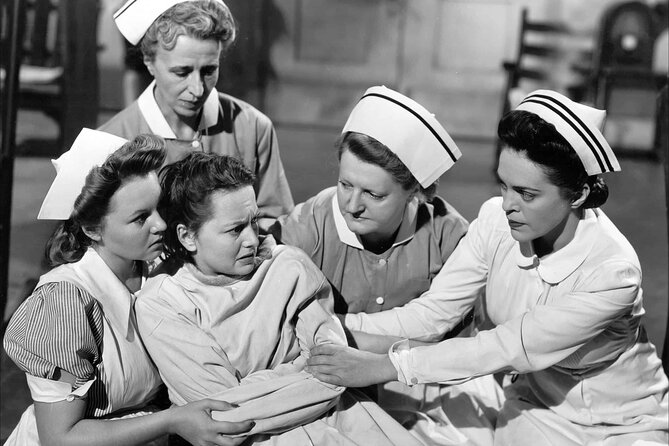
- The route links eight unusual sites: You will see former medical buildings, a psychoanalytic institute, private houses, a theater building, and the Park Avenue Armory.
- The tour begins beside the East River: The first stop at John Finley Walk gives you views toward Roosevelt Island and Wards Island.
- The group stays small: A maximum of 12 people gives the guide room to answer questions and keep the walk personal.
- The subject is broader than hospitals: New York’s psychiatric past appears through architecture, social history, psychoanalysis, neurological medicine, and child study.
- The walk ends near Central Park: The final stop is at East 62nd Street and Madison Avenue, a few blocks from the southeast corner of Central Park.
- The price is $40: For two hours of guided sightseeing in Manhattan, that is fair value if you enjoy history that sits outside the usual tourist trail.
Why this Upper East Side walk is different
Most New York walking tours lean on famous people, famous buildings, or famous food. This one takes a narrower and more unusual route. It asks you to look at familiar streets through the story of psychiatric medicine and mental health in New York.
That focus gives the walk a clear purpose. You are not simply wandering through attractive blocks and hearing general facts about the neighborhood. The guide uses specific addresses to show how medical institutions, private homes, and cultural buildings fit into the city’s past.
I like that the route does not stay inside a museum. You move from the East River to Yorkville, then south through the Upper East Side toward Park Avenue and Madison Avenue. The city itself becomes the exhibit, and the buildings remain part of everyday New York.
The experience lasts about two hours. That is long enough to develop a theme without taking up a whole afternoon. The walk starts at 3:00 pm, a useful time if you want to spend the morning at a museum or have lunch before meeting the group.
A few more history tours around New York City worth a look
- NYC: Speakeasy Drinks and Prohibition History Tour
★ 4.7 · 474 reviews - The Original Greenwich Village Food & Cultural Tour Since 1999
★ 5.0 · 254 reviews - The Speakeasy Adventure: A Tipsy Trip Through History
★ 5.0 · 220 reviews
Starting at John Finley Walk by the East River
The meeting point is at East 87th Street and East End Avenue. This is not the most obvious starting point for a Manhattan walking tour, so give yourself time to reach it. The route opens at John Finley Walk, where you can look across the East River toward Roosevelt Island and Wards Island.
This first stop provides a helpful visual reset. You are away from the more crowded avenues, with water and open space in front of you. The view also places the tour in a wider New York setting, since Roosevelt Island has its own long connection with institutions and public care.
The stop lasts about 12 minutes and admission is free. You are not entering a site here. The value comes from the guide’s explanation and from seeing the islands from this particular angle.
Wear comfortable shoes from the start. The tour covers several sections of the Upper East Side, and the route is best enjoyed at a steady walking pace rather than as a hurried transfer between addresses.
Yorkville Glockenspiel and the German neighborhood
The second stop is the Yorkville Glockenspiel, at the southwest corner of East 83rd Street and York Avenue. The mural is a nod to the German Yorkville neighborhood, giving the tour a cultural layer beyond formal medical history.
This is the sort of stop you could easily pass without understanding. A mural or public artwork may seem decorative until someone explains what it recalls. Here, the guide connects the local streetscape with the immigrant history that shaped this part of Manhattan.
The stop lasts about 12 minutes. Again, there is no admission charge, so the experience depends on the quality of the explanation. This is where a lively guide can make a real difference. Feedback about Krombe, also spelled Krumbie, describes a guide who brought humor, energy, and strong knowledge of New York’s past to the walk.
If you enjoy architecture and neighborhood change, pay close attention here. The tour is not only about psychiatric institutions. It also shows how social history and medical history occupy the same city blocks.
The New York Psychoanalytic Society and Institute
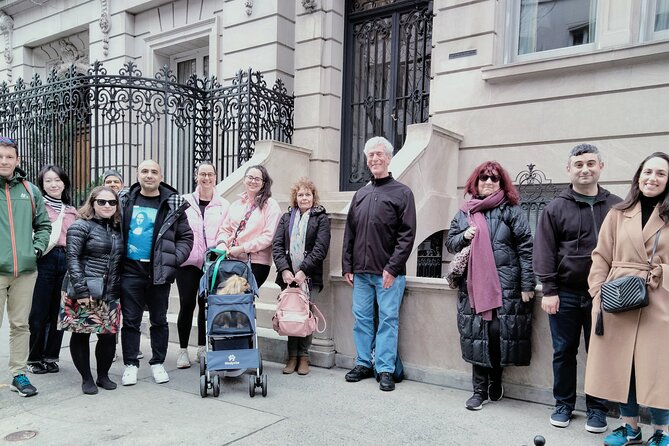
At 247 East 82nd Street, the group pauses outside the New York Psychoanalytic Society and Institute. This is one of the clearest connections to the tour’s central subject.
The stop gives the guide a chance to discuss psychoanalysis and its place in New York’s medical culture. You should not expect an indoor visit based on the information available. The experience is an exterior stop, with the guide supplying the context.
That format has both benefits and limits. You can cover more ground and see the neighborhood as it functions today, but you will not have galleries, displays, or objects to examine. If you want a museum-style presentation, this walk may feel light on physical exhibits. If you enjoy learning why an ordinary-looking address matters, it works well.
The stop lasts about 12 minutes. In a group of no more than 12 people, there should be enough room to hear the explanation and ask a question without the crowd becoming unwieldy.
Same place, a different slice of the past:
- Speakeasy Drinks and Prohibition History Tour NYC
★ 4.5 · 204 reviews - Hamilton and Washington Revolutionary Walking Tour
★ 5.0 · 182 reviews - #1 Rated NYC Chinatown Food and History Walking Tour with FNYT
★ 5.0 · 171 reviews - Tribeca Architecture And History Walking Tour
★ 5.0 · 141 reviews
East 80th Street houses and everyday architecture
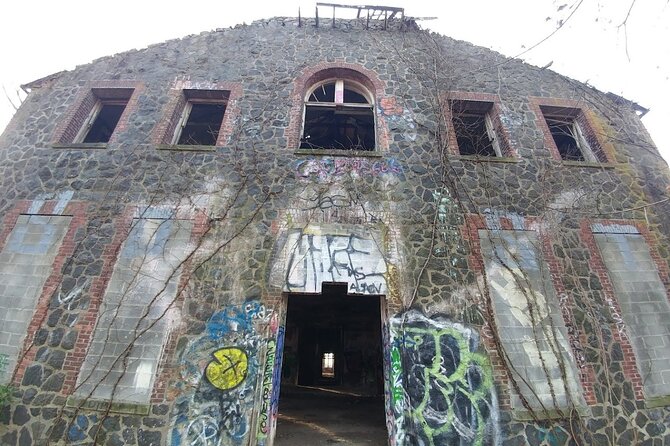
The East 80th Street Houses are another reminder that this is an architecture-based history walk. The tour uses residential buildings, not just institutions, to build its story.
That choice makes sense in the Upper East Side. Medical and psychological history did not happen only in large hospitals. It also involved offices, homes, professionals, families, and private life. The houses provide a chance to consider that less visible side of the subject.
This may be one of the quieter stops, especially if you are hoping for a dramatic landmark. The reward comes from the guide’s interpretation and from learning to read the neighborhood’s buildings as historical evidence.
I like this kind of stop because it slows the pace. You get a closer look at the streets you are walking through instead of racing from one major attraction to the next. Still, the experience will be strongest for people who are happy to listen carefully and use their imagination.
Hunter College Baker Theatre Building at 149 to 151 East 67th Street
The Hunter College Baker Theatre Building is a particularly layered address. It was formerly the Mount Sinai Dispensary, the Neurological Institute, and the Kennedy Child Study Center.
That list alone shows why the building matters. One location connects general medical care, neurological study, and child development. The guide can use the building to show how medical specialties changed over time and how different forms of care found a home in New York.
The stop lasts about 12 minutes and remains outside. You will not receive a separate admission experience, but the building’s former uses give the guide plenty to work with.
This is one of the most valuable stops for anyone interested in the overlap between psychiatric history and wider medicine. The tour does not treat mental health as an isolated topic. It places it beside neurology, child study, and the city’s broader medical institutions.
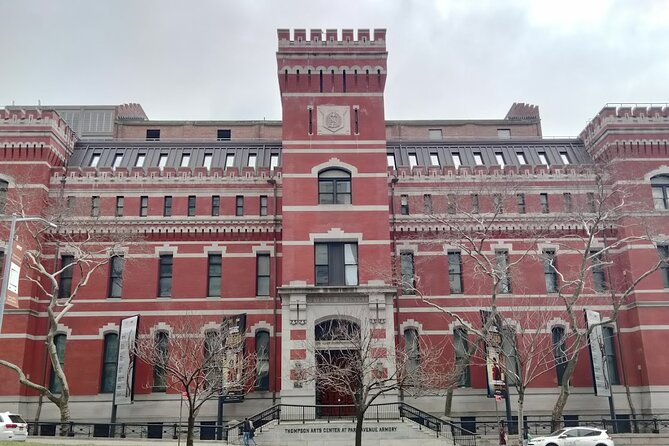
Park Avenue Armory at 643 Park Avenue
The route then reaches the Park Avenue Armory at 643 Park Avenue. This is one of the most recognizable buildings on the walk, and its large scale gives the group a change of visual pace after the residential addresses.
The armory is also a good reminder that New York history rarely stays in neat categories. A grand civic or military building can sit inside a tour about psychiatric history because the city’s institutions, social groups, and public life overlap.
The stop is planned for about 12 minutes. You should expect to see the exterior and hear the guide explain its place in the route, rather than spend time inside. If you already know the armory, the psychiatric angle may give you a fresh reason to examine it.
This part of the walk also helps you appreciate the Upper East Side as more than a polished residential district. Behind the elegant façades are stories about public life, medicine, culture, and power.
Tillinghast House and East 64th Street
At 26 East 64th Street, just off Madison Avenue, the group visits Tillinghast House. This stop shifts the focus back to a particular building and its place in the medical story.
The information provided does not spell out every detail of the house’s connection, so you should rely on the guide to explain why it belongs on the route. That is worth noting because the tour depends heavily on spoken interpretation. The addresses are clues, not self-explanatory attractions.
This is another point where a small group helps. With only 12 people at most, you can stay close to the guide and ask for clarification if a name, institution, or former use is unfamiliar.
The stop takes about 12 minutes. It is best approached with curiosity rather than the expectation of a famous sight. The tour’s strength lies in revealing why less celebrated places matter.
The final addresses at 15 to 17 East 62nd Street
The route finishes at 15 to 17 East 62nd Street, off Madison Avenue. This final stop lasts about 18 minutes, making it the longest pause on the route.
The extra time suggests a fuller closing discussion, though the supplied details do not specify exactly what the guide covers there. What you can count on is an exterior stop near the end of the walk, followed by the finish at East 62nd Street and Madison Avenue.
That ending is convenient. You are a few blocks from the southeast corner of Central Park, so you can continue sightseeing, find a meal, or head toward another Upper East Side attraction. The finish is not at the starting point, so plan your next move from Midtown or the park rather than expecting to return to East 87th Street.
What $40 buys you
The $40 price is reasonable for a two-hour, small-group walking tour in Manhattan. You are paying for a guide’s research, storytelling, route planning, and interpretation rather than entrance tickets. All listed stops are free to view.
Value depends on your interests. If you want famous paintings, grand interiors, or a long list of major attractions, $40 may feel high because the tour is largely outdoors. If you enjoy local history and unusual subjects, the cost is easier to justify. You are getting a focused route that would be hard to recreate from casual sightseeing alone.
The small group matters here. A maximum of 12 people is far more personal than a large city walking tour. The guide can point out details, respond to questions, and adjust the explanation to the group’s pace.
The experience is offered in English. A mobile ticket makes arrival simple, and confirmation comes when you book. Public transportation is nearby, and service animals are allowed.
Who will enjoy this tour most
I would choose this tour if you have already seen the standard Manhattan sights and want a more specialized subject. It also suits people interested in psychology, psychiatry, neurological medicine, child study, architecture, and New York social history.
The walk can work for locals, too. One strong piece of feedback came from someone who lived in the area but still learned new facts about buildings passed every day. That is a good sign for anyone who wants to see a familiar neighborhood with fresh eyes.
Families may want to consider the age and interest of their children. The subject is educational but can be serious, and the route depends on listening rather than hands-on activity.
The tour is accessible to most people according to the supplied information, but it is still a two-hour city walk. Anyone concerned about walking should consider personal comfort and ask the provider for current details before booking.
A guide-led experience with some variation
The strongest praise focuses on the guide’s energy, humor, and ability to make a specialized subject interesting. One person called the tour an unusual and informative way to spend two hours, while another especially enjoyed the scenic route and engaging explanations.
There is also a less positive piece of feedback describing a guide as pleasant but overly dependent on reading from a book. That tells you something important about this experience: the guide’s delivery matters greatly. Since the stops are mostly exterior addresses, storytelling carries much of the tour.
The overall rating is 4.9 from 31 reviews, and 97 percent of people recommend it. Those numbers point to a very strong experience overall, while the mixed comment is a useful reminder to keep expectations realistic. You are booking a specialist walking tour, not a scripted theatrical performance.
Practical timing and cancellation advice
The tour begins at 3:00 pm and lasts about two hours. I would arrive early at East 87th Street and East End Avenue, since the starting point is not the same as the final address and the route does not loop back.
You receive confirmation at booking. The tour is available in English, uses a mobile ticket, and permits service animals. It is near public transportation, which helps at both ends of the walk.
Free cancellation is available if you cancel at least 24 hours before the 3:00 pm start time. Cancellations made less than 24 hours before the start are not refunded, and changes within that period are not accepted. The cut-off follows New York local time.
Should you book the Upper East Side psychiatric history walk?
Book it if you like New York history with an unusual angle, small groups, outdoor sightseeing, and buildings that reveal more than they first suggest. The river opening, the Yorkville mural, the psychoanalytic institute, former medical sites, and the final Madison Avenue addresses create a route unlike the usual Manhattan walk.
Skip it if you want indoor exhibits, famous masterpieces, or a tour built around major attractions with little specialist discussion. The subject can also feel serious, and the quality of the experience depends heavily on the guide’s storytelling.
For curious repeat visitors, local residents, and anyone fascinated by psychology or medical history, I think $40 is a fair price. You finish near Central Park with a better sense of how New York’s mental health story is written into ordinary streets.
FAQ
How long is the Psychiatric History of New York tour?
The tour lasts approximately two hours.
What time does the tour begin?
The start time is 3:00 pm.
Where does the tour begin?
It begins at East 87th Street and East End Avenue in New York City.
Where does the tour end?
It ends at East 62nd Street and Madison Avenue, a few blocks from the southeast corner of Central Park.
How much does the tour cost?
The price is $40 per person.
What language is the tour offered in?
The tour is offered in English.
How many people can join the tour?
The maximum group size is 12 people.
Are the stops free to visit?
Yes. The listed stops have no admission charge.
Can I cancel for a full refund?
Yes, if you cancel at least 24 hours before the experience start time. Cancellations made less than 24 hours before the start are not refunded.
Just added around New York City
- Wall Street Inside with a Trader Walking History Tour★ 5.0 · 23 reviews
- Tenement History and Immigrant Life in the Lower East Side★ 5.0 · 50 reviews
- The Original Greenwich Village Food & Cultural Tour Since 1999★ 5.0 · 254 reviews
- Speakeasy Drinks and Prohibition History Tour NYC★ 4.5 · 204 reviews
- New York City: Mafia History in Little Italy Walking Tour w/NYPD★ 5.0 · 59 reviews
- Soul of Harlem: Striver’s Row, Apollo Theatre & Gospel Heritage★ 5.0 · 75 reviews
- The Speakeasy Adventure: A Tipsy Trip Through History★ 5.0 · 220 reviews
- Private Tour New York City in the Gilded Age: A History of High Society★ 5.0 · 125 reviews
New York City History Tours, compared.

NYC: Speakeasy Drinks and Prohibition History Tour
Read our review →
The Original Greenwich Village Food & Cultural Tour Since 1999
Read our review →
The Speakeasy Adventure: A Tipsy Trip Through History
Read our review →
Speakeasy Drinks and Prohibition History Tour NYC
Read our review →
Hamilton and Washington Revolutionary Walking Tour
Read our review →
#1 Rated NYC Chinatown Food and History Walking Tour with FNYT
Read our review →

NYC: Night Out Prohibition History Bar and Speakeasy Tour
Read our review →Browse the lists this tour appears in