
Review · NEW YORK CITY
Private Tour New York City in the Gilded Age: A History of High Society
New York’s grandest stories are hiding in plain sight. This private two-hour walk follows Fifth Avenue from the edge of Central Park toward the Upper East Side, connecting mansions, museums, social clubs, and famous families from the Gilded Age. I like the way the tour turns familiar streets into a personal history lesson, and I especially like the private format, which lets your guide adjust the pace and answer your questions.
The strongest part is the storytelling. Guides such as Dan, Kevin, Sara, Richard, John, Jarod, and Brad have been praised for making the people and buildings feel real rather than dusty and remote. You should know, though, that this is mainly an outdoor walking tour. You will look at many important buildings from the street, not tour the interiors, so cold, heat, rain, and walking comfort matter.
Key points to know before booking
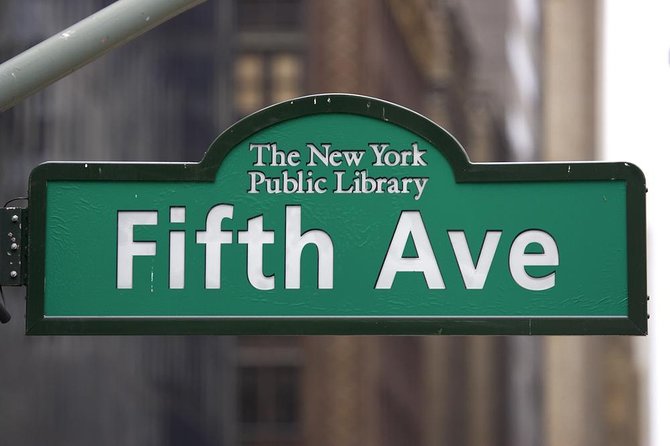
- Fifth Avenue becomes the main character: Follow New York’s transformation from commercial center to mansion-lined address.
- The tour is private: Only your group takes part, so the guide can tailor the pace and conversation.
- Central Park adds a grand setting: The route connects Gilded Age wealth with one of New York’s great public works.
- Expect stories more than interiors: Mansions, museums, and clubs are viewed from outside unless access is otherwise available.
- The route ends near major museums: The published finish is in front of Cooper Hewitt, Smithsonian Design Museum, at 2 East 91st Street.
- Two hours goes quickly: The pace suits many people, including older walkers, but comfortable shoes are essential.
Why this slice of New York history works
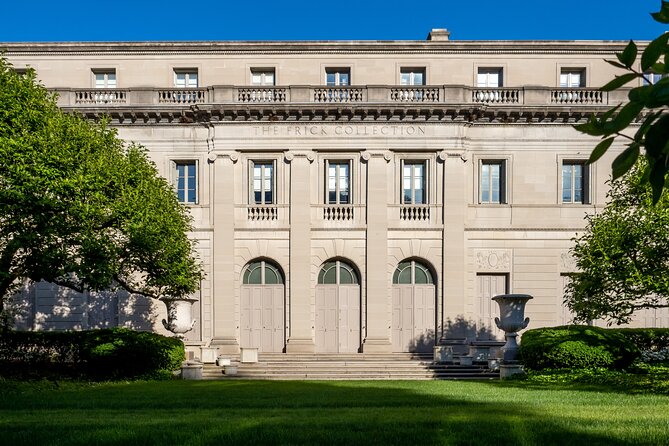
The Gilded Age was a period of huge fortunes, social rivalry, rapid building, and sharp inequality. New York’s wealthiest families competed to build the grandest houses, host the most talked-about parties, and secure the most prestigious address. Their world has largely disappeared, but Fifth Avenue still holds clues.
I like this tour because it does not treat architecture as a row of impressive façades. The buildings become evidence of ambition. A mansion tells you who wanted social power. A museum points to a family’s wealth and taste. A club suggests who was welcomed into elite society, and who was kept outside.
Your historian guide provides the thread tying it all together. Several guides have been praised for mixing architecture, business, family drama, popular culture, and social history. Kevin, in particular, is known for connecting the walk with books, films, and television about the period. Dan has been praised for his humor, warmth, and ability to adjust the pace.
That personal approach matters. A large group tour often has to follow a fixed script. Here, you can ask why a particular mansion mattered, how an address gained status, or what happened to buildings that no longer exist. The tour can become more about architecture, prominent families, or New York’s changing social order, depending on your interests.
More Private History Tours in the USA
- Christmas in New York: Private Holiday History Tour
★ 5.0 · 107 reviews - NYC Private Walking Tour: Local Insights, History & Food
★ 5.0 · 41 reviews - Private Guided Historic Electric Cart Tour of St. Augustine
★ 5.0 · 1,194 reviews
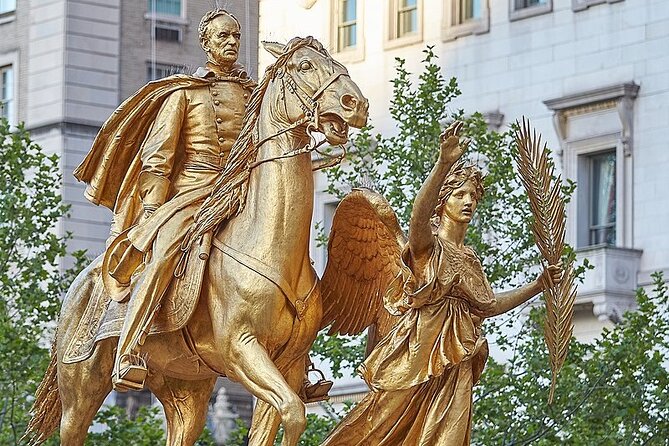
Starting beside the Sherman Monument
The meeting point is the General William Tecumseh Sherman Monument at 764 Doris C. Freedman Place, New York, 10019. This puts you near the southern end of Central Park and the point where Fifth Avenue shifts from a commercial corridor into one of the city’s most famous residential addresses.
That change in character is important. The guide uses the opening section to explain how Fifth Avenue developed and why the avenue became the preferred place for the city’s richest families. You are not simply walking from one stop to another. You are watching the city change in scale and purpose.
The first portion is listed at about 15 minutes, but the full experience continues north through the avenue and Upper East Side. Because the exact route can be adapted for your group, you should listen for the guide’s explanation of what remains, what vanished, and why.
The Sherman Monument is easy to reach by public transportation, and the tour is near transit for much of its route. Give yourself enough time to arrive before the start. A private guide can begin more smoothly when the entire group is ready.
Fifth Avenue and the birth of a fashionable address
Fifth Avenue provides the tour’s clearest lesson in how New York’s elite reshaped the city. The avenue’s grand houses were not built only for privacy. They were public statements, designed to show wealth, family position, and cultural ambition.
As you walk, look for the contrast between the buildings that survived and the gaps left by redevelopment. One of the most useful parts of the tour is learning that the Gilded Age city was much larger and more lavish than the remaining mansions suggest. Many famous homes were demolished, altered, or replaced.
That loss gives the tour a slightly bittersweet edge. You will not see a continuous row of preserved nineteenth-century residences. Instead, the guide uses surviving structures, photographs, stories, and street plans to help you picture the avenue as it once was.
This is also where a good guide earns the fee. Anyone can point at an ornate building. A skilled historian can explain who lived there, why the location mattered, and how the family fitted into New York society. John’s tours have been praised for keeping the pace manageable while explaining famous residents and buildings that are no longer present.
Central Park as a Gilded Age project
Central Park is more than a pleasant green space on this walk. It was a major work of design and city planning, and its presence helped make the surrounding avenue attractive to wealthy New Yorkers.
The park offered open views, fresh air, carriage routes, and a prestigious setting for new homes. Families could build along Fifth Avenue and look toward a carefully planned public space rather than a wall of factories or crowded tenements.
Your guide may also use the park to explain the tension between public improvement and private wealth. The same city that created a grand public park was also becoming sharply divided by class. That contrast gives the tour more substance than a simple parade of rich families.
One guide described in the tour feedback, Jarod, led a walk that included a return through Central Park. The published meeting and end points place most of the experience along the Upper East Side, but route details can vary. Wear shoes that feel good on pavement and park paths, and do not assume the entire walk will be indoors.
More Private History Tours in New York City:
- Private Historical Walking Tour of York
★ 5.0 · 1,324 reviews - Istanbul: Acemoglu Historical Turkish Bath w/Private Options
★ 4.6 · 1,190 reviews - From Cairo: Private Full-Day Tour of Historical Alexandria
★ 4.1 · 1,155 reviews - Porto: Private Tour of the Historic City in a Ford T Car
★ 4.8 · 932 reviews
The exclusive addresses of the Upper East Side
The Upper East Side became a symbol of old New York money, social rules, and carefully guarded status. The tour points out one of the world’s most exclusive addresses and explains how location became part of a family’s identity.
The address mattered because New York society was organized around access. Where you lived affected who visited, which clubs you joined, and whether your family was accepted by established social circles. Your guide brings those invisible rules into view.
This is where the private format is especially useful. You can stop to ask how new fortunes were received, why certain families were considered outsiders, or how marriage and business shaped social standing. The guide can spend more time on the subjects that interest you instead of moving a large crowd along.
Do not expect a house museum experience. The tour does not promise entry into every mansion, club, or museum. Much of the value comes from seeing the exterior while hearing the story behind it. If you want grand interiors, plan a separate museum visit before or after the walk.
The Metropolitan Museum of Art and the power of collecting
One stop focuses on the home of the greatest art collection in the Western Hemisphere, a clear reference to the Metropolitan Museum of Art. The Met is one of the most important cultural institutions in New York, and its presence adds another layer to the Gilded Age story.
The city’s wealthy families did not limit their influence to banks, railroads, real estate, and shipping. Many also collected art and supported museums. Cultural giving could provide public benefits, but it could also strengthen a family’s reputation and social authority.
The guide helps you see museum patronage as part of the same world as the mansions. A grand house displayed taste privately. A major donation displayed it publicly. Both helped families claim a place among New York’s cultural leaders.
The tour is not a guided museum visit, so your time inside the Met is not included. If you want to explore the collection, schedule that separately. One practical benefit is that the museum area can provide a useful point for restrooms, though the published end point for this experience is Cooper Hewitt farther north.
Museum Mile and New York’s cultural families
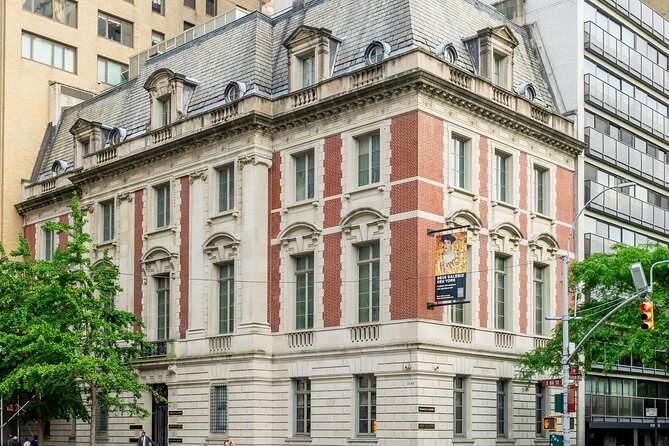
The Upper East Side section also touches the concentration of fine art museums and cultural institutions along Fifth Avenue. This part of the route shows how the avenue changed from a line of private mansions into a cultural corridor.
That change tells an important story. As the city grew, many private houses became too large, too expensive, or too impractical for their original owners. Some were torn down. Others were converted into institutions. The social world shifted, but the avenue retained its association with wealth and culture.
I like this section because it lets you compare different forms of power. Earlier families displayed status through private homes and formal entertaining. Later institutions used buildings, collections, and public access to shape New York’s identity.
The guide may also help you picture how different the street once looked. Several important buildings from the era no longer exist, and that absence is part of the lesson. You are not merely admiring old architecture. You are learning how the city decides what to preserve and what to replace.
The former mansion of an American magnate
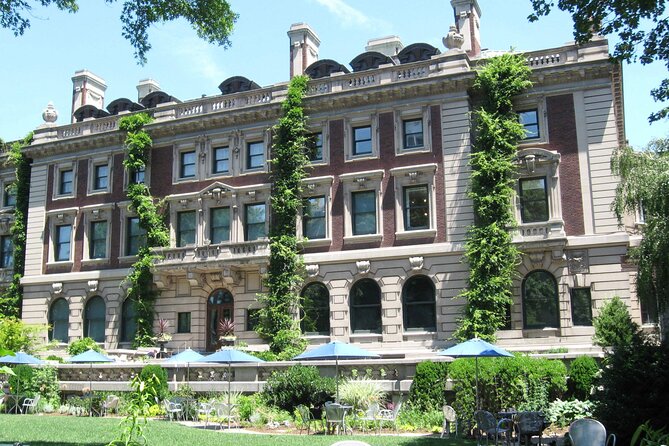
The tour finishes at or near a former mansion connected with an iconic American magnate, now associated with the Cooper Hewitt, Smithsonian Design Museum at 2 East 91st Street. The published end point is in front of the museum.
This is a fitting finish. A mansion built for private wealth now serves a public cultural purpose. The building links the private world of the Gilded Age with modern New York’s museum culture.
The tour itself ends outside, so admission to Cooper Hewitt is not included. You can choose to visit afterward if the museum’s exhibits fit your plans. That gives you a useful option: end the history walk, use the nearby museum area as your next stop, and continue exploring the Upper East Side at your own pace.
One point needs clarification. Most of the supplied details identify Cooper Hewitt as the endpoint, while one account describes the finish near the Metropolitan Museum of Art. Ask your guide at the beginning which route and final stop your group will follow, especially if you are arranging a museum visit afterward.
What the two-hour private format is worth
The price is $150 per person. That is a serious cost for a two-hour walk, but the comparison should be with a private historian-led experience, not a basic sightseeing stroll.
You are paying for a guide devoted only to your group, a route centered on one specific period, and the ability to ask questions as you go. For a family or small group with a strong interest in architecture, New York society, or the Gilded Age, that can be good value.
Group discounts are available, though the exact savings are not specified. The price does not include gratuities. It also does not include museum admission, food, indoor access, or transportation beyond what you use to reach the meeting point.
The tour is usually booked about 31 days ahead, which suggests that you should not leave it until the last minute if your schedule is fixed. Confirmation arrives at booking, and free cancellation is available up to 24 hours before the start time.
Weather, walking, and practical comfort
This is an outdoor walking experience, so dress for the forecast. A family group found the information excellent but warned not to count on being indoors, especially in extreme heat or cold. Another group took the walk in rain and still found it worthwhile, but weather can affect your comfort and attention.
The pace is generally manageable. John’s tour was described as suitable for retirees, and Dan adjusted the speed for a group on a cold, windy day. Still, two hours on city sidewalks requires steady walking, and comfortable shoes are more important than fashionable ones.
Bring water in warm weather and an extra layer in cooler months. A small umbrella or rain jacket can help, but remember that the guide may need to speak over wind and traffic. The private format makes pace adjustments easier, though it cannot change the basic outdoor nature of the route.
Service animals are allowed, and most people can participate. The experience is offered in English and uses a mobile ticket.
Who will enjoy this tour most
I would choose this tour if you enjoy seeing a city through its people and buildings rather than checking off famous sights. It suits first-time New York visitors who want a focused introduction to the Upper East Side, as well as locals who have walked Fifth Avenue many times but never considered the stories behind the façades.
It is particularly good for:
- History fans interested in wealth, social class, architecture, and museum patronage
- Families with older children or teenagers who enjoy stories more than formal lectures
- Couples who want a private walk with room for questions
- People who have watched a television drama about the Gilded Age and want real places to anchor the period
- Local residents who want a new way to see Fifth Avenue and Central Park
You may want another type of tour if your main goal is to enter historic mansions or spend most of the time inside museums. This experience explains buildings from the street, and some of the most important homes no longer survive.
Should you book this private Fifth Avenue walk?
Book it if the idea of connecting New York’s grand avenues with the people, fortunes, and social rules behind them sounds appealing. The best guides make the past feel close, and the private format gives you a more relaxed conversation than a large group tour.
I especially value the strong guide reports surrounding Dan and Kevin, along with praise for Sara, Richard, John, Jarod, and Brad. The repeated themes are clear: lively storytelling, good pacing, and a talent for making history easy to follow.
Skip it if you want guaranteed indoor access, a long museum visit, or a cheap overview of Manhattan. At $150 per person, the price makes the most sense for a small group that will ask questions and care about the subject.
For the right audience, this is a thoughtful way to walk from the Sherman Monument toward Cooper Hewitt while seeing New York’s wealth and culture in a new light.
FAQ
How long is the private Gilded Age tour?
The tour lasts approximately two hours.
Where does the tour begin?
It begins at the General William Tecumseh Sherman Monument, 764 Doris C. Freedman Place, New York, NY 10019.
Where does the tour end?
The published endpoint is in front of the Cooper Hewitt, Smithsonian Design Museum at 2 East 91st Street, New York, NY 10128.
Is this a private experience?
Yes. Only your group participates in the activity.
Is the tour offered in English?
Yes, the experience is offered in English.
Are museum admission and gratuities included?
No. Gratuities are not included, and the tour information does not include admission to museums.
Can I cancel for a full refund?
Yes, you can cancel at least 24 hours before the start time for a full refund. Cancellations or changes made less than 24 hours before the start time are not accepted for a refund.
Just added around New York City
- Wall Street Inside with a Trader Walking History Tour★ 5.0 · 23 reviews
- Tenement History and Immigrant Life in the Lower East Side★ 5.0 · 50 reviews
- The Psychiatric History of New York: Upper East Side Tour★ 5.0 · 31 reviews
- The Original Greenwich Village Food & Cultural Tour Since 1999★ 5.0 · 254 reviews
- Speakeasy Drinks and Prohibition History Tour NYC★ 4.5 · 204 reviews
- New York City: Mafia History in Little Italy Walking Tour w/NYPD★ 5.0 · 59 reviews
- Soul of Harlem: Striver’s Row, Apollo Theatre & Gospel Heritage★ 5.0 · 75 reviews
- The Speakeasy Adventure: A Tipsy Trip Through History★ 5.0 · 220 reviews
Private History Tours, compared.
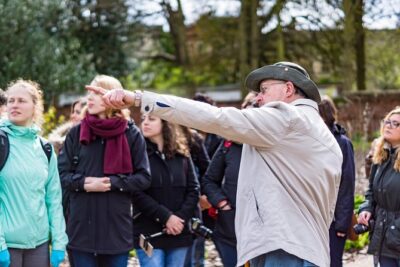

Private Guided Historic Electric Cart Tour of St. Augustine
Read our review →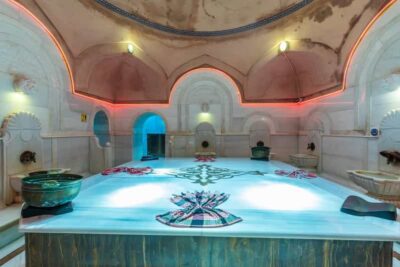
Acemoglu Historical Turkish Bath w/Private Options
Read our review →
Private Full-Day Tour of Historical Alexandria
Read our review →
Private Tour of the Historic City in a Ford T Car
Read our review →
Madrid Historical Tour with Local Guide in Eco Tuk Tuk Private
Read our review →
Private Biblical Tour Ancient Corinth & Isthmus Canal from Athens
Read our review →
Private Kathmandu Sightseeing Tour | UNESCO World Heritage sites
Read our review →Browse the lists this tour appears in