
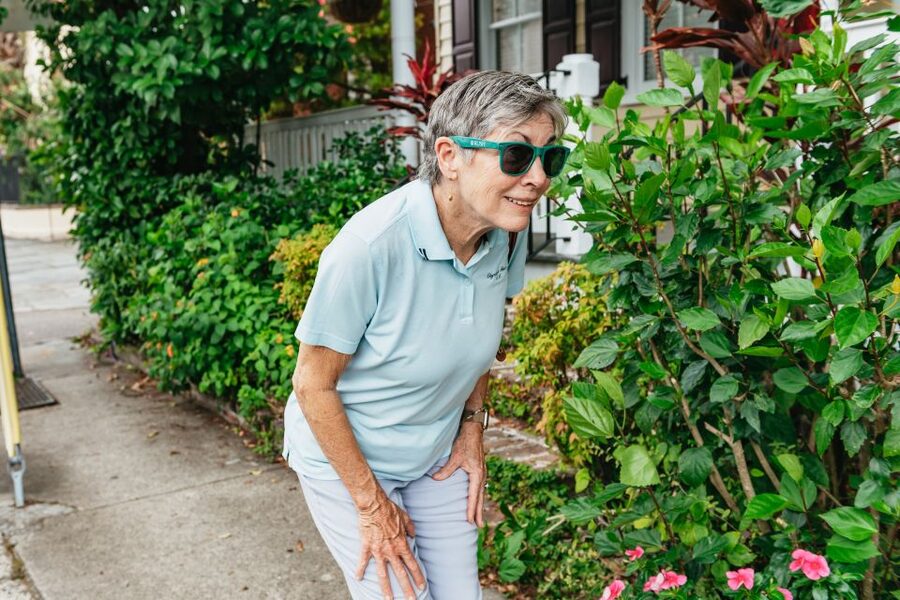
Review · SOUTH CAROLINA
Charleston: Old Walled City Historical Walking Tour
Charleston’s past is written on its streets. This two-hour walk brings the old city to life through colonial homes, churches, graveyards, public buildings, and stories about fire, war, disease, piracy, hurricanes, and earthquakes. I like the way the tour covers both grand landmarks and smaller details, especially the symbols carved into old tombstones. I also like the chance to hear Charleston through a local voice, including guides such as Al, Bruce, Eric, and Alfie, who bring years of local experience to the route.
The main drawback is the pace. You cover a fair amount of ground in two hours, and the information comes quickly. One guide may speak faster than ideal, especially for anyone hard of hearing or for visitors who prefer a slow, reflective walk. Still, at $30 per person, this is a strong introduction to Charleston if you enjoy walking and want context before exploring on your own.
Key things to know before you book
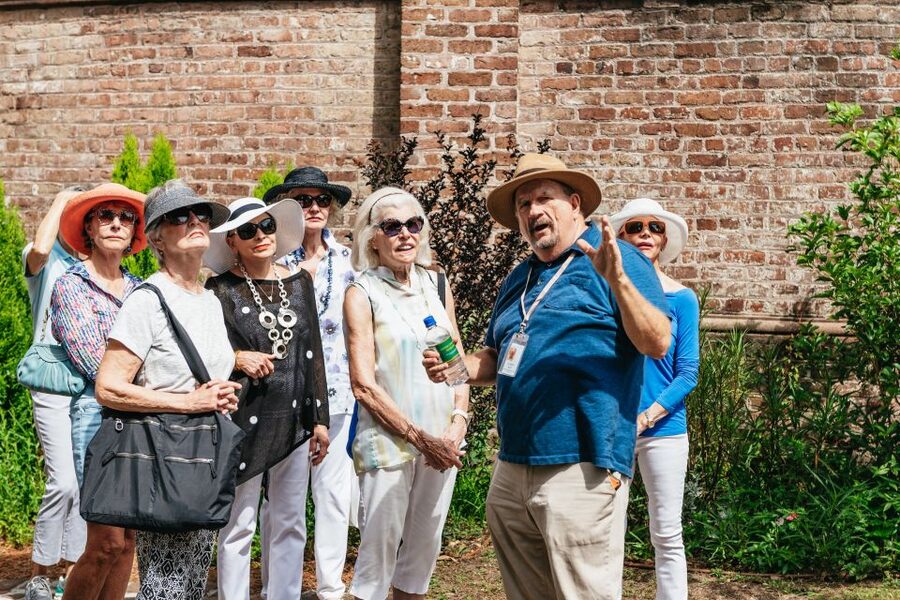
- A local view of Charleston: Some guides, including a 7th-generation Charlestonian, add family memories and local stories to the standard landmarks.
- A wide sweep of history: The talk moves from colonial settlement and piracy to rice planters, epidemics, sieges, bombardments, fires, hurricanes, and the earthquake.
- A useful first-day tour: The route passes several major sights, making it a practical way to get your bearings early in a Charleston visit.
- Mostly outdoor sightseeing: You see churches, homes, streets, monuments, and public buildings from the outside, with selected stops and photo opportunities.
- A real walking commitment: Comfortable shoes, water, sunscreen, and weather-appropriate clothing matter, especially in hot or humid conditions.
- Strong guide-led experience: The guide is the heart of the tour. Al, Bruce, Eric, Alfie, and others have been praised for humor, local insight, patience, and storytelling.
Meeting your guide on Chalmers Street

The tour begins outside Shop Historic Charleston, on the sidewalk at the corner of Meeting Street and Chalmers Street. Chalmers is the cobblestone street, so this is a useful landmark when you are finding the meeting point.
The opening location puts you right inside the historic core. You do not waste the first part of the tour getting to the old district. Once the group gathers, the guide sets off on foot through Charleston’s old streets, where colorful houses, churches, storefronts, and public buildings provide the backdrop.
This is a live, English-language tour, not an audio walk. That matters because you can ask questions and follow the guide’s interests. Several guides have been praised for adjusting the conversation to the group, including one who asked about personal interests and shaped parts of the walk around them.
More History Walking Tours in Charleston
- Historic Charleston Guided Sightseeing Walking Tour
★ 5.0 · 6,216 reviews - Hidden Alleyways and Historic Sites Small-Group Walking Tour
★ 5.0 · 2,335 reviews - Charleston historical walking tour with a Professor of History at The Citadel
★ 5.0 · 1,284 reviews
The French Quarter in 50 minutes
The longest portion of the route takes place in the French Quarter, where you spend about 50 minutes walking, sightseeing, and stopping for photographs. This is the core of the experience.
The name can suggest one narrow architectural style, but the real value here is the mix of buildings and stories. You pass pre-colonial and post-colonial homes, churches, storefronts, and civic structures. The guide explains how Charleston grew, how its streets and buildings reflect changing fortunes, and how the people who lived here shaped the city.
I especially like this part for first-time visitors because it gives meaning to details you might otherwise pass without noticing. A doorway, church façade, street plan, or old home becomes part of a larger story. You are not simply photographing attractive buildings. You are learning why the city looks this way and what happened behind those walls.
The storytelling covers Charleston’s rise as a port, the age of piracy, and the influence of rice planters. It also addresses the difficult parts of the city’s past. The tour does not present Charleston as a pretty collection of pastel homes. It connects wealth, labor, power, conflict, and disaster. That balance makes the walk more useful than a tour focused only on architecture.
The amount of information can be a strength or a challenge. Al, Bruce, and Eric have been singled out for giving long, entertaining explanations, while one visitor found the volume of information almost too much and wished the guide had spoken more slowly. If you want every date and name, take notes. If you simply want the main story, listen for the big patterns.
Churches, tombstones, and the Dock Street Theatre
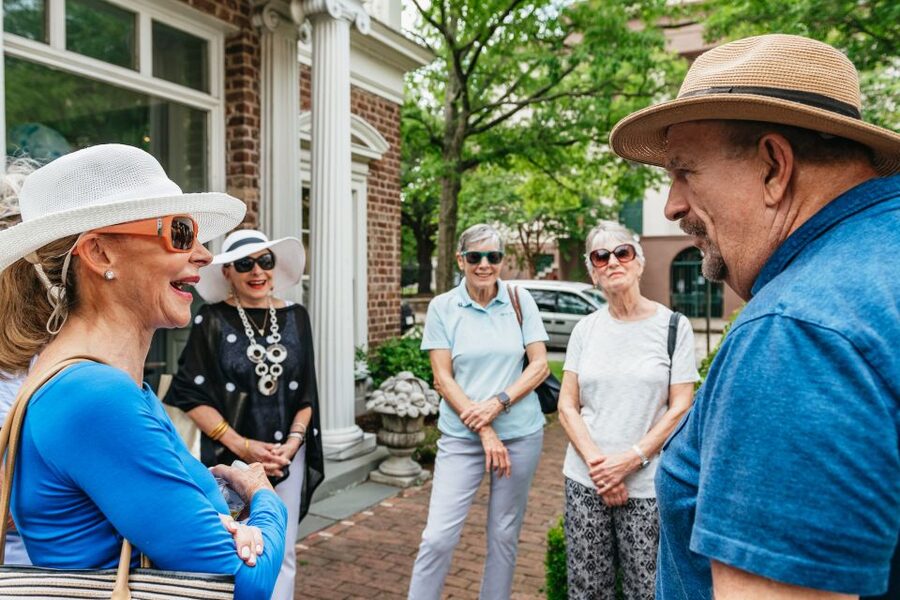
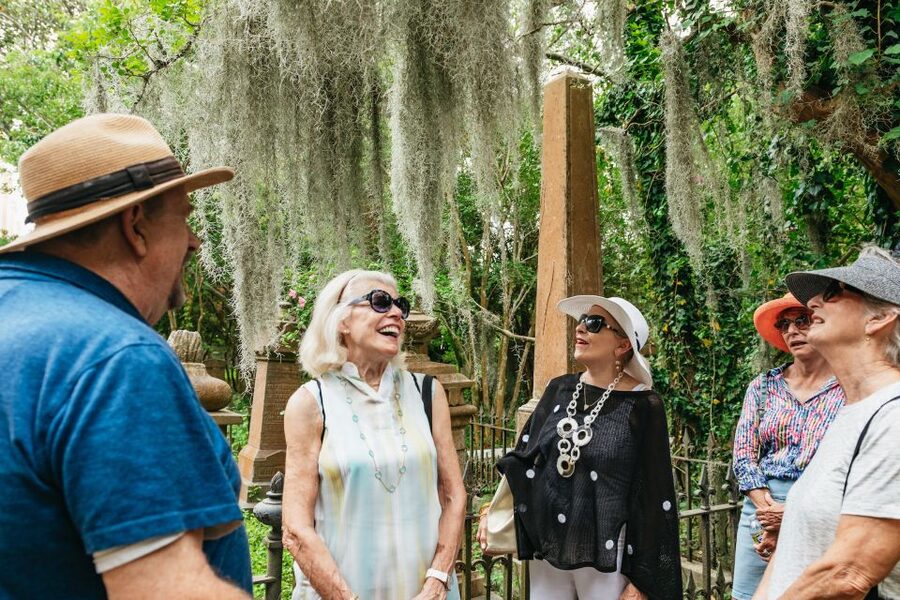
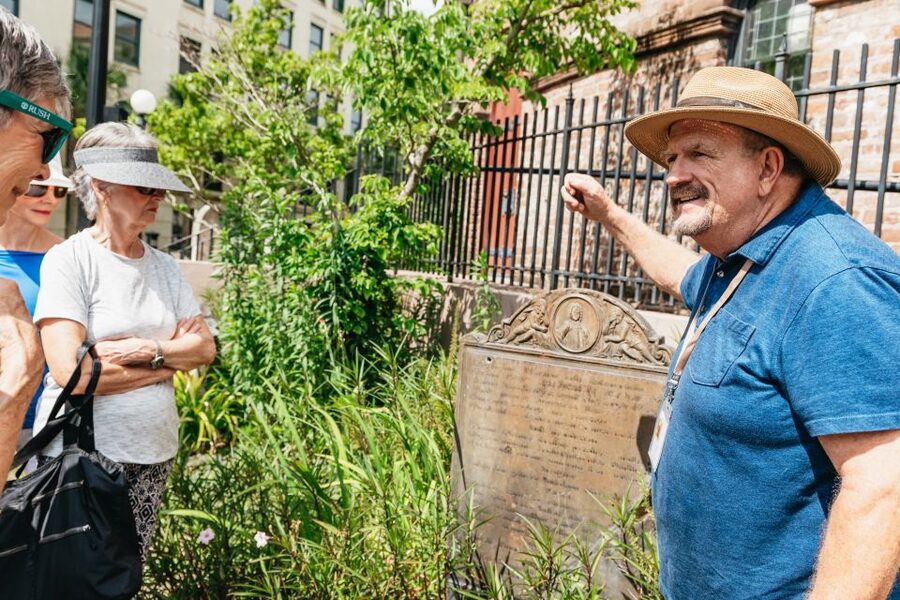
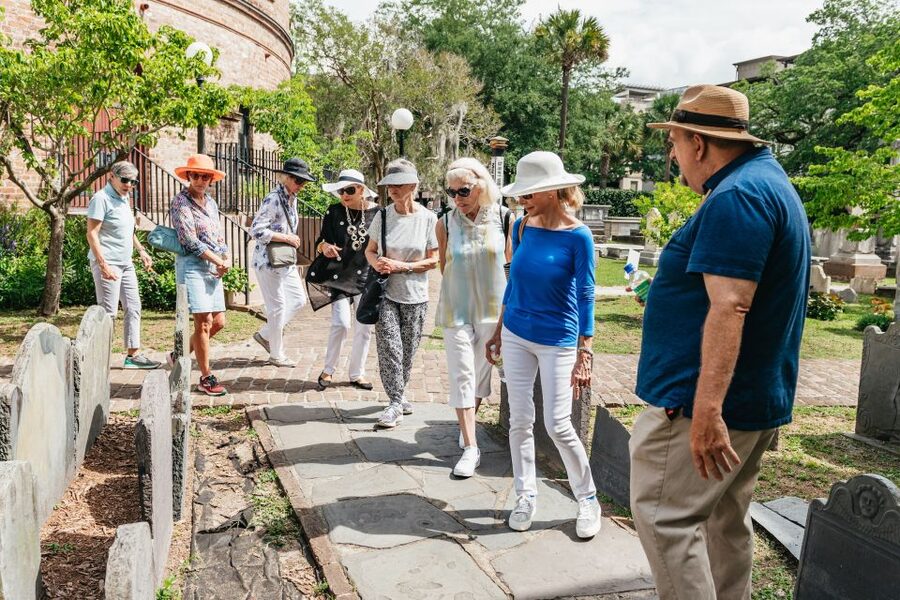
The route includes picturesque churches and old burial grounds, where the guide explains symbols found on tombstones. These details add a personal scale to the city’s past. Instead of hearing only about governors, wealthy families, and famous events, you get a glimpse of how earlier residents marked death, faith, family, and social position.
The old symbols are worth close attention. Your guide gives you a way to read them, turning what can look like weathered stone into evidence of the people who lived here. Since the tour is outdoors, visibility and crowd position may affect how easily you can see each detail. Stay near the guide when the group gathers around a marker or façade.
The Dock Street Theatre receives about 15 minutes. It is a good stop for discussing Charleston’s cultural life and the role of public buildings in the city. You visit and photograph the exterior area rather than expecting a full theater performance or backstage tour. That distinction matters if you are hoping to go inside.
The stop also breaks up the walking. Two hours on city streets can feel long, so these short pauses give you time to look up, take pictures, and reset your attention before the next story.
The Old Exchange and Provost Dungeon
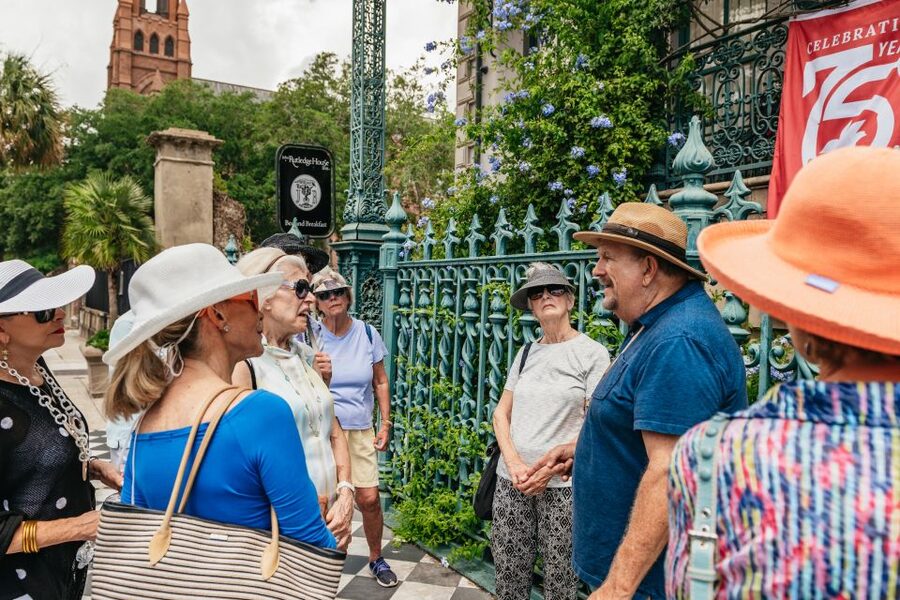
The Old Exchange and Provost Dungeon is scheduled for about 12 minutes. This stop points to Charleston’s colonial and political past, as well as the harsher side of the city’s public history.
The word dungeon catches the eye, but you should treat this as a guided sightseeing stop rather than a long interior visit. The tour uses the site to explain events and people connected with Charleston’s earlier years. Your guide’s storytelling is especially important here because the building’s meaning comes from the context, not just its exterior.
This is one of the places where the tour’s broad subject range works well. Charleston’s story is not only about elegant houses. It includes imprisonment, conflict, political change, and the uncertainty that came with living in a port city exposed to war and natural disasters.
More History Walking Tours in the USA
- Historic Charleston Walking Tour: Rainbow Row, Churches, and More
★ 5.0 · 691 reviews - Charleston: History and Architecture Guided Walking Tour
★ 4.8 · 349 reviews - Charleston History and Hops Tour: Bar and History Walk
★ 5.0 · 316 reviews - Small-Group Tour: Charleston Old Walled City Historical Walking Tour
★ 4.5 · 283 reviews
Waterfront Park and views along the harbor
The walk continues toward Waterfront Park for roughly 15 minutes of sightseeing and scenic views. This section gives you a change of scenery after the tighter streets of the French Quarter.
The park is a good place to appreciate Charleston’s position beside the water. The guide connects the views to the city’s growth as a port and to the dangers that repeatedly threatened it. Hurricanes, sieges, bombardments, fires, epidemics, and the earthquake are all part of the tour’s larger account of survival.
Do not expect a long rest stop. The route continues, and the tour remains a walking experience. Still, the open views help the city make more sense. You begin to see why trade, shipping, weather, and military threats mattered so much here.
Rainbow Row in seven minutes
Rainbow Row gets a short stop of about seven minutes. The colorful façades are among Charleston’s most recognizable sights, so this is a natural photo break.
The stop is brief and focused. You will have time to see the row and hear its place in the city’s architectural story, but not to linger for a long building-by-building examination. If you want detailed photographs, keep your camera ready before the group arrives.
This is also a good example of the tour’s design. It gives you the postcard views, but it does not let them dominate the whole walk. The colorful buildings are attractive, yet the guide keeps returning to the people, events, and disasters that formed the city behind the façades.
Heyward-Washington House and notable residents
The Heyward-Washington House receives about five minutes. It is a quick stop, but it adds another colonial home to the architectural picture.
The tour also includes stories about famous people who lived in Charleston. A local guide can make this part more engaging by linking homes to personalities and family connections. Bruce, Al, and other guides have been praised for personal stories and anecdotes about the city, including memories of growing up in Charleston.
Do not expect a full house tour during this walk. The value is in seeing where the home fits within Charleston’s wider development. If you want to explore historic interiors, you will need to plan separate visits.
St. Michael’s Episcopal Church
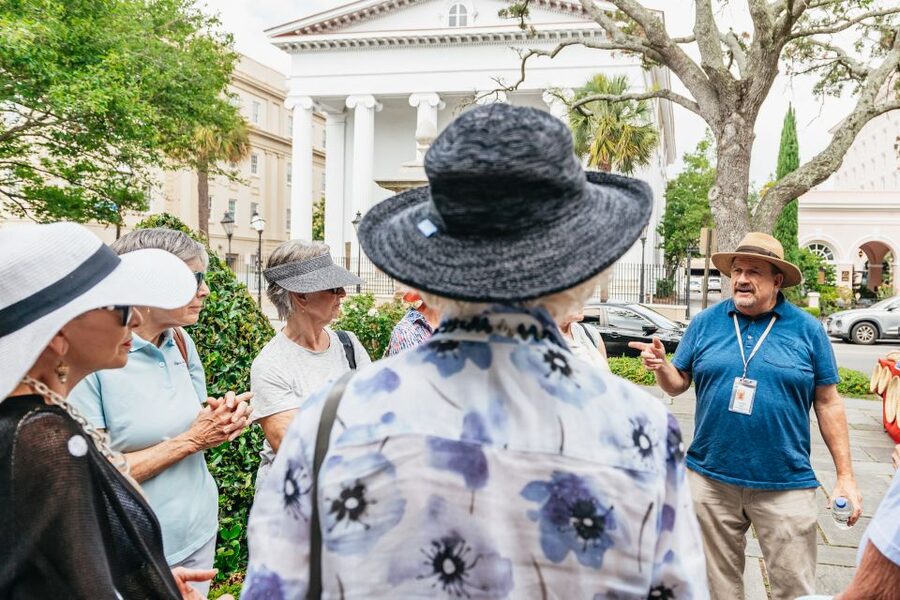
St. Michael’s Episcopal Church receives about 12 minutes of sightseeing. Its presence on the route gives the guide another chance to explain Charleston’s religious, architectural, and civic life.
Churches are especially useful landmarks on a history walk because they often connect several eras. They can show changing design tastes, the role of religious institutions, and the social importance of prominent public buildings. The guide uses this and other church stops to place Charleston’s growth in a longer timeline.
As with the other stops, the schedule indicates sightseeing rather than a dedicated interior tour. You should be prepared to view the site from the route and listen to the explanation outdoors.
The final stretch and what the route teaches
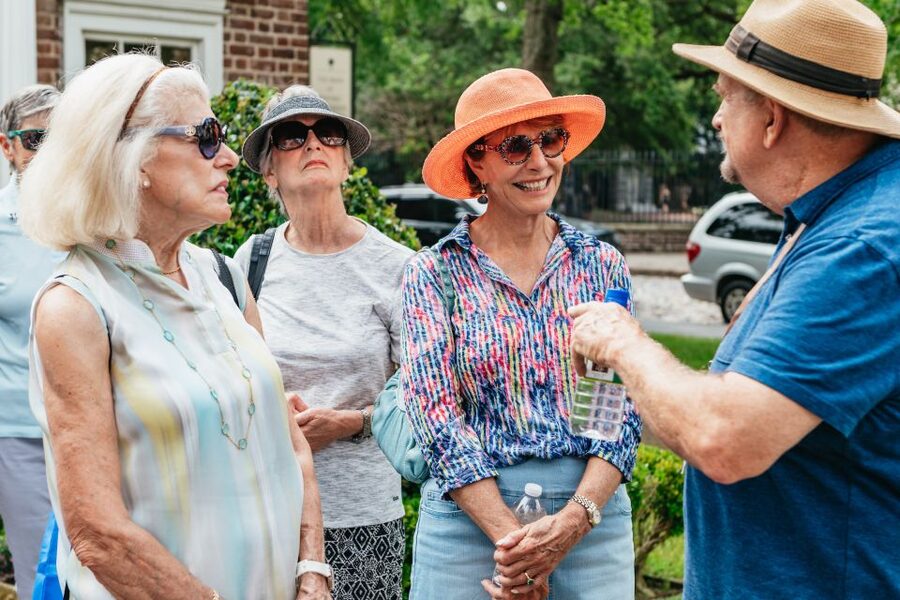
After St. Michael’s, the group returns to Shop Historic Charleston. The listed timing adds up to a full two-hour walk, though the exact rhythm depends on questions, group size, weather, and the guide.
The best part of the route is its range. In a short period, you see colonial homes, churches, a theater, a historic exchange, the waterfront, Rainbow Row, and a notable residence. More important, you learn how these places connect.
Charleston’s story comes across as a series of shocks and recoveries. Seven major fires, hurricanes, epidemics, sieges, bombardments, and a devastating earthquake all left marks on the city. Hearing about these events while standing among old buildings helps you understand that preservation here is not simply about age. It is also about survival.
The guide’s local perspective adds another layer. A 7th-generation Charlestonian can speak about the city as a lived place, not only as a museum district. Other guides, including Eric Wright and Alfred Ray, have been praised for combining formal historical knowledge with personal familiarity. That mix is one of the tour’s strongest features.
Is $30 a fair price?
At $30 per person, the tour offers good value if you want a guided introduction to central Charleston. You get two hours with a professional guide and a route that covers many of the city’s most recognizable areas. A private guide would cost far more, while a self-guided walk would not give you the same running explanation or chance to ask questions.
The value depends on how you use it. If you already know Charleston well, the broad overview may repeat familiar material, though a strong local guide can still reveal less obvious stories. One long-time resident found that the tour introduced new places and amusing details despite already living in the city.
For most visitors, I would schedule it near the start of a stay. You can return later to the places that caught your attention, explore interiors separately, and use the guide’s local suggestions to shape the rest of your visit. One person also appreciated receiving restaurant recommendations, though that is a useful extra rather than a promised feature.
Walking comfort, weather, and hearing needs
The tour involves a substantial amount of walking. Some people found the route easy and not strenuous, while others emphasized that you cover considerable ground in two hours. Wear comfortable shoes, bring water and sunscreen, and dress for the weather.
Charleston’s historic streets can include cobblestones, so stable footwear is important. The supplied information does not give a precise distance or promise a fully accessible route. One guide did adapt the route for a participant using a wheelchair, but you should discuss mobility needs in advance rather than assume every path will work equally well.
Hot weather can affect your enjoyment. A guide may choose shaded streets when possible, but you should still prepare for sun and heat. The experience is also strongly dependent on hearing the guide clearly. One person who was hard of hearing missed some words when the guide’s voice dropped, and another wished the guide had slowed down. Stay close, ask the guide to repeat details, and let the guide know about hearing needs at the start.
Who will enjoy this Charleston walk?
I would choose this tour if you enjoy history, architecture, and walking at the same time. It suits first-time visitors who want an overview before exploring the city independently, as well as repeat visitors who want local stories rather than another quick photo stop.
Families can also fit comfortably into the experience. One guide was praised for being patient and kind with children, and another adapted the tour to suit the group. Still, young children need to manage two hours of walking and listening.
The tour is less suitable if you want extended indoor visits, a very slow pace, or a narrow focus on one period. It covers a lot, and some guides deliver a large amount of information. You will get more from it if you enjoy asking questions and following a lively story.
Should you book the Old Walled City tour?
Book it if you want a practical first look at Charleston with a guide who can connect beautiful buildings to difficult events. The strongest reasons are the wide historical coverage, the local voices, the manageable two-hour length, and the solid $30 price.
Skip it if you dislike walking, prefer quiet self-guided sightseeing, or want detailed interior access at every stop. For most visitors, though, this is a useful and entertaining way to begin. Arrive ready for cobblestones, fast-moving stories, and a city that has endured far more than its polished façades suggest.
FAQ
How long is the Charleston Old Walled City Historical Walking Tour?
The tour lasts two hours.
How much does the tour cost?
The price is $30 per person.
Where does the tour meet?
Meet on the sidewalk at the corner of Meeting Street and Chalmers Street. Chalmers is the cobblestone street.
What language is the tour offered in?
The live tour is offered in English.
What sights are included?
The route includes the French Quarter, Dock Street Theatre, the Old Exchange and Provost Dungeon, Waterfront Park, Rainbow Row, Heyward-Washington House, St. Michael’s Episcopal Church, and other historic areas of Charleston.
Does the tour include a professional guide?
Yes. A professional live guide leads the walking tour.
How much walking is involved?
The tour involves a substantial amount of walking. Comfortable shoes are recommended.
What should I bring?
Bring comfortable shoes, sunscreen, water, and clothing suited to the weather.
Can I cancel the tour for a refund?
You can cancel up to 24 hours in advance for a full refund. You can also reserve now and pay later.
Just added around Charleston
- Charleston’s Historic Pubs, Taverns, and Taprooms Tour★ 4.5 · 33 reviews
- Charleston’s Strong Women of the South History Tour★ 4.5 · 27 reviews
- Small-Group Tour: Charleston Old Walled City Historical Walking Tour★ 4.5 · 283 reviews
- Private Walking Tour of Historic Charleston★ 5.0 · 38 reviews
- Sip History in The Sun Cabana Covered Cocktail Class★ 5.0 · 332 reviews
- Sip History In a Secret Speakeasy Cocktail Class★ 5.0 · 40 reviews
- Private Afternoon Sailing/Dolphin & History Tour on 43ft Mystique★ 5.0 · 32 reviews
- Private Sunset Sail BYOB Dolphin/History Tours on 43ft Mystique★ 5.0 · 42 reviews
History Walking Tours, compared.
History and Hauntings of Salem Guided Walking Tour
Read our review →
Freedom Trail History Small Group Walking Tour
Read our review →
Historic Charleston Guided Sightseeing Walking Tour
Read our review →
Tapas Walking Tour with Food, Wine, and History
Read our review →
Savannah History and Haunts Candlelit Ghost Walking Tour
Read our review →
A History of Terror – Belfast City Centre Walking Tour
Read our review →Browse the lists this tour appears in