
Review · NORTHERN GERMANY
Bremen: Walking Tour of Historic Schnoor District
Tiny lanes, big stories. Bremen’s Schnoor quarter packs centuries of architecture into a small, easy-to-explore area, and this one-hour walk gives you the context that a casual stroll cannot. I like the 14th-century houses and winding alleyways, and I also like the way the tour points out less obvious details, from old facades to buildings recreated from historic plans. The main limitation is that the tour is conducted in German, and every building is viewed from outside.
At $14 per person, this is an appealing way to get your bearings in Bremen without spending half a day. The experience is short, practical, and full of character, though visitors who need wheelchair access should note that the tour is not suitable for wheelchair users. Guide Sönke has earned praise for mixing amusing local stories with solid historical detail, which can make the hour feel more like a lively conversation than a formal lecture.
Key points to know before you book
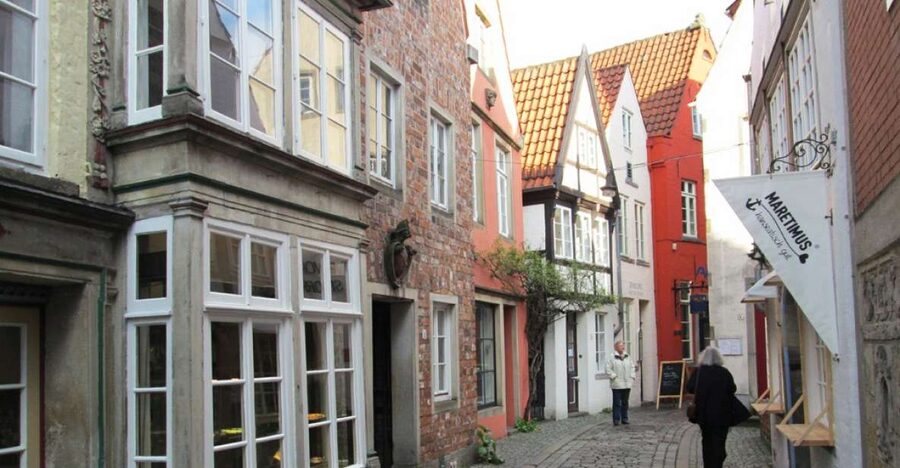
- Schnoor’s narrow lanes are the main attraction: Little houses crowd together in a maze-like quarter near the Weser River.
- You see buildings from the outside only: The value comes from the guide’s explanation of architecture, history, and former uses.
- The tour covers several periods: Look for Gothic, Baroque, Renaissance, Classicist, Historicist, and half-timbered styles.
- Haus Schnoor 15 and Packhaus Schnoor 2 are important stops: Both are among the quarter’s oldest surviving secular buildings.
- The tour is offered as shared or private: A private group can make the experience more personal if you want to ask many questions.
- Comfortable shoes matter: The walk lasts one hour and passes through old, narrow lanes.
Why Schnoor feels unlike the rest of Bremen
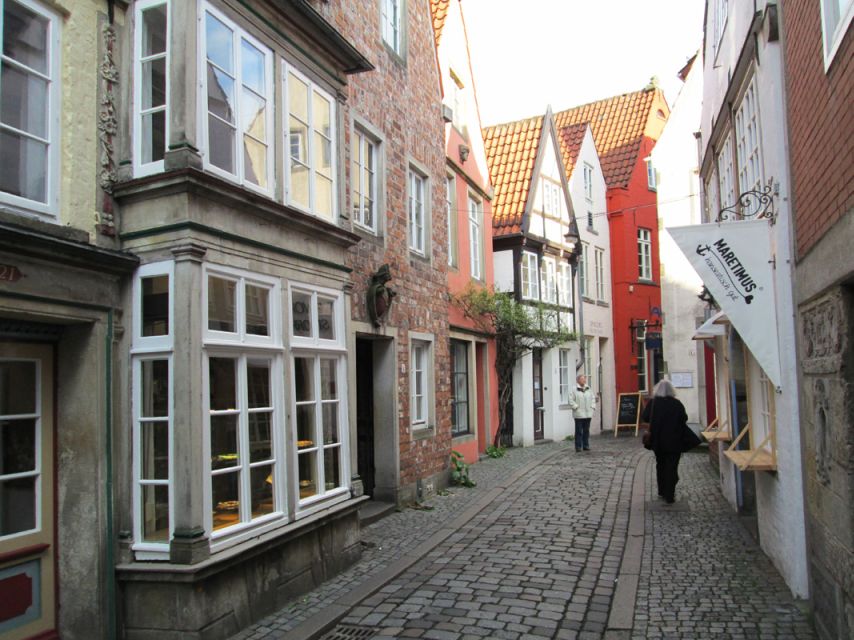
Schnoor is not a broad square lined with grand public buildings. It is a compact quarter of close-set houses, tight passages, small shops, and winding lanes. The name is linked with the old craft and maritime character of the area, and the quarter’s layout still gives you a strong sense of an older Bremen.
I like the way the streets make you slow down. You cannot simply march through Schnoor in a straight line. The lanes bend, narrow, and open into small pockets where a half-timbered house or painted facade suddenly catches your eye.
The earliest written reference to Schnoor dates to the 13th century. A Franciscan monastery was built on the edge of the district around that time. Only the monastery church remains today, but the old religious connection helps explain why this small neighborhood became such an important part of Bremen’s early story.
The present Catholic St. John’s Church dates from the 14th century and uses redbrick Gothic design. In northern Germany, brick was a practical building material, but it could also create a strong, elegant style. The church gives the walk a useful point of reference before you move deeper into the lanes.
More History Walking Tours in Germany
- Leipzig: 1.5-Hour Historical Walking Tour in German
★ 4.7 · 2,217 reviews - Berlin: History of the Third Reich Guided Walking Tour
★ 4.7 · 791 reviews - Trier: Guided Old Town Highlights and History Walking Tour
★ 4.7 · 687 reviews
Meeting at Die Glocke and entering the quarter
The tour begins in front of Die Glocke concert hall at Domsheide 6, in Bremen’s 28195 postal district. Your guide waits with a sign reading Bremen Tour Guide, so the meeting point should be easy to identify.
This location is useful because it places you near Bremen’s central historic area and close to the route toward Schnoor. You do not need to arrange separate transport for the tour itself. The walk is short enough to fit before another city sight, after a visit to the cathedral area, or during a compact stop in Bremen.
The first few minutes are likely to be about orientation. You are introduced to Schnoor’s position, its connection with the Weser River, and the reason the quarter has kept such a different feel from the larger streets around it.
Bring comfortable shoes. The distance is only one hour, but old quarters are rarely designed for long, even pavements. The narrow streets and uneven surfaces are part of Schnoor’s character, but they are also why this experience is not suitable for wheelchair users.
13th-century roots and St. John’s Church
The monastery story gives the tour more weight than a simple walk past pretty houses. Schnoor was not preserved just because it looks charming today. Its religious, residential, and working history helped shape the quarter over many centuries.
At St. John’s Church, look for the redbrick Gothic style. The church is Catholic and dates from the 14th century, placing it among the area’s oldest major surviving structures.
You will not be touring the church interior as part of this experience. The buildings are viewed from outside, so the guide’s explanation matters. A good guide can help you read the facade, understand the period, and see how the church fits into the surrounding streets.
That outside-only rule is important when you decide if the tour suits you. If your main aim is to enter historic interiors, this is not the right activity by itself. If you want a short introduction to the quarter’s architecture and story, the restriction is less of a problem.
Houses from the 17th and 18th centuries
Many Schnoor houses from the 17th and 18th centuries remain in their original form. These buildings give the quarter much of its romantic appearance, but the tour also helps you avoid treating them as a single style.
You can see differences between narrow half-timbered houses, brick structures, rebuilt facades, and buildings influenced by later architectural fashions. The point is not only to admire the details. It is to notice how one small street can contain several periods of construction.
The close-set houses may remind you of a string of small pearls, with each building slightly different from the next. That variety is one of the best reasons to take the guided option instead of walking through alone.
I would not expect a long stop at every building. The tour lasts one hour, so the guide must keep moving. Still, the compact size of Schnoor works in your favor. You can cover a useful number of sights without feeling that you are racing across Bremen.
Same place, a different slice of the past:
- Leipzig: City History Canal Sightseeing Tour on a Motorboat
★ 4.7 · 7,671 reviews - Berlin: 3-Hour World Heritage Cruise to Potsdam
★ 4.5 · 1,569 reviews - Heidelberg: Night Watchman Historic Adventure Tour
★ 4.7 · 1,186 reviews - The Local Tour of Hamburg Historic Centre
★ 5.0 · 1,058 reviews
Haus Schnoor 15 and Packhaus Schnoor 2
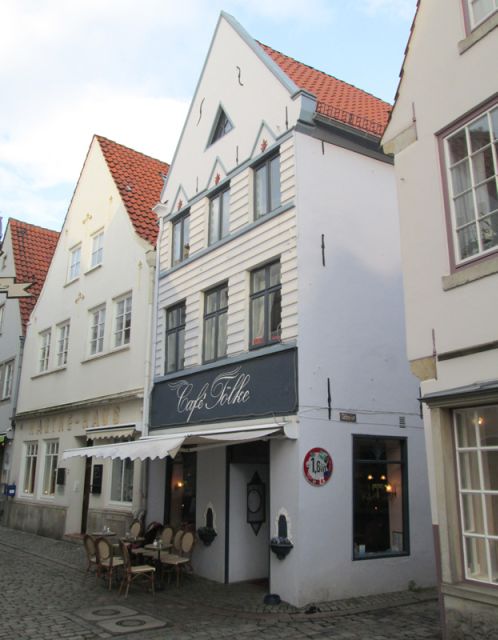
Two especially useful reference points are Haus Schnoor 15, also known as Brasilhaus, and Packhaus Schnoor 2. Both date back to the 15th century and are among the quarter’s oldest surviving secular buildings.
These houses help you picture Schnoor before it became a popular place for small shops and city walks. A secular building is not a church or monastery structure, so these sites show how ordinary urban life was housed and organized in the old quarter.
Packhaus Schnoor 2 also suggests the working side of the neighborhood. The name points toward storage and trade, linking the quarter to the commercial life of Bremen and the nearby river.
As you look at the buildings, pay attention to their proportions and position along the lane. The narrow frontage is not just a decorative choice. It reflects the limits of an old urban quarter, where space was valuable and houses were fitted closely together.
Recreated buildings and unusual facades
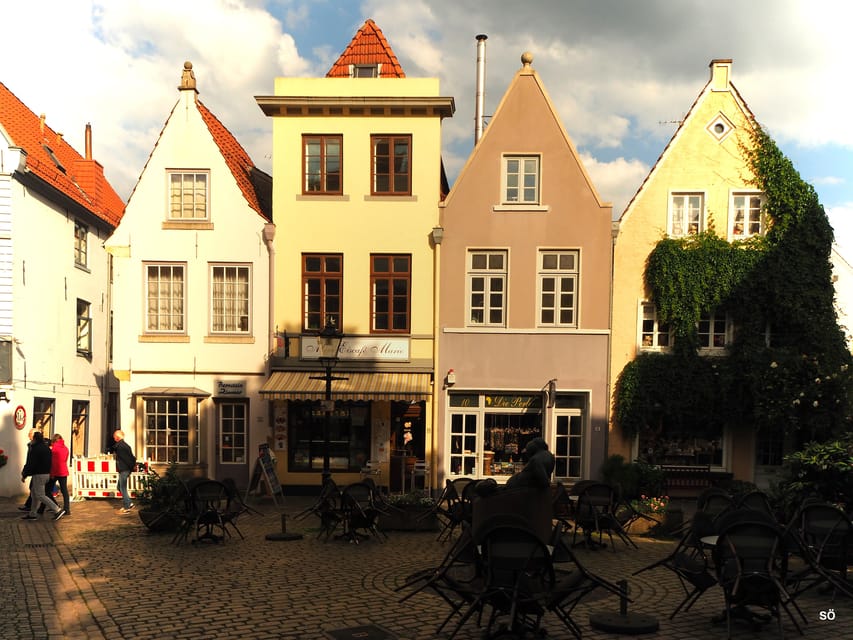
One of the more interesting parts of the walk is learning that not every historic-looking building has remained untouched in its original place. Some houses have been recreated according to historical specifications. Others now consist only of facades, even though the original buildings once stood somewhere else.
This gives Schnoor a more complicated story than a simple preserved medieval village. What you see may be original, reconstructed, relocated, or altered over time. The guide’s role is to explain those differences so that you can appreciate the quarter without taking every old-looking surface at face value.
The half-timbered house with the tea room is another detail worth watching for. It adds a domestic, almost storybook touch to the lane, while also showing how historic buildings have found modern uses.
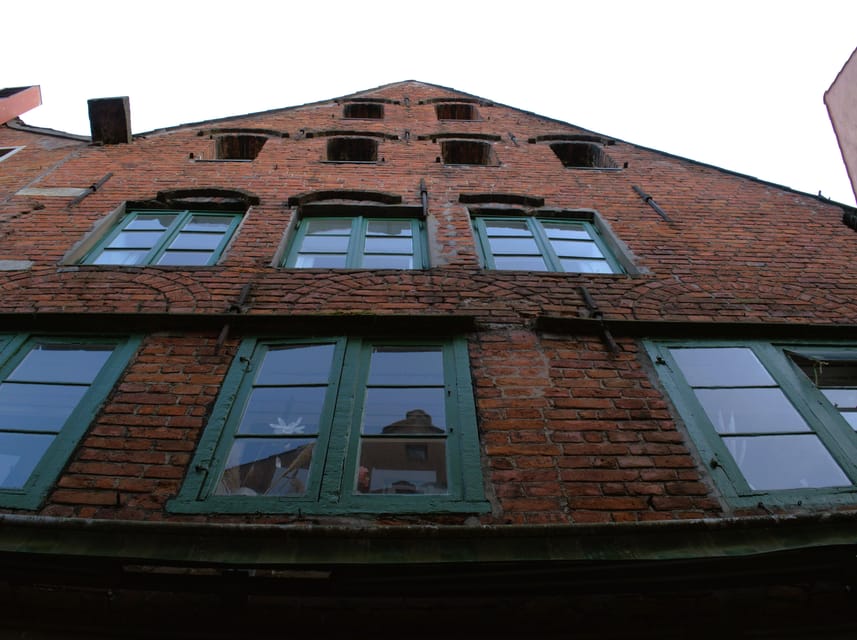
Since you cannot enter the buildings on this tour, these details are best appreciated from the street. Take a moment to look above shop windows and doorways. Upper floors, timber patterns, brickwork, and narrow entrances can tell you as much as the street-level displays.
Architecture from Gothic to Historicism
The tour covers a surprisingly broad architectural range for such a compact district. Alongside redbrick Gothic design, you learn about Renaissance, Baroque, Classicist, and Historicist influences.
That mix is valuable because it shows that Schnoor was not frozen at one moment in time. Buildings were repaired, rebuilt, extended, and reshaped as tastes and needs changed.
You might see a restrained Classicist detail near a more decorative Baroque feature, or a later Historicist interpretation beside an older half-timbered house. Without guidance, these differences can blur together. With a guide, you get a basic visual vocabulary for reading the streets.
I especially like this aspect for visitors who are not architecture specialists. You do not need to remember every label. It is enough to understand that Schnoor’s appearance comes from several centuries of change, not from one single design plan.
Goldsmiths, handicrafts, and the modern Schnoor
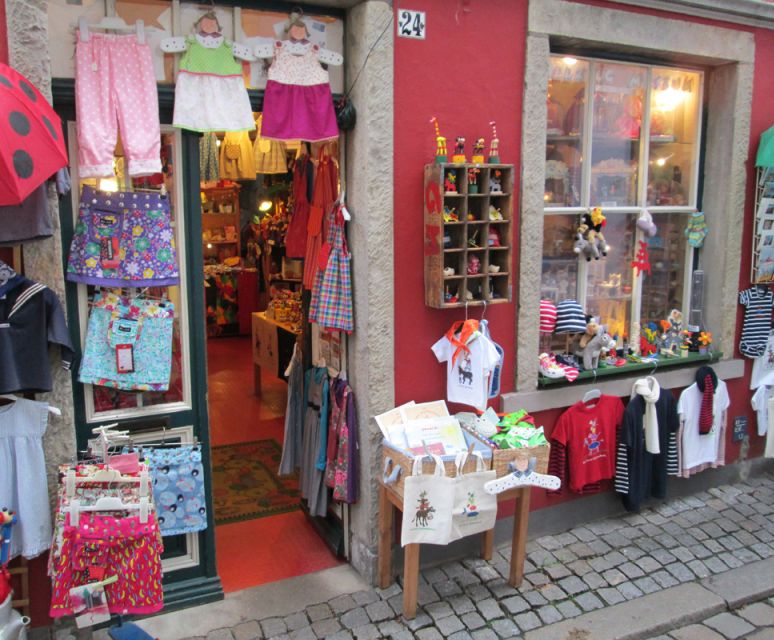
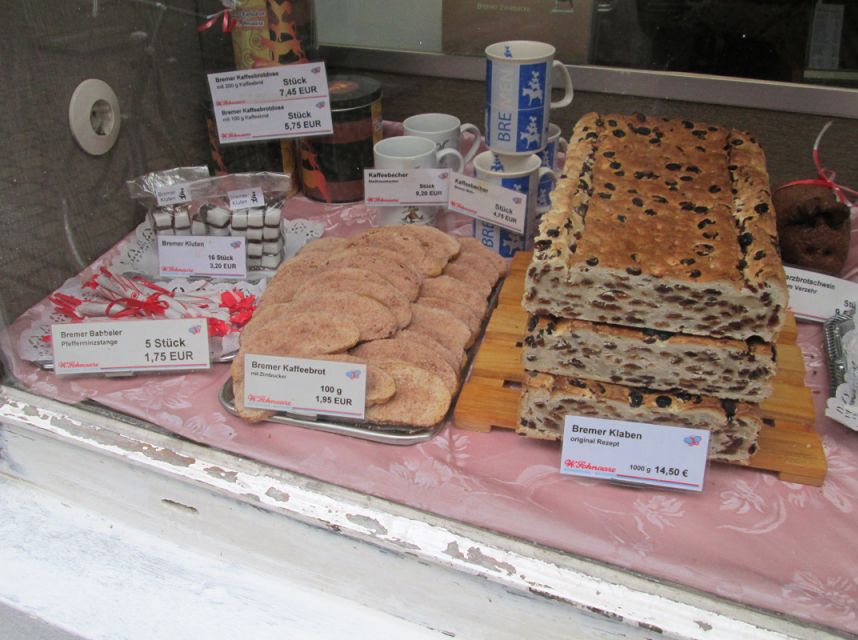
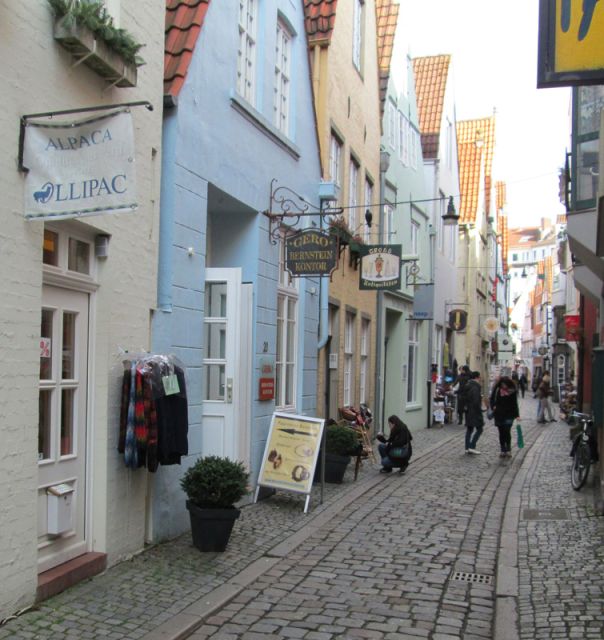
Schnoor is still a living neighborhood rather than an open-air museum. As you walk, you pass goldsmiths and shops selling local handicrafts. These businesses add color and give the lanes a reason to exist beyond sightseeing.
The shops also provide a useful contrast with the old houses. Historic walls now hold modern businesses, and the quarter’s small scale suits makers, jewelers, and independent shops better than large commercial chains.
You should not expect food or drinks to be included. If you want a snack or coffee, plan that separately before or after the tour. The one-hour format leaves room to continue exploring on your own, but the tour itself is focused on the guided walk and the buildings around you.
I would give yourself a little extra time after the tour to revisit the lanes at your own pace. The guide will point out many things, but you may want to stop for photographs, browse a shop, or look again at a facade you passed quickly.
What the guides add to the experience
The strongest part of a short walking tour is often the guide, and this experience seems to depend heavily on that human element. Guide Sönke has been praised for his warm Bremen personality, funny stories, and ability to explain the quarter in an engaging way.
A detail worth noting is the use of local jokes and amusing stories. That matters in Schnoor because the streets can look almost too polished at first glance. Humor helps bring the buildings and former inhabitants closer to everyday life.
The tour is conducted in German. If you are comfortable listening in German, you should gain much more from the historical explanations and stories. If you do not understand German, the architecture can still be enjoyed visually, but the main service being sold is the spoken interpretation.
You can choose a shared walk or a private group. A private option makes the most sense if your group wants to ask questions, prefers a slower pace, or has a particular interest in Bremen’s buildings and residents. A shared walk is the better value if you simply want a clear introduction at a low price.
Is one hour enough for Schnoor?
One hour is enough for an introduction, not a full study of the quarter. You will see the key streets, hear the main historical background, and learn about notable houses and architectural styles.
The short duration is a strength if you have limited time. You can fit it into a day that includes other central Bremen sights without giving up a large block of your schedule.
It can also feel brief if you enjoy detailed questions. The quarter contains centuries of changes, and the guide cannot cover every house in depth. If you want a slow photographic walk or plenty of shopping time, plan to stay in Schnoor after the formal tour ends.
I see the hour as a useful first pass. It gives you the framework, then lets you return to the lanes with better eyes.
Does the $14 price offer good value?
At $14 per person, the tour offers good value for a focused introduction to one of Bremen’s most distinctive quarters. You are paying for a live guide, not admission to an interior attraction, a meal, or transportation.
That distinction matters. The value lies in the stories, the architectural explanations, and the ability to recognize which buildings deserve a closer look. If you would otherwise wander through Schnoor without understanding its dates, styles, or reconstructed facades, the fee is modest.
The price is especially fair for a first visit to Bremen or for anyone who likes a short orientation walk. A private group option may cost more depending on the booking choice, but it gives your party a more personal setting.
The current rating is 4.8 out of 5 from 429 ratings, which fits the experience’s strongest qualities: entertaining guides, useful information, and a pleasant pace. I would still judge it against the German-language format and the outside-only viewing before booking.
Who should book this Schnoor walk?
I would recommend it to you if:
- You want a short introduction to Bremen’s oldest-looking quarter.
- You enjoy architecture but prefer explanations in plain language.
- You like local stories and a guide with personality.
- You have only one hour available.
- You are comfortable walking through narrow historic lanes.
- You understand German well enough to follow a live tour.
It is less suitable if you need wheelchair access, want to enter historic buildings, or expect food and drinks to be part of the experience. It may also be a weak choice if you do not understand German and are looking mainly for a language-independent guided activity.
The free cancellation policy allows you to cancel up to 24 hours ahead for a full refund, and you can reserve now and pay later. Those options make it easier to fit the walk around a changing Bremen schedule, but the more important decision is still the language and format.
Final verdict: book it for stories, not interiors
Book this tour if you want Schnoor to make sense, not simply look attractive. For $14 and one hour, you get a compact walk through old lanes, 14th-century religious architecture, 15th-century secular buildings, half-timbered houses, craft shops, and several later architectural styles.
The best reason to choose it is the guide-led storytelling, especially if you get Sönke or another guide with the same mix of humor and detail. Go in with the right expectations: this is an outdoor walking tour in German, not an interior museum visit.
If that suits you, it is an easy, good-value addition to a Bremen day. Afterward, you can wander back through Schnoor, browse the handicraft shops, and enjoy the details you now know how to recognize.
FAQ
Where does the Schnoor walking tour meet?
The meeting point is in front of Die Glocke concert hall at Domsheide 6, Bremen, 28195. The guide waits with a sign reading Bremen Tour Guide.
How long does the tour last?
The walking tour lasts one hour.
What language is the tour conducted in?
The live tour guide speaks German.
Are the buildings open to tour inside?
No. The buildings viewed during the walk are seen from the outside only.
Is a private tour available?
Yes. You can choose a private group option, depending on the booking choice.
Is the tour suitable for wheelchair users?
No. The experience is not suitable for wheelchair users.
What is included in the price?
A guided walking tour is included. Food and drinks are not included.
Just added around Germany
- Historic center of Berlin – Tour in Italian★ 5.0 · 143 reviews
- Berlin Food & Cultural Tour: Must-Try German & Berliner Classics★ 5.0 · 51 reviews
- Private Berlin WWII and Cold War History Tour with Local Expert Guide★ 5.0 · 28 reviews
- Private Tour: Jewish Heritage Walking Tour of Berlin★ 5.0 · 29 reviews
- Small-Group Historical Bike Tour in Berlin★ 4.5 · 103 reviews
- East Berlin Food & History Tour with Eating Europe★ 5.0 · 204 reviews
- Explore Berlin History and Highlights Sightseeing Walking Tour★ 5.0 · 81 reviews
- Berlin: Private Bike Tour of the Berlin Wall and Third Reich★ 5.0 · 23 reviews
History Walking Tours, compared.
History and Hauntings of Salem Guided Walking Tour
Read our review →
Freedom Trail History Small Group Walking Tour
Read our review →
Historic Charleston Guided Sightseeing Walking Tour
Read our review →
Tapas Walking Tour with Food, Wine, and History
Read our review →
Savannah History and Haunts Candlelit Ghost Walking Tour
Read our review →
A History of Terror – Belfast City Centre Walking Tour
Read our review →Browse the lists this tour appears in