
Review · HAKONE
Hike Japan Heritage Hakone Hachiri (Half Day)
A quiet trail leads into old Japan. This four-hour Hakone walk follows the preserved cobbles of the Tokaido highway, passes the woodcraft village of Hatajuku, and ends at Lake Ashi. I like the small maximum group of six, which keeps the walk personal, and I like the chance to hear local history from a certified national mountain guide rather than simply follow a marked path.
The main drawback is that this is not a continuous mountain hike. You skip the steepest section by bus, and you must pay a shared taxi fare to the trailhead plus a small bus fare. Still, the route offers a fine mix of forest, traditional culture, and old-road history in half a day.
Key details before you book
- Walk an old highway between Tokyo and Kyoto: The route follows part of the Tokaido, the road that once linked Edo, now Tokyo, with Kyoto.
- Reach Hatajuku after about one hour: This traditional woodcraft village gives the walk a cultural stop, not just a woodland setting.
- Stop at a 400-year-old teahouse: The visit includes amasake, a traditional drink, and a chance to rest indoors.
- Avoid the hardest climb by bus: The tour keeps the route manageable by skipping the steepest section.
- Finish beside Lake Ashi: You can catch a bus or pirate ship ferry onward from Motohakone after the walk.
- Expect a small, active outing: The group is limited to six, and a moderate level of fitness is required.
Why this old Tokaido walk is worth your morning
Hakone is often treated as a quick stop between Tokyo and Kyoto, but this route gives you a better sense of why the area mattered. The old Tokaido highway crossed difficult mountain terrain and connected Japan’s political center with the imperial capital. Walking a surviving section lets you see the route at ground level, where steep grades, forest cover, stone paving, and rest stops tell more than a museum display can.
You will hike for about two to three hours, with some time on cobbled sections and some time on forest trails. The route is not presented as a hard athletic challenge. Instead, it works as a historical walk with real exercise, supported by a guide who can explain what you are seeing as you go.
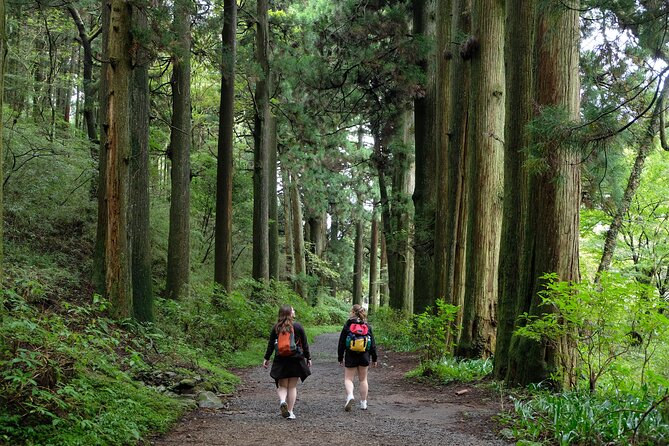
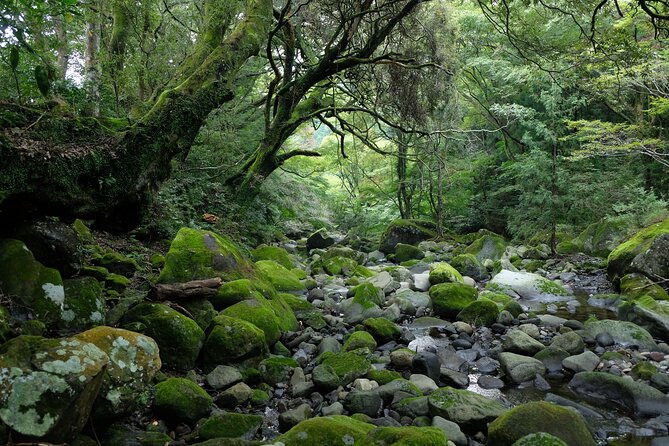
The forest is one of the strongest parts of the outing. Some sections are less visited, and the route can feel quiet. That matters in Hakone, where the popular sights around Lake Ashi can become crowded. Here, your attention shifts to the road under your feet, the trees around you, and the older shape of the region.
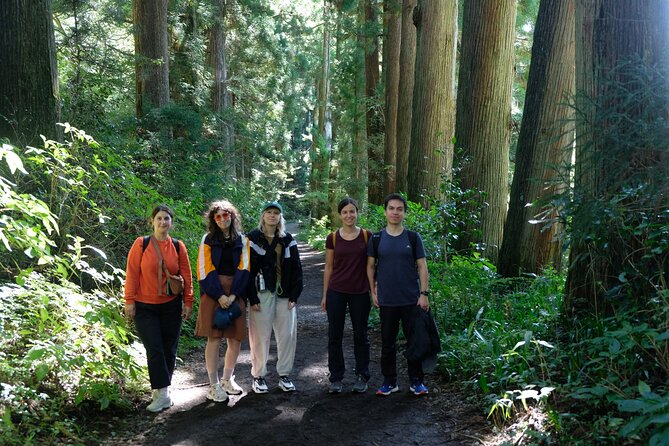
The small group size also improves the experience. With no more than six people, you can ask questions without shouting across a large crowd. Guides named Akihiro and Aki have been praised for clear English, friendly manners, and strong knowledge of the area. One guide had studied in Seattle, which may be useful if you want detailed explanations in English.
A few more history tours around Japan worth a look
- Hike Japan Heritage Hakone Hachiri with certified mountain guide
★ 5.0 · 46 reviews - 1-Day Tour from Nagoya: Hiking the Historic Nakasendo Trail
★ 4.9 · 34 reviews - Rio: Tijuca Forest Small Group Hike to Caves and Waterfalls
★ 4.9 · 536 reviews
Starting at Hakone-Yumoto at 9am
The meeting point is Hakone-Yumoto Station, a practical start for anyone staying in Hakone or arriving by train. The tour begins at 9am, so plan to arrive with enough time to find the guide and organize the first transfer.
Transportation to the trailhead is not included. A shared taxi costs 2,000 yen, divided among the group. The exact amount you pay depends on the number of people sharing it, so allow for this extra expense when comparing the tour price.
At $114.95 per person, this is not the cheapest way to walk in Hakone. The price makes more sense if you value a small group, a certified national mountain guide, historical explanations, and a planned route that connects several separate sights. If you only want a self-guided woodland walk, you can spend less. If you want to understand the road and the villages along it, the guide adds real value.
The mobile ticket is useful for a morning tour built around public transportation. You will still need to pay the shared taxi and local bus costs separately, but the main booking process is straightforward.
Hatajuku, Hakone’s traditional woodcraft village

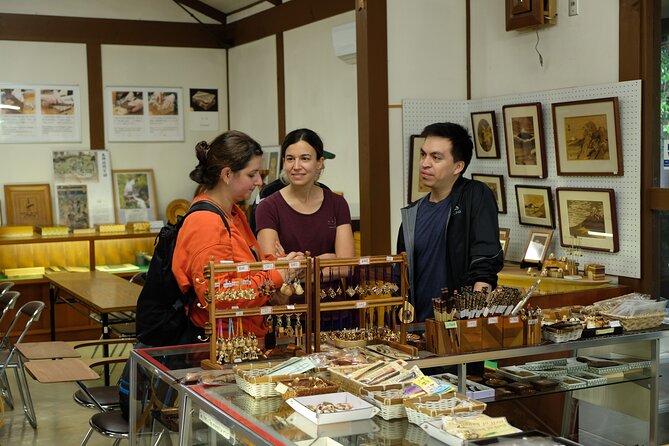
After roughly one hour of walking, you reach Hatajuku. This village is known for Hakone’s traditional woodcraft, especially the detailed decorative work associated with the area. The stop gives you a look at a living craft tradition rather than another scenic pause on the trail.
I like this part because it breaks up the walk in a useful way. You are not simply covering distance through trees. You learn why the settlement developed along this route and how local skills became part of Hakone’s identity.
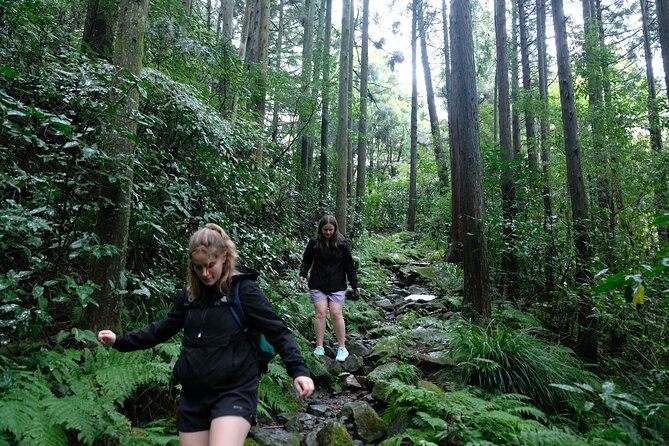
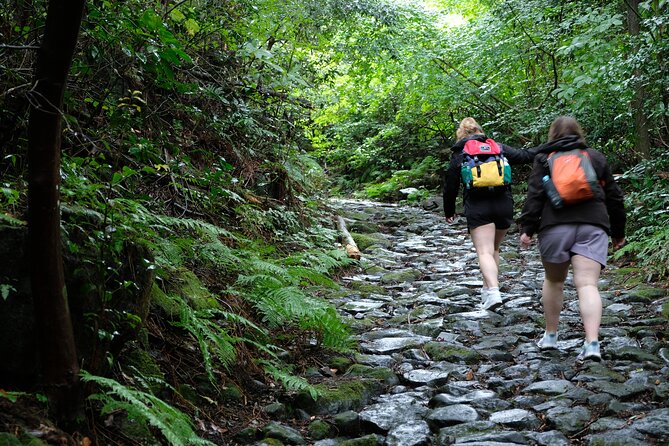
The itinerary allows about two hours for this first section, including the walk and the village visit. The surface changes as you go. Expect a mixture of old cobbles and forest paths, rather than a smooth paved track. Good walking shoes are a sensible choice, especially because cobbles can feel uneven underfoot.
Hatajuku also marks the point where the tour changes pace. Instead of climbing the steepest section of the old road, you take a bus toward the teahouse. This is an important practical detail. The tour still gives you a genuine walk along the Tokaido, but it does not ask you to tackle the entire route at its hardest point.
The bus fare is less than 400 yen and is not included. Keep some yen available. The listing gives the fare in local currency, and a small cash expense is easier to manage if you have prepared before leaving the station.
Amasake at a 400-year-old teahouse
The bus brings you to the Hakone Amazake Tea House, an old resting place with a history of about 400 years. You spend around 30 minutes here and receive an amasake drink.
Amasake is a traditional sweet drink made from fermented rice. Despite the name, it is not necessarily alcoholic, and the drink is commonly served as a warming refreshment. On this walk, it works as more than a beverage. It connects the modern tour with the old road tradition, when people needed places to rest, eat, and regain energy during a mountain crossing.
The teahouse is one of the most memorable parts of the route because it feels tied to the road itself. You are not stopping at a generic café selected for convenience. You are resting at a place that has served the route for centuries.
The break also helps make the half-day format practical. You get a chance to sit, drink, and hear more about the route before continuing toward Lake Ashi. One account of the walk also describes a stop for barley tea and a traditional rice dessert. The exact refreshments may depend on the day, but you should expect amasake as the included drink.
If you are looking for a nonstop hike with a strong physical challenge, the teahouse stop may feel leisurely. I see it as one of the tour’s strengths. Hakone’s old roads were shaped by rest stops as much as by the miles between them, and this pause helps you understand that.
Same place, a different slice of the past:
- Kyoto: Fushimi Inari, Kinkakuji, Bamboo Grove 1 Day Bus Tour
★ 4.8 · 4,316 reviews - World Heritage Shirakawa-go and Experience Tours from Kanazawa
★ 5.0 · 4,049 reviews - Tokyo: Imperial Palace and Shogun Historical Walking Tour
★ 5.0 · 2,251 reviews - World Heritage Kyoto & Nara Uji Authentic Matcha Experience
★ 5.0 · 1,573 reviews
Forest paths leading toward Lake Ashi
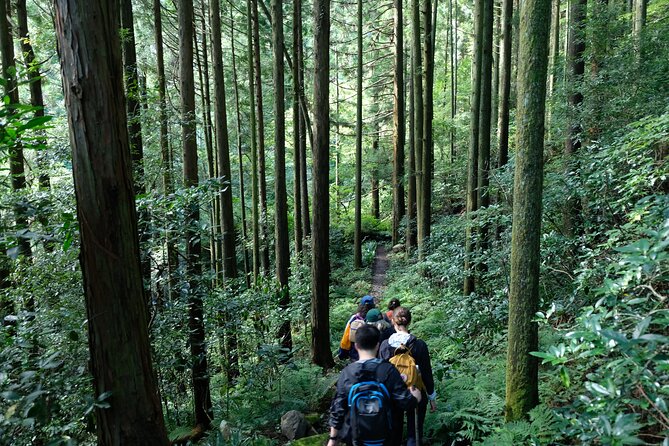
After the teahouse, the walk continues toward Lake Ashi. This is the forest bathing portion of the experience, with quiet woodland and the best-preserved cobbled path on this part of the Hachiri route.
The term Hachiri refers to the Hakone section of the old Tokaido route. You should not expect a single, uninterrupted road surface. Some parts are stone-paved, while others run through forest. That changing surface is part of the appeal, but it also explains why a moderate fitness level is required.
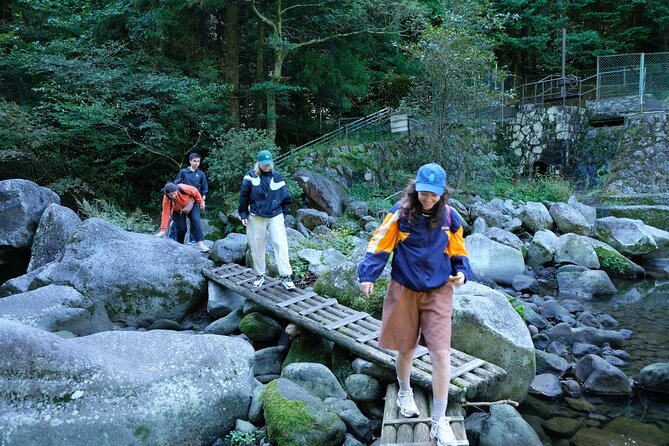
The route is active without being described as extreme. The steepest section is skipped, but you still need to walk for several hours and manage uneven ground. If you have trouble with cobblestones, slopes, or forest trails, this may not be comfortable. The tour data does not provide accessibility details, so you should not book it assuming a smooth or step-free route.
The guide’s role matters most here. A marked path can show you where to walk, but it cannot explain why the stones were laid, how the road functioned, or how the forest shaped movement through Hakone. Guides Akihiro and Aki have been praised for giving context about the Edo period and the road connecting Tokyo and Kyoto.
This is also where the small group works well. A guide can stop to explain a feature without delaying a large crowd. You can ask about the old road, local traditions, or the surrounding area as the walk unfolds.
Lake Ashi and the final view
The route ends at Lake Ashi, with about an hour allocated to the lake area and final sightseeing. This gives you time to take in the water, look toward the mountains, and possibly see Mount Fuji across the lake.
The Fuji view is weather dependent. Do not book this walk only for a guaranteed photograph. Clear conditions may provide the classic sight of Fuji above Lake Ashi, but cloud can hide it. The forest walk and historical stops remain the main reasons to choose the tour.
Lake Ashi is a useful ending point because you are not left in an isolated area. The tour finishes in Motohakone, where you can continue by bus to Odawara, Hakone-Yumoto, or a Hakone hotel. You may also take the pirate ship ferry to your next destination.
The timing is particularly convenient. The tour starts at 9am and finishes around 1pm, leaving the afternoon open. You can continue sightseeing around the lake, take the ferry, return toward the station, or head back to your hotel. Check the onward transport before starting, especially if you need to make a train connection.
Hakone Checkpoint and the road’s purpose
The Hakone Checkpoint is the final historical stop, with about 30 minutes for the visit. This was an important control point on the old Tokaido, and the guide explains its role in Japan’s past.
The checkpoint gives the walk a clear ending. At Hatajuku, you see local craft. At the teahouse, you see how people rested. On the forest road, you experience the route itself. At the checkpoint, you understand how the government controlled movement along it.
I would pay close attention here, even if you are more interested in scenery than politics. Hakone was not simply a mountain obstacle between two cities. Its position made it important for travel, security, and control. The checkpoint helps connect those ideas.
The stop is also useful for orientation. By the time you reach Motohakone, you have seen the road as a working route rather than a decorative old path. That added context is the main difference between this guided walk and a simple hike from a map.
Price, group size, and what you actually receive
The $114.95 price includes a certified national mountain guide. It does not include the shared taxi to the trailhead, which costs 2,000 yen divided among the group, or the bus to the teahouse, which costs less than 400 yen.
The value is strongest for visitors who want interpretation and efficient planning in a small group. You are not paying only for four hours of walking. You are paying for a guide who links the road, village, teahouse, checkpoint, and lake into one story.
The group limit of six is another meaningful benefit. A large coach group would change the mood of the forest and make questions harder. This format feels more like a guided outing than a mass tour.
The tour has a perfect five-star rating from 18 published ratings, with 100 percent recommending it. That is a small sample, so I would not treat it as a guarantee. Still, the praise is consistent in the areas that matter most: the guide’s friendly manner, clear English, local knowledge, historical explanations, and the beauty of the route.
Who should book this Hakone walk
I would recommend it to you if you want more than a viewpoint and a ferry ride. It suits visitors who enjoy history, traditional crafts, forest paths, and moderate walking. It is also a good choice if you want to see a quieter side of Hakone without giving up the famous lake setting.
Families with older children may find the format appealing. A 16-year-old completed the outing with a parent and enjoyed the guide, scenery, and explanations. The physical requirement remains important, so consider your group’s comfort with uneven paths and several hours on foot.
You should think twice if you want a hard, uninterrupted hike. The bus section means you skip the steepest part, and the teahouse and checkpoint create a relaxed cultural rhythm. That is a feature for most people, but not for anyone seeking a pure endurance walk.
Weather also matters. The experience requires good conditions, and poor weather can lead to cancellation, with a choice of another date or a full refund. The cancellation policy for personal changes is strict: the booking is non-refundable and cannot be changed for any reason. Choose your date carefully.
Should you book it?
Book this tour if you want to connect Hakone’s forest, old highway, craft village, teahouse, checkpoint, and lake in one well-paced morning. The guide and small group are the main reasons to pay the premium, while the chance of a Mount Fuji view is a welcome bonus rather than a promise.
Skip it if you want a low-cost self-guided stroll, a fully continuous hike, or a guaranteed Fuji photograph. For most visitors with moderate fitness and an interest in how Japan’s old roads worked, this is a thoughtful and practical way to spend four hours.
FAQ
Where does the Hakone Hachiri hike begin?
The tour begins at Hakone-Yumoto Station in Hakone, Kanagawa.
What time does the tour start?
The tour starts at 9am.
Where does the tour finish?
It finishes in Motohakone at Lake Ashi.
How long does the experience last?
The experience lasts approximately four hours.
How much walking is involved?
You will hike for about two to three hours, using cobbled sections and forest trails.
Is transportation to the trailhead included?
No. A shared taxi to the trailhead costs 2,000 yen, divided among the group.
Is the bus to the teahouse included?
No. The bus fare is less than 400 yen.
What is included in the tour price?
A certified national mountain guide is included.
How many people can join the group?
The maximum group size is six travelers.
What happens if bad weather cancels the tour?
If poor weather causes cancellation, you will be offered a different date or a full refund.
Just added around Japan
- Hike Japan Heritage Hakone Hachiri with certified mountain guide★ 5.0 · 46 reviews
- Hakata Old Town Walking Tour Tracing the True History of Fukuoka★ 5.0 · 17 reviews
- Private sake pairing@ancient underground★ 5.0 · 27 reviews
- [30 minutes] Rickshaw tour around Asakusa [History, sightseeing, Tokyo Skytree]★ 5.0 · 38 reviews
- Tokyo: Asakusa & Sensoji ー Oldest Temple Walking Tour (2hrs)★ 5.0 · 213 reviews
- Tokyo: Mount Fuji Private Full-Day Trip with Hotel Pickup★ 5.0 · 18 reviews
- Private Tour Through the Tokyo National Museum & Ukiyo-e★ 4.7 · 17 reviews
- Tokyo: Imperial Palace, the history of Japan (ENGLISH GUIDE)★ 5.0 · 77 reviews
Hiking & Trekking, compared.
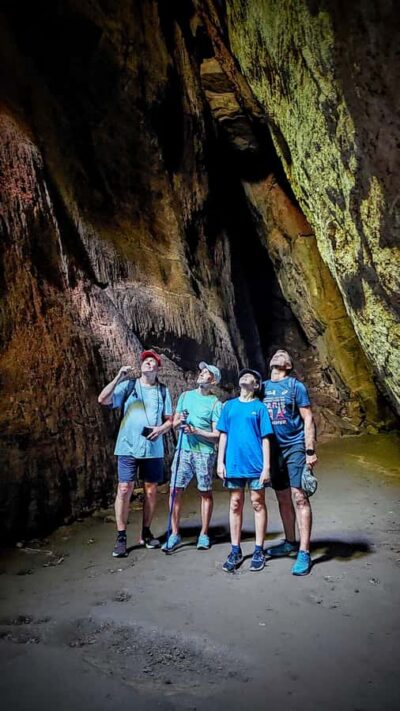
Rio: Tijuca Forest Small Group Hike to Caves and Waterfalls
Read our review →

Nepal Discovery Tour: Heritage Sites & Scenic Hill Easy Hike
Read our review →

PRIVATE LeMorne Mountain Picturesque Hike-UNESCO Recognised
Read our review →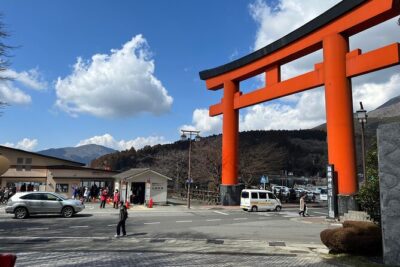
Hike Japan Heritage Hakone Hachiri with certified mountain guide
Read our review →
1-Day Tour from Nagoya: Hiking the Historic Nakasendo Trail
Read our review →
Ancient Landscapes Private Geology Hike at Garden of the Gods
Read our review →Browse the lists this tour appears in