
Review · GHENT
Historical Walking Tour: Legends of Gent
Ghent rewards curious walkers. This two-hour tour links the city’s medieval port, castle, towers, churches, and odd local legends with a guide who gives the streets a clear story. I especially like the route’s excellent first look at Ghent and the useful advice on food, beer, chocolate, and things to do afterward. I also like the pay-what-you-want format, which keeps the upfront cost very low.
The main consideration is the pace. You are on your feet for about two hours over historic streets, and the group can reach 35 people. The tour also focuses on exterior explanations rather than full visits inside each major building, so you may want extra time afterward for Gravensteen, the Belfry, or St. Bavo’s Cathedral.
Key points about Legends of Gent
- Ghent’s best central views come early: St Michael’s Bridge frames the three famous towers and the medieval waterways.
- The route covers 13 major stops: You pass the castle, cathedral, belfry, town hall, old port, graffiti street, and several historic squares.
- The storytelling is the main attraction: Guides such as Tatiana, Kasia, Kenny, Sophia, Robin, and Florian have been praised for humor, warmth, and clear explanations.
- It is a low-cost introduction: The listed price is $3.62 per person, with payment based on what you feel the tour was worth.
- Plan to walk and stand: The tour lasts about two hours and may include cobblestones, crowds, and outdoor listening.
- You finish near the Belfry: That makes it easy to continue sightseeing or return to a favorite stop for a closer look.
Why this Ghent walking tour works well
Ghent can feel confusing at first. Its canals, towers, castle, churches, narrow lanes, and grand civic buildings are all packed into a compact center, but the connections between them are not always obvious. This walk gives you a useful framework before you explore on your own.
The route is not just a parade of façades. It explains how Ghent grew as a trading center, why its citizens developed a stubborn independent streak, how religious and civic power shaped the city, and where darker episodes fit into the picture.
I like that the tour mixes major sights with smaller details. You see headline attractions such as Gravensteen and St. Bavo’s Cathedral, but you also pass the House of Alijn, the graffiti lane, and the Great Butchers’ Hall. That balance helps you understand Ghent as a living city rather than a collection of postcard views.
The guide makes a large difference. Tatiana has been praised for strong storytelling and enthusiasm, while Kasia is noted for being warm, clear, and attentive in hot weather. Kenny, Sophia, Robin, Florian, Liedewei, and Camilla have also received praise for humor, local insight, and helpful suggestions.
More History Walking Tours in Belgium
- Historical Walking Tour: Legends of Bruges
★ 5.0 · 2,541 reviews - Historical Walking Tour: Legends of Antwerp
★ 5.0 · 1,837 reviews - Brussels: Historical Walking Tour with Chocolate & Waffle Tasting
★ 5.0 · 1,165 reviews
St Michael’s Bridge and Ghent’s three towers
The meeting point is Hostel Uppelink on Sint-Michielsplein, beside St Michael’s Bridge. This is a smart place to begin because the bridge gives you one of Ghent’s most useful views in a single sweep.
From here, your guide introduces Ghent as a medieval trading center and points out the three towers that shape the skyline: St. Bavo’s Cathedral, the Belfry, and St. Nicholas Church. The view is especially helpful early in your visit because it gives you a mental map of the old center.
You spend about 15 minutes here, longer than at most later stops. That extra time suits the location. Look up, listen to the opening explanation, and take a few photographs before the group moves on.
Graslei, Korenlei, and the old port
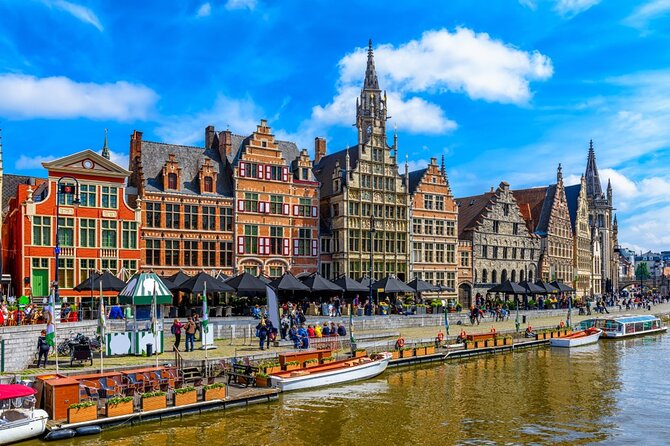
The tour then reaches Graslei and Korenlei, the historic waterfront at the heart of central Ghent. These quays are among the city’s most attractive places, but the guide adds something more useful than a photo stop.
You learn which buildings were tied to medieval trading activity when this stretch served as the city’s port. The façades are not just decorative; they reflect the commercial life that made Ghent powerful.
The stop lasts about 10 minutes. That is enough for an overview, though not enough to examine every building closely. I would return here later, when you can walk both sides of the water at your own speed.
Design Museum Gent and the rebellious city
The Design Museum is used to explain a local attitude: the stubborn, independent mindset associated with the people of Ghent. The point is less about touring the museum’s collection and more about using one part of the building or its setting as a way into the city’s character.
Admission is not included, and the group does not appear to spend time on a full museum visit. If design interests you, treat this as a signpost for a separate visit rather than as an entry ticket.
This is one of the tour’s more distinctive choices. Many city walks rush from famous church to famous castle. Here, a museum becomes a doorway into local identity.
Same place, a different slice of the past:
- Brussels: Historical Tour with Chocolate & Waffle Tasting
★ 4.8 · 1,206 reviews - THE Storytelling Tour of Bruges | First Day Must | History & Tips
★ 5.0 · 925 reviews - Historical Walking Tour: The Story of Bruges – by Legends
★ 4.7 · 483 reviews - Ghent: 40-Minute Historical Boat Tour of City Center
★ 4.3 · 430 reviews
Great Butchers’ Hall and Ghent’s darker stories
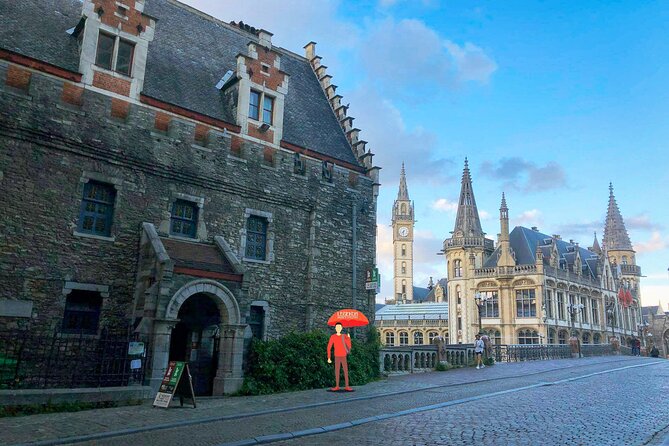
At Het Groot Vleeshuis, you look across the water toward the medieval covered Great Butchers’ Hall. The building is grand, but the guide also shares less pleasant facts connected with it.
That change in tone gives the walk some depth. Ghent’s past was not only trade, architecture, and civic pride. Food production, public life, power, and punishment could all be close together in the medieval city.
You do not pay admission for this stop. The guide’s explanation is the reason to pause, while the building itself gives you a strong view from outside.
Gravensteen, the castle in the middle of town
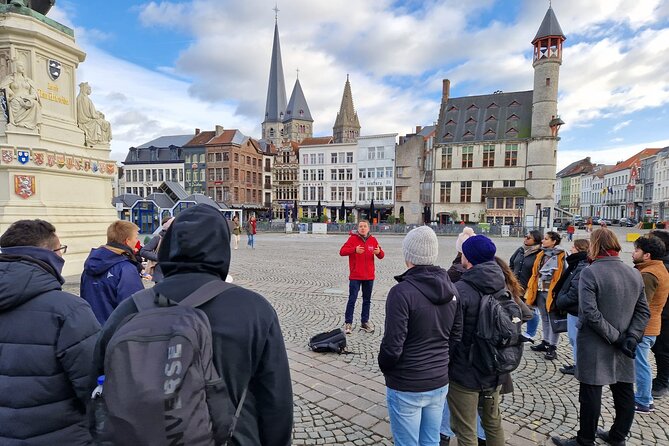
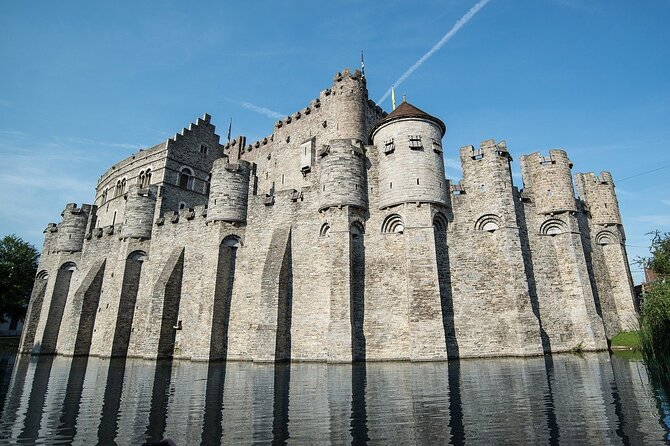
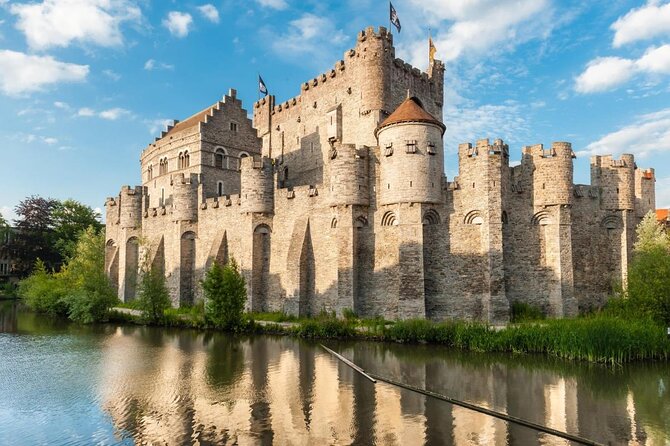
Gravensteen is one of Ghent’s most memorable sights because the medieval Castle of the Counts sits right in the city center. Its walls and towers are unusually well preserved, making it easy to picture the force it once represented.
The guide spends about 10 minutes explaining the castle’s past. This is an orientation, not a complete castle visit, and admission is not included. If you want interiors, exhibits, and a longer look around the fortifications, plan a separate visit.
I like this arrangement because the walking tour helps you decide if the castle deserves more of your time. For most people, it will. The short exterior explanation makes the building easier to appreciate when you return inside.
St. Veerleplein, the square of death and life
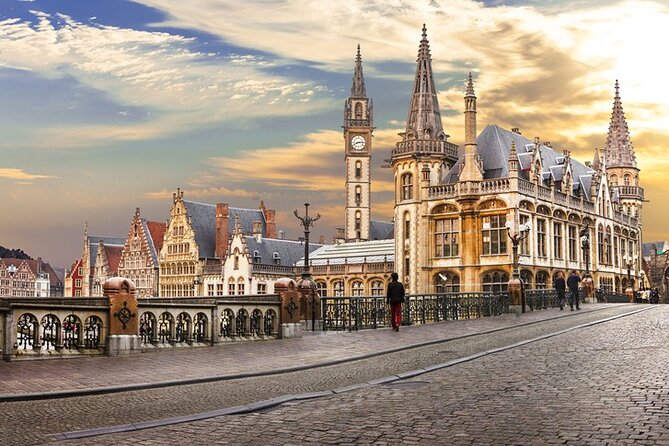
The square in front of Gravensteen is St. Veerleplein. Its two grimly different nicknames, the square of death and the square of life, provide one of the tour’s built-in mysteries.
Your guide explains why the square carried both associations. This is exactly the sort of stop that benefits from a local storyteller because the meaning is not obvious from the paving stones or surrounding buildings.
You spend around 10 minutes here. It is a compact stop, but it connects the castle to the public life of the city around it.
House of Alijn and the god house story
Huis van Alijn, or the House of Alijn, is described as Ghent’s only remaining god house. It once served as a hospital, and the guide explains the unfortunate story behind that change.
This stop broadens the tour beyond rulers and monuments. Hospitals, charitable institutions, and everyday suffering were part of the city too. The building gives you a reminder that medieval Ghent was lived in by ordinary people, not only counts, merchants, and civic leaders.
Admission is not listed as part of the tour. You receive an outside explanation, with the option of returning if you want to explore more.
Vrijdagmarkt and the city’s political memory
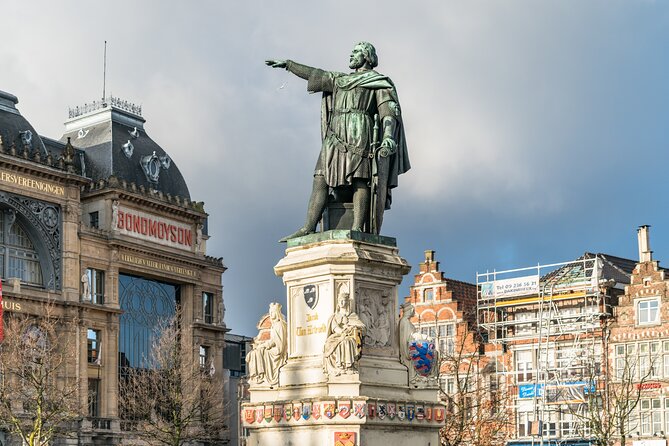
Vrijdagmarkt is one of the important open squares in Ghent. The guide explains its role in the city’s past and discusses the person represented by the statue in the center.
This is a useful place to listen for the connection between public space and power. Squares such as this one were not simply places to cross. They could be settings for trade, political events, public gatherings, and displays of authority.
The stop takes about 10 minutes. It is a good point to ask questions, especially if you want to connect Ghent’s medieval story with its later political development.
Werregarenstraat and controlled street art
Werregarenstraat offers a sharp change of mood. The city designated this lane for street artists so monumental buildings would be less likely to be covered with unauthorized graffiti.
The guide walks you through the passage and explains its purpose. It is a practical example of how Ghent manages the tension between historic preservation and modern street culture.
You should not expect a polished monument here. That is the point. The lane adds color and a little disorder to a route otherwise filled with churches, stone façades, and civic buildings.
Town Hall and Ghent’s great conflict
At Ghent Town Hall, the guide explains why the building looks confused. Its mixed architectural appearance reflects a major conflict in the city’s past.
This is one of the more useful history stops because architecture becomes evidence. Instead of simply hearing that Ghent had political struggles, you can see those tensions in the town hall itself.
Admission is not included, and the group remains outside for the explanation. Take note of the different styles before the guide moves on. This is a place where a quick photograph will not tell the full story, but the short talk gives you a reason to look more closely later.
St. Bavo’s Cathedral and the Van Eyck masterpiece
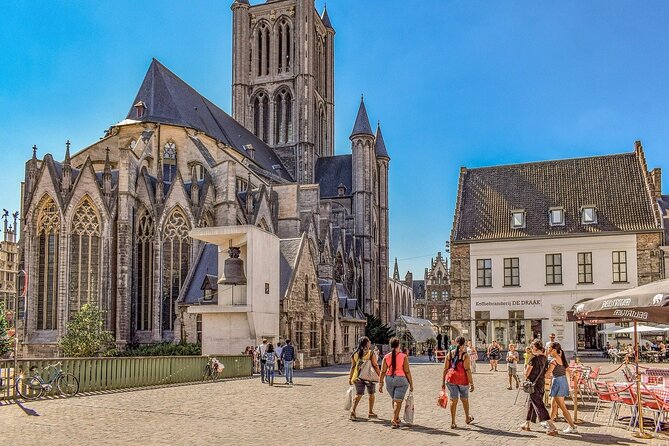
St. Bavo’s Cathedral is one of the tour’s major highlights. It has a long religious and artistic history and is home to the famous Ghent Altarpiece by the brothers Van Eyck.
The guide introduces the cathedral and its art treasures during a roughly 10-minute stop. The walk does not replace a proper interior visit, so anyone interested in the altarpiece should set aside additional time afterward.
This is a good example of the tour’s value. You learn why the cathedral matters before deciding how much time to spend inside. The short explanation also helps you avoid treating the building as just another Gothic church on a busy sightseeing list.
Ghent Belfry and the people’s tower
The Belfry is the end point, at Sint-Baafsplein. It is described as the people’s tower, a symbol of Ghent’s independence, power, and stubborn civic spirit.
The guide also explains its former use as a prison and shares a strange legend connected with the façade. This gives the tower both political meaning and a memorable human story.
Admission is not included. Since the tour ends here, you can choose to visit the Belfry afterward if you want a closer look. Ending at this landmark is convenient because you have already heard why it matters, and the square gives you room to continue exploring.
St. Nicholas Church and the final legend
The final stop is St. Nicholas Church, called Esglesia de Sant Nicolau in the supplied route details. It looks over Korenmarkt and is dedicated to St. Nicholas, the protector of merchants and sailors.
The church dates to the early 12th century, and its façade connects to the legend of its patron saint. It is a fitting finish because the route returns you to the world of merchants, waterways, and medieval trade introduced at the start.
Admission is free according to the tour details. As with the cathedral, the short stop gives you context, but you may want to return for a quieter look inside.
Guides, group size, and the walking pace
The strongest part of this experience is the guide-led storytelling. The most praised qualities are clear explanations, humor, warmth, and a genuine feel for Ghent. Robin’s commentary and sense of humor, Florian’s discussion of architecture, and Kasia’s friendly delivery are good examples of the range you may encounter.
The group can have up to 35 people, though one reported group had around 18 to 20 people. A larger group can make narrow streets and canal-side stops less intimate, but guides may use a microphone when needed.
You should expect to stand and walk for about two hours. Historic streets can include cobblestones, and the route moves at a steady pace. It is not described as a difficult walk, but supportive shoes will make the outing easier.
Price, payment, and overall value
The listed price is $3.62 per person, but this is a pay-what-you-want experience. The guide is paid through the amount you choose at the end, so the low upfront price should not be mistaken for the total expected contribution.
That system can be excellent value if you want a friendly orientation without committing to an expensive private tour. It also places some responsibility on you to budget for a fair payment after the walk.
One serious caution deserves attention. A complaint described confusion over payment platforms and a demand for an additional large sum for a family group. To avoid trouble, carry your booking confirmation, check the payment instructions carefully, and clarify any requested contribution before the tour begins. The supplied information does not establish that this was a general practice, but it is a sensible reason to confirm the terms.
Who should book this Ghent tour
I would choose this walk for a first visit to Ghent, especially if you want the city explained before exploring it alone. It suits people who enjoy stories, architecture, local legends, and practical restaurant or beer suggestions more than people seeking long interior visits.
It is also a good fit for a short stay. In two hours, you reach many of the central sights and finish close to the Belfry, giving you a useful plan for the rest of the day.
You may want another option if you dislike group walks, need frequent sitting breaks, or want detailed access to every monument. The tour is an introduction, not a substitute for visiting Gravensteen, the cathedral, or the Belfry at length.
Should you book Legends of Gent?
Yes, if you want a lively, affordable way to get oriented in central Ghent. The route is strong, the stop list is unusually broad, and the best guides bring history to life with humor and local tips.
Book it early if your schedule is tight, since it is commonly reserved about 16 days ahead. Choose a day with good weather, arrive at Hostel Uppelink on time, wear comfortable shoes, and treat the walk as a smart first pass through the city. Then return to the places that caught your attention, especially Gravensteen, St. Bavo’s Cathedral, and the Belfry.
FAQ
How long does the Legends of Gent walking tour last?
The tour lasts approximately two hours.
Where does the tour begin?
It begins at Hostel Uppelink, Sint-Michielsplein 21, 9000 Gent, Belgium.
Where does the tour end?
The tour ends at the Belfry of Ghent on Sint-Baafsplein.
Is the tour offered in English?
Yes. English is the listed tour language.
What is the maximum group size?
The maximum group size is 35 people.
Can I cancel for a full refund?
Yes, if you cancel at least 24 hours before the scheduled start time. Cancellations made within 24 hours are not refunded. If poor weather or an insufficient number of bookings causes the tour to be canceled, you will be offered another date or experience, or a full refund.
Just added around Belgium
- Historical Walking Tour: The Story of Brussels – by Legends★ 5.0 · 164 reviews
- Bruges Bites & Sights – Belgian Food, Beer & A Little Bit Of History★ 5.0 · 94 reviews
- 2-Hour Historical Walking Tour in Bruges with Praline Included★ 5.0 · 291 reviews
- Historic Battle of the Bulge Sites Tour from Brussels★ 5.0 · 31 reviews
- Food tasting & Historical walk★ 4.5 · 47 reviews
- Bruges at Night: Murder, Mystery & Dark Stories Small Group Walk★ 5.0 · 137 reviews
- Private Guided Historical Walking Tour in Bruges Belgium★ 5.0 · 23 reviews
- Across Bruges History Equals Fun with chocolate and waffle sample★ 5.0 · 34 reviews
History Walking Tours, compared.

History and Hauntings of Salem Guided Walking Tour
Read our review →
Freedom Trail History Small Group Walking Tour
Read our review →
Historic Charleston Guided Sightseeing Walking Tour
Read our review →
Tapas Walking Tour with Food, Wine, and History
Read our review →
Savannah History and Haunts Candlelit Ghost Walking Tour
Read our review →
A History of Terror – Belfast City Centre Walking Tour
Read our review →Browse the lists this tour appears in