
Review · DUBROVNIK
Dubrovnik walking history tour
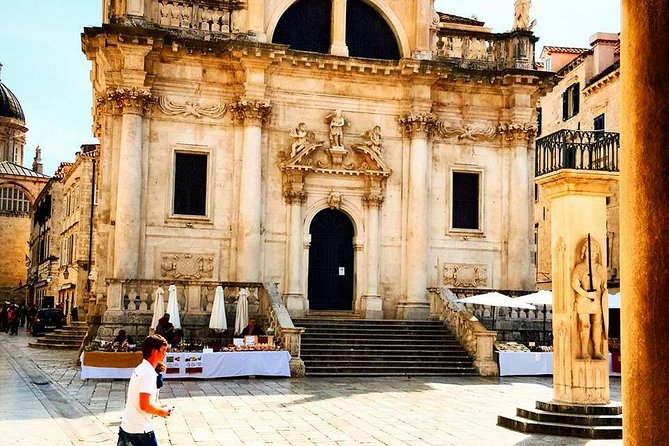
Dubrovnik rewards a slower first look. This 90-minute walk gives you a clear introduction to the Old Town, with stops at Sponza Palace, Rector’s Palace, Orlando’s Column, and the Cathedral of the Assumption. I like that a licensed guide leads the route, and guides such as Ines have earned repeated praise for their clear English, local insight, and friendly manner.
I also like the practical mix of famous sights and useful context. Onofrio’s Fountain is not just a handsome stone landmark: it marks the end of a 12-kilometer aqueduct that supplied Dubrovnik with water. The main drawback is that City Walls tickets cost an extra €35 per person, so you need to budget separately if walking the walls is part of your plan.
The tour costs $33.61 per person and is capped at 30 participants. That is a fair price for a short orientation walk, especially if you want the major landmarks explained before exploring on your own. Still, the group can be fairly large, and the advertised meeting information should be checked carefully before you set out.
Key points to know before booking
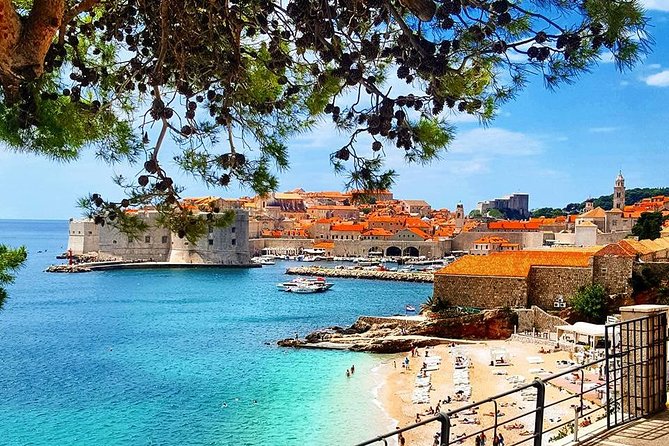
- Sponza Palace anchors the route: The palace is listed as the itinerary stop and helps frame Dubrovnik’s commercial and civic past.
- Onofrio’s Fountain has a practical story: The fountain marked the end of a 12-kilometer aqueduct built to bring water into the city.
- Ines is a particularly praised guide: Her relaxed style, strong English, and wide knowledge of Dubrovnik, Croatia, and former Yugoslavia received repeated approval.
- The tour lasts about 90 minutes: That is long enough for a useful introduction without taking up half your day.
- The City Walls cost extra: Wall tickets are not included and are listed at €35 per person.
- The route starts near Pile Gate: The stated meeting point is Art Go’den, Brsalje ul. 1, with the walk ending back at the meeting point.
Why this short walk works well in Dubrovnik
Dubrovnik’s Old Town can feel confusing at first. Stone lanes twist away from the main street, grand buildings crowd one another, and important details are easy to miss if you simply follow the flow of people. A guided walk gives you a basic map in your head, along with the stories that make the buildings matter.
This tour focuses on the Republic of Dubrovnik and its monuments. That is useful because the city is more than a pretty collection of old walls. Its palaces, fountains, columns, churches, and streets reflect how the former republic governed itself, supplied its population, marked public freedom, and rebuilt after disaster.
At 90 minutes, the experience stays focused. You will not get an exhaustive study of every alley or church, but you should come away knowing what you are looking at and why it matters. I see this as a good first activity in Dubrovnik, particularly if you have just arrived and want to get your bearings before choosing which sights to visit in greater detail.
The short length also suits you if your schedule is tight. Dubrovnik is often part of a larger Croatian trip, and a compact walking tour leaves time for the City Walls, museums, lunch, or an independent wander.
More History Walking Tours in Croatia
- Dubrovnik Old Town History Walking Tour
★ 5.0 · 1,684 reviews - Dubrovnik: Ancient City Walls & Wars Walking Tour
★ 5.0 · 1,270 reviews - Dubrovnik: Old Town History Walking Tour
★ 4.9 · 474 reviews
Meeting at Pile Gate and entering the Old Town
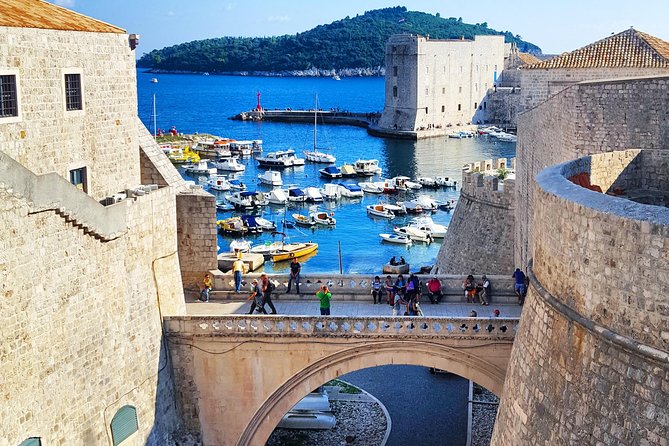
The walk begins near Pile Gate, the main western entrance to Dubrovnik’s Old Town. The supplied meeting address is Art Go’den, Art Go’denBrsalje ul. 1, 20000 Dubrovnik, while the tour description refers to meeting at Pile Gate. Because those details are slightly different, I would confirm the precise spot before arrival.
Pile Gate is a sensible starting point. It places you directly beside one of the city’s best-known entrances, where the transition from modern Dubrovnik to the historic center is immediate. From here, your guide can introduce the basic shape of the Old Town and explain how the republic’s monuments fit together.
The walk stays within the historic center and returns to the meeting point at the end. That makes the tour easy to combine with other plans. You do not need to arrange a separate ride back or guess where the route finishes.
The tour is offered in English and includes a licensed guide. A maximum of 30 participants is listed. That limit keeps the group from becoming enormous, though 30 people is still enough to affect how closely you can gather around a guide in narrow streets.
Sponza Palace and Dubrovnik’s civic character
Sponza Palace is the listed itinerary stop, and it is one of the most useful places to begin thinking about Dubrovnik as a working republic rather than a backdrop for photographs. The building is closely tied to the city’s public and commercial life, making it a natural point for a discussion of trade, administration, and the way Dubrovnik organized itself.
Your guide should help connect the architecture to the city’s wider story. That is where this walk earns its price. On your own, you may admire the stonework and take a photo. With a guide, you get the reasons the building mattered and how it fit into daily life.
The tour information does not specify a separate admission ticket for Sponza Palace, so you should not assume that an extended interior visit is included. The safe expectation is a guided stop focused on the palace and its place in the Old Town route.
I particularly like the fact that Sponza is not treated as an isolated monument. The walk links it with other public buildings, religious sites, and symbols of independence. That gives you a better sense of Dubrovnik’s compact scale, where politics, commerce, religion, and public life were all concentrated inside the walls.
Orlando’s Column and the idea of freedom
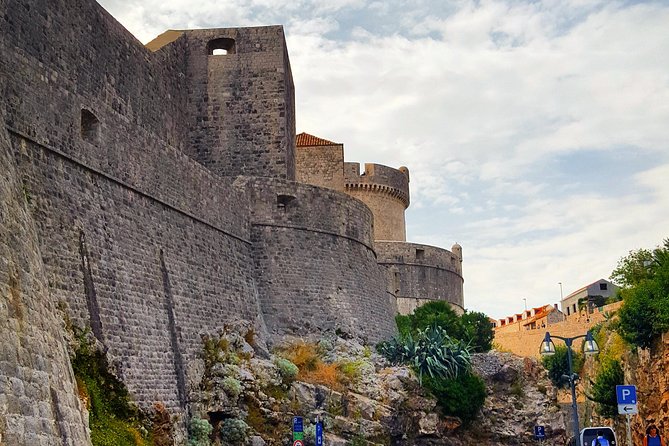
Orlando’s Column is another important stop. The monument is described as a symbol of the city’s freedom, so your guide can use it to explain how Dubrovnik presented its independence and civic identity.
This is the kind of detail that can easily pass unnoticed. A column in a busy square may seem decorative if you do not know what it represents. With a short explanation, it becomes part of the city’s political story.
The tour’s focus on the Republic of Dubrovnik is valuable here. Rather than treating Dubrovnik as simply an old coastal town, the guide can show you how public symbols expressed the city’s position and values. That broader context makes the later stops easier to understand.
The route also gives you time to look around and take photographs. One particularly strong comment about the tour described its pace as comfortable, with enough time to absorb the sights without feeling hurried. That matters in Dubrovnik, where stopping for a photograph can quickly block a narrow passage if the group is not handled carefully.
More History Walking Tours in Dubrovnik:
- Dubrovnik Old Town: Small-Group Walking Tour With A Local
★ 5.0 · 123 reviews - Dubrovnik Jewish Heritage Private Walking Tour
★ 5.0 · 121 reviews - Dubrovnik: Small-Group Guided Old Town History Walking Tour
★ 4.9 · 37 reviews - Historic Walk with Game of thrones details in Dubrovnik
★ 5.0 · 20 reviews
Onofrio’s Fountain and a 12-kilometer water system

Onofrio’s Fountain offers one of the most memorable practical stories on the walk. Built in the 15th century, it marked the end of a 12-kilometer aqueduct that supplied Dubrovnik with water.
That fact changes the way you see the fountain. It was not merely a decorative public feature. It represented a major piece of city infrastructure and helped support life inside the fortified settlement.
The tour notes say you can refresh yourself and drink water from the fountain. That is a useful stop during a walking route, especially in warm weather. You should still bring your own water, since the tour lasts about 90 minutes and Dubrovnik’s heat can make even a short walk feel demanding.
I like this part of the route because it connects a visible monument with an everyday need. Water supply is not as immediately glamorous as a palace or cathedral, but it tells you a great deal about how a historic city functioned.
The account of the tour also suggests that guides explain the importance of the places rather than simply naming them. Ines, in particular, was praised for combining historical information with local knowledge and personal stories. That style can make a practical feature such as an aqueduct easier to remember.
Rector’s Palace and the machinery of government
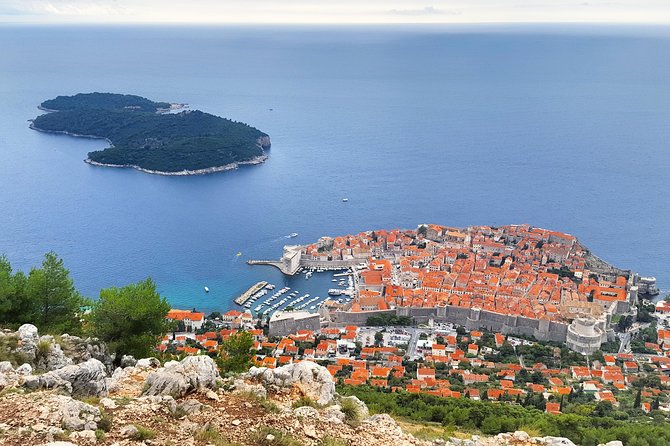
Rector’s Palace is one of the key landmarks on the walk. Its name points to Dubrovnik’s former governing system, and the stop gives your guide a chance to explain the role of the rector and the republic’s administration.
The value here lies in the explanation. A grand palace can look like a residence for a powerful ruler, but Dubrovnik’s political system had its own rules and traditions. A good guide can help you distinguish the city’s civic structure from the royal courts you may have seen elsewhere in Europe.
The tour description says you will visit Rector’s Palace, but it does not specify whether the price includes admission to every interior area. I would treat this as a guided stop unless your booking confirmation clearly says otherwise.
This is also a point where the guide’s wider knowledge matters. The strongest comments about Ines describe her as able to discuss Dubrovnik, Croatia, and Yugoslavia, not just the buildings directly in front of the group. That wider frame can help you understand how the city’s older political identity connects with more recent Croatian history.
The Cathedral of the Assumption after the 1667 earthquake
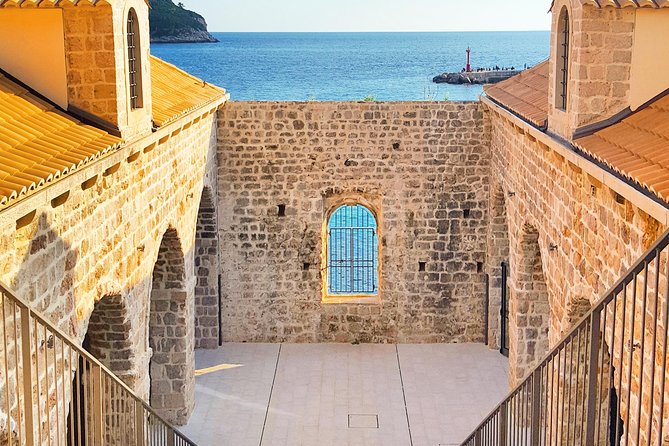
The Cathedral of the Assumption adds a religious and architectural layer to the route. It is described as a Baroque church rebuilt after the devastating earthquake of 1667.
That detail gives the cathedral more weight than its appearance alone. You are not only looking at a church; you are seeing part of Dubrovnik’s recovery after a disaster that reshaped the city.
The cathedral also helps balance the tour. Sponza Palace and Rector’s Palace represent civic and political life, while the cathedral shows the importance of faith and public rebuilding. Together, the stops create a fuller picture of the Old Town.
Again, the available details do not promise a separate museum-style interior visit or an extended look at religious art. The main benefit is the guide’s explanation of the building and its place in the city’s past.
If you are especially interested in church interiors, you may want to return independently after the walk. The tour provides context, but 90 minutes is not enough for lengthy visits at every stop.
What the guide adds to the experience
The most praised part of this tour is the guide’s delivery. Ines is repeatedly described as friendly, easygoing, and able to explain complicated subjects in strong English. One account also refers to her as Ynez, which may be an alternate spelling or a simple variation, so check the guide’s name when you receive your confirmation.
The important point is not just the guide’s knowledge of dates. The strongest descriptions highlight a balance of historical facts, local recommendations, personal stories, and legends. That mix helps prevent the walk from becoming a list of names and years.
A good walking guide also controls the pace. The tour is described as thoughtful and well managed, with time for photographs and explanations. That is especially useful in Dubrovnik, where heat, crowds, and polished stone streets can make a rushed route unpleasant.
There is one serious service caveat. One scheduled walk was canceled when the guide became ill on the way to the meeting point during extreme heat. The payment was refunded in full, but the cancellation was not communicated before the participant had to contact support. This appears to have been an unusual medical emergency, not a normal feature of the tour, but it is worth knowing that last-minute changes can occur.
Price, group size, and what you actually receive
At $33.61 per person, the tour is priced as a reasonably affordable introduction to Dubrovnik. You are paying for about 90 minutes with a licensed English-speaking guide, not for entry to every major attraction.
The price makes the most sense if you value explanation. If you plan to walk the Old Town anyway, you could see many of the buildings without paying. But you would miss the organized story connecting the fountain, palaces, column, cathedral, and the former republic.
The group limit of 30 is a practical compromise. A smaller private group would be easier for questions and photographs, but it would cost more. With up to 30 people, you get a lower per-person price while accepting that the experience may feel less personal during crowded sections.
The City Walls are not included. The listed additional cost is €35 per person, which is significant compared with the tour price. If you want both experiences, calculate the combined cost before booking. The walking tour explains the city from street level, while the walls provide a separate view and should be treated as an optional extra rather than part of this package.
Who should book this Dubrovnik walk
I would choose this tour if you are visiting Dubrovnik for the first time and want a compact introduction before exploring alone. It also suits anyone who prefers stories and context over simply photographing monuments.
It is a good fit for you if you want:
- A short activity that leaves most of the day free
- A guided introduction to the Old Town
- Clear English explanations
- A walk focused on public monuments and the Republic of Dubrovnik
- Local suggestions from a guide with personal knowledge of the city
- A route that begins and ends near Pile Gate
You may want something else if you prefer a private tour, a very small group, or long interior visits. The maximum group size is 30, and the available details do not promise extended access to every building.
Wear comfortable shoes and carry water. The route is on foot, the weather may be hot, and the tour includes outdoor stops. If you plan to walk the City Walls afterward, remember that those tickets are separate and cost €35 per person.
Free cancellation is available up to 24 hours before the start time for a full refund. Cancellations or changes made less than 24 hours before the start time are not accepted for a refund, and the cut-off follows local time.
Should you book the Dubrovnik walking history tour?
I would book it as a first look at Dubrovnik, especially if Ines is the assigned guide. Her praised mix of local knowledge, personal stories, and clear explanations is exactly what makes a short city walk worthwhile.
The tour offers good value when you want the major landmarks explained without committing to a half-day outing. Keep your expectations in check: this is not a City Walls ticket, a private tour, or a full interior tour of every monument.
Book it if you want a friendly, focused introduction to the Old Town and its civic story. Skip it if you prefer to explore entirely at your own pace or already know Dubrovnik’s history well. Before setting out, confirm the exact meeting point near Pile Gate and add the separate €35 wall admission to your budget if you want that experience too.
FAQ
How long does the Dubrovnik walking history tour last?
The tour lasts approximately 1 hour and 30 minutes.
Where does the tour begin?
The stated meeting address is Art Go’den, Brsalje ul. 1, 20000 Dubrovnik, Croatia. The tour description also identifies Pile Gate as the meeting point, so confirm the exact location before arrival.
Where does the tour end?
The activity ends back at the meeting point.
Is the City Walls ticket included?
No. City Walls tickets are not included and are listed at €35 per person.
What language is the tour offered in?
The tour is offered in English.
How many people can join the tour?
The maximum group size is 30 participants.
Just added around Dubrovnik
- Private History Old Town and City Wall Tour in Dubrovnik★ 5.0 · 41 reviews
- Private Walking Tour of Dubrovnik Hidden Gems and History★ 5.0 · 19 reviews
- Game of Thrones and History Combo Private Tour★ 5.0 · 53 reviews
- Historic Walk with Game of thrones details in Dubrovnik★ 5.0 · 20 reviews
- Dubrovnik History, Sweets & Liquors in a Private Palace (PRIVATE)★ 5.0 · 63 reviews
- Outdoor Escape Game Dubrovnik – The Spy And The Traitor (History theme)★ 5.0 · 32 reviews
- Dubrovnik by Night, History, Wine & Bites★ 5.0 · 41 reviews
- Dubrovnik’s History with a Local: the Homeland War Stories Private Tour★ 5.0 · 29 reviews
History Walking Tours, compared.

History and Hauntings of Salem Guided Walking Tour
Read our review →
Freedom Trail History Small Group Walking Tour
Read our review →
Historic Charleston Guided Sightseeing Walking Tour
Read our review →
Tapas Walking Tour with Food, Wine, and History
Read our review →
Savannah History and Haunts Candlelit Ghost Walking Tour
Read our review →
A History of Terror – Belfast City Centre Walking Tour
Read our review →Browse the lists this tour appears in