Review · DALMATIA
Dubrovnik: Old Town History Walking Tour
Dubrovnik’s stones have stories. This 90-minute Old Town walk gives you a clear introduction to the city through local anecdotes, medieval architecture, maritime traditions, and everyday life. I like the way the tour connects famous sights such as the Rector’s Palace and Cathedral with smaller details, including old graffiti, wartime traces, and centuries-old vines.
I also like the use of local guides who bring personal knowledge to the route. Guides such as Ivana, Jelena, Kim, Josip, and Boris have been praised for their humor, clear explanations, and practical tips. The main drawback is that 90 minutes goes quickly, and the tour only passes by some major buildings rather than taking you inside them.
Key points at a glance
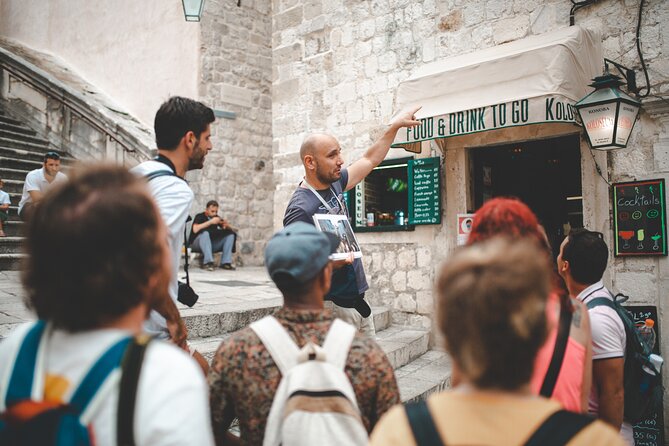
- Local voices make the history stick: Guides from Dubrovnik add family memories, cultural insight, and personal stories to the standard historical account.
- A useful first look at the Old Town: The route covers the main streets and landmarks, helping you plan what to explore later on your own.
- Small details reward close attention: Look for old Latin graffiti, shipbuilding traces, quarantine stories, and wartime reminders.
- Good value at $20: You get a licensed English-speaking guide and 90 minutes of focused sightseeing for a modest price.
- Easy walking, but not effortless: Cobblestones and some stairs require comfortable shoes, water, and sun protection.
- Best taken early in your stay: The guide’s advice on restaurants, shops, viewpoints, and further sightseeing can shape the rest of your visit.
Why this Dubrovnik walking tour works well
Dubrovnik can feel like a beautiful maze at first. The Old Town is compact, but its polished limestone streets, narrow lanes, grand churches, and fortified gates can blur together when you are exploring without context. A guided walk gives you a useful framework before you start wandering on your own.
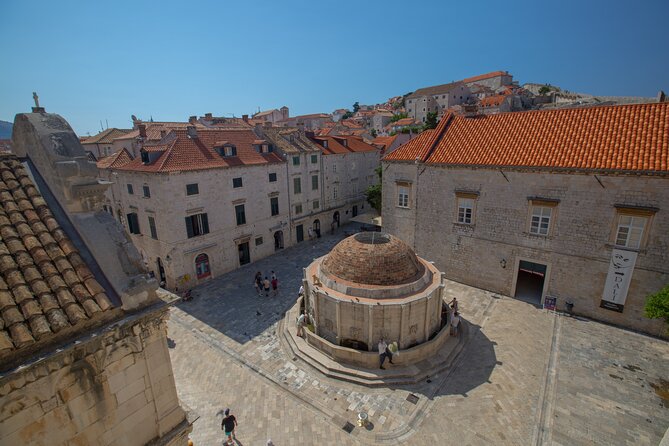
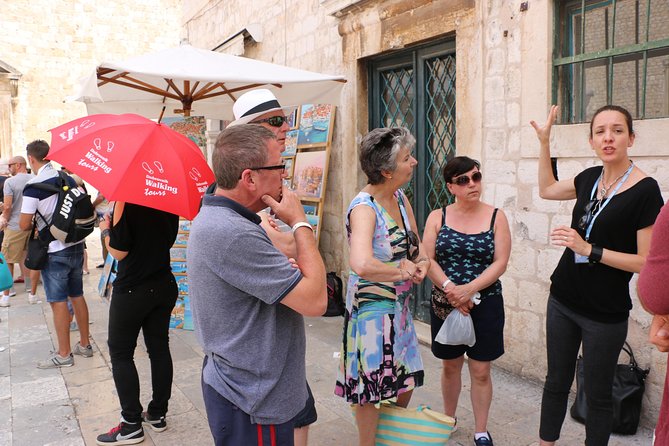
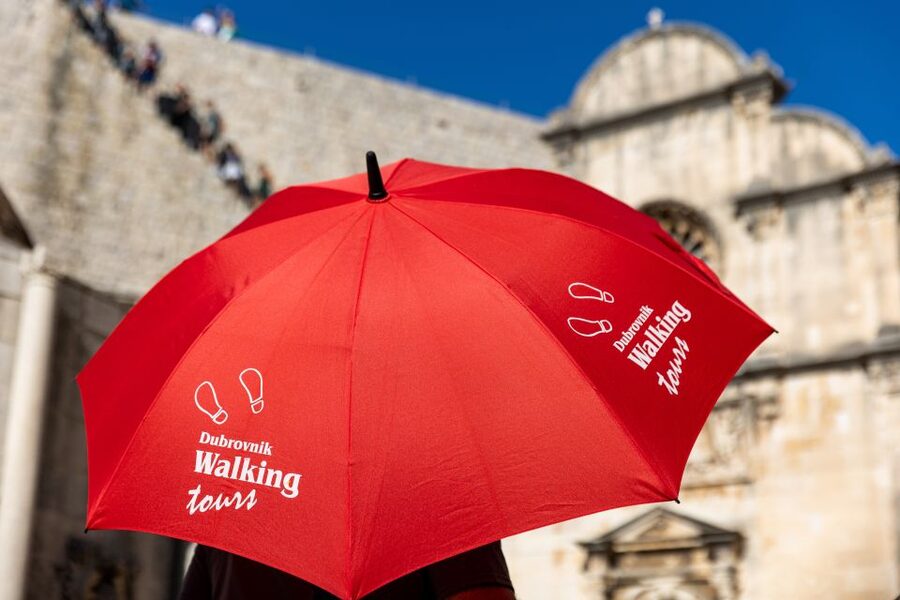
The tour begins at the Large Onofrio’s Fountain, beside the Hard Rock Cafe. Look for the representative with a red umbrella. From there, you move through the western entrance to the Old Town and gradually follow the city’s main historical line toward the harbor.
I like the balance here. You are not handed a long string of dates and names. Instead, the guide explains why the buildings mattered, how the Republic functioned, and what daily life was like behind the grand façades. The best guides add humor and personal memories without letting the stories drift too far from the city itself.
The tour has received a 4.9 rating from 474 reviews, with especially strong praise for the guides’ historical explanations, clear English, humor, and local advice. That consistency matters because the quality of a walking tour depends heavily on the person holding the umbrella.
More History Walking Tours in Croatia
- Dubrovnik Old Town History Walking Tour
★ 5.0 · 1,684 reviews - Dubrovnik: Ancient City Walls & Wars Walking Tour
★ 5.0 · 1,270 reviews - Dubrovnik Old Town: Small-Group Walking Tour With A Local
★ 5.0 · 123 reviews
Starting at Large Onofrio’s Fountain
The fountain is a practical meeting point and a fitting place to begin. It sits near Pile Gate, one of the Old Town’s main entrances, so you are immediately surrounded by Dubrovnik’s defensive walls, polished stone, and steady stream of people entering the historic center.
The opening section introduces Dubrovnik’s medieval foundations and architectural character. This is where you begin to understand that the Old Town was not built simply to look handsome. Its streets, walls, fountains, churches, palaces, and harbor formed a working city shaped by trade, diplomacy, religion, and defense.
The fountain itself also helps explain how important water was to a fortified city. Your guide sets the scene before leading you onward, which is useful if you have arrived in Dubrovnik with little background.
Because this is a public meeting point near a busy entrance, it may be crowded. Arrive with enough time to find the red umbrella and stay close to the group at the start.
Pile Gate and the city’s defensive edge

Pile Gate gives the tour an immediate sense of Dubrovnik’s military character. It was not just an attractive entrance for visitors. It controlled access to the walled city, and its position helps you see how the Old Town was protected.
Your guide explains the fortifications and the role of the gates as you move inward. You will hear about the city’s ability to protect its independence through careful diplomacy, trade, and defense. The exact emphasis may vary by guide, but the route is designed to connect the physical walls with the political story behind them.
This is also a good place to pay attention to the paving under your feet. The Old Town looks smooth and orderly in photographs, but the cobbled streets can be uneven. Wear shoes with a firm sole, especially if you plan to continue walking after the tour.
Twenty-five minutes through the Old Town
The longest part of the walk takes you through the Old Town itself. This is the section where the tour earns its price. You are not simply moving from one famous building to another. You are getting a guided reading of the city’s details.
The guide points out elegant palaces, religious buildings, façades, old stonework, and details that can disappear if you are focused only on taking photographs. One particularly memorable detail mentioned by a guide is old Latin graffiti on a church wall. Small discoveries like this help you picture people using and altering the city over many generations.
You may also hear about wartime traces, including a viewpoint once used for shooting practice during the war. Such details add modern memory to the older medieval setting. Dubrovnik is not only a preserved monument. It is also a lived-in city with painful and recent chapters.
Several guides bring their own connection to the place. Ivana has been praised for sharing personal wartime and family stories. Kim is known for living inside the Old Town walls, giving her a direct connection to the present-day community. Other guides, including Jelena and Josip, are praised for making the material lively and easy to follow.
I find this local element especially valuable. A textbook can tell you when a palace was built. A local guide can explain how the city feels as a home, how its traditions continue, and how residents view the streets that tourists photograph all day.
More Old Town and Historic Centre Walks in Croatia
- Dubrovnik Combo: Old Town & Ancient City Walls
★ 5.0 · 1,019 reviews - Dubrovnik Old Town: Night tour with History, Wine & Bites
★ 4.7 · 59 reviews - Dubrovnik: Small-Group Guided Old Town History Walking Tour
★ 4.9 · 37 reviews - Dubrovnik Old Town: Easy paced and accessible History tour
★ 4.9 · 20 reviews
Stradun, Dubrovnik’s great central street
Stradun is the Old Town’s main thoroughfare and one of the easiest places to understand the city’s layout. The broad limestone street gives you a strong visual contrast with the narrow side lanes branching away from it.
The tour spends about 10 minutes here, enough to explain its role without turning the walk into a long pause in the middle of a busy public street. Your guide can point out the surrounding façades and explain how the central street connects important civic, religious, and commercial spaces.
This is also one of the most crowded parts of the route, especially during the warmer months. If you have trouble hearing in busy places, pay attention to the guide’s position. One summer group specifically appreciated the use of Bluetooth earpieces, which helped everyone hear over the street noise.
Do not expect much time for shopping or sitting at a cafe during the tour. The purpose here is orientation and explanation. You can return later when you know which side streets and squares deserve a slower look.
Orlando’s Column and the symbols of the Republic
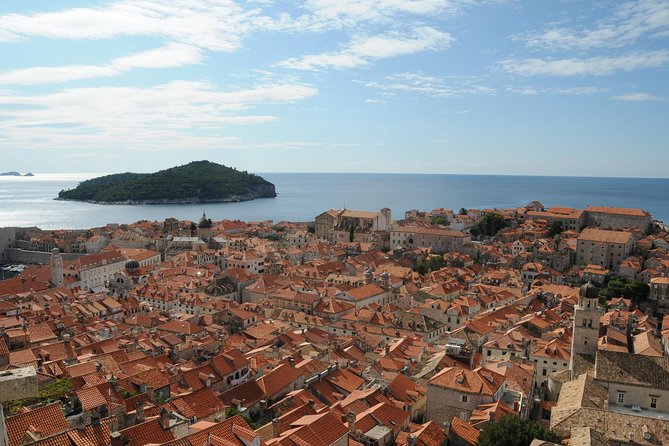
Orlando’s Column is a short stop, but it carries political meaning. It represents the independence and civic identity of Dubrovnik’s old Republic, and your guide uses it to explain how the city presented its values in public spaces.
This is the sort of stop that benefits from a guide. On your own, you might take a photograph and continue walking. With context, the column becomes part of the city’s larger story about autonomy, law, diplomacy, and public authority.
The five-minute timing is appropriate. There is no need to linger for long, but the explanation gives you another piece of the puzzle before the tour moves toward the palaces and cathedral.
Sponza Palace and the working city
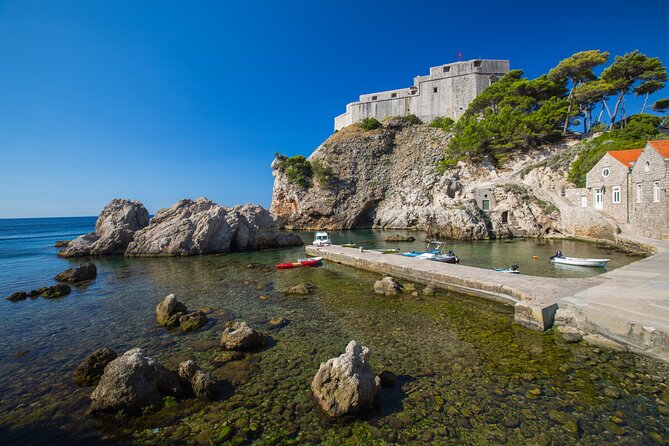
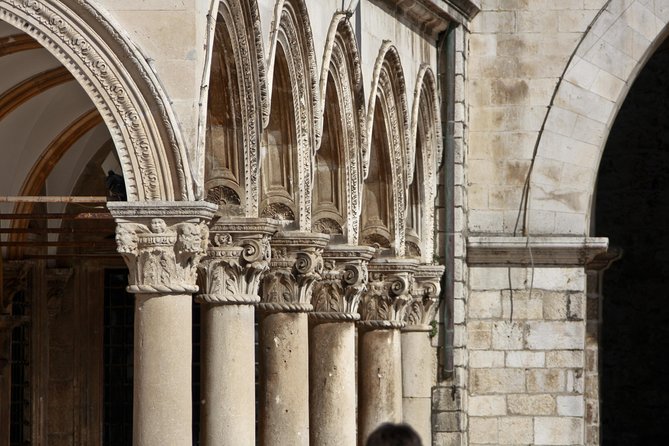
The group passes by Sponza Palace, one of the Old Town’s most striking civic buildings. Its graceful façade reflects Dubrovnik’s commercial and administrative importance, but the guide also draws attention to the practical business of the Republic.
This is where stories about trade, records, commerce, and maritime power can add useful depth. Dubrovnik’s prosperity depended on ships, merchants, agreements, and careful relationships across the Adriatic and beyond. The city’s beauty was backed by serious economic work.
You should note that this is a pass-by stop. The tour does not include an interior visit, so you will mainly see the exterior and hear its story from the street. If Sponza Palace catches your interest, mark it for a separate visit if you have time.
Rector’s Palace and the people who governed
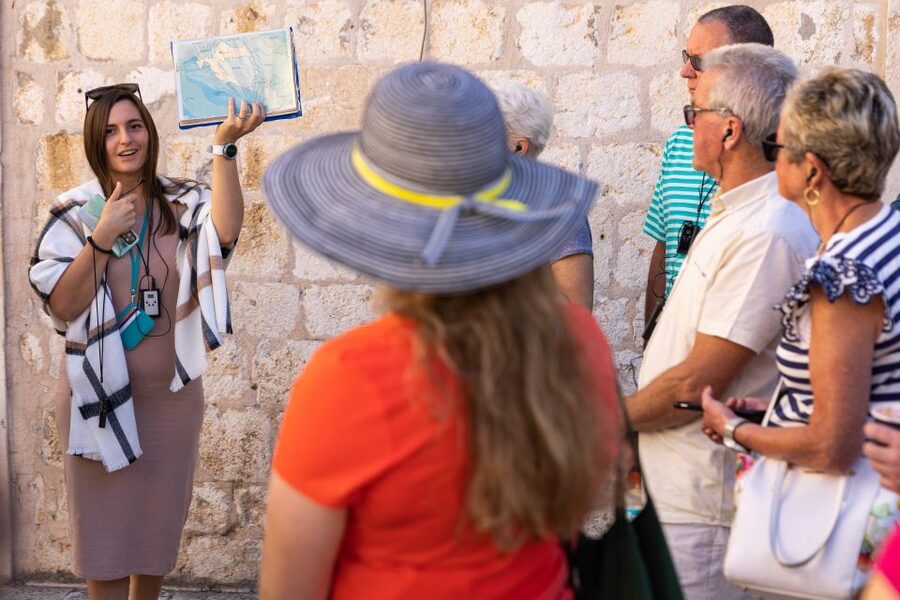
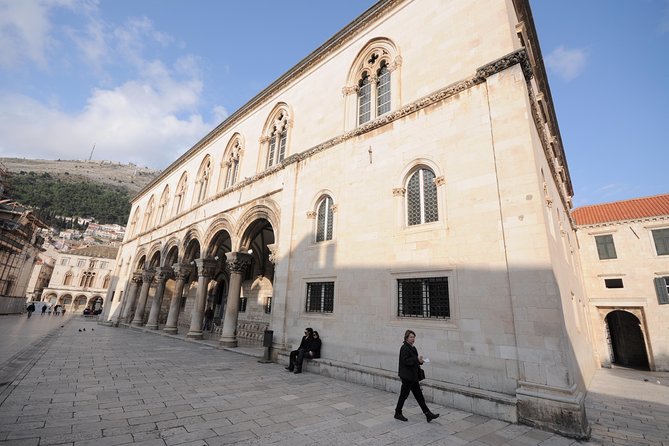
Rector’s Palace offers another look at the Republic’s political structure. The building is visually impressive, but its value on this tour comes from hearing how power worked inside the city.
The guide explains the role of the rector and the institutions that managed Dubrovnik. This helps you see beyond the palace’s decorative details. The building was not merely a residence. It was part of the machinery of government, diplomacy, and public life.
Again, you pass by rather than tour the interior. That keeps the walk moving and makes the $20 price reasonable, but it also means this experience is best treated as an introduction. If you want museum rooms, exhibits, and a slower look at individual buildings, you will need extra time afterward.
Dubrovnik Cathedral and the spiritual heart of the city
The Cathedral is another major landmark included in the route. The guide places it within Dubrovnik’s artistic and spiritual life, explaining how churches shaped the city’s identity and daily rhythm.
This part of the tour is useful even if you are not focused on religious architecture. The cathedral helps show how faith, public art, wealth, and civic pride were connected. It also gives the guide a chance to discuss traditions and the way local people relate to the Old Town beyond its role as a sightseeing district.
The stop lasts about 10 minutes and is listed as a pass-by visit. You will receive an explanation from outside rather than a dedicated interior tour. Check current opening arrangements separately if you want to go inside later.
The Arsenal and Dubrovnik’s seafaring past
One of the more distinctive stories along the route concerns the Arsenal, once central to Dubrovnik’s shipbuilding. This is a valuable addition because it shifts the focus from palaces and churches to the city’s working waterfront.
Dubrovnik was a maritime republic. Its strength came not only from walls and diplomacy but also from ships, sailors, builders, merchants, and port activity. The Arsenal story helps you picture the Old Town as a place where vessels were built and maintained, not simply admired from a distance.
The guide also discusses quarantine practices used to protect the Republic from disease. This is a memorable example of how Dubrovnik managed the risks that came with international trade. It brings an everyday, practical side of history into the tour and shows how public health affected travel long before modern border controls.
Old Port and the final view of the city
The walk ends at Dubrovnik’s Old Port after about 10 minutes of guided sightseeing. This is a fitting finish because the harbor ties together many of the themes introduced earlier: trade, ships, defense, quarantine, and the city’s relationship with the wider Adriatic.
At the port, you can better understand why Dubrovnik’s location mattered. The water was a source of wealth and connection, but it also brought military threats and disease. The guide’s earlier stories about shipbuilding and quarantine make more sense when you are standing beside the harbor itself.
The end point also works well for planning the rest of your day. You can continue exploring, return to a landmark that deserves more time, or ask your guide for advice on restaurants and further sights. Guides have been praised for practical suggestions on food, shops, and getting good value from time in the city.
What the $20 price includes
At $20 per person, this is a strong value if you want a guided introduction rather than a private or museum-heavy tour. You receive a professional licensed English-speaking guide, a 90-minute walk, historical explanations, and access to local stories that are difficult to gather from signs alone.
The value is greatest for first-time visitors. You get the city’s main orientation in a short block of time, then you can decide which places deserve a second visit. I would not choose this tour if your main goal is entering every landmark or studying architecture in detail. Several key stops are explained from outside.
There is no hotel pickup, food, or drink included. That is not a serious issue in Dubrovnik’s compact Old Town, but you should bring your own water. The tour also involves cobbled streets and some stairs, so it is not a good match for anyone expecting a completely flat or effortless walk.
Free cancellation is available up to 24 hours before the tour for a full refund, and you can reserve now and pay later. Starting times vary, so check availability when booking.
Who should take this tour?
I would recommend it to first-time visitors, cruise passengers with limited time, couples, families with older children, and anyone who wants history explained in plain English. It is also a good choice if you prefer a relaxed pace and enjoy asking questions rather than listening to a fixed speech.
The tour seems particularly well suited to people who value local perspective. Guides such as Boris, Karen, Kim, Ivana, Jelena, and Josip have been praised for answering questions, adding humor, and explaining present-day Dubrovnik as well as its past.
It may be less suitable for you if you want a private experience, a long museum visit, a wall walk, or extensive time for photography. The city walls are not part of this tour. One useful approach is to take the Old Town walk first and explore the walls separately, when you can set your own pace.
Practical advice for a comfortable walk
Wear comfortable shoes with good grip. Limestone paving and stairs are manageable, but sandals with little support may become tiring.
Bring water and sun protection, particularly in summer. One guide was praised for moving the group between shaded spots during a very hot July walk, but you should still prepare for direct sun.
Keep your group close near Pile Gate, Stradun, and other busy areas. Avoid smoking, swimwear, and loud behavior during the tour, and respect local customs around churches and historic sites.
If hearing clearly matters to you, ask whether audio support is being used on your departure. Bluetooth earpieces helped one group follow the guide in noisy streets, though equipment may vary by tour.
Should you book the Dubrovnik Old Town History Walking Tour?
Book it if you want a well-priced introduction to Dubrovnik that mixes major landmarks with small, human details. The strongest part is the guide-led storytelling: shipbuilding, quarantine, old graffiti, wartime memories, family stories, and local advice give the stone streets more meaning.
Skip it if you want a full museum itinerary or a private guide with plenty of time inside each building. For most first-time visitors, though, 90 minutes is a sensible starting point. Take it early in your stay, wear proper shoes, and use the guide’s suggestions to shape the rest of your Dubrovnik visit.
FAQ
Where does the Dubrovnik Old Town walking tour start?
It starts at the Large Onofrio’s Fountain next to the Hard Rock Cafe in Dubrovnik’s Old Town. Look for the representative carrying a red umbrella.
How long is the walking tour?
The tour lasts 90 minutes.
What language is the tour offered in?
The tour is conducted in English by a live, licensed English-speaking guide.
Which Dubrovnik landmarks are included?
The route includes Large Onofrio’s Fountain, Pile Gate, the Old Town, Stradun, Orlando’s Column, Sponza Palace, Rector’s Palace, Dubrovnik Cathedral, and the Old Port.
Does the tour include hotel pickup, food, or drinks?
No. Hotel pickup and drop-off, food, and drinks are not included.
What should I bring?
Bring comfortable shoes and water. Sun protection is also advised because the walk includes outdoor streets and some stairs.
More History Walking Tours in Dubrovnik
- Dubrovnik Jewish Heritage Private Walking Tour
★ 5.0 · 121 reviews - History and Hauntings of Salem Guided Walking Tour
★ 5.0 · 14,564 reviews - Lisbon: History, Stories and Lifestyle Walking Tour
★ 4.8 · 10,902 reviews - Boston: Freedom Trail History Small Group Walking Tour
★ 5.0 · 6,450 reviews
More Old Town and Historic Centre Walks in Dubrovnik
- Madrid Essential: Historic Center, Plaza Mayor & Royal Palace
★ 5.0 · 6,416 reviews - Lisbon: Live Fado Show with Port Wine in Historic Center
★ 4.7 · 4,166 reviews - Valencia Old Town Tour with Wine & Tapas in 11th Century Historic Monument
★ 5.0 · 3,234 reviews - Prague Old Town, Medieval Underground and Dungeon Historical Tour
★ 4.5 · 3,227 reviews
Just added around Dubrovnik
- Dubrovnik: Red History Museum Regular Ticket★ 4.6 · 134 reviews
- Dubrovnik: Small-Group Guided Old Town History Walking Tour★ 4.9 · 37 reviews
- Dubrovnik Old Town: Night tour with History, Wine & Bites★ 4.7 · 59 reviews
- Dubrovnik: Historical Tour with Game of thrones details★ 4.9 · 43 reviews
- Dubrovnik: Game of Thrones & History Tour★ 4.7 · 72 reviews
- Dubrovnik History and Game of Thrones Locations Tour★ 4.8 · 49 reviews
- Dubrovnik Old Town: Easy paced and accessible History tour★ 4.9 · 20 reviews
- Dubrovnik Old Town: Small-Group Walking Tour With A Local★ 5.0 · 123 reviews
Old Town & Historic Centre Walks, compared.

Live Fado Show with Port Wine in Historic Center
Read our review →
Valencia Old Town Tour with Wine & Tapas in 11th Century Historic Monument
Read our review →
Prague Old Town, Medieval Underground and Dungeon Historical Tour
Read our review →
Historic Center and Getsemaní Shared Walking Tour
Read our review →

Old Town Walking Tour History and Tales in Edinburgh
Read our review →
Philadelphia Old City Historic Walking Tour with 10+ Top Sites
Read our review →