
Review · DUBROVNIK
Private Walking Tour of Dubrovnik Hidden Gems and History
Dubrovnik’s old town rewards a good storyteller. This private two-hour walk links the city’s main landmarks with stories about the Republic of Ragusa, local customs, the 1990s war, and daily life behind the polished stone walls. I especially like the small-group format, limited to six people, and the way guide Antje adapts the walk to your questions and interests. The route also gives you a useful first look at Dubrovnik without forcing you into a long day of sightseeing.
The main trade-off is time. Ten stops in two hours means several places are viewed from outside, including Rector’s Palace, and optional museum visits are not included. If you want a slow look at every church, archive, and pharmacy, you will need extra time after the tour. Still, the personal guidance and clear storytelling make this a strong choice for first-time visitors, cruise passengers, and anyone who wants context before exploring alone.
Key points to know before booking
- A private walk for up to six people: Your group gets the guide’s attention rather than sharing the route with a large crowd.
- A complete Old Town introduction: The walk connects Pile Gate, Stradun, Saint Blaise’s Church, the Cathedral, the Old Port, and other central sights.
- Antje is praised for personal storytelling: She explains history, culture, politics, and the war in a relaxed way, then adjusts the conversation to your questions.
- Optional interiors cost extra: The Franciscan pharmacy, monastery, Cathedral treasury, and other museums are not part of the tour price.
- A practical morning start: Meeting at the Amerling Fountain at 9:00 am helps you see the Old Town before the day gets hotter and busier.
- Strong value for a small group: At $228.05 for up to six people, the cost works out better when shared by several people.
Starting at Pile Gate with Dubrovnik’s big story
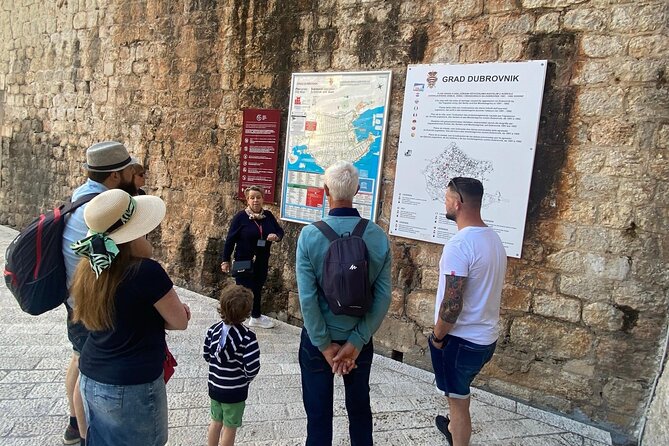
The tour begins at the Amerling Fountain, on Ul. Svetog Đurđa, close to Pile Gate. This is a sensible meeting point because Pile Gate is the main western entrance to the Old Town and one of Dubrovnik’s clearest introductions to its medieval defenses.
You will see the stone bridge, former drawbridge, and the statue of Saint Blaise above the entrance. Pile Gate was built in the 15th century as part of the city’s fortifications, so the guide can begin with the basic question behind Dubrovnik’s appearance: this was a small maritime republic that had to protect its independence.
I like this opening because it gives the rest of the walk a frame. Dubrovnik can feel like a beautiful film set at first glance, especially with its pale limestone and polished streets. At Pile Gate, you begin to see the practical city behind the beauty: controlled entrances, strong walls, and a careful approach to defense.
The meeting area can be busy, so arrive a little early. The listed start time is 9:00 am, and punctuality matters on a two-hour private tour with a full route.
More History Walking Tours in Croatia
- Dubrovnik Old Town History Walking Tour
★ 5.0 · 1,684 reviews - Dubrovnik: Ancient City Walls & Wars Walking Tour
★ 5.0 · 1,270 reviews - Dubrovnik: Old Town History Walking Tour
★ 4.9 · 474 reviews
Onofrio’s Fountain and the city’s clever water system
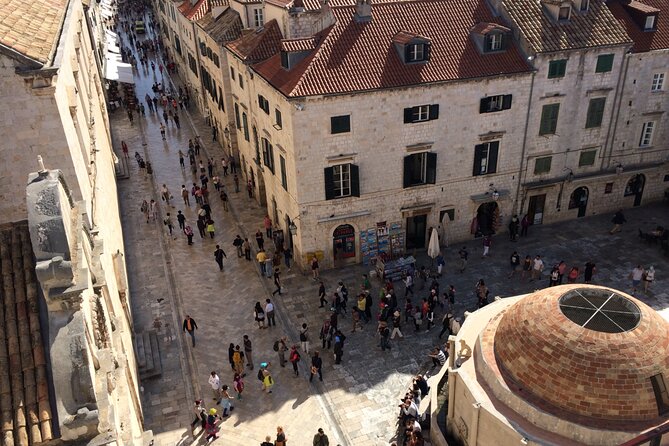
The next stop is Onofrio’s Large Fountain, a 15-minute visit with no separate admission charge. Its round stone structure has 16 carved masks, each fitted with a spout. The fountain is one of those places you can pass quickly if nobody explains it.
The useful story here is the water system. In 1438, Italian architect Onofrio della Cava helped create a supply route that brought fresh water from a spring about 12 kilometers away. For a medieval city, this was a major public service and an impressive piece of engineering.
I appreciate stops like this because they move the tour beyond rulers and monuments. You learn how ordinary people got water and how the Republic of Ragusa organized city life. The fountain also makes a good early pause, since you can focus on one object while the guide explains how water was distributed in Dubrovnik’s past.
The Franciscan Monastery and Europe’s old pharmacy
The Franciscan Monastery dates from the 14th century and includes a quiet cloister and a pharmacy established in 1317. The pharmacy is one of the oldest still-functioning pharmacies in Europe, and it once served both the religious community and the public.
The tour allows an optional visit to the monastery and old pharmacy, but the entrance fee is not included. This is an important detail when planning your day. The guide can explain the site during the walk, but you should expect to pay separately if you want to go inside.
This is also one of the places where the two-hour schedule can feel tight. Fifteen minutes is enough for an introduction and a look at the setting. It is not enough for a leisurely visit through every room or display. If the pharmacy interests you, ask Antje whether you should return after the tour and allow extra time.
The monastery adds a quieter note after the defensive drama of Pile Gate. Its value is not only architectural. It shows how religious institutions supported city life through medicine, service, and practical care.
Stradun, Dubrovnik’s polished main street
From the monastery, the route reaches Stradun, the limestone-paved street that runs through the center of the Old Town. The stop lasts about ten minutes, enough for the guide to explain the street’s role and point out the historic buildings, shops, and cafés along it.
Stradun is Dubrovnik’s main social corridor. It connects the western entrance to the eastern end of the city, and its broad, pale surface makes it easy to understand the layout of the Old Town. The street can also be slick underfoot, especially when polished by years of use, so shoes with a firm grip are useful.
The guide’s stories matter here because Stradun is easy to reduce to a scenic walk. Antje is praised for bringing the street and its past to life with details about local people, culture, and politics. You also get the chance to ask about places to eat or visit later, which is valuable if this is your first morning in Dubrovnik.
More Private History Tours in Croatia
- Dubrovnik Jewish Heritage Private Walking Tour
★ 5.0 · 121 reviews - Dubrovnik History, Sweets & Liquors in a Private Palace (PRIVATE)
★ 5.0 · 63 reviews - Game of Thrones and History Combo Private Tour
★ 5.0 · 53 reviews - Private History Old Town and City Wall Tour in Dubrovnik
★ 5.0 · 41 reviews
Saint Blaise and the city’s protector
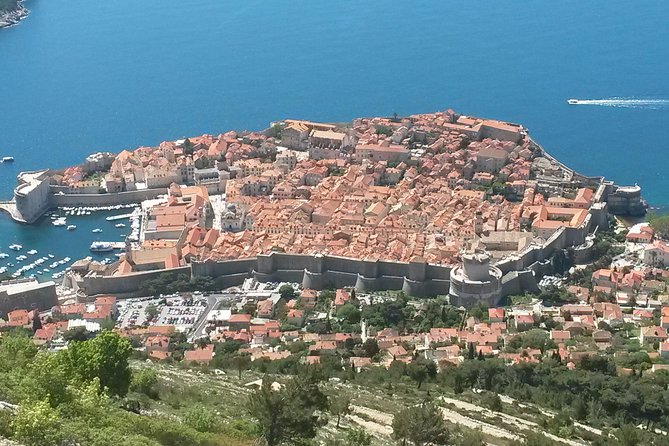
The Church of Saint Blaise is a short stop of about ten minutes. Built in the early 18th century in Baroque style, it is dedicated to Dubrovnik’s patron saint. Inside is a treasured statue of Saint Blaise holding a model of medieval Dubrovnik.
Even if you do not spend long inside, the church helps explain how strongly Saint Blaise is tied to the city’s identity. The small model of Dubrovnik presents the saint as a protector of the walls, streets, and people.
This is a good example of why a private guide can help. A quick photograph of the church tells you little about why the saint matters. A short explanation connects the building to local tradition and the city’s sense of itself.
The itinerary includes this stop without a separate admission charge. Since the tour moves quickly, ask questions as they come up rather than waiting until the end.
Sponza Palace and the business of a republic
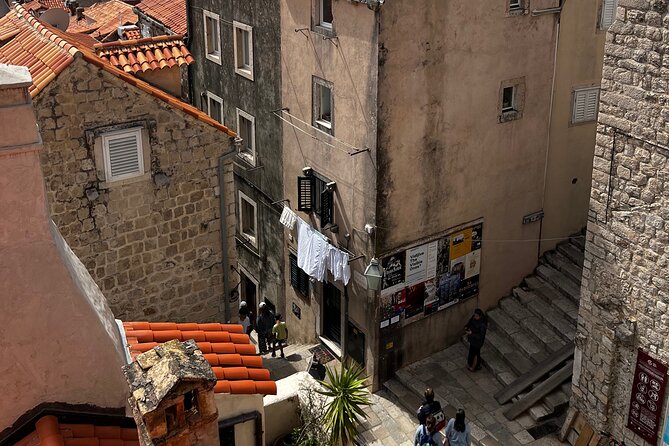
At the eastern end of Stradun, Sponza Palace combines Gothic and Renaissance design. It once served as a customs house and treasury, which tells you something about Dubrovnik’s place in regional trade.
Today, the building houses historical archives and a memorial room for Dubrovnik defenders. It also hosts important cultural events. The palace therefore links several periods of the city’s story: commerce, government records, wartime memory, and public culture.
The ten-minute stop is mainly about orientation and explanation rather than a full interior visit. That is fine if you want to understand the Old Town’s public buildings as you pass them. It is less satisfying if you hoped to study the archives or memorial room in detail.
I find Sponza especially useful for understanding that Dubrovnik was not simply a fortified port. It was an organized republic with customs, finance, records, and diplomacy. That background makes the grander buildings feel more practical and human.
Rector’s Palace and the power of the Republic of Ragusa
The walk continues to Rector’s Palace, a striking mix of Gothic, Renaissance, and Baroque elements. This was the seat of the Rector, the official who governed the Republic of Ragusa.
You will stop in front of the palace, but you will not enter as part of this tour. The museum inside contains period furniture, portraits, and objects connected with Dubrovnik’s political and cultural past, but any admission is separate.
This is probably the clearest example of the tour’s limits. The outside stop gives you the essential setting and history, but the interior requires another visit. If you are interested in government, diplomacy, or the lives of officials, plan to return later.
Still, seeing Rector’s Palace with an explanation is far better than simply walking past its ornate entrance. The building represents a system of government that valued careful administration and protected the city’s independence through trade and diplomacy.
The Cathedral and its optional treasury
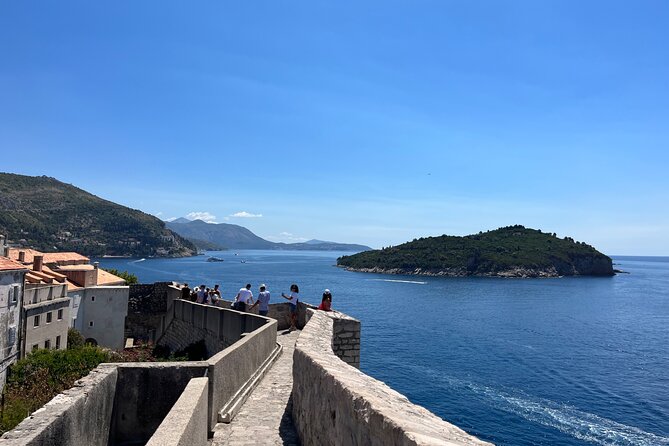
The Cathedral of the Assumption of the Virgin Mary was rebuilt in the 18th century after an earthquake. Its large Baroque form is one of the Old Town’s major religious landmarks.
The cathedral treasury contains relics, including those associated with Saint Blaise. The building also has a painting attributed to Titian, giving the stop interest for both religious and art-minded visitors.
The tour includes an explanation outside and allows an optional visit, but optional entrance fees are not included. The supplied details list the cathedral stop as free while also describing the interior visit as optional, so you should confirm any current admission arrangements if you want to enter.
Ten minutes is enough to hear the main story and decide if you want to return. I like having that choice. A guide can give you the context first, then you can spend your own time inside instead of trying to understand the site while rushing behind a group.
The Old Port and Dubrovnik’s seafaring side
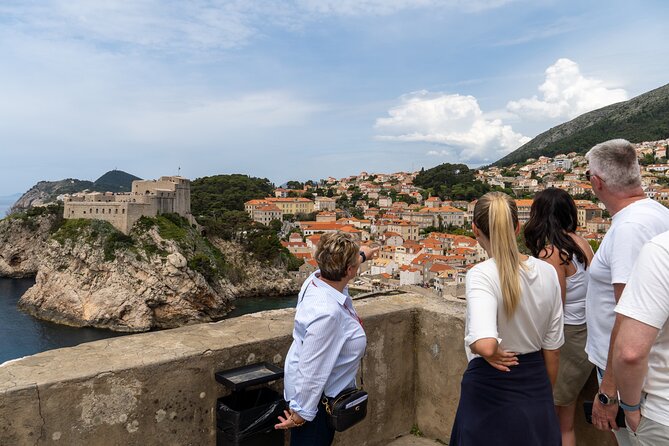
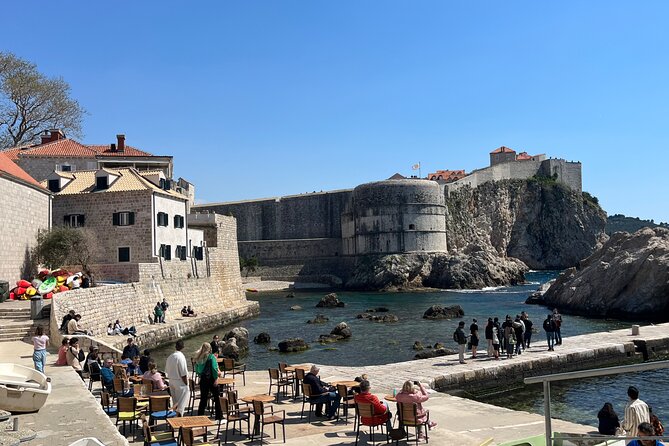
The route then reaches Dubrovnik’s Old Port, below the city walls. During the Republic of Ragusa, this was a center for trade and naval strength. Today it is a scenic harbor with boats, cafés, and departures for trips to nearby islands.
The port changes the mood of the walk. Until this point, much of the route has focused on streets, churches, government buildings, and defenses. Here, you see the sea that shaped Dubrovnik’s economy and political life.
This is also a useful planning stop. If you are staying in town, the guide can offer advice about nearby excursions and restaurants. Several people who took Antje’s walks valued her practical suggestions for the rest of their stay, not just the historical explanations.
The Old Port is a good place to pause for photographs, though the schedule allows about 15 minutes. If you want to take a boat trip, you will need to arrange that separately.
Ending beneath the Bell Tower
The final stop is Dubrovnik’s Bell Tower, near the Clock Tower at the eastern end of the Old Town. The tower rises 31 meters and was first built in the 15th century. It was reconstructed in the 1920s after earthquake damage.
Look for the two bronze figures known as the Green Men, or Maro and Baro. They strike the bell every hour. The tower provides a simple, memorable ending because it brings together Dubrovnik’s timekeeping, civic life, and distinctive old-town architecture.
The tour ends near the Clock Tower, not back at Pile Gate. That matters for your plans. You can continue toward the Old Port, find lunch nearby, visit a museum, or retrace part of the route without crossing the entire Old Town again.
How the price works for a private group
The listed price is $228.05 per group of up to six people. That is not a cheap solo walking tour, but the calculation changes when you share it. Six people would pay about $38 per person, while four people would pay about $57 each. For two people, the cost is much higher per person.
The value comes from private attention. You can ask about the war, politics, food, architecture, or later plans without waiting for a large group to move on. Antje is also praised for adjusting the tour to specific interests and offering useful suggestions for restaurants and excursions.
You should compare this price with your group size. A couple seeking the lowest-cost introduction may prefer a standard group walk. A family or group of friends can get good value, especially if everyone wants a flexible conversation in English, Dutch, or French.
The tour lasts about two hours and includes guide services. Museum and monastery entrance fees are not included, so budget separately if you plan to enter the Franciscan pharmacy, Rector’s Palace, the cathedral treasury, or other attractions.
Who will enjoy this walk most
I would choose this tour for a first morning in Dubrovnik. It gives you a clear map of the Old Town, introduces the city’s major figures and institutions, and leaves you near the Clock Tower with the rest of the day open.
It also suits cruise passengers who need a compact introduction. The route covers a lot without requiring transportation, and the private format lets you focus on the sights most useful to your short stay.
Families and mixed-interest groups should benefit from the adaptable style. One person can ask about architecture, another about local politics, and another about restaurants or nearby trips. A guide who responds to those questions is more useful than a fixed speech.
You should think twice if your main goal is a slow museum visit. The walk gives you orientation, not extended time inside. Anyone wanting the monastery, Rector’s Palace, or cathedral treasury in detail should treat this as a first look, then return independently.
Most travelers can participate, and service animals are allowed. The tour is close to public transportation, although the experience itself is a walking route through the Old Town.
Guide style and language choices
Antje van Berkel-Crvik is the named guide associated with the experience. Her strongest qualities are a warm manner, clear explanations, and an ability to connect Dubrovnik’s past with current concerns.
Her talks cover more than architecture. She explains the city’s culture, political situation, and wartime background, which can give the walk more emotional depth. Several comments also praise her communication before and after the tour, including sending extra information and sharing practical tips.
Guiding is available in English, Dutch, or French. Select the language that will make complicated historical subjects easiest for your group to follow. Since the tour is private, you can also ask for more or less detail as you go.
Booking, cancellation, and timing advice
You receive confirmation when booking. Free cancellation is available up to 24 hours before the experience begins. Cancellations or changes made less than 24 hours before the start time are not refunded or accepted, and the cut-off uses Dubrovnik’s local time.
I would arrive at the Amerling Fountain before 9:00 am. Bring comfortable shoes, water, and a phone with the mobile ticket available. The walk has many short stops, but the Old Town’s stone surfaces and steady pace make practical footwear more important than stylish footwear.
The experience has a 4.9 rating from 19 reviews, with 100 percent recommending it. Those figures suggest strong satisfaction, but the small sample means you should still match the tour to your own priorities, especially if interiors and museum time matter most.
Should you book this Dubrovnik walking tour?
Book it if you want a private, story-led introduction to Dubrovnik in two hours. It is especially good for a group of four to six, a cruise stop, or a first morning when you want practical advice along with history.
Skip it if you only want entrance-heavy sightseeing or a very slow architectural tour. Several key interiors are optional, and the walk stops outside Rector’s Palace. For most first-time visitors, though, the mix of Pile Gate, Stradun, the churches, public palaces, Old Port, and Bell Tower gives you a useful foundation for exploring on your own.
FAQ
How long does the private walking tour last?
The tour lasts approximately two hours.
Where does the tour begin?
It begins at Amerling Fountain on Ul. Svetog Đurđa in Dubrovnik.
Where does the tour end?
The tour ends near the Clock Tower of Dubrovnik, close to the Bell Tower.
What time does the tour start?
The listed start time is 9:00 am.
Is the tour private?
Yes. Only your group participates, with a maximum of six people.
Are entrance fees included?
No. Optional entrance fees for museums, the Franciscan Monastery and pharmacy, the cathedral, and other attractions are not included.
More Private History Tours in Dubrovnik
- Dubrovnik’s History with a Local: the Homeland War Stories Private Tour
★ 5.0 · 29 reviews - Private Historical Walking Tour of York
★ 5.0 · 1,324 reviews - Private Guided Historic Electric Cart Tour of St. Augustine
★ 5.0 · 1,194 reviews - Istanbul: Acemoglu Historical Turkish Bath w/Private Options
★ 4.6 · 1,190 reviews
More History Walking Tours in Dubrovnik
- Dubrovnik Old Town: Small-Group Walking Tour With A Local
★ 5.0 · 123 reviews - Dubrovnik: Small-Group Guided Old Town History Walking Tour
★ 4.9 · 37 reviews - Dubrovnik walking history tour
★ 5.0 · 22 reviews - Historic Walk with Game of thrones details in Dubrovnik
★ 5.0 · 20 reviews
Just added around Dubrovnik
- Private History Old Town and City Wall Tour in Dubrovnik★ 5.0 · 41 reviews
- Game of Thrones and History Combo Private Tour★ 5.0 · 53 reviews
- Historic Walk with Game of thrones details in Dubrovnik★ 5.0 · 20 reviews
- Dubrovnik History, Sweets & Liquors in a Private Palace (PRIVATE)★ 5.0 · 63 reviews
- Outdoor Escape Game Dubrovnik – The Spy And The Traitor (History theme)★ 5.0 · 32 reviews
- Dubrovnik by Night, History, Wine & Bites★ 5.0 · 41 reviews
- Dubrovnik walking history tour★ 5.0 · 22 reviews
- Dubrovnik’s History with a Local: the Homeland War Stories Private Tour★ 5.0 · 29 reviews
History Walking Tours, compared.

History and Hauntings of Salem Guided Walking Tour
Read our review →
Freedom Trail History Small Group Walking Tour
Read our review →
Historic Charleston Guided Sightseeing Walking Tour
Read our review →
Tapas Walking Tour with Food, Wine, and History
Read our review →
Savannah History and Haunts Candlelit Ghost Walking Tour
Read our review →
A History of Terror – Belfast City Centre Walking Tour
Read our review →Browse the lists this tour appears in