
Review · CHICAGO
Chicago Walking Tour: Historic Treasures of Chicago
Chicago’s best stories are written in stone. This two-hour walk links the Chicago Architecture Center, Michigan Avenue, State Street, and the Loop, turning famous facades into readable chapters of city history. I like the small group of no more than 15 and the way the tour takes you inside places many people pass without looking up, especially the Palmer House lobby and Chicago Cultural Center. At $35, it is a sensible introduction to central Chicago architecture.
I also like the guides’ flexible, conversational style. Names praised in the tour’s feedback include Bob, Russell, John, Jim, Maureen, Laurel, Margaret, Jean, Beth, and Paul, with repeated approval for clear explanations, humor, patience, and good answers to questions. The main drawback is that building access can change on weekends, holidays, or during unexpected closures, and you must meet at the Chicago Architecture Center rather than receive hotel pickup.
Key points to know before you go
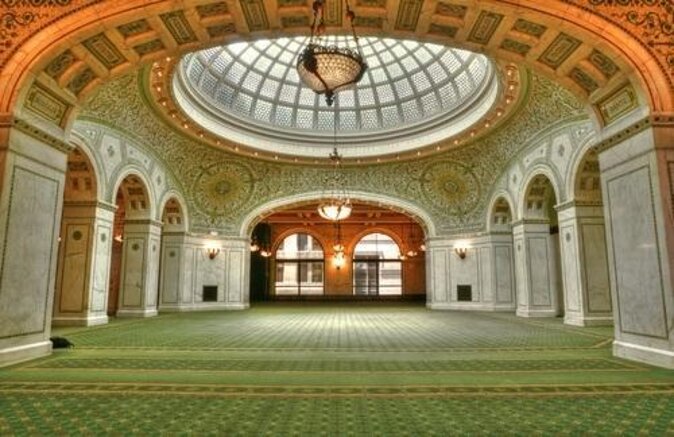
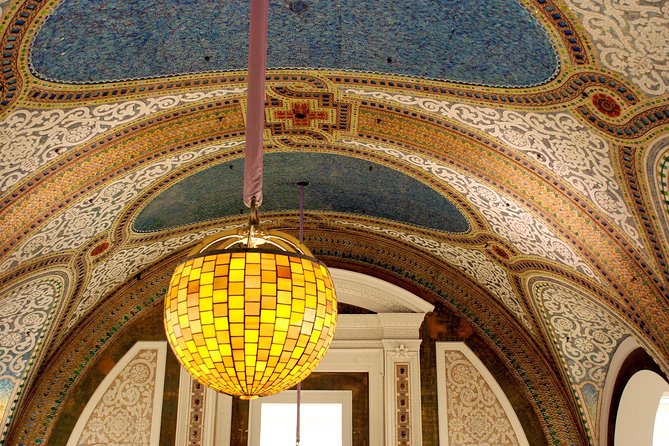
- Art Deco interiors are part of the walk: You go inside the Palmer House and Chicago Cultural Center, not just past their entrances.
- The route covers several major buildings in two hours: Wrigley Building, Carbide and Carbon Building, Reliance Building, Palmer House, and the Cultural Center all appear.
- A certified guide gives the buildings a story: Expect architecture, retail, hotel, and Chicago history rather than a silent photo walk.
- The group is capped at 15 people: That makes it easier to hear the guide and ask questions.
- The tour ends at the Chicago Cultural Center: You may walk back to the Architecture Center with the docent if you wish.
- Plan for changing access: Interiors may be unavailable because of schedules, holidays, or unforeseen closures.
Why this two-hour walk works well in Chicago
Chicago can feel like an open-air architecture textbook, but only if someone points out what you are seeing. A tall building is easy to photograph. It is harder to understand why its materials, shape, lobby, and location mattered.
This tour gives you that missing context without taking up half a day. You move through a compact part of downtown, starting near the Chicago River and finishing at the Cultural Center. The walking is spread across several short stops, with the longest listed visits taking about 10 minutes.
That pace suits you if you want substance but not a full-day architecture program. The route does not try to cover every famous Chicago building. Instead, it builds a useful introduction around landmark exteriors and a few important interiors.
The guide-led format is especially helpful for first-time visitors. You can ask why a building looks the way it does, how a hotel lobby fits into Chicago’s past, or what makes one facade different from another. Several guides, including John, Jim, Bob, and Maureen, are praised for making time for questions and giving background stories instead of rushing from stop to stop.
The small-group limit matters here. With no more than 15 people, you are less likely to lose the guide in a crowd, and a question does not need to compete with 40 other voices. It also gives the walk a more personal feel than a large coach or headset tour.
More History Walking Tours in the USA
- Chicago in a Day: Food, History & Architecture Walking Tour
★ 5.0 · 1,153 reviews - Chicago Walking Tour: Historic Skyscrapers
★ 5.0 · 67 reviews - Historic Homes and Cottages of Wicker Park Walking Tour
★ 5.0 · 44 reviews
Starting at the Chicago Architecture Center
The walk begins at the Chicago Architecture Center, at 111 E Wacker Drive. Your first stop is brief, about five minutes, but it serves an important purpose: the docent introduces the center and its galleries before you head outdoors.
Admission to the Chicago Architecture Center galleries is included. That adds value to the $35 price because you are not simply paying for someone to lead you down a sidewalk. You get a short orientation to an institution devoted to Chicago’s buildings and design.
Do not expect a long gallery visit during the walking tour itself. Five minutes is enough for an introduction, not enough for a full examination of the exhibits. If architecture is a main reason for your Chicago visit, you may want to return on your own, but the tour gives you a useful starting point.
From here, the route moves toward the city’s celebrated central buildings. Wear comfortable shoes. The tour lasts about two hours, and even a short route can feel tiring if you are focused on taking photographs, looking upward, and keeping pace with the group.
The Wrigley Building and Chicago’s grand entrance
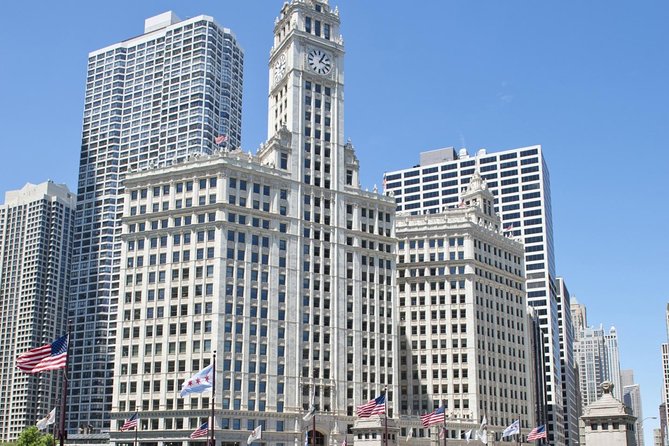
The Wrigley Building is viewed from the outside, with about five minutes devoted to the stop. That may sound brief, but the building is a natural early highlight because it gives you a clear example of Chicago’s polished commercial architecture.
This is a viewing stop, not an interior visit. You will want to listen closely as the guide points out the building’s details and place in the city rather than expecting time to wander inside.
The location also helps connect the tour’s architectural story to Chicago’s major streets. Michigan Avenue is not just a shopping corridor. Its buildings show how business, retail, hotels, and public life shaped the center of the city.
The guide’s role matters most here. A quick exterior view can be little more than a photograph without explanation. With a good docent, you begin to compare proportions, ornament, materials, and purpose as you walk.
Palmer House: the tour’s most memorable interior
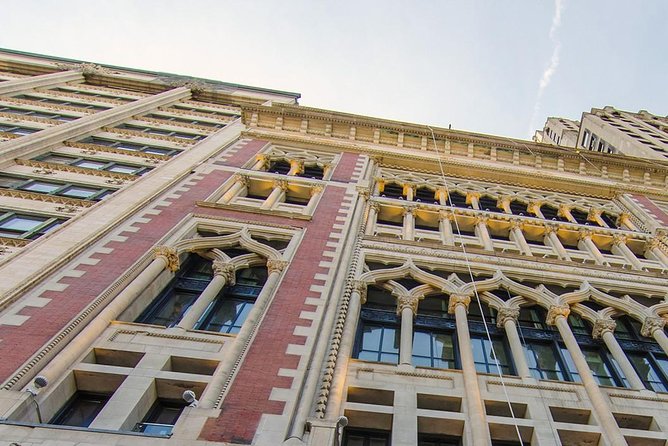
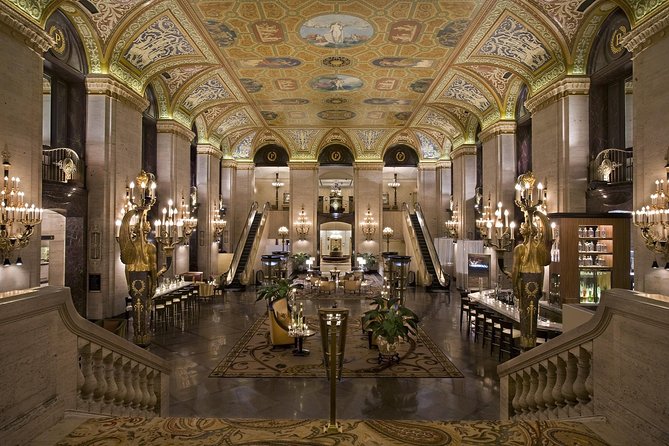
The Palmer House Hilton receives about 10 minutes, including both exterior and interior viewing. For many people, this is the emotional high point of the walk because you get to step inside a historic hotel rather than view it only from the pavement.
The hotel allows you to see how architecture works at eye level. Look beyond the entrance and notice how the lobby creates a sense of arrival. The interior gives the guide a chance to discuss hotels, retail, and the social life of Chicago in a way that a street facade cannot.
One especially useful thread is the story of the city’s Seven Sisters and the role of retail. That subject helps explain why certain downtown buildings were designed to attract shoppers and how commercial life shaped the central streets.
Access to the Palmer House interior requires proof of COVID-19 vaccination under the stated tour conditions. That is a practical point to check before booking, particularly if everyone in your party does not have the required proof.
You should also keep expectations flexible. Interior access to featured buildings can change because of weekend or holiday schedules and unexpected closures. If the Palmer House interior is unavailable on your date, the tour will lose one of its strongest inside experiences, even though the exterior remains part of the route.
More History Walking Tours in Chicago:
- History and Hauntings of Salem Guided Walking Tour
★ 5.0 · 14,564 reviews - Lisbon: History, Stories and Lifestyle Walking Tour
★ 4.8 · 10,902 reviews - Boston: Freedom Trail History Small Group Walking Tour
★ 5.0 · 6,450 reviews - Historic Charleston Guided Sightseeing Walking Tour
★ 5.0 · 6,216 reviews
Carbide and Carbon brings a different mood
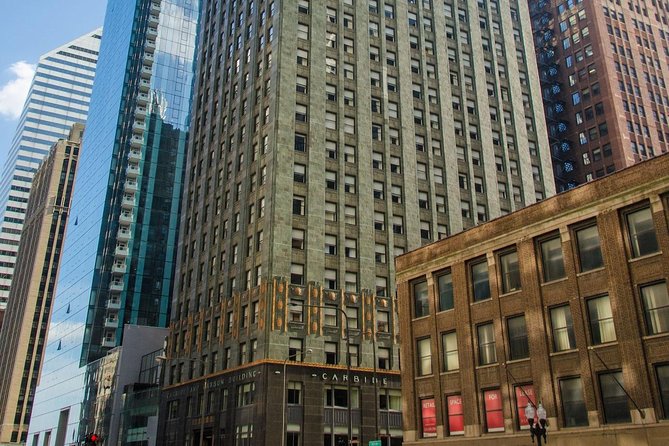
The Carbide and Carbon Building is another exterior stop, lasting about five minutes. Its appearance gives the walk variety after the formal atmosphere of the Palmer House.
You will not go inside as part of the stated route, so this stop depends on the guide’s explanation and your ability to study the facade from outside. That is not a weakness unique to this building. It is simply worth knowing that the tour alternates between quick exterior views and short interior visits.
This rhythm keeps the tour moving. You are not spending 20 minutes at every address, and that allows several buildings to fit into a two-hour program. If you want extended time for architectural sketches or detailed photography, you may need to return later.
The Reliance Building and the value of looking up
The Reliance Building is viewed for about five minutes, with admission listed as free. Again, the main experience is the exterior and the guide’s interpretation.
This is where the tour’s central lesson becomes clear: Chicago rewards attention. Details that are easy to miss from street level become easier to read when a guide tells you where to focus. The tour encourages you to stop treating downtown as a collection of office blocks and begin seeing individual design choices.
I would keep your phone or camera ready, but do not let photography take over. You have a short time at each building, and the explanation is the part you cannot reproduce from a quick online search.
The route also gives you a practical way to compare buildings from different periods and design approaches. That comparison is more useful than seeing one isolated landmark. You start to notice how each structure presents itself to pedestrians and how the city’s commercial center changed over time.
Chicago Cultural Center: an impressive finish
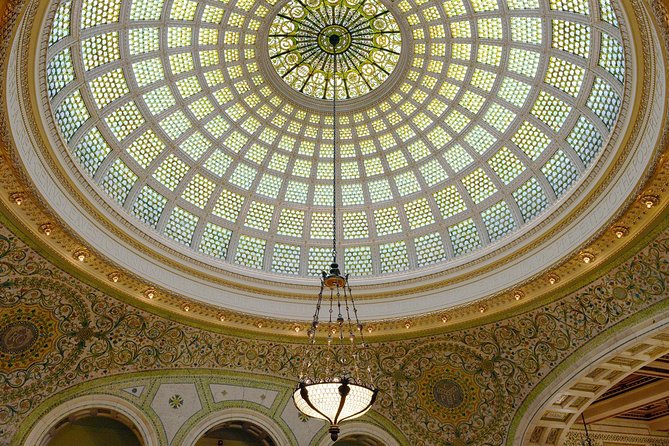
The tour ends at the Chicago Cultural Center, at 78 E Washington Street. You view both the exterior and interior, with about 10 minutes scheduled here.
The Cultural Center is an excellent final stop because it shifts the focus from private commercial buildings to a public cultural space. Its interior gives the walk a strong finish and helps explain why public architecture can feel different from a hotel, office, or retail building.
One particular interior detail praised in the tour’s feedback is the former public library space. You may find the room especially memorable because it shows how civic buildings used decoration and scale to make public services feel important.
The official end point is inside the Cultural Center. The docent returns to the Chicago Architecture Center, and you are welcome to accompany the guide back. That option is useful if you need to collect something nearby, want to ask a final question, or prefer to finish where you started.
If you plan to continue sightseeing after the tour, the Cultural Center is also a convenient finish in the center of the Loop. The tour does not provide hotel drop-off, so you will make your own way onward by foot or public transportation.
What the guides add to the experience
The buildings are the main attraction, but the guide determines how much you take away. The strongest descriptions of this tour point to guides who are friendly, clear, humorous, and willing to adjust the pace or route.
Bob is praised for making the tour informative and interesting. Russell is noted for his passion for both Chicago’s buildings and the city’s past. John receives repeated praise for bringing buildings to life and answering questions carefully.
Other guide names connected with strong experiences include Jim, Maureen, Laurel, Margaret, Jean, Beth, and Paul. Their styles may differ, but the common thread is a personal approach. You are not simply hearing memorized dates. You are encouraged to ask questions and connect architecture with daily life.
That flexibility can matter when downtown events interfere with the planned route. One guide had to adjust because of a Memorial Day parade and handled the change without disrupting the experience. You should still expect the exact order or access to shift if a public event or building schedule requires it.
The tour uses professional, certified guides, while some descriptions also refer to docents and volunteers connected with the architecture center. In practical terms, you should expect an educator who knows the subject and can explain it in plain language.
Is $35 a fair price?
At $35 per person, this is a good-value orientation to central Chicago architecture. You receive a two-hour guided walk, commentary from a certified guide, admission to the Chicago Architecture Center galleries, and access to several important buildings at no extra admission cost.
The value is strongest if you are new to Chicago or want help choosing which buildings deserve a closer look later. A guide saves you the work of researching every facade and turns a short downtown walk into a connected story.
The price is less compelling if you want extensive interior access or a slow photographic tour. Several stops last only five minutes, and some are exterior views only. You are paying for interpretation and route design, not for long visits inside each building.
The small group improves the value. A 15-person maximum gives you a better chance to hear the guide and participate. Since the tour averages booking about 10 days ahead, it is sensible to reserve before your visit if your schedule is fixed.
Practical advice for your day
Meet at the Chicago Architecture Center at 111 E Wacker Drive. The tour does not include hotel pickup or drop-off, luggage storage, stroller storage, or coat check, so arrive ready to walk with only what you need.
The route is near public transportation, and most people can take part. Service animals are allowed, while pets are not. Because the tour moves through active downtown areas and building entrances, comfortable shoes and a weather-ready layer are sensible choices.
Allow extra time if you want to examine the Architecture Center galleries beyond the brief introduction. Also leave room in your plans for changes to interior access. The Palmer House and Cultural Center are key parts of the experience, but the tour notes that building access can change.
Free cancellation is available if you cancel at least 24 hours before the start time. Changes or cancellations made less than 24 hours ahead are not accepted for a refund, with cut-off times based on local Chicago time.
Who should book this walking tour?
I would choose this tour for a first visit to Chicago, a short city break, or any day when you want a focused introduction rather than a full architecture program. It is also a good fit for people who enjoy history, design, hotels, public buildings, and city planning but do not want a highly technical lecture.
It suits curious locals, too. The route includes places that are easy to pass without looking up, and the guide’s explanations may reveal details you have missed on many previous visits.
Families and mixed-age groups may appreciate the two-hour length and the short stops. Still, anyone who dislikes walking, needs frequent sitting breaks, or wants guaranteed access to every interior should consider the limitations first.
Rain does not automatically ruin the experience. One guide led a fascinating tour on a rainy day, and much of the route includes interior viewing. Still, you should expect to spend time outdoors between buildings.
Should you book it?
Book this walk if you want a compact, well-explained introduction to Chicago’s central architecture at a reasonable price. The Palmer House and Chicago Cultural Center interiors add something that a simple street walk cannot, while the small group gives you room to ask questions.
I would skip it only if you need a fully indoor activity, want a slow and highly detailed architectural study, or cannot meet the vaccination requirement listed for the Palmer House entrance. For most visitors, this is a practical first step before exploring Chicago’s buildings on your own.
FAQ
How long does the Chicago Historic Treasures walking tour last?
The tour lasts approximately two hours.
How much does the tour cost?
The price is $35 per person.
Where does the tour begin?
It begins at the Chicago Architecture Center, 111 E Wacker Drive, Chicago, Illinois 60601.
Where does the tour end?
The scheduled end point is the Chicago Cultural Center at 78 E Washington Street, Chicago, Illinois 60602.
Can I return to the Chicago Architecture Center after the tour?
Yes. The docent returns to the Chicago Architecture Center, and you may accompany the guide back.
What buildings are included?
The route includes the Chicago Architecture Center, Wrigley Building, Palmer House Hilton, Carbide and Carbon Building, Reliance Building, and Chicago Cultural Center.
Is admission to the Chicago Architecture Center included?
Yes. Admission to the galleries of the Chicago Architecture Center is included.
Is proof of COVID-19 vaccination required?
Proof of COVID-19 vaccination is required to enter the Palmer House location under the stated tour conditions.
Just added around Chicago
- Chicago River Architecture Tour Aboard a Historic Yacht★ 5.0 · 45 reviews
- Walkin’ with Colin: Chicago History-Mystery-Comedy-Tragedy Tour★ 5.0 · 218 reviews
- Historic Homes and Cottages of Wicker Park Walking Tour★ 5.0 · 44 reviews
- Historical and Architectural Chicago Fireboat River & Lake Cruise★ 5.0 · 246 reviews
- Chicago Architecture and True Crime Tour★ 5.0 · 326 reviews
- Field Museum of Natural History Early Access Ticket★ 4.5 · 52 reviews
- Field Museum of Natural History All-Access Pass★ 4.5 · 135 reviews
- African American Heritage Tour of Chicago★ 4.5 · 127 reviews
History Walking Tours, compared.
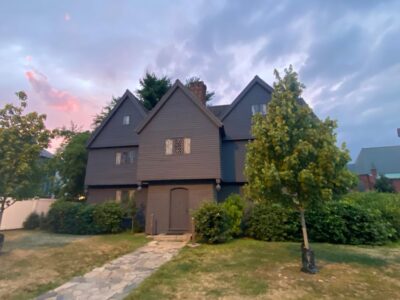
History and Hauntings of Salem Guided Walking Tour
Read our review →
Freedom Trail History Small Group Walking Tour
Read our review →
Historic Charleston Guided Sightseeing Walking Tour
Read our review →
Tapas Walking Tour with Food, Wine, and History
Read our review →
Savannah History and Haunts Candlelit Ghost Walking Tour
Read our review →
A History of Terror – Belfast City Centre Walking Tour
Read our review →Browse the lists this tour appears in