
Review · CHICAGO
Chicago Walking Tour: Historic Skyscrapers
Chicago’s old towers tell better stories than any skyline photo. This 90-minute walk through the Loop brings you face to face with early skyscrapers, ornate interiors, and the people who shaped Chicago’s rise. I like the small group of no more than 10 and the guides’ clear enthusiasm, especially the passion praised in guides such as Deborah, Audrey, and Angela Platt. The main catch is that some buildings may be closed, particularly on Sundays, weekends, or holidays.
I also like that the Chicago Architecture Center gallery admission is included. You get more than a sidewalk stroll for $35, though the tour is best for adults and older children who can listen while walking. If you want modern Chicago or lots of interior access, this tour may feel too focused on historic buildings and exterior viewing.
Key points before you book
- The tour begins at the Fine Arts Building: Meet at 410 S Michigan Ave, not at the Chicago Architecture Center.
- The route covers seven important stops: You see the Fine Arts Building, Auditorium Building, Rookery, Board of Trade, Marquette, and Monadnock buildings.
- The Rookery is a major highlight: Its famous design makes it one of the most rewarding stops on the route.
- Interior access can change: Weekend, holiday, or unexpected closures may mean seeing some buildings only from outside.
- The group stays small: A maximum of 10 people gives the guide room to answer questions and point out details.
- Your ticket includes the architecture galleries: The Chicago Architecture Center is not part of the walking route, but admission is included.
Why this short Chicago walk works so well
Chicago can overwhelm you with tall buildings, busy streets, and big architectural names. A good guide gives the Loop a clear order. Instead of passing a handsome facade and wondering what you are looking at, you learn why the building matters, who designed it, and how it fits into Chicago’s story.
That matters on a 90-minute tour. You are not signing up for an all-day architectural lecture. You get a compact route through several major buildings, with enough time at each stop to understand the basic design and historical point. I like this format for a first morning in the city, especially if your schedule is tight.
The group limit of 10 is another real advantage. A large crowd can make a city walk feel like a school outing, with the guide repeating every point and half the group standing behind someone’s phone. This smaller format should feel more personal. It also gives you a better chance to ask about a style, a building detail, or the people behind the design.
The strongest praise goes to the guides. Deborah was described as passionate about the development of the skyscraper, while Audrey received credit for offering insight into both individual buildings and Chicago architecture as a whole. Angela Platt was praised for explaining different architectural styles and pointing out interior details. The quality of your experience will depend partly on which guide leads your group, but the guide is clearly central to the tour.
More History Walking Tours in the USA
- Chicago in a Day: Food, History & Architecture Walking Tour
★ 5.0 · 1,153 reviews - Chicago Walking Tour: Historic Treasures of Chicago
★ 5.0 · 362 reviews - Historic Homes and Cottages of Wicker Park Walking Tour
★ 5.0 · 44 reviews
Starting inside the Fine Arts Building
The meeting point is the Fine Arts Building at 410 S Michigan Ave. Take a moment to get oriented before the group sets off. This is a practical starting point because you begin with a building rather than a generic street corner.
The opening stop lasts about 10 minutes. Your guide uses this time to set up the larger story of Chicago’s architecture and the city’s early skyscraper era. Pay close attention here. The first explanation gives you a framework for the rest of the walk, including the changes in building design, construction, and decoration that appear at later stops.
Because the tour begins inside or at the Fine Arts Building, arrive with the address in your confirmation ready to check. The stated meeting location is 410 S Michigan Ave, while the general address is sometimes shortened to 410 Michigan Ave. That small difference can matter on a busy downtown street.
This is also a good place to ask questions early. If you are particularly interested in Art Deco, early skyscraper construction, or interior ornament, say so. The guides have been praised for tailoring explanations to architectural interests, and a small group makes that easier.
The Auditorium Building and the city’s grand ambitions
The next stop is the Auditorium Building, viewed from the outside for roughly 10 minutes. It gives the tour a useful change of pace. You move from your starting building to a major public structure and begin comparing how Chicago’s architects handled scale, decoration, and civic purpose.
Your guide will fill in the human side of the building story. The tour is not just a parade of facades. It focuses on builders, designers, styles, and the ideas behind these structures. That approach is what turns a walk into something more useful than a list of names.
The drawback is simple: this stop is exterior viewing. You should not assume you will tour every interior on the route. Building access can change without notice, and the schedule may affect what is open. Still, the outside view remains worthwhile because the guide helps you read details you might otherwise pass without noticing.
The Rookery: the route’s big architectural moment
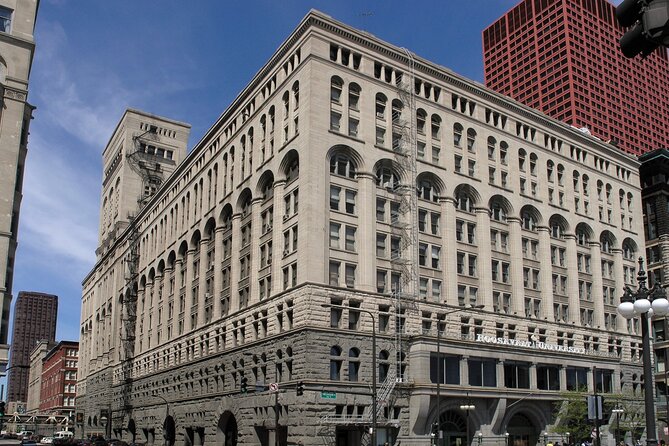
The Rookery Building receives about 10 minutes, and it is one of the stops that gives the tour its strongest visual payoff. The building is famous enough to attract attention on its own, but the guide’s explanation helps you understand why it matters rather than treating it as a quick photo stop.
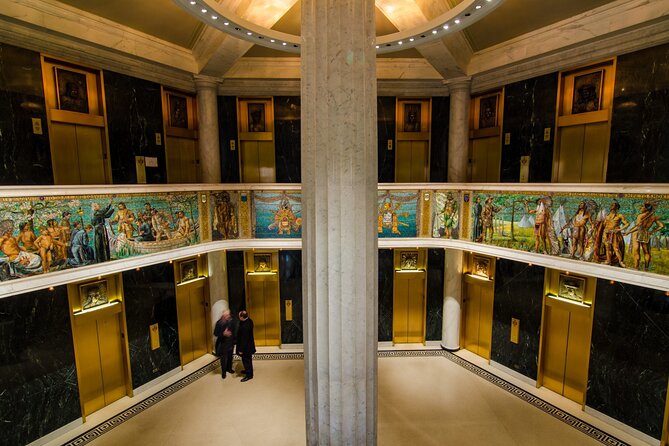
This is the place to watch for the contrast between structure and decoration. Early skyscrapers were not only engineering experiments. Their designers also wanted grand entrances, carefully arranged ornament, and interiors that made a strong impression. The Rookery helps show how practical office buildings became architectural statements.
The itinerary lists the Rookery as an exterior stop, yet some guides have taken groups inside buildings when access allowed. That is not guaranteed. A Sunday or holiday visit may mean closed doors, so keep your expectations flexible. If interior details are especially important to you, ask the guide what is open that day.
The Rookery also rewards a slower look. Do not spend the entire 10 minutes taking one photo from across the street. Listen for the details about design and construction, then look back at the facade with that information in mind. That is where the tour earns its keep.
More History Walking Tours in Chicago:
- History and Hauntings of Salem Guided Walking Tour
★ 5.0 · 14,564 reviews - Lisbon: History, Stories and Lifestyle Walking Tour
★ 4.8 · 10,902 reviews - Boston: Freedom Trail History Small Group Walking Tour
★ 5.0 · 6,450 reviews - Historic Charleston Guided Sightseeing Walking Tour
★ 5.0 · 6,216 reviews
The Board of Trade and the power of the Loop
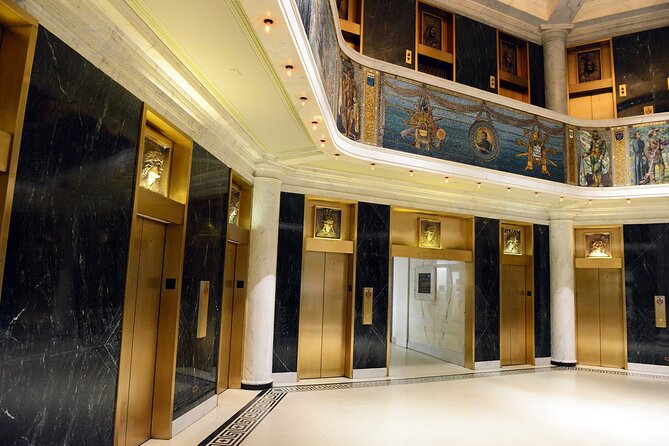
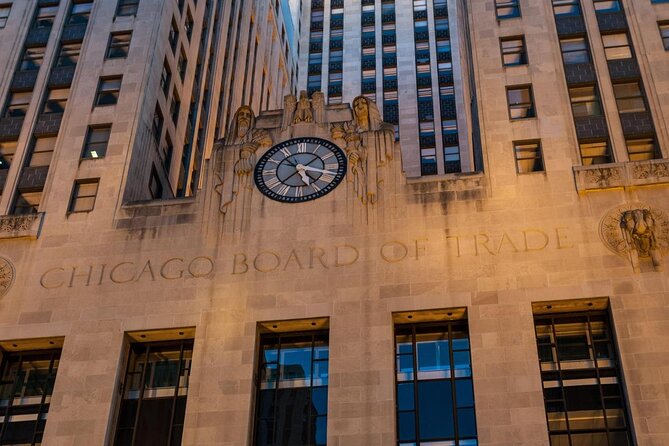
The Chicago Board of Trade Building gets a shorter stop of about five minutes, with the exterior as the focus. The stop helps connect architecture to commerce. Chicago’s early skyscrapers were not isolated works of art. They were built for offices, trade, money, and the growing power of a major American city.
Five minutes is enough for an introduction, but not for a long architectural study. Think of this as part of the route’s larger rhythm. The tour gives you a series of concise explanations rather than asking you to spend half an hour at every address.
This is also where the guide’s storytelling matters most. A plain list of dates would make the stop feel thin. A strong explanation links the building to Chicago’s business life and shows how the structure fits into the Loop. One less enthusiastic review found some facts dull and wanted more about modern Chicago, so you should know what this walk does best: it focuses on historic architecture, not the city’s recent development.
The Marquette Building and details worth noticing
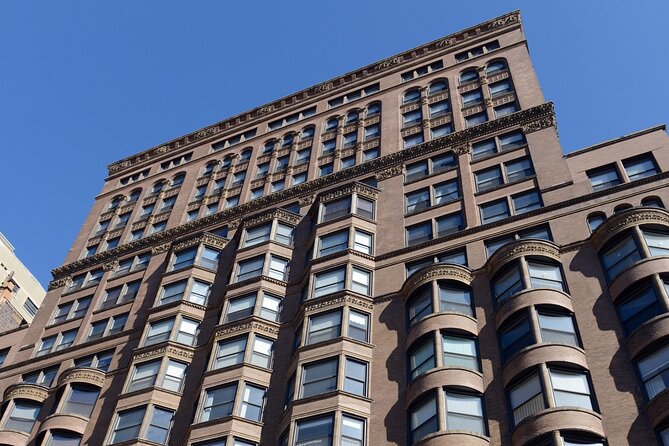
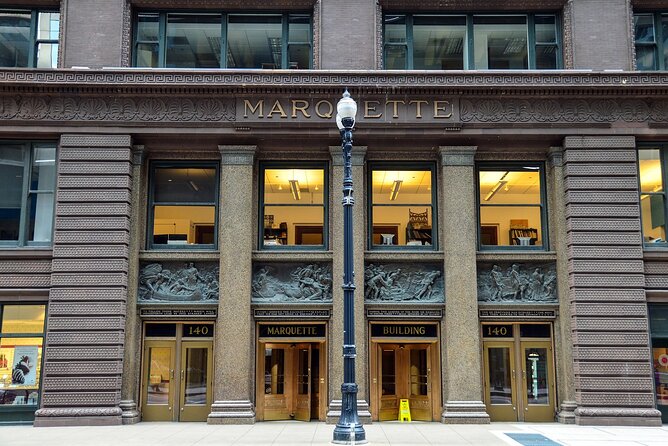
The Marquette Building is another five-minute exterior stop. It adds variety to the route and gives you another chance to compare styles, decoration, and the way historic office buildings present themselves at street level.
This is the kind of stop where I would keep my phone in my pocket for a moment. Look at the entrance, the arrangement of the facade, and any ornament the guide points out. The tour’s value comes from learning how to see these buildings, not simply collecting photographs.
The schedule is brisk. Five minutes passes quickly, especially if the group pauses for questions. If you have a particular interest in the Marquette, ask about it when the guide introduces the building. The small group should make that possible without slowing everyone down too much.
The Monadnock Building brings the walk to a close
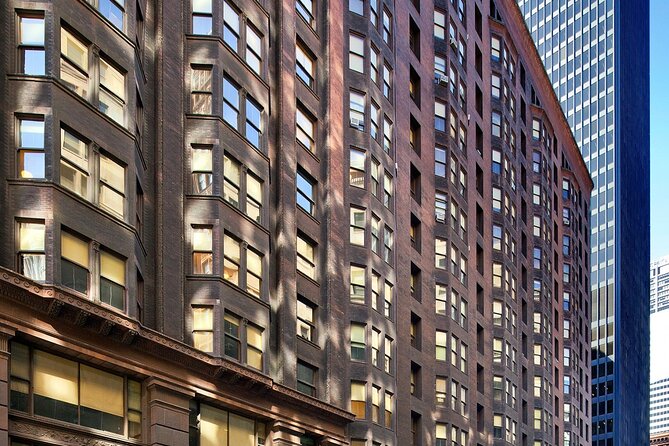
The final main stop is the Monadnock Building at 53 W Jackson Blvd. The exterior visit lasts about five minutes, and this is also where the tour ends.
Ending here makes practical sense if you plan to continue exploring the Loop. You are not returned to the starting point, so plan your next stop from the south end of the route. The end location is clear: the Monadnock Building, 53 W Jackson Blvd.
The Monadnock is a useful final building because it lets the guide close the architectural story with one more comparison. By this point, you have seen several buildings from different periods and can better understand changes in height, decoration, structure, and purpose.
Do not book this walk expecting a round trip. If you need to return to the Fine Arts Building, you will have to make your own way back. The tour is short enough that this is usually manageable, but it is worth knowing before you plan a tight connection or reservation.
What the Chicago Architecture Center adds
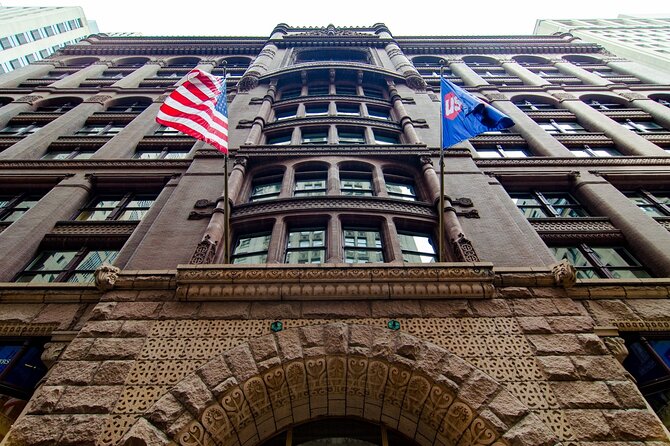
Admission to the galleries at the Chicago Architecture Center is included in the $35 price. The center is not directly part of the walking route, so you will need to treat it as a separate visit rather than expecting the guide to finish there.
That inclusion improves the value. The walk gives you context in the streets, while the galleries give you a place to continue looking at Chicago’s buildings and architectural ideas. If you have time, use the center after the tour while the guide’s explanations are still fresh.
The galleries are especially useful if you want more than a quick introduction. The walking tour moves at a set pace, and each stop has a limited time. At the center, you can spend longer with the material that interests you most.
Keep in mind that the ticket includes gallery admission, not food, drinks, coat check, luggage storage, or stroller storage. Do not arrive carrying large bags that you expect the center or tour staff to hold.
Is $35 a fair price?
At $35 per person, this is not the cheapest way to walk through downtown Chicago. You can see the buildings from the sidewalk for free. The question is whether you want to know what you are seeing.
I think the price is fair if you care about architecture, history, or efficient sightseeing. You receive a 90-minute guided walk, a certified Chicago Architecture Center guide, a group capped at 10, and admission to the center’s galleries. The guide’s interpretation is the main product. Without it, the Rookery, Marquette, and Monadnock can blur into a series of handsome old facades.
The value is less convincing if you prefer to explore alone, want modern architecture, or dislike scheduled stops. One critical review found the facts dull and wanted more about modern Chicago. That is a useful warning, not a reason to reject the tour. Choose this for the historic Loop and early skyscraper story, not for a broad survey of every era.
The average booking lead time is about 20 days. If your dates are fixed, reserve ahead rather than waiting until the last morning. The maximum group size is small, so available spaces can be limited.
Who will enjoy this walk most?
I would recommend it first to architecture lovers, history buffs, and anyone with only a short time in Chicago. The route covers several major landmarks without demanding half a day, and the guide gives you a useful introduction to the Loop.
It also suits people who learn better from a person than from a guidebook. Guides such as Deborah, Audrey, and Angela Platt have been praised for their energy, explanations, and ability to point out interior and style details. That human connection is the strongest reason to book.
The tour is not recommended for young children. The content depends on listening, and the pace includes several stops with historical explanation. Older children who already enjoy buildings may be fine, but families with very young children should choose another activity.
Most people can participate, and service animals are allowed. Pets are not allowed. The tour is near public transportation, which makes it easier to reach without adding a long walk before the 90-minute route.
Wear comfortable shoes and check the weather before you go. The tour is outdoors for much of its time, and the itinerary includes several exterior stops. Bring only what you need because there is no luggage or stroller storage and no coat check.
Timing, closures, and the small details
Building access is subject to change because of weekend and holiday schedules, as well as unexpected closures. This matters most if you are hoping to see interiors. The tour still operates as a historic architecture walk, but the balance between inside and outside may change.
One Sunday visit had several closed buildings. Plan around that possibility rather than treating interior access as guaranteed. The published route specifically lists most stops as exterior viewing, so you should be pleased by extra access, not disappointed if doors are closed.
You receive confirmation when you book, and the ticket is mobile. Free cancellation is available if you cancel at least 24 hours before the start time. Changes or cancellations made less than 24 hours ahead are not accepted for a refund, and the cut-off uses Chicago local time.
Should you book the Historic Skyscrapers walk?
Book it if you want a compact, guide-led introduction to Chicago’s early skyscrapers and you value expert explanation more than independent wandering. The Rookery, Board of Trade, Marquette, and Monadnock buildings give you a strong set of landmarks, while the included Chicago Architecture Center galleries add useful time indoors.
Skip it if your main interest is modern Chicago, if you need guaranteed interior access, or if you want a relaxed walk with no fixed schedule. For most architecture-minded visitors, though, the $35 cost is sensible. You get a small group, a focused route, and guides who have shown real passion for the city’s buildings. Just keep your expectations clear: this is a historic Loop walk, not a complete tour of Chicago architecture.
FAQ
Where does the Chicago Historic Skyscrapers tour begin?
The tour begins at the Fine Arts Building, 410 S Michigan Ave, Chicago, Illinois 60611.
Where does the tour end?
The tour ends at the Monadnock Building, 53 W Jackson Blvd, Chicago, Illinois 60604.
How long does the tour last?
The walking tour lasts approximately 1 hour and 30 minutes.
How many people can join the tour?
The group is limited to a maximum of 10 participants.
What buildings are included on the route?
The route includes the Fine Arts Building, Auditorium Building, Rookery Building, Chicago Board of Trade Building, Marquette Building, and Monadnock Building.
Is admission to the Chicago Architecture Center included?
Yes. Your tour ticket includes admission to the galleries at the Chicago Architecture Center, although the center is not directly part of the walking route.
Are the buildings visited inside?
The itinerary lists the Auditorium Building, Rookery Building, Chicago Board of Trade Building, Marquette Building, and Monadnock Building as exterior viewing stops. Interior access may change because of weekend, holiday, or unexpected closures.
Can I cancel for a full refund?
Yes. You can cancel for a full refund up to 24 hours before the experience starts. Cancellations or changes made less than 24 hours before the start time are not accepted for a refund.
Just added around Chicago
- Chicago River Architecture Tour Aboard a Historic Yacht★ 5.0 · 45 reviews
- Walkin’ with Colin: Chicago History-Mystery-Comedy-Tragedy Tour★ 5.0 · 218 reviews
- Historic Homes and Cottages of Wicker Park Walking Tour★ 5.0 · 44 reviews
- Historical and Architectural Chicago Fireboat River & Lake Cruise★ 5.0 · 246 reviews
- Field Museum of Natural History All-Access Pass★ 4.5 · 135 reviews
- Chicago Architecture and True Crime Tour★ 5.0 · 326 reviews
- Field Museum of Natural History Early Access Ticket★ 4.5 · 52 reviews
- African American Heritage Tour of Chicago★ 4.5 · 127 reviews
History Walking Tours, compared.
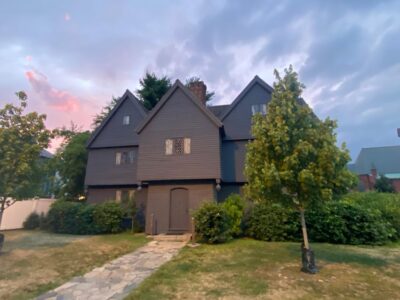
History and Hauntings of Salem Guided Walking Tour
Read our review →
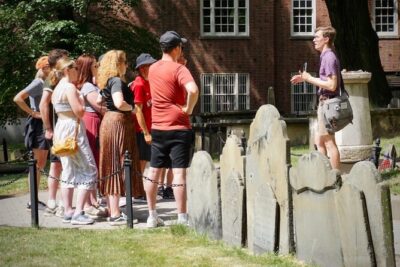
Freedom Trail History Small Group Walking Tour
Read our review →
Historic Charleston Guided Sightseeing Walking Tour
Read our review →
Tapas Walking Tour with Food, Wine, and History
Read our review →
Savannah History and Haunts Candlelit Ghost Walking Tour
Read our review →
A History of Terror – Belfast City Centre Walking Tour
Read our review →Browse the lists this tour appears in