Review · CHARLESTON
Semi-private SMALL group Historic Walking Tours w/certified guide
Charleston rewards a slow walk. This two-hour tour gives you close-up architecture and the stories behind old homes, churches, and public buildings, with time at the Charleston Battery and the Four Corners of Law. I especially like the small-group limit of 10 and the chance to ask questions instead of trailing behind a large crowd. The $35 price is fair for a licensed guide, though you should be ready to walk outdoors in Charleston’s heat and humidity.
The guides bring different strengths. Steve Bailey is praised for local stories and an easy way with questions, while Kay has adjusted routes to suit individual interests. Kate, Russ, and other guides have also led this experience, so the exact style can vary. The meeting points are central, but the tour is not a deep architectural inspection or a ticketed attraction visit. It is an overview on foot.
Key points at a glance
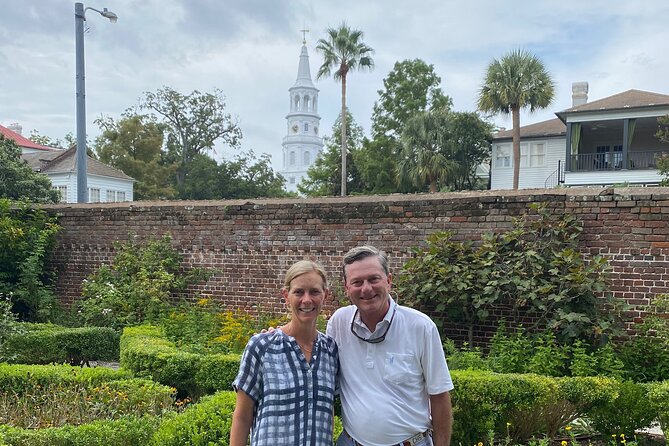
- Small groups capped at 10: A compact group makes it easier to hear the guide and ask questions.
- Starts at 80 Broad Street: The walk begins near City Hall and Charleston’s Four Corners of Law.
- Covers more than dates: Expect history, architecture, customs, folklore, art, food, and local character.
- Includes the Charleston Battery: The route adds one of the city’s key waterfront sights to its historic-center walk.
- Guides can adapt the conversation: Kay has adjusted the tour when visitors had already seen part of the planned route.
- Good value at $35: You get about two hours with a licensed and certified guide, without admission fees.
A two-hour introduction to old Charleston
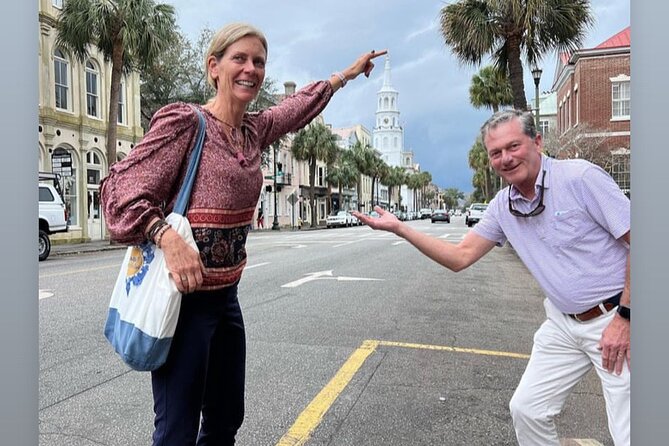
Charleston is a city best understood at walking speed. Cars can take you from one sight to another, but they do not help much with the details above eye level: a church façade, a public building, a narrow passage, or the age of a house that looks merely elegant at first glance.
This tour is built around that slower view. You stroll through the historic center while the guide explains the buildings and the events connected with them. The emphasis is not on entering a long list of attractions. It is on seeing the city as a connected outdoor story.
That approach suits a first visit. You get a basic map in your head, learn which parts of the city matter, and gather enough context to make later independent walks more rewarding. If you already know Charleston well, the value depends more on your guide and your interest in local stories.
The tour lasts about two hours. That is long enough for a useful orientation without consuming an entire morning or afternoon. It is also short enough to fit into a cruise stop or the first day of a longer stay, provided the timing works with your ship or other plans.
More History Walking Tours in Charleston
- Historic Charleston Guided Sightseeing Walking Tour
★ 5.0 · 6,216 reviews - Hidden Alleyways and Historic Sites Small-Group Walking Tour
★ 5.0 · 2,335 reviews - Charleston historical walking tour with a Professor of History at The Citadel
★ 5.0 · 1,284 reviews
Broad Street and the Four Corners of Law
The walk begins at 80 Broad Street, near Charleston City Hall. This is a practical starting point because the guide can explain the city’s early story at a meaningful intersection before leading you farther into the historic center.
The Four Corners of Law is formed by buildings associated with religious, local, state, and federal authority. The exact presentation belongs to the guide, but the point is clear: this one corner gives you a compact lesson in how Charleston’s civic and religious life developed.
I like this kind of opening because it gives the rest of the walk a frame. Instead of collecting disconnected facts, you begin with a place where several parts of the city’s public life meet. The guide can also explain why the starting point matters, rather than treating City Hall as a simple place to gather.
The start is easy to reach by public transportation, and confirmation arrives when you book. You should still allow a little extra time to find the exact meeting spot. A walking tour loses its rhythm quickly when people arrive late and the guide must repeat the introduction.
Historic homes, churches, and public buildings

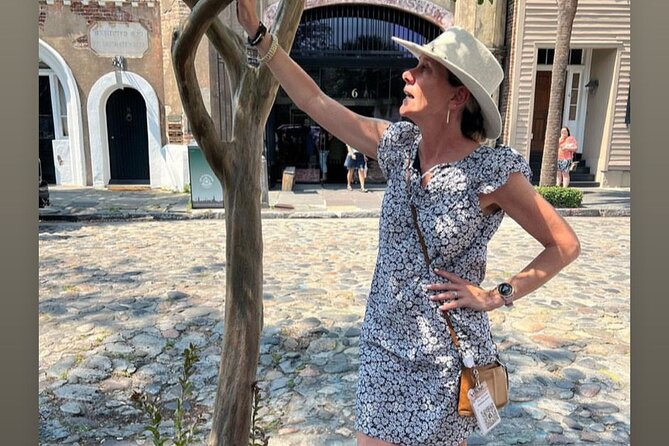
From the opening discussion, the route moves through Charleston’s historic streets. You pass homes, churches, and public buildings, including structures that predate the American Revolution.
The useful part is not just the age of the buildings. A good guide helps you read the city’s visual clues: how a building faces the street, why a church occupies its site, what a public building says about civic priorities, and how different eras sit beside one another.
Steve Bailey receives especially strong praise for giving a broad overview while adding local stories. One account describes him as a lifelong local who knows the city’s smaller details and seems to know many people along the way. That sort of local connection can make a street feel less like a row of façades and more like a lived-in place.
Kay’s approach appears more flexible. She has adjusted the discussion when part of the planned route was already familiar to the group, using the time to focus on other interests. That matters if you have only a few hours in Charleston and want to avoid hearing the same basic explanation twice.
The tour also reaches beyond formal history. The subjects can include customs, folklore, art, and food. I consider that a strength. Charleston’s identity is not confined to wars and dates, and a city walk is more useful when it explains how people shaped daily life as well as who held office.
The Charleston Battery and the waterfront portion
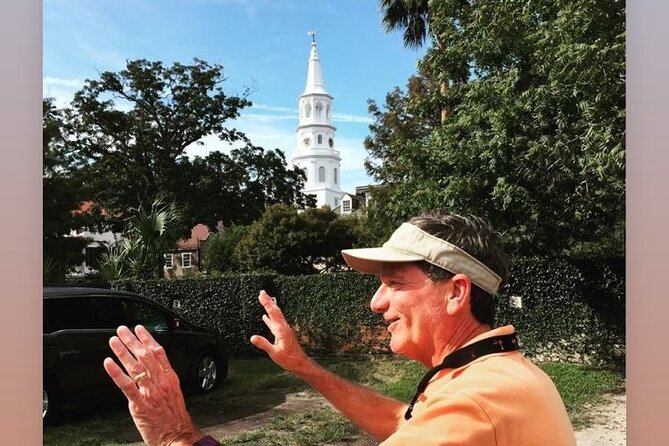
The Charleston Battery is one of the named highlights, so you should expect the walk to include this prominent waterfront area. It gives the tour a change of pace after the streets around City Hall and the historic buildings.
Here, the appeal is partly visual. You can take in the waterfront setting while the guide connects the Battery to Charleston’s wider story. The experience is still a walking tour, not a formal visit inside a museum or historic house, so the detail depends on the guide’s presentation and the time available.
The Battery also gives you a useful sense of Charleston’s shape. A city can seem like a collection of attractive streets until you reach the water and see how its position influenced its growth and public life. I would pay attention to that broader view, not just the photo opportunities.
The drawback is exposure. Charleston can be hot and humid, and one account describes a tour affected by rain. Wear comfortable shoes, carry water, and check the forecast. The company does not list a separate indoor alternative in the supplied details, so you should be prepared for the walk to remain an outdoor activity.
More History Walking Tours in the USA
- Charleston: Old Walled City Historical Walking Tour
★ 4.7 · 705 reviews - Historic Charleston Walking Tour: Rainbow Row, Churches, and More
★ 5.0 · 691 reviews - Charleston: History and Architecture Guided Walking Tour
★ 4.8 · 349 reviews - Charleston History and Hops Tour: Bar and History Walk
★ 5.0 · 316 reviews
Why the small group matters

The stated maximum is 10 people. That is a real benefit for a history walk, where the experience can suffer if you cannot hear the guide or get a word in.
In a small group, you can ask why a building matters, request more detail on a period that interests you, or clarify something you missed while crossing a street. The guide can also pause without creating a major delay for dozens of people.
Some departures may be smaller still. One family had a group of six, and another couple had a private-feeling walk with only four people. That makes the $35 price more attractive, since you receive some of the benefits of a private tour without paying a private-tour rate.
The small-group promise should be read as a maximum, not a guarantee that every departure will have four or six people. One older account refers to a group of 13, which does not match the stated limit, so group size may have changed over time or varied by departure. I would book this tour for the intended small-group format, but I would not assume a private experience.
The compact format also helps families. Steve was praised for keeping a patient pace with elderly parents, and another account describes the walking speed as comfortable. That does not mean the route is effortless, but it suggests the guide can respond to the group instead of pushing everyone at one fixed speed.
Guide styles and the value of local knowledge

The guide is the heart of this experience. The route itself is free to walk, and the buildings can be seen without a ticket. You are paying for interpretation, organization, and the ability to turn an attractive street into a meaningful part of Charleston.
The strongest praise goes to the guides’ command of local history and their ability to answer questions. Steve Bailey is repeatedly described as easy to engage with, enthusiastic, and well informed about the city. Kay is praised for adapting the route and adding details that fit the group’s interests. Kate is described as especially strong by a local who had already taken other Charleston tours.
Russ has also received credit for clear communication before the tour and for adjusting timing around a ship departure. That is useful if you are visiting Charleston during a cruise call, although you should still build in a safe margin before you must return to the ship.
Because several guides lead the experience, you should not expect one fixed personality or identical wording each time. That is not necessarily a weakness. Some people prefer a polished script, while others want a local who can follow questions and tell stories. This tour appears to favor the second style.
Is $35 a good price?
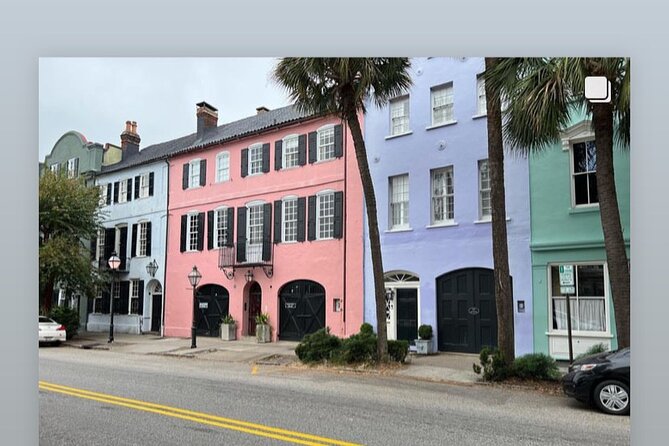
At $35 per person, the price is reasonable for a two-hour guided walk in central Charleston. You are not paying admission to a major attraction, so the value rests almost entirely on the guide.
I would call it good value for a first-time visitor who wants a foundation before exploring alone. The tour can save you from wandering past important buildings without understanding them, and it may help you choose which streets, churches, museums, or neighborhoods deserve more time later.
The price is less compelling if you only want photographs or already have a strong grasp of Charleston’s past. You can walk the historic center for free, and the tour does not include a meal, attraction entry, or transportation.
Still, a certified guide can make two hours count. For many people, that is a better use of $35 than spending the same amount on a generic overview with a large crowd. The small-group limit makes the comparison stronger.
Timing, meeting points, and practical preparation

The walk starts at 80 Broad Street and ends at the Dock Street Theatre at 135 Church Street. That point-to-point arrangement is helpful because you finish in a different part of the historic center rather than returning to the start.
The ending location also gives you a useful next step. You can continue exploring around Church Street after the tour, though the supplied information does not include a formal post-tour activity or transfer. Plan your route from the Dock Street Theatre if you have a reservation or another appointment.
Confirmation is provided at booking, and the experience is offered in English with a mobile ticket. Service animals are allowed, and the activity is near public transportation. Most people can participate, but you should think honestly about walking for roughly two hours in outdoor conditions.
I would wear shoes with solid support and bring water. Keep your phone charged, since your ticket is mobile, and arrive early enough to locate City Hall without rushing. There is no listed admission fee for the walking stops.
Free cancellation is available when you cancel at least 24 hours before the start time. Changes or cancellations inside that window are not refunded, and the experience requires a minimum number of participants. If the operator cancels because that minimum is not reached, you are offered another date or experience, or a full refund.
Who should book this Charleston walk?
I would recommend it most strongly to first-time visitors, couples, solo visitors, and families who want context without committing to a full-day tour. The two-hour length is manageable, and the route introduces several sides of Charleston without requiring entry into multiple attractions.
It also suits anyone who enjoys questions and conversation. The small group gives you a better chance to ask about architecture, local customs, folklore, or the city’s food traditions.
Families with older relatives may find the flexible pace useful, based on the way Steve handled an elderly family group. Still, the activity remains a walk, and Charleston’s weather can make it tiring. If anyone in your party struggles with outdoor walking, contact the provider before booking rather than assuming the route will be adapted.
I would be less likely to choose it if I wanted a highly specialized subject, such as one narrow architectural period or a detailed study of a single historic site. The appeal here is the broad picture and the guide’s local storytelling.
Should you book Walk It! Charleston?
Book it if you want a well-priced orientation led by a certified local guide, especially if this is your first time in Charleston. The best reasons are the small-group format, the central route from Broad Street to the Dock Street Theatre, the Charleston Battery, and the chance to ask questions along the way.
Go in expecting an outdoor overview, not a museum tour. Weather matters, group size can vary, and the experience depends heavily on which guide leads your departure. If you are comfortable with those limits, $35 buys a useful first look at Charleston and a better understanding of what you are seeing afterward.
FAQ
How long does the Charleston walking tour last?
The tour lasts approximately two hours.
Where does the tour begin?
It begins at 80 Broad Street, Charleston, South Carolina 29401, USA.
Where does the tour end?
The tour ends at the Dock Street Theatre, 135 Church Street, Charleston, South Carolina 29401, USA.
What sights are included?
The walk covers Charleston’s historic center, historic homes, churches, public buildings, the Four Corners of Law near City Hall, and the Charleston Battery.
How many people can join the tour?
The stated maximum is 10 travelers.
Is the tour offered in English?
Yes. The experience is offered in English.
What is the cancellation policy?
You can cancel at least 24 hours before the start time for a full refund. Cancellations or changes made less than 24 hours before the start time are not accepted for a refund.
More Private History Tours in the USA
- Private Sunset Sail BYOB Dolphin/History Tours on 43ft Mystique
★ 5.0 · 42 reviews - Private Walking Tour of Historic Charleston
★ 5.0 · 38 reviews - Private Afternoon Sailing/Dolphin & History Tour on 43ft Mystique
★ 5.0 · 32 reviews - Half Day Private Tour throughout Charleston Historic Locations
★ 5.0 · 32 reviews
More Private History Tours in Charleston
- Private Photo Session in Historic Charleston
★ 5.0 · 123 reviews - Private Historic Horse & Carriage Tour of Charleston
★ 5.0 · 103 reviews - Private Morning Sail, Dolphin and History Tour on Mystique
★ 5.0 · 84 reviews - Private Charleston Walking History City Tour
★ 5.0 · 49 reviews
Just added around Charleston
- Charleston’s Historic Pubs, Taverns, and Taprooms Tour★ 4.5 · 33 reviews
- Charleston’s Strong Women of the South History Tour★ 4.5 · 27 reviews
- Small-Group Tour: Charleston Old Walled City Historical Walking Tour★ 4.5 · 283 reviews
- Private Walking Tour of Historic Charleston★ 5.0 · 38 reviews
- Sip History in The Sun Cabana Covered Cocktail Class★ 5.0 · 332 reviews
- Sip History In a Secret Speakeasy Cocktail Class★ 5.0 · 40 reviews
- Private Afternoon Sailing/Dolphin & History Tour on 43ft Mystique★ 5.0 · 32 reviews
- Private Sunset Sail BYOB Dolphin/History Tours on 43ft Mystique★ 5.0 · 42 reviews
History Walking Tours, compared.
History and Hauntings of Salem Guided Walking Tour
Read our review →
Freedom Trail History Small Group Walking Tour
Read our review →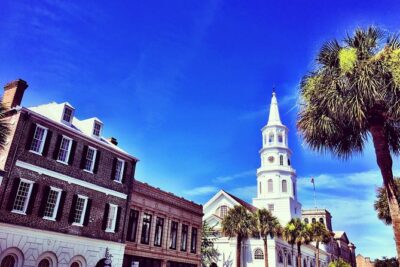
Historic Charleston Guided Sightseeing Walking Tour
Read our review →
Tapas Walking Tour with Food, Wine, and History
Read our review →
Savannah History and Haunts Candlelit Ghost Walking Tour
Read our review →