
Review · CHARLESTON
Historic Charleston Walking & Storytelling Tour
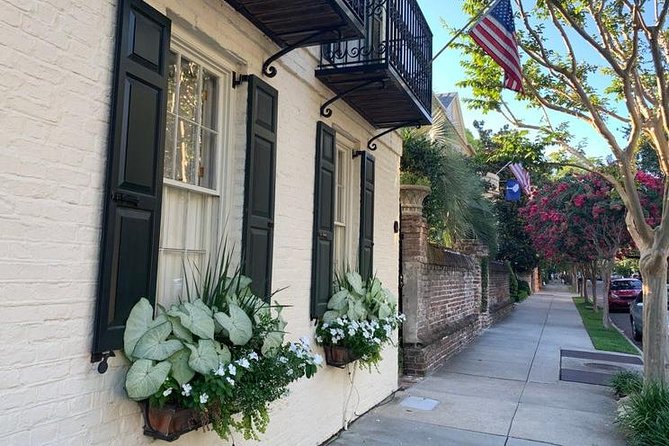
Charleston tells its best stories on foot. This two-hour tour links major sights with tales of George Washington, colonial Charleston, commerce, architecture, and the American Revolution. I like the way it mixes famous landmarks with lesser-known stories, and I like that guide Larry adjusts the conversation to your background instead of giving every group the same speech.
The $35.90 price is fair for a small-group walk with a maximum of 20 people and admission to the Philip Simmons House and Halsey Gallery included. The main drawback is that the experience leans more toward storytelling than a long sightseeing route. If you want to cover a large part of the city, two hours may feel short.
Key points to know before you book
- Larry is the central attraction: He is praised for his humor, local insight, and ability to keep adults and teenagers interested.
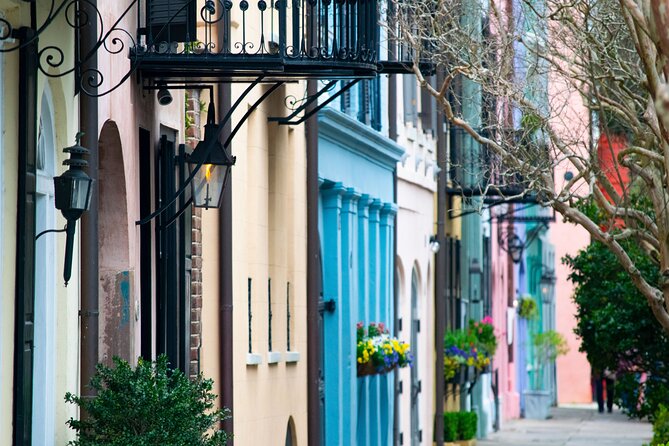
- The tour covers major Charleston landmarks: Expect Rainbow Row, White Point Garden, the Battery area, the Four Corners of Law, and historic houses.
- It is history first, walking second: You will hear plenty about Charleston and America, with a moderate route connecting the stories.
- Harbor views add breathing room: White Point Garden and the Battery provide open space after the denser downtown streets.
- Included admissions add value: Entry to the Philip Simmons House and Halsey Gallery is part of the experience.
- Plan for Charleston weather: Shade is available along the route, but sunscreen, a hat, and cold water are wise in summer.
Why Larry makes this Charleston walk worth considering
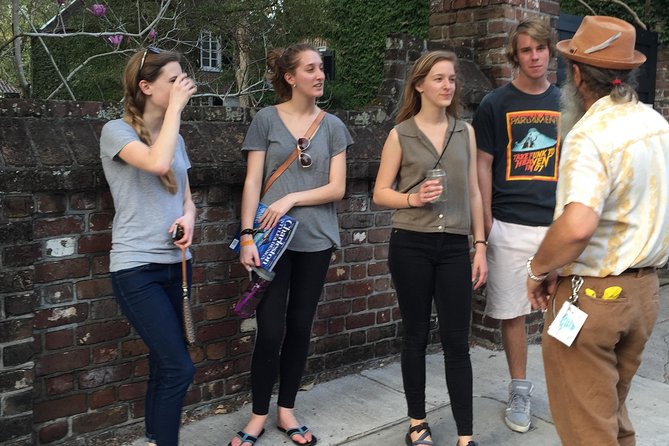
A good guide can turn a row of old buildings into a living city. Larry’s strength is storytelling. He connects Charleston’s architecture and trade to larger events in American history, then adds local details that are unlikely to appear on a standard plaque.
His style is animated and flexible. If you already know the basics of Charleston, he can adjust the level of detail. If you are starting from scratch, he gives you a useful framework for understanding the city. One especially helpful feature is his habit of tying past events to the present, which keeps the tour from feeling like a list of dates.
I would choose this experience if you enjoy history but do not want a dry lecture. Families may also find it a good fit. Larry has been able to hold the attention of teenagers, which is no small feat on a warm Charleston afternoon.
The tour is not built around rushing from one sight to another. You will spend time listening, looking closely, and asking questions. That makes it a better match for curious visitors than for anyone trying to check off as many attractions as possible.
More History Walking Tours in Charleston
- Historic Charleston Guided Sightseeing Walking Tour
★ 5.0 · 6,216 reviews - Hidden Alleyways and Historic Sites Small-Group Walking Tour
★ 5.0 · 2,335 reviews - Charleston historical walking tour with a Professor of History at The Citadel
★ 5.0 · 1,284 reviews
Starting at the Old Exchange and Provost Dungeon
The walk begins at 122 East Bay Street, placing you near one of Charleston’s most important historic areas. The Old Exchange and Provost Dungeon was built in 1771 as a commercial exchange and custom house. For nearly 250 years, it has been part of the city’s public and political story.
Today, the site operates as a nonprofit historic place focused on colonial Charleston and the American Revolution. That gives the opening stop a useful purpose: it introduces the city as a center of trade, government, and conflict, not just a collection of pretty houses.
The name Provost Dungeon also hints at the harsher side of colonial life. You should expect the guide to place Charleston’s prosperity beside the systems and power struggles that helped create it. The tour’s broader subjects include commerce and American history, so this stop helps set the tone early.
The starting point is convenient for visitors already exploring downtown. The meeting location is near public transportation, and the walk ends back at the same point, which simplifies planning for the rest of your day.
Rainbow Row and Charleston’s famous colors
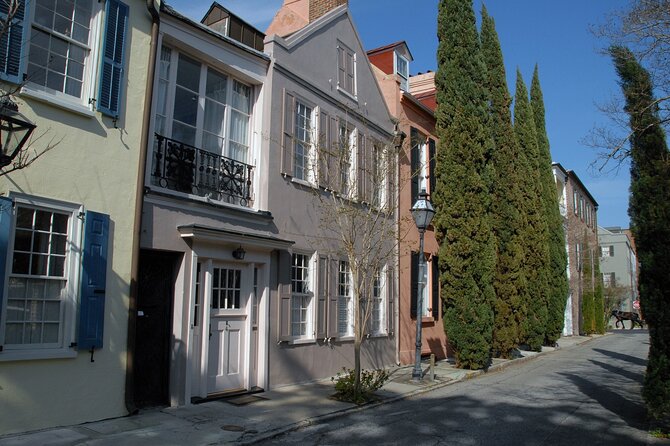
Rainbow Row is one of Charleston’s most recognizable stretches. Thirteen historic houses line East Bay Street between Tradd Street and Elliott Street, forming the longest cluster of Georgian row houses in the United States.
The pastel colors are not an original colonial feature. The name Rainbow Row came after the buildings were painted in soft colors during restoration work in the 1930s and 1940s. That small detail is exactly the kind of fact that improves a quick photo stop. You see the colors, then understand why they are there.
This is a good place to notice Charleston’s compact urban design. The houses sit close together, unlike the freestanding side-hall houses found elsewhere in the historic district. Your guide can help you read the street rather than simply point out a colorful facade.
Rainbow Row is also a reminder that preservation changes how a city presents itself. The houses are old, but the appearance people associate with them is partly the result of twentieth-century restoration. That gives the stop more substance than a simple photo opportunity.
The house built over Fort Mechanic
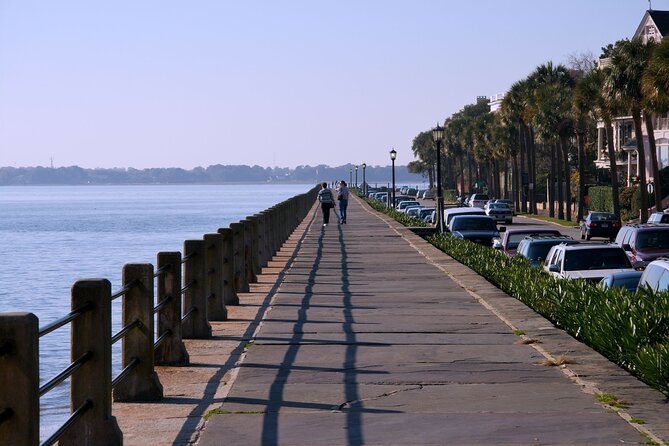
Another stop brings you to a notable house built on the foundation ruins of Fort Mechanic. The site began as a low, sandy lot that had once been connected to Charleston’s defenses in the late eighteenth century.
Scottish immigrant and shipping merchant Charles Edmondston purchased the property in 1817. The wet, unstable ground was not ready for a large home, so a sea wall had to be built first. Charleston officials constructed one in 1820, after which Edmondston began building.
The house was constructed between 1820 and 1828 in the English Regency style. It was later modified into an antebellum Charleston single house, also called a side-hall house. That architectural change gives you a useful look at how Charleston homes adapted over time.
This stop should appeal to anyone who enjoys buildings as much as battles and famous names. The story links land reclamation, city planning, shipping wealth, military defenses, and domestic architecture. It also shows how much work was required to build on Charleston’s low coastal ground.
More History Walking Tours in the USA
- Charleston: Old Walled City Historical Walking Tour
★ 4.7 · 705 reviews - Historic Charleston Walking Tour: Rainbow Row, Churches, and More
★ 5.0 · 691 reviews - Charleston: History and Architecture Guided Walking Tour
★ 4.8 · 349 reviews - Charleston History and Hops Tour: Bar and History Walk
★ 5.0 · 316 reviews
White Point Garden and the Charleston Harbor view
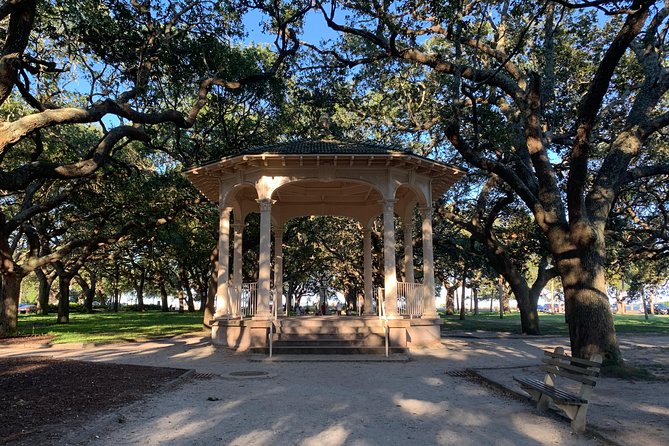
White Point Garden occupies 5.7 acres at the southern tip of the Charleston peninsula. It is the southern end of the Battery, the defensive seawall and promenade that frames the edge of the city.
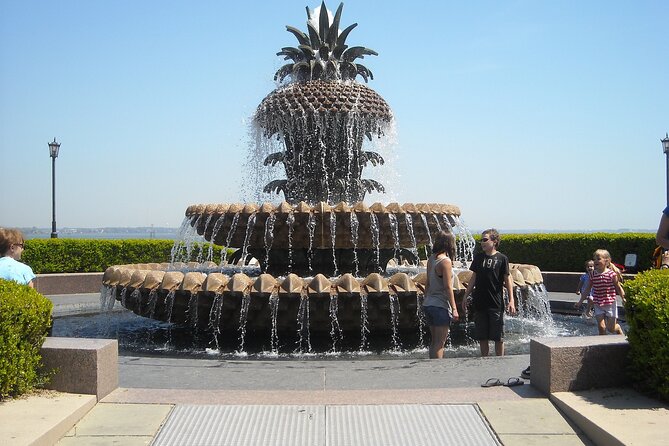
This is one of the tour’s best places to pause. After the tighter streets downtown, the open park gives you room to look across the Charleston Harbor and understand the city’s position on the water. The harbor view adds context to the earlier stories about shipping and trade.
White Point Garden is bounded by East Battery, Murray Boulevard, King Street, and South Battery. The setting also makes Charleston’s defensive past easier to picture. The Battery was not built only for pretty walks. It formed part of the city’s edge and protection.
The open setting comes with a practical concern. Charleston can be hot and sunny, especially during summer. Shade exists along the route, but you should carry water, wear sunscreen, and bring a hat. One past participant found a three o’clock departure enjoyable but still recommended very cold water and sun protection.
The grand house and its huge ballroom
The tour also brings you past a very large historic house with 24,000 square feet, 30 main rooms, and many additional smaller rooms. Its main hall measures 50 feet long and 14 feet wide, while the ballroom has a 45-foot-high ceiling.
Those measurements help you grasp the scale of Charleston’s wealth in a way that a general description cannot. A grand house was not just a private home. It required an enormous workforce, elaborate entertaining spaces, and considerable money to build and maintain.
I appreciate stops like this because they add social context to the architecture. A beautiful facade can hide a complicated story about wealth, status, labor, and the people who made such a lifestyle possible. Listen for those connections instead of focusing only on the ceiling height.
The available information does not identify this house by name, so I would treat it as an architectural and social-history stop within the route. The important point is the scale: this is not a modest Charleston residence.
The Nathaniel Russell House and difficult wealth
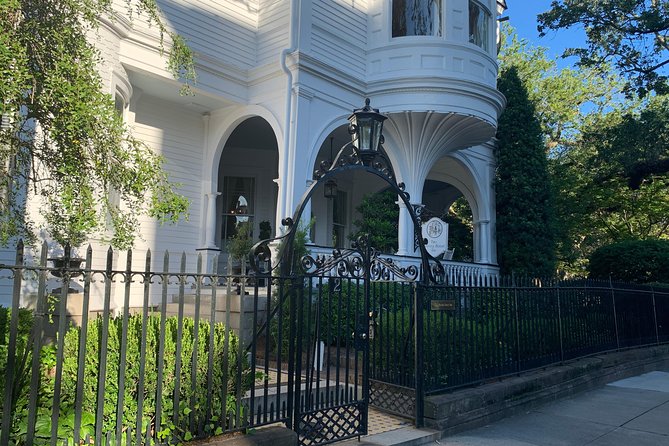
The Nathaniel Russell House at 51 Meeting Street is one of Charleston’s major Neoclassical houses. Built in 1808 by wealthy merchant and slave trader Nathaniel Russell, it received National Historic Landmark designation in 1973.
The house is valuable to the tour because it lets you admire important architecture without ignoring the source of the wealth behind it. Charleston’s grand residences are tied to trade, slavery, and economic power. A good walking tour should make those connections plainly, and this experience is designed to place architecture within that wider story.
The building is recognized as one of America’s important Neoclassical houses. That makes it worth seeing even if you are not an architecture specialist. Look for the formal design and the sense of order, then consider how such a house fit into the social world of early nineteenth-century Charleston.
You should not expect every interior room to be part of the walking route. The tour is approximately two hours, and the itinerary focuses on seeing important sites while hearing their stories. Admission to the Philip Simmons House and Halsey Gallery is included, but the exact amount of time spent inside each site may depend on the day’s pacing.
Four Corners of Law, four kinds of power
The intersection of Meeting and Broad Streets is known as the Four Corners of Law. The name refers to the four buildings on its corners, each linked to a different form of authority.
St. Michael’s Anglican Church was built between 1752 and 1761 and occupies the southeast corner. Charleston City Hall sits on the northeast corner and was built in the Adamesque style between 1800 and 1804.
The Charleston County Courthouse is on the northwest corner. Its building began in 1753 as South Carolina’s provincial capital and was rebuilt in 1792 for use as a courthouse. On the southwest corner is the United States Post Office and Federal Courthouse, built in 1896.
This intersection makes a fine final lesson in how Charleston was governed. Church authority, city government, county law, and federal power all meet within a few steps. You do not need to enter every building to see the point. The arrangement itself turns the street corner into a diagram of public life.
The term Four Corners of Law was coined in the 1930s by Robert Ripley, the creator of Ripley’s Believe It or Not! That bit of twentieth-century history adds another layer to a place that looks much older.
Included cultural stops: the Philip Simmons House and Halsey Gallery
Admission to the Philip Simmons House and Halsey Gallery is included, which adds value beyond a standard exterior-only walk. These stops broaden the tour’s focus beyond colonial officials, merchants, and grand homes.
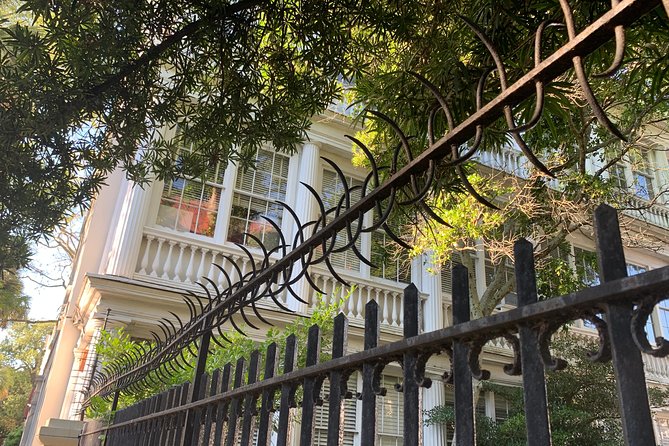
The available details do not specify how long you spend at each site or which exhibits are open during every departure. Still, their inclusion matters. Philip Simmons is associated with Charleston’s celebrated ironwork tradition, while the Halsey Gallery adds an art-focused stop to a tour otherwise centered on streets, buildings, and civic history.
For you, the practical benefit is variety. Two hours of architectural exteriors can become repetitive, especially in hot weather. A gallery or house visit offers a change of pace and gives the guide another way to explain Charleston’s cultural life.
Price, group size, and the pace of the walk
At $35.90 per person, this is not the cheapest way to see downtown Charleston, but the price is reasonable if you value a strong guide. You are paying for roughly two hours of interpretation, a group capped at 20 people, and included admission to two cultural sites.
The maximum group size is small enough to allow questions, though your experience can still vary depending on attendance. Some departures may feel nearly private. One afternoon tour had only two people, creating a highly personal experience. You should not count on that, but the possibility shows that the tour can become flexible when numbers are low.
The main value is not the distance covered. It is the way Larry links separate sights into one story. If you simply want a fast circuit of Charleston’s most photographed buildings, a self-guided walk may cost less. If you want context, humor, and a guide who can respond to what you already know, the fee makes more sense.
The tour is offered in English, uses a mobile ticket, and returns to the starting point. Most people can participate, and service animals are allowed. Free cancellation is available up to 24 hours before the start time. Poor weather or failure to meet the minimum number of participants can lead to a new date, another experience, or a full refund.
Who will enjoy this tour most?
I would recommend it to:
- First-time Charleston visitors who want an introduction to the historic center
- Couples who enjoy architecture, politics, and local stories
- Families with older children or teenagers
- Visitors who prefer a guide with a sense of humor
- People who want a history lesson tied to real streets and buildings
- Repeat visitors looking for details beyond the usual postcard view
You may want a different option if your priority is a long walking route, extensive interior touring, or a fast list of attractions. The pace favors explanation. As one useful distinction, this is mostly a historical story with walking mixed in, not a strenuous city hike.
Should you book the Historic Charleston Walking & Storytelling Tour?
Book it if you want Charleston explained by a lively local guide rather than simply photographed. Larry’s humor, flexibility, and storytelling receive the strongest praise, and he appears especially good at bringing teenagers and mixed-age groups into the conversation.
The tour is also a good first-day activity. It gives you a working map of downtown, introduces the Battery and harbor, and points out places you can revisit later. Arrive ready to listen, ask questions, and walk at a comfortable pace.
Skip it if you want to cover a much larger part of the city or spend most of your time inside historic houses. For everyone else, the modest price, small maximum group, included admissions, and strong guide make this a sensible way to meet Charleston through its buildings and its stories.
FAQ
How long is the Historic Charleston Walking & Storytelling Tour?
The tour lasts approximately two hours.
Where does the tour begin and end?
It begins at 122 East Bay Street, Charleston, South Carolina, and ends back at the same meeting point.
What language is the tour offered in?
The experience is offered in English.
What sights are included on the route?
The route includes the Old Exchange and Provost Dungeon, Rainbow Row, a historic house built over the ruins of Fort Mechanic, White Point Garden, the Nathaniel Russell House, and the Four Corners of Law. Views of Charleston Harbor are also included.
Are admissions included?
Admission to the Philip Simmons House and Halsey Gallery is included.
Can I cancel for a full refund?
Yes. You can cancel at least 24 hours before the experience start time for a full refund. Cancellations or changes made within 24 hours are not refunded, and poor weather or an unmet minimum number of participants may lead to a rescheduled experience or full refund.
Just added around Charleston
- Charleston’s Historic Pubs, Taverns, and Taprooms Tour★ 4.5 · 33 reviews
- Charleston’s Strong Women of the South History Tour★ 4.5 · 27 reviews
- Small-Group Tour: Charleston Old Walled City Historical Walking Tour★ 4.5 · 283 reviews
- Private Walking Tour of Historic Charleston★ 5.0 · 38 reviews
- Sip History in The Sun Cabana Covered Cocktail Class★ 5.0 · 332 reviews
- Sip History In a Secret Speakeasy Cocktail Class★ 5.0 · 40 reviews
- Private Afternoon Sailing/Dolphin & History Tour on 43ft Mystique★ 5.0 · 32 reviews
- Private Sunset Sail BYOB Dolphin/History Tours on 43ft Mystique★ 5.0 · 42 reviews
History Walking Tours, compared.
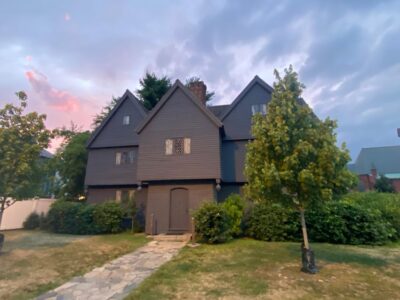
History and Hauntings of Salem Guided Walking Tour
Read our review →
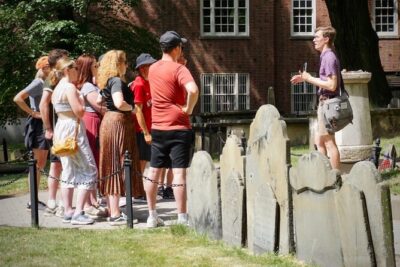
Freedom Trail History Small Group Walking Tour
Read our review →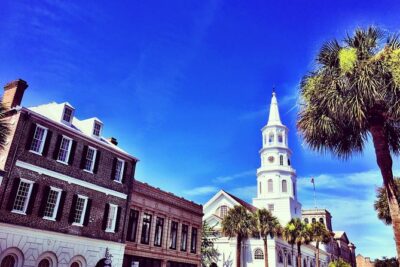
Historic Charleston Guided Sightseeing Walking Tour
Read our review →
Tapas Walking Tour with Food, Wine, and History
Read our review →
Savannah History and Haunts Candlelit Ghost Walking Tour
Read our review →
A History of Terror – Belfast City Centre Walking Tour
Read our review →Browse the lists this tour appears in