

Review · AMSTERDAM
Amsterdam History Walking Tour
Amsterdam reveals itself on foot. This two-hour walk links the city’s beginnings, Golden Age wealth, social freedoms, wartime memory, and crooked canal houses in one compact route. I especially like the small group of no more than 10 people and the low $6.05 price, which makes this an easy first look at the city.
I also like the mix of major sights and less familiar corners, including Oude Nieuwstraat and the old prison setting at Kalverpassage. The main consideration is pace: ten stops in about two hours means you get stories and context, not long visits inside attractions. Tickets to the Anne Frank House and Amsterdam Gallery are not included, and the tour ends some distance from where it starts.
Key points to know before you book

- Ten stops in roughly two hours: Expect a brisk city walk with about ten minutes at each listed stop, plus time on the streets between them.
- A small-group format: The maximum group size is 10, so questions should be easier than on a large city tour.
- Samuel is a praised guide: Several comments single out Samuel for his energy, storytelling, local perspective, and willingness to answer questions.
- The route connects big themes: You move from the city’s founding to the Dutch Golden Age, Anne Frank, social freedoms, organized crime, tulips, and architecture.
- The price is unusually low: At $6.05 per person, the tour offers strong value if you want orientation and historical background rather than attraction admission.
- The endpoint is useful: You finish at the Dancing Houses on the Amstel, one of Amsterdam’s most photographed views.
Why this short Amsterdam walk works
I like walking tours that explain how a city grew instead of simply pointing at famous buildings. This one begins at the city center and moves through several eras, showing how Amsterdam’s identity formed over time.
The route covers a lot. You hear about the city’s founding, its rise during the Dutch Golden Age, the story of Anne Frank, modern ideas of freedom, the prison system, organized crime, tulip fever, marijuana, and the practical reasons some houses lean. That is a wide range for two hours.
The value comes from the connections. A canal, a narrow street, a church square, and a row of leaning houses become more useful to you once you know what they say about Amsterdam. You are not just collecting photographs. You are learning how to read the city.
The small maximum group size helps here. With only 10 people, the guide can speak to the group without needing to compete with a crowd. You should also have a better chance to ask about details that catch your eye. Comments about Samuel repeatedly praise his ability to answer questions, speak with everyone, and keep the walk lively.
Still, this is not a substitute for visiting Amsterdam’s museums or historic interiors. The tour gives you an outside view and a strong introduction. You will need separate tickets and time if you want to enter the Anne Frank House or another attraction.
More History Walking Tours in Amsterdam
- Amsterdam: Haunted History and Ghost Walking Tour
★ 4.5 · 488 reviews - Amsterdam: Highlights & History Walking Tour
★ 4.8 · 266 reviews - Anne Frank and Amsterdam Jewish History Walking Tour
★ 5.0 · 259 reviews
Starting beside the New Church at Dam Square
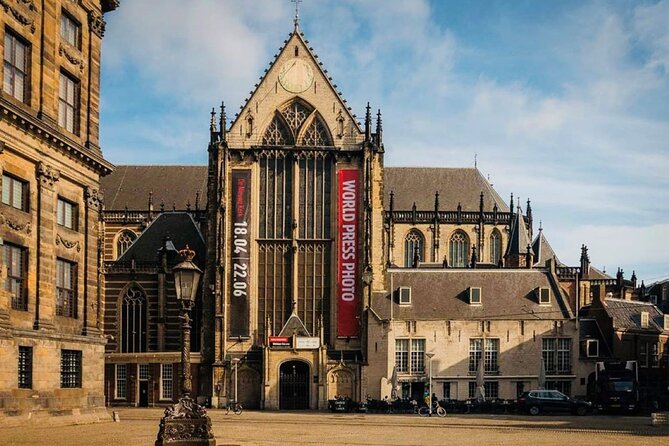
The walk begins at the New Church on Dam Square, listed at De Dam, 1012 NP Amsterdam. This is a practical starting point because Dam Square is central and easy to connect with public transportation.
The first stop is Kattengat, where the guide introduces Amsterdam’s founding and its early years. Beginning here gives the walk a clear purpose. Before you hear about canals, merchants, freedoms, and crooked houses, you get the basic story of how a city developed.
You spend about ten minutes at this opening stop. That is enough for an overview, but not for a long historical lecture. I would treat it as a framework for the rest of the walk. Pay attention to names and dates if you want the later stops to make more sense.
The meeting point deserves a little care. The start is given as the New Church at Dam Square, while the first listed stop is Kattengat. Arrive early enough to locate the church and find the guide without rushing. The booking confirmation should provide the tour details at the time of purchase.
Oude Nieuwstraat and Amsterdam’s less familiar red-light history
From Kattengat, the group continues to Oude Nieuwstraat, described as one of the city’s beautiful and less-known streets. The theme here is the other Red Light District, which gives the tour a more layered view of Amsterdam than a simple walk through its best-known nightlife zone.
This stop lasts about ten minutes and has no admission charge. You are likely to get historical and cultural explanation rather than a formal visit to an attraction. The value is in seeing how a street that can be easy to pass connects to a larger story about Amsterdam.
I like this part because it moves away from the most obvious route. Amsterdam is famous for its canals and central squares, but smaller streets often make the city feel more understandable. The guide’s role matters here. A lively explanation can turn an ordinary-looking lane into a place you remember.
The subject may not suit every family or every visitor, especially if you prefer a strictly architectural tour. The schedule does not state how much detail is given, so expect an introduction rather than an exhaustive treatment of the area.
Leliegracht and the wealth of the Dutch Golden Age

At Leliegracht, the focus shifts to the Dutch Golden Age and the period when Amsterdam held major influence around the world. This is where the route moves from early settlement to international power.
The canal setting should help make the subject concrete. You can connect the city’s grand period with the streets and water routes around you rather than hearing about it in a classroom. The stop lasts around ten minutes and is free to visit.
I find this kind of stop especially useful early in a trip. It gives you a better lens for later walks along Amsterdam’s canals. You begin to notice that the city’s beauty is tied to trade, money, planning, and expansion, not simply to picturesque buildings.
Because the tour moves quickly, you should not expect a full account of the Golden Age. Instead, you get a concise explanation that adds meaning to the city views you will see for the rest of your visit.
More History Walking Tours in the Netherlands
- Amsterdam: Ghost Walking Tour and Dark History
★ 4.8 · 118 reviews - Amsterdam: Iconic Canals & Historic Sights Walking Tour
★ 4.5 · 90 reviews - Amsterdam: Anna Frank and World War II History Walking Tour
★ 4.8 · 86 reviews - Amsterdam Private Historical Walking Tour
★ 5.0 · 75 reviews
Anne Frank House, an important stop without entry
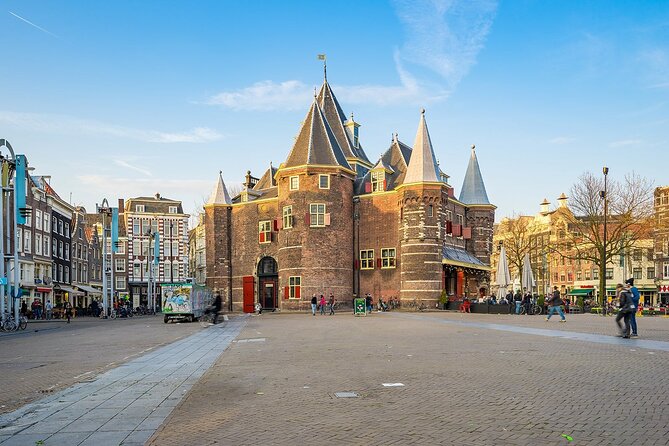
The route continues to the Anne Frank House, one of Amsterdam’s most important modern landmarks. The stop is listed for about ten minutes, but admission is not included.
This distinction matters. You can expect the guide to explain the site and its importance from outside, but the walking tour does not provide entry to the museum. If visiting the Anne Frank House is a priority, arrange that separately and do not assume this tour includes it.
The stop works well as part of a broader history walk because it places wartime memory beside older stories of trade, religion, and city growth. It also gives you a chance to ask questions in a small group, though the schedule leaves little time for a long discussion.
I would not book this walk solely for access to the Anne Frank House. Book it for context, orientation, and the chance to include the site in a wider story about Amsterdam.
Dam Square, the city’s central stage

The next stop returns to Dam Square, the heart of the city. Since the tour both begins near the New Church and later dedicates time to the square, you get a chance to understand this central place in more than one way.
Dam Square is not treated as just a meeting point. The guide explains its role in Amsterdam, giving you a better sense of why so many city routes pass through it. The stop is free and lasts about ten minutes.
This is a useful pause in the route. After visiting smaller streets and canals, you reach the city’s main public space and can place the surrounding sights on a mental map. It is also a good moment to ask practical questions about where to go next in Amsterdam.
The square can be busy, so do not expect a quiet setting. The group size helps, but you will still need to stay close enough to hear the guide.
Amsterdam Gallery and the story behind facade plates
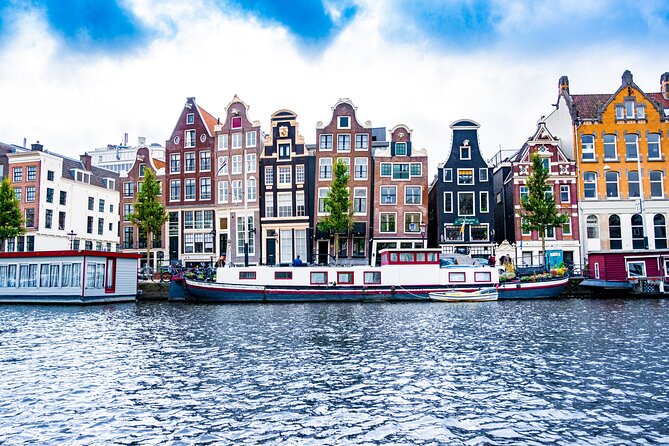
The route then heads south to Amsterdam Gallery. The focus is on the origin of the plates and decorative markers seen on many facades around the city. These details are easy to overlook when you are moving from one major sight to another.
This stop is listed as about ten minutes. Admission is not included, so you should understand it as part of the walking explanation rather than a paid gallery visit.
I like the subject because it trains you to look upward and examine buildings more carefully. Small symbols and plates can tell you something about the people, trades, or uses connected with a building. The tour uses these details to make Amsterdam’s architecture more readable.
The information supplied does not explain exactly what the gallery contains or whether the guide takes you inside. Plan on an exterior-focused stop unless your confirmation says otherwise.
Spui and the roots of Amsterdam’s freedoms
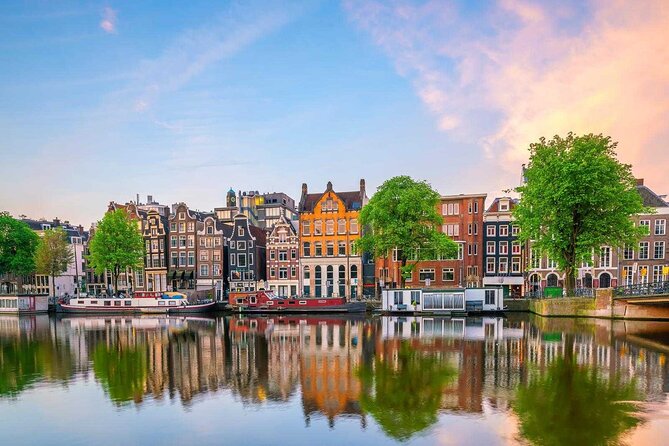
At Spui, the tour explores the freedoms for which Amsterdam is widely known. The route reaches the square through the city’s attractive streets, and the guide explains how current attitudes developed there.
This is one of the more thought-provoking sections because it connects public space with social ideas. Amsterdam’s reputation for openness did not appear from nowhere. A good guide can show how history, policy, and everyday culture meet in a place like Spui.
The stop is free and lasts around ten minutes. That makes it a short introduction, not a complete study of Dutch society. Still, it can help you understand why the city is often discussed in terms of tolerance and personal freedom.
The comments about Samuel are especially relevant here. His style is described as open, dynamic, and willing to discuss many topics. That is useful at a stop where visitors may have different questions and opinions.
Kalverpassage, from an old prison to organized crime
At Kalverpassage, the walk turns to the darker side of Amsterdam. The group enters an old prison setting and hears about the Dutch prison system and organized crime.
This change of subject keeps the tour from becoming a string of pretty canals and cheerful anecdotes. Amsterdam has difficult stories as well as beautiful ones, and this stop gives them room within the route.
The stop is listed as free and lasts about ten minutes. The description says you go into the old prison, but no separate admission charge is shown. Since the tour schedule is compact, I would expect a focused explanation rather than a long visit through a prison museum.
This section may be especially appealing if you want more than architecture and Golden Age history. It also gives the guide a chance to explain how modern Amsterdam differs from the postcard version of the city.
Bloemenmarkt, tulip fever, and marijuana
At the Bloemenmarkt, one of Amsterdam’s best-known places, the guide discusses tulip fever and another famous flower, marijuana. The subjects fit the location, but they also reveal how commerce, fashion, and reputation have shaped the city.
The tulip story is a useful reminder that Amsterdam’s relationship with flowers is not just decorative. The marijuana discussion adds a modern cultural theme and returns to the earlier subject of Dutch freedoms.
This stop is free and lasts about ten minutes. Because the Bloemenmarkt is famous, you may already have it on your list. The tour adds value by giving you historical and cultural context instead of leaving you with only a shopping stop and a few photographs.
The tone here will likely be light, but the topics can be complex. If you want legal or policy detail, use this as an introduction and ask the guide questions during the walk.
The Dancing Houses and a memorable finish
The final stop is the Dancing Houses on the Amstel, at Amstel 102II, 1017 AD Amsterdam. These sloping houses are among the city’s most photographed views, and the guide explains both the architecture and the reason the buildings lean.
This is a strong ending because it leaves you with a clear image of Amsterdam. You finish with a practical explanation for something that many people photograph without understanding. The stop is free and lasts about ten minutes.
The endpoint also helps you plan the rest of your day. You are not returned to Dam Square, so check the location before booking if you need to meet someone at the starting point afterward. The route ends in front of the Dancing Houses, which makes this a useful place to continue exploring independently.
I like tours that finish with a sight you can remember easily. After two hours of dates, places, and social themes, the leaning houses provide a simple visual final chapter.
Price, group size, and what you really receive
At $6.05 per person, this is excellent value for a two-hour introduction, especially with all fees and taxes included. You are paying for a guided walk, interpretation, and a route that links ten locations. You are not paying for museum admission, private transportation, or a long visit inside any one attraction.
The price also sets the right expectation. This is an orientation walk, not a full-day historical seminar. Its strength is breadth. You get a usable overview of Amsterdam’s origins, culture, architecture, and major talking points in a short period.
The maximum of 10 people is another advantage. Small groups tend to make city walks easier to follow, and the comments about Samuel suggest that questions are welcome. The experience is offered in English and includes a mobile ticket.
The tour is available with free cancellation up to 24 hours before the start time. Changes or cancellations inside that window are not refunded. The experience requires good weather and a minimum number of participants, so poor weather or too few bookings can lead to a different date or a full refund.
You should be comfortable walking outdoors for about two hours. The tour is near public transportation, service animals are allowed, and most people can participate according to the supplied information.
Who should book this walk?
I would recommend it to first-time visitors who want a fast, affordable introduction before exploring Amsterdam alone. It also suits people who enjoy questions, local viewpoints, and stories that move beyond the city’s prettiest canals.
It is a good match for you if you want:
- A small English-language group
- A low-cost overview of central Amsterdam
- History mixed with culture and social subjects
- A guide who can answer questions
- A route that ends at a memorable photograph
I would be more cautious if you want extensive museum access, long stops, or a slow architectural study. The Anne Frank House and Amsterdam Gallery do not include admission, and the ten-stop schedule leaves limited time at each place.
Should you book the Amsterdam History Walking Tour?
Yes, if you want strong orientation at a very low price. The route gives you more than a standard postcard walk, with early Amsterdam, Golden Age power, Anne Frank, prison history, social freedoms, tulips, marijuana, and the Dancing Houses all included.
The best reason to book is the combination of scale and price. You see a broad slice of the city in two hours, and a group capped at 10 gives the experience a personal feel. Samuel has received especially warm praise for his storytelling, enthusiasm, and answers, though guide availability can vary by date.
Book it early if your schedule is fixed, since it is often reserved well ahead of time. Then use the walk as your city primer. Afterward, you will know which places deserve a longer visit and which Amsterdam stories you want to follow on your own.
FAQ
How long is the Amsterdam History Walking Tour?
The tour lasts approximately two hours.
How much does the tour cost?
The listed price is $6.05 per person.
What language is the tour offered in?
The experience is offered in English.
Where does the tour start?
It starts at the New Church, De Dam, 1012 NP Amsterdam, Netherlands.
Where does the tour end?
It ends at the Dancing Houses, Amstel 102II, 1017 AD Amsterdam, Netherlands.
Is admission to the Anne Frank House included?
No. Admission to the Anne Frank House is not included.
Is admission to Amsterdam Gallery included?
No. Admission to Amsterdam Gallery is not included.
How many people can join the tour?
The tour has a maximum of 10 participants.
Just added around Amsterdam
- Amsterdam: Luxury Canal Cruise with Historic VR Experience★ 5.0 · 305 reviews
- Amsterdam Walking Tour: Urban Legends & History with local guide★ 5.0 · 39 reviews
- Amsterdam 3 hrs Bike Tour – live guide En/Fr/De/Nl/Sp★ 4.5 · 138 reviews
- Amsterdam Haunted History and Ghost Walking Tour★ 5.0 · 47 reviews
- Private Guided Historic Amsterdam Canal Cruise in a Salon Boat★ 5.0 · 21 reviews
- Historical Walking Tour, private with local Dutch guide★ 5.0 · 23 reviews
- LGBTQI+ History Tour of Amsterdam★ 5.0 · 123 reviews
- Anne Frank’s Amsterdam Jewish History WWII Exclusive Guided Tour★ 5.0 · 18 reviews
History Walking Tours, compared.
History and Hauntings of Salem Guided Walking Tour
Read our review →
Freedom Trail History Small Group Walking Tour
Read our review →
Historic Charleston Guided Sightseeing Walking Tour
Read our review →
Tapas Walking Tour with Food, Wine, and History
Read our review →
Savannah History and Haunts Candlelit Ghost Walking Tour
Read our review →
A History of Terror – Belfast City Centre Walking Tour
Read our review →Browse the lists this tour appears in