
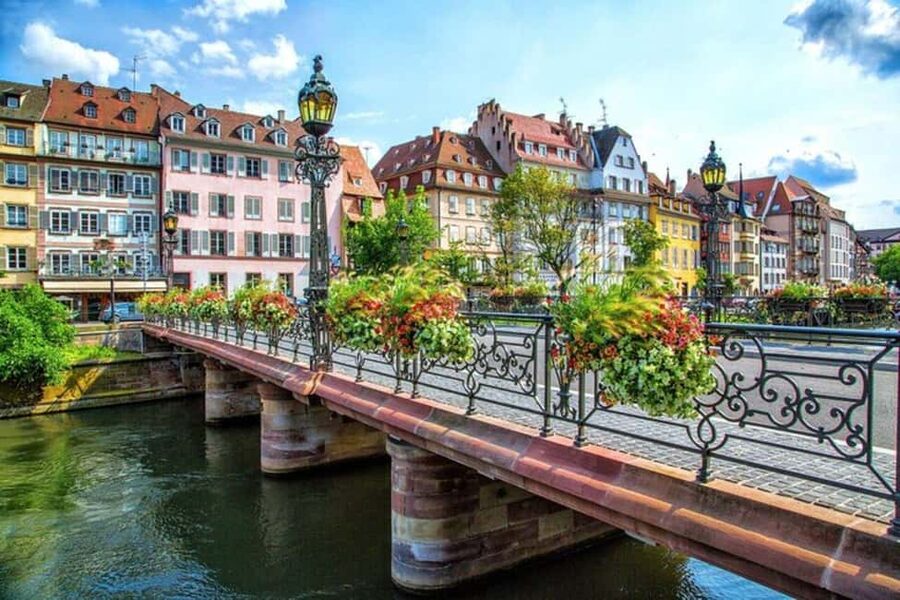
Review · GRAND EST
Strasbourg: Historic Center Walking Tour
Strasbourg rewards curious walkers. This private two-hour tour is a smart way to meet the city through a local guide, with time for the major sights and the smaller corners you might otherwise miss. I especially like the custom route and the personal advice, including restaurant tips and ideas matched to your interests. The main consideration is time: two hours gives you a strong introduction, but not a detailed visit inside every landmark.
I also like that the tour is private, so you are not sharing the guide with a large crowd. Guides such as Andrea, Jean-Pierre, Marius, Nahama, and Amelie have been praised for clear explanations, friendly conversation, and stories that make the streets easier to understand. The drawback is that food, drinks, and any desired entry tickets are not included, so your final cost can rise if you add paid visits.
Key points to know before booking
- A private guide shapes the walk around you: You can focus on architecture, local culture, food, history, or whatever matters most to your group.
- The route links Strasbourg’s big civic squares: Place de la République, Place Broglie, Place Kléber, and Place Saint-Étienne give you a useful view of the city beyond the cathedral.
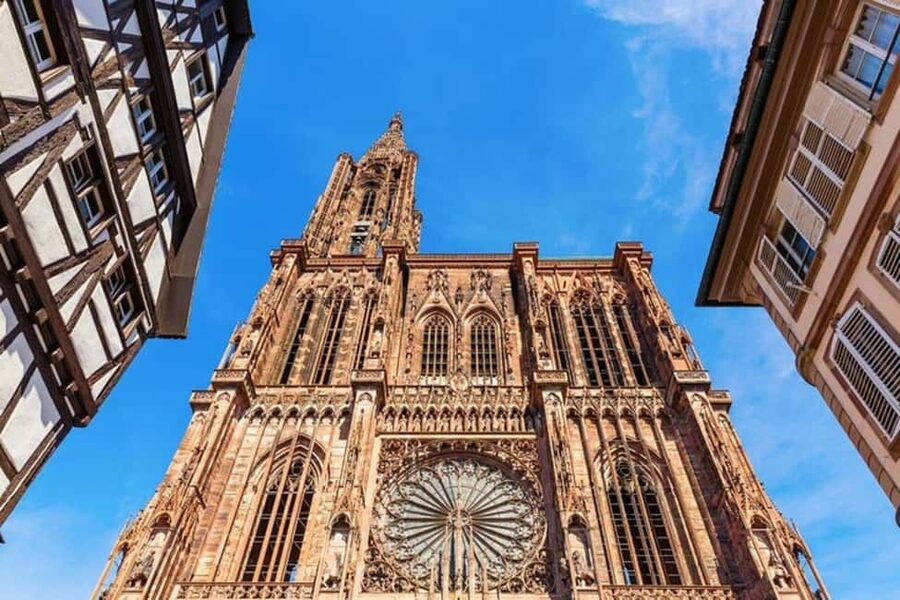
- Notre Dame Cathedral is the dramatic finale: The tour gives you stories about one of Strasbourg’s defining buildings.
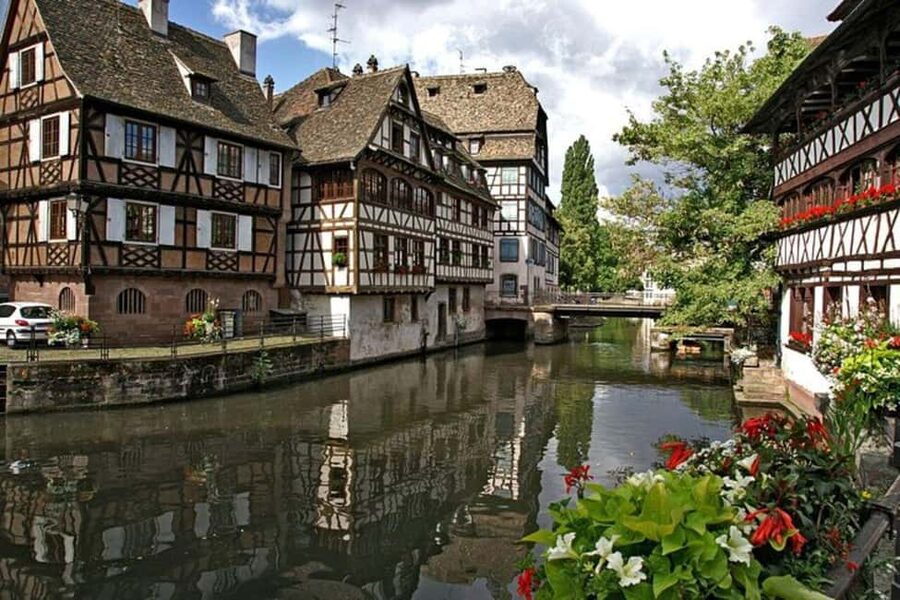
- La Petite France adds the postcard scenery: Its narrow streets, waterways, and older buildings show a different side of the city.
- Local advice is part of the value: Guides have suggested places to eat, gardens to visit, and additional sights based on each group’s plans.
- The format suits a first visit: Two hours, several languages, wheelchair access, and flexible planning make it easy to fit into a short stay.
Why a private two-hour walk works well in Strasbourg
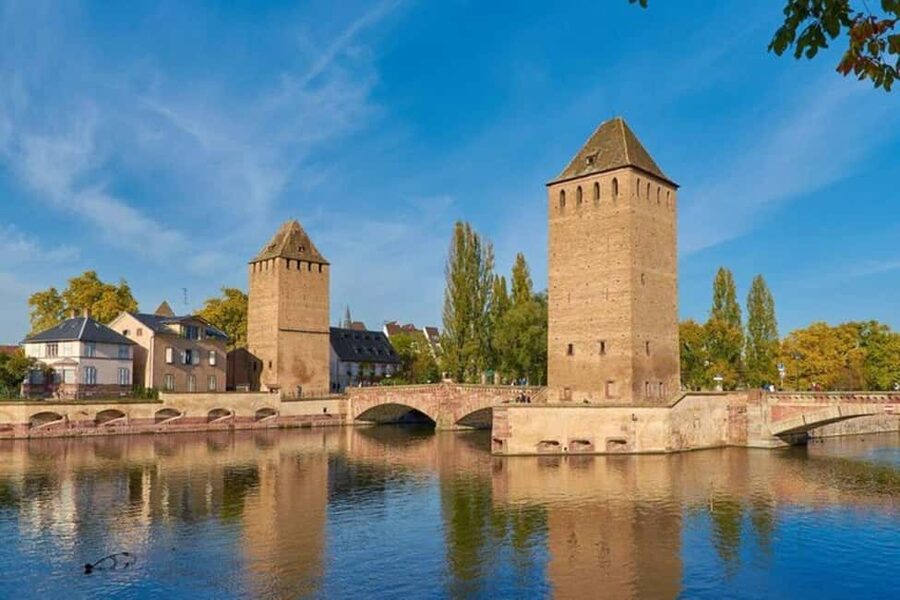
Strasbourg is not difficult to walk, but it can be difficult to read. One square reflects French civic planning, another recalls the city’s German connections, and a medieval lane may lead to a landmark you would otherwise pass without noticing. A local guide gives those places a frame.
The private format matters here. You will not be waiting while a large group catches up, and you can ask questions as the walk develops. If you care about food, your guide can point you toward Alsatian dishes. If you like architecture, you can spend more time looking at buildings. If you are traveling with family, you can keep the pace conversational and stop for photos.
The two-hour length is useful on a first day. It helps you get your bearings before you explore alone. One guest described Jean-Pierre spending about 10 minutes at the start laying out a timeline of Strasbourg. That is a fine idea because the city’s story can otherwise feel like a pile of disconnected dates and buildings.
You should not expect a full museum-style tour of every site. This is an orientation walk with depth where your interests call for it. At $34 per person, the price is especially reasonable for a private experience, though the value depends on the size of your party. A solo visitor pays more per person than a family or group sharing one guide.
More History Walking Tours in France
- Paris: Dark History and Ghostly Guided Walking Tour
★ 4.7 · 1,000 reviews - Vieux Lyon Cultural & Historical Walking Guided Tour (English)
★ 5.0 · 942 reviews - Strasbourg: Guided Historical Neighborhoods Walking Tour
★ 4.9 · 275 reviews
Starting at 7 Rue des Frères
The meeting point is 7 Rue des Frères, with the walk returning there. That gives you a clear beginning and end, which is handy if you have another activity afterward. The route includes public transport when needed, except for options where different arrangements are selected.
Because the tour is private, use the opening minutes to tell your guide what you want. Say if you care most about the cathedral, local food, political history, photography, or quiet streets. You will get more from the tour if you treat it as a conversation rather than simply following a fixed script.
The itinerary includes several central squares and the cathedral. The supplied description also places particular attention on La Petite France, so ask your guide how that neighborhood fits into the route on your chosen start time. The exact balance can depend on your interests and the pace of your group.
Notre Dame Cathedral: Strasbourg’s essential landmark
Strasbourg’s cathedral is the emotional high point of the walk. Even before you hear the stories, its scale and detailed stonework make it hard to ignore. The guide offers a tour of the cathedral area and explains why this building has such a strong place in the city’s identity.
A good guide does more than point toward a famous facade. You want the political, religious, and architectural background that helps the building make sense. Jean-Pierre was praised for giving historical context, while Andrea was appreciated for explaining details that a visitor might otherwise miss.
The cathedral is also where the tour can become busiest and least relaxed, depending on the time of day. A private guide cannot remove crowds, but can help you look beyond the obvious photo stop. Ask questions, and take a moment to notice how the cathedral relates to the surrounding streets and squares.
The experience does not promise a separate paid entry or an extended interior visit. If entering the cathedral is important to you, ask the provider for help booking the desired visit. Ticket assistance is included, but food, drinks, and admission costs are not.
Place Saint-Étienne and the city’s quieter side
Place Saint-Étienne gives the tour a change of pace. It is one of the stops where a local guide can help you see Strasbourg as a lived-in city rather than a collection of famous attractions.
This is a useful place to slow down and ask about daily life, local customs, and the way the city has changed. A guide who has lived in Strasbourg for years, such as Amelie, can add a sense of place that a basic audio guide cannot. She was praised for connecting local culture and food with the streets along the walk.
You may find this stop less instantly dramatic than the cathedral or Petite France. That is also its strength. If you want nothing but headline sights, it may feel like a pause. If you want to understand how the city fits together, it earns its place.
More Old Town and Historic Centre Walks in France
- Bordeaux: Historic Center & Chartrons District Bike Tour
★ 4.8 · 709 reviews - Strasbourg on Foot: Historic Center and Petite France with a Local Guide
★ 4.7 · 223 reviews - Rouen: Guided Tour of the Historic Center
★ 4.8 · 145 reviews - Strasbourg: Private Walking Tour of the Historical Center
★ 4.2 · 107 reviews
Place Broglie and Strasbourg’s formal face
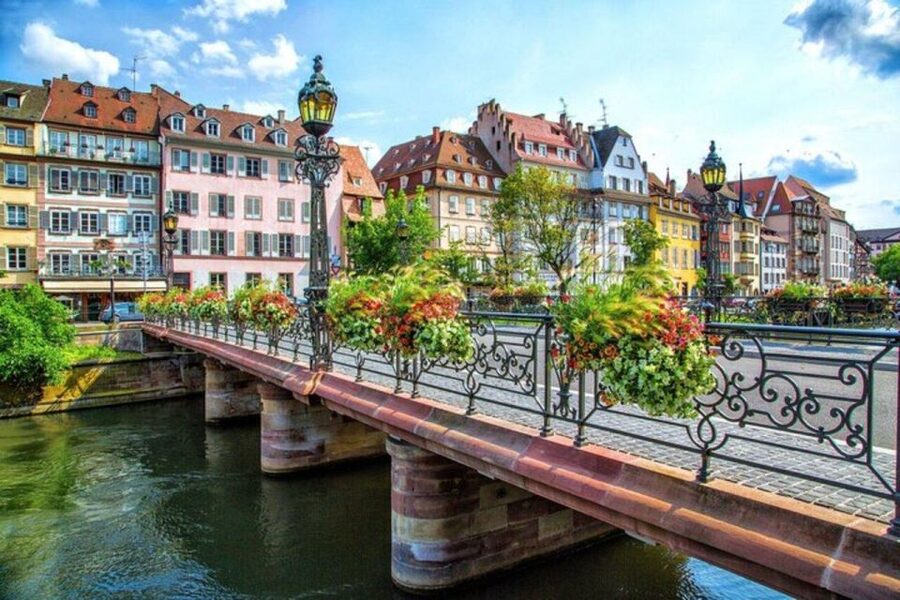
Place Broglie brings another side of Strasbourg into view. It is part of the city’s grander civic setting and helps widen the tour beyond the medieval center.
Your guide can explain the square’s role and point out how Strasbourg’s architecture reflects its location between French and German cultural worlds. The tour data does not promise a detailed lecture on every building, so the quality here will depend on the guide and the questions you ask.
That flexibility is one reason the private setup works. You can ask for more context at Place Broglie if civic architecture interests you, or move on more quickly if you are eager to reach Petite France. Marius, who was praised for humor and clear explanations, is the sort of guide who can keep this historical material from becoming dry.
Place Kléber and the city’s public gathering place
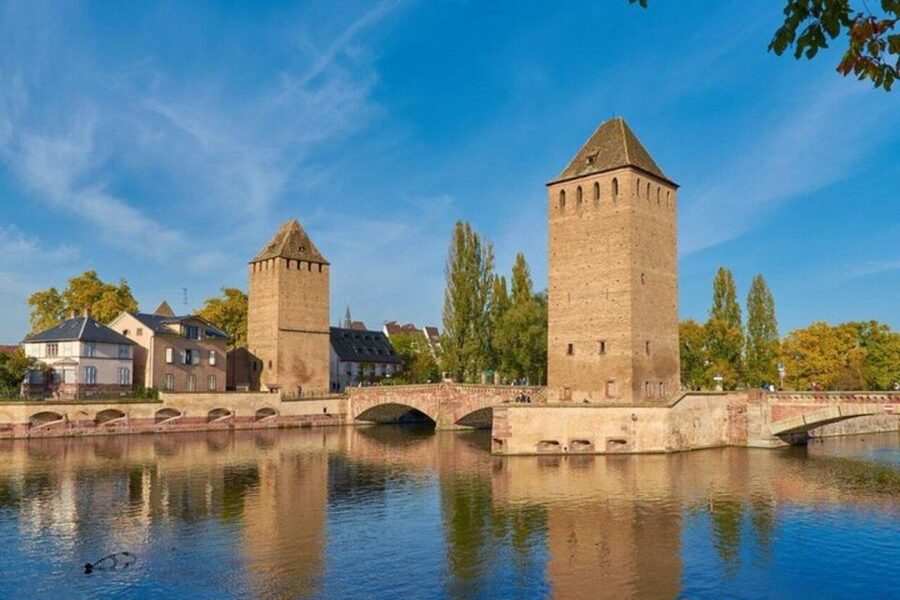
Place Kléber is Strasbourg’s main square and one of the easiest places to understand the city’s present-day energy. It is a broad public space rather than a tucked-away medieval lane, so it gives you room to pause and watch local life unfold.
During the Christmas season, the square is famous for its large Christmas tree. At other times of year, it remains a central meeting point and a useful reference for finding your way around.
This stop also shows why timing matters. A square can feel entirely different during holiday events than on an ordinary day. Your guide can place the seasonal activity in context and suggest where to go next. Several guides have been praised for offering useful ideas for the rest of a visitor’s stay, which makes Place Kléber a good point to ask about nearby food or further sightseeing.
Place de la République and Strasbourg’s civic story
Place de la République is described as an important opening point, though the stated stop sequence also lists it later in the walk. Either way, it is part of the tour’s central civic story and a useful place for your guide to explain how Strasbourg developed beyond its old lanes.
The square gives you a different visual experience from Petite France. Here, the setting is more formal and spacious. The guide can connect the square with the city’s changing political identity and urban growth, then help you compare it with the older parts of central Strasbourg.
This is also a place where a short timeline helps. Strasbourg has layers, and a simple explanation at the start can make the rest of the walk easier to follow. Jean-Pierre’s opening overview was particularly practical because it gave his group a structure for everything they saw afterward.
La Petite France, where Strasbourg turns scenic
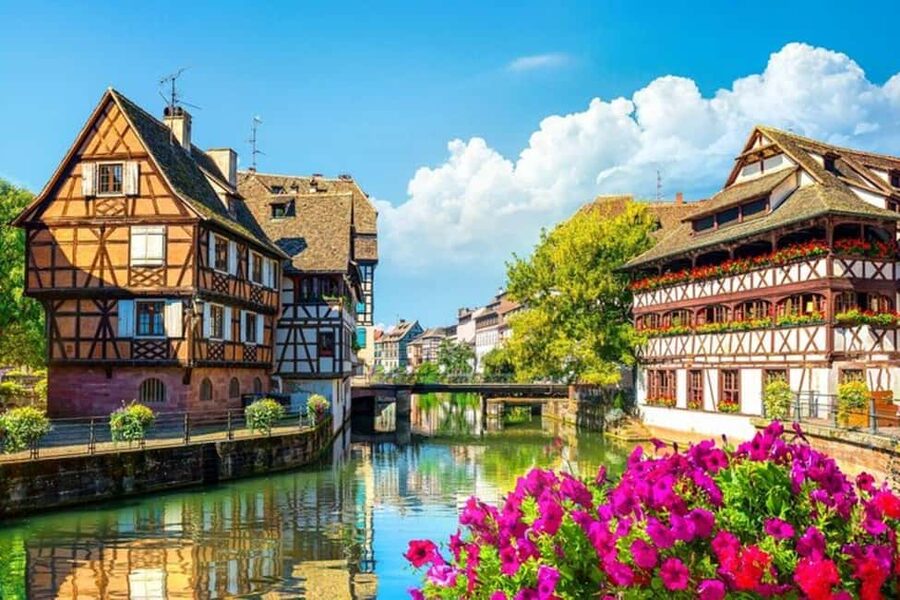
La Petite France is the part of Strasbourg most likely to appear on a postcard. Its picturesque streets and older buildings give the walk its most atmospheric stretch. The guide explains how the neighborhood developed and changed over the centuries, rather than treating it as scenery alone.
I would give this section your full attention. Look beyond the most photographed corners and ask how the neighborhood once functioned, how it changed, and what remains of its earlier character. Andrea was praised for showing groups places they would not have found on their own, which is exactly the kind of help that matters in a district built around lanes and small discoveries.
The drawback is that Petite France can be crowded, particularly during popular travel periods. A private walk gives you more freedom than a large group, but you will still share the streets with other people. Comfortable shoes are sensible, though the tour information does not specify a particular surface or walking distance.
For many visitors, this is the stretch that makes the walk feel personal. You are not only checking off a neighborhood. You are hearing why it matters, then leaving with a better sense of where to wander again on your own.
Guide quality: the biggest factor in your experience
The strongest praise goes to the guides’ warmth, local perspective, and ability to adjust the conversation. Andrea was described as friendly and easy to talk with, while Marius was praised for combining information with humor. Nahama was appreciated for taking time to understand her group’s interests and offering a range of ideas.
Jean-Pierre received especially strong praise for structure and detail. His brief city timeline at the beginning is a useful model for what you should hope to get from the tour: not just facts, but a way to organize them.
Other guides mentioned include Kevin, Marjorie, Stef, Amelie, and Marius. The available languages are English, French, Spanish, and Italian. Since the tour is private, language choice can make a major difference to how relaxed and useful the experience feels.
You should still remember that a private tour is not a guarantee of the same style every time. Some guides may focus more on dates and buildings, while others may lean toward food, local life, or personal stories. Tell your guide what you want at the beginning. That simple step can shape the whole two hours.
Food advice and what to do after the walk
Food and drinks are not included, but local eating advice is one of the tour’s practical strengths. Guides have suggested places to eat and helped visitors think about Alsatian dishes before they chose meals for the following days.
That advice can be worth more than a generic restaurant list. Tell your guide how adventurous you are, what you already plan to eat, and where you are heading next. One group interested in flowers received a recommendation for rose gardens after the guide noticed that they enjoyed smelling flowers. That kind of small, personal suggestion is a good example of what a conversation with a local can produce.
The same applies to sightseeing. Your guide can offer ideas for the rest of your stay, but the tour itself does not include extra visits. If you want help arranging tickets for a particular attraction, the provider can assist with booking the desired visit.
Price, timing, and who gets the best value
At $34 per person, the tour is fairly priced for a private two-hour walk, especially if two or more people share the cost. You are paying for a local guide, a private group, a customizable route, and advice that can improve the rest of your time in Strasbourg.
The value is less clear if you want long interior visits or a highly specialized historical lecture. Two hours is enough for a city introduction, not enough for every landmark in detail. You may also need to pay separately for food, drinks, and entry tickets.
The tour is wheelchair accessible, and a private group is available. You can cancel up to 24 hours in advance for a full refund, and you can reserve now while paying later. Starting times depend on availability, so check the schedule before building the rest of your day around it.
I would choose this tour early in a Strasbourg stay. The advice about food, streets, gardens, and additional sights becomes more useful when you still have time to act on it.
Should you book this Strasbourg walking tour?
Book it if you want a friendly introduction that combines the cathedral, key squares, Petite France, and local advice without being tied to a large group. It is especially good for first-time visitors, families, couples, and anyone who likes asking questions rather than listening to a fixed speech.
Skip it if you already know central Strasbourg well or want an exhaustive architectural study. You should also allow extra time and money if entering major attractions or booking special visits is a priority.
For most short stays, I think the $34 is well spent. You get a clear first look at Strasbourg, a private guide who can shape the route, and practical ideas for what to eat and see next. The best result comes when you arrive with a few interests ready to share.
FAQ
Where does the tour start?
The tour starts at 7 Rue des Frères.
Where does the tour end?
The tour returns to 7 Rue des Frères.
How long does the walking tour last?
The tour lasts two hours.
How much does the tour cost?
The listed price is $34 per person.
Is this a private tour?
Yes. The tour is private and exclusive, with no one else in your group.
Can the tour be customized?
Yes. The route and focus can be customized around your interests.
Which languages are available?
The live guide is available in English, French, Spanish, and Italian.
Is public transportation included?
Walking and public transport are included, except if you select one of the other available options.
Is the tour wheelchair accessible?
Yes, the activity is wheelchair accessible.
Are food, drinks, and attraction tickets included?
Food and drinks are not included. Help booking tickets for desired visits is available, but ticket costs are not stated as included.
Just added around France
- Small Group Guided Tour of the Secret History of Rouen★ 5.0 · 24 reviews
- Rouen: Historic Guided Tour of the Old Town★ 5.0 · 41 reviews
- Paris: Fashion History Walking Tour in the Heart of Paris★ 4.9 · 22 reviews
- Paris: Khéops VR Experience – Explore Ancient Egypt★ 4.9 · 39 reviews
- Paris: French Fashion History Walking Tour★ 4.9 · 37 reviews
- Paris Jewish History 2-Hour Private Guided Walking Tour★ 4.6 · 32 reviews
- Nimes: Private Walking Tour of the Historical Center★ 4.3 · 20 reviews
- Nîmes – Spend a day like an ancient Roman★ 5.0 · 26 reviews
Old Town & Historic Centre Walks, compared.
Live Fado Show with Port Wine in Historic Center
Read our review →
Valencia Old Town Tour with Wine & Tapas in 11th Century Historic Monument
Read our review →
Prague Old Town, Medieval Underground and Dungeon Historical Tour
Read our review →
Historic Center and Getsemaní Shared Walking Tour
Read our review →
Old Town Walking Tour History and Tales in Edinburgh
Read our review →
Philadelphia Old City Historic Walking Tour with 10+ Top Sites
Read our review →
Saadian Tombs & Bahia Palace, Medina Guided Tour
Read our review →Browse the lists this tour appears in