
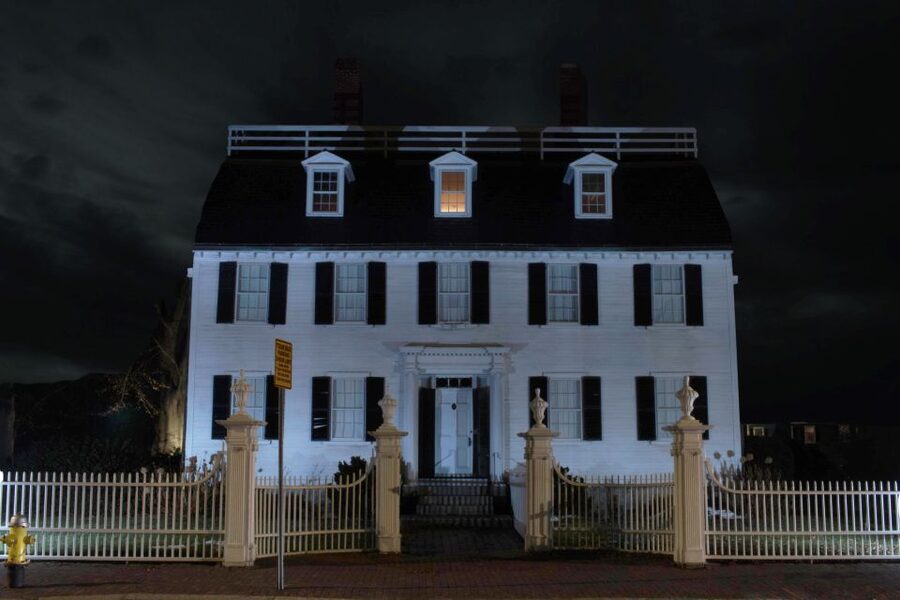
Review · MASSACHUSETTS
Salem: Secrets of Salem Hidden History Walking Tour
Salem’s spooky image has a complicated backstory. This two-hour walking tour connects the town’s Puritan roots, witch-trial legacy, and modern tourism scene in a way that feels more thoughtful than a simple ghost walk. I especially like the nine historic stops, including the Salem Athenaeum and Old Burying Point Cemetery, and the way guides such as Mason, John, Danielle, and Noelle turn dates and names into memorable stories. The chance to see locations linked to Bewitched and Hocus Pocus adds a bit of fun without making the whole tour feel like a movie-themed stroll.
The main drawback is the walking. You cover more than a mile, often on uneven surfaces, and the tour runs rain or shine. October can also bring heavy crowds around the meeting area, while a few people may be disappointed if the route does not pass the Bewitched statue. Still, at $35 per person, the tour offers a useful first look at Salem and gives you context for the places you might otherwise photograph and walk past.
Key points to know before you go
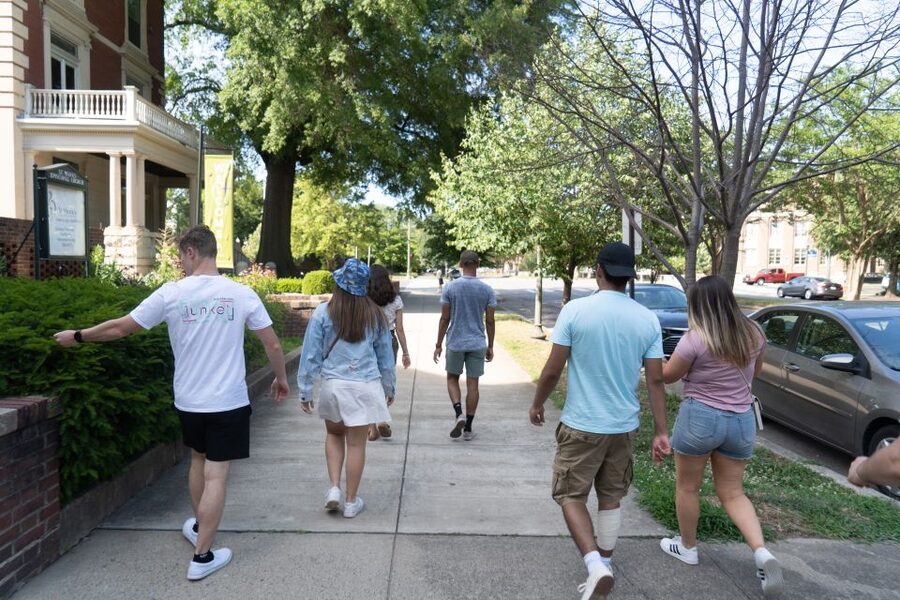
- Two hours and nine stops: A compact route covers major Salem stories without requiring a full day.
- History beyond the witch trials: You learn about Puritan Salem, Nathaniel Hawthorne, the Hathorne family, local architecture, and modern tourism.
- Strong storytelling: Guides including Mason and John are praised for clear explanations, humor, and lively delivery.
- Real walking required: Expect more than a mile, uneven ground, and outdoor conditions in rain or sun.
- Movie and television photo stops: The route includes photo opportunities connected with Bewitched and Hocus Pocus, though the exact stops can vary.
- Flexible booking: You can cancel up to 24 hours before the tour and reserve now while paying later.
Why this Salem tour is more than a witch-trial walk

Salem is easy to misread. The town’s shops, costumes, haunted signs, and Halloween crowds can make it seem as if the entire place began and ended with the events of 1692. This tour works best because it widens the picture.
You start with Salem’s strict Puritan beginnings. From there, the guide explains how the town became associated with witchcraft, how the trial story changed over time, and how later writers and popular culture helped turn Salem into the Witch City.
That broader approach matters. You do not simply hear a list of accusations and executions. You get a sense of how Salem’s identity was built, reshaped, and sold to the public. The guide also points out that many of the people, accusations, executions, and alleged witchcraft connected with the trials were actually based in Danvers, not present-day Salem. That distinction helps clear away one of the town’s most persistent myths.
The tone is historical, but not stiff. Guides use personal stories, questions, gestures, humor, and occasional spooky material to keep the walk moving. Mason, a local who grew up in Salem, is especially praised for explaining the town’s complicated past without overwhelming people with dates. John is also noted for adding trivia, answering questions patiently, and offering practical suggestions about Salem after the tour.
More History Walking Tours in the USA
- History and Hauntings of Salem Guided Walking Tour
★ 5.0 · 14,564 reviews - Boston: Freedom Trail History Small Group Walking Tour
★ 5.0 · 6,450 reviews - Historic Charleston Guided Sightseeing Walking Tour
★ 5.0 · 6,216 reviews
Starting at 210 Essex Street
The listed meeting point is outside Salem Five Savings Bank at 210 Essex Street. Arrive 15 to 20 minutes early so you have time to check in and find the guide before the group sets off.
There is one detail worth checking before you leave for the tour. The tour description also refers to meeting outside Old Town Hall, while the specific meeting instructions give the bank address. Use the final confirmation details you receive, and do not assume the two locations are interchangeable.
Once the walk begins, expect an outdoor history lesson rather than a museum visit. There is no indoor seating, no transport between stops, and no audio device to manage. You stay with the guide on city streets and at public historic locations.
That setup has a clear advantage: Salem’s buildings and cemeteries become part of the lesson. The tradeoff is that weather and street conditions affect your comfort. Bring comfortable shoes, water, sun protection, and an umbrella or rain jacket if the forecast looks uncertain.
The first stops: Puritan Salem and the town’s changing identity
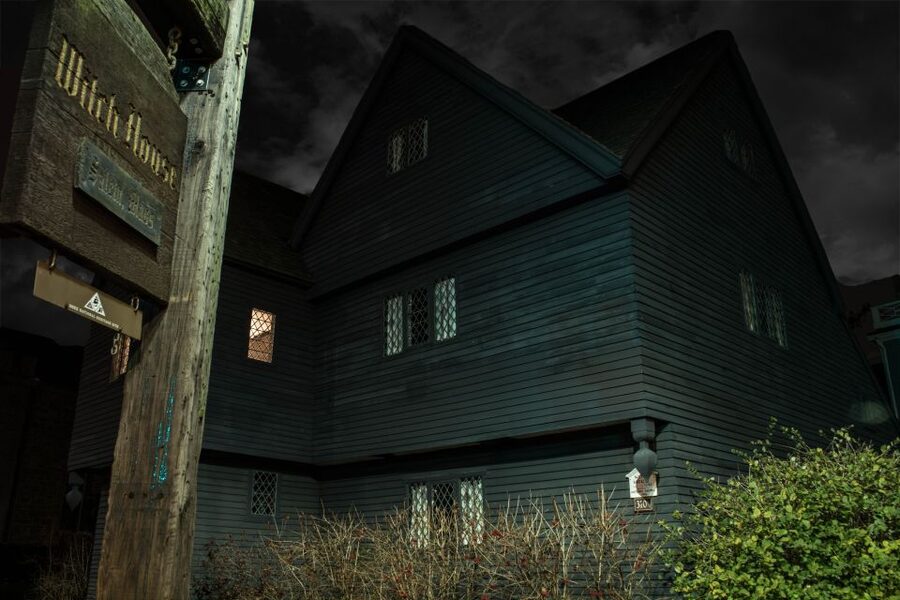
The early part of the route sets up the biggest question of the tour: how did a strict Puritan community become an international center of witchcraft tourism?
Your guide explains the values and social pressures that shaped early Salem. This background is important because the witch trials did not happen in a vacuum. Religious belief, local rivalries, fear, social status, and legal authority all played a part in the events that followed.
The story then shifts from the original town to the Salem people know today. You hear how the witch trials became more prominent in the town’s public image long after 1692. Nineteenth-century writing, local memory, tourism, films, television, and Halloween culture all helped build the modern version of Salem.
I like this part because it gives you a useful filter for the rest of your visit. After the tour, you can tell the difference between a site with a direct connection to the trials and a place that became important because later generations attached a spooky story to it.
The tour also shows how tourism shapes the city. Salem’s dark reputation brings visitors and supports businesses, but it can also flatten a complicated past into costumes and slogans. The guide’s job is to keep the entertaining stories while adding the missing context.
The Salem Athenaeum and the city’s literary connection
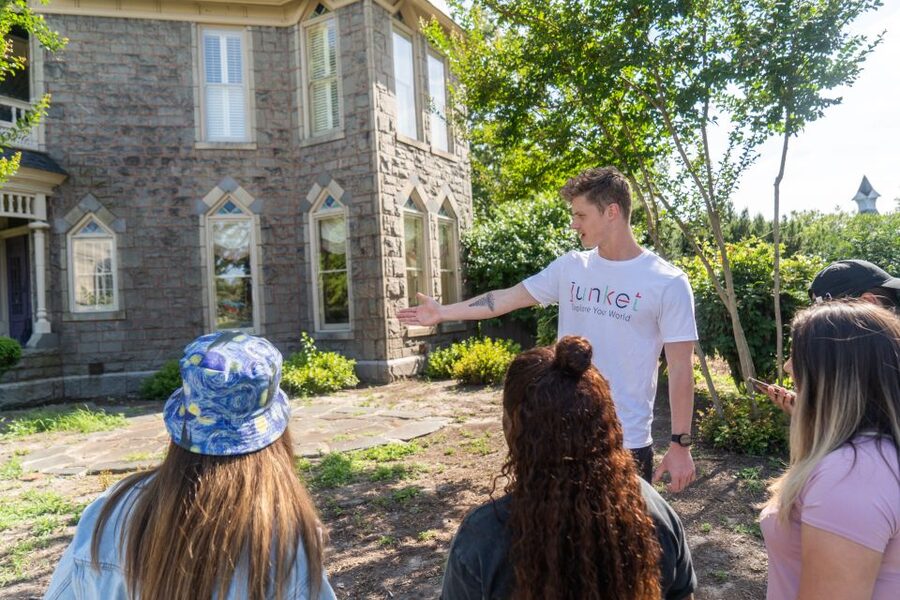
The Salem Athenaeum is one of the named stops. It helps shift the focus from trials and ghosts to the intellectual and literary life of the city.
This is where the connection between Nathaniel Hawthorne and judge John Hathorne becomes especially useful. Hathorne was involved in the witch trials, while Hawthorne later became one of America’s best-known writers. The spelling of the family name changed, but the connection remained part of Hawthorne’s family story.
That detail gives the tour a strong human angle. Salem’s past did not vanish after the trials. It stayed in family names, public memory, literature, and the way later residents dealt with an uncomfortable inheritance.
You do not need to be a Hawthorne specialist to enjoy this stop. The guide explains why the connection matters and places it within Salem’s wider story. If you have read The Scarlet Letter or other Hawthorne works, you may find the stop more meaningful, but the explanation works even if you have not.
The Athenaeum also gives the tour a welcome change of pace. Salem is not only a place of courts, accusations, and executions. It has also been a town of books, writers, architecture, commerce, and civic institutions.
Same place, a different slice of the past:
- Charleston’s Old South Carriage Historic Horse & Carriage Tour
★ 5.0 · 10,023 reviews - Beneath The Streets Underground History Tour
★ 4.5 · 8,006 reviews - Charleston Horse-Drawn Carriage Tour: Explore Historic Charleston
★ 5.0 · 3,561 reviews - Savannah History and Haunts Candlelit Ghost Walking Tour
★ 5.0 · 3,235 reviews
Old Burying Point Cemetery and the difficult facts of 1692
Old Burying Point Cemetery is another key stop. Cemeteries can make history feel immediate, but they can also lead to confusion if every old marker is treated as proof of a witch-trial connection.
The guide helps separate the people connected to the trials from the people who simply lived in Salem at another time. You learn how the cemetery fits into the city’s development and how Salem’s public spaces preserve several different periods at once.
The tour’s explanation of Danvers is especially valuable here. Many people arrive assuming Salem was the main setting for every major event in the witch trials. In fact, much of the activity took place in what is now Danvers, formerly Salem Village. That distinction does not make Salem irrelevant, but it does make the story more accurate.
Expect serious material at this point. The tour covers betrayal, murder, accusations, executions, and alleged witchcraft. It is presented as history rather than as a horror performance, though the subject matter may still be upsetting for younger children or anyone who prefers a lighter tour.
You also get a chance to ask questions. The guides are repeatedly praised for handling questions well, and that matters at a place where popular stories often mix fact, legend, and later invention.
The other historic stops and what they add
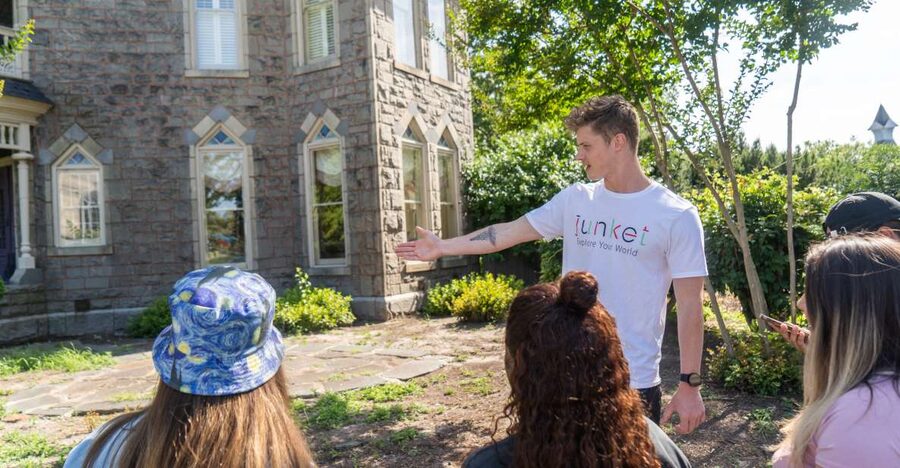
The full route includes nine historic locations. Only some are identified by name in the tour details, so you should think of the walk as a connected story rather than a checklist of nine famous buildings.
At each stop, the guide introduces another part of Salem’s past. Some locations help explain the Puritan period. Others connect with the witch trials, local families, literature, architecture, or the growth of the modern tourist economy.
The value is in the links between places. A cemetery means more after you understand the town’s social divisions. A historic building becomes easier to read after you know which institutions held power. A popular filming location becomes more interesting when you see how a real city has been used to create a fictional Salem.
Several guides also add extra information when time and conditions allow. John sometimes included an additional location or offered tips about nightlife and avoiding Halloween traffic. Those extras are not guaranteed, but they show why a live guide can be more useful than a self-guided route.
Do not expect entry into every building. The experience is a walking tour with outdoor stops and photo opportunities. If you want detailed indoor exhibits, plan a separate museum visit.
Bewitched, Hocus Pocus, and Salem’s movie image

The tour includes opportunities to take photos at locations connected with Bewitched and Hocus Pocus. This is a smart addition because those productions helped spread Salem’s image far beyond Massachusetts.
The movie and television references are used as part of the city’s modern story, not as a replacement for it. You can enjoy the familiar locations, take a selfie, and still understand that Salem’s identity was shaped by real events and later storytelling.
The exact route matters here. One person specifically wished the tour had passed the Bewitched statue, so do not assume every famous television marker is included. The tour promises filming-related photo opportunities, but individual stops may depend on the route, timing, or group movement.
For fans of Hocus Pocus, the photo stops may be a highlight. For everyone else, they provide a lighter break after the more serious material about the trials. I would treat these as a bonus rather than the main reason to book.
Guides who make the two hours work
The most praised part of this experience is the guiding. Mason, John, Danielle, and Noelle are all singled out for different strengths, including humor, local insight, patience, clear explanations, and strong storytelling.
Mason is described as a local who can connect Salem’s complicated past into one understandable story. His style appears to work well for people who want facts but do not want a lecture. He also uses gestures and movement to bring scenes from the past to life.
John is praised for his energy, trivia, and willingness to answer questions. He is also good at making the tour useful for the rest of your visit, with practical advice about the city and busy periods.
Danielle is noted for creating a comfortable pace and an inclusive feel. That is especially helpful when a group includes different ages or levels of interest. Noelle is praised for taking time with the group and adding extra care to the experience.
Guide quality can vary from one departure to another, but the repeated strength of this tour is its personal delivery. You are not just following a route while reading plaques. You are listening to someone interpret the town in real time.
Pace, crowds, weather, and physical demands
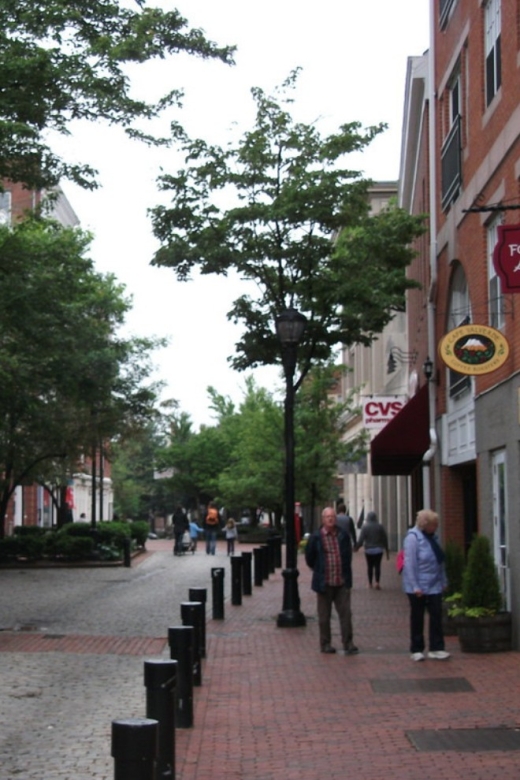
The tour lasts two hours and covers more than a mile. That is manageable for most people who are comfortable walking, but it is not a short stroll around one square.
You may walk on uneven surfaces, and the route takes place outdoors in all weather. Wear shoes with good support. In warm weather, bring water, sunscreen, and a hat. In wet weather, an umbrella helps, but you still need footwear that can handle slick or uneven ground.
The tour is not recommended for wheelchair users or people with mobility impairments. Anyone who cannot comfortably walk more than a mile should choose a different way to see Salem.
Timing also affects the mood. October and Halloween weekends can bring serious crowds. One family found the packed streets stressful, but the guide helped turn an otherwise difficult day into a more enjoyable and informative one. If you visit during the busiest season, arrive early and expect the first meeting area to be crowded.
In quieter months, groups can be very small. That may give you more time to ask questions and, in some cases, make the experience feel almost private. The guide still needs to deliver the full tour even when only one or two people attend, so a small group can be a real advantage.
Is $35 a fair price?
At $35 per person, this is a reasonable price for a two-hour guided walk, especially if you want a useful orientation to Salem before visiting museums or historic houses.
You are paying for a live guide, nine stops, local interpretation, and the chance to ask questions. There are no stated admission tickets to major indoor attractions, so the value comes from the route and the quality of the explanation rather than from included entries.
I think the price works best if you use the tour as a foundation for the rest of your day. It can help you decide which sites deserve more time and prevent you from spending the whole visit on the most commercial parts of Salem.
The free cancellation window, up to 24 hours before the tour, also makes it easier to fit into a changing itinerary. You can reserve now and pay later, which is useful when planning around New England weather.
Who should book this Salem walking tour?
I would choose this tour if you want Salem’s witch trials explained in context rather than presented as a string of scary anecdotes. It suits first-time visitors, history fans, families with older children, and anyone who wants a guide to connect the town’s major themes.
It is also a good pick if you have already walked around Salem and noticed that the buildings and cemeteries raised more questions than answers. The route gives those places a clearer meaning.
I would skip it if you need a fully accessible route, dislike walking in poor weather, or mainly want ghost stories and theatrical scares. The tour is lively and sometimes spooky, but its main purpose is history and interpretation.
Book the Secrets of Salem Hidden History Walking Tour if you want a grounded introduction to the city, with enough witch-trial material to satisfy curious visitors and enough broader history to keep the experience from becoming a costume show. Arrive early, wear good shoes, and keep your expectations flexible about the exact filming locations. That is the best way to get the most from the two hours.
FAQ
How long is the Secrets of Salem Hidden History Walking Tour?
The tour lasts two hours.
How much does the tour cost?
The price is $35 per person.
Where does the tour meet?
The specific meeting instructions give the location as outside Salem Five Savings Bank at 210 Essex Street in Salem, Massachusetts. The tour description also refers to Old Town Hall, so check your final booking details before arriving.
How many historic locations does the tour visit?
The route includes nine historic stops.
Is the tour offered in English?
Yes. The tour has a live English-speaking guide.
Does the tour run in bad weather?
Yes. The tour takes place rain or shine.
How much walking is involved?
You should be able to walk more than a mile. Comfortable shoes are strongly recommended, and some surfaces may be uneven.
Is the tour suitable for wheelchair users?
No. The experience is not suitable for wheelchair users or people with mobility impairments.
Can I cancel for a refund?
Yes. You can cancel up to 24 hours in advance for a full refund. You can also reserve now and pay later.
Just added around the USA
- Historical Bicycle Tour of Dunedin★ 5.0 · 44 reviews
- Safety Harbor Ghost Tour★ 5.0 · 60 reviews
- Tarpon Springs Ghost Tour★ 4.5 · 19 reviews
- Cincy Brunch History and Streetcar Tour with Riverside Food Tours★ 5.0 · 108 reviews
- 2.5 Hour Kayaking with Manatee and History Tour in Tarpon Springs★ 5.0 · 24 reviews
- Chicago River Architecture Tour Aboard a Historic Yacht★ 5.0 · 45 reviews
- Walkin’ with Colin: Chicago History-Mystery-Comedy-Tragedy Tour★ 5.0 · 218 reviews
- Historic Homes and Cottages of Wicker Park Walking Tour★ 5.0 · 44 reviews
History Walking Tours, compared.
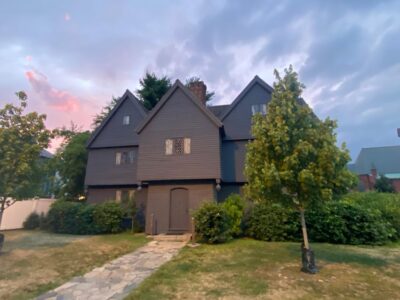
History and Hauntings of Salem Guided Walking Tour
Read our review →
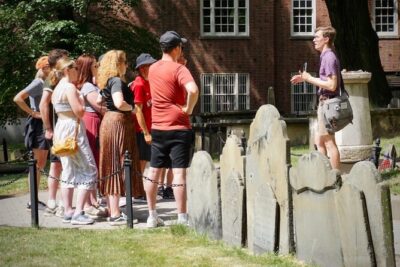
Freedom Trail History Small Group Walking Tour
Read our review →
Historic Charleston Guided Sightseeing Walking Tour
Read our review →
Tapas Walking Tour with Food, Wine, and History
Read our review →
Savannah History and Haunts Candlelit Ghost Walking Tour
Read our review →
A History of Terror – Belfast City Centre Walking Tour
Read our review →Browse the lists this tour appears in