

Review · FLORIDA
Award-winning Art Deco & History Walking Tour
Miami Beach has more secrets than sunshine. This 150-minute walking tour links Art Deco buildings with the stranger chapters of South Beach history, from swampy beginnings and segregation to Miami Vice and the murder of Gianni Versace. I especially like the access to historic hotel lobbies and semi-public spaces, plus the host’s strong connection to preservation. The main consideration is pace: one guest felt the tour could have been closer to two hours, while the advertised length is two and a half.
I also like that this is not just a parade of pastel facades. Damian, also named Damien in some tour details, brings architecture, Cuban migration, Jewish history, film locations, and true crime into one story. A few past departures have also been led by Adrian, so the exact guide may vary.
Key points at a glance
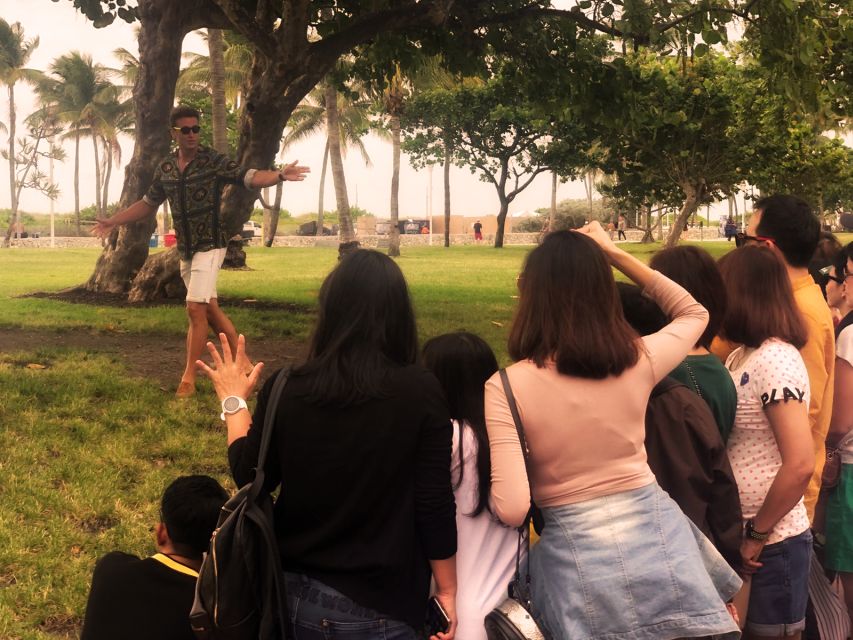
- Miami Beach was largely made by people: The tour explains how a shallow Biscayne Bay swamp became a famous resort city.
- Architecture gets practical attention: You learn to spot Art Deco, Mediterranean Revival, and MiMo details instead of simply photographing colorful buildings.
- Historic interiors add value: The route includes hotel lobbies and other semi-public spaces that are easy to miss from the pavement.
- The city’s darker side is included: Segregation, scandals, cocaine-era crime, and the murder of Gianni Versace all enter the story.
- Film fans get extra context: Miami Vice, Scarface, and Birdcage locations help explain Miami Beach’s screen image.
- The guide makes the difference: Damian’s humor, organization, and preservation work receive especially strong praise.
Why Miami Beach needs a history walk
South Beach can look simple at first glance: palm trees, bright hotels, beach traffic, and a long ribbon of cafes. Walk a little slower, though, and the city becomes a lesson in land-making, immigration, design, money, crime, and reinvention.
This tour gives you that wider frame. It begins with the basic surprise that much of Miami Beach is man-made, while Biscayne Bay was once shallow swamp. That fact changes how you see the city. These hotels and boulevards did not grow naturally from an old coastal town. They came from ambitious development, shifting fortunes, and repeated attempts to remake Miami Beach for new audiences.
I like this approach because it keeps the architecture from becoming decoration. The buildings are evidence. Their shapes, materials, entrances, and colors tell you what kind of city developers wanted to sell at different points in time.
The guide also places local history beside national stories. Muhammad Ali became world boxing champion in Miami Beach, for example. The tour connects that sporting moment with the wider image of the city as a place where fame, risk, money, and reinvention meet.
More History Walking Tours in the USA
- History and Hauntings of Salem Guided Walking Tour
★ 5.0 · 14,564 reviews - Boston: Freedom Trail History Small Group Walking Tour
★ 5.0 · 6,450 reviews - Historic Charleston Guided Sightseeing Walking Tour
★ 5.0 · 6,216 reviews
Meeting at The Betsy Hotel
The tour starts in the lobby of The Betsy Hotel. That is a fitting meeting point because you begin inside a historic Miami Beach setting rather than on a random street corner.
You should arrive ready to walk and listen. The experience lasts 150 minutes, and the route includes outdoor streets, hotel interiors, and other semi-public areas. Comfortable shoes matter more than dressed-up beach footwear, especially if you want to stay focused on the stories instead of your feet.
The tour is conducted in English with a live guide. Damian is the name most often associated with the experience, and his role as a local historian and Miami Design Preservation League member gives the tour a clear preservation angle. He is not simply pointing out old buildings. He is explaining why these places survived, what they meant to earlier residents, and how South Beach became worth saving.
A hand-prepared guide map is included. Keep it after the walk. It can help you retrace the route, identify places you passed quickly, and continue looking at the architecture after the tour ends.
Learning to read Art Deco on Ocean Drive
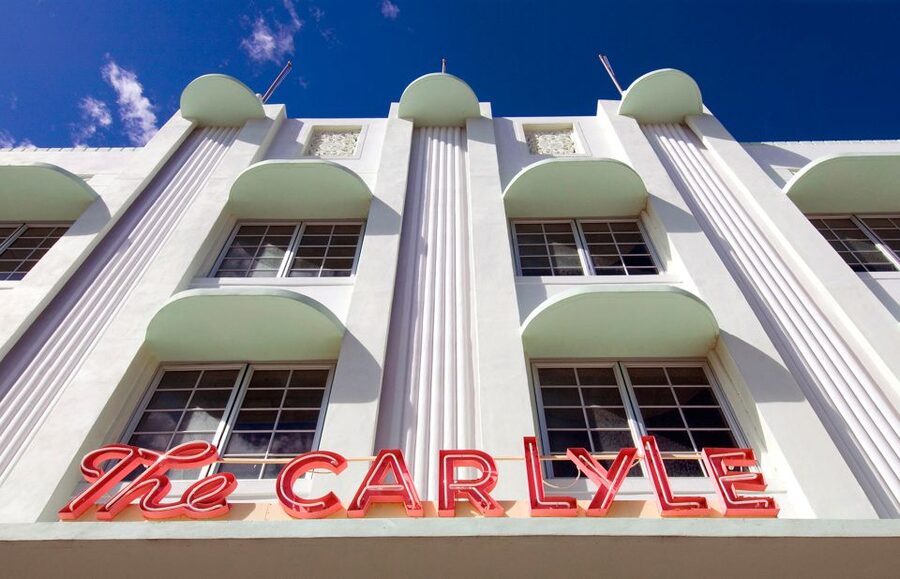
The Art Deco section is the heart of the experience. Miami Beach is famous for its streamlined hotels, rounded corners, porthole windows, eyebrows over windows, geometric details, and pastel colors. Yet a quick stroll can leave you seeing only a row of attractive facades.
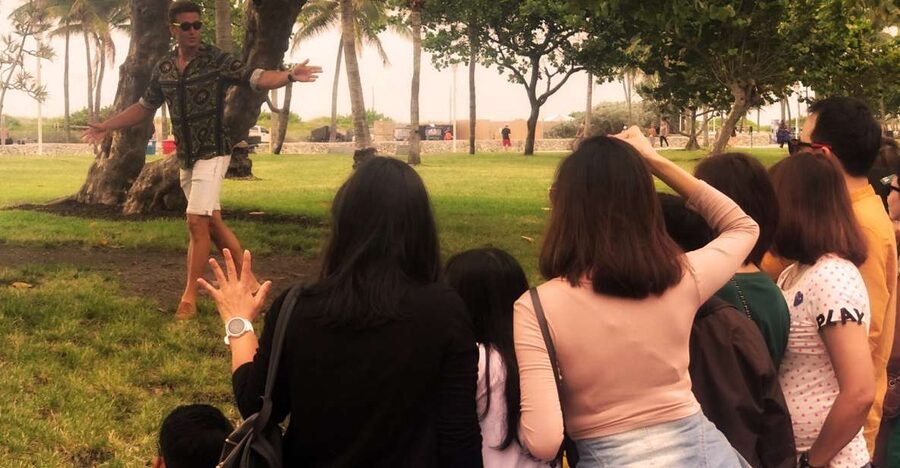
A good guide helps you sort out what you are actually looking at. Damian is especially praised for making architectural details understandable, even if you do not know much about design. That is important here. You do not need a background in architecture to notice why one building feels sleek and machine-like while another borrows from older Mediterranean styles.
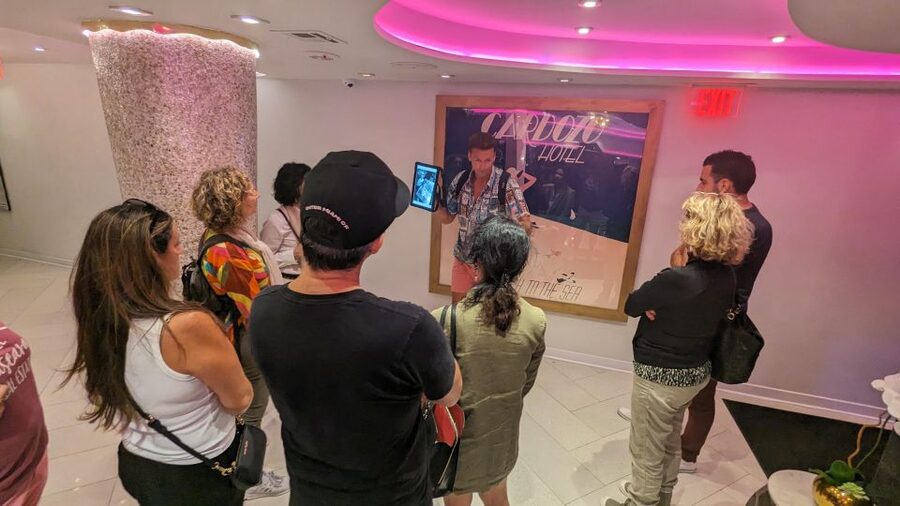
The route follows iconic South Beach streets and includes historic hotel lobbies. Those interior visits add something that an ordinary street walk cannot. Outside, you notice the front elevation. Inside, you can see how the hotel’s public spaces carried the design language through entrances, decoration, and layout.
The access is not described as a private museum visit. It is better understood as a chance to see selected historic interiors and semi-public spaces that many people pass without entering. That makes the experience feel more connected to the working city, not just its postcard view.
You will also encounter Mediterranean Revival and MiMo, or Miami Modern, architecture. This variety matters. Miami Beach is not one single style frozen in time. Its buildings reflect different periods and different ideas about luxury, leisure, and modern life.
From the Great Depression to preservation

The tour places Art Deco in the setting of economic change. The Great Depression forms part of the story, helping explain how the city’s fortunes shifted and why its buildings cannot be separated from national events.
This historical context gives the buildings more weight. A hotel is not only a place with a curved facade. It can represent a development boom, a period of financial strain, or a later revival that changed how residents valued older structures.
The preservation story is also central. Miami Design Preservation League involvement signals that the guide cares about what happens to these buildings now, not only what happened decades ago. You get a sense of the effort required to protect South Beach’s architectural identity while the area changes around it.
That advocacy background may appeal most to you if you care about old buildings, city planning, and the tension between preservation and commercial use. If you mainly want quick photo stops, the historical explanations may feel longer than necessary. The tour works best when you give the stories time to develop.
Same place, a different slice of the past:
- Charleston’s Old South Carriage Historic Horse & Carriage Tour
★ 5.0 · 10,023 reviews - Beneath The Streets Underground History Tour
★ 4.5 · 8,006 reviews - Charleston Horse-Drawn Carriage Tour: Explore Historic Charleston
★ 5.0 · 3,561 reviews - Savannah History and Haunts Candlelit Ghost Walking Tour
★ 5.0 · 3,235 reviews
The parts of Miami Beach often left out
The experience does not present a polished resort story alone. It addresses segregation and the unequal way Miami Beach developed. That is an important part of understanding the city, even if it makes the history less comfortable.
Jewish history and Cuban migration also receive attention. These subjects show how Miami Beach was shaped by communities arriving with their own memories, traditions, businesses, and ambitions. The city’s identity is not just the result of tourism or wealthy developers.
This is where the tour offers more than a standard architecture walk. The buildings become connected to people and power. You begin to ask who was welcomed, who was excluded, who built the city, and who got to enjoy its success.
The guide’s storytelling style helps keep these subjects approachable. Damian is frequently praised for combining facts with humor and clear analysis. That balance matters. A long list of dates can flatten a place, while a good story gives you a reason to remember the date.
True crime, scandals, and Miami’s darker image
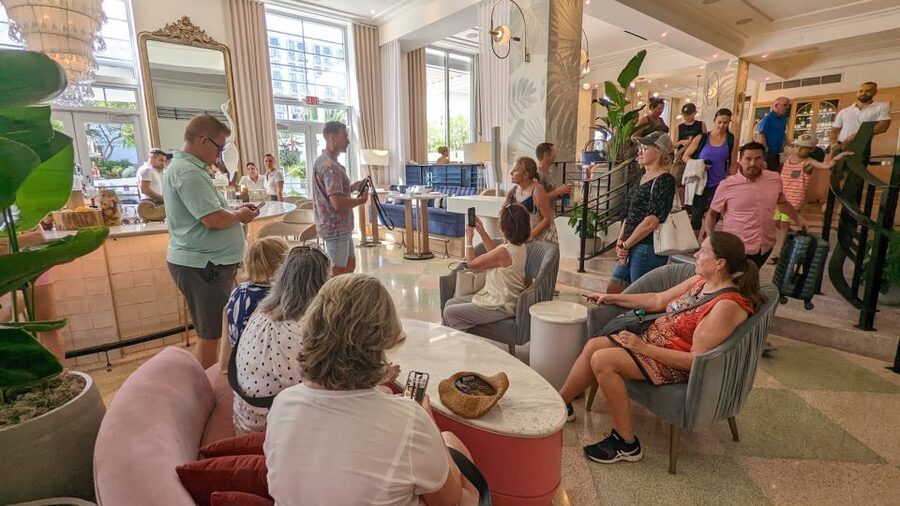
South Beach has a glamorous public face and a darker back story. This tour includes true crime, scandals, the cocaine cowboys era, and the murder of Gianni Versace.
These subjects are not added simply for shock. They help explain why Miami Beach has such a strong place in popular culture. The city has long attracted people looking for wealth, fame, escape, or a fresh identity. That mix can create both memorable art and serious crime.
The Versace story is especially tied to the streets of South Beach, making the subject more immediate than a distant historical anecdote. The cocaine era adds another layer, showing how Miami’s public image was shaped by fear and criminal power as well as hotels and nightlife.
You should know what kind of history walk you are booking. This is not a gentle architecture lesson with crime kept safely out of sight. The darker material is part of the tour’s appeal, but it may not suit someone looking for a purely lighthearted morning.
Miami Vice, Scarface, and the screen version of South Beach
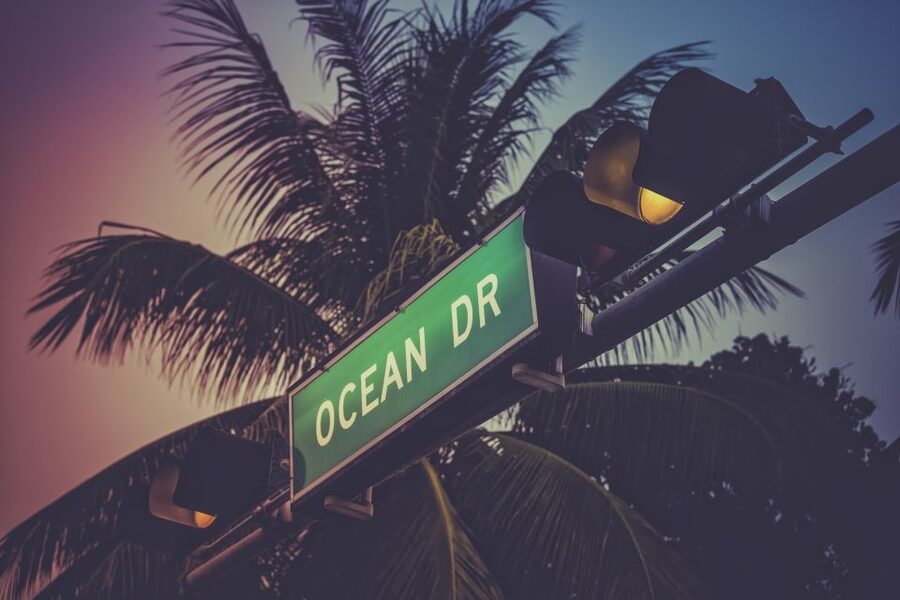
Film and television helped turn Miami Beach into a global image. The tour points out locations connected with Miami Vice, Scarface, and Birdcage.
That film context is useful because screen Miami is both real and carefully staged. You can compare the places you see with the versions created for television and film. The result is a better understanding of how the city sold itself to the world.
Miami Vice is particularly important to the city’s visual identity. Its colors, night scenes, cars, and architecture helped define a certain idea of Miami. Scarface brings in the darker mythology of money and crime, while Birdcage offers a different look at South Beach’s social and cultural life.
The film stops should work well for first-time visitors and anyone who enjoys seeing familiar locations in their real setting. They are part of a larger story, not the entire point of the walk, so architecture and local history remain central.
How the guide shapes the experience
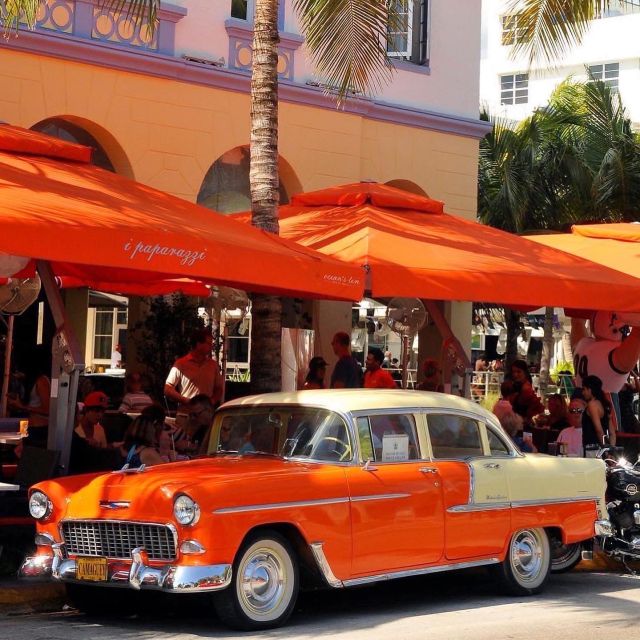
The strongest feature here is the guide. Damian is described as organized, friendly, charismatic, and highly committed to Miami Beach. That combination matters over two and a half hours.
A guide with facts can give you information. A guide with personal connection can help you understand why the place matters. Damian’s preservation work and enthusiasm for Art Deco give the tour a sense of purpose. He also has a reputation for answering questions and adjusting parts of the discussion to the interests of the group.
Adrian has also led a departure, and the tone appears to remain focused on history, architecture, and an enjoyable walk. Still, you should check the booking details if having a particular guide matters to you, since the available information does not guarantee Damian for every date.
The tour begins promptly according to one detailed account, so arrive at The Betsy Hotel lobby with enough time to get settled. The route is presented as a full, information-packed experience. If you prefer a short introduction followed by free time, this may feel too dense. If you want a guide to change how you see South Beach, the length is useful.
Is $49 a fair price?
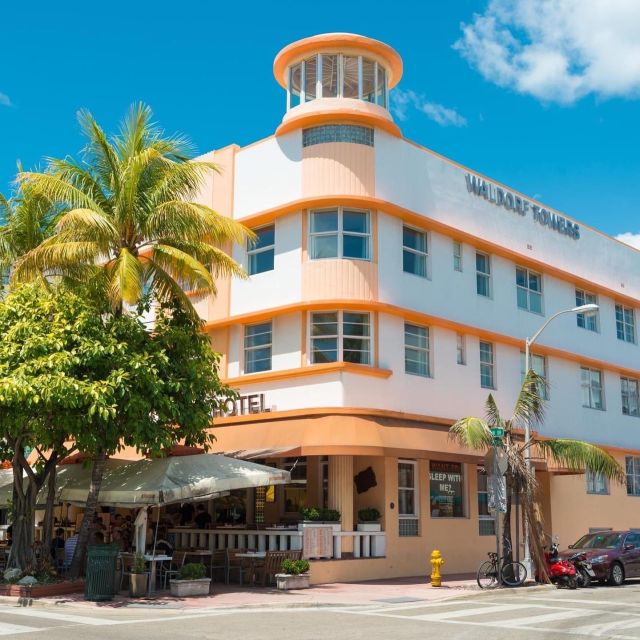
At $49 per person, this is not the cheapest way to walk around Miami Beach. You can see the facades for free. The value comes from the interpretation, access to historic lobbies and semi-public spaces, the guide map, and the range of subjects covered.
I consider the price fair if you have a genuine interest in architecture or local history. You are paying for more than a route between famous buildings. You are getting an explanation of how the city was made, how its communities changed, why its architecture matters, and how crime and entertainment shaped its reputation.
The value is also better if you have limited time in Miami Beach. In one organized walk, you get a working introduction to Art Deco, Mediterranean Revival, MiMo, film locations, social history, and famous crime stories.
It is less useful for you if you only want a few quick photo opportunities or if you dislike long guided walks. The experience covers a lot, and one past participant preferred a two-hour format. The advertised 150 minutes gives the guide room to tell the story properly, but it also asks you to commit most of a morning or afternoon.
Free cancellation up to 24 hours before the tour and the reserve-now, pay-later option reduce the financial risk. Starting times vary, so check availability before planning the rest of your day.
Who should book this South Beach walk?
I would recommend it to first-time visitors who want a strong introduction to Miami Beach before exploring on their own. It is also a good fit for repeat visitors who have photographed Ocean Drive but never understood the buildings behind the colors.
Architecture fans will get the most from the Art Deco, Mediterranean Revival, and MiMo material. History-minded people will appreciate the links to the Great Depression, segregation, Jewish history, Cuban migration, preservation, and the city’s development.
Film fans and readers of true crime will find plenty of familiar names and places. The tour also suits couples, solo visitors, and small groups who prefer a personal guide to a large, scripted sightseeing operation.
I would hesitate to recommend it to anyone seeking a quiet, purely visual walk. The subject matter is broad, and the darker stories are part of the package. It is also conducted in English only, so you need to be comfortable following a long spoken explanation.
Should you book Miami Deco Tours?
Book this tour if you want Miami Beach to make sense, not just look good in photographs. The best reason to go is the combination of sharp architectural observation and unusual local history, delivered by a guide who clearly cares about preservation.
At $49, it earns its price through the guide’s knowledge, interior access, map, and wide range of stories. Choose another activity if you want a brief stroll or a simple photo tour. For everyone else, this is a smart way to spend 150 minutes in South Beach, especially early in your stay, before you return to the streets with a better eye for what you are seeing.
FAQ
Where does the Art Deco and history tour meet?
The meeting point is the lobby of The Betsy Hotel in Miami Beach.
How long does the tour last?
The advertised duration is 150 minutes, or two and a half hours. One detailed account described it as a packed two-hour-style experience, so plan for the full stated length.
What language is the tour conducted in?
The live guided tour is conducted in English.
What architectural styles are covered?
The tour covers Miami Beach Art Deco, Mediterranean Revival, and MiMo, also known as Miami Modern architecture.
Does the tour include historic interiors?
Yes. The experience includes access to historic hotel lobbies and other semi-public spaces.
Can I cancel for a full refund?
Yes. You can cancel up to 24 hours in advance for a full refund. You can also reserve now and pay later.
Just added around the USA
- Historical Bicycle Tour of Dunedin★ 5.0 · 44 reviews
- Safety Harbor Ghost Tour★ 5.0 · 60 reviews
- Tarpon Springs Ghost Tour★ 4.5 · 19 reviews
- Cincy Brunch History and Streetcar Tour with Riverside Food Tours★ 5.0 · 108 reviews
- 2.5 Hour Kayaking with Manatee and History Tour in Tarpon Springs★ 5.0 · 24 reviews
- Chicago River Architecture Tour Aboard a Historic Yacht★ 5.0 · 45 reviews
- Walkin’ with Colin: Chicago History-Mystery-Comedy-Tragedy Tour★ 5.0 · 218 reviews
- Historic Homes and Cottages of Wicker Park Walking Tour★ 5.0 · 44 reviews
History Walking Tours, compared.

History and Hauntings of Salem Guided Walking Tour
Read our review →
Freedom Trail History Small Group Walking Tour
Read our review →
Historic Charleston Guided Sightseeing Walking Tour
Read our review →
Tapas Walking Tour with Food, Wine, and History
Read our review →
Savannah History and Haunts Candlelit Ghost Walking Tour
Read our review →
A History of Terror – Belfast City Centre Walking Tour
Read our review →Browse the lists this tour appears in