
Review · ILE-DE-FRANCE
Montmartre Walking Tour: A Journey Through Art and History
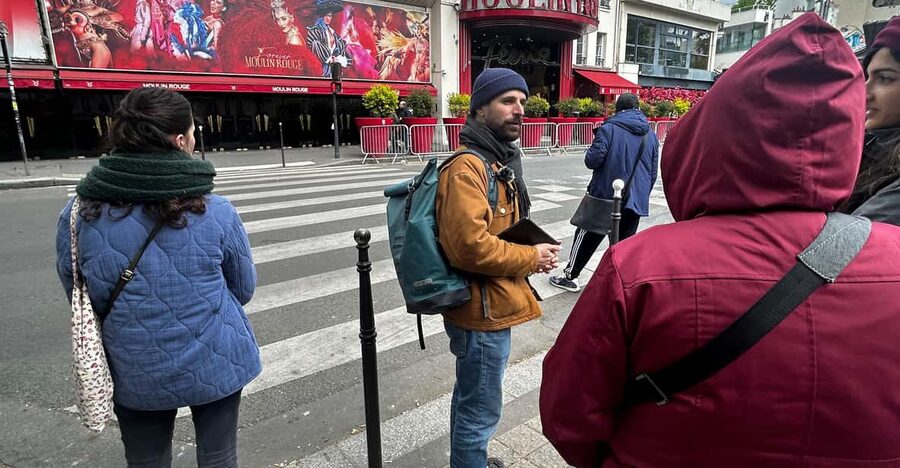
Montmartre rewards walkers who look twice. This 160-minute tour turns Paris’s famous hill into an open-air art lesson, with Arthur’s carefully researched storytelling linking streets, artists, religion, and politics. I like the small groups, limited to 10 people, and the way pictures on a tablet help bring old paintings and long-gone residents back into view. At $34, it offers strong value if you want context rather than a quick photo stop. The main drawback is simple: you will be walking uphill for more than two hours, so comfortable shoes are not optional.
I also like the route’s quieter corners. You see the Moulin Rouge, Le Bateau-Lavoir, the windmills, La Maison Rose, the vineyard, and Sacré-Coeur, but the tour is not just a parade of famous addresses. The guide connects each place to artists such as Picasso and Van Gogh, while also giving attention to women whose work and support were often left out of older versions of art history. The English is excellent, and the friendly, personal format suits curious adults and older children.
Key points at a glance
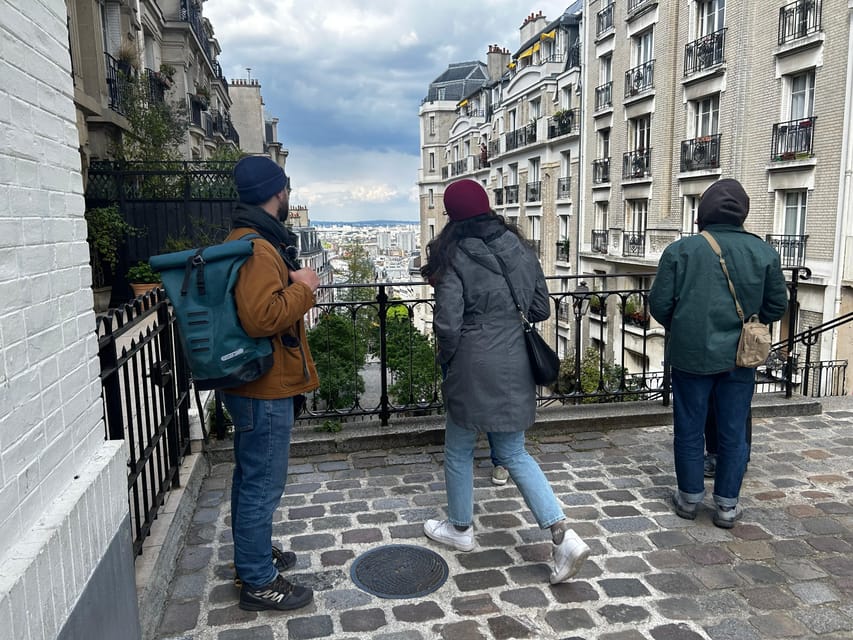
- A 10-person maximum keeps the conversation personal, making it easy to ask questions and stay close to the guide.
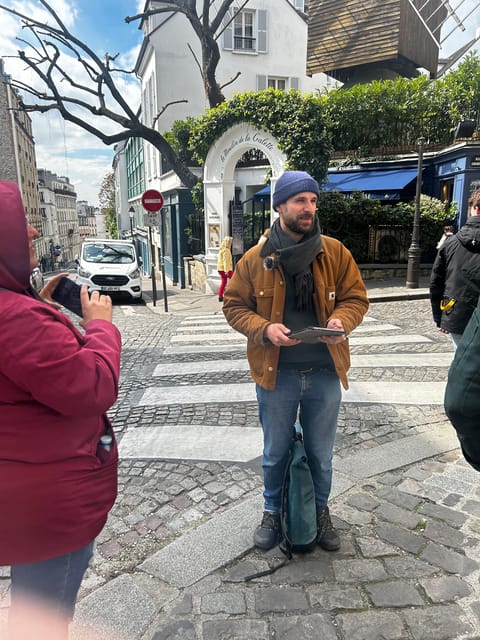
- Arthur uses images on a tablet to show artworks and historical figures connected with Montmartre.
- The route covers both icons and lesser-known stops, from the Moulin Rouge and Sacré-Coeur to Le Bateau-Lavoir, old windmills, a vineyard, and a secret stop.
- Art, religion, and politics share equal billing, so you learn why Montmartre mattered, not only where to take pictures.
- The tour costs $34 and lasts 160 minutes, a fair price for a small-group experience with a history and art focus.
- Bring weather gear and water, since Montmartre can feel colder than other parts of Paris and the tour takes place entirely outside.
Why Montmartre works best on foot
Montmartre is easy to admire and surprisingly easy to misunderstand. Many people arrive for the white dome of Sacré-Coeur, pose near the Moulin Rouge, and leave with a few photographs. That gives you the postcard version. This tour aims for the story behind the postcard.
The neighborhood’s importance comes from its mixture of art, religion, politics, and everyday life. Its steep streets and village-like corners helped give it a separate identity within Paris. At the end of the 19th century and beginning of the 20th, artists lived and worked here, crossing paths in studios, cafés, cabarets, and rented rooms.
I like that the tour uses artists as a way into the neighborhood rather than treating them as a list of famous names. Picasso and Van Gogh appear, but the discussion also includes lesser-known artists and women who were often pushed out of the traditional story. That approach gives you a fuller picture of how artistic life actually worked.
The route lasts about two and a half hours, though the listed duration is 160 minutes. That is long enough to build a proper story, but short enough to fit comfortably into a busy Paris day. You are not stopping inside a long series of museums, so the pace remains focused on streets, buildings, viewpoints, and the guide’s explanation.
More History Walking Tours in France
- Paris: Dark History and Ghostly Guided Walking Tour
★ 4.7 · 1,000 reviews - Vieux Lyon Cultural & Historical Walking Guided Tour (English)
★ 5.0 · 942 reviews - Strasbourg: Guided Historical Neighborhoods Walking Tour
★ 4.9 · 275 reviews
Meeting Arthur at Place Blanche
The tour begins outside the Five Guys restaurant at 3 Place Blanche, a practical meeting point near the Moulin Rouge. Give yourself enough time to find the exact spot, particularly if you are arriving by Metro or walking from another part of Paris. The area is busy, and a few extra minutes can prevent a hurried start.
Arthur is the guide named in the available feedback, and his five years of experience show in the structure of the tour. He studied history and art history, has lived in Montmartre for several years, and presents the neighborhood as someone with a personal connection to it. The tone is friendly rather than formal.
The small-group limit matters here. With no more than 10 people, you can hear the guide more easily and ask questions without turning the walk into a public lecture. That format also helps at narrow streets and viewpoints, where a large group can quickly become awkward.
The tour is conducted in English. The provider places strong emphasis on clear English, and the available comments repeatedly praise Arthur’s ability to explain complicated subjects in an engaging way. If you enjoy asking questions about art, Paris, or the people behind the famous names, this is the kind of group where conversation should feel natural.
The Moulin Rouge and Montmartre’s public face
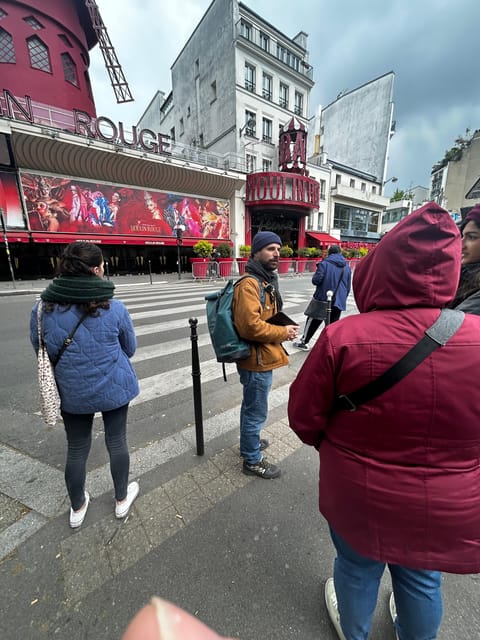
The Moulin Rouge is the first major stop, with around 20 minutes for a guided visit and photographs. It is one of the easiest places in Paris to reduce to a single image: red windmill, bright lights, cabaret. The tour gives it a wider role in Montmartre’s artistic and social story.
This opening stop helps set the tone. You are not beginning with a quiet church or a grand painting. You are starting with entertainment, nightlife, and the public image of Montmartre. From here, the route moves beyond the familiar surface.
The guide then takes you to a secret stop for another 20-minute explanation. The exact details are not specified in advance, which is part of the appeal. It gives the route a sense of discovery without promising something extravagant. You should expect a place selected for its story rather than a major attraction with a ticket booth.
After that comes a viewpoint for about five minutes. These short photo stops are useful because Montmartre’s elevation gives you changing views across Paris. They also provide a natural pause before the tour returns to the neighborhood’s artistic heart.
Le Bateau-Lavoir and the artists of the hill
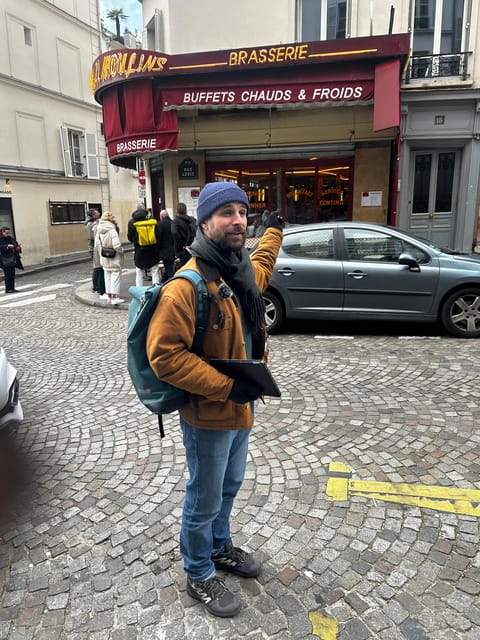
Le Bateau-Lavoir receives about 20 minutes of guided attention. This is one of the most important stops for understanding why Montmartre became associated with modern art. Rather than simply pointing to a building, Arthur uses images and stories to show how artists lived, worked, and influenced one another.
The tablet is especially helpful here. Art history can become abstract when you hear only names and dates. Seeing the relevant paintings while standing in the place connected to their makers gives the discussion a physical anchor. You begin to connect the street with the work instead of treating the artist as a distant figure in a textbook.
The tour’s strongest feature is likely this connection between biography and art. You hear about the people who produced the work, the neighborhood that shaped them, and the social circles around them. That is why the experience appeals to people who normally find formal art tours dry.
You should also know what this tour is not. It is not a museum visit, and it does not promise entry to every site along the route. If you want to stand in front of original paintings, you will need a separate museum visit. Here, the art is explained outdoors, with reproduced images and the streets as your setting.
More History Walking Tours in Paris
- Paris City of Fashion History Private Guided Walking Tour
★ 5.0 · 221 reviews - Paris City Center w/ Notre Dame interior | Exclusive Walking Tour
★ 5.0 · 190 reviews - Paris: Le Marais & Montmartre Jewish History Walking Tour
★ 4.8 · 170 reviews - Historic Paris Walking Tour in English
★ 4.9 · 78 reviews
Windmills, viewpoints, and La Maison Rose
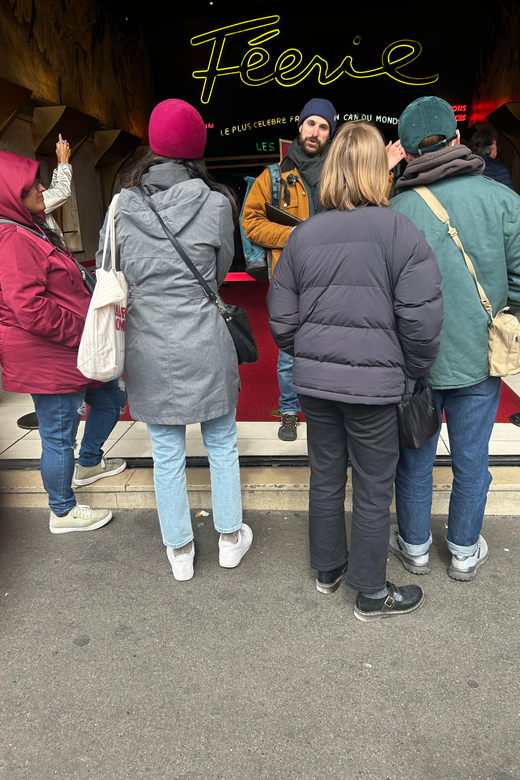
The route continues to several short stops, including the windmills and another viewpoint. Each receives roughly five minutes. These are not long lectures, but they break up the walking and show a less monumental side of Montmartre.
The windmills point to an older period, before the area became a major tourist destination. Their presence helps you picture Montmartre as a village on the edge of Paris rather than only as an artists’ quarter. The short visit works best as part of the larger story, not as a stand-alone attraction.
La Maison Rose is another five-minute stop for photographs and explanation. Its colorful exterior is instantly recognizable, but the guide adds meaning beyond the usual photo opportunity. As with the other brief stops, the value comes from knowing why the place matters and how it fits into the neighborhood’s identity.
You will have chances to take pictures, but this is not a photo-only walk. The guide’s explanations keep the group moving, and the short stops mean you should be ready to listen and photograph without lingering too long. If you prefer a slow morning with extended café breaks, this route may feel brisk.
The vineyard and Musée de Montmartre
The vineyard offers another look at Montmartre’s local character. It is easy to think of Paris as entirely urban, so a vineyard on the hill adds a useful surprise. The stop lasts about five minutes and is mainly for sightseeing and explanation rather than a tasting.
Snacks and drinks are not included, and no food or merchandise is being sold as part of the experience. That is worth knowing before you arrive. Bring water if the weather is warm, and consider buying it near Place Blanche, where a supermarket is available.
The Musée de Montmartre receives about 15 minutes of guided attention. The tour does not list museum admission or an extended interior visit, so think of this as an explanation of the museum and its place in the neighborhood rather than a full museum outing. If the subject catches your interest, you could return later with more time.
This part of the walk helps link the neighborhood’s buildings and streets with its collected memory. The tour keeps moving, but it gives you enough background to decide which places deserve a return visit. That is a good use of limited sightseeing time.
Reaching Sacré-Coeur after the uphill route
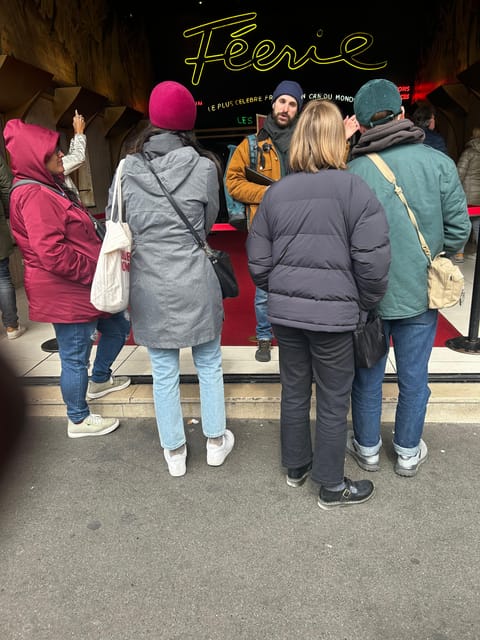
The tour ends at Sacré-Coeur Basilica, at 35 Rue du Chevalier de la Barre. Before reaching it, you make one more viewpoint stop, then spend about 20 minutes at the basilica for photographs and guided explanation.
Sacré-Coeur brings the tour’s religious and political themes into sharper focus. By this point, you have heard about artists and entertainment, but Montmartre is also shaped by faith and public events. The basilica is not simply a final photo backdrop. It completes the wider story of the hill.
The route’s physical shape matters here. Montmartre is Paris’s biggest hill, and the walk includes slopes and changes in elevation. The provider describes the experience as wheelchair accessible, but anyone with mobility concerns should confirm the exact route and conditions before booking, especially since the tour moves through hilly streets and lasts 160 minutes.
For most people, the best preparation is basic: wear comfortable shoes, bring water in warm weather, and carry a raincoat or umbrella if rain is expected. Montmartre can feel colder than other parts of Paris, so a warm layer is useful even when the city center feels mild.
What the $34 price delivers
At $34 per person, this tour sits in a sensible range for a small-group guided walk in Paris. You are paying for 160 minutes with a guide, a group limited to 10, researched content, and visual material on a tablet. There are no snacks, drinks, museum admissions, or shopping stops included.
That last point may actually appeal to you. The tour has nothing to sell, and the places visited are not used as sales opportunities. Your spending is limited to the tour itself and anything you choose to buy before or after it.
The value depends on your interests. If you only want a quick introduction to Sacré-Coeur, you can visit the basilica independently for less. If you want the connections between artists, buildings, women’s contributions, religion, and Parisian politics, $34 is a fair price for the amount of explanation packed into one outing.
The experience has a strong record from its earlier Airbnb work, with a 4.98 rating from more than 1,200 comments, while its GetYourGuide presence is newer. The available ratings for this experience are all five out of five, with particular praise for Arthur’s passion, storytelling, personal attention, and use of art to explain the neighborhood.
Who should book this walk
I would recommend this tour to adults who enjoy art, history, and stories about real people. It is also a good fit for an older teenager who might resist a standard sightseeing lecture. One 18-year-old described in the feedback became especially engaged because the guide made the artists and their lives feel immediate.
Families can enjoy the route, but children under 10 are not suitable for this activity. The walking time, hills, and art-focused explanations may also be better for older children and teenagers than for very young visitors.
Solo visitors should find the small group welcoming, since the format makes it easier to speak with the guide and other participants. Couples and families benefit from the same personal scale. People over 80 are not considered suitable for the activity, according to the tour information.
The tour is less suitable if you dislike walking, want a museum-heavy experience, or prefer to explore without a guide. It also is not the right choice if recording is important to you, since video and audio recording are not allowed. You can take photographs at the designated photo stops, but the emphasis is on listening and discussion.
Practical details before you go
Plan to arrive at the Five Guys outside 3 Place Blanche with comfortable footwear already on. Since the walk begins in a busy area and includes several short stops, avoid arriving with large bags or anything that makes uphill walking harder.
Check the forecast before leaving your accommodation. Bring a raincoat or umbrella in wet weather, warm clothes in cool weather, and water when temperatures rise. A supermarket is located near the meeting point, so you can buy water before the walk.
The tour is offered in English with a live guide. It is listed as wheelchair accessible, and cancellation is free up to 24 hours before the start. You can also reserve now and pay later, which helps if your Paris schedule is still changing.
Should you book the Montmartre Walking Tour?
Book it if you want Montmartre explained through art and people, not just photographed. Arthur’s greatest strength is the way he links famous artists with lesser-known figures and brings women back into a story often told almost entirely through men.
Skip it if you want a relaxed, flat stroll, a full museum visit, or lots of free time at each stop. For everyone else, $34 buys a focused, friendly introduction to one of Paris’s most complicated neighborhoods. Bring good shoes, listen closely, and allow time after the tour to revisit the places that caught your attention.
FAQ
How long does the Montmartre Walking Tour last?
The tour lasts 160 minutes, or about two and a half hours.
Where does the tour begin?
It begins outside the Five Guys restaurant at 3 Place Blanche, 75009 Paris.
Where does the tour finish?
The tour finishes at 35 Rue du Chevalier de la Barre, 75018 Paris, near Sacré-Coeur Basilica.
What language is the tour offered in?
The tour is conducted in English with a live guide.
How large is the group?
The group is limited to 10 participants.
What should I bring?
Bring comfortable shoes. Depending on the forecast, you should also bring an umbrella or raincoat, warm clothing, and water.
Are food, drinks, or museum admissions included?
No. Snacks and drinks are not included, and the activity information does not include museum admission.
Just added around France
- Nimes: Private Walking Tour of the Historical Center★ 4.3 · 20 reviews
- Nîmes – Spend a day like an ancient Roman★ 5.0 · 26 reviews
- Nimes: Ancient Roman Arena Ticket & Old Town Audio Tour★ 3.8 · 19 reviews
- From Nice: Historic Train Ride & Alps Villages★ 4.8 · 312 reviews
- Nice: Theatrical History Tour – Secrets of the Castle Hill★ 5.0 · 21 reviews
- Nice: Sunset & Wine Tasting in a historic Land Rover★ 5.0 · 91 reviews
- Nice : Wine Tasting at a Historic Château in a Land Rover !★ 4.9 · 156 reviews
- Mont Saint Michel: Village History and Legends Walking Tour★ 4.8 · 96 reviews
History Walking Tours, compared.
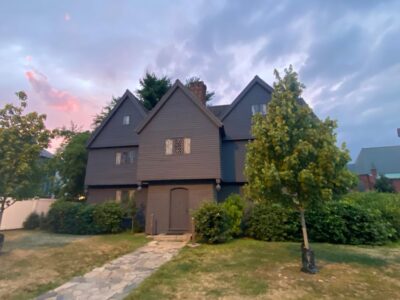
History and Hauntings of Salem Guided Walking Tour
Read our review →
Freedom Trail History Small Group Walking Tour
Read our review →
Historic Charleston Guided Sightseeing Walking Tour
Read our review →
Tapas Walking Tour with Food, Wine, and History
Read our review →
Savannah History and Haunts Candlelit Ghost Walking Tour
Read our review →
A History of Terror – Belfast City Centre Walking Tour
Read our review →Browse the lists this tour appears in