
Review · LISBON DISTRICT
Lisbon: History, Stories and Lifestyle Walking Tour
Lisbon reveals itself one hill at a time. This three-hour walking tour links Bairro Alto, Baixa, Alfama, and several of the city’s best viewpoints, giving you a useful first look at Lisbon’s streets, churches, politics, and daily life. I especially like the included tram ride and the stop for coffee and pastel de nata, two small touches that make the history feel connected to the city you see today.
The guides are the real strength. Paulo, Ricardo, Beatrice, Anna, João, and others are repeatedly praised for clear storytelling, humor, patience, and practical local advice. The main consideration is the terrain: Lisbon is hilly, and the tour includes slopes, steps, and uneven streets, even though the pace includes regular stops and is described as manageable for people who are not especially fit.
I also like the way the route covers both famous sights and less obvious details. You get the grand story of the 1755 earthquake, the Carnation Revolution, and the city’s Moorish and Catholic past, but you also see fado territory, neighborhood life, and the places where Lisbon residents gather.
Key points to know before booking
- A broad first look at Lisbon: In three hours, you connect Bairro Alto, Baixa, the Carmo area, the castle district, Portas do Sol, and Alfama.
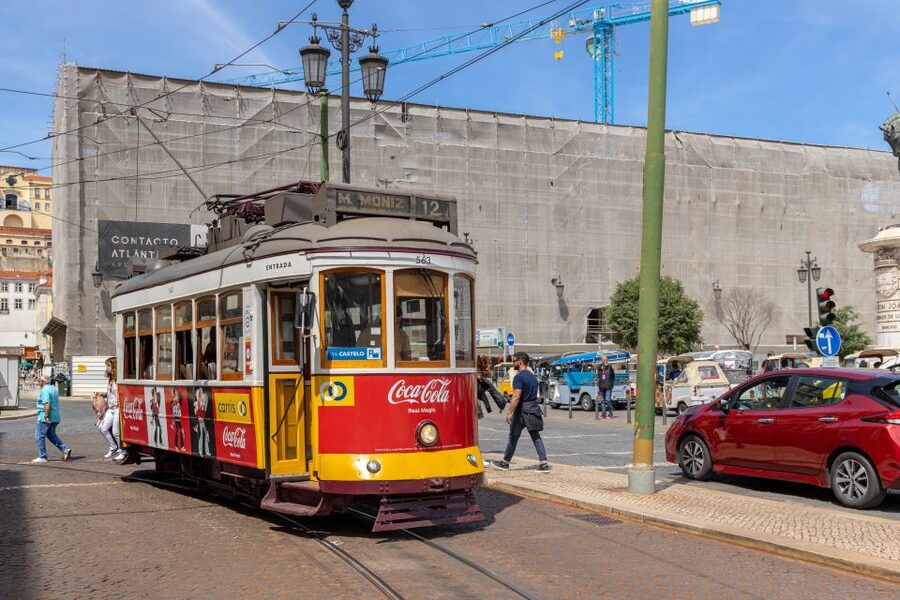
- The tram ride adds real local flavor: The tour includes a ride through the old city, generally using tram 12 according to visitor accounts.
- History is tied to actual places: You hear about the 1755 earthquake at the Carmo ruins and the 1974 Carnation Revolution at the Carmo convent and church.
- The guides make the difference: Paulo, Ricardo, Beatrice, Anna, João, and Lucia are among the guides praised for warmth, humor, and strong knowledge of Lisbon.
- Coffee and cake are included: A short break with a bica, or Portuguese espresso, and pastel de nata gives your feet a rest.
- Plan for hills and weather: Wear firm shoes and leave some time after the tour, since the walk can run longer than three hours.
Why this Lisbon walking tour works as a first-day introduction
Lisbon can be confusing at first. The center spreads across several hills, and the most interesting neighborhoods are close together on a map but separated by steep streets, stairways, and sharp changes in elevation. This tour gives you a mental map before you start exploring alone.
The route also avoids treating Lisbon as a collection of monuments. You hear how districts changed, how the earthquake reshaped the city, how dictatorship ended in 1974, and why Alfama still feels different from the more orderly streets of Baixa. That mix is valuable because Lisbon’s character comes from both its grand events and its ordinary neighborhoods.
At $29 per person, the price is fair for a three-hour guided walk that includes public transportation, coffee, and cake. You are not paying simply for a list of stops. You are paying for someone to explain what you are looking at, help you get oriented, and point out details you could easily miss on your own.
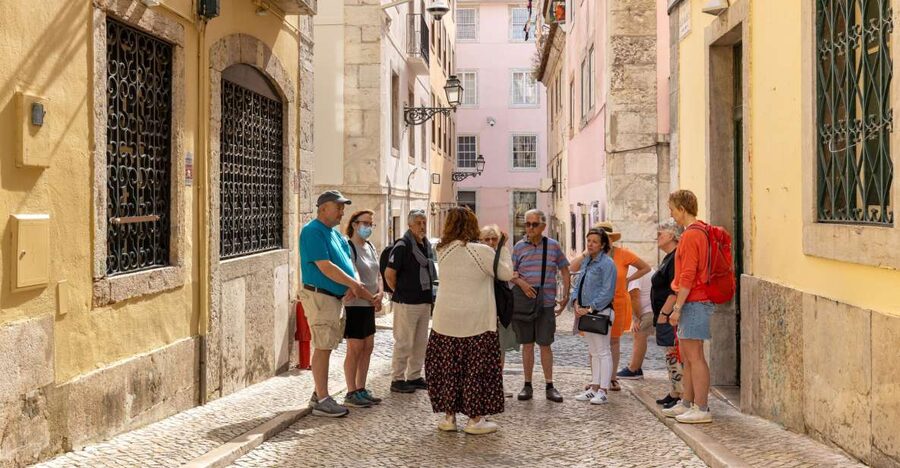
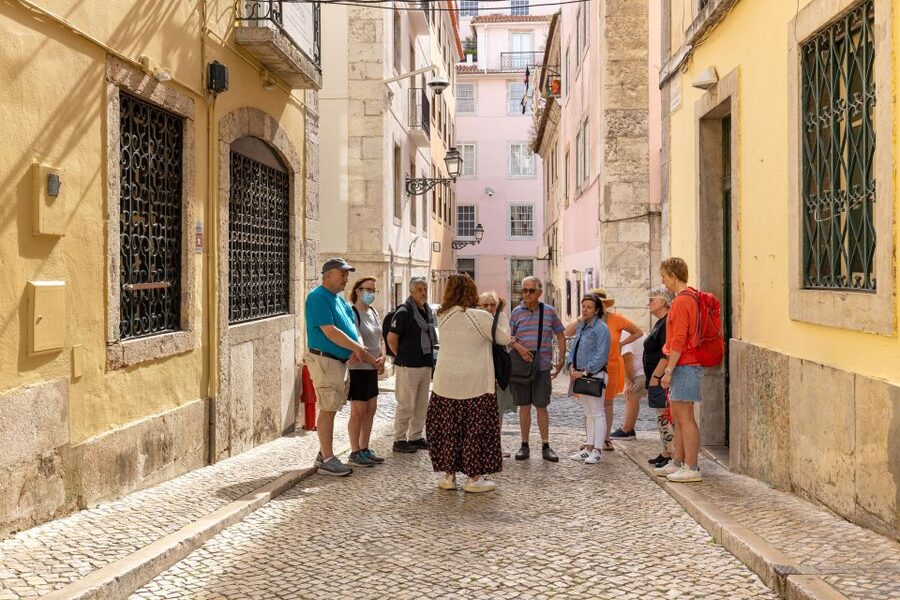
The tour is offered as a private or small-group experience. Group size matters in Lisbon, where narrow lanes and busy sidewalks can make a large group awkward. A small group also makes it easier to hear the guide and ask questions. One person described a group of only three as feeling almost private, while another noted that a group of eight remained easy to manage.
More History Walking Tours in Lisbon
- Lisbon: Private Dark History Walking Tour with Drinks
★ 4.8 · 387 reviews - Lisbon Essential Walking Tour: History, Stories and Lifestyle
★ 5.0 · 316 reviews - Historic Walking Tour Through Lisbon’s Oldest Neighborhood
★ 5.0 · 233 reviews
Bairro Alto opens with five centuries of change
The walk begins in Bairro Alto, a district dating from the 16th century. Today it is associated with nightlife and fado houses, but the tour uses it to explain how Lisbon grew and changed over time.
The neighborhood became especially important after the earthquake of 1755, when families from Baixa and nearby districts moved into the area. That detail helps you see Bairro Alto as more than a bar district. Its streets also tell a story about displacement, rebuilding, and the way Lisbon responded to disaster.
This is a good early stop because the guide can establish the larger story before the route drops toward the center. Guides such as Paulo have been praised for connecting city history with personal memories, including his experience of growing up in Lisbon around the time of the 1974 revolution. That sort of local perspective can make political history easier to understand than a string of dates.
São Pedro de Alcântara brings the first big view
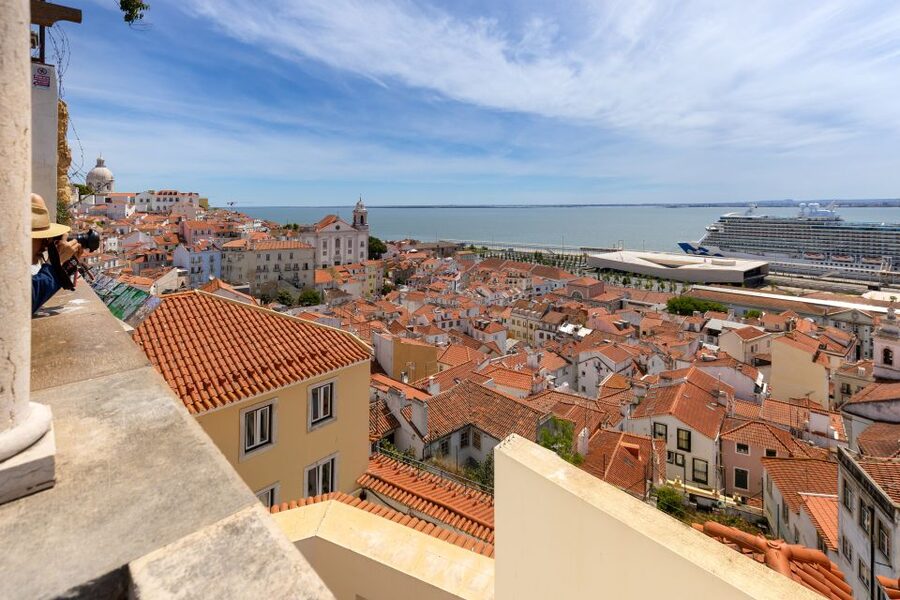
At the garden of São Pedro de Alcântara, you get one of the tour’s best pauses. From here, you can look across Baixa toward the south bank of the Tagus River.
The view is useful, not just pretty. Your guide can point out the shape of central Lisbon and help you understand how the hills relate to the lower city. I find viewpoints like this especially helpful early in a stay because they turn a confusing street plan into something you can picture.
You should also expect a photo stop here. The itinerary includes several viewpoints, but this one gives you a wide look across the city without requiring a separate trip to a distant lookout. Keep in mind that the view depends on the weather. Rain and wind have occasionally forced guides to adjust the route, yet guides such as Anna and João have been praised for staying upbeat and adapting the plan.
São Roque Church is plain outside, ornate inside
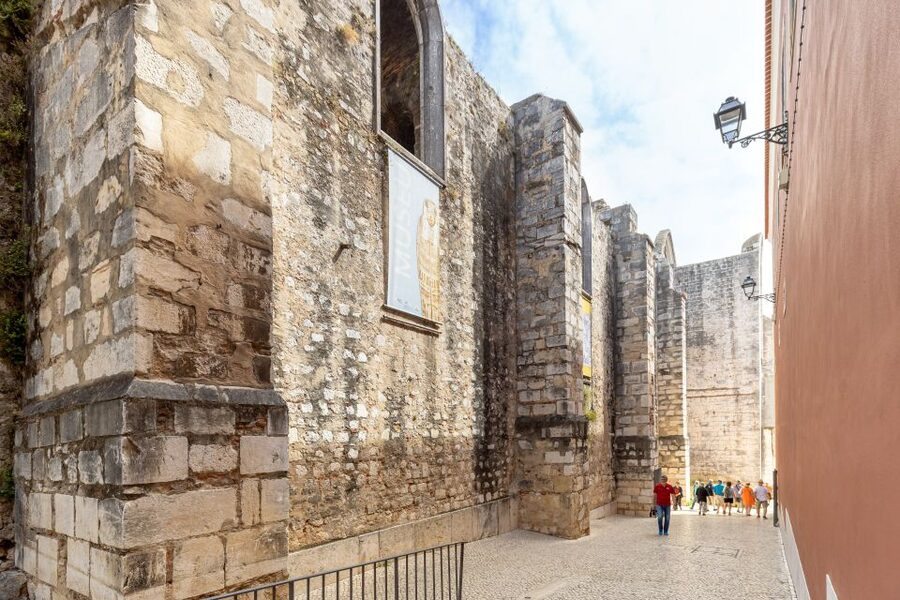
The next major sight is São Roque Church, built by the Jesuits. Its exterior is austere, almost severe. Inside, the effect changes completely, with gilding, tiles, and paintings representing Mannerist and Baroque styles.
That contrast is one of the better teaching moments on the route. You see how Portuguese churches can appear restrained from the street while revealing elaborate decoration inside. The church works best when the guide gives you time to look rather than rushing through it.
This stop also adds variety. The tour is not only about open-air views and neighborhood streets. You get architecture, religious art, and a chance to compare different periods of Lisbon’s design. If you prefer a walk with some indoor relief, São Roque helps break up the hills and outdoor sections.
More History Walking Tours in Portugal
- Lisbon: 3-Hour The Slave Trade – An Historical Walking Tour
★ 4.9 · 179 reviews - Lisbon Fado History Cultural Walking Tour
★ 5.0 · 118 reviews - Lisbon: Historical Walking Tour with Jeronimos Monastery
★ 4.5 · 71 reviews - Lisbon: Jewish History in Portugal Guided Walking Tour
★ 4.6 · 52 reviews
Carmo connects Gothic ruins with modern Portugal
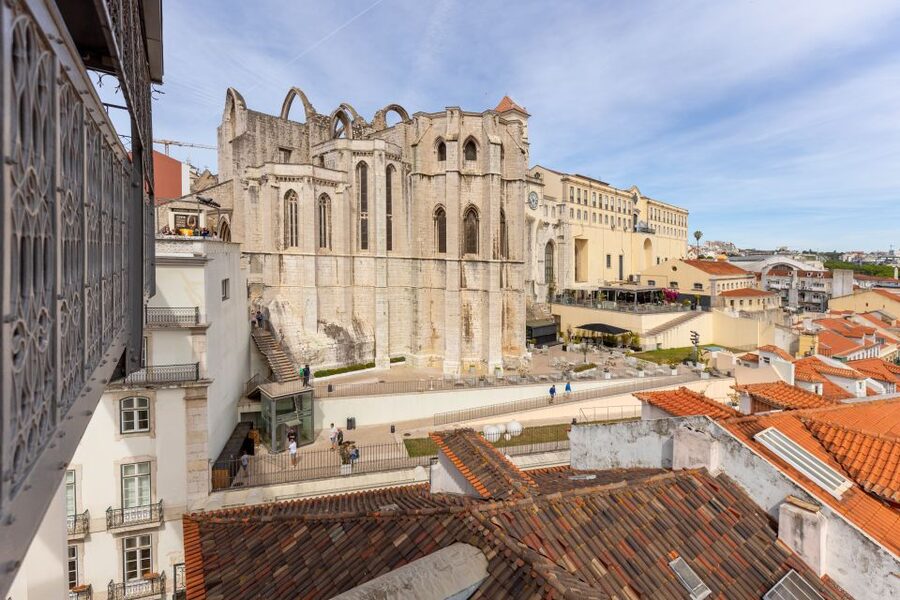
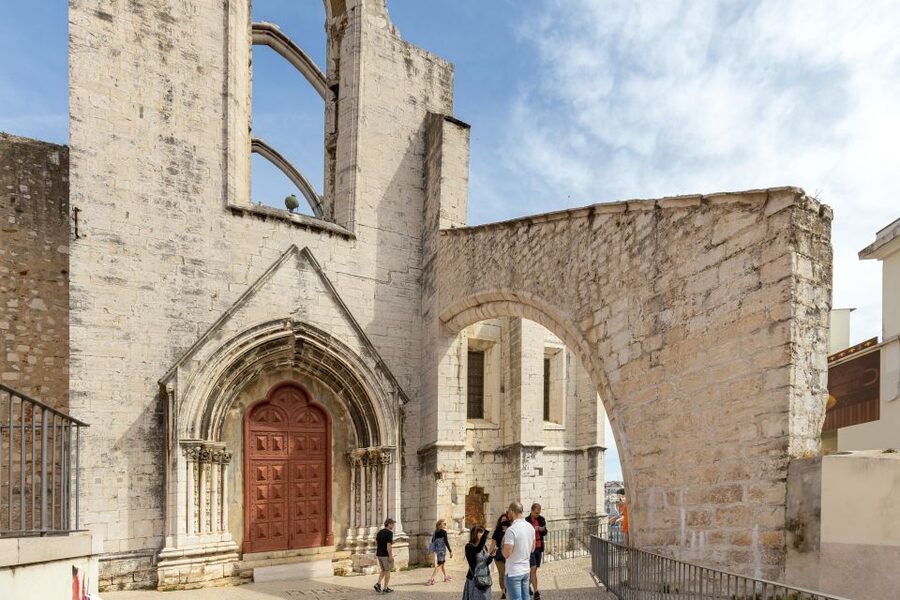
The Carmo convent and church are among the most memorable stops because the site carries both architectural and political meaning. The church is a fine example of Lisbon’s Gothic style, but much of its roof was destroyed in the earthquake of 1755. The open structure makes the damage visible instead of hiding it behind a modern repair.
The site also matters because the Carnation Revolution began here in 1974. That movement ended nearly five decades of dictatorship in Portugal. A good guide can explain why this event still matters in everyday Portuguese life, and several guides are praised for making the country’s recent political past clear and personal.
For me, this is where the tour moves beyond a standard sightseeing walk. You are not simply shown an old church. You are given a way to connect medieval architecture, natural disaster, and modern democracy in one place.
Santa Justa and Baixa show two sides of central Lisbon
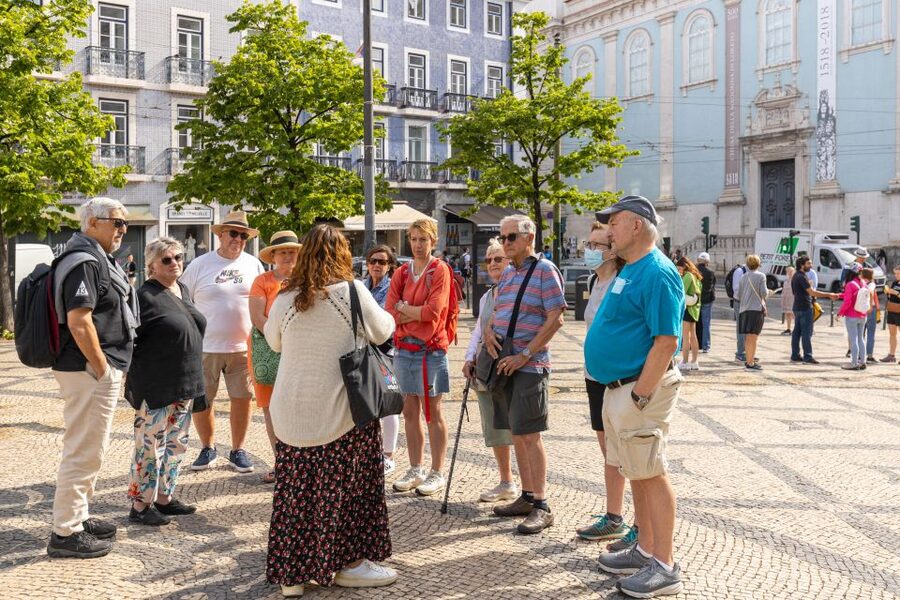
The route continues toward the Santa Justa elevator, a tall Gothic Revival structure that links different levels of the city. It is one of Lisbon’s most recognizable landmarks and one of the city’s strongest viewing points.
The elevator is impressive, but this tour does not necessarily mean you will ride it. The included ride is the tram trip later in the route, so ask your guide or check the exact option you book if riding Santa Justa is important to you. You can still appreciate its ironwork, height, and role in connecting upper and lower Lisbon from the street.
From here, the walk reaches Baixa, the central district rebuilt after the 1755 earthquake. The broad, orderly streets feel different from the tight lanes of Bairro Alto and Alfama. That contrast helps you understand the scale of the rebuilding project and why Baixa has such a distinct shape.
A short break follows around this part of the route. The included coffee and cake are practical as well as enjoyable. A bica, the small Portuguese espresso served during the stop, and a pastel de nata give you a taste of a daily Lisbon ritual while providing a chance to sit down before the next climb.
The tram ride turns transport into part of the tour
The tram segment is one of the most appealing parts of the experience. The route usually uses tram 12, traveling upward from the castle area toward Portas do Sol. The old tram is not just a convenient way to cover ground. It is part of Lisbon’s identity and gives you a short taste of how the city’s steep streets are connected.
The tram can be crowded, and service can change. One tour had to be altered when the tram broke down, while another faced pouring rain. The important point is that the tram ride is a planned part of the experience, but it should not be treated as guaranteed in every circumstance. A good guide will adjust the route if transport or weather causes trouble.
The ride is also a welcome rest for your legs. After walking through Bairro Alto, Baixa, and the Carmo area, sitting for part of the route gives you energy for Alfama. It also lets you watch Lisbon pass by at street level rather than from a sightseeing bus.
Portas do Sol frames Alfama and the Tagus
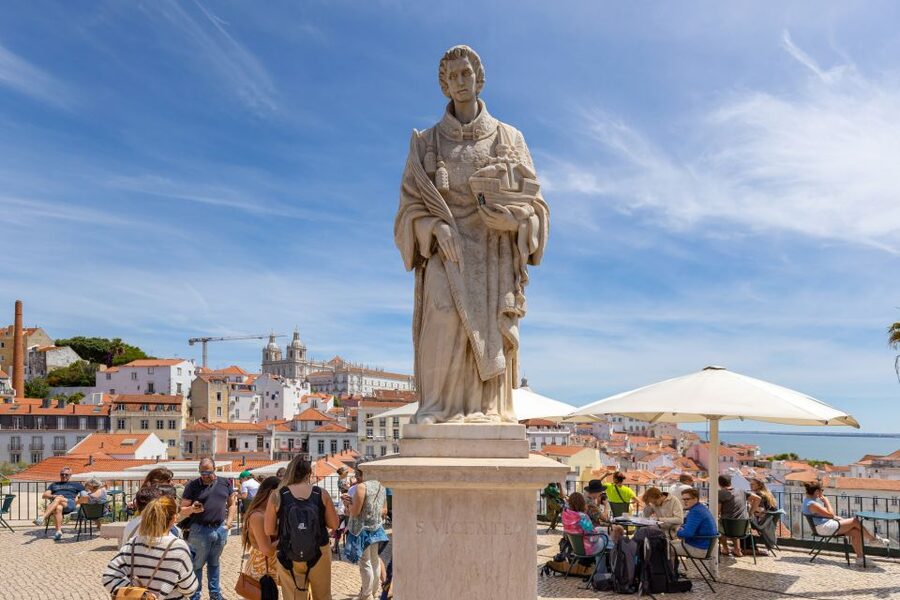
At Portas do Sol, the city opens out again. You can see the Alfama district running downhill toward the Tagus, along with the Monastery of São Vicente de Fora and the National Pantheon.
This is another place where the guide’s explanation matters. A viewpoint can look beautiful without telling you much, but a guide can identify the major buildings and explain how the oldest parts of Lisbon fit together. Ricardo, Helena, Lucia, and other guides have been praised for answering questions and adding recommendations for the rest of a stay.
Portas do Sol is also a useful orientation point. From here, you can see why Alfama feels like a separate world from Baixa. The streets below are narrow and irregular, shaped by centuries of construction rather than by the straight lines of the post-earthquake center.
Alfama delivers the most atmospheric walking
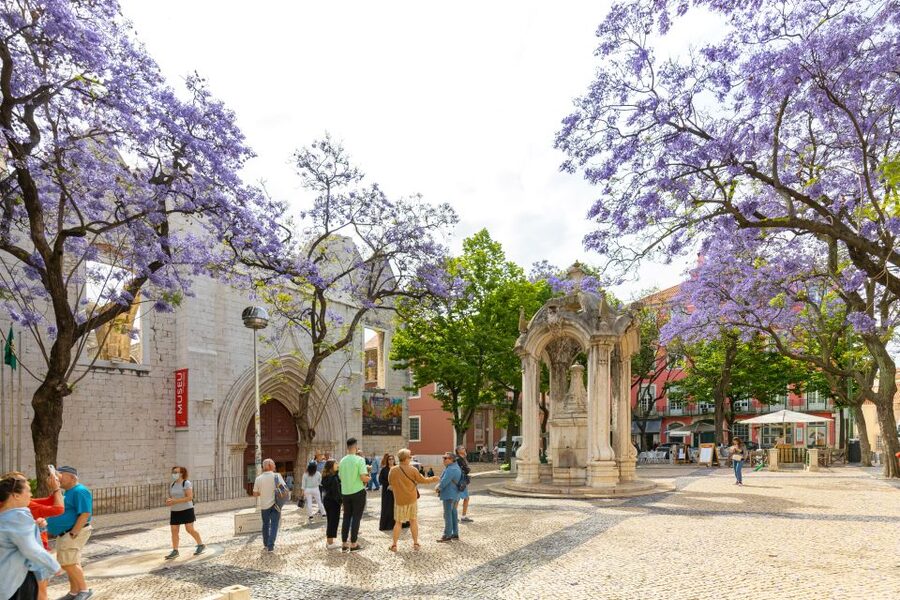
Alfama is the oldest and one of the most picturesque neighborhoods on the route. Its lanes run in a maze toward the river, with stairways, tight corners, and old buildings close together.
The area is known for fado houses and festivals honoring Lisbon’s popular saints, especially St. Anthony. The guide can explain how these traditions fit into neighborhood life, giving you more than a quick photograph of a tiled wall or a narrow alley.
This is likely the most physically demanding section. Alfama includes hills and steps, although the pace is not described as a race. There are frequent stops and photo opportunities, and Beatrice in particular has been praised for adjusting to older members of the group without sacrificing the rest of the route.
You should still wear shoes with a firm sole. Lisbon’s smooth stone streets can be tiring, and the combination of slopes and uneven surfaces is more important than the official three-hour duration suggests. If you have limited mobility, ask about the specific route and meeting point before booking, since options may vary.
Lisbon Cathedral ends the walk with layered history
The tour finishes at Lisbon Cathedral, built in 1150, only three years after the city was taken back from the Moors. The building has changed over time, so it combines several architectural styles rather than presenting one perfectly unified design.
That makes it a fitting final stop. By this point, you have seen traces of Moorish Lisbon, Catholic Portugal, the earthquake, the rebuilding of Baixa, and the political change of 1974. The cathedral gathers several centuries into one place.
Ending here also leaves you in a useful part of the city for further exploring. The tour does not include hotel pickup or drop-off, so you should be ready to continue on your own from the cathedral or arrange your next stop in advance.
The guides are the main reason to choose this walk
The tour’s strongest feature is the human delivery. Paulo is praised for personal stories and humor. Ricardo receives repeated praise for his explanations, patience, and recommendations. Beatrice is described as warm, energetic, and attentive to different walking abilities. Anna, João, Lucia, Helena, and others are also praised for making history easy to follow.
That consistency matters because a three-hour city walk can become tiring if it turns into a lecture. The best guides keep the group moving, answer questions, and add local observations without losing the main thread.
You may not get the same guide every time, and that means the experience will have a slightly different tone. Still, the guide roster has a strong record for friendliness and clear presentation. If you care about language, tours are available in Portuguese, Spanish, Italian, German, French, and English.
Who should book it, and who should think twice?
I would choose this tour if you are visiting Lisbon for the first time, want a quick orientation, or enjoy learning how a city’s past shaped its streets. It suits solo visitors, couples, and small groups, and the coffee stop and tram ride keep the experience from feeling like three straight hours of walking.
It is also a good choice if you want both major sights and neighborhood atmosphere. You see famous places such as Santa Justa and Lisbon Cathedral, but you also walk through Bairro Alto and Alfama, where the city’s daily character is easier to feel.
I would think twice if you want an in-depth visit inside every monument, a slow photography tour, or a fully flat route. The itinerary covers a lot of ground, and the tour may run beyond three hours. Keep a little extra time afterward, especially if you have dinner reservations or another timed activity.
At $29, the value is strong. The tram fare, coffee, pastry, guide, and broad coverage make it a sensible way to spend the first morning or afternoon of a Lisbon stay. You should book it if you want a well-paced introduction with real historical context and local color. Skip it only if steep streets are a serious problem or you prefer exploring entirely at your own speed.
FAQ
How long does the Lisbon History, Stories and Lifestyle Walking Tour last?
The tour lasts three hours, although you should allow extra time because the walk may run over.
What is included in the price?
The price includes a live guide, the walking tour, a tram trip, coffee, and cake.
Is hotel pickup included?
No. Hotel pickup and drop-off are not included, and the meeting point can vary depending on the option you book.
Which languages are available?
The tour is available in Portuguese, Spanish, Italian, German, French, and English.
Does the tour include a private option?
Yes. Private and small-group options are available.
Can I cancel for a full refund?
Yes. You can cancel up to 24 hours in advance for a full refund. You can also reserve your place and pay later, depending on the booking option.
Just added around Lisbon
- Lisbon: Historical Walking Tour with Jeronimos Monastery★ 4.5 · 71 reviews
- Lisbon Sunset Sailing – Small Group (max 10) Wine & History★ 4.8 · 41 reviews
- Queer Lisbon History Tour: scene/history★ 4.9 · 20 reviews
- Lisbon: Private Historic Tour by Eco Tuk Tuk★ 5.0 · 78 reviews
- Lisbon: Private Guided Tour of Historical Center by Tuk Tuk★ 4.7 · 67 reviews
- Lisbon: Sunset Sailing with Portuguese Wine and History★ 5.0 · 270 reviews
- Lisbon with Tukxi: Historical Secrets by Tuk-Tuk★ 4.8 · 96 reviews
- Lisbon in One Day: Full-Day Minivan Historic Tour★ 4.5 · 32 reviews
History Walking Tours, compared.
History and Hauntings of Salem Guided Walking Tour
Read our review →
Freedom Trail History Small Group Walking Tour
Read our review →
Historic Charleston Guided Sightseeing Walking Tour
Read our review →
Tapas Walking Tour with Food, Wine, and History
Read our review →
Savannah History and Haunts Candlelit Ghost Walking Tour
Read our review →
A History of Terror – Belfast City Centre Walking Tour
Read our review →
New Orleans Garden District History Walking Tour
Read our review →Browse the lists this tour appears in