
Review · ILE-DE-FRANCE
Historic Paris Walking Tour in English
Paris makes sense on foot. This 150-minute English walking tour links the Louvre, Notre-Dame, Pont des Arts, and Tuileries Gardens into one useful first look at the city. I like the clear historical sweep, from the Parisii and Roman rule through the Revolution and Napoleon, and I like that the tour connects famous buildings with stories about art, politics, religion, and daily life. The main consideration is that two and a half hours on city streets can feel brisk, especially if you want long visits inside monuments.
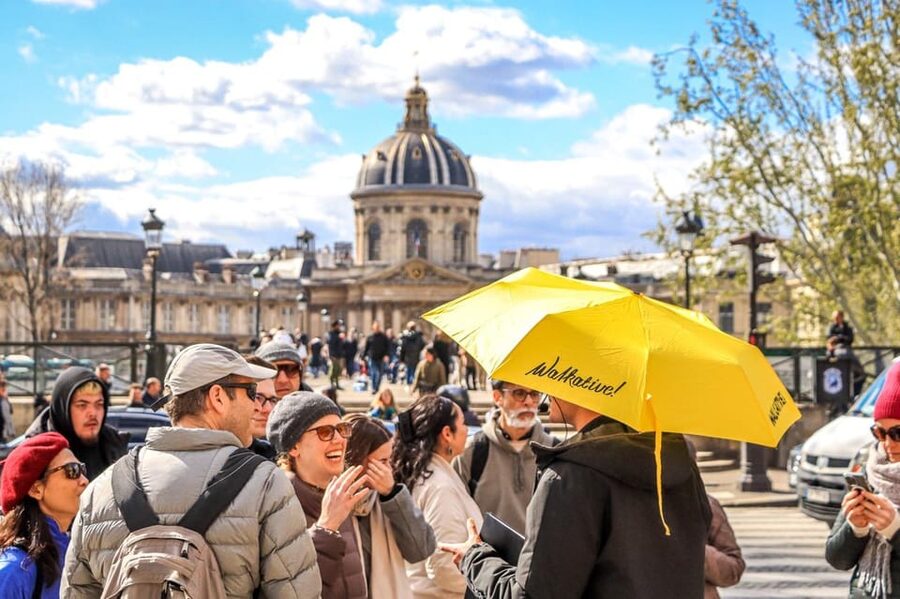
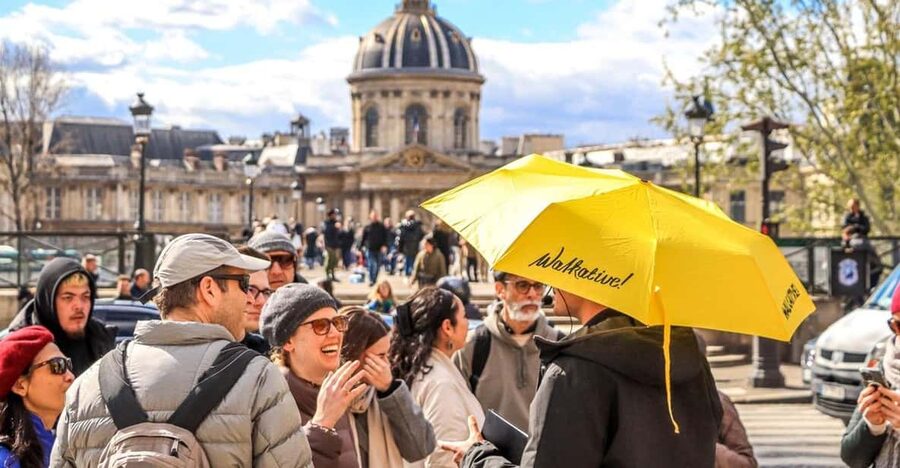
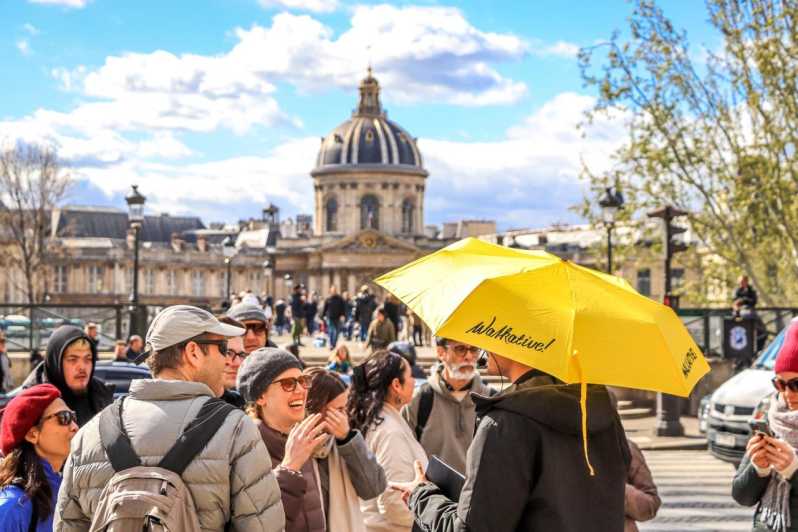
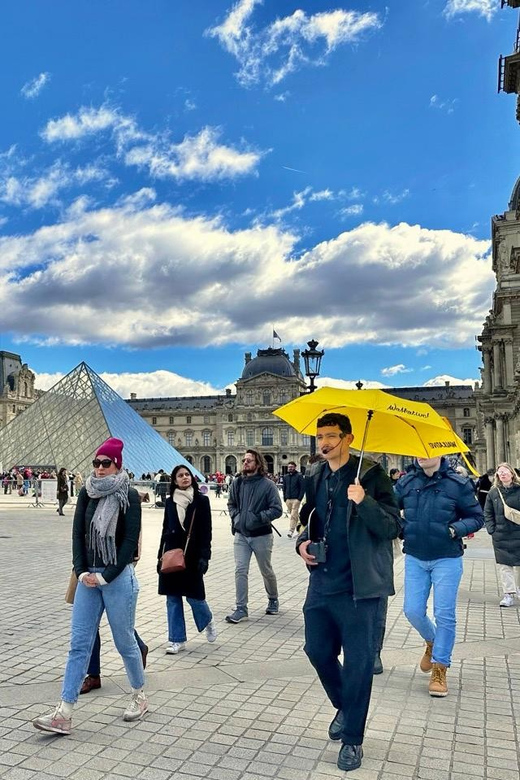
The Hotel de Ville meeting point is practical, and the yellow umbrella should make the group easy to find outside Metro exit 5. Guides including Thomas, Harry, Tom, Yazid, Francesca, and Gurvan, also called Jay, have earned especially warm praise for clear storytelling, humor, and the ability to include both serious history fans and people with only a passing interest.
Key points at a glance
- A strong first-day route: You move through central Paris landmarks without spending the whole day inside one museum.
- History with a wide time span: The story runs from the Gallic Parisii and Roman Paris to the Revolution, Napoleon, Haussmann, and the modern city.
- Major sights from the outside: Expect discussion and views of the Louvre, Notre-Dame, Sainte-Chapelle, the Eiffel Tower, bridges, boulevards, and Tuileries Gardens, not a museum admission tour.
- Guides are the main attraction: Thomas, Harry, Tom, Yazid, Francesca, and Jay are praised for warmth, humor, art history, and strong storytelling.
- Good value at $31: The price covers the reservation fee and guide payment for a 150-minute live tour.
- Simple but important preparation: Arrive 10 minutes early, wear comfortable shoes, and bring protection from rain or sun.
Why this walk works as a Paris introduction
Paris can be hard to read at first. A grand boulevard may hide a medieval church, a quiet square may have been the scene of political violence, and a famous museum may have begun life as a royal fortress or palace. This route gives you a framework before you tackle the city on your own.
I like the way the tour treats Paris as more than a collection of pretty facades. You hear how the city grew around the Seine, how it became a political and religious center, and how wars, poverty, religion, science, art, and rebellion changed its shape.
The tour also gives you the useful big picture. Paris began on marshy land around the river, where the Parisii lived. Roman power followed, then the city became the capital of the Franks in the sixth century. By the medieval period, it had grown into one of Europe’s largest cities, with a population of about 200,000 and the influential Sorbonne helping shape intellectual life.
That long view matters. When you later see a royal palace, a Gothic church, or a broad nineteenth-century avenue, you will have a better sense of why it is there and what problem it was meant to solve.
More History Walking Tours in France
- Paris: Dark History and Ghostly Guided Walking Tour
★ 4.7 · 1,000 reviews - Vieux Lyon Cultural & Historical Walking Guided Tour (English)
★ 5.0 · 942 reviews - Strasbourg: Guided Historical Neighborhoods Walking Tour
★ 4.9 · 275 reviews
Starting at Hotel de Ville and the Seine
Your meeting point is Hotel de Ville, outside the metro at exit 5. Look for the yellow umbrella and arrive about 10 minutes before the start.
This is a fitting place to begin because the area puts you close to the Seine, the historic center, and the political life of Paris. From here, the guide can set up the basic story of how the river shaped settlement, trade, defense, and movement through the city.
The first part of the walk is likely to feel more like orientation than sightseeing. That is useful. You begin learning how the central districts fit together instead of rushing straight toward a single monument.
The route is also well placed for a first day in Paris. A solo visitor can quickly gain confidence with the central streets, while couples and families get a shared map in their heads before setting off for museums, churches, or food markets.
Notre-Dame and the medieval heart
Notre-Dame Cathedral is one of the key stops, and it gives the tour a strong medieval anchor. The cathedral represents the religious power of Paris, but its importance goes beyond architecture. It belongs to the period when Paris was becoming France’s political, economic, and cultural center.
Your guide is expected to explain the cathedral’s place in the city rather than simply point out its towers. The broader story includes medieval Paris, the growth of the university, and the role of churches in public life.
The tour also includes Sainte-Chapelle. Its mention alongside Notre-Dame adds another layer to the medieval story, especially the connection between faith, royal power, and art. You should think of these stops as guided outdoor interpretation rather than a dedicated church visit.
That distinction matters. If you want to study stained glass, attend a service, or spend time inside either church, plan a separate visit. The walking tour gives you context and views, but 150 minutes does not allow for long interior visits at every major sight.
Pont des Arts and the Seine views
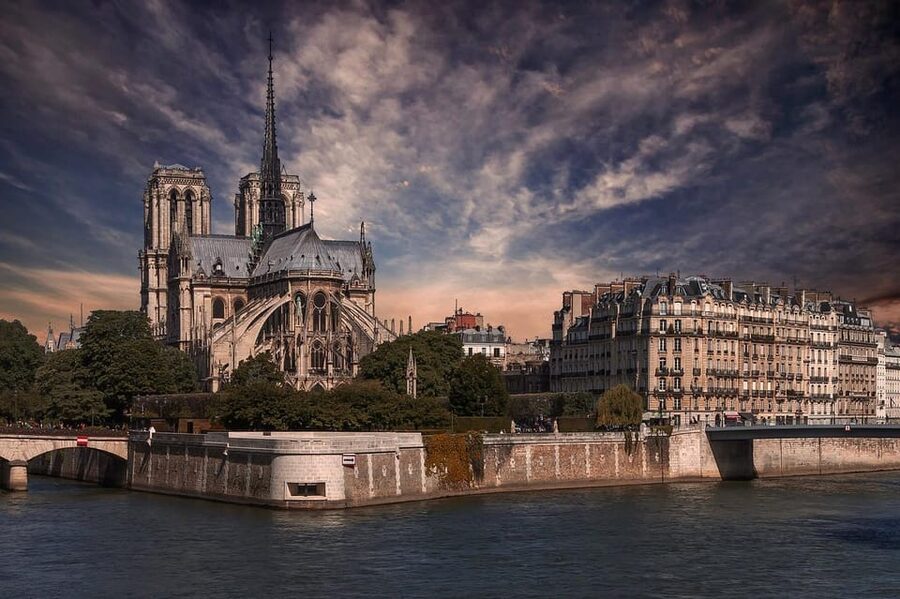
Pont des Arts brings the walk back to the river and to one of Paris’s most recognizable bridges. The crossing is valuable not only for photographs but also for understanding how the Seine ties together the historic center, the Louvre, and the Left Bank.
From the bridge, your guide can help you read the city’s arrangement. Paris is often most understandable when you stop looking at individual buildings and notice how water, bridges, gardens, palaces, and avenues relate to one another.
This is also a natural place for stories about art and romance. The tour promises tales of love, desire, and revenge, along with the city’s long connection to painters, writers, rulers, and ambitious ordinary people.
The bridge can be busy, and stopping as a group may require attention to foot traffic. That is a practical reason to stay close to the guide and avoid treating each stop as a long photo break.
More History Walking Tours in Paris
- Paris City of Fashion History Private Guided Walking Tour
★ 5.0 · 221 reviews - Paris City Center w/ Notre Dame interior | Exclusive Walking Tour
★ 5.0 · 190 reviews - Paris: Le Marais & Montmartre Jewish History Walking Tour
★ 4.8 · 170 reviews
The Louvre as palace, museum, and symbol
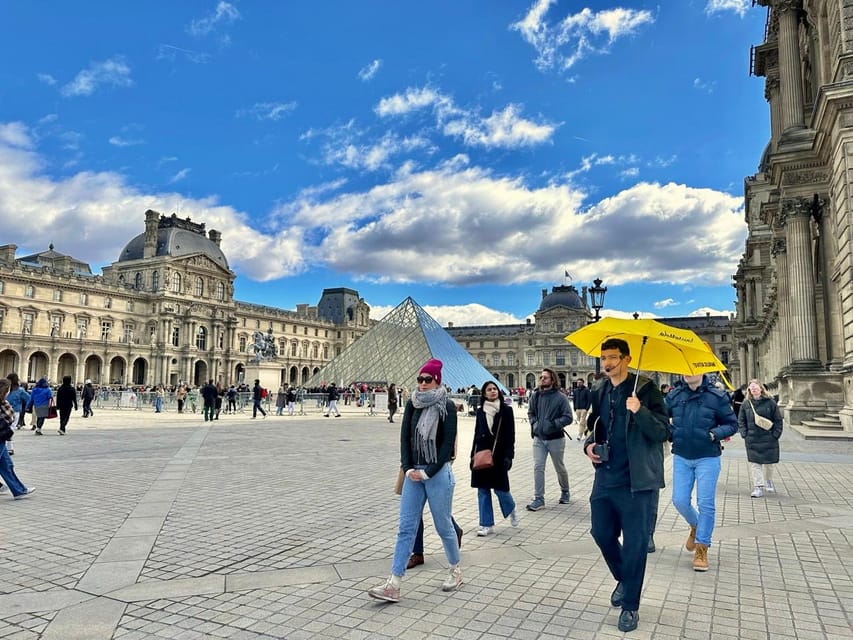
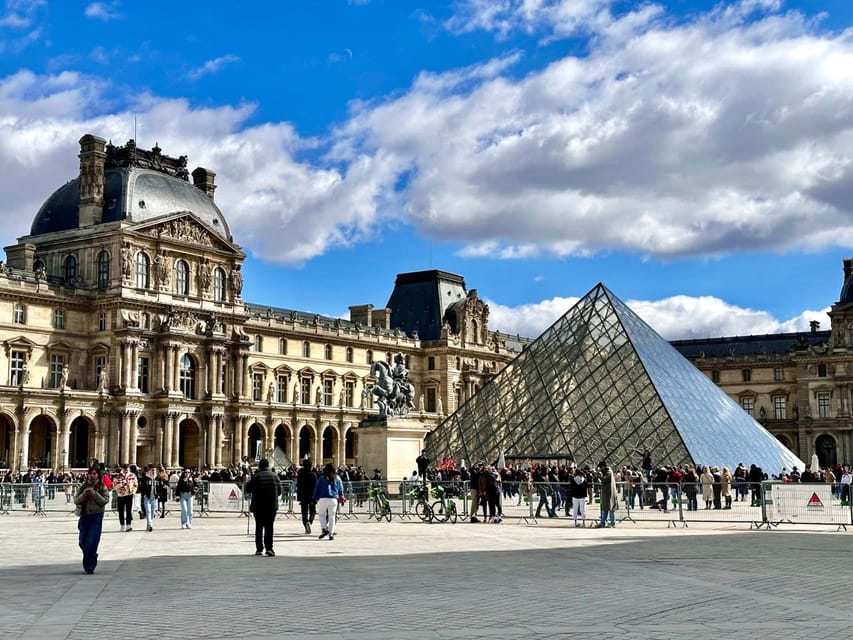
The Louvre is one of the tour’s central subjects. The useful point here is that the Louvre was not built simply to house the world’s most famous paintings. It began as a fortress and later developed into a royal palace before becoming a museum.
That change reflects the wider story of France. A building tied to royal authority was eventually opened to the public as part of a new political and cultural order. The guide can connect the Louvre to the Revolution, the monarchy, Napoleon, and the role of art in national identity.
The Mona Lisa story should add some fun to the stop. The tour includes the famous theft, often described as one of the boldest art thefts in history. You will not be entering the museum or viewing the painting during this walk, but knowing the story can make a later Louvre visit more enjoyable.
I especially value this kind of explanation because the Louvre can overwhelm first-time visitors. Even before you enter, you get a sense of why the building grew so large and why its collections carry such political weight.
If you plan to visit the museum afterward, do not assume the walking tour ticket provides admission or a reserved entry time. It does not. Treat the Louvre portion as an exterior stop and historical briefing.
Tuileries Gardens and the royal view
The Tuileries Gardens provide a welcome change of pace. After streets, bridges, and monumental buildings, the gardens let you see how Paris uses open space to frame power and beauty.
The gardens are tied to the Louvre and the old royal world, but they also show how grand urban planning shaped the city. The long views help explain the visual connection between palace, garden, avenue, and monument.
This is one of the better stops for taking in Paris without a lecture crowding every minute. You can look along the formal paths, notice the scale of the city, and connect the garden to the elegant boulevards that came later.
The tour’s food advice also fits naturally here. Paris is a city where fromage, baguette, and wine can turn a simple garden break into part of the day’s pleasure. The tour does not provide a picnic or food tasting, but the guide’s city orientation can help you decide how to spend the hours afterward.
From revolution to Napoleon
The historical narrative moves beyond kings and churches into the Revolution and Napoleon. This is where the tour sounds especially useful for people who want more than dates.
Paris was shaped by extreme poverty and inequality, which helped fuel the overthrow of the royal regime. The execution of the monarchs and the rise of Napoleon changed France and much of Europe. Stories about Napoleon give the guide a way to connect military ambition, state power, monuments, and Parisian identity.
The tour also promises stories about Hitler and the city. That suggests the narrative reaches into the twentieth century rather than stopping with the Revolution. You should expect selected stories that bring major events down to street level, not a full course in French history.
The best guides make this material accessible. Thomas was praised for combining military and art history with humor. Harry was singled out as a strong storyteller who could make the past feel close. Tom was described as informative and attentive to questions, while Yazid was praised for his enthusiasm about art, buildings, and culture.
Haussmann, boulevards, and the Eiffel Tower
Paris’s nineteenth-century boulevards are another important part of the story. The broad avenues, parks, sewers, and aqueducts were part of a major rebuilding program associated with Baron Haussmann.
The practical reason for the wide streets was not only beauty or sanitation. Paris had a long tradition of rebellion and street barricades. A redesigned city could move people, water, and troops more efficiently, while also making barricade building harder.
That is the kind of detail that makes the architecture easier to understand. You are not just looking at a broad avenue. You are seeing the result of public health plans, political control, modern transport, and a desire to present Paris as a grand capital.
The Eiffel Tower is included in the promised sights, although the tour is not an Eiffel Tower entry experience. Its story adds a nice reminder that Parisians have not always loved the monuments now associated with their city. Built for the 1889 Universal Exposition, the tower faced strong criticism before becoming a national symbol.
You should expect a view or discussion of the tower as part of the wider route, not time to go up it. If the Eiffel Tower is a priority, reserve a separate visit.
The guide style and group experience
The strongest feature of this walk is the guide. The rating is 4.9 from 78 reviews, and the praise is unusually consistent around storytelling, humor, enthusiasm, and personal attention.
That does not mean every guide has the same style. One may be dramatic and emphatic, another relaxed and conversational, and another focused more closely on art history. Tank was praised for humor and theatrical energy, while Victoria received praise for making a solo participant feel included during a different evening experience connected with the same company. For this historic walk, the named guides most often praised include Thomas, Harry, Tom, Yazid, Francesca, Jay, and Toto.
Several useful patterns emerge. The walk works for first-time visitors, solo visitors, history fans, and people traveling with someone less interested in kings, wars, and revolutions. One guide used illustrations to support the explanation, which can help when a building or event is difficult to picture from the street.
The pace appears manageable rather than strenuous. One person described it as good exercise without being hard work. Still, you are walking for 150 minutes, so comfortable shoes matter. Paris pavement, weather, and pauses at busy sights can affect how tiring the route feels.
Is $31 a fair price?
At $31 per person, this is a reasonable price for a live, English-language introduction lasting two and a half hours. You are paying for a guide’s preparation, a structured narrative, and the ability to ask questions as the route unfolds.
The value is strongest if you are new to Paris. A good orientation can save time later because you will recognize the relationships between the Louvre, the Seine, Notre-Dame, the gardens, and central boulevards.
The price does not include hotel pickup, museum admission, food, or a separate Eiffel Tower visit. You should budget for those independently if they matter to your plan.
The booking information says this is part of a general pay-as-you-wish tour format, while the $31 amount covers the reservation fee and the guide’s payment. In practical terms, read the price as the amount required to reserve this experience and support the guide, not as a museum or attraction ticket.
Free cancellation is available up to 24 hours before the start, and you can reserve now and pay later. Those terms are useful if your Paris schedule is still shifting.
Who should book this Paris walk?
I would choose this tour for a first or second day in Paris, especially if you want a clear introduction before visiting the Louvre or Notre-Dame on your own.
It suits:
- Solo visitors who want an easy way to learn the central city
- Couples who enjoy architecture, art, food, and political stories
- Families with older children who can manage a 150-minute walk
- History fans who want a broad narrative rather than one narrow subject
- Visitors who prefer a guide with humor and conversation instead of a formal lecture
It may be less suitable if you want long interior visits, a small private tour, or a slow photography walk. The route covers many major subjects, so the experience favors breadth and storytelling over detailed examination of one monument.
Practical advice before you go
Arrive 10 minutes early at Hotel de Ville, outside Metro exit 5, and look for the yellow umbrella. Check the start time when booking because several departure times may be available.
Wear shoes you can walk in for two and a half hours. Bring water and dress for the weather, since this is an outdoor walking experience with stops in open streets, bridges, and gardens.
Keep your expectations clear. You will see and discuss major sights, including the Louvre, Notre-Dame, Sainte-Chapelle, Pont des Arts, Tuileries Gardens, elegant boulevards, bridges, and the Eiffel Tower. You will not receive hotel pickup, museum entry, or a guided interior tour of every monument.
Should you book it?
Yes, if you want a lively historical map of central Paris for $31. The combination of the Louvre, Notre-Dame, Pont des Arts, Tuileries Gardens, and broad city history gives you plenty to work with for the rest of your stay.
I would book it early in your visit rather than on your final day. The strongest benefit is orientation, and guides such as Thomas, Harry, Tom, Yazid, Francesca, Jay, and Toto seem to bring the subject to life with warmth and humor. Choose something else only if your priority is entering attractions, taking a slow walk, or receiving a private itinerary built around your own interests.
FAQ
How long is the Historic Paris Walking Tour?
The tour lasts 150 minutes, or two and a half hours.
What language is the tour conducted in?
The live tour guide speaks English.
Where does the tour meet?
The meeting point is at Hotel de Ville, outside the metro at exit 5. Look for a yellow umbrella.
How early should I arrive?
You should arrive 10 minutes before the activity starts.
Does the tour include hotel pickup and drop-off?
No. Hotel pickup and drop-off are not included.
Does the tour include entry to the Louvre or other monuments?
The provided details describe seeing and learning about the Louvre, Notre-Dame, Sainte-Chapelle, the Eiffel Tower, bridges, boulevards, and Tuileries Gardens. They do not include admission tickets or promise interior visits.
Can I cancel the booking?
Yes. You can cancel up to 24 hours in advance for a full refund. You can also reserve now and pay later.
Just added around France
- Mont Saint Michel: Village History and Legends Walking Tour★ 4.8 · 96 reviews
- Lyon: Music History Tour with Wine Tasting★ 4.9 · 34 reviews
- Lyon: Kheops VR Experience – Immersion in Ancient Egypt★ 4.7 · 26 reviews
- Historical and naughty tour of Lyon in french★ 4.5 · 49 reviews
- Historic Center of Dijon : Discovery Tasting Wine Burgundy★ 4.5 · 40 reviews
- Group Visit to Mont Saint-Michel: A Shared Historic Journey★ 4.4 · 31 reviews
- From Avigno: Full-Day Roman Sites and Historical Places Tour★ 4.7 · 28 reviews
- Explore the Marais: History, Art & Local Culture★ 4.6 · 105 reviews
History Walking Tours, compared.

History and Hauntings of Salem Guided Walking Tour
Read our review →
Freedom Trail History Small Group Walking Tour
Read our review →
Historic Charleston Guided Sightseeing Walking Tour
Read our review →
Tapas Walking Tour with Food, Wine, and History
Read our review →
Savannah History and Haunts Candlelit Ghost Walking Tour
Read our review →
A History of Terror – Belfast City Centre Walking Tour
Read our review →Browse the lists this tour appears in