
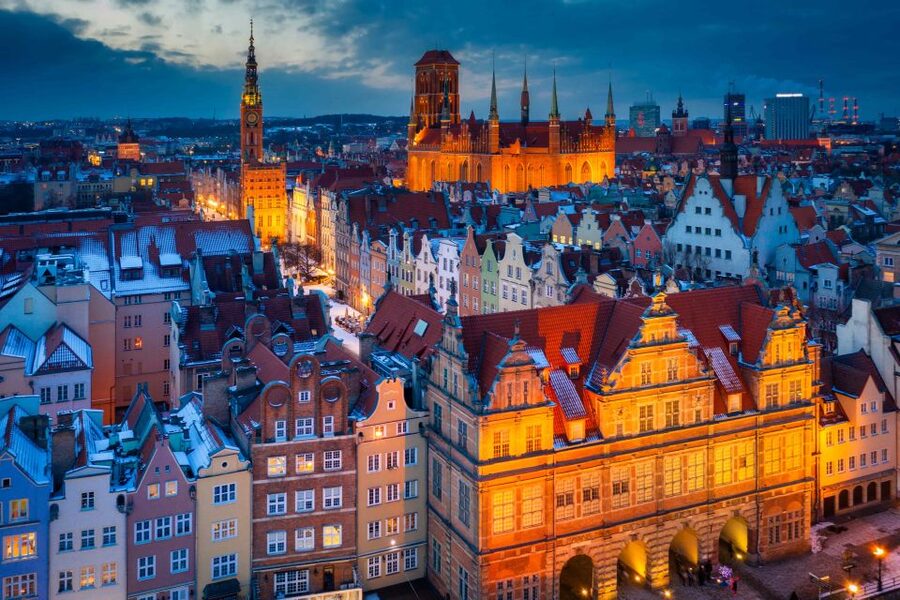
Review · POMERANIA PROVINCE
Gdańsk City Sights & History Guided Walking Tour in English
Gdańsk tells big stories in small streets. This 150-minute English walking tour links the city’s handsome rebuilt center with the harder chapters of WWII, communism, and the Solidarity movement. I like the clear route from the Golden Gate through Long Market to the river, and I like that the guides add humor and local recommendations instead of simply reciting dates. The main drawback is that this is a general walking tour, so group size can vary and some stops may feel crowded.
At $26 per person, the tour offers strong value if you are new to Gdańsk and want a useful first look before exploring on your own. It runs in rain or shine, and winter conditions can be severe. Bring warm, weather-ready clothing, and expect a fair amount of standing outdoors.
Key points to know before you book
- The route follows Gdańsk’s royal way: You walk along the historic path used for centuries by Polish kings.
- The story covers more than pretty buildings: WWII, the destruction and rebuilding of the city, and the Solidarity movement all receive serious attention.
- The Golden Gate is the meeting point: Look for the yellow umbrella at Złota Brama.
- The guides are the main strength: Names praised in recent feedback include Tufi, Kate, Sandra, Marcin, Philip, Paul, and Katie.
- The tour works in bad weather: Guides have used indoor pauses and coffee breaks during very cold days, but you still need suitable clothing.
- It is accessible and English-language: Hotel pickup is not included, and the tour joins the wider general walking group.
Starting at the Golden Gate
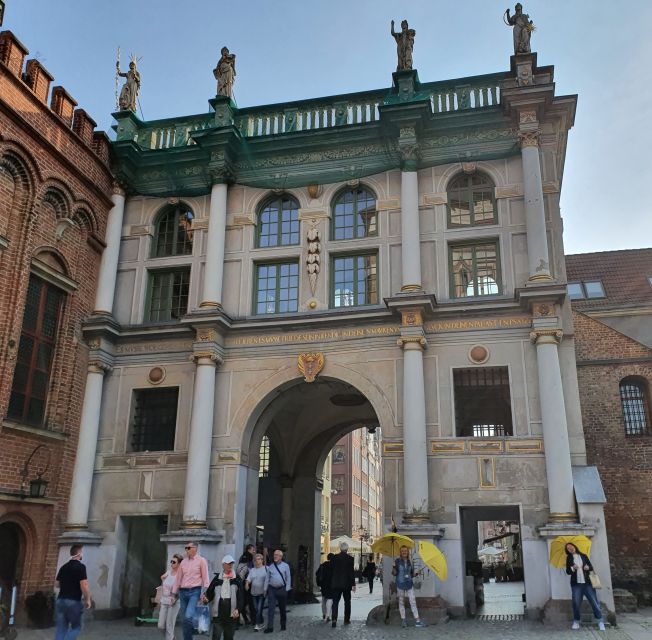
The tour begins at the Golden Gate, or Złota Brama, one of the clearest landmarks in central Gdańsk. Look for the yellow umbrella. The meeting instructions are simple, though one person found it unclear which side of the gate to use, so arrive with a few spare minutes.
This is a smart starting point because the gate leads directly into the historic center. You do not waste time on a bus transfer or a long introduction in a distant neighborhood. From here, your guide can explain how Gdańsk grew as a trading city and why its identity has never been entirely simple.
The city’s character comes from several influences, including Polish, Dutch, and German traditions. That mix appears in the architecture, the language of its past, and the political struggles that shaped the city. The guide’s job is to connect those pieces, so you understand more than just what a building looks like.
Guides are consistently praised for clear English, humor, and strong command of local events. Tufi is described as energetic and especially good at making difficult periods easy to follow. Kate receives high marks for her storytelling and clarity, while Sandra is praised for placing Gdańsk’s past in a wider context. The exact guide depends on the day, but the overall standard appears high.
More History Walking Tours in Poland:
- Warsaw: Jewish History Guided Walking Tour in English
★ 4.7 · 324 reviews - Best of Wroclaw 3-Hour History and Culture Walking Tour
★ 4.9 · 49 reviews - History and Hauntings of Salem Guided Walking Tour
★ 5.0 · 14,564 reviews
Rebuilt merchant houses along the Royal Route
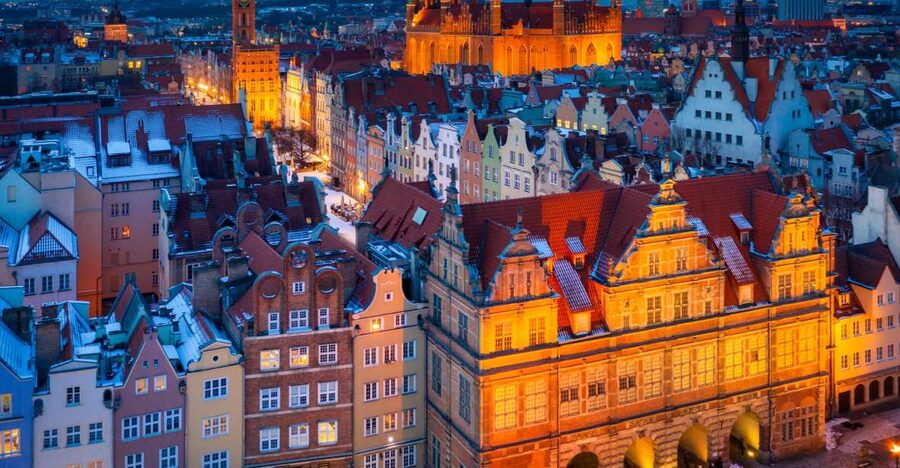
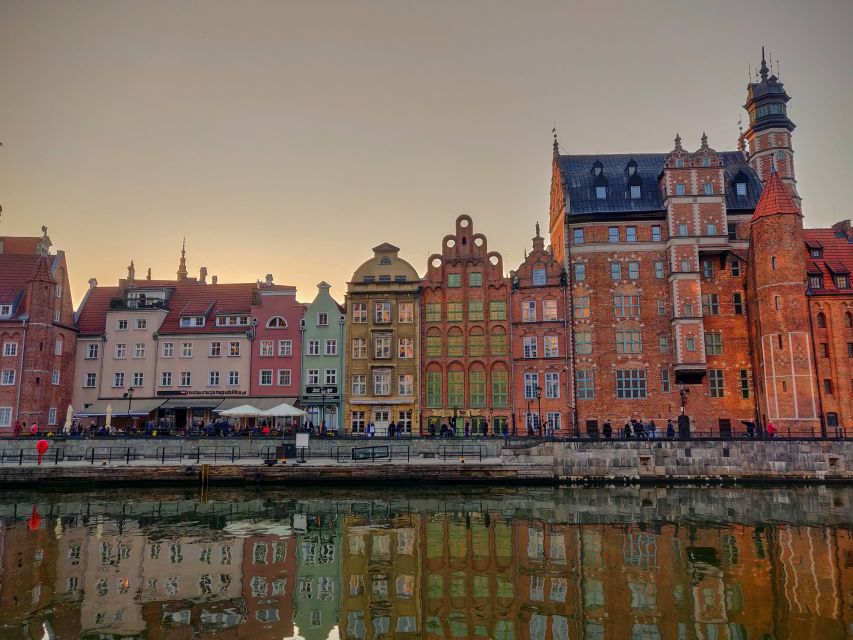
From the Golden Gate, you walk among the colorful merchant townhouses of the central streets. Their decorative fronts make Gdańsk look old and untouched, but the truth is more complicated. Much of the city was destroyed during WWII and later rebuilt with great care.
That fact changes how you read the streets. The facades are not simply survivors from the Middle Ages. They are part of a large reconstruction effort that restored the historic appearance of the center while giving the city a new postwar life.
Your guide explains how merchants helped make Gdańsk one of the wealthiest ports on the Baltic Sea. This is where the tour moves beyond architecture. The houses were connected to trade, status, foreign contacts, and the city’s long-running tension between local interests and larger political powers.
I especially like this part for first-time visitors because it gives the buildings a purpose. You are not just stopping to photograph a pretty row of townhouses. You are learning why the city looked this way, who benefited from its port, and why Gdańsk repeatedly pushed for greater control over its own affairs.
The route can be busy, especially when several groups gather in the same narrow area. A large group also makes it harder to hear at certain points. Stay close to the guide and keep the yellow umbrella in view.
Long Market and the Neptune Fountain
Long Market is the visual center of the walking route. Its grand facades and open stretch make it one of the easiest places in Gdańsk to appreciate the city’s former wealth.
The Neptune Fountain is the obvious stop. It is a symbol of the city and a natural place for photographs, but the guide gives it more meaning by placing it within Gdańsk’s merchant culture and maritime identity. You will likely have time to look around and take pictures, although the area can be busy.
The value here is not just the fountain itself. Long Market helps you see how civic pride was displayed in stone, paint, and sculpture. The surrounding buildings tell you that Gdańsk wanted to present itself as a serious European trading center, not merely a harbor town.
This is also a good point to ask questions. The strongest guides do not rush through a fixed script. They respond to the group and add personal stories or local details. Several guides have been praised for answering questions fully and offering suggestions for places to eat or visit after the walk.
St. Mary’s Basilica and the famous clock
St. Mary’s Basilica is one of the tour’s major sights. Its brick Gothic construction gives it a powerful, plain presence, and it is described as the largest brick Gothic church in the world.
The tour focuses on the exterior and the role of the church in Gdańsk’s identity. You should not assume that an extended interior visit is included, since the experience is a guided walking tour rather than a dedicated church tour.
Timing can add a memorable detail. One guide arranged the route so the group could see the figures move on the church clock at noon. Another guide timed the stop for the clock to strike twelve. This is a small touch, but it shows how a good guide can turn a standard sight into a moment you remember.
The basilica is also a useful pause in the historical story. Gdańsk’s past is not only about merchants and political conflict. Religious buildings show the city’s wealth, craftsmanship, and place in the wider Baltic world.
More Guided Tours in Poland:
- Small-Group Historical Guided Tour of Warsaw with pick up/drop off. Public Tour.
★ 4.5 · 343 reviews - Edinburgh: Edinburgh Castle Guided History Tour with Tickets
★ 4.8 · 9,933 reviews - Historic Charleston Guided Sightseeing Walking Tour
★ 5.0 · 6,216 reviews - Rome: Colosseum with Arena, Roman Forum and Palatine Guided Tour
★ 4.0 · 5,598 reviews
Żuraw crane beside the harbor
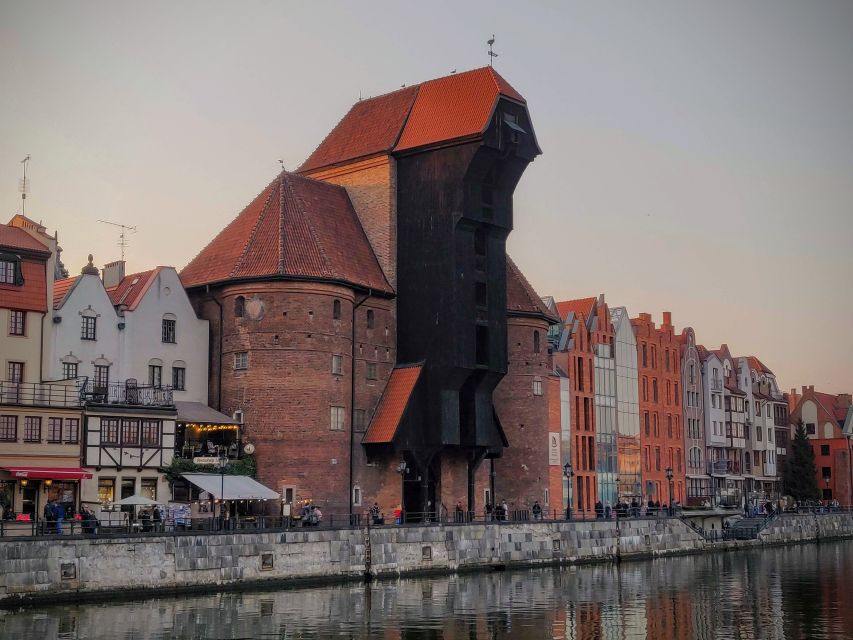
At the waterfront, the tour reaches Żuraw, the medieval treadwheel crane. It is one of Gdańsk’s best-known symbols and is described as the largest of its kind in the world.
The crane makes the port’s working past easy to picture. Rather than hearing only that Gdańsk was a major trading center, you see the kind of machinery that helped load and unload goods. The rivers and canals around the route reinforce the point: water shaped the city’s economy and its daily life.
This is one of the strongest stops for visitors who want practical historical context. A decorative townhouse shows wealth. Żuraw shows how that wealth moved through the port.
The waterfront may feel more exposed than the streets around Long Market. In cold weather, wind can make the walk uncomfortable. Several guides have handled this well by adjusting the pace or offering a coffee and bathroom pause. Still, the tour takes place outdoors in all conditions, so warm layers are essential in winter.
WWII and the city’s destruction
Gdańsk’s story takes a darker turn when the guide explains how WWII began in the city. This is not treated as a minor footnote. It helps explain why the city center looks historic while also being largely reconstructed.
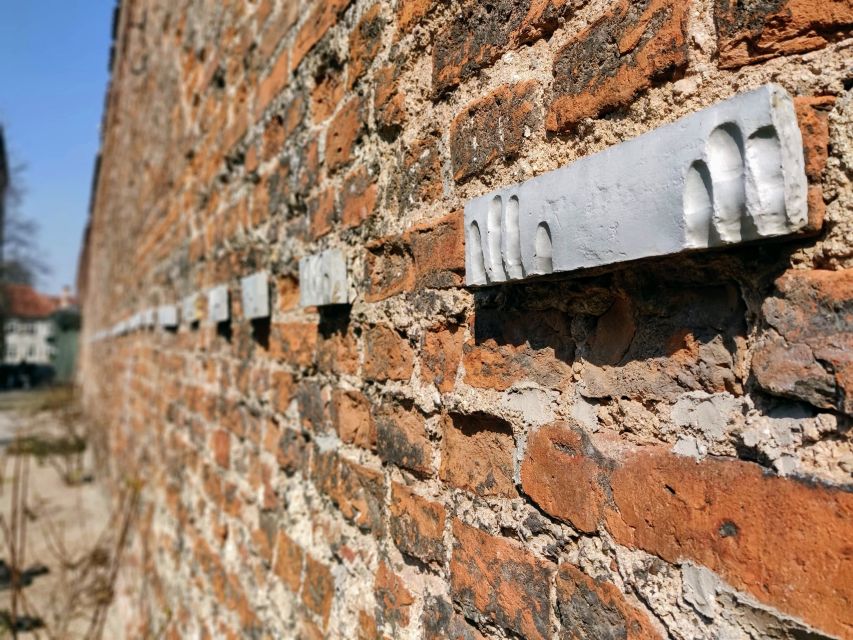
The tour connects the wartime story with the damaged buildings and the painstaking rebuilding that followed. That approach gives you a better sense of what you are seeing. You learn to look for the difference between old fabric, restored architecture, and carefully recreated historic form.
One particularly praised guide was able to explain the battles and struggles of Gdańsk through clear stories rather than a list of dates. The fighting around the post office was singled out as especially powerful. The exact amount of detail depends on the guide and the group, but this part of the tour is likely to be more serious than the opening walk through the merchant streets.
If you prefer a purely light sightseeing stroll, the WWII section may feel heavy. I consider that a strength, but it is worth knowing in advance. Gdańsk’s beauty is tied closely to destruction, loss, and the work of rebuilding.
Solidarity and the road out of communism
The final historical thread is the Solidarity movement and its role in the fall of communism across Eastern Europe. This gives the tour a modern political ending rather than leaving you with a city frozen in its medieval past.
The guide explains Gdańsk’s repeated push toward independence and self-rule. That theme connects the medieval trading city with the modern struggle for political change. You come away with a better sense of why Gdańsk carries such importance in Polish national history.
This part is especially useful if you plan to visit other historic sites in the city. The walking tour gives you a basic framework, so later visits to museums or memorials have more meaning. It also shows why local identity remains such an important part of Gdańsk’s public life.
The strongest guides make this section personal without turning it into a political lecture. Tufi, Kate, and Marcin are praised for combining facts with humor and personal stories. That balance helps keep a long history lesson from becoming tiring.
Guide style, pace, and group size
The guide can make or break a city walk, and this experience has a strong record in that area. Guides have been described as funny, warm, passionate, and easy to understand. Some have academic backgrounds, including anthropology, while others bring family stories and personal connections to the city.
The pace is generally relaxed, with time for photographs and questions. Two and a half hours is long enough to cover a lot, but some people may find the amount of history hard to absorb in one sitting. If you prefer a shorter orientation, you might find the tour a little dense.
Group size is the biggest practical variable. This is not automatically a small private tour. It joins the general walking group, and one person found a large group cumbersome at some locations. If you want a quieter experience, you can contact the provider after booking to ask about arranging a smaller private tour.
The tour is wheelchair accessible, but the historic center can still involve crowded streets and outdoor surfaces. The supplied information confirms accessibility, though it does not give detailed route notes about every surface or building entrance.
Price, breaks, and weather planning
At $26, the price is reasonable for a 150-minute guided introduction to Gdańsk. You are paying for a live English-speaking guide, a planned route, and historical interpretation across several major sights. You are not paying for hotel transfers, admission to separate attractions, meals, or a private group.
That makes the tour best value at the start of your stay. You can use the guide’s recommendations to plan the rest of your time, and several guides provide suggestions for restaurants or other places to visit. One person specifically used the tour to get a better sense of where to explore next.
Weather deserves real attention. The walk runs rain or shine. Winter feedback includes snow, strong cold, and wind chills as low as minus 8 Celsius. Guides have responded sensibly, bringing groups indoors for some explanations or stopping for coffee, mulled wine, or a bathroom break.
Bring a warm coat, waterproof footwear, and weather-appropriate clothing. A little loose change can be useful for bathroom stops, since one person advised having coins ready to avoid delays.
The booking terms are flexible: you can cancel up to 24 hours before the tour for a full refund, and you can reserve now and pay later. Those details reduce the risk of booking before your schedule is fixed.
Who should book this Gdańsk walk?
I would choose this tour if you are visiting Gdańsk for the first time, want a strong historical framework, and prefer walking to riding in a vehicle. It suits curious visitors who enjoy architecture but also want to understand WWII and the Solidarity movement.
It is also a good fit for people who appreciate a lively guide. The best moments come from the storytelling, humor, local tips, and answers to questions, not from simply ticking off monuments.
You may want another option if you dislike outdoor walks in poor weather, need a very small group, or want long interior visits at the basilica and other attractions. The tour covers a lot of ground in 150 minutes, so it gives you an orientation rather than an exhaustive study of each building.
Should you book the Gdańsk City Sights and History Tour?
Yes, for most first-time visitors, I would book it early in your stay. The route covers the Golden Gate, Long Market, Neptune Fountain, St. Mary’s Basilica, the Żuraw crane, the rivers and canals, WWII, and Solidarity in one well-priced walk.
Go in expecting a lively general tour, not a private experience. Dress for the forecast, stay near the guide, and be ready for a serious history lesson alongside the pretty streets. If you want a clear introduction to Gdańsk and a guide who can help you understand what you are seeing, this is a strong choice.
FAQ
Where does the tour meet?
The meeting point is the Golden Gate, called Złota Brama in Polish. Look for a yellow umbrella.
How long does the walking tour last?
The tour lasts 150 minutes, or two and a half hours.
What language is the tour in?
The live tour guide speaks English.
What sights does the route include?
The route includes the Golden Gate, merchant townhouses, Long Market, Neptune Fountain, St. Mary’s Basilica, the Żuraw crane, rivers, and canals.
Does the tour discuss WWII?
Yes. The guide explains how WWII began in Gdańsk and discusses the city’s wartime destruction and rebuilding.
Does the tour cover the Solidarity movement?
Yes. The tour explains the Solidarity movement and its connection to the fall of communism in Eastern Europe.
Is hotel pickup included?
No. Hotel pickup and drop-off are not included.
Is the tour wheelchair accessible?
Yes, the activity is listed as wheelchair accessible.
What should I bring?
Bring clothing suitable for the weather. The tour takes place outdoors and runs rain or shine.
Can I book a private tour?
The standard experience joins the general walking tour. If you prefer a smaller private tour, you can contact the provider after booking to ask about arranging one.
Just added around Poland
- Best of Wroclaw 3-Hour History and Culture Walking Tour★ 4.9 · 49 reviews
- Schindler’s List Movie Tour: Historic Sites & Film Location★ 5.0 · 23 reviews
- Krakow: Vistula River Cruise with Historical Views★ 3.5 · 357 reviews
- Krakow: Kościuszko Mound Ticket – History & Views!★ 4.4 · 303 reviews
- Krakow Old Town Segway Tour — 2H of History, Fun & Discovery★ 4.8 · 91 reviews
- Warsaw: Historic Private Tour in Retro Fiat★ 4.9 · 41 reviews
- Small-Group Historical Guided Tour of Warsaw with pick up/drop off. Public Tour.★ 4.5 · 343 reviews
- Warsaw: Jewish History Guided Walking Tour in English★ 4.7 · 324 reviews
History Walking Tours, compared.
History and Hauntings of Salem Guided Walking Tour
Read our review →
Freedom Trail History Small Group Walking Tour
Read our review →
Historic Charleston Guided Sightseeing Walking Tour
Read our review →
Tapas Walking Tour with Food, Wine, and History
Read our review →
Savannah History and Haunts Candlelit Ghost Walking Tour
Read our review →
A History of Terror – Belfast City Centre Walking Tour
Read our review →Browse the lists this tour appears in