
Review · PUNE
Why Pune?: Best Heritage Walk through Old Pune
Pune’s story is written in its streets. This 2.2-kilometre walk links Shaniwar Wada, old temples, political homes, reformist landmarks, and a colonial-era market into one clear story of how a small settlement became a major city. I like the strong historical thread and the chance to see ordinary lanes and working neighborhoods, not just polished monuments. I also like that Dhruva Kalita brings more than 300 heritage walks of experience to the route.
The main drawback is simple: the walk can last up to 3 hours 20 minutes, much of it through dense Old Pune streets, and the Shaniwar Wada admission fee is extra. Still, at $16.84 per person, with snacks included and a maximum group size of 15, this is a good-value introduction to the city.
Key points at a glance
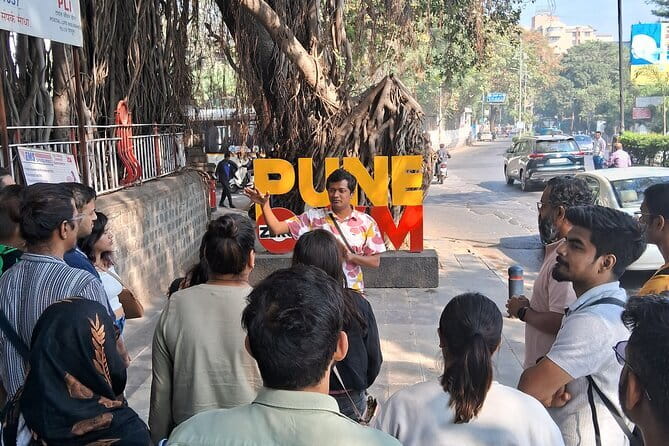
- A 2.2-kilometre route with a clear story: The walk connects Pune’s royal, religious, political, reformist, and commercial past.
- Shaniwar Wada sets the scene: You spend about an hour at the former Peshwa residence, with admission paid separately.
- Small group size: A maximum of 15 people makes it easier to hear Dhruva and ask questions.
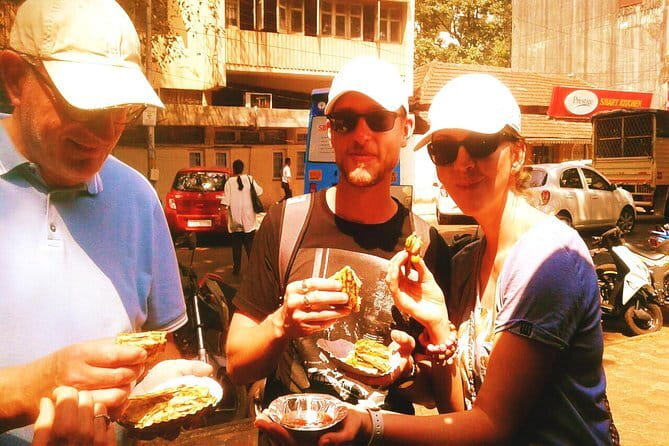
- Local food is part of the experience: Snacks are included, adding a welcome taste of Pune beyond its buildings.
- The walk ends at Mandai: You finish at Mahatma Jyotiba Phule Mandai, about 2 kilometres from the starting point.
- Strong value at $16.84: The price covers the guided walk and snacks, but not meals, transport, or the Shaniwar Wada ticket.
Why Old Pune makes a good walking tour
Pune can seem spread out and modern at first glance. Its older center tells a different story. Here, royal residences, shrines, market streets, historic homes, and signs of social reform sit close together. A walking tour helps you connect those pieces in a way that a taxi ride never can.
The route covers nine key landmarks across the old city, with each stop adding a different part of Pune’s identity. You move from the Peshwa period to the era of Chhatrapati Shivaji Maharaj, then toward religious life, political change, India’s freedom movement, education, social reform, trade, and colonial development.
I like this structure because it avoids treating Pune as a collection of unrelated sights. You are not simply ticking off a palace, a temple, and a market. You are following the city’s changing fortunes from a village setting to a major urban center.
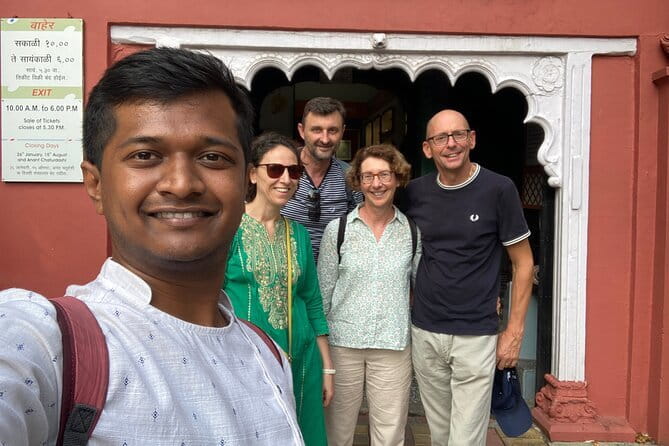
The walk is also a useful choice if you want context before exploring Pune on your own. Dhruva is praised for clear English, warm conversation, humor, and the ability to explain both local and national events. He has also adjusted the walk to suit individual interests and helped one participant with gift shopping after the tour. That suggests a guide who pays attention rather than delivering a fixed speech and sending you on your way.
More History Walking Tours in India
- Fontainhas Heritage Walk by Make It Happen
★ 5.0 · 2,834 reviews - The Great Indian Food Tour: Old Delhi Food and Heritage Walk
★ 5.0 · 1,698 reviews - Old Goa Heritage Walk by Make It Happen
★ 5.0 · 797 reviews
Starting at Shaniwar Wada
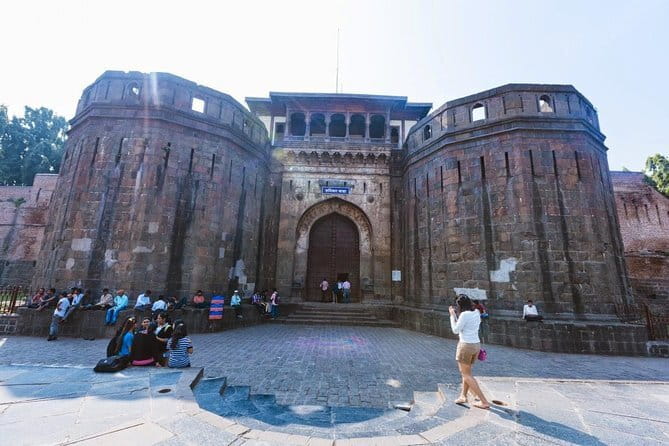
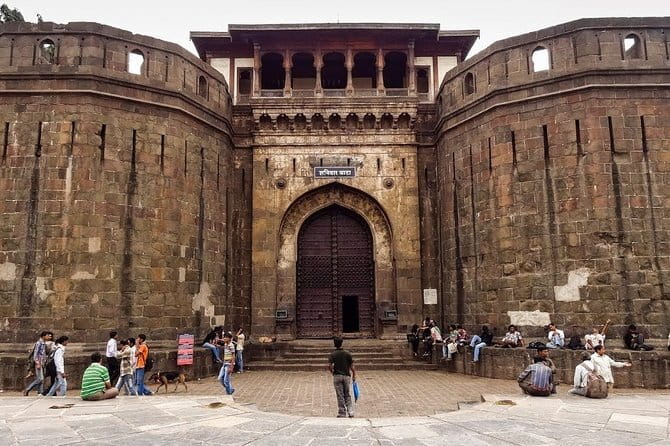
The tour begins at Shaniwar Wada, the former residence of the Peshwas. This is the largest stop, taking about an hour, and it gives the rest of the walk its historical frame.
You can expect to examine key parts of the palace complex while hearing how the Peshwas shaped Pune’s political importance. Starting here makes sense. Without this background, later stops such as Nana Wada and the old peth neighborhoods can feel like disconnected fragments.
The entry ticket is not included, so you should budget for that separately. The tour price remains modest, but this extra cost is worth remembering when you compare the total expense with other activities in Pune.
Shaniwar Wada is also the point where the tour’s walking demands begin. The full route covers 2.2 kilometres, but the pace includes explanations, stops, and movement through crowded city streets. Wear comfortable shoes and keep water with you, especially if you are not used to walking in Pune’s heat.
Lal Mahal and Pune’s early political story
The next stop is Lal Mahal Chitra, connected with the former residence of Chhatrapati Shivaji Maharaj. The stop lasts about 10 minutes, but it carries considerable weight because it shifts the story from the Peshwa court to an earlier period in Pune’s political development.
This part of the route helps you see Pune before it became the large city around you. Dhruva uses the site to explain how the city’s political role began when it was still closer to a village than a metropolis.
Do not expect a long indoor visit here. The value is in the explanation and the connection to what you have just seen at Shaniwar Wada. The two places together show how Pune’s political identity changed over time.
Kasba Peth Ganpati and the feel of an old neighborhood

At Kasba Peth Ganpati Temple, you spend about 15 minutes with a temple said to be 400 years old. This stop brings the tour down from royal politics to the religious life of local communities.
The temple helps explain why the old peth areas matter. Pune’s early identity was not built only by rulers and officials. It also grew through neighborhood institutions, worship, festivals, and daily community life.
This is one of the stops where the walk feels most connected to present-day Pune. You are not looking at a monument cut off from its surroundings. You are seeing a religious site within the fabric of the old city.
As with any active place of worship, keep your behavior respectful and follow any local instructions. The visit is short, so listen closely when Dhruva explains the site’s role.
Same place, a different slice of the past:
- Old Delhi Food, Heritage&Cultural Walk with Rickshaw ride to Masterji Kee Haveli
★ 5.0 · 742 reviews - Blue City Heritage Private Walking Tour With Pickup and Drop-Off
★ 5.0 · 441 reviews - Kolkata Heritage Tram Tour
★ 4.0 · 395 reviews - Private Heritage Walking Tour in Jaisalmer Fort and Old Bazaar
★ 5.0 · 306 reviews
Nana Wada and the homes of power
Nana Wada takes about 10 minutes and adds another political layer. The house belonged to a former statesman, and the stop helps explain the changing people and communities of Old Pune.
The appeal here is not grand scale. This is about how power operated through homes, offices, and local networks. A residence can tell you something different from a palace. It points toward the officials, advisers, and influential families who helped run the city.
I appreciate that the route includes places like Nana Wada rather than focusing only on the biggest attraction. These smaller sites make the story more human. They also show why a guide matters. Without explanation, you might pass by and see only an old building.
Bhausaheb Rangari and the freedom movement
The stop at Shrimant Bhausaheb Rangari Ganpati lasts around 20 minutes. You visit the well-maintained house of a former revolutionary and hear about Pune’s role in India’s freedom movement.
This section broadens the tour beyond royal and religious history. Pune was also a place of political action and resistance. The building gives that story a physical setting, while the guide supplies the links to the larger national movement.
The stop is especially useful if you want to understand how public life in Pune changed after the Peshwa period. The tour does not present the city as frozen in an earlier age. Instead, it follows the way old homes and institutions became part of newer political causes.
The longer stop also gives you time to ask questions. Dhruva has been praised for making history easy to follow and for adding small facts that would be difficult to find during a solo walk.
Bhide Wada and the city’s reformist side
Bhide Wada is associated with a former reformer and adds education, politics, and social change to the route. The stop lasts about 10 minutes.
This is an important part of the walk because Pune’s identity is not only about rulers, temples, and markets. The city also played a role in debates over education and social reform. A house connected with that work helps you see how change took place through people and local institutions.
The building itself may not provide the visual impact of Shaniwar Wada. That is the trade-off. This stop earns its place through the story attached to it, not through size or decoration. If you prefer history that explains how society changed, you will likely value it more than a quick photo stop.
The major Ganesh temple along the route
The walk passes Pune’s most iconic Ganesh temple, described as one of India’s wealthiest temples. The route information does not name the stop, so you should treat it as a passing point rather than a full scheduled visit.
Even a short look adds useful context. Ganesh worship is central to Pune’s public and religious life, and the temple’s prominence shows how faith, community identity, and civic culture overlap here.
This is also where the route may feel busiest. Old Pune’s streets are active, and the walk moves through areas used by local residents and shoppers. That is part of the experience, but it means you should stay close to the group and listen for meeting instructions.
Tulshibaug, its market, and the Shri Ram temple
Tulshibaug brings together a small temple, old architecture, and a lively market area. The stop at Tulshibaug Shri Ram Temple takes about 20 minutes, making it one of the longer visits after Shaniwar Wada.
The market is a strong part of the route because it shows Old Pune as a living district, not an open-air museum. You pass through a working commercial area while learning how the neighborhood developed. The contrast between religious architecture and active trade gives you a sharper sense of how the old city functions.
This is also a good place to keep your expectations realistic. The tour is not a dedicated shopping trip, and the schedule is built around history rather than browsing. If you want to buy gifts, you may need to ask Dhruva whether there is time or request suggestions for later. His past willingness to help with shopping guidance is useful, but it is not listed as a formal part of the tour.
Ending at Mahatma Jyotiba Phule Mandai
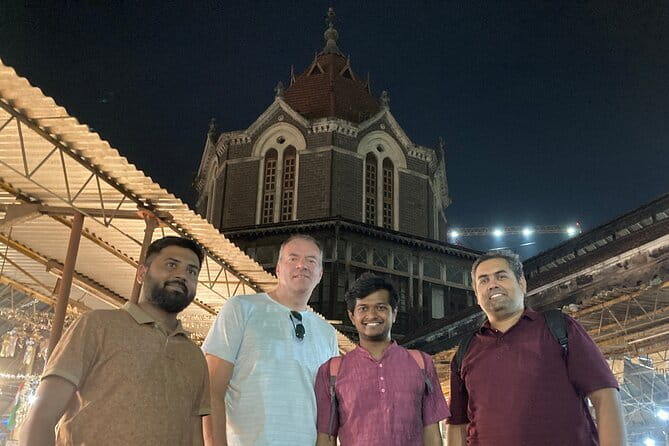
The final major stop is Mahatma Jyotiba Phule Mandai, a colonial-era vegetable market. You spend about 15 minutes here, closing the walk with Pune’s commercial and colonial development.
Mandai is a fitting finish. The route begins with royal power at Shaniwar Wada and ends among everyday trade. That change mirrors the city’s movement from a political center shaped by courts and statesmen to a modern urban community sustained by commerce, food, worship, and local neighborhoods.
The tour ends at the market, about 2 kilometres from the starting point. This is practical to know before you book. You will not return to Shaniwar Wada, so plan your next activity from Mandai rather than assuming the walk circles back.
The market also gives you a useful base for continuing your Pune day. The exact transport arrangements are not included, but the starting area is near public transportation, and the end point is in a central part of the old city.
How much value do you get for $16.84?
At $16.84 per person, this is a strong-value experience if you want a guided introduction to Old Pune. You receive roughly 2.5 to 3 hours 20 minutes of interpretation, a route covering nine landmarks, and snacks. A private guide for that length would normally cost much more, while a self-guided walk would not provide the same connections between the sites.
The price does not include the Shaniwar Wada ticket, meals, or private transport. Those exclusions are reasonable, but you should add them to your day’s budget. The included snacks are a nice touch, especially during a long walk, though they should not be confused with a full meal.
The group limit of 15 is another value point. You may not receive a private-tour feel, but a group of that size should still allow you to hear the guide and ask questions. The strongest praise for this experience centers on Dhruva’s clear explanations, humor, care, and ability to make local history feel connected to real places.
Who should book this walk?
I would choose this experience if you are visiting Pune for the first time and want more than a quick look at the main monuments. It suits people interested in history, religion, politics, architecture, social reform, and local life.
It is also a good fit for residents who know the city but want to understand its older neighborhoods in a more organized way. Dhruva’s willingness to adapt the walk may help if you have a particular interest in history or shopping.
You should think twice if you dislike walking through dense city streets, prefer air-conditioned sightseeing, or want a tour focused only on grand buildings. The route includes active markets, short visits, and sites whose importance depends on explanation. Its rewards are cultural and historical rather than purely visual.
Confirmation arrives when you book, and most people can take part. Free cancellation is available if you cancel at least 24 hours before the start time. Within 24 hours, refunds and changes are not accepted.
Should you book Why Pune?
Yes, if you want a well-priced introduction to the city’s old center and prefer a guide who can explain the links between sites. The strongest reason to book is Dhruva Kalita himself, whose clear English, local knowledge, humor, and personal attention shape the experience.
Book with realistic expectations. You will pay extra for Shaniwar Wada, walk through busy streets, and finish at Mandai rather than where you began. But for $16.84, you get a focused route through Pune’s royal, religious, political, reformist, and commercial past, plus snacks and a small group.
If your time in Pune is limited, this walk gives you a useful foundation. It helps you understand what you are seeing for the rest of your stay.
FAQ
Where does the walk start?
The walk starts at Shaniwar Wada, 480 Shaniwar Peth, Pune, Maharashtra 411011, India.
Where does the walk end?
It ends at Mahatma Jyotiba Phule Mandai, Shanipar Chowk, Mahatma Phule Market, Gayakwad Path, Mandai, Shukrawar Peth, Pune, Maharashtra 411002, India.
How long does the experience last?
The walk lasts approximately 2 hours 30 minutes to 3 hours 20 minutes.
How far do you walk?
The route covers approximately 2.2 kilometres through Pune’s dense city center.
Is the Shaniwar Wada admission fee included?
No. Admission to Shaniwar Wada is not included in the tour price.
Are snacks included?
Yes. Snacks are included, but meals are not.
What is the maximum group size?
The experience accepts a maximum of 15 participants.
Can I cancel for a full refund?
Yes, if you cancel at least 24 hours before the experience start time. Cancellations or changes made less than 24 hours before the start time are not accepted for a refund.
Just added around India
- Pondicherry Heritage Walking Tour of French Quarters★ 5.0 · 25 reviews
- Unveil Old Delhi’s Food, Spice Market & Heritage Walk★ 5.0 · 26 reviews
- Old Delhi Heritage Walk with Rickshaw Ride★ 5.0 · 68 reviews
- Timeless Treasures: An Old Delhi Heritage Walking Tour★ 5.0 · 69 reviews
- Same Day Tour of Taj Mahal with Our Real Historical Experience★ 5.0 · 42 reviews
- Delhi’s historical 7 hours experience tour★ 5.0 · 115 reviews
- From Delhi: Skip the line Taj Mahal, Agra Tour by Express Train★ 5.0 · 84 reviews
- Discover Delhi’s Cultural Heritage in a Day with Food Tasting★ 5.0 · 32 reviews
History Walking Tours, compared.
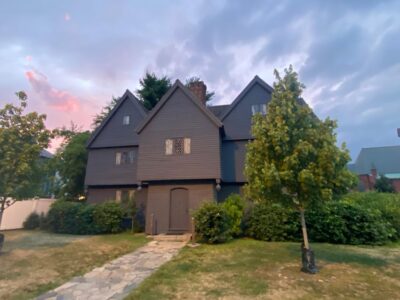
History and Hauntings of Salem Guided Walking Tour
Read our review →
Freedom Trail History Small Group Walking Tour
Read our review →
Historic Charleston Guided Sightseeing Walking Tour
Read our review →
Tapas Walking Tour with Food, Wine, and History
Read our review →
Savannah History and Haunts Candlelit Ghost Walking Tour
Read our review →
A History of Terror – Belfast City Centre Walking Tour
Read our review →Browse the lists this tour appears in